
Anatomy and Physiology Chapter 1 Organization of the
- Slides: 42
Anatomy and Physiology Chapter 1 Organization of the Body
What is anatomy? • Anatomy is the structure of an organism and the relationships of its parts.
Dissections • We use dissections to isolate and study the structural components or parts of the human body. • Gross anatomy- study of body parts visible to the naked eye. • Microscopic anatomy- study of body parts using a microscope
Parts to microscopic anatomy • Cytology- study of cells • Histology- study of tissues Other studies of anatomy: • Developmental anatomy- study of human growth and development • Pathological anatomy- study of diseased body structures • Systemic anatomy- study of the body by systems
What is physiology? Physiology is the study of how the body works. Parts of physiology: 1) Organism involved 2) Organization level studied 3) Systemic function •
Characteristics of Life Characteristics of life considered most important in humans: – Responsiveness – Conductivity – Growth – Respiration – Digestion – Absorption – Secretion – Excretion – Circulation – Reproduction
Metabolism • Metabolism—sum total of all physical and chemical reactions occurring in the living body
Levels of organization • • Atom Molecule Organelle Cell Tissue Organ system Organism
Levels of Organization (Figure 1 -3) • Chemical level—basis for life – Organization of chemical structures separates living material from nonliving material – Organization of atoms, molecules, and macromolecules results in living matter—a gel called cytoplasm
Levels of Organization • Organelle level – Chemical structures organized to form organelles that perform individual functions – It is the functions of the organelles that allow the cell to live – Dozens of organelles have been identified, including the following: • Mitochondria • Golgi apparatus • Endoplasmic reticulum
Levels of Organization • Cellular level – Cells—smallest and most numerous units that possess and exhibit characteristics of life – Cell—nucleus surrounded by cytoplasm within a limiting membrane – Cells differentiate to perform unique functions
Levels of Organization • Tissue level – Tissue—an organization of similar cells specialized to perform a certain function – Tissue cells surrounded by nonliving matrix – Four major tissue types: • • Epithelial tissue Connective tissue Muscle tissue Nervous tissue
Levels of Organization • Organ level – Organ—organization of several different kinds of tissues to perform a special function – Organs represent discrete and functionally complex operational units – Each organ has a unique size, shape, appearance, and placement in the body
Levels of Organization • System level – Systems—most complex organizational units of the body – System level involves varying numbers and kinds of organs arranged to perform complex functions (Table 1 -1): • • • Support and movement Communication, control, and integration Transportation and defense Respiration, nutrition, and excretion Reproduction and development
Levels of Organization • Organism level – The living human organism is greater than the sum of its parts – All of the components interact to allow the human to survive and flourish
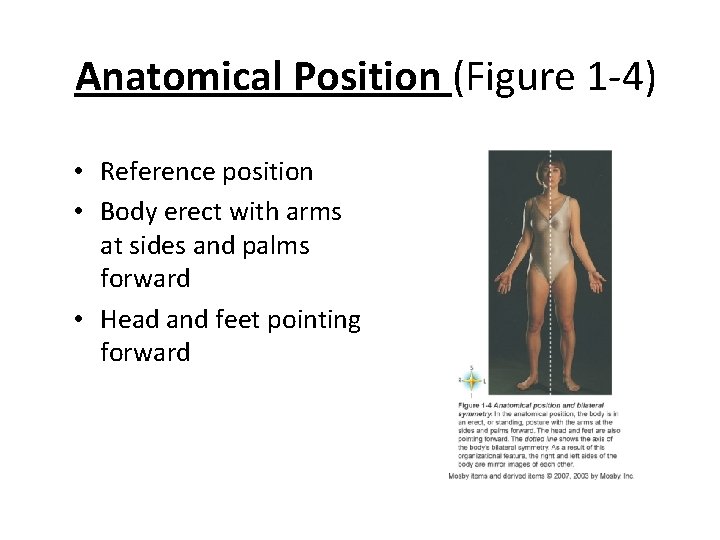
Anatomical Position (Figure 1 -4) • Reference position • Body erect with arms at sides and palms forward • Head and feet pointing forward
Bilateral symmetry • Bilateral symmetry is a term meaning that right and left sides of body are mirror images – Ipsilateral structures are on the same side of the body in anatomical position – Contralateral structures are on opposite sides of the body in anatomical position
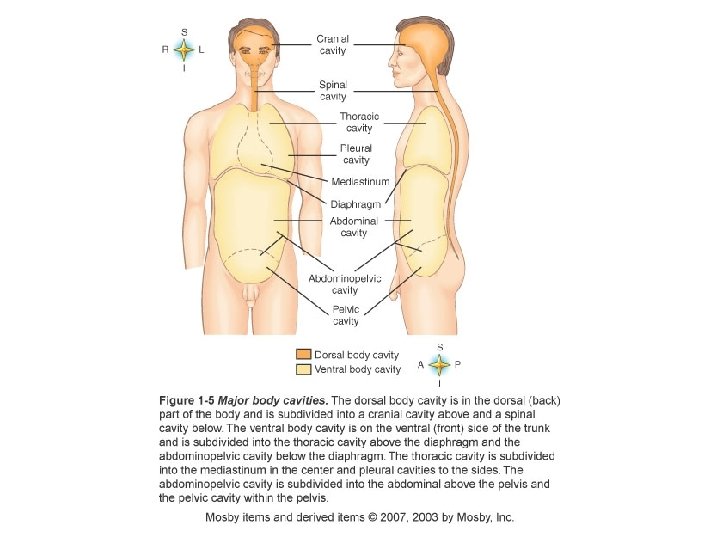
Body Cavities • Ventral body cavity – Thoracic cavity • Right and left pleural cavities • Mediastinum – Abdominopelvic cavity • Abdominal cavity • Pelvic cavity
Body cavity • Dorsal body cavity – Cranial cavity – Spinal cavity
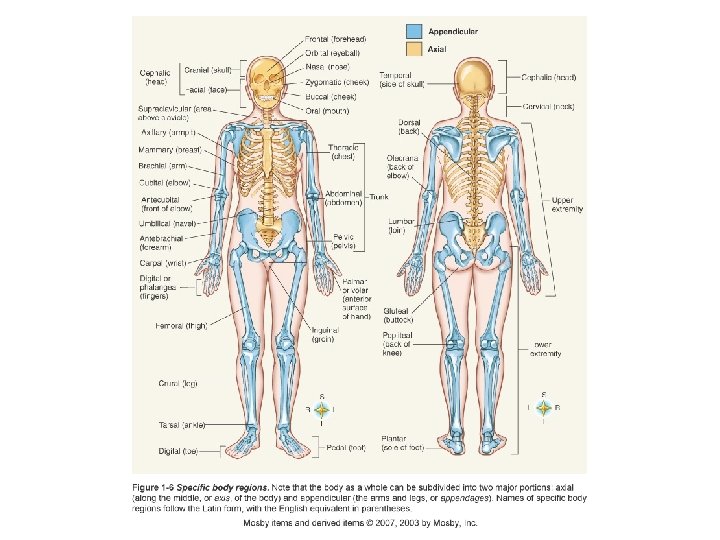
Body Regions • Axial subdivision – Head – Neck – Torso, or trunk, and its subdivisions • Appendicular subdivision – Upper extremity and subdivisions – Lower extremity and subdivisions
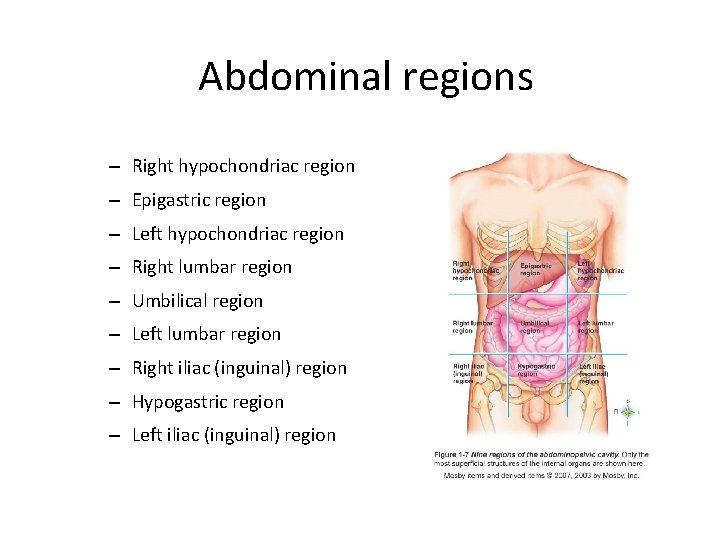
Abdominal regions – Right hypochondriac region – Epigastric region – Left hypochondriac region – Right lumbar region – Umbilical region – Left lumbar region – Right iliac (inguinal) region – Hypogastric region – Left iliac (inguinal) region
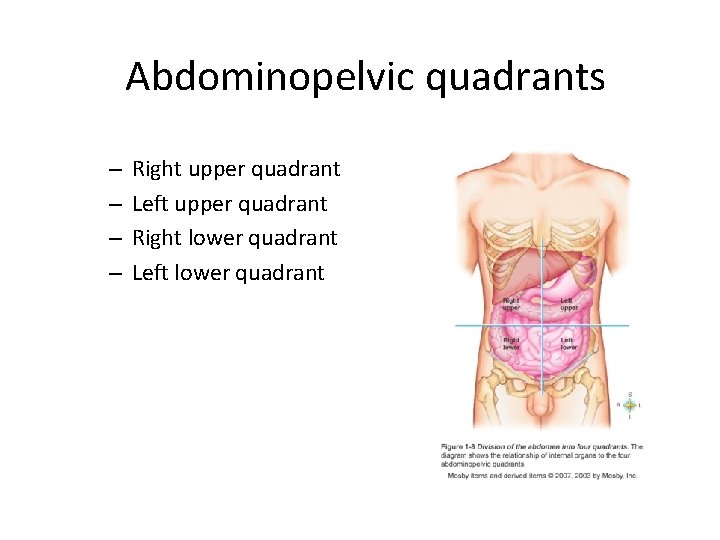
Abdominopelvic quadrants – – Right upper quadrant Left upper quadrant Right lower quadrant Left lower quadrant
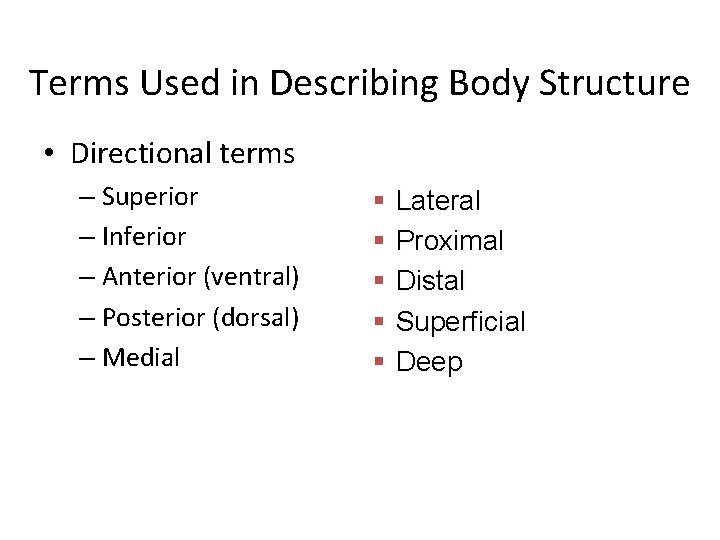
Terms Used in Describing Body Structure • Directional terms – Superior – Inferior – Anterior (ventral) – Posterior (dorsal) – Medial § Lateral § Proximal § Distal § Superficial § Deep
Body Planes and Sections Planes are lines of orientation along which cuts or sections can be made to divide the body, or a body part, into smaller pieces • There are 3 planes: 1) Saggital plane 2) Frontal (coronal) plane 3) Transverse (horizontal) plane •
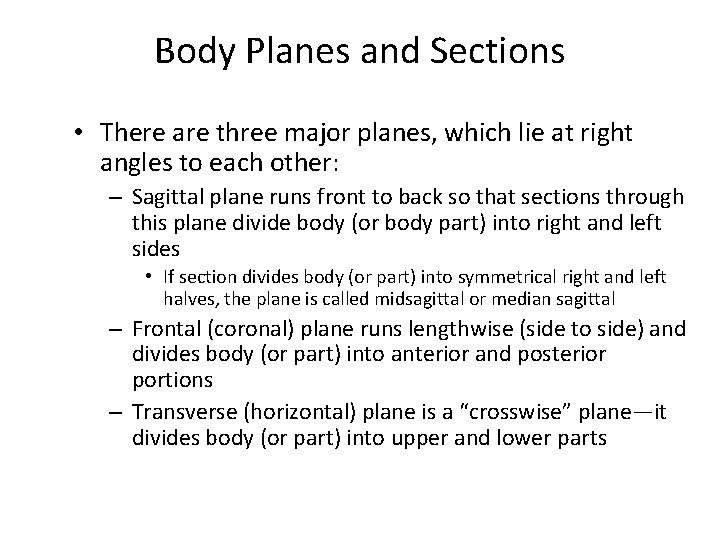
Body Planes and Sections • There are three major planes, which lie at right angles to each other: – Sagittal plane runs front to back so that sections through this plane divide body (or body part) into right and left sides • If section divides body (or part) into symmetrical right and left halves, the plane is called midsagittal or median sagittal – Frontal (coronal) plane runs lengthwise (side to side) and divides body (or part) into anterior and posterior portions – Transverse (horizontal) plane is a “crosswise” plane—it divides body (or part) into upper and lower parts
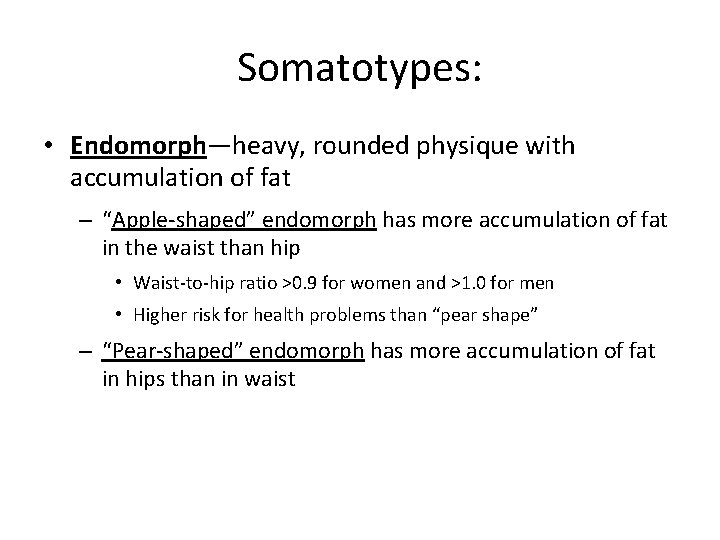
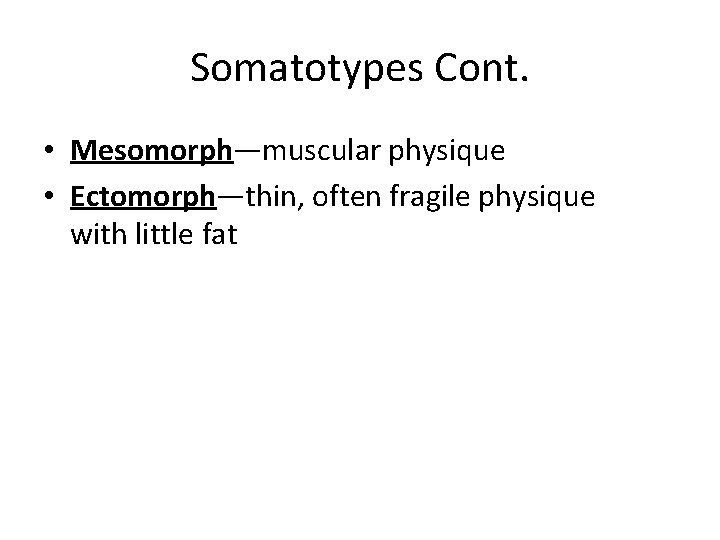
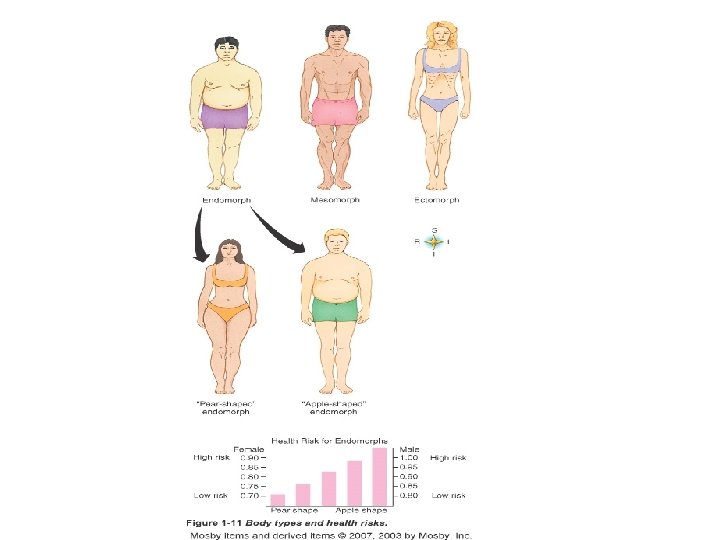
Body Type and Disease • Somatotype—category of body build or physique • Three somatotype: 1) Endomorph 2) Mesomorph 3) Ectomorph
Somatotypes: • Endomorph—heavy, rounded physique with accumulation of fat – “Apple-shaped” endomorph has more accumulation of fat in the waist than hip • Waist-to-hip ratio >0. 9 for women and >1. 0 for men • Higher risk for health problems than “pear shape” – “Pear-shaped” endomorph has more accumulation of fat in hips than in waist
Somatotypes Cont. • Mesomorph—muscular physique • Ectomorph—thin, often fragile physique with little fat
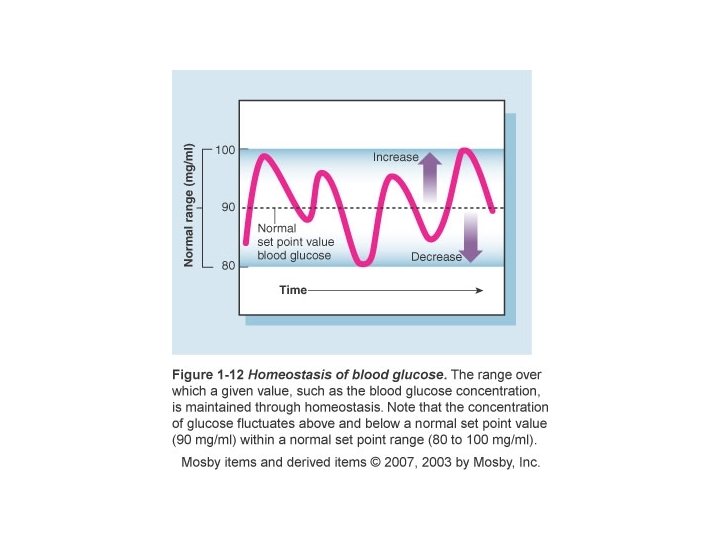
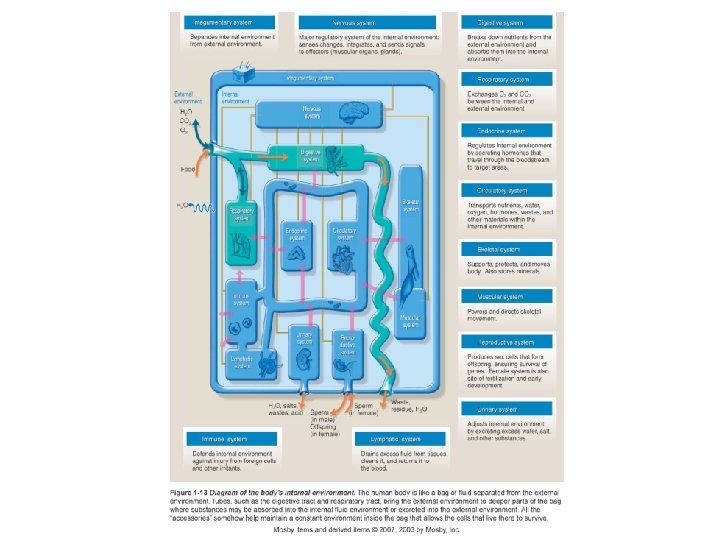
Homeostasis • Homeostasis is the term used to describe the relatively constant states maintained by the body—internal environment around body cells remains constant
Homeostasis • Body adjusts important variables from a normal “set point” in an acceptable or normal range • Examples of homeostasis: – Temperature regulation – Regulation of blood carbon dioxide level – Regulation of blood glucose level
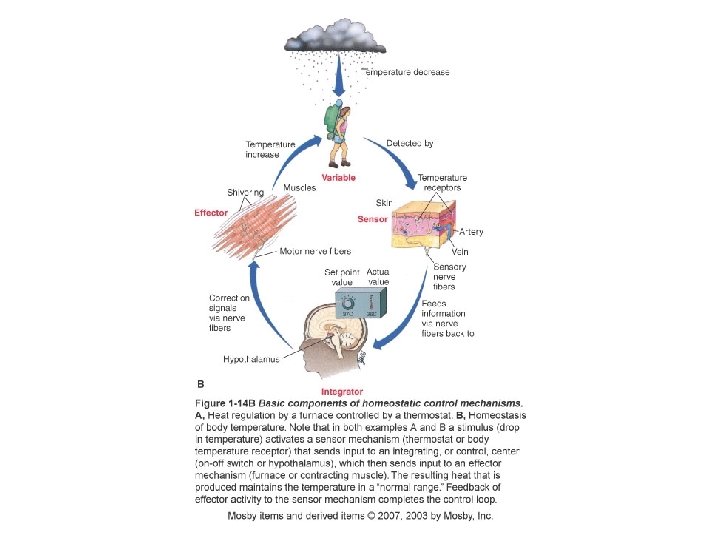
Homeostatic Control Mechanisms • Devices for maintaining or restoring homeostasis by self-regulation through feedback control loops
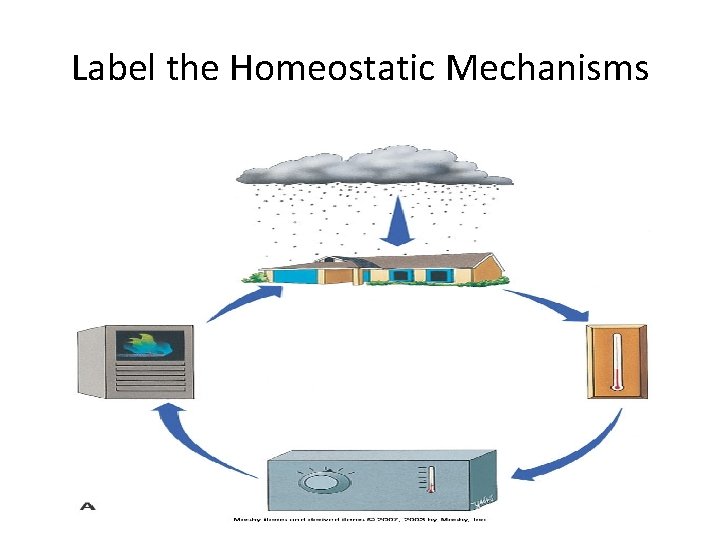
Homeostatic Mechanisms • Basic components of control mechanisms – Sensor mechanism—specific sensors detect and react to any changes from normal – Integrating, or control, center—information is analyzed and integrated, and then, if needed, a specific action is initiated – Effector mechanism—effectors directly influence controlled physiological variables – Feedback—process of information about a variable constantly flowing back from the sensor to the integrator
Label the Homeostatic Mechanisms
Homeostatic Control Mechanisms • Negative feedback control systems – Are inhibitory – Stabilize physiological variables – Produce an action that is opposite to the change that activated the system – Are responsible for maintaining homeostasis – Are much more common than positive feedback control systems
Homeostatic Control Mechanisms • Positive feedback control systems – Are stimulatory – Amplify or reinforce the change that is occurring – Tend to produce destabilizing effects and disrupt homeostasis – Bring specific body functions to swift completion • Feed-forward occurs when information flows ahead to another process or feedback loop to trigger a change in anticipation of an event that will follow
Homeostatic Control Mechanisms • Levels of control – Intracellular control • Regulation within cells • Genes or enzymes can regulate cell processes – Intrinsic control (autoregulation) • Regulation within tissues or organs • May involve chemical signals • May involve other “built-in” mechanisms – Extrinsic control • Regulation from organ to organ • May involve nerve signals • May involve endocrine signals (hormones)