
Anatomy and Physiology Cell Reproduction The Cell Cycle

- Slides: 29
Anatomy and Physiology Cell Reproduction The Cell Cycle: Mitosis
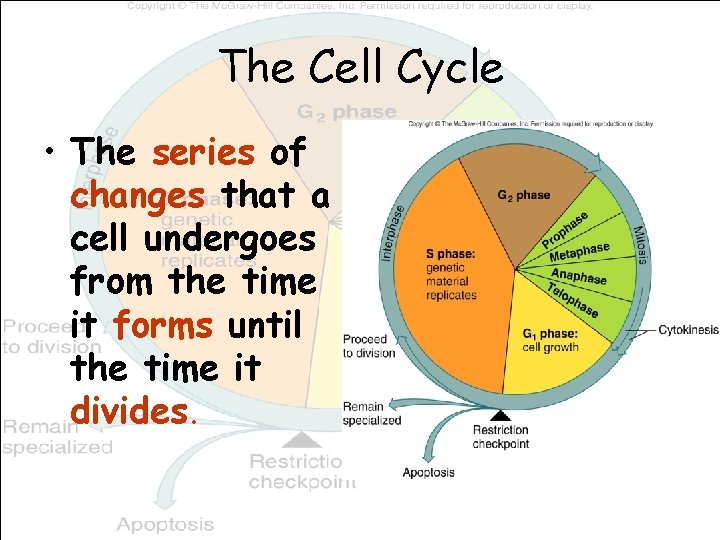
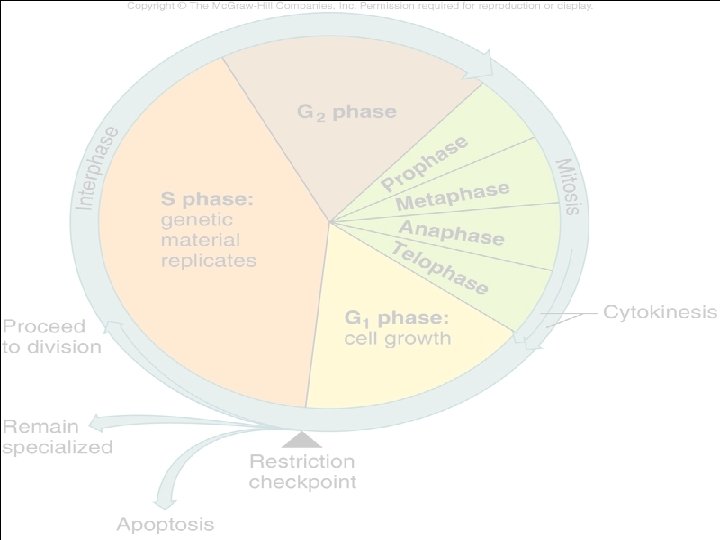
The Cell Cycle • The series of changes that a cell undergoes from the time it forms until the time it divides.
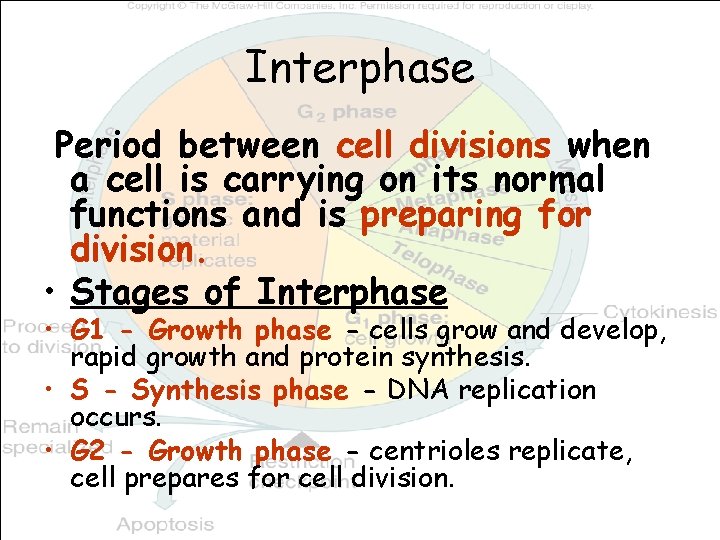
Interphase Period between cell divisions when a cell is carrying on its normal functions and is preparing for division. • Stages of Interphase • G 1 - Growth phase - cells grow and develop, rapid growth and protein synthesis. • S - Synthesis phase - DNA replication occurs. • G 2 - Growth phase - centrioles replicate, cell prepares for cell division.
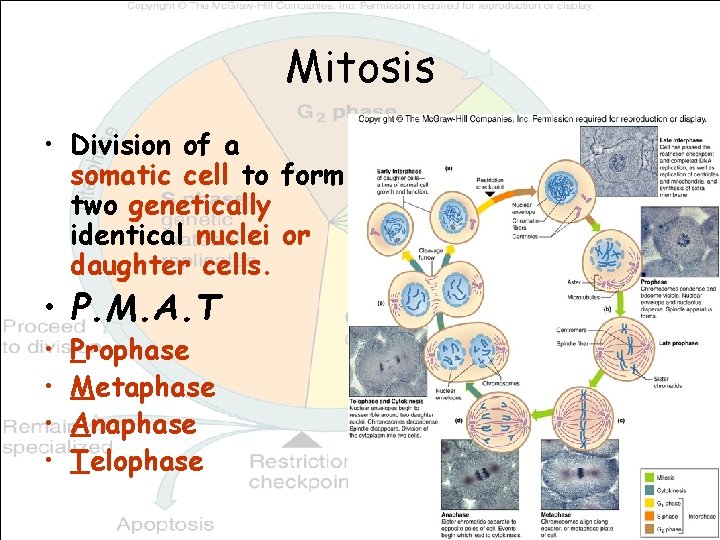
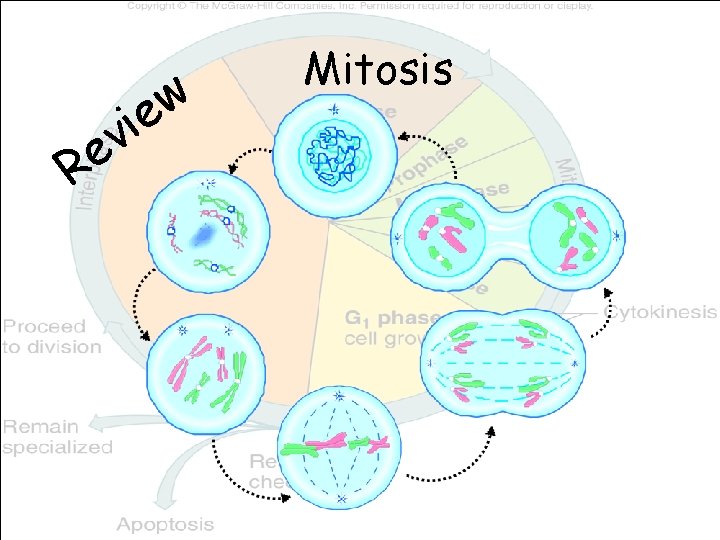
Mitosis • Division of a somatic cell to form two genetically identical nuclei or daughter cells. • P. M. A. T • • Prophase Metaphase Anaphase Telophase
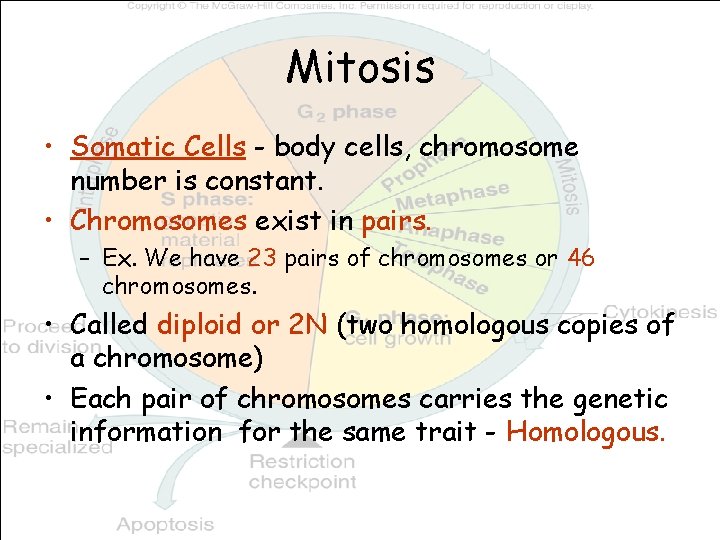
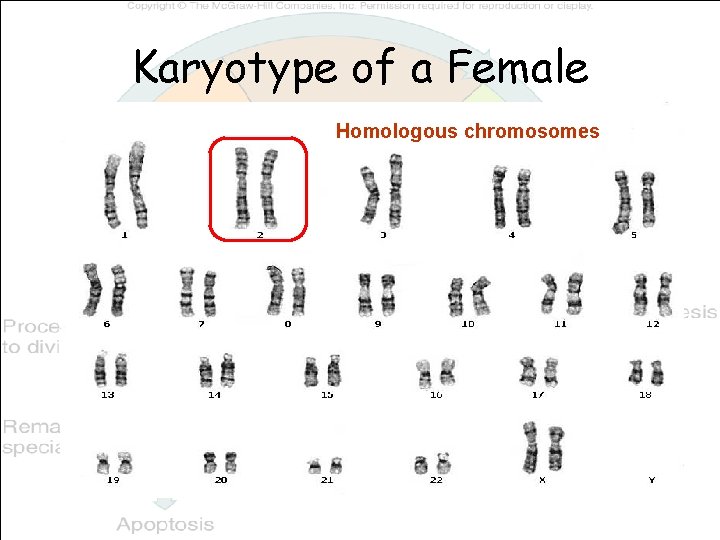
Mitosis • Somatic Cells - body cells, chromosome number is constant. • Chromosomes exist in pairs. – Ex. We have 23 pairs of chromosomes or 46 chromosomes. • Called diploid or 2 N (two homologous copies of a chromosome) • Each pair of chromosomes carries the genetic information for the same trait - Homologous.
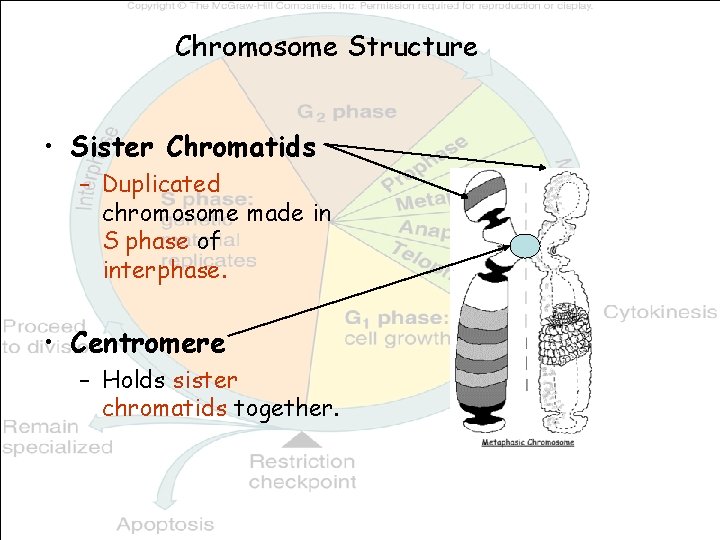
Chromosome Structure • Sister Chromatids – Duplicated chromosome made in S phase of interphase. • Centromere – Holds sister chromatids together.
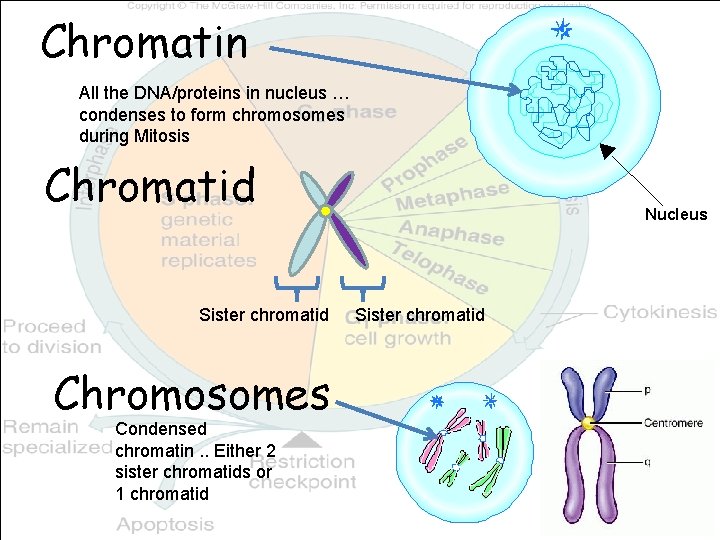
Chromatin All the DNA/proteins in nucleus … condenses to form chromosomes during Mitosis Chromatid Sister chromatid Chromosomes Condensed chromatin. . Either 2 sister chromatids or 1 chromatid Nucleus Sister chromatid
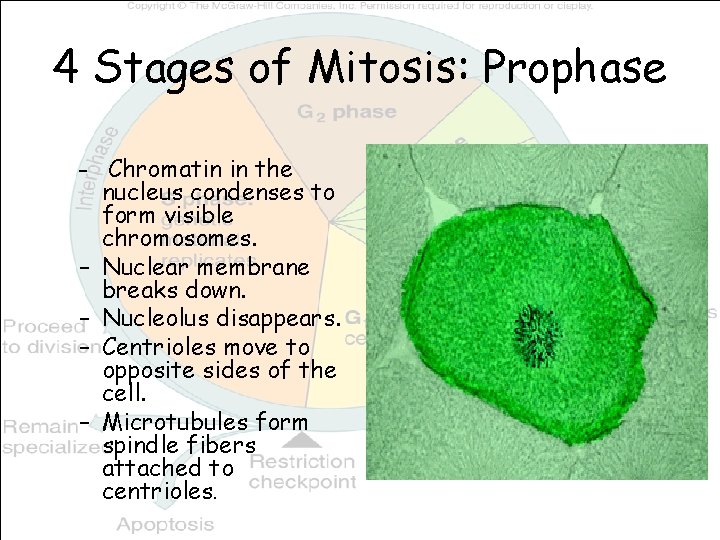
4 Stages of Mitosis: Prophase – Chromatin in the – – nucleus condenses to form visible chromosomes. Nuclear membrane breaks down. Nucleolus disappears. Centrioles move to opposite sides of the cell. Microtubules form spindle fibers attached to centrioles.
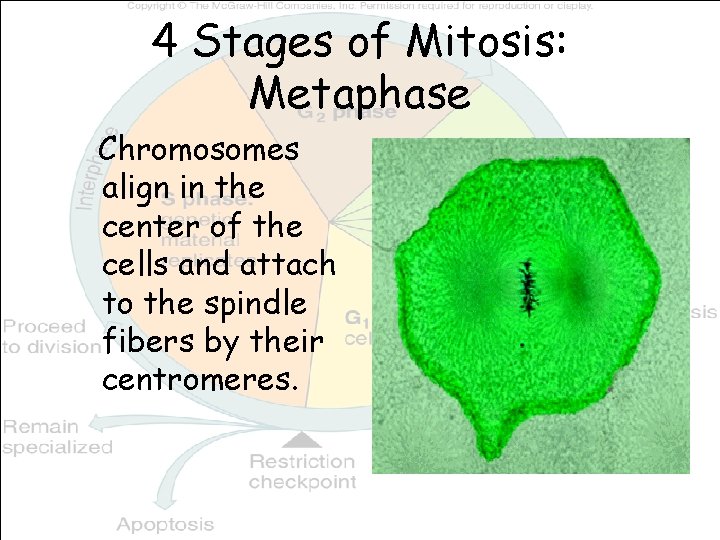
4 Stages of Mitosis: Metaphase Chromosomes align in the center of the cells and attach to the spindle fibers by their centromeres.
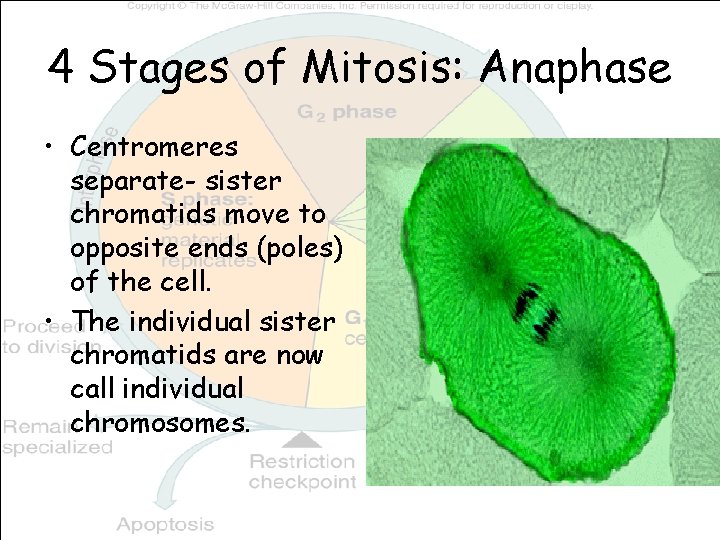
4 Stages of Mitosis: Anaphase • Centromeres separate- sister chromatids move to opposite ends (poles) of the cell. • The individual sister chromatids are now call individual chromosomes.
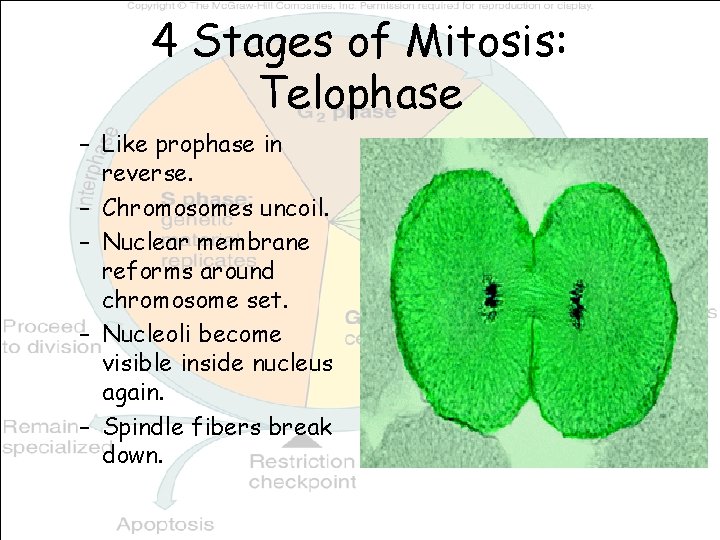
4 Stages of Mitosis: Telophase – Like prophase in reverse. – Chromosomes uncoil. – Nuclear membrane reforms around chromosome set. – Nucleoli become visible inside nucleus again. – Spindle fibers break down.
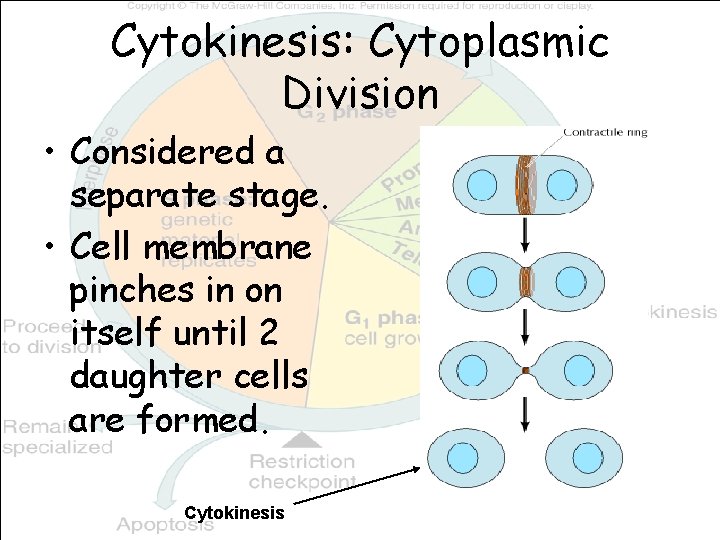
Cytokinesis: Cytoplasmic Division • Considered a separate stage. • Cell membrane pinches in on itself until 2 daughter cells are formed. Cytokinesis
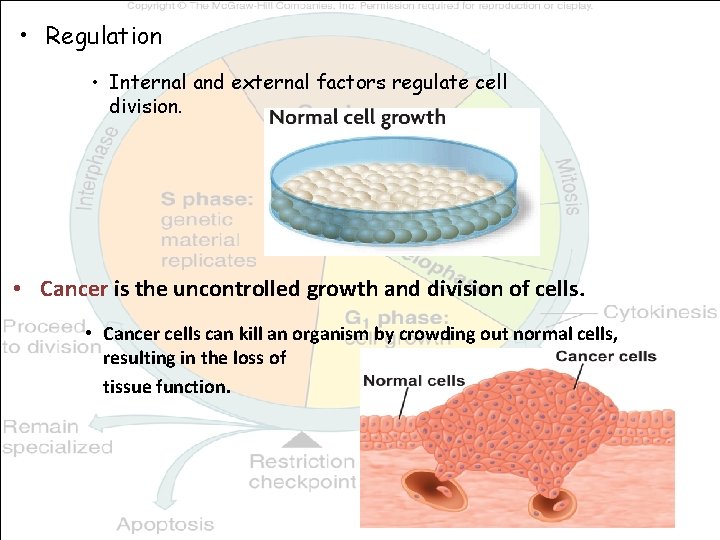
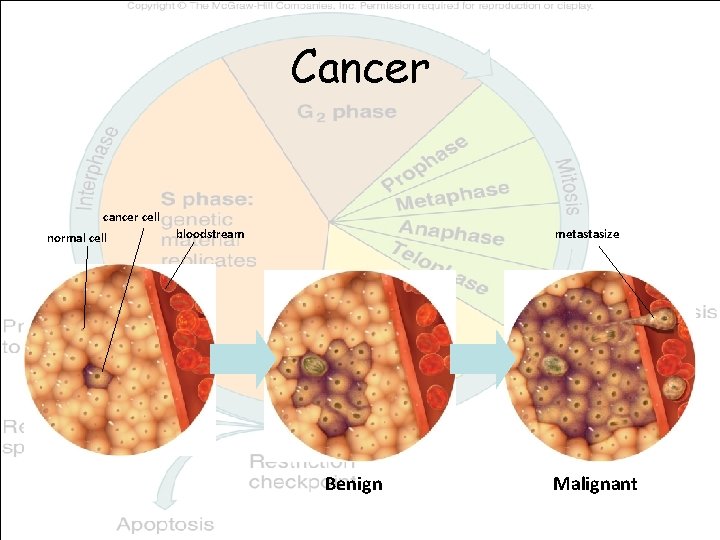
• Regulation • Internal and external factors regulate cell division. • Cancer is the uncontrolled growth and division of cells. • Cancer cells can kill an organism by crowding out normal cells, resulting in the loss of tissue function.
Cancer cell normal cell bloodstream metastasize Benign Malignant
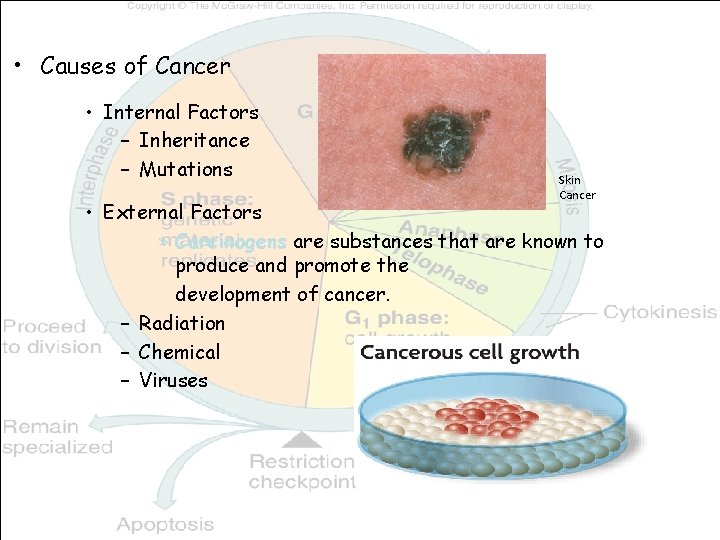
• Causes of Cancer • Internal Factors – Inheritance – Mutations Skin Cancer • External Factors » Carcinogens are substances that are known to produce and promote the development of cancer. – Radiation – Chemical – Viruses
v e R w ie Mitosis
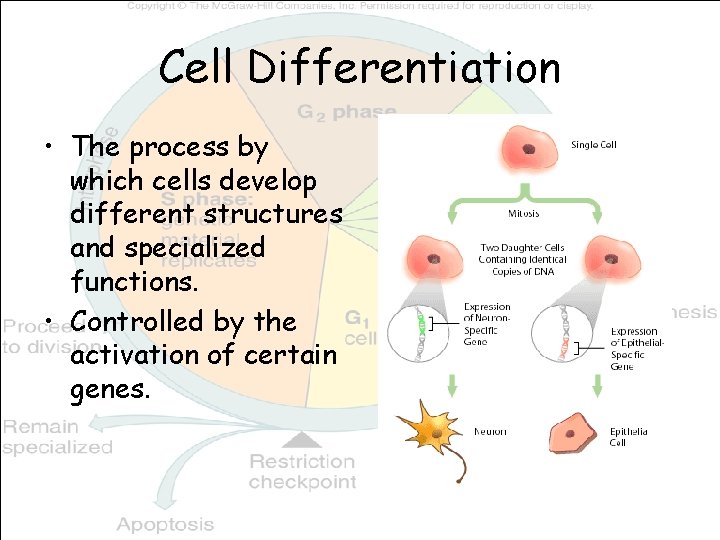
Cell Differentiation • The process by which cells develop different structures and specialized functions. • Controlled by the activation of certain genes.
Stem Cells A precursor cell that can be triggered by genes to become any type of cell.
Meiosis Why does it take place? • Forming of gametes which are haploid cells Where does it take place? • Reproductive organs – Male = testes Female = ovaries
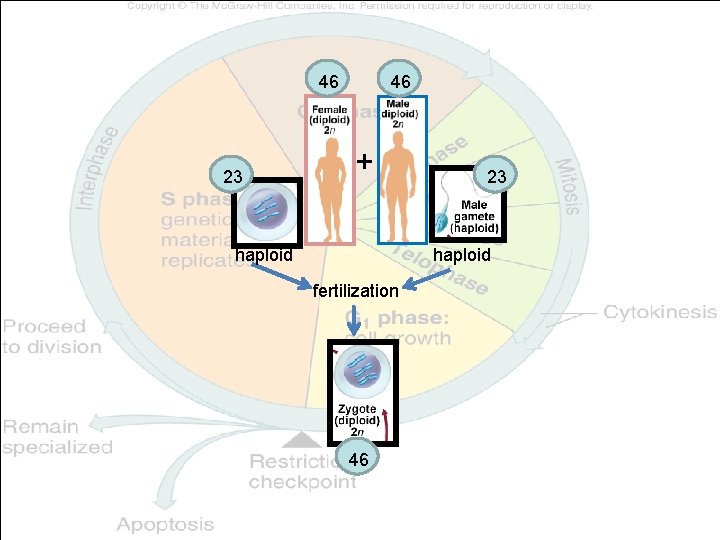
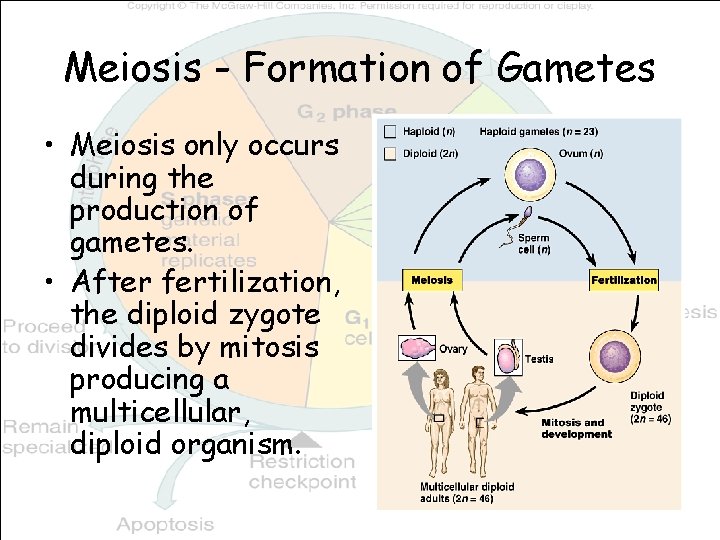
46 23 46 + haploid 23 haploid fertilization 46
Meiosis - Formation of Gametes • Meiosis only occurs during the production of gametes. • After fertilization, the diploid zygote divides by mitosis producing a multicellular, diploid organism.
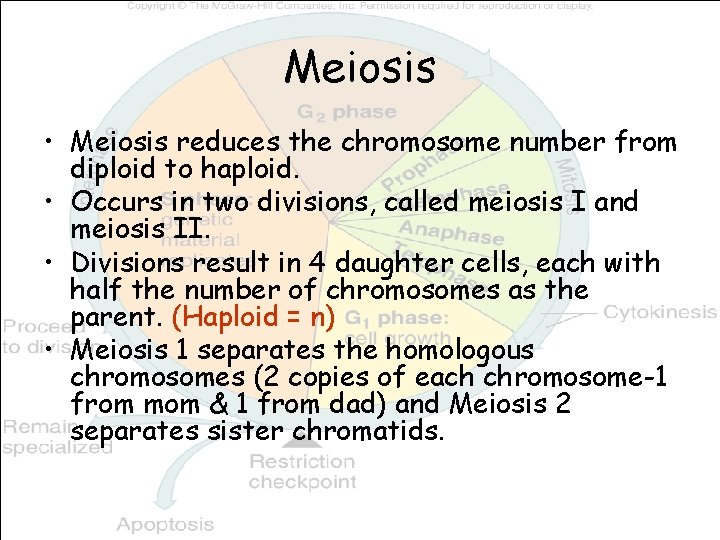
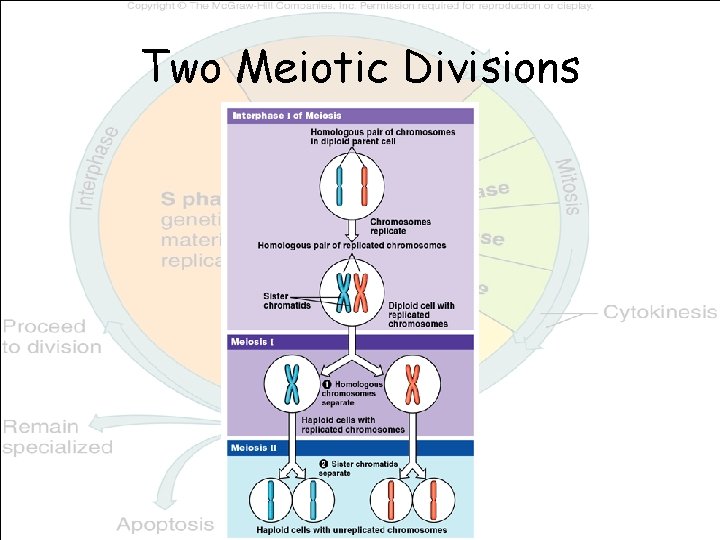
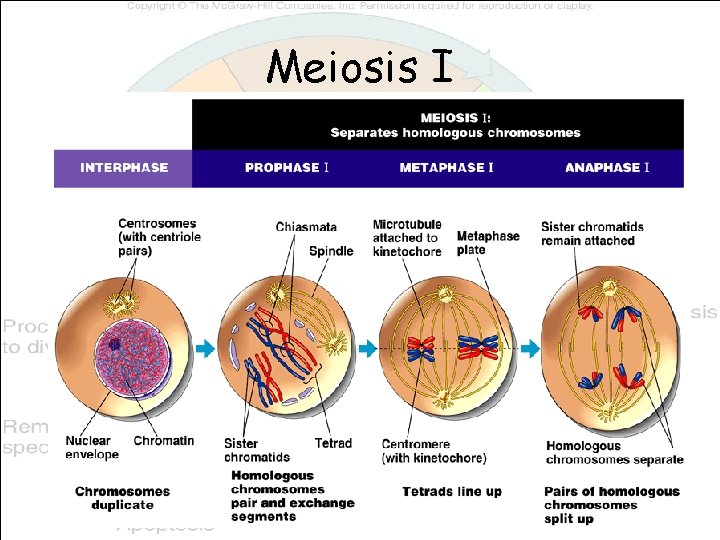
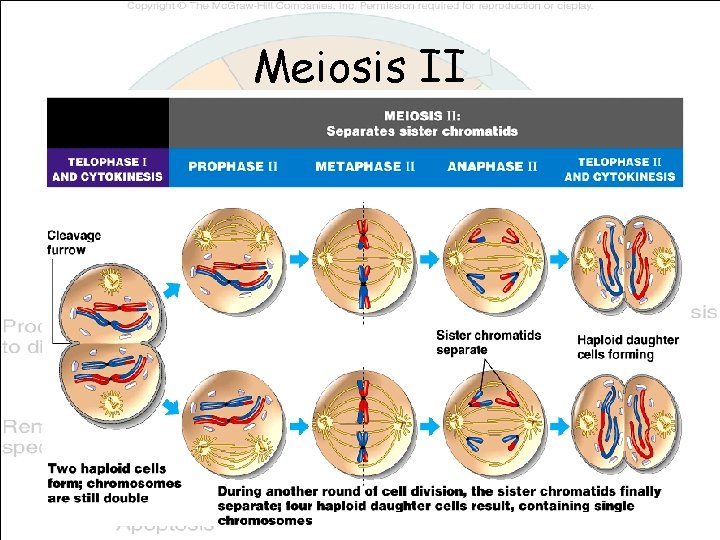
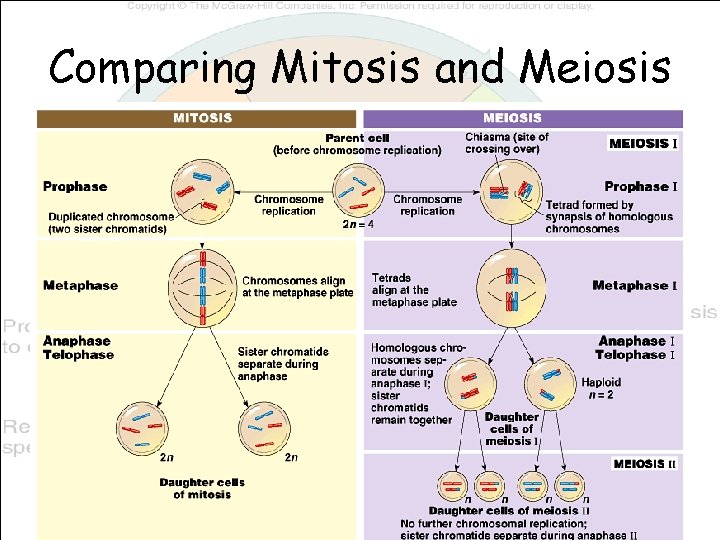
Meiosis • Meiosis reduces the chromosome number from diploid to haploid. • Occurs in two divisions, called meiosis I and meiosis II. • Divisions result in 4 daughter cells, each with half the number of chromosomes as the parent. (Haploid = n) • Meiosis 1 separates the homologous chromosomes (2 copies of each chromosome-1 from mom & 1 from dad) and Meiosis 2 separates sister chromatids.
Karyotype of a Female Homologous chromosomes
Two Meiotic Divisions
Meiosis I
Meiosis II
Comparing Mitosis and Meiosis
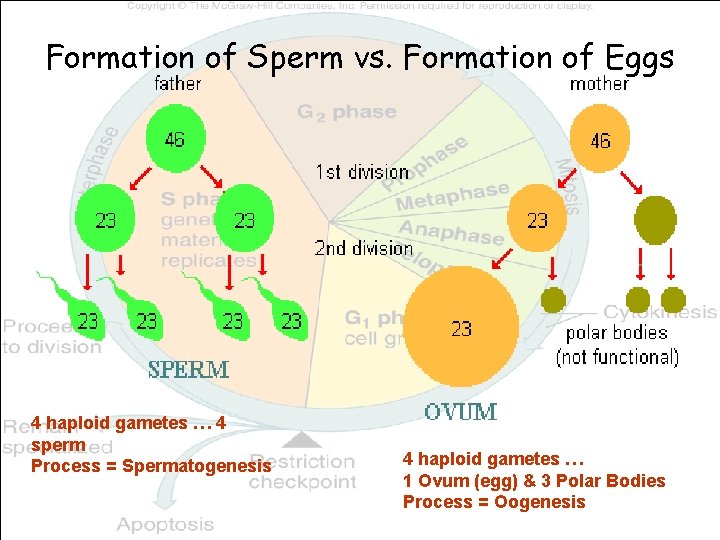
Formation of Sperm vs. Formation of Eggs 4 haploid gametes … 4 sperm Process = Spermatogenesis 4 haploid gametes … 1 Ovum (egg) & 3 Polar Bodies Process = Oogenesis