
Anatomy and Physiology Anatomy Describes the structures of
Anatomy and Physiology § Anatomy • Describes the structures of the body • What they are made of • Where they are located • Associated structures § Physiology • Is the study of • Functions of anatomical structures • Individual and cooperative functions 1
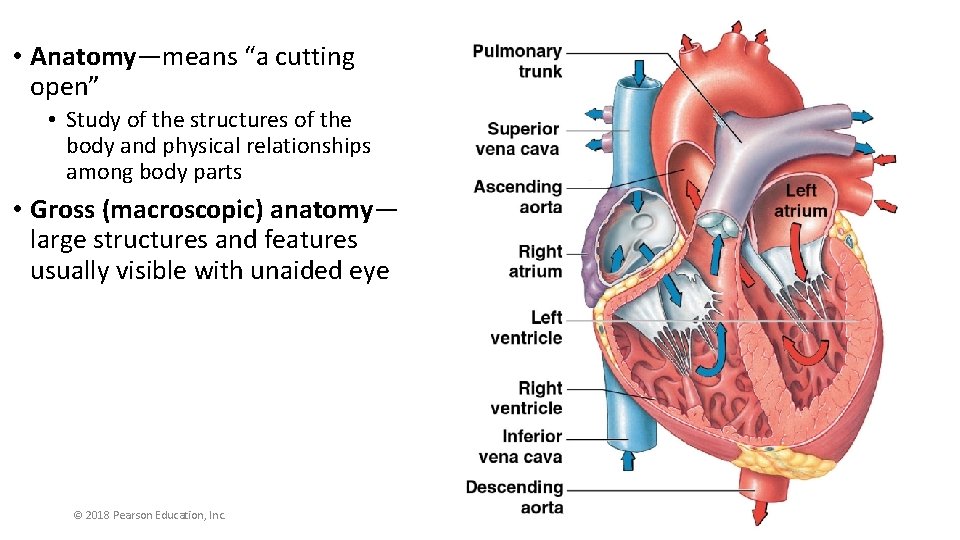
• Anatomy—means “a cutting open” • Study of the structures of the body and physical relationships among body parts • Gross (macroscopic) anatomy— large structures and features usually visible with unaided eye © 2018 Pearson Education, Inc.
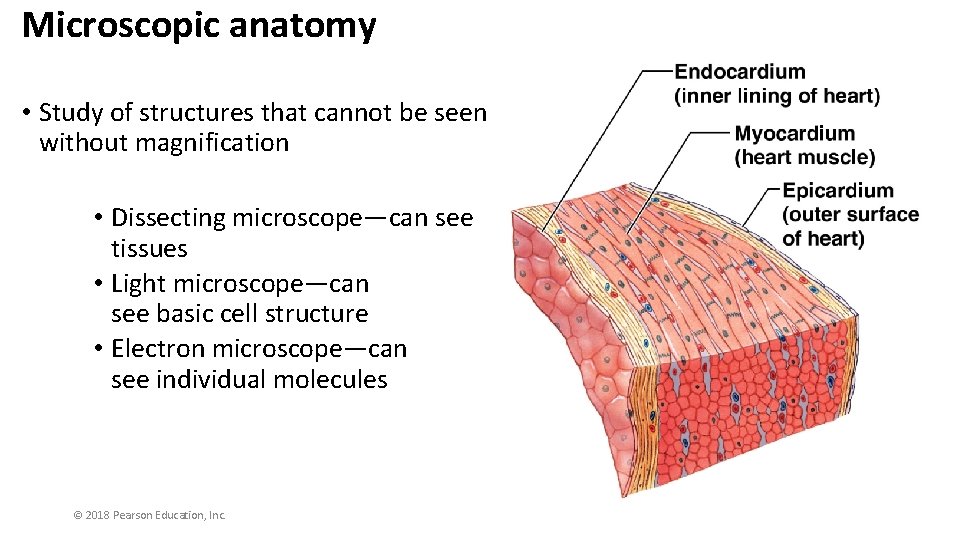
Microscopic anatomy • Study of structures that cannot be seen without magnification • Dissecting microscope—can see tissues • Light microscope—can see basic cell structure • Electron microscope—can see individual molecules © 2018 Pearson Education, Inc.

Human anatomy § Gross anatomy, or macroscopic anatomy, examines large, visible structures § Surface anatomy: exterior features § Regional anatomy: body areas § Sectional anatomy: cross sections § Systemic anatomy: organ systems § Clinical anatomy: medical specialties § Developmental anatomy: from conception to adulthood, including embryology 4
Human anatomy Microscopic anatomy examines cells and molecules Cytology: study of cells Histology: study of tissues 5

Physiology Study of function and how organisms perform vital functions Complex and more difficult to examine than anatomical structures Focuses on functional properties © 2018 Pearson Education, Inc.
Human physiology Cell physiology: functions of cells Organ physiology: functions of specific organs Systemic physiology: functions of organ systems Pathological physiology: effects of diseases on organs or systems 7
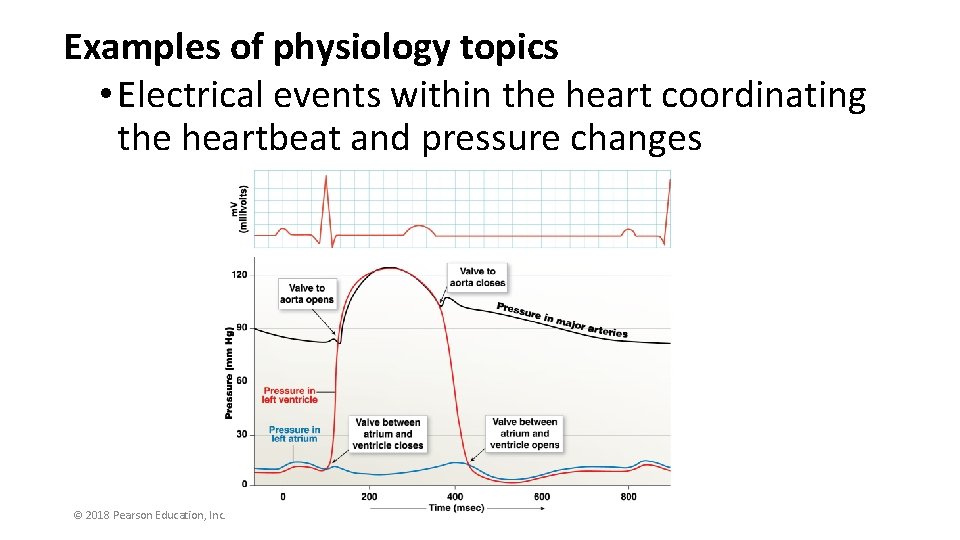
Examples of physiology topics • Electrical events within the heart coordinating the heartbeat and pressure changes © 2018 Pearson Education, Inc.
Physiology and anatomy are closely interrelated in theory and in practice Anatomical details have an effect on function Physiological mechanisms are understood in terms of underlying structural relationships © 2018 Pearson Education, Inc.
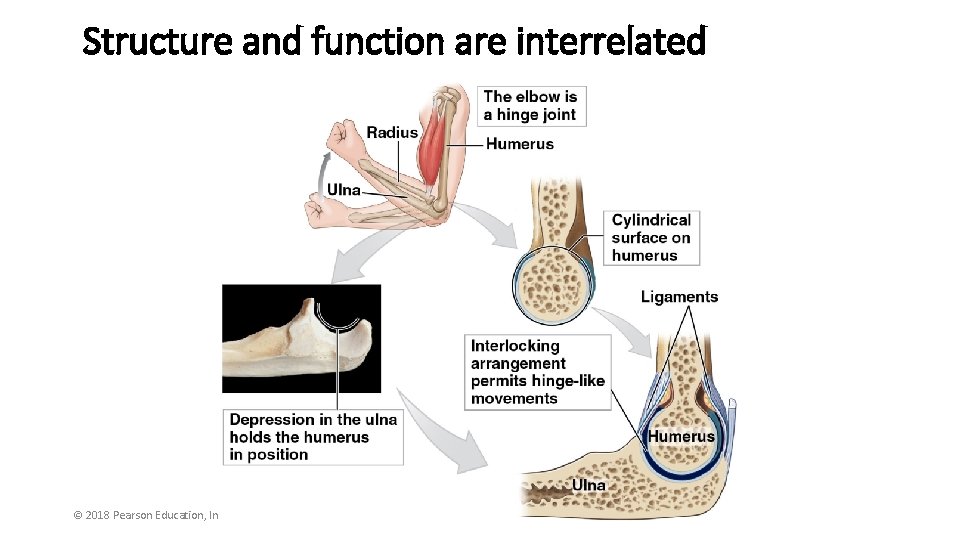
Structure and function are interrelated © 2018 Pearson Education, Inc.
Chemical level example Cells communicate using specifically shaped molecules called chemical messengers Receptors on target cells receive the message only if the messenger molecule fits the shape of receptor © 2018 Pearson Education, Inc.

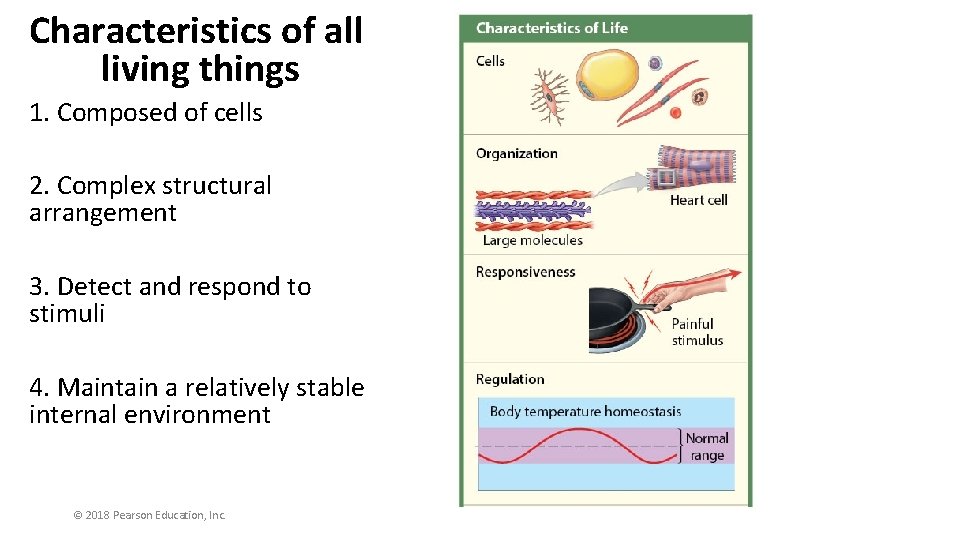
Characteristics of all living things 1. Composed of cells 2. Complex structural arrangement 3. Detect and respond to stimuli 4. Maintain a relatively stable internal environment © 2018 Pearson Education, Inc.
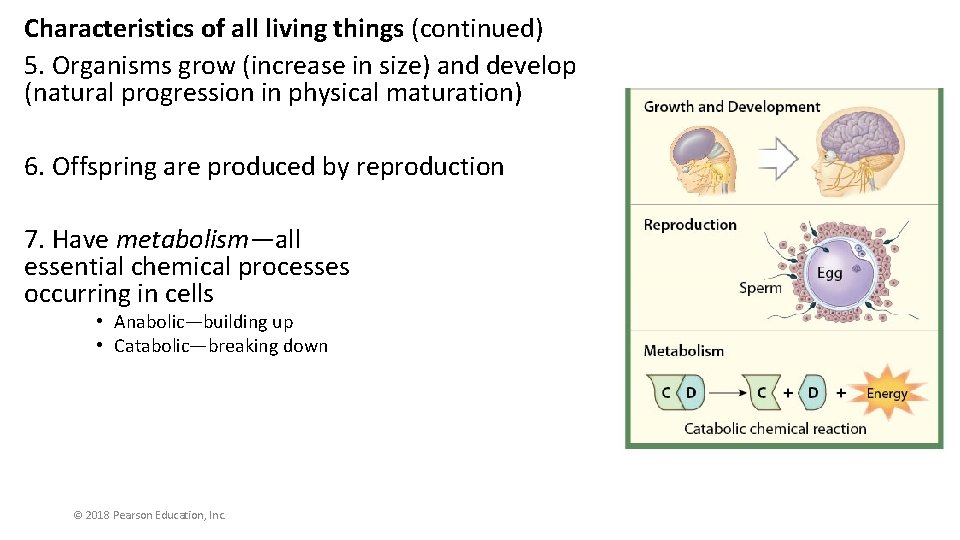
Characteristics of all living things (continued) 5. Organisms grow (increase in size) and develop (natural progression in physical maturation) 6. Offspring are produced by reproduction 7. Have metabolism—all essential chemical processes occurring in cells • Anabolic—building up • Catabolic—breaking down © 2018 Pearson Education, Inc.
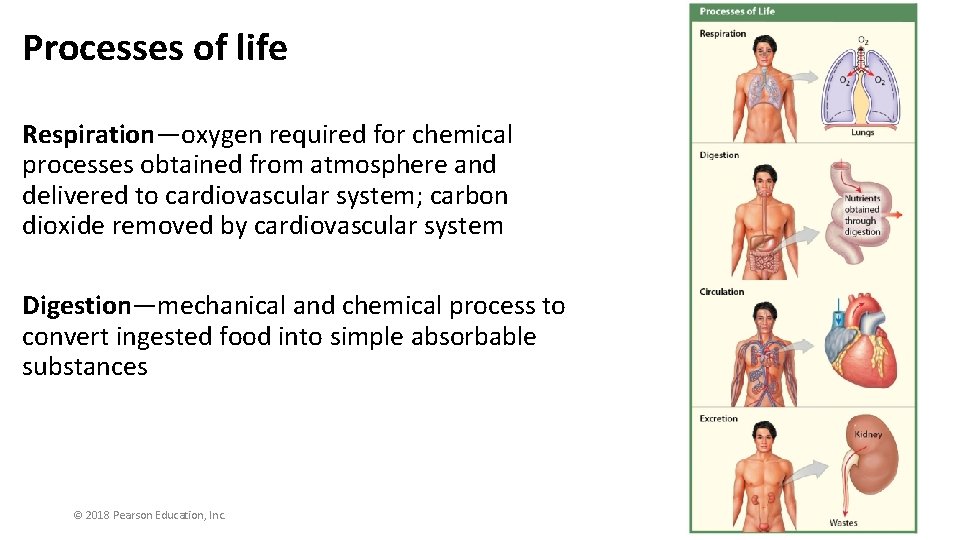
Processes of life Respiration—oxygen required for chemical processes obtained from atmosphere and delivered to cardiovascular system; carbon dioxide removed by cardiovascular system Digestion—mechanical and chemical process to convert ingested food into simple absorbable substances © 2018 Pearson Education, Inc.
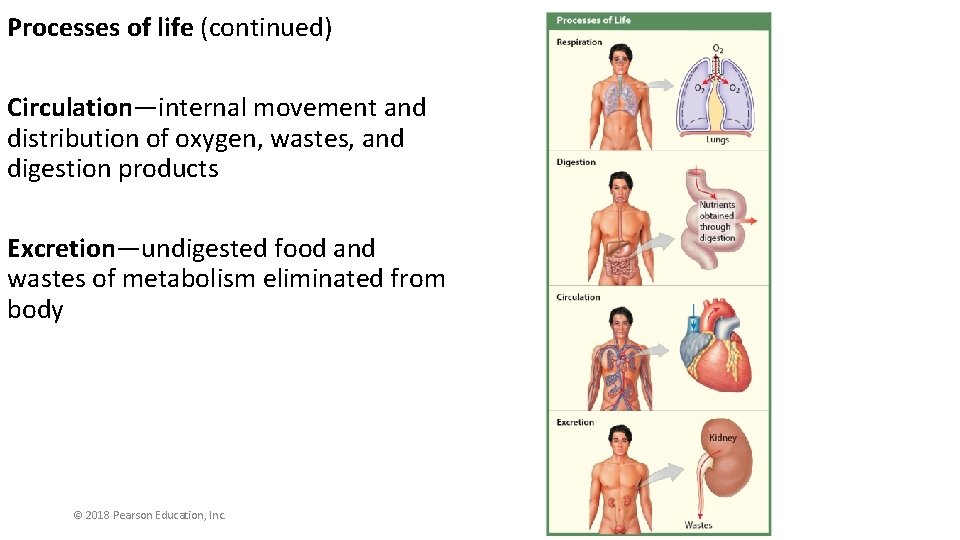
Processes of life (continued) Circulation—internal movement and distribution of oxygen, wastes, and digestion products Excretion—undigested food and wastes of metabolism eliminated from body © 2018 Pearson Education, Inc.
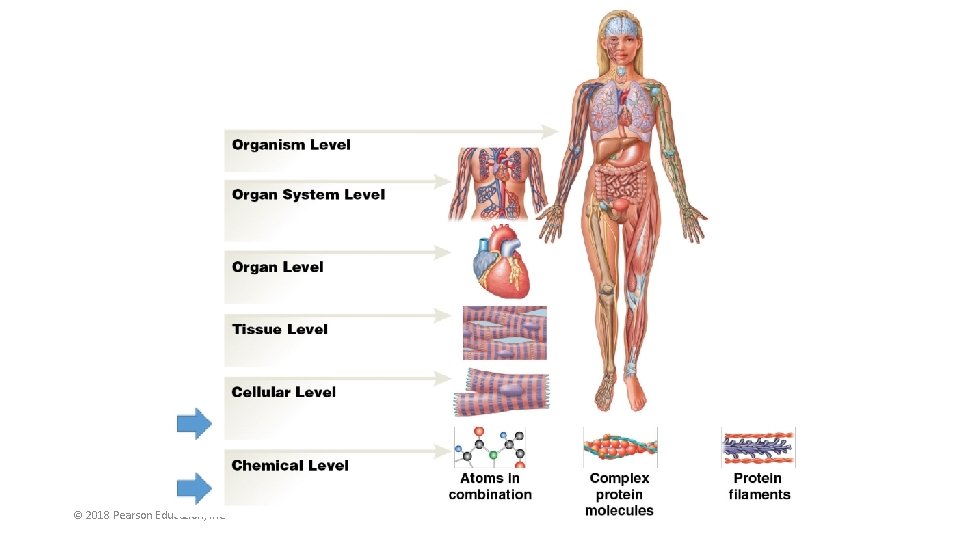
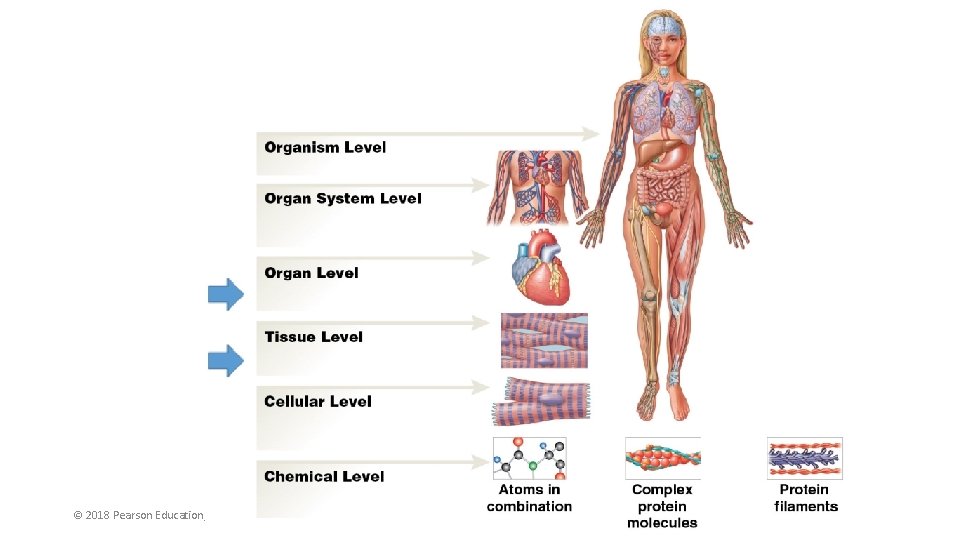
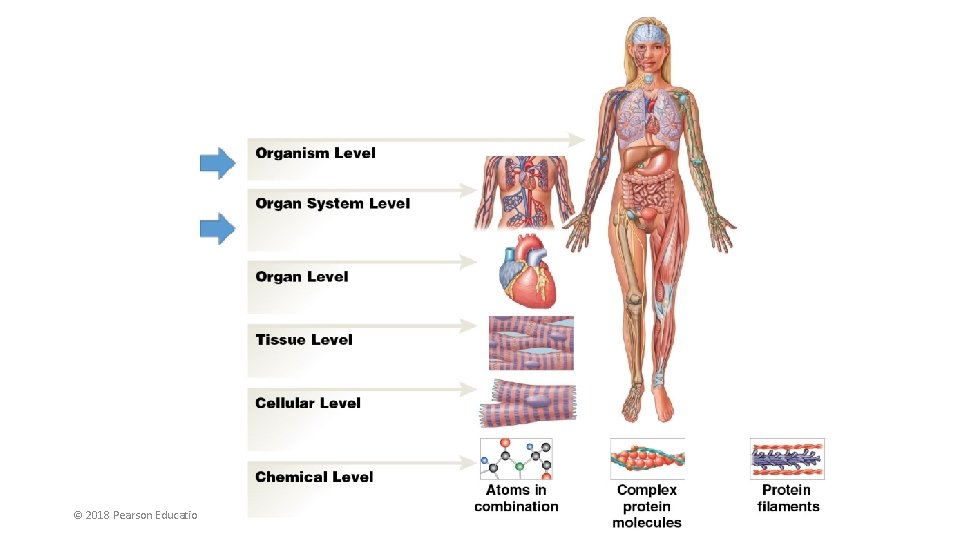
Levels of organization • The human body is complex, representing multiple levels of organization • Each level more complex than underlying one • All can be broken down to similar chemical and cellular components © 2018 Pearson Education, Inc.
© 2018 Pearson Education, Inc.
Chemical level (Chapter 2) • Atoms (smallest stable units of matter) combine to form molecules • Functional properties of molecule determined by shape and atomic components © 2018 Pearson Education, Inc.
Cellular level (Chapter 3) Cells are the smallest living units in the body Functions depend on organelles (composed of molecules) Each organelle has a specific function • Example: a mitochondrion provides energy for heart muscle cell contraction © 2018 Pearson Education, Inc.
Tissue level (Chapter 4) A tissue is a group of cells working together to perform specific functions • Example: heart muscle cells form cardiac muscle tissue Organ level • An organ is composed of two or more tissues working together to perform specific functions • Example: layers of cardiac muscle tissue along with connective tissue form the heart © 2018 Pearson Education, Inc.
© 2018 Pearson Education, Inc.
Organ system level (Chapters 5– 27) Organ systems consist of interacting organs • Example: the heart works with blood vessels and blood to form the cardiovascular system Organism level • An organism is the highest level of organization • Collection of organ systems working together to maintain life and health © 2018 Pearson Education, Inc.
© 2018 Pearson Education, Inc.
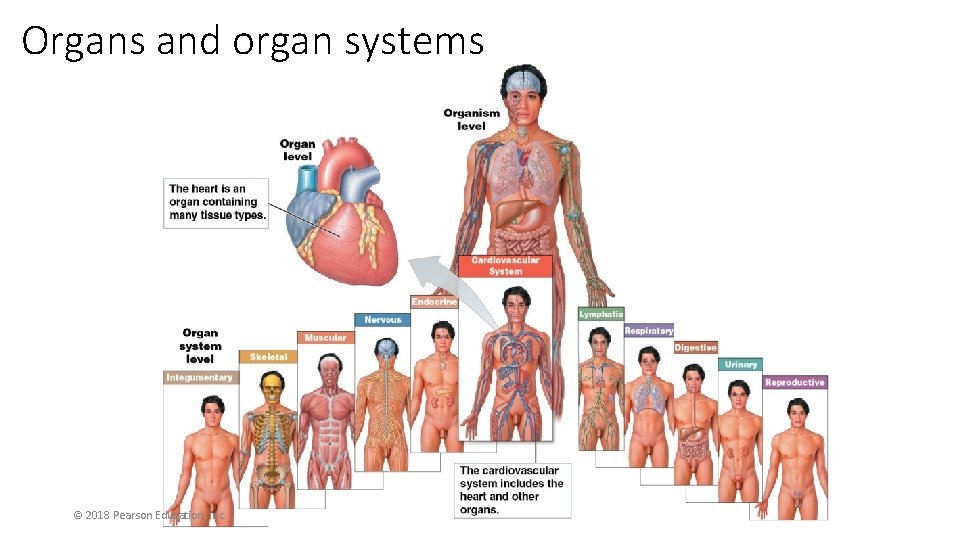
Organs and organ systems © 2018 Pearson Education, Inc.
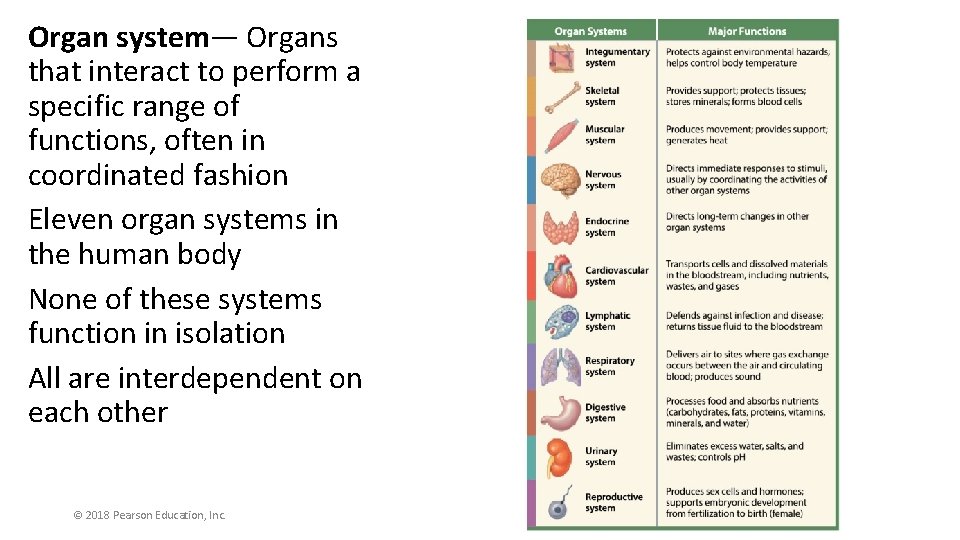
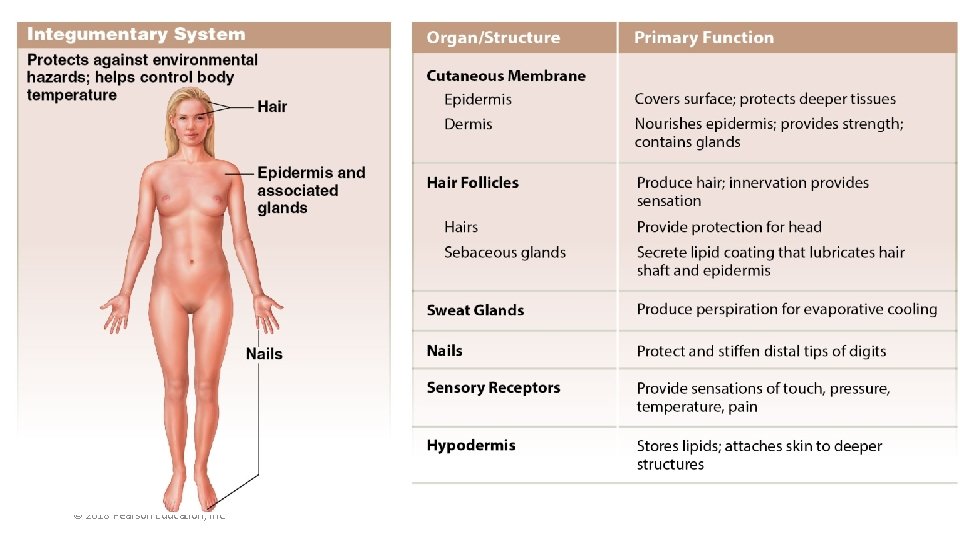
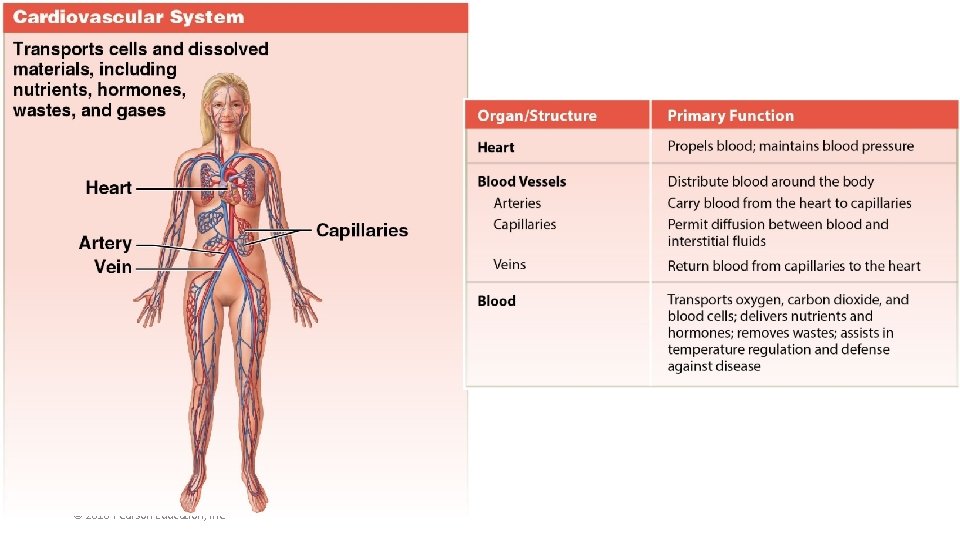
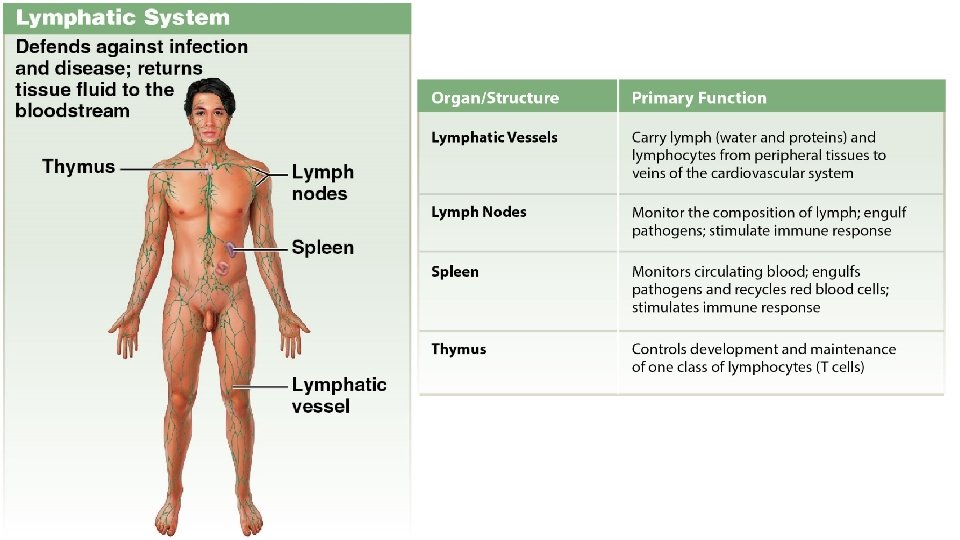
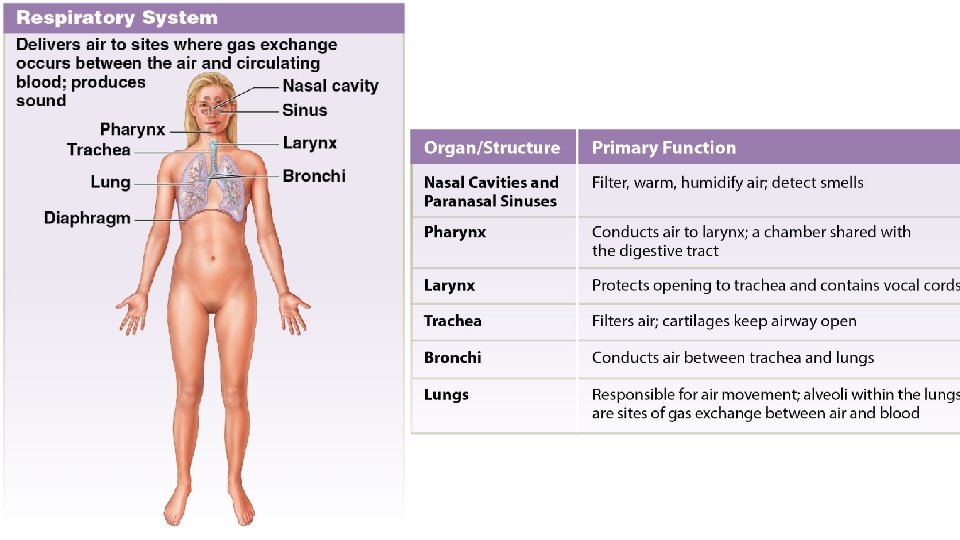
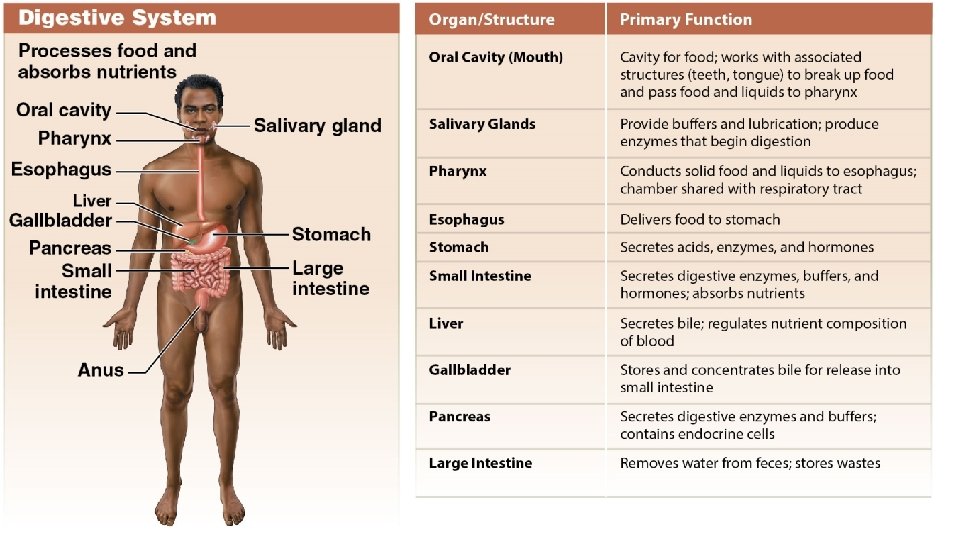
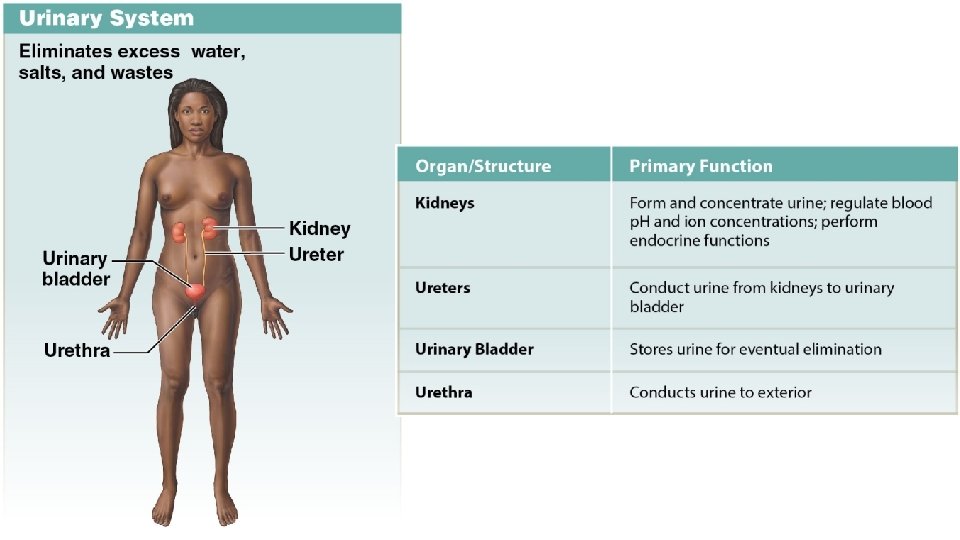
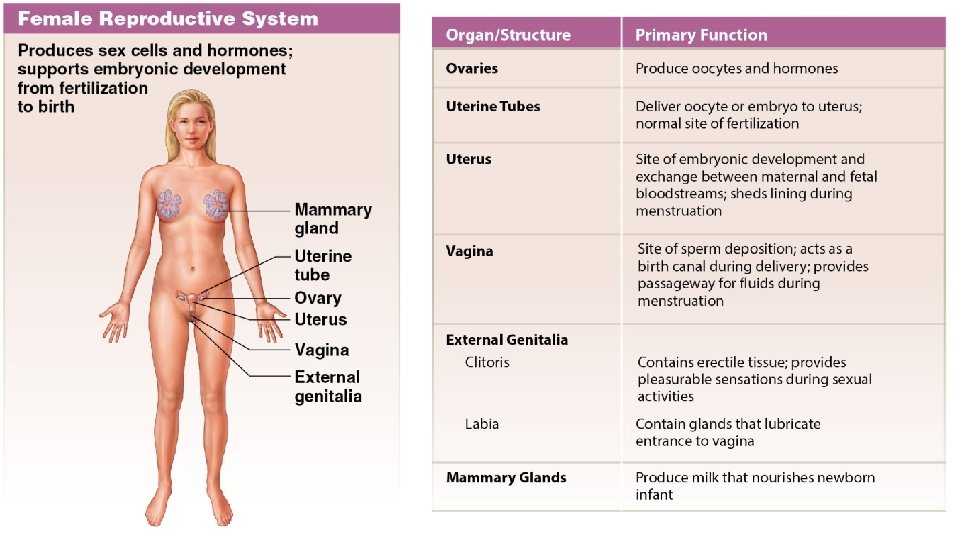
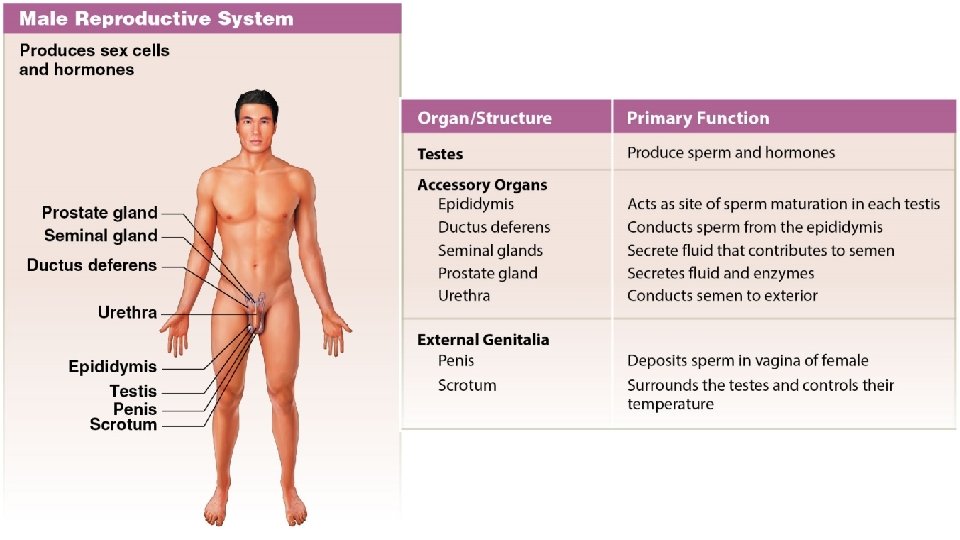
Organ system— Organs that interact to perform a specific range of functions, often in coordinated fashion Eleven organ systems in the human body None of these systems function in isolation All are interdependent on each other © 2018 Pearson Education, Inc.
© 2018 Pearson Education, Inc.
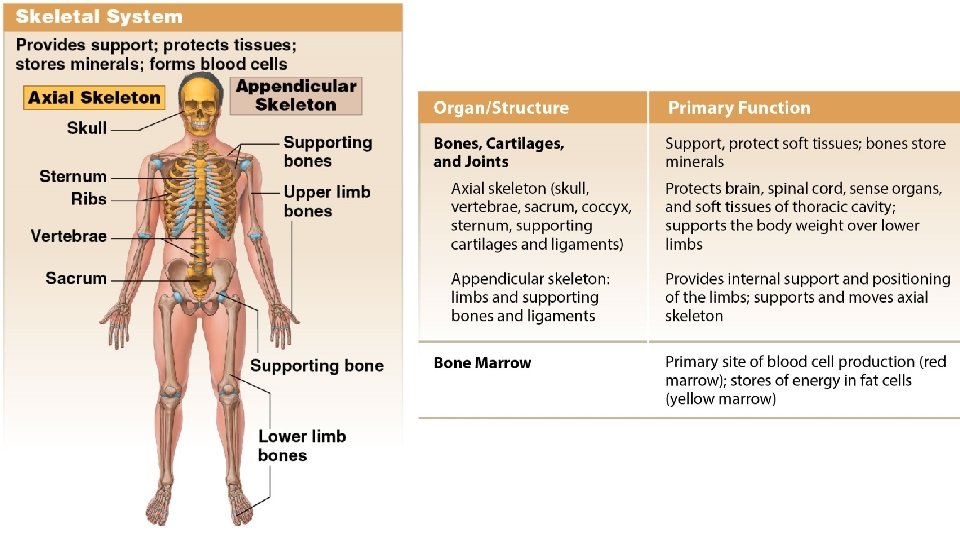
© 2018 Pearson Education, Inc.
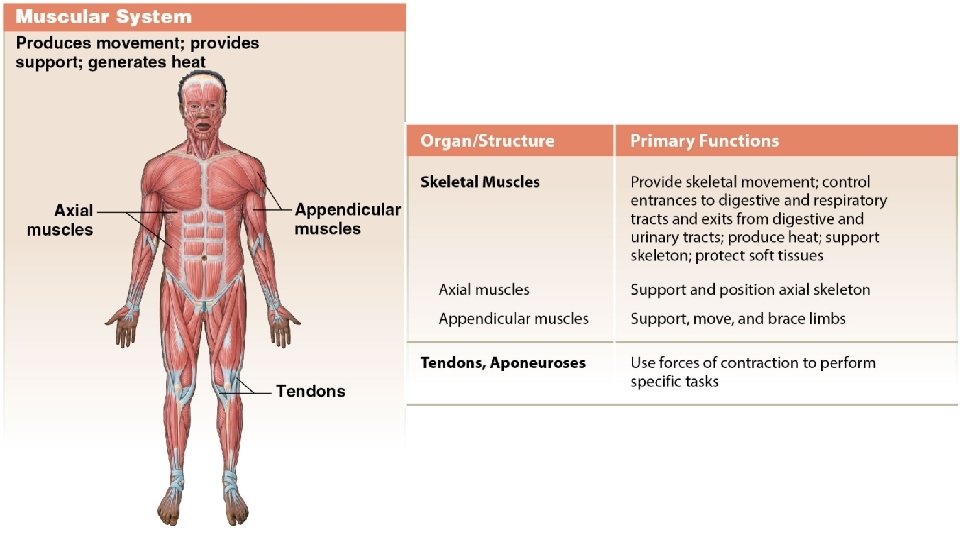
© 2018 Pearson Education, Inc.
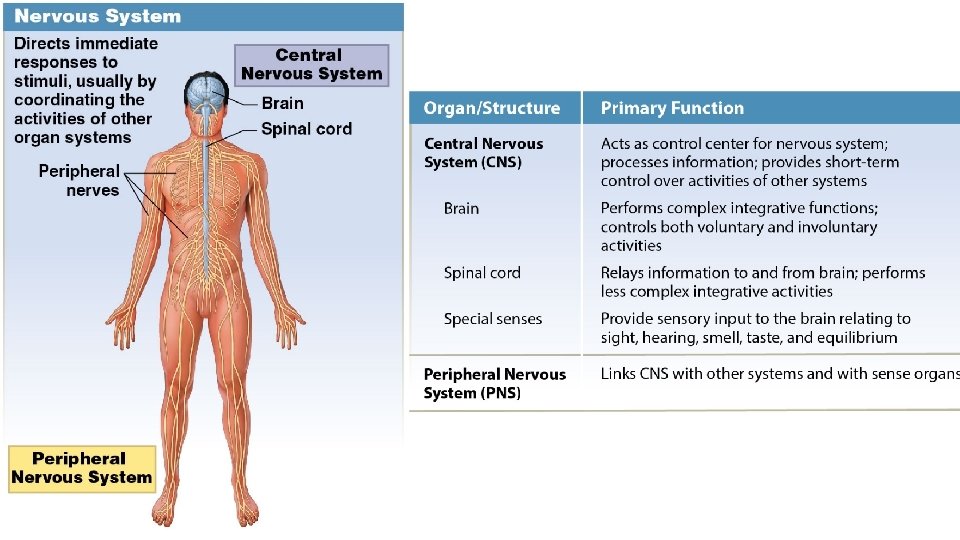
© 2018 Pearson Education, Inc.
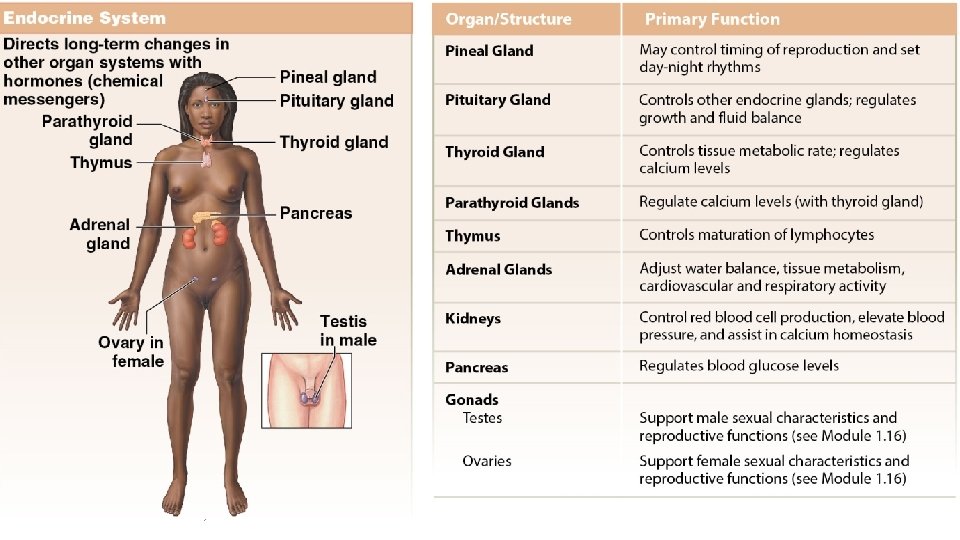
© 2018 Pearson Education, Inc.
© 2018 Pearson Education, Inc.
© 2018 Pearson Education, Inc.
© 2018 Pearson Education, Inc.
© 2018 Pearson Education, Inc.
© 2018 Pearson Education, Inc.
© 2018 Pearson Education, Inc.
© 2018 Pearson Education, Inc.
Homeostatic regulation relies on a receptor, a control center, and an effector Homeostasis (homeo, unchanging + stasis, standing) Presence of stable internal environment Failure to maintain homeostasis leads to illness or death Homeostatic regulation • Physiological adjustment to preserve homeostasis in variable environments © 2018 Pearson Education, Inc.
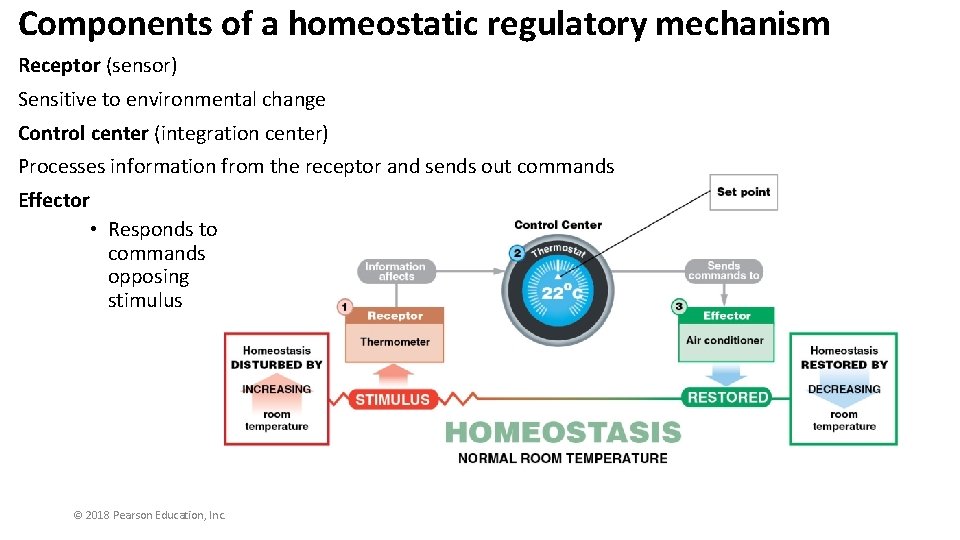
Components of a homeostatic regulatory mechanism Receptor (sensor) Sensitive to environmental change Control center (integration center) Processes information from the receptor and sends out commands Effector • Responds to commands opposing stimulus © 2018 Pearson Education, Inc.
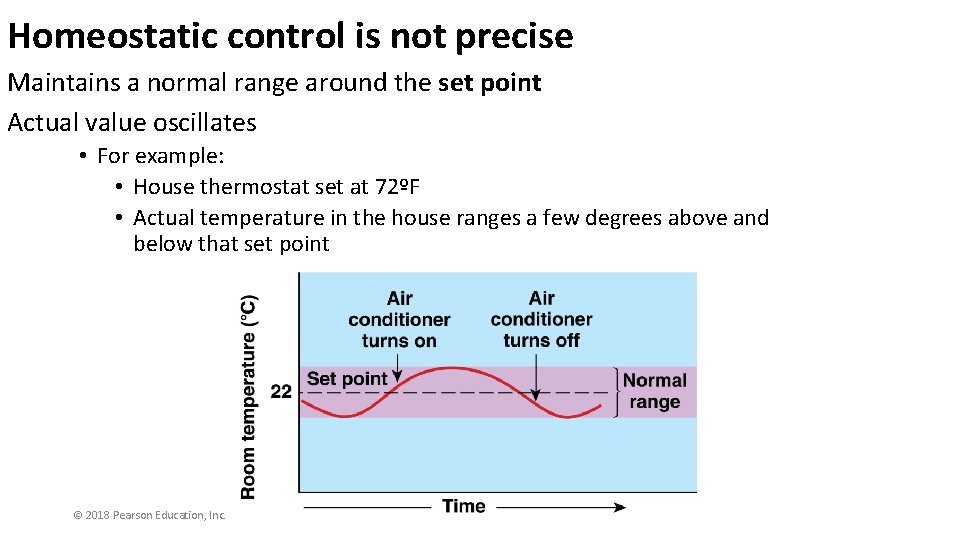
Homeostatic control is not precise Maintains a normal range around the set point Actual value oscillates • For example: • House thermostat set at 72ºF • Actual temperature in the house ranges a few degrees above and below that set point © 2018 Pearson Education, Inc.
Negative feedback provides stability … Feedback • Stimulation of a receptor triggers response that changes environment at that receptor Negative feedback • • Effector opposes or negates the original stimulus Minimizes change Primary mechanism of homeostatic regulation in the body Dynamic process • Set point varies with varying environments and activity levels © 2018 Pearson Education, Inc.
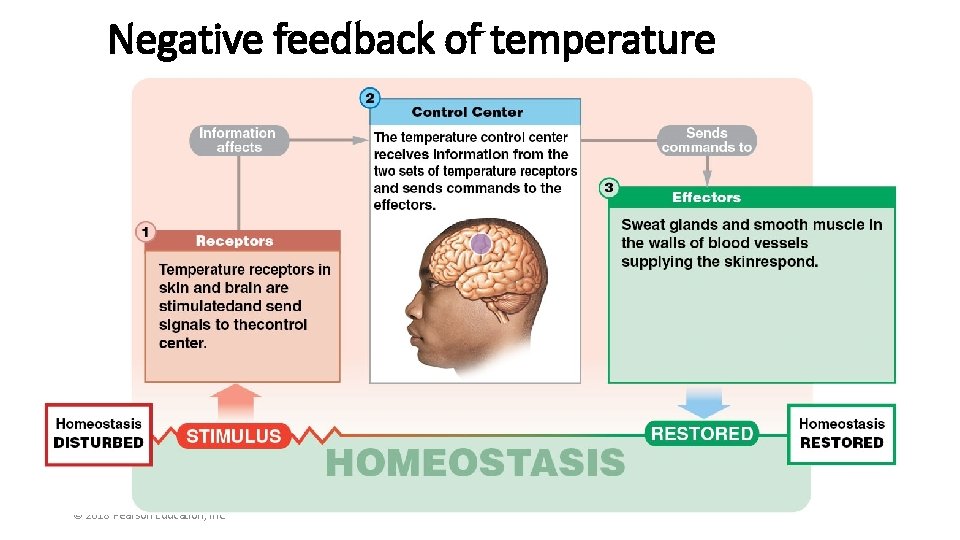
Negative feedback of temperature © 2018 Pearson Education, Inc.
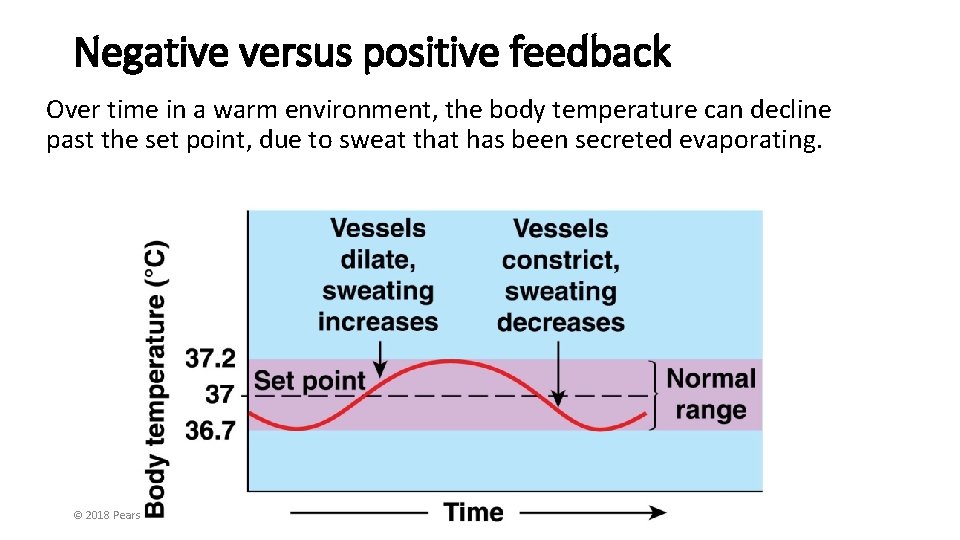
Negative versus positive feedback Over time in a warm environment, the body temperature can decline past the set point, due to sweat that has been secreted evaporating. © 2018 Pearson Education, Inc.
Positive feedback Initial stimulus produces a response that amplifies the original change in conditions Body is moved away from homeostasis Normal range is not maintained A positive feedback loop completes a dangerous process quickly to reestablish homeostasis 45
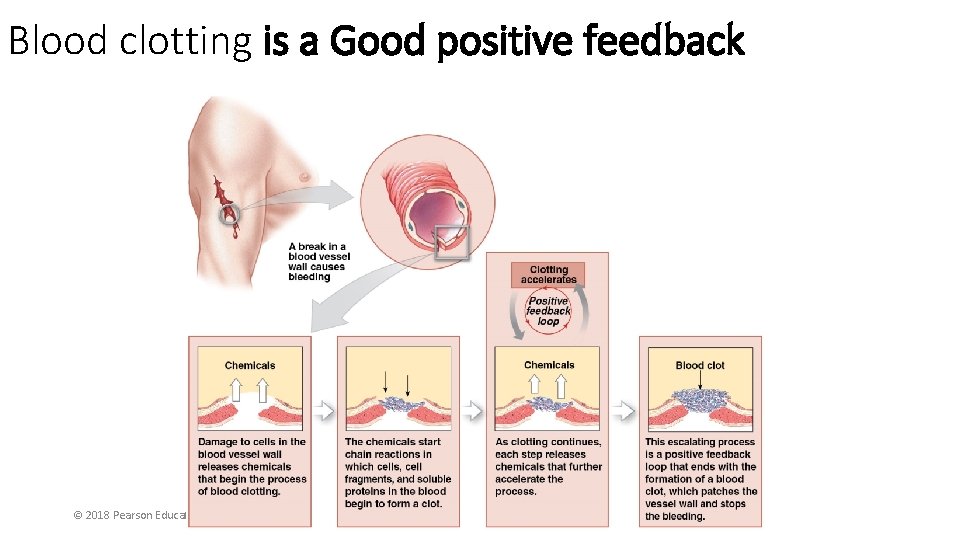
Blood clotting is a Good positive feedback © 2018 Pearson Education, Inc.
Orientation to the body • Landmarks around the body create a map for orientation • Anatomy uses a special language, with many terms based on Latin or Greek words used by ancient anatomists • Vocabulary continues to expand © 2018 Pearson Education, Inc.
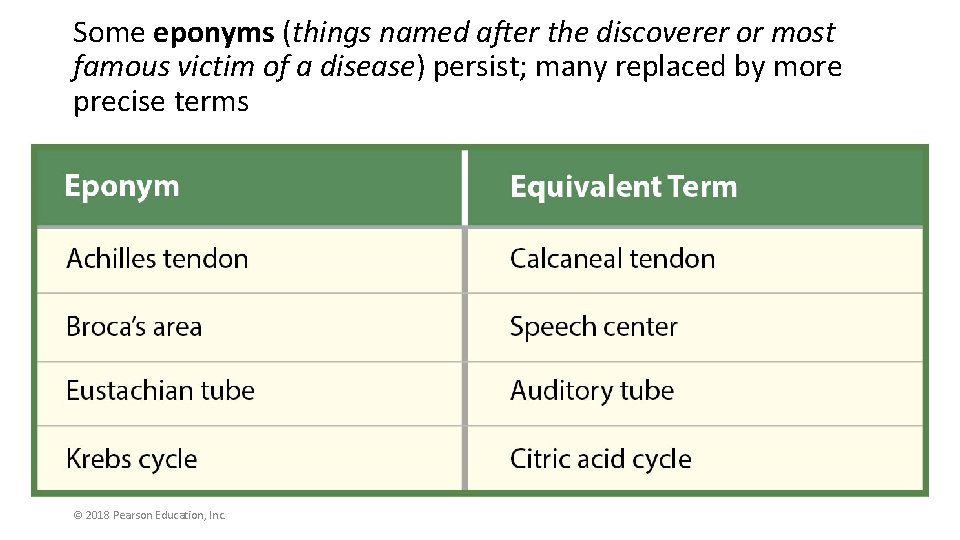
Some eponyms (things named after the discoverer or most famous victim of a disease) persist; many replaced by more precise terms © 2018 Pearson Education, Inc.
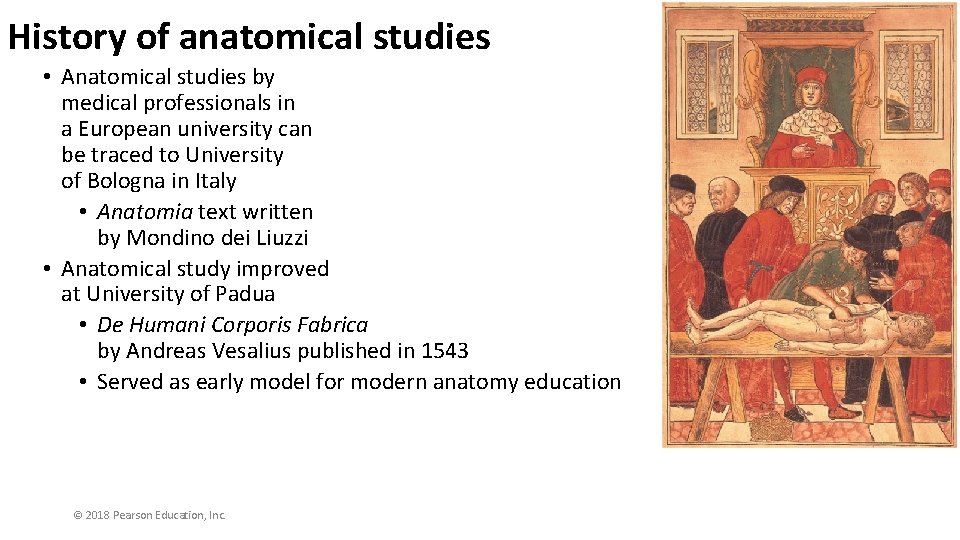
History of anatomical studies • Anatomical studies by medical professionals in a European university can be traced to University of Bologna in Italy • Anatomia text written by Mondino dei Liuzzi • Anatomical study improved at University of Padua • De Humani Corporis Fabrica by Andreas Vesalius published in 1543 • Served as early model for modern anatomy education © 2018 Pearson Education, Inc.
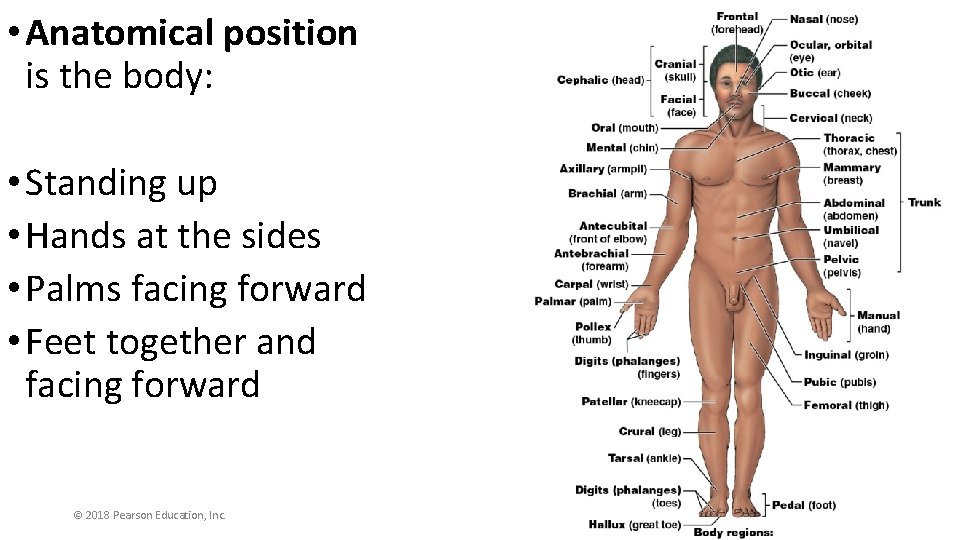
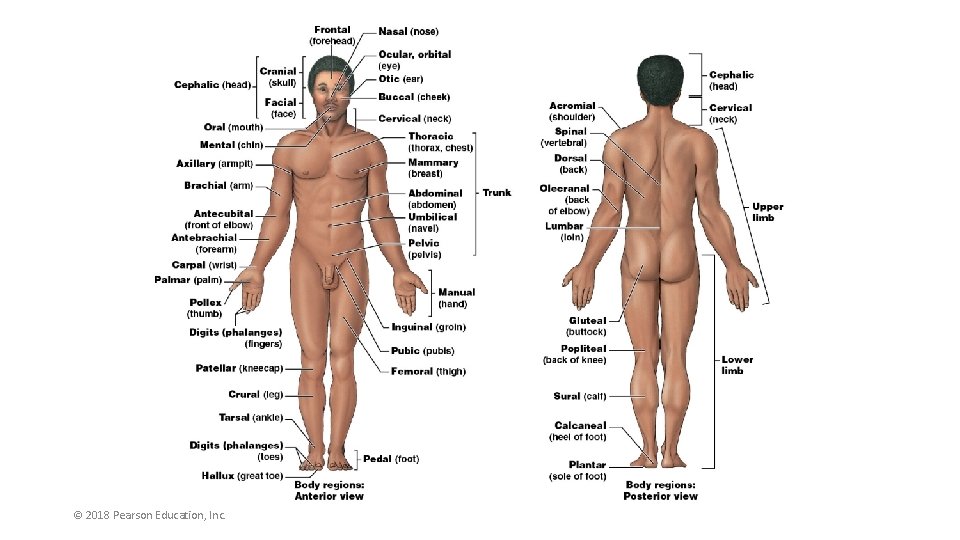
• Anatomical position is the body: • Standing up • Hands at the sides • Palms facing forward • Feet together and facing forward © 2018 Pearson Education, Inc.
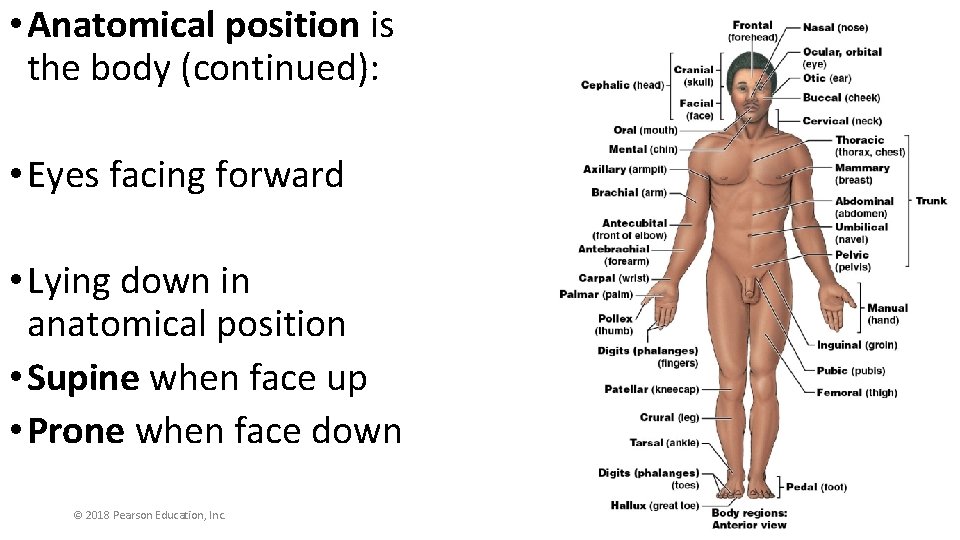
• Anatomical position is the body (continued): • Eyes facing forward • Lying down in anatomical position • Supine when face up • Prone when face down © 2018 Pearson Education, Inc.
© 2018 Pearson Education, Inc.
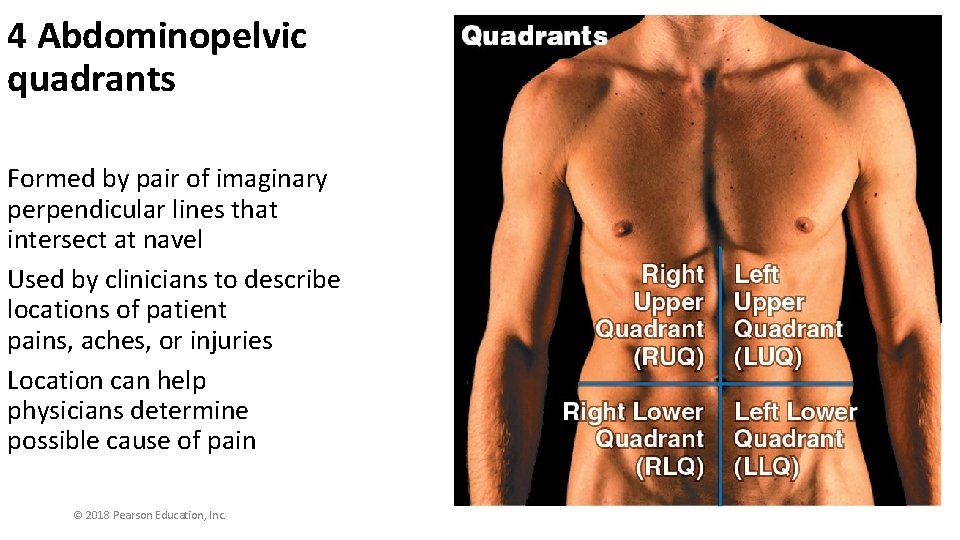
4 Abdominopelvic quadrants Formed by pair of imaginary perpendicular lines that intersect at navel Used by clinicians to describe locations of patient pains, aches, or injuries Location can help physicians determine possible cause of pain © 2018 Pearson Education, Inc.

9 Abdominopelvic regions Used by anatomists to describe precise location and orientation of internal organs More precise than abdominopelvic quadrants © 2018 Pearson Education, Inc.

Abdominopelvic regions and quadrants help identify organ locations in the body © 2018 Pearson Education, Inc.
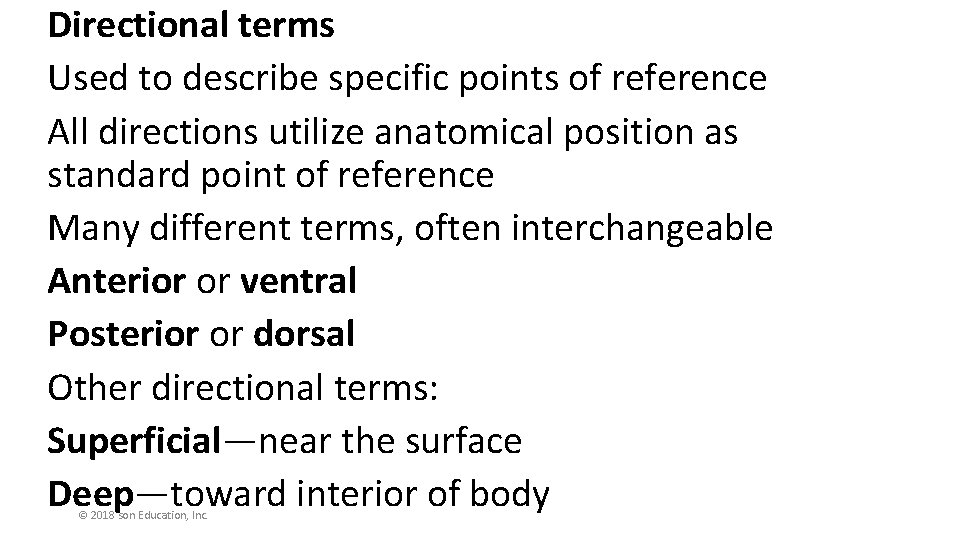
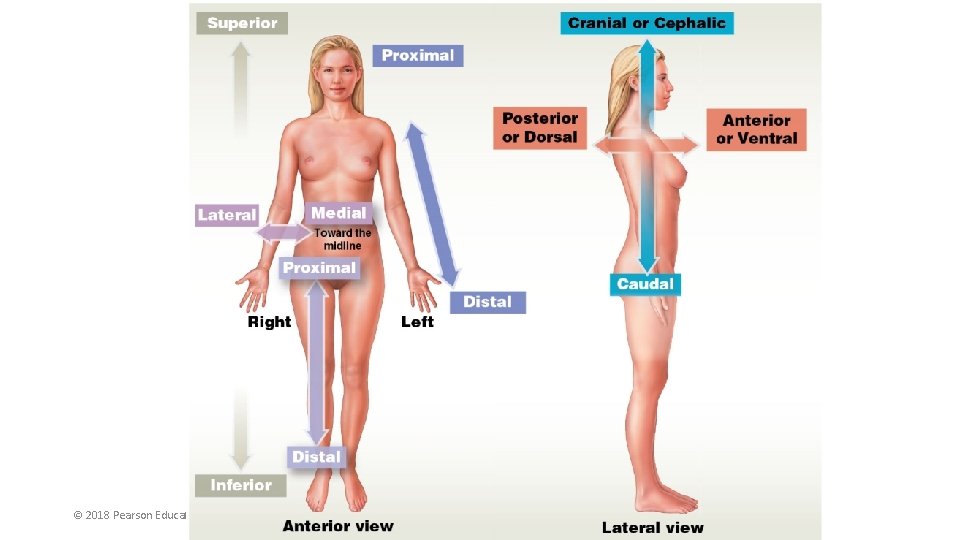
Directional terms Used to describe specific points of reference All directions utilize anatomical position as standard point of reference Many different terms, often interchangeable Anterior or ventral Posterior or dorsal Other directional terms: Superficial—near the surface Deep—toward interior of body © 2018 son Education, Inc.
© 2018 Pearson Education, Inc.
Sectional views Shows the relationship between parts of a threedimensional body Medical imaging techniques utilize sectional views Used for visualization purposes Important to consider when looking at microscope slides and CT or MRI scans © 2018 Pearson Education, Inc.
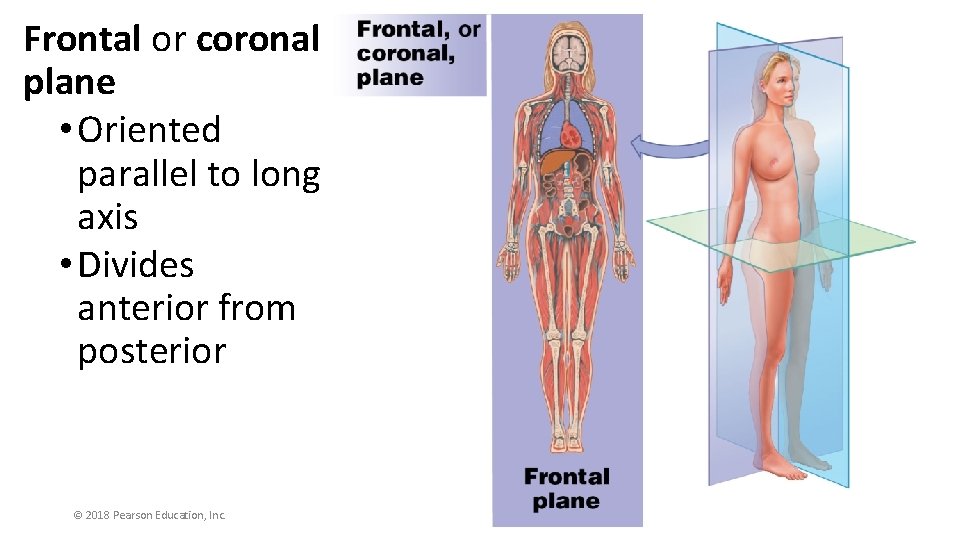
Frontal or coronal plane • Oriented parallel to long axis • Divides anterior from posterior © 2018 Pearson Education, Inc.
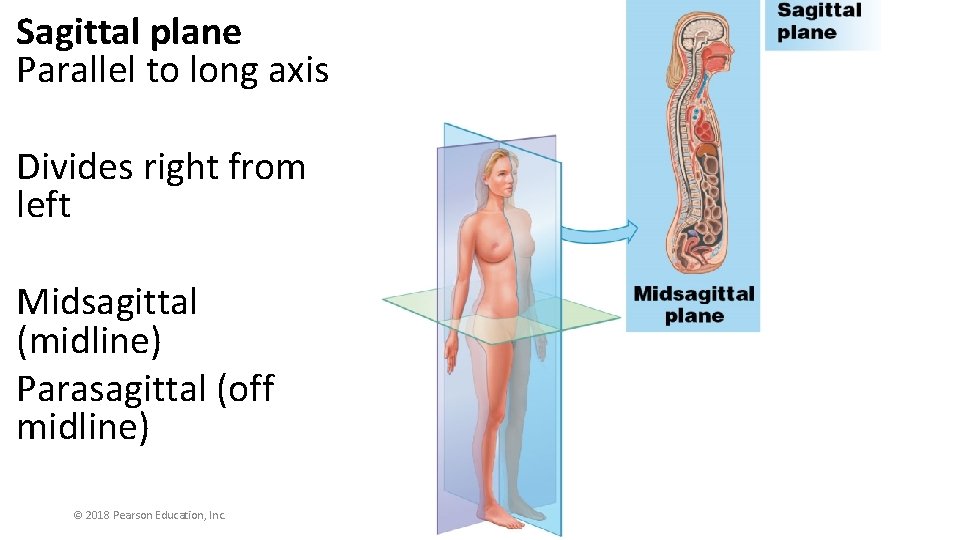
Sagittal plane Parallel to long axis Divides right from left Midsagittal (midline) Parasagittal (off midline) © 2018 Pearson Education, Inc.
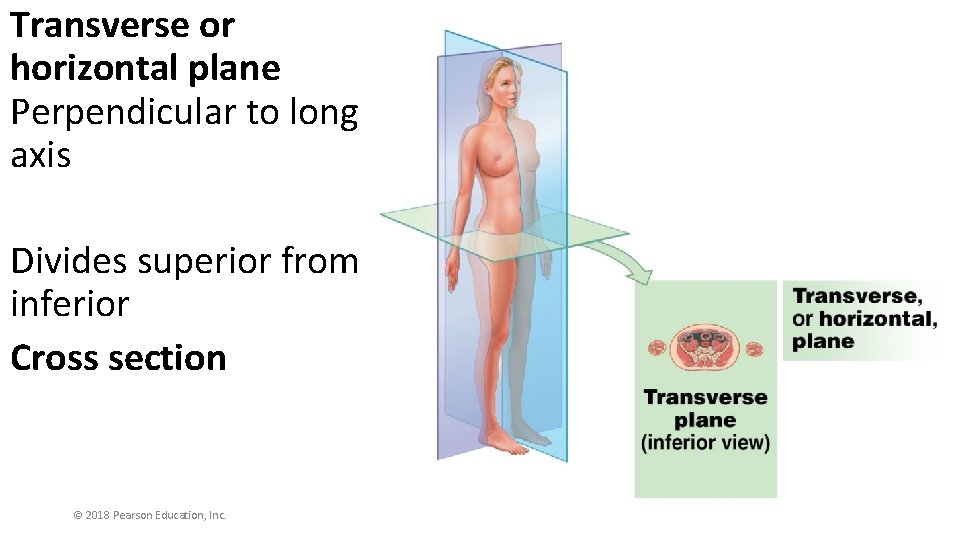
Transverse or horizontal plane Perpendicular to long axis Divides superior from inferior Cross section © 2018 Pearson Education, Inc.
Body cavities protect internal organs, allow them to change shape Interior of the body is subdivided into regions established by the body wall Many organs within these regions suspended in closed fluid-filled chambers called body cavities • From common embryological origin • Covered by serous membrane • Two essential functions 1. Protect organs from shocks and impacts 2. Permit changes in size and shape of organs © 2018 Pearson Education, Inc.
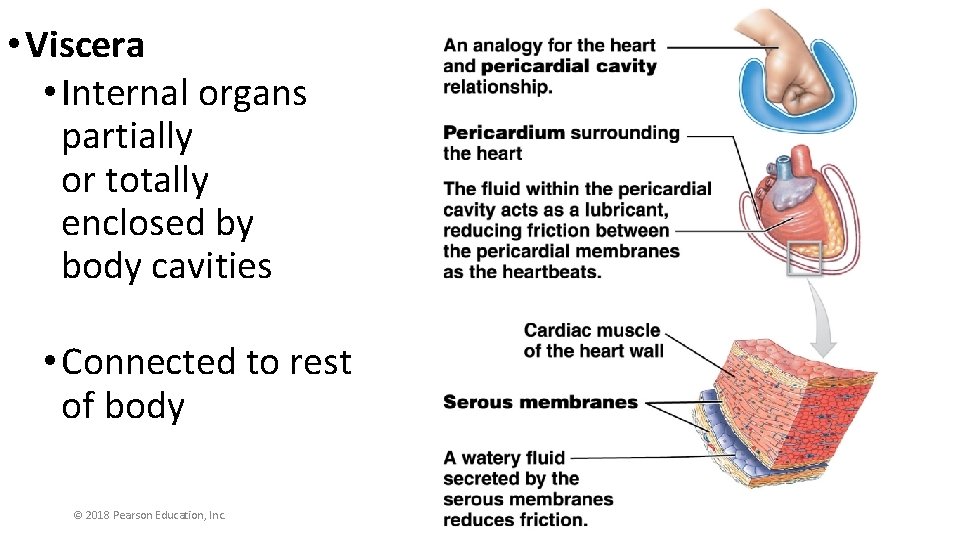
• Viscera • Internal organs partially or totally enclosed by body cavities • Connected to rest of body © 2018 Pearson Education, Inc.
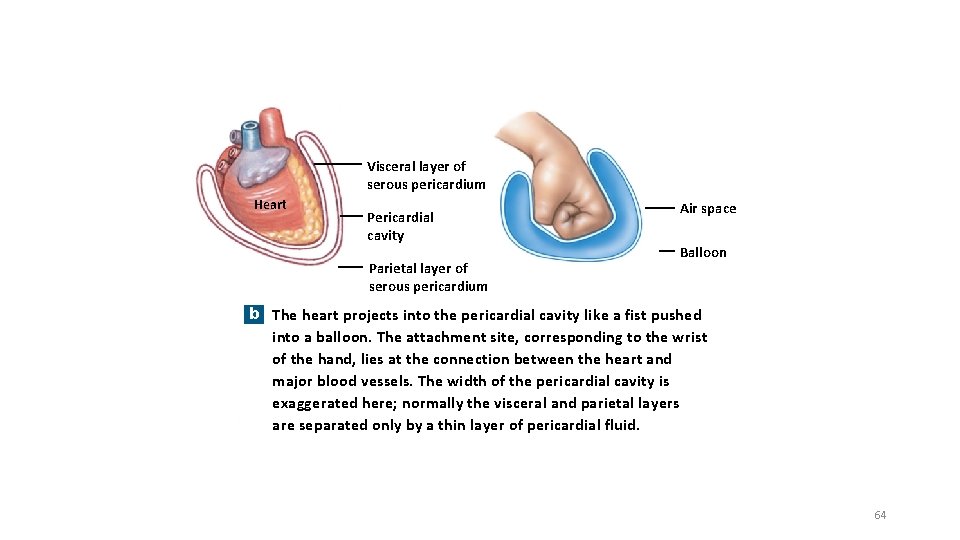
Visceral layer of serous pericardium Heart Pericardial cavity Parietal layer of serous pericardium Air space Balloon b The heart projects into the pericardial cavity like a fist pushed into a balloon. The attachment site, corresponding to the wrist of the hand, lies at the connection between the heart and major blood vessels. The width of the pericardial cavity is exaggerated here; normally the visceral and parietal layers are separated only by a thin layer of pericardial fluid. 64
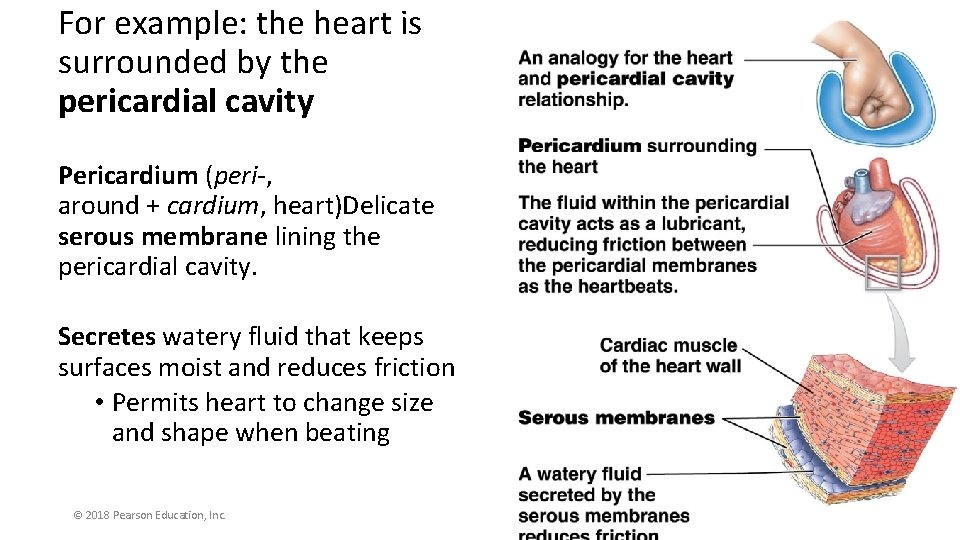
For example: the heart is surrounded by the pericardial cavity Pericardium (peri-, around + cardium, heart)Delicate serous membrane lining the pericardial cavity. Secretes watery fluid that keeps surfaces moist and reduces friction • Permits heart to change size and shape when beating © 2018 Pearson Education, Inc.
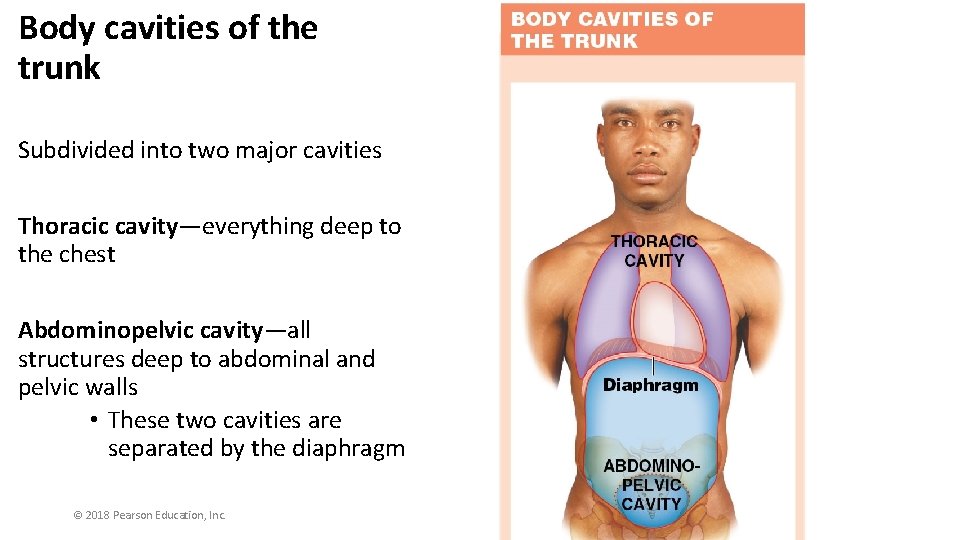
Body cavities of the trunk Subdivided into two major cavities Thoracic cavity—everything deep to the chest Abdominopelvic cavity—all structures deep to abdominal and pelvic walls • These two cavities are separated by the diaphragm © 2018 Pearson Education, Inc.
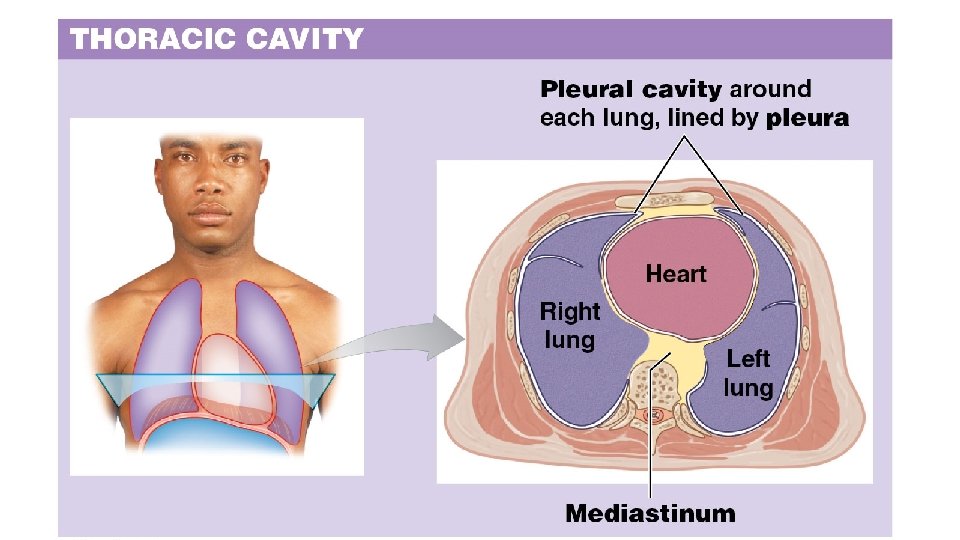
Thoracic cavity Everything deep to the chest wall Three subdivisions Two pleural cavities Lined by pleura Contain the lungs Mediastinum • Contains connective tissue and the pericardial cavity containing the heart © 2018 Pearson Education, Inc.
© 2018 Pearson Education, Inc.
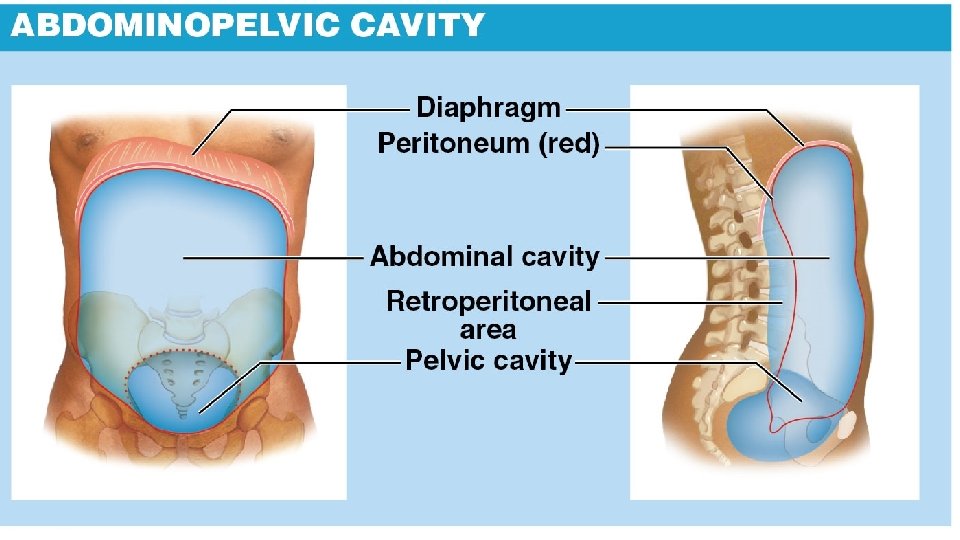
Abdominopelvic cavity Everything deep to abdominal and pelvic walls Divided into two portions 1. Abdominal cavity Contains many digestive glands and organs 2. Pelvic cavity • Contains urinary bladder, reproductive organs, and last portion of the digestive tract © 2018 Pearson Education, Inc.
Abdominopelvic cavity (continued) Within abdominal cavity is the peritoneal cavity lined by serous membrane called peritoneum Some organs (e. g. , kidneys) lie posterior to the peritoneal membrane Position is called retroperitoneal Some organs (e. g. , urinary bladder) extend inferior to the peritoneal cavity Position is called infraperitoneal © 2018 Pearson Education, Inc.
© 2018 Pearson Education, Inc.
- Slides: 71