
Anaphylaxis What all Parents Need to Know Teaching
- Slides: 11
Anaphylaxis: What all Parents Need to Know Teaching Project by: Krissy Ison NUR 271 Block IV
My Goal � My audience will be a group of parents from the community. My goal is to educate parents about what anaphylaxis is, how it occurs and what to do in an emergency situation.
Objectives � Parents will be able to verbalize a basic understanding of what an anaphylactic reaction is and it’s signs and symptoms. � Parents will be able to recognize what can cause an anaphylactic reaction. � Parents will be able to demonstrate actions that need to be taken in an emergency situation.
What is Anaphylaxis? � Anaphylaxis is a word used to describe a life threatening type of allergic reaction. ◦ ◦ Caused by an allergen Effects more than one body system Signs & symptoms occur rapidly Emergency treatment may be necessary
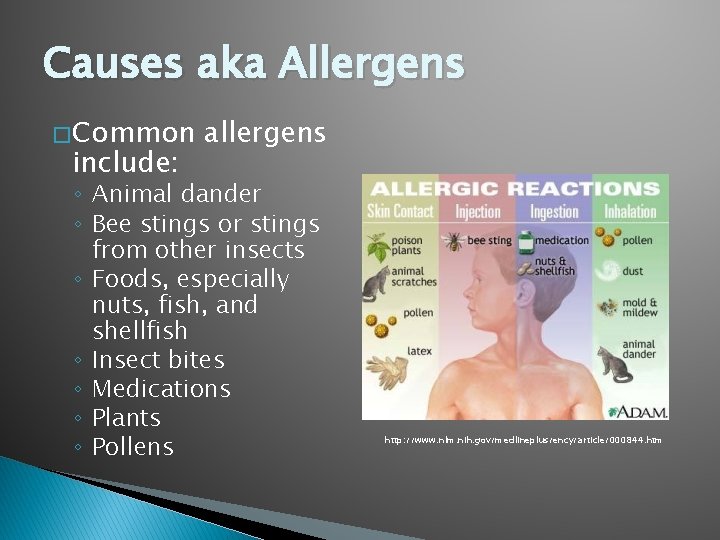
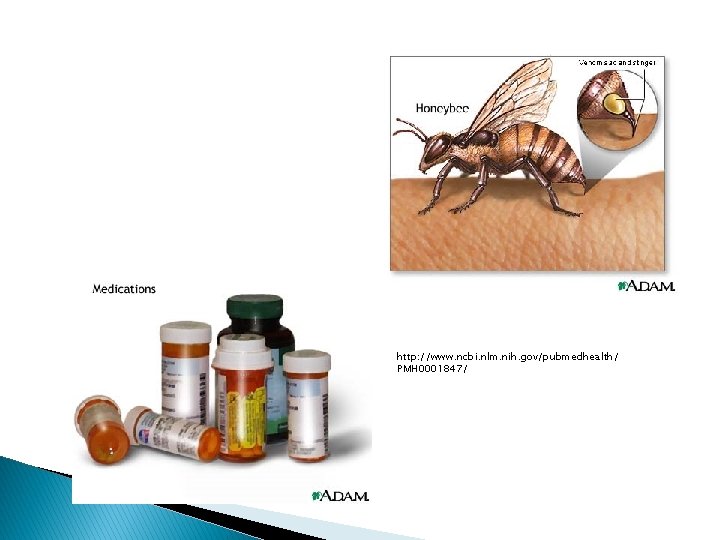
Causes aka Allergens � Common include: allergens ◦ Animal dander ◦ Bee stings or stings from other insects ◦ Foods, especially nuts, fish, and shellfish ◦ Insect bites ◦ Medications ◦ Plants ◦ Pollens http: //www. nlm. nih. gov/medlineplus/ency/article/000844. htm
http: //www. ncbi. nlm. nih. gov/pubmedhealth/ PMH 0001847/
In a normal allergic reaction… � The body(or skin) is exposed to some sort of allergen � This contact with an allergen causes an allergic reaction, causing: ◦ Redness ◦ Swelling ◦ Pain
In Anaphylaxis… � The body is re-exposed to the allergen � Immune system overreacts to the allergen releasing large amounts of histamine throughout the body ◦ This causes: �Widespread damage to blood vessels throughout the body and especially in the lungs �Widespread swelling caused from fluid escaping out of damaged blood vessels �Airways constrict
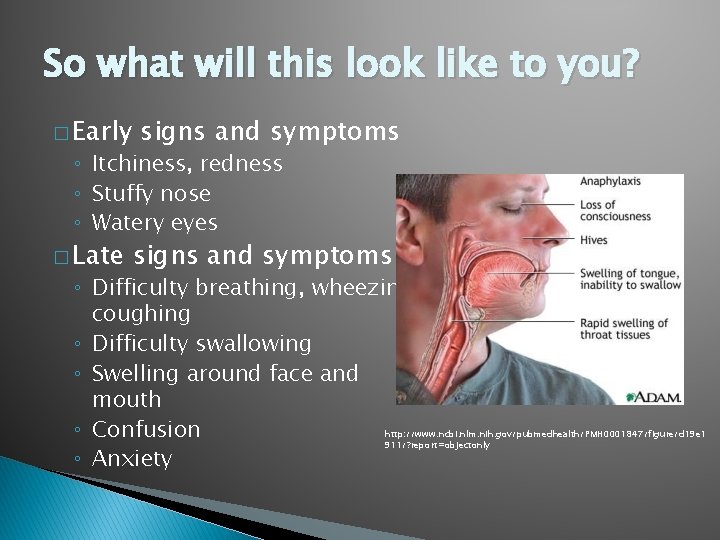
So what will this look like to you? � Early signs and symptoms ◦ Itchiness, redness ◦ Stuffy nose ◦ Watery eyes � Late signs and symptoms ◦ Difficulty breathing, wheezing, coughing ◦ Difficulty swallowing ◦ Swelling around face and mouth ◦ Confusion ◦ Anxiety http: //www. ncbi. nlm. nih. gov/pubmedhealth/PMH 0001847/figure/d 19 e 1 911/? report=objectonly
Anaphylaxis is a medical Emergency!! � Call 911. � Calm and reassure your child � Remove the cause of the reaction (i. e. bee stinger) � If your child has emergency allergy medication on hand, help them take or inject the medication. ◦ DO NOT give any oral meds if difficulty breathing � Take steps to prevent shock by having your child lie flat, raise their feet about 12 inches, and cover him or her with a coat or blanket. � CPR or rescue breathing may need to be initiated if child is not breathing
References � � � Waring G, Levy D. CHALLENGING ADVERSE REACTIONS IN CHILDREN WITH FOOD ALLERGIES. Paediatric Nursing [serial online]. July 2010; 22(6): 16 -22. Available from: Health Source: Nursing/Academic Edition, Ipswich, MA. Accessed March 21, 2011. Dugdale, III. , MD, D. D. (2010, May 2). Anaphylaxis. Retrieved from http: //www. ncbi. nlm. nih. gov/pubmedhealth/PMH 00018 47/ Anaphylaxis Doesn't have to be a Shock. Nursing Made Incredibly Easy!: November/December 2007 - Volume 5 - Issue 6 - p 9 -13