
Anaphylaxis Caring for Children in a Community Program

- Slides: 13
Anaphylaxis Caring for Children in a Community Program 2013 -04 -02
Allergies • Excessive reaction to a normally harmless substance (allergen) • Immune system creates Ig. E antibodies in response to allergen • When exposed to allergen, Ig. E antibodies cause symptoms • Vary from mild to lifethreatening
Anaphylaxis • Severe allergic reaction • Extreme total body reaction • Can result in death due to airway obstruction or a severe drop in blood pressure • Can be triggered by minute amounts of an allergen
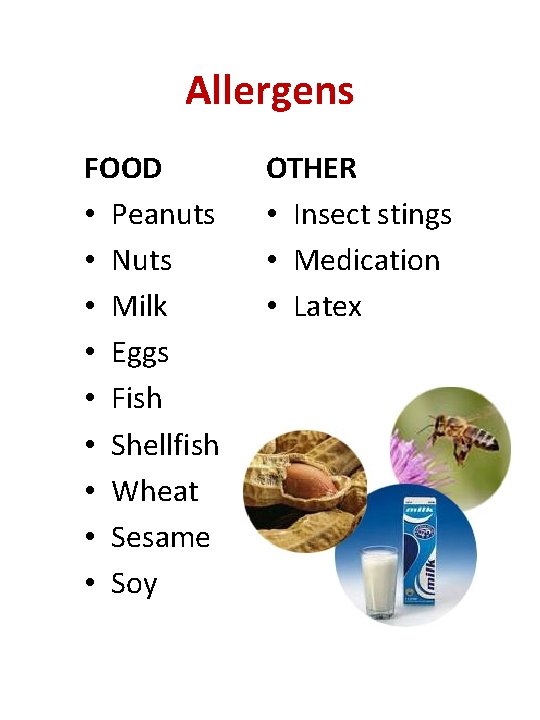
Allergens FOOD • Peanuts • Nuts • Milk • Eggs • Fish • Shellfish • Wheat • Sesame • Soy OTHER • Insect stings • Medication • Latex
Risk Reduction • Avoidance of allergens is the only way to prevent an anaphylactic reaction • Greatest risk of exposure to food allergens occurs in new situations What risk reduction strategies are implemented in your community program?
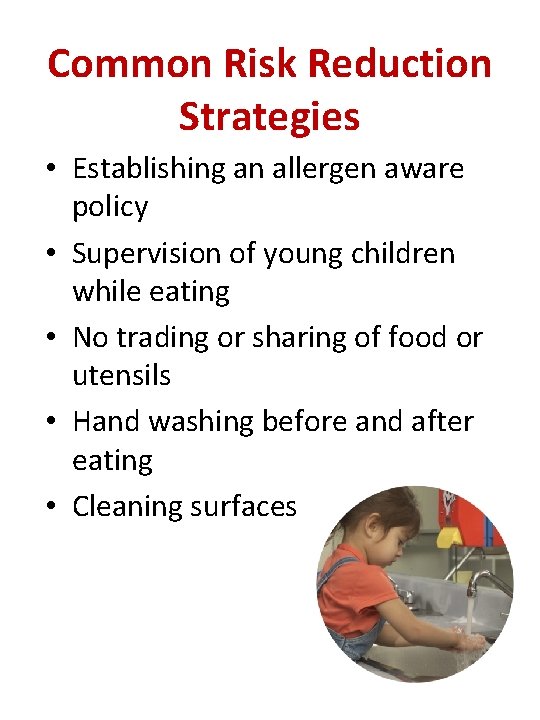
Common Risk Reduction Strategies • Establishing an allergen aware policy • Supervision of young children while eating • No trading or sharing of food or utensils • Hand washing before and after eating • Cleaning surfaces
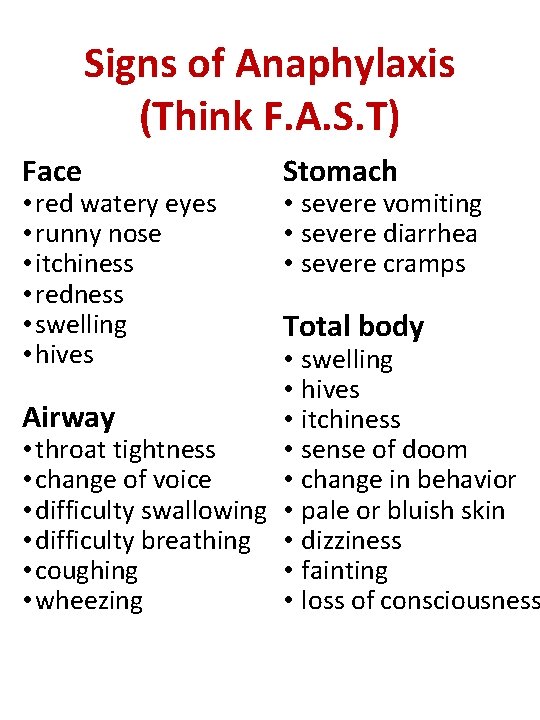
Signs of Anaphylaxis (Think F. A. S. T) Face • red watery eyes • runny nose • itchiness • redness • swelling • hives Stomach • severe vomiting • severe diarrhea • severe cramps Total body • swelling • hives Airway • itchiness • sense of doom • throat tightness • change in behavior • change of voice • difficulty swallowing • pale or bluish skin • difficulty breathing • dizziness • fainting • coughing • loss of consciousness • wheezing
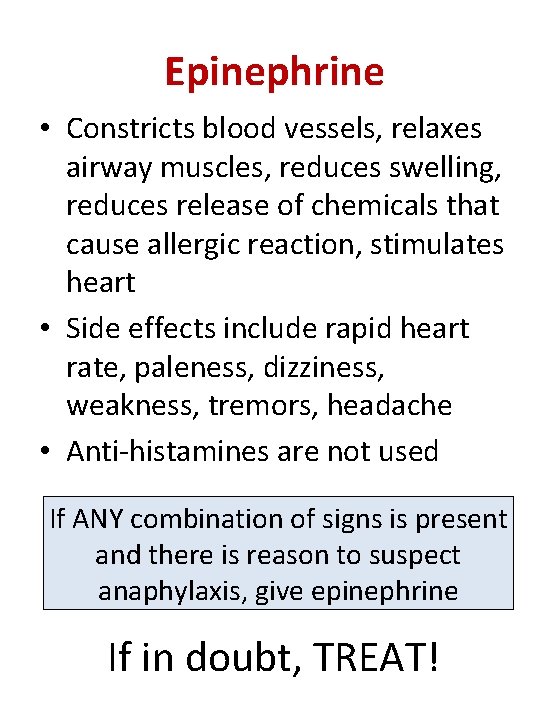
Epinephrine • Constricts blood vessels, relaxes airway muscles, reduces swelling, reduces release of chemicals that cause allergic reaction, stimulates heart • Side effects include rapid heart rate, paleness, dizziness, weakness, tremors, headache • Anti-histamines are not used If ANY combination of signs is present and there is reason to suspect anaphylaxis, give epinephrine If in doubt, TREAT!
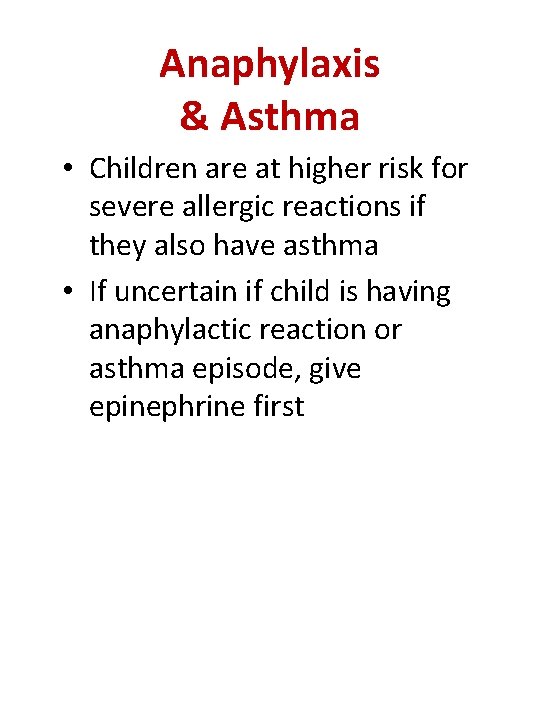
Anaphylaxis & Asthma • Children are at higher risk for severe allergic reactions if they also have asthma • If uncertain if child is having anaphylactic reaction or asthma episode, give epinephrine first
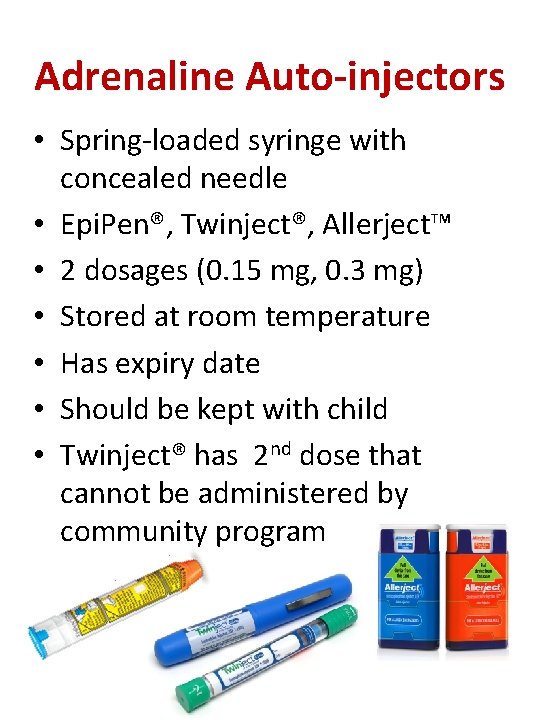
Adrenaline Auto-injectors • Spring-loaded syringe with concealed needle • Epi. Pen®, Twinject®, Allerject™ • 2 dosages (0. 15 mg, 0. 3 mg) • Stored at room temperature • Has expiry date • Should be kept with child • Twinject® has 2 nd dose that cannot be administered by community program
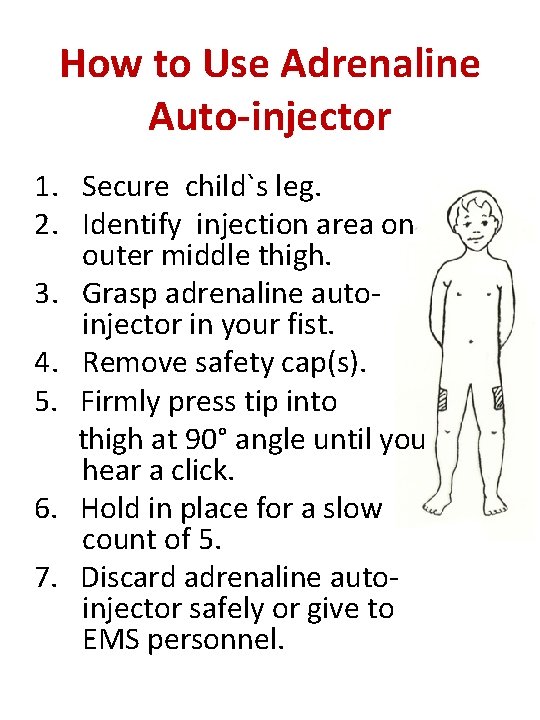
How to Use Adrenaline Auto-injector 1. Secure child`s leg. 2. Identify injection area on outer middle thigh. 3. Grasp adrenaline autoinjector in your fist. 4. Remove safety cap(s). 5. Firmly press tip into thigh at 90° angle until you hear a click. 6. Hold in place for a slow count of 5. 7. Discard adrenaline autoinjector safely or give to EMS personnel.
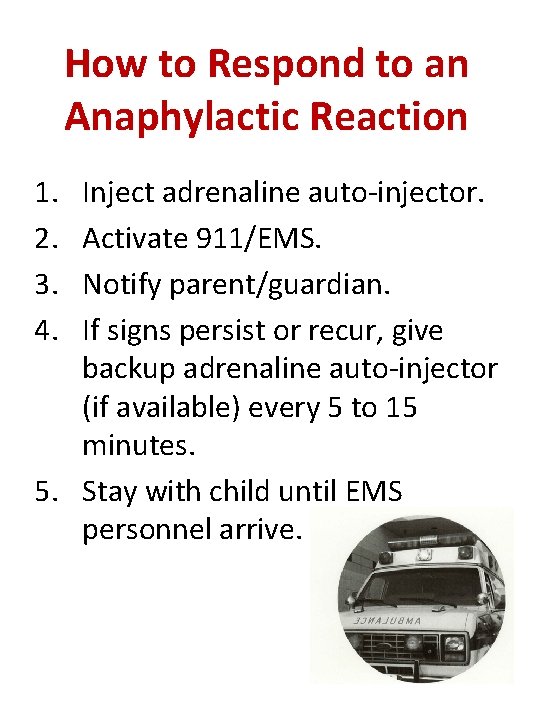
How to Respond to an Anaphylactic Reaction 1. 2. 3. 4. Inject adrenaline auto-injector. Activate 911/EMS. Notify parent/guardian. If signs persist or recur, give backup adrenaline auto-injector (if available) every 5 to 15 minutes. 5. Stay with child until EMS personnel arrive.
Child Specific Information It is important to be aware of the children with anaphylaxis in your care AND: • their life threatening allergen(s) • the location of their adrenaline auto-injector This information is included in the child’s Anaphylaxis Health Care Plan