
Analyzing Structure of a Poem STANZA AND RHYME

- Slides: 6
Analyzing Structure of a Poem STANZA AND RHYME
Poetic structure refers to the given pattern of organization in a poem. This may include, among other things, the number of lines in a stanza, the pattern of rhyme scheme, and the number of accents in each line. - ANALYZE POETIC STRUCTURE: STANZA AND RHYME
Analyze Poetic Structure: Stanza and Rhyme • The way a poem develops the central theme – some poems build in a straightforward fashion while others may shift in direction • Poetry often employs figurative language and unusual syntax, and tends to be organized, in a much less predictable way than narrative, readers often dismiss it as too difficult to understand. Today's focus will be on poems with patterns of basic four- to six- line stanzas, we will practice connecting the meaning of poems with their overall structures.
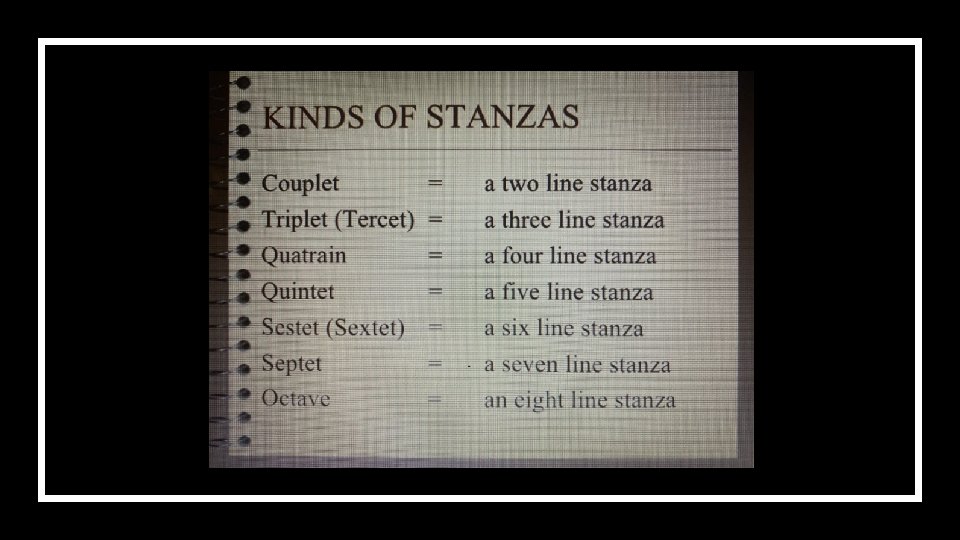
Academic Vocabulary • Stanza – is a division of four or more lines having a fixed length, meter, or rhyming scheme. They are similar to paragraphs in prose. Both stanzas and paragraphs include connected thoughts and are set off by a space. • Rhyme Scheme – the pattern of rhyme that comes at the end of each verse or line in poetry. The structure of end words of a verse or line that a poet needs to create when writing a poem. • Figurative Language – when you use a word or phrase that does not have its normal everyday, literal meaning. . . metaphors, similes, personification and hyperbole • Syntax – the way in which words and sentences are placed together. • Meter – is a stressed and unstressed syllabic pattern in a verse, or within the lines of a poem. • Prose – is a form of language that has no formal metrical structure. It applies a natural flow of speech, and ordinary grammatical structure rather than rhythmic structure, such as in the case of traditional poetry.