
Analyzing Fibers Forensic Science Fibers Material composing fabrics

Analyzing Fibers Forensic Science

Fibers • Material composing fabrics and garments • Two types: Man-made and Natural
Natural Fibers • Derived completely from plant or animal sources • Identified by microscopic examination of color and morphology of fiber • Most prevalent is cotton

Microscopic Examination of Cotton Under microscope, the cotton looks like twisted ribbon or collapsed and twisted tubes. These twists are called

Man-Made Fibers • Fibers created from natural or synthetic polymers • Dates back to 1911 with rayon and 1939 with nylon • Polymers: chains of regular and repeating atoms
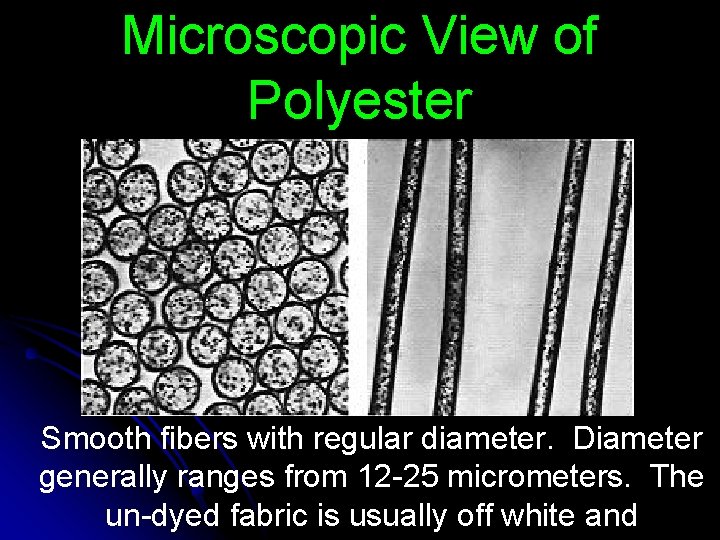
Microscopic View of Polyester Smooth fibers with regular diameter. Diameter generally ranges from 12 -25 micrometers. The un-dyed fabric is usually off white and

Comparison and Identification of Fibers • Most important is the ability to trace the origin of the fibers • Only if pieces completely fit together can a definite origin be determined • If cannot fit together, the fibers must be compared side-by-side with standard/reference samples

Comparison and Identification of Fibers (cont’d) • First microscopically compare fibers for diameter and color • Look for other morphological details like striations or pitting • Use visible light microspectrophotometer to analyze colors of fibers for comparison
Collection and Preservation of Fiber Evidence • Know potential carriers of fiber evidence • Collect and package evidence in separate paper bags • Fold blankets, carpets and rugs to prevent loss of evidence • Cover car seats with polyethylene sheets
- Slides: 9