
Analyzing Business Markets Organizational Buying The decisionmaking process
Analyzing Business Markets
Organizational Buying The decision-making process by which formal organizations establish the need for purchased products and services and identify, evaluate, and choose among alternative brands and suppliers. -- F. Webster Jr and Y. Wind
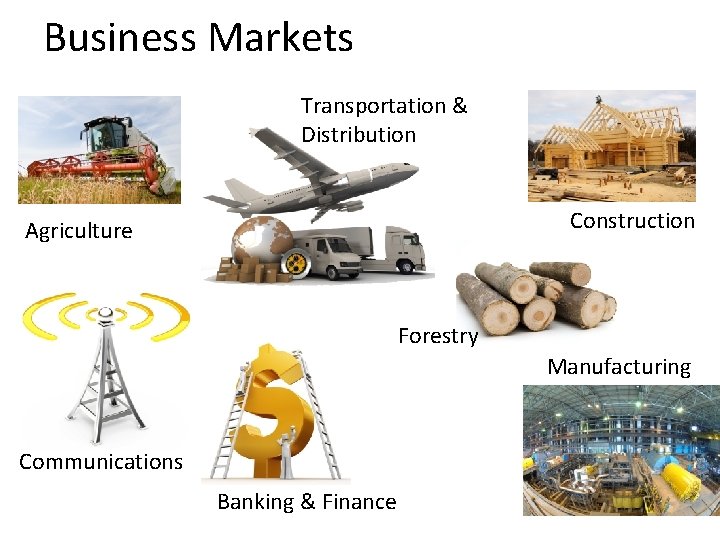
Business Markets Transportation & Distribution Construction Agriculture Forestry Manufacturing Communications Banking & Finance
Business Markets Similarities to the Consumer Market • Understanding deep customer needs • Identify areas for growth • Improving value management techniques • Calculating better marketing metrics • Competing and growing in global markets • Countering product commoditization • Gain support for the marketing concept
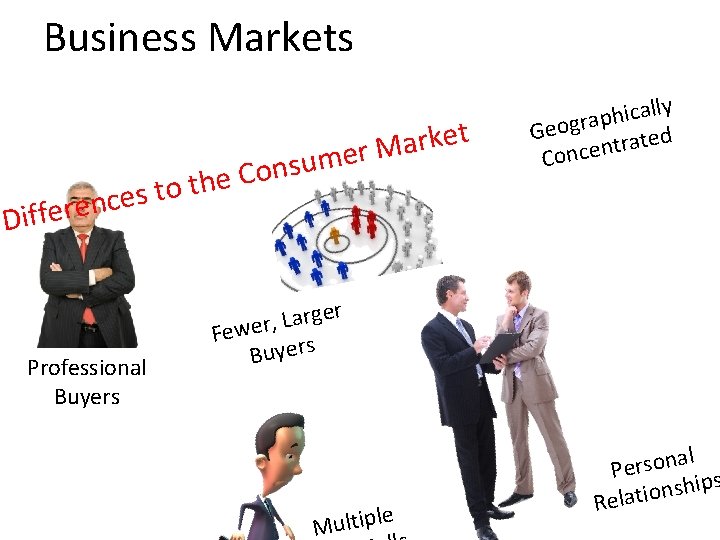
Business Markets o t s e c n e r e f f i D Professional Buyers t e k r a er M m u s n o the C lly a c i h p Geogra rated t Concen er g r a L , r Fewe Buyers le p i t l u M al n o s r e P ips h s n o i t Rela
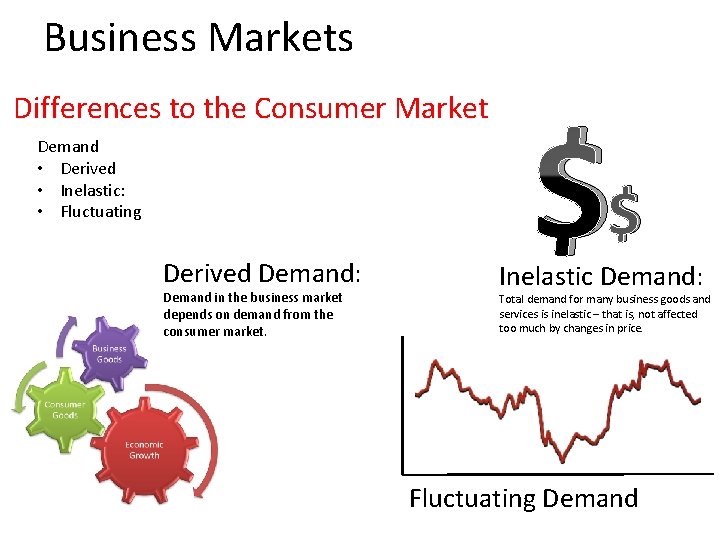
Business Markets Differences to the Consumer Market Demand • Derived • Inelastic: • Fluctuating Derived Demand: Demand in the business market depends on demand from the consumer market. $$ Inelastic Demand: Total demand for many business goods and services is inelastic – that is, not affected too much by changes in price. Fluctuating Demand
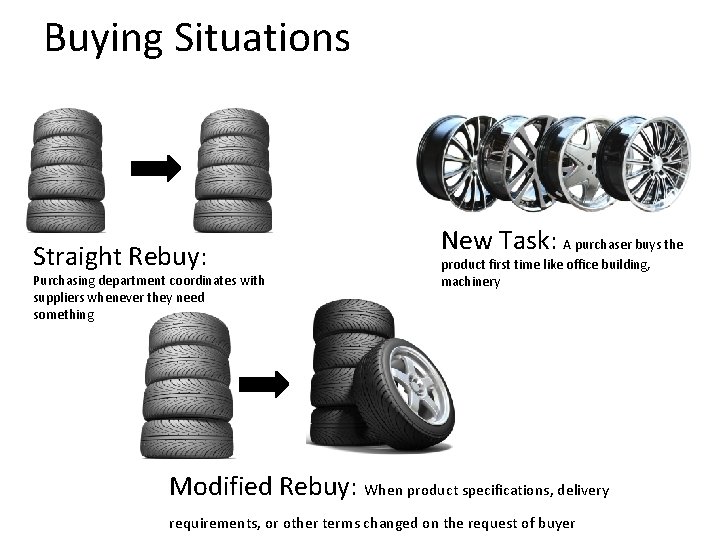
Buying Situations Straight Rebuy: Purchasing department coordinates with suppliers whenever they need something New Task: A purchaser buys the product first time like office building, machinery Modified Rebuy: When product specifications, delivery requirements, or other terms changed on the request of buyer
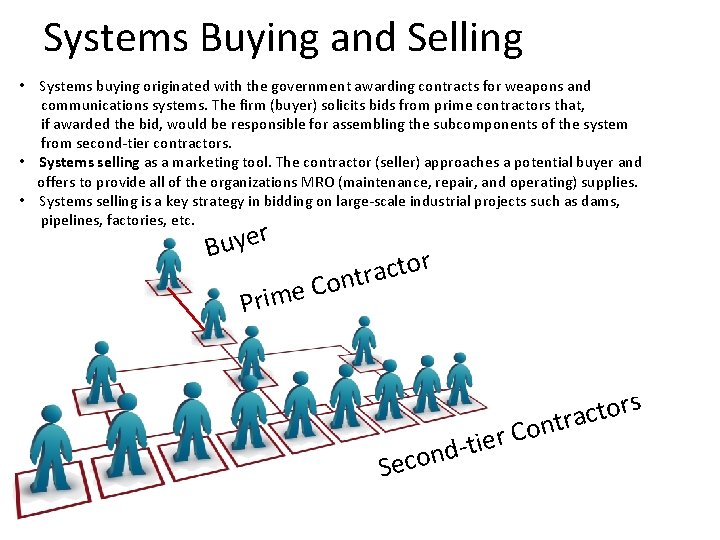
Systems Buying and Selling • Systems buying originated with the government awarding contracts for weapons and communications systems. The firm (buyer) solicits bids from prime contractors that, if awarded the bid, would be responsible for assembling the subcomponents of the system from second-tier contractors. • Systems selling as a marketing tool. The contractor (seller) approaches a potential buyer and offers to provide all of the organizations MRO (maintenance, repair, and operating) supplies. • Systems selling is a key strategy in bidding on large-scale industrial projects such as dams, pipelines, factories, etc. r e y u B Prime r o t c a r Cont Seco o C r e i nd-t s r o t c ntra
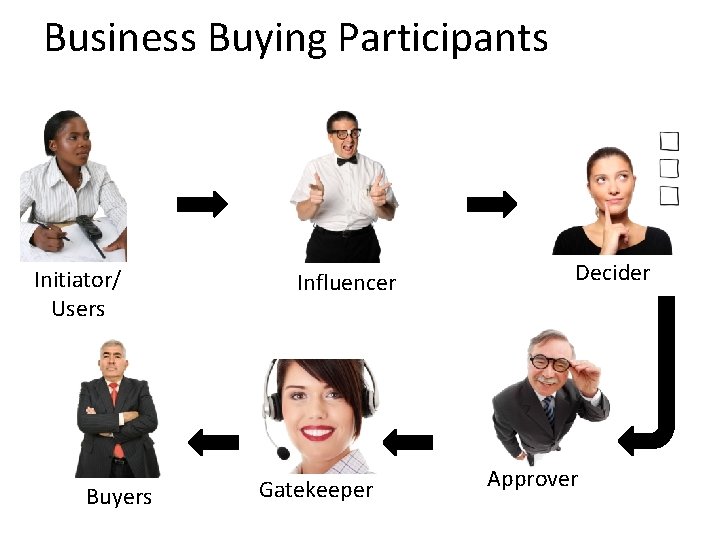
Business Buying Participants Initiator/ Users Buyers Influencer Gatekeeper Decider Approver
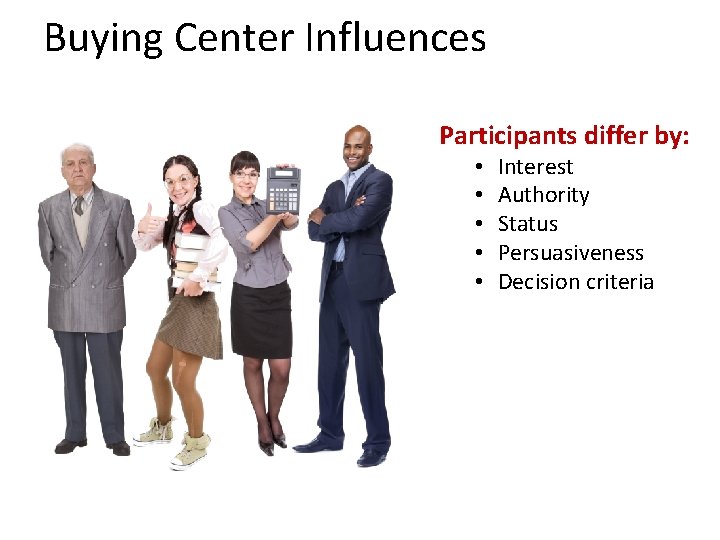
Buying Center Influences Participants differ by: • • • Interest Authority Status Persuasiveness Decision criteria
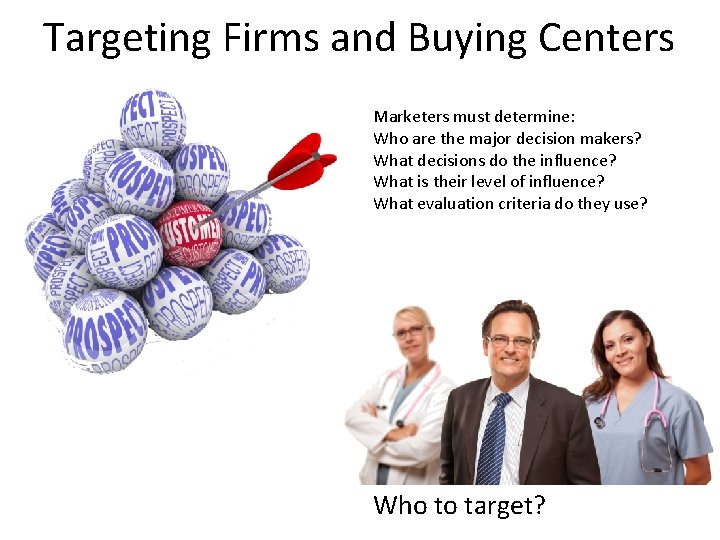
Targeting Firms and Buying Centers Marketers must determine: Who are the major decision makers? What decisions do the influence? What is their level of influence? What evaluation criteria do they use? Who to target?
Purchasing/Procurement Process Diverse supplier base Benefits vs. Costs
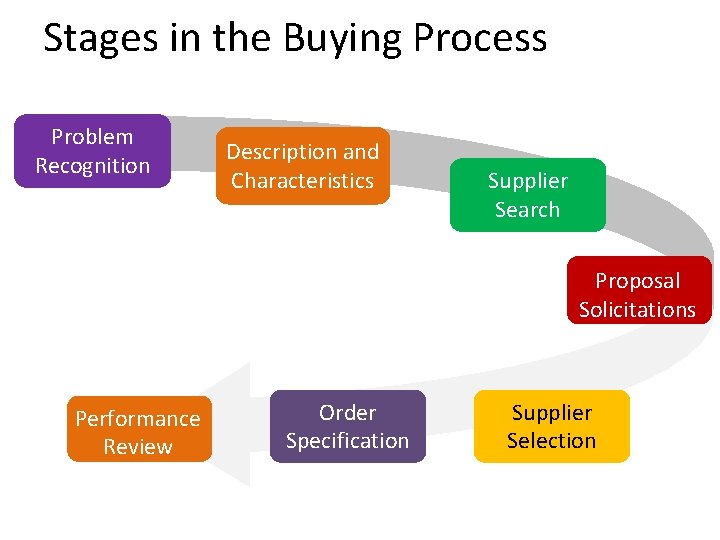
Stages in the Buying Process Problem Recognition Description and Characteristics Supplier Search Proposal Solicitations Performance Review Order Specification Supplier Selection
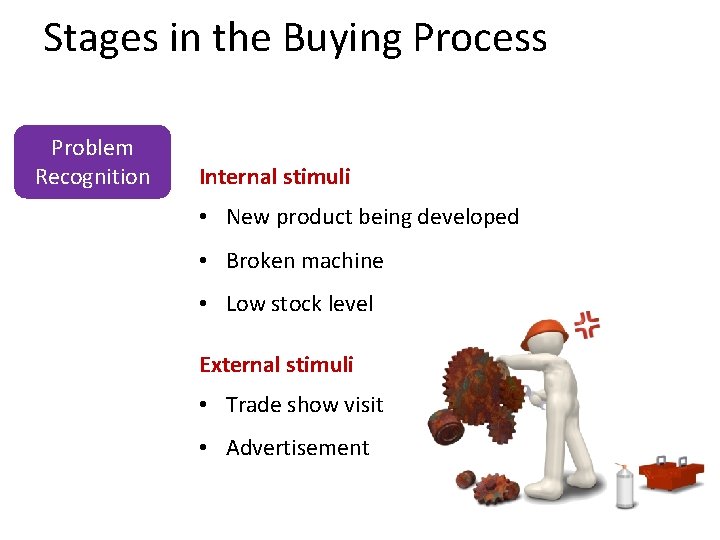
Stages in the Buying Process Problem Recognition Internal stimuli • New product being developed • Broken machine • Low stock level External stimuli • Trade show visit • Advertisement
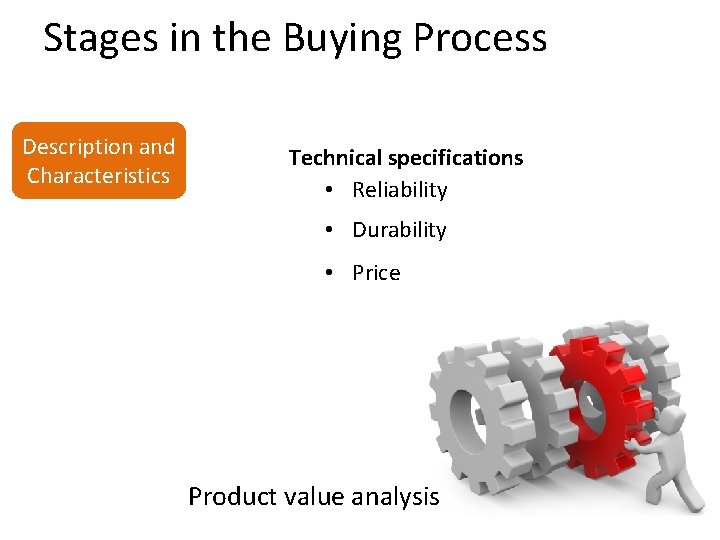
Stages in the Buying Process Description and Characteristics Technical specifications • Reliability • Durability • Price Product value analysis
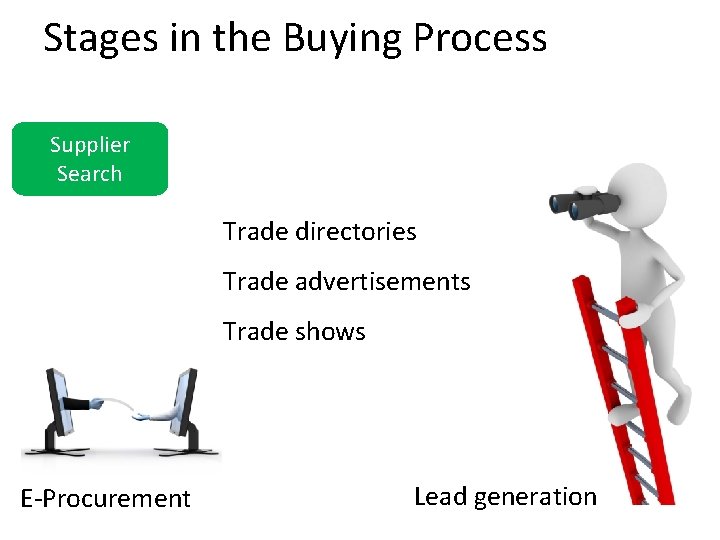
Stages in the Buying Process Supplier Search Trade directories Trade advertisements Trade shows E-Procurement Lead generation
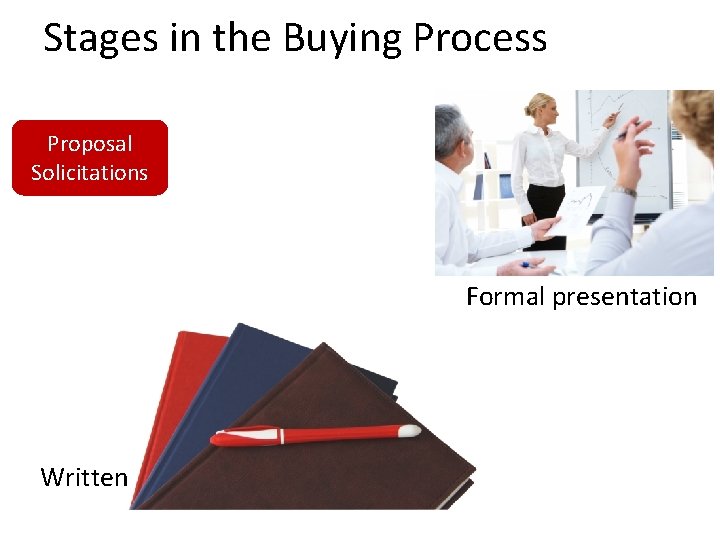
Stages in the Buying Process Proposal Solicitations Formal presentation Written
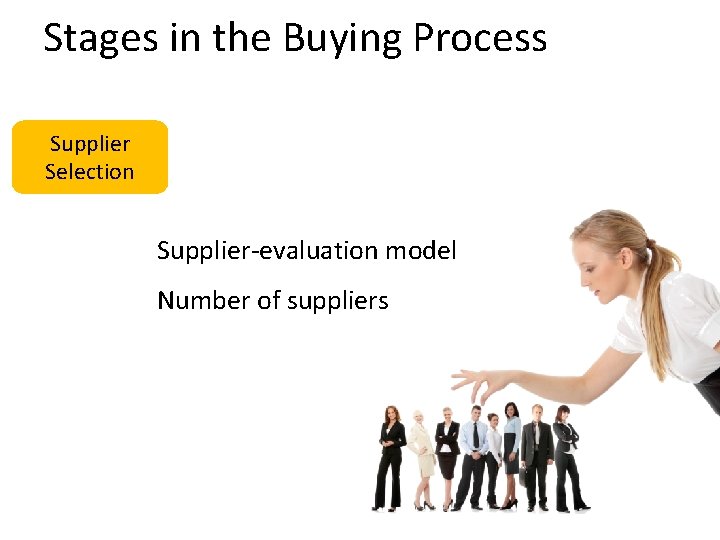
Stages in the Buying Process Supplier Selection Supplier-evaluation model Number of suppliers
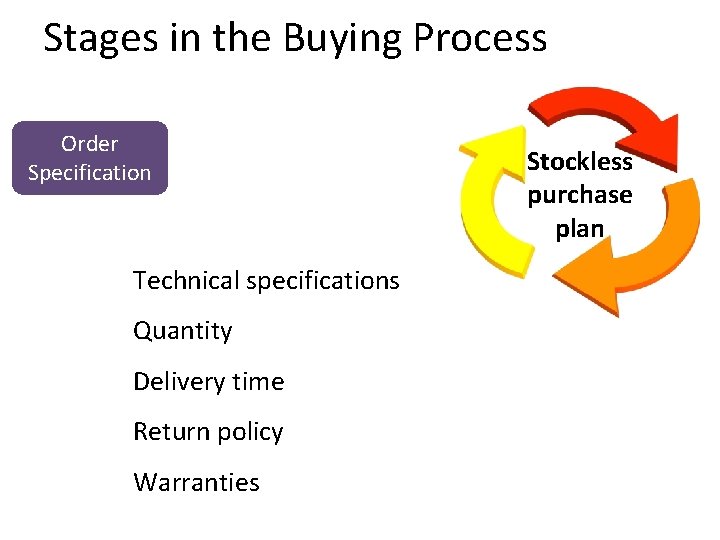
Stages in the Buying Process Order Specification Technical specifications Quantity Delivery time Return policy Warranties Stockless purchase plan
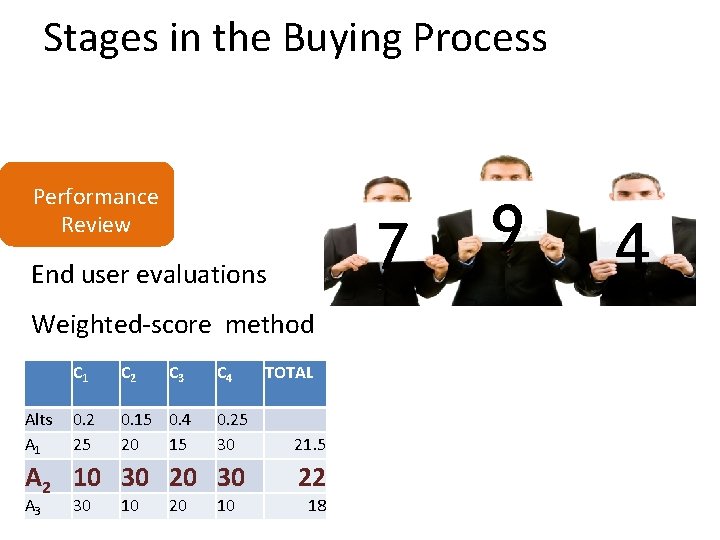
Stages in the Buying Process Performance Review 7 End user evaluations Weighted-score method Alts A 1 C 2 C 3 0. 2 25 0. 15 0. 4 20 15 C 4 TOTAL 0. 25 30 21. 5 A 2 10 30 22 A 3 30 10 20 10 18 9 4
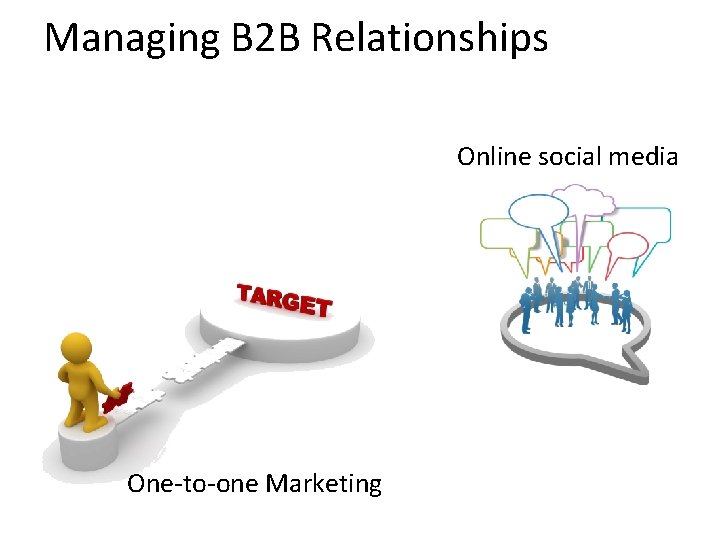
Managing B 2 B Relationships Online social media One-to-one Marketing
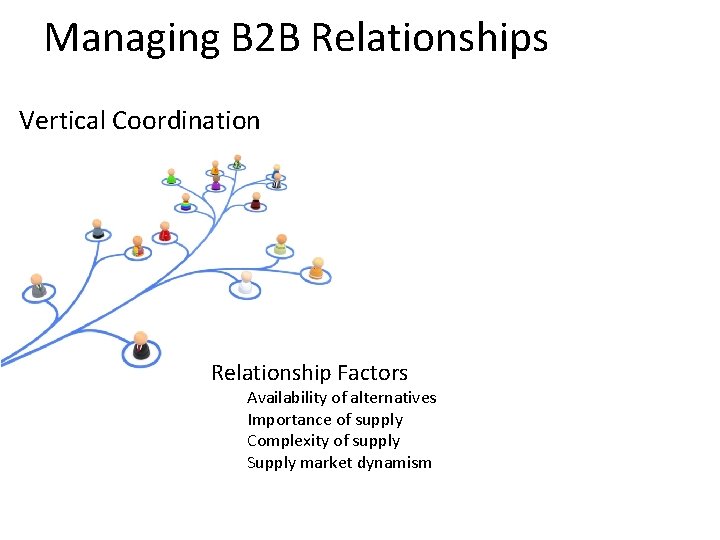
Managing B 2 B Relationships Vertical Coordination Relationship Factors Availability of alternatives Importance of supply Complexity of supply Supply market dynamism
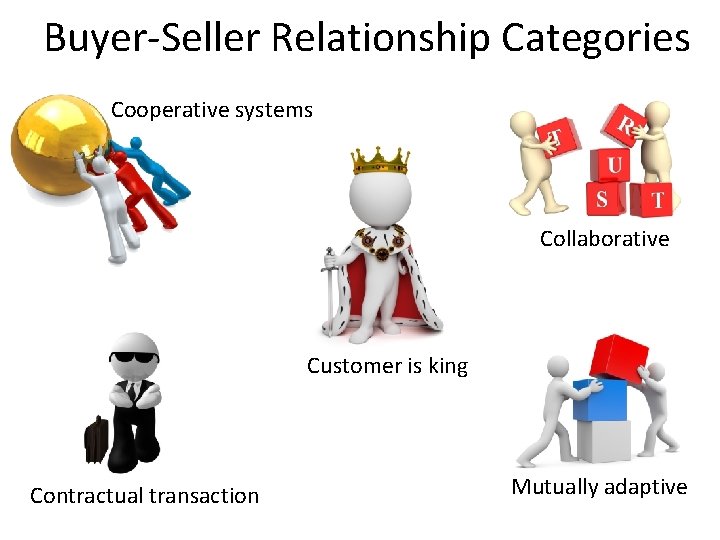
Buyer-Seller Relationship Categories Cooperative systems Collaborative Customer is king Contractual transaction Mutually adaptive
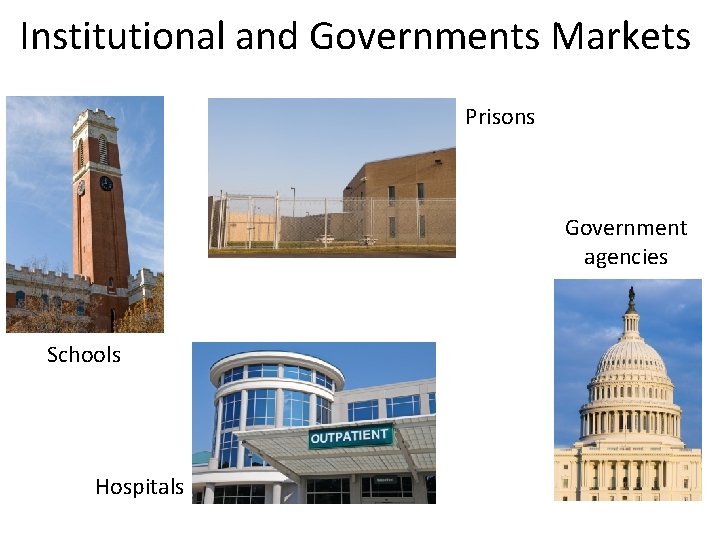
Institutional and Governments Markets Prisons Government agencies Schools Hospitals

Thank You
- Slides: 25