
Analytical Epidemiology Case Control Study Prof Najam Khalique


- Slides: 39
Analytical Epidemiology: Case Control Study Prof. Najam Khalique Community Medicine
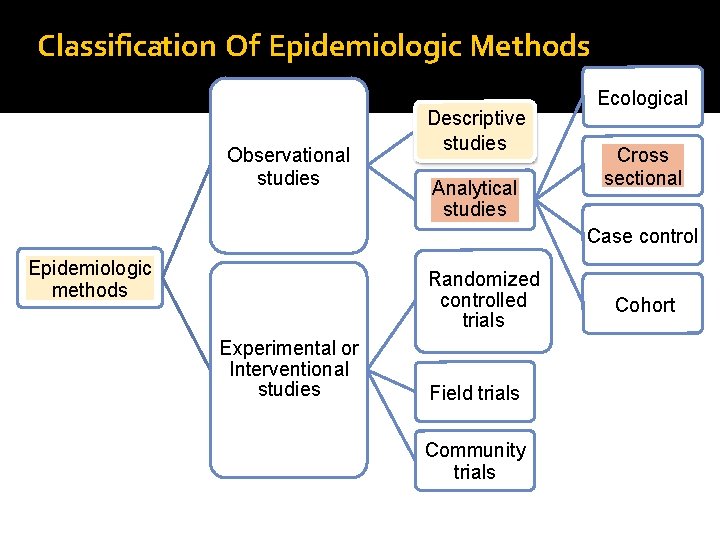
Classification Of Epidemiologic Methods Observational studies Descriptive studies Analytical studies Ecological Cross sectional Case control Epidemiologic methods Randomized controlled trials Experimental or Interventional studies Cohort Field trials Community trials 2
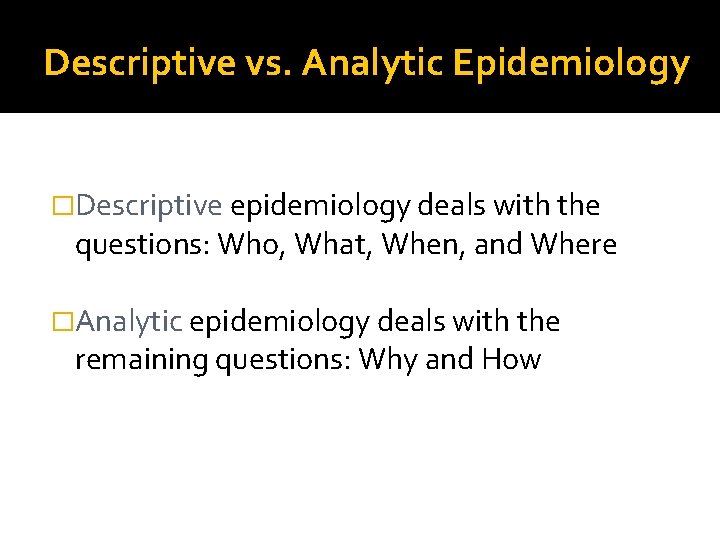
Descriptive vs. Analytic Epidemiology �Descriptive epidemiology deals with the questions: Who, What, When, and Where �Analytic epidemiology deals with the remaining questions: Why and How
Analytic Epidemiology �Used to help identify the cause of disease �Typically involves designing a study to test hypotheses developed using descriptive epidemiology
Analytical Studies Three main study designs: 1. Cross-sectional study 2. Case-control study 3. Cohort study
Case-control studies � Often called “retrospective studies” � Provide a relatively simple way to investigate causes of diseases, especially rare diseases.
� The study compares the occurrence of the possible cause in cases (people with a disease or other outcome variable) and in controls (people unaffected by the disease or outcome variable).
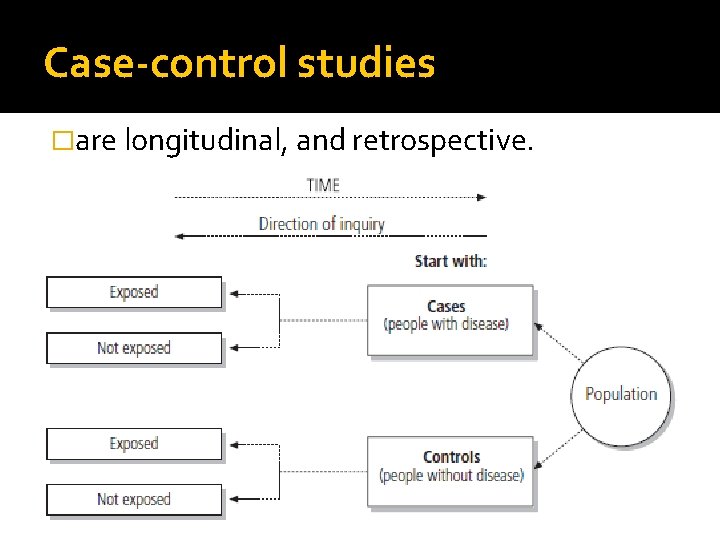
Case control study �Three distinct features : Ø Both exposure and outcome (disease) have occurred before the start of study. Ø The study proceeds backwards from effect to cause. Ø It uses a control or comparison group to support or refute an inference.
Case-control studies �are longitudinal, and retrospective.
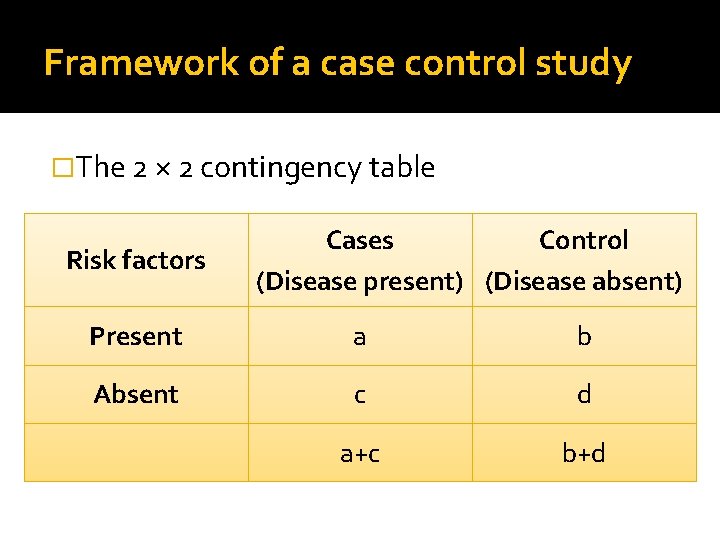
Framework of a case control study �The 2 × 2 contingency table Risk factors Cases Control (Disease present) (Disease absent) Present a b Absent c d a+c b+d
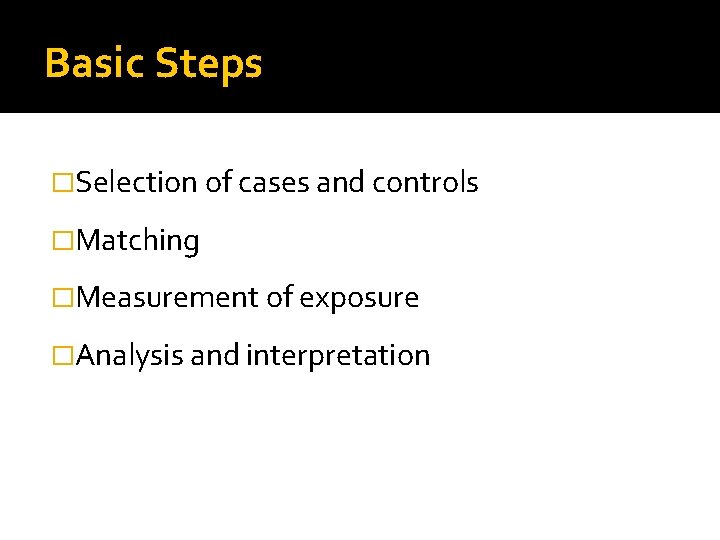
Basic Steps �Selection of cases and controls �Matching �Measurement of exposure �Analysis and interpretation
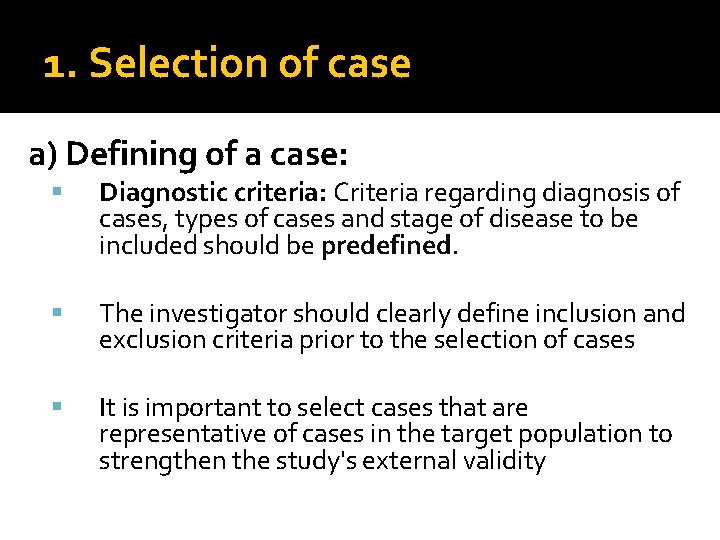
1. Selection of case a) Defining of a case: Diagnostic criteria: Criteria regarding diagnosis of cases, types of cases and stage of disease to be included should be predefined. The investigator should clearly define inclusion and exclusion criteria prior to the selection of cases It is important to select cases that are representative of cases in the target population to strengthen the study's external validity
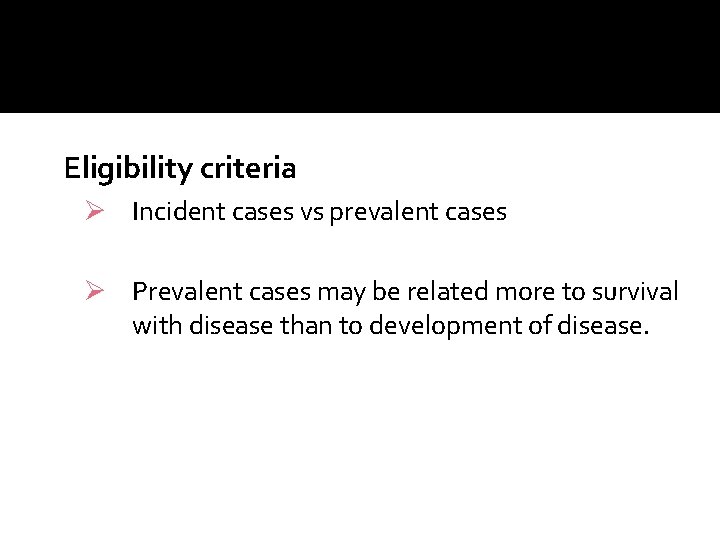
Eligibility criteria Ø Incident cases vs prevalent cases Ø Prevalent cases may be related more to survival with disease than to development of disease.
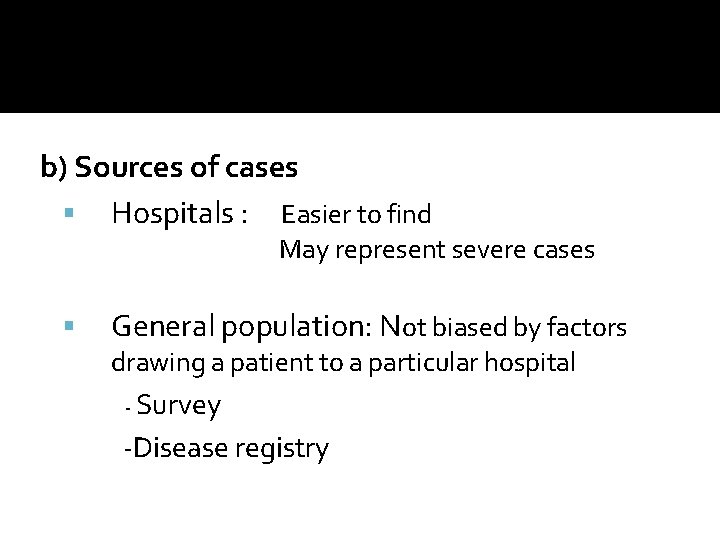
b) Sources of cases Hospitals : Easier to find May represent severe cases General population: Not biased by factors drawing a patient to a particular hospital - Survey -Disease registry
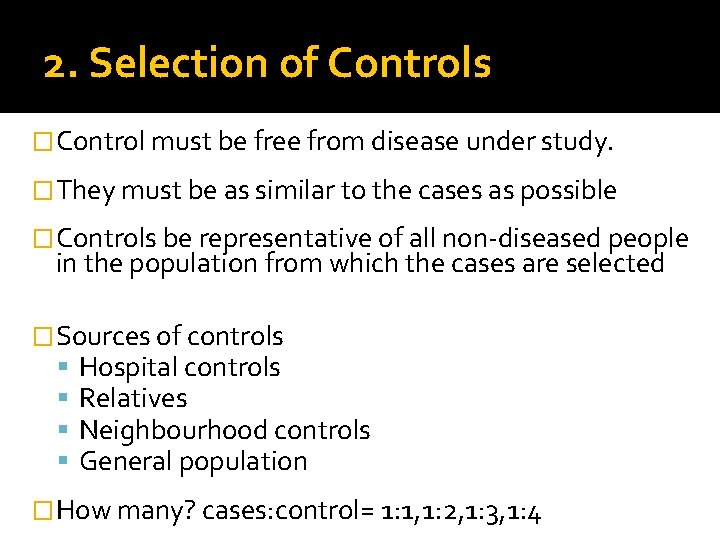
2. Selection of Controls � Control must be free from disease under study. � They must be as similar to the cases as possible � Controls be representative of all non-diseased people in the population from which the cases are selected � Sources of controls Hospital controls Relatives Neighbourhood controls General population � How many? cases: control= 1: 1, 1: 2, 1: 3, 1: 4
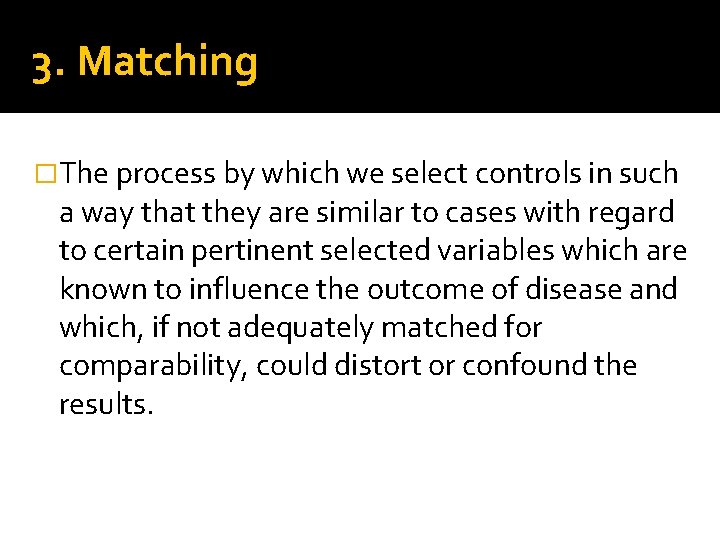
3. Matching �The process by which we select controls in such a way that they are similar to cases with regard to certain pertinent selected variables which are known to influence the outcome of disease and which, if not adequately matched for comparability, could distort or confound the results.
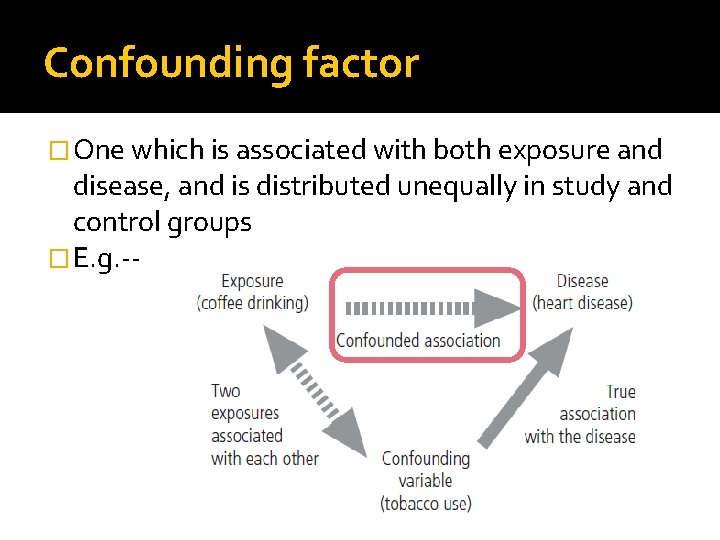
Confounding factor �One which is associated with both exposure and disease, and is distributed unequally in study and control groups �E. g. --
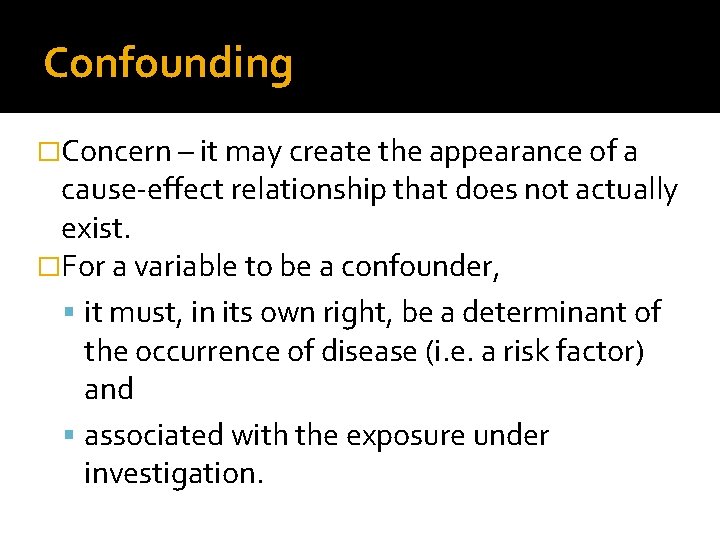
Confounding �Concern – it may create the appearance of a cause-effect relationship that does not actually exist. �For a variable to be a confounder, it must, in its own right, be a determinant of the occurrence of disease (i. e. a risk factor) and associated with the exposure under investigation.
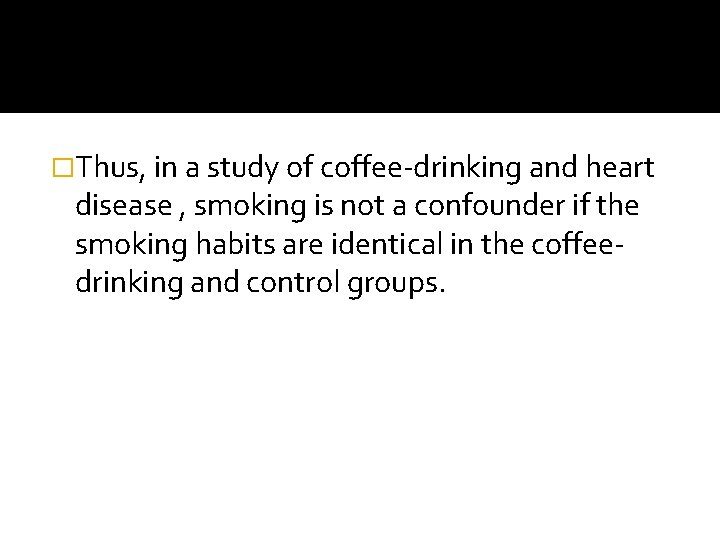
�Thus, in a study of coffee-drinking and heart disease , smoking is not a confounder if the smoking habits are identical in the coffeedrinking and control groups.
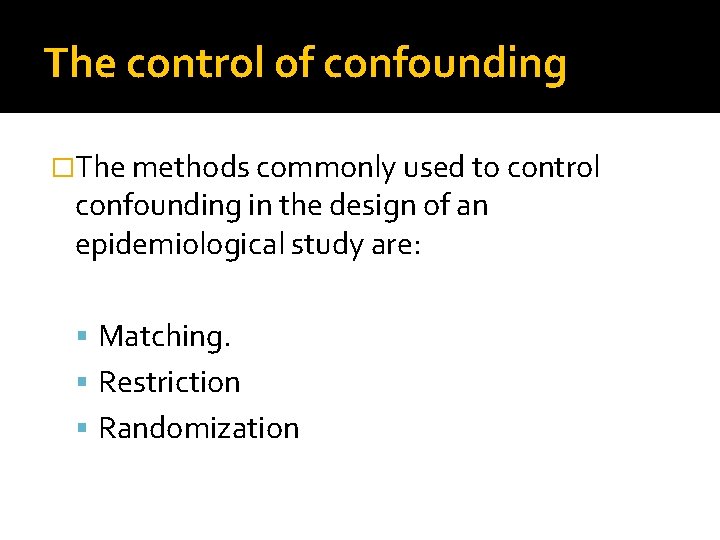
The control of confounding �The methods commonly used to control confounding in the design of an epidemiological study are: Matching. Restriction Randomization
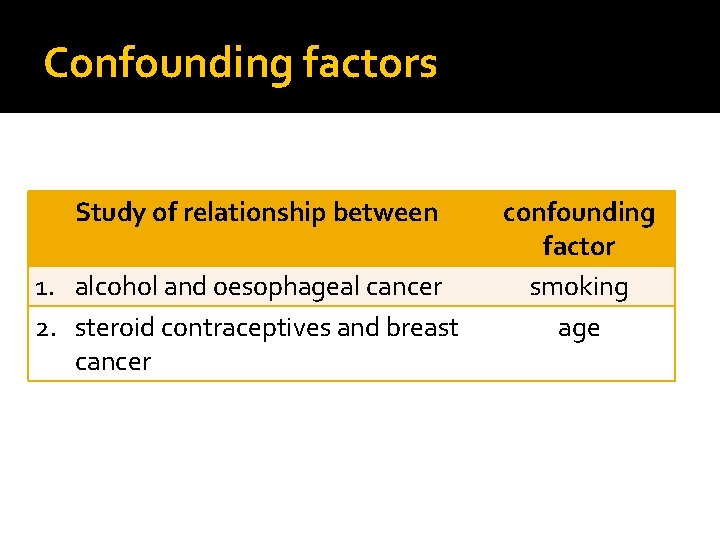
Confounding factors Study of relationship between 1. alcohol and oesophageal cancer 2. steroid contraceptives and breast cancer confounding factor smoking age
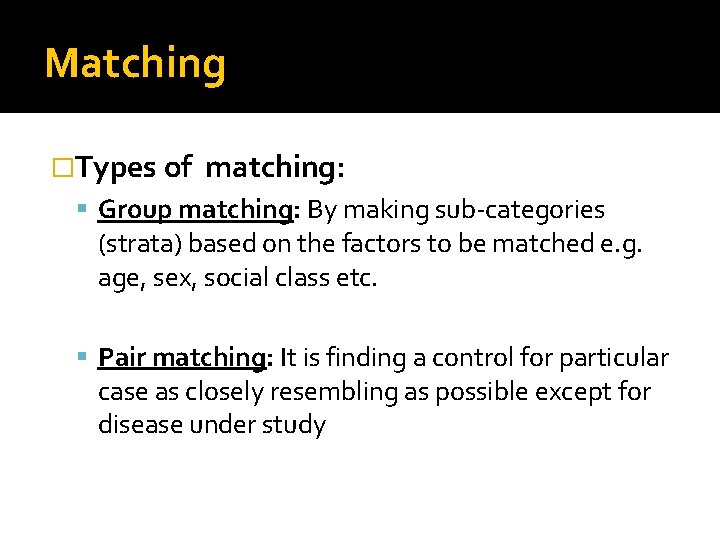
Matching �Types of matching: Group matching: By making sub-categories (strata) based on the factors to be matched e. g. age, sex, social class etc. Pair matching: It is finding a control for particular case as closely resembling as possible except for disease under study
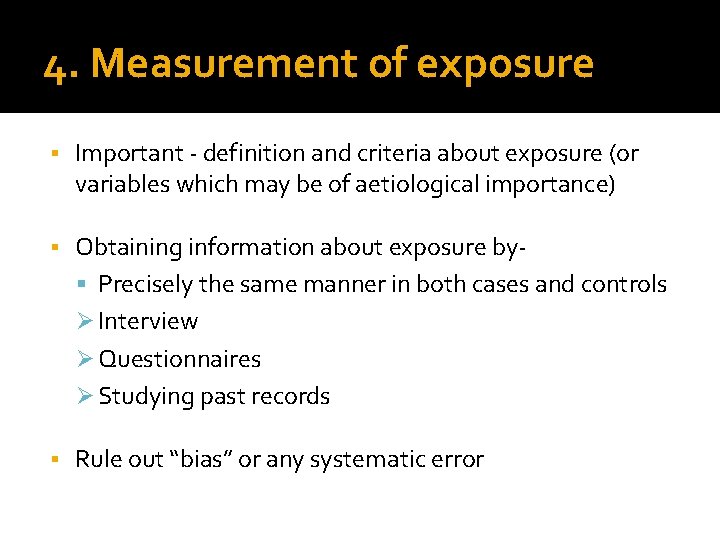
4. Measurement of exposure Important - definition and criteria about exposure (or variables which may be of aetiological importance) Obtaining information about exposure by Precisely the same manner in both cases and controls Ø Interview Ø Questionnaires Ø Studying past records Rule out “bias” or any systematic error
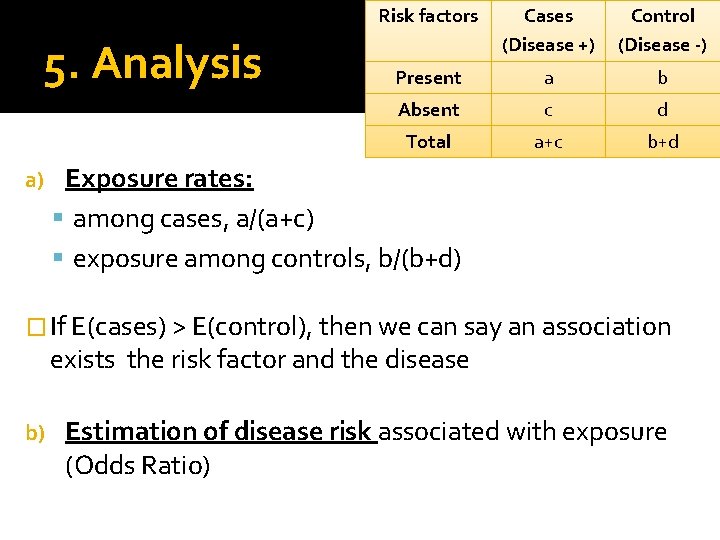
5. Analysis a) Risk factors Cases (Disease +) Control (Disease -) Present a b Absent c d Total a+c b+d Exposure rates: among cases, a/(a+c) exposure among controls, b/(b+d) � If E(cases) > E(control), then we can say an association exists the risk factor and the disease b) Estimation of disease risk associated with exposure (Odds Ratio)
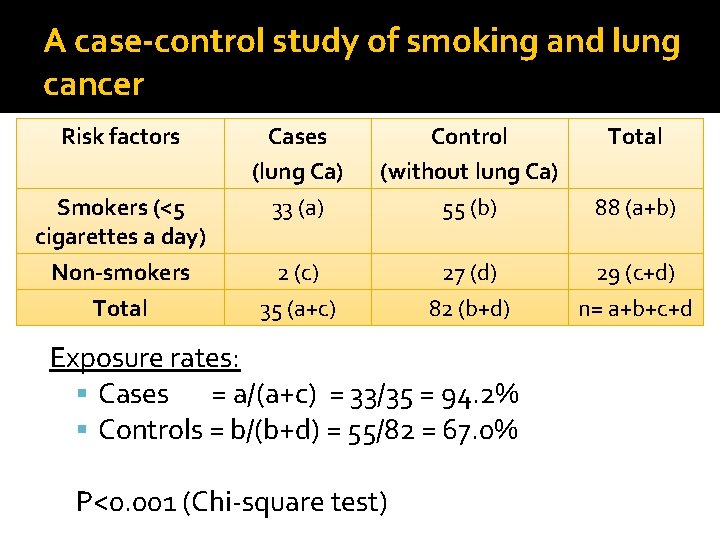
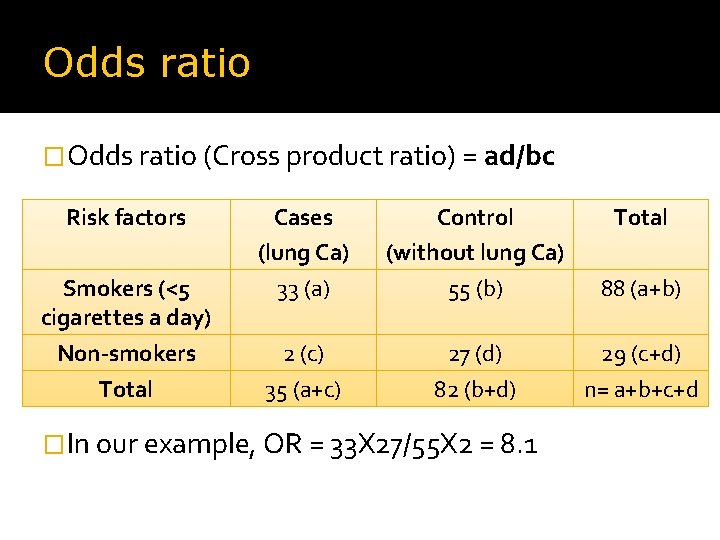
A case-control study of smoking and lung cancer Risk factors Smokers (<5 cigarettes a day) Non-smokers Total Cases (lung Ca) 33 (a) Control (without lung Ca) 55 (b) 88 (a+b) 2 (c) 35 (a+c) 27 (d) 82 (b+d) 29 (c+d) n= a+b+c+d Exposure rates: Cases = a/(a+c) = 33/35 = 94. 2% Controls = b/(b+d) = 55/82 = 67. 0% P<0. 001 (Chi-square test) Total
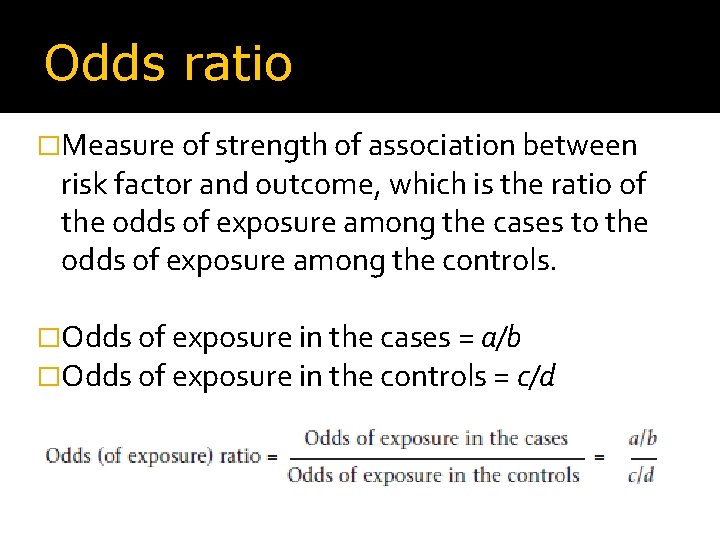
Odds ratio �Measure of strength of association between risk factor and outcome, which is the ratio of the odds of exposure among the cases to the odds of exposure among the controls. �Odds of exposure in the cases = a/b �Odds of exposure in the controls = c/d
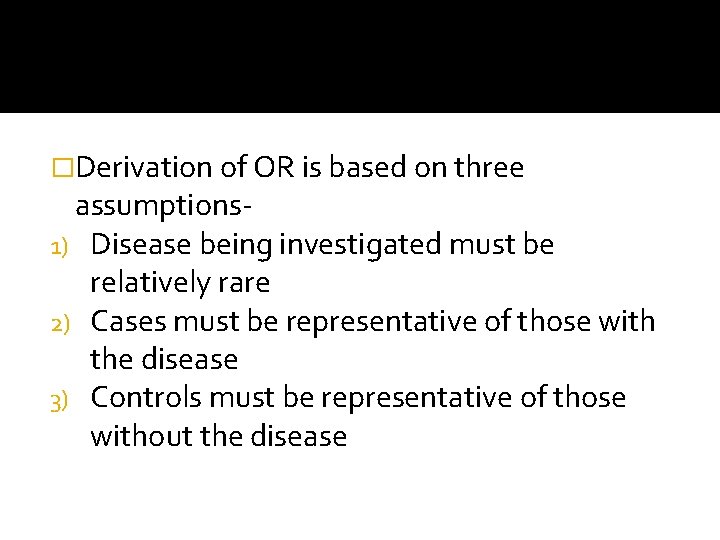
�Derivation of OR is based on three assumptions 1) Disease being investigated must be relatively rare 2) Cases must be representative of those with the disease 3) Controls must be representative of those without the disease
Odds ratio �Odds ratio (Cross product ratio) = ad/bc Risk factors Smokers (<5 cigarettes a day) Non-smokers Total Cases (lung Ca) 33 (a) Control (without lung Ca) 55 (b) 88 (a+b) 2 (c) 35 (a+c) 27 (d) 82 (b+d) 29 (c+d) n= a+b+c+d �In our example, OR = 33 X 27/55 X 2 = 8. 1 Total
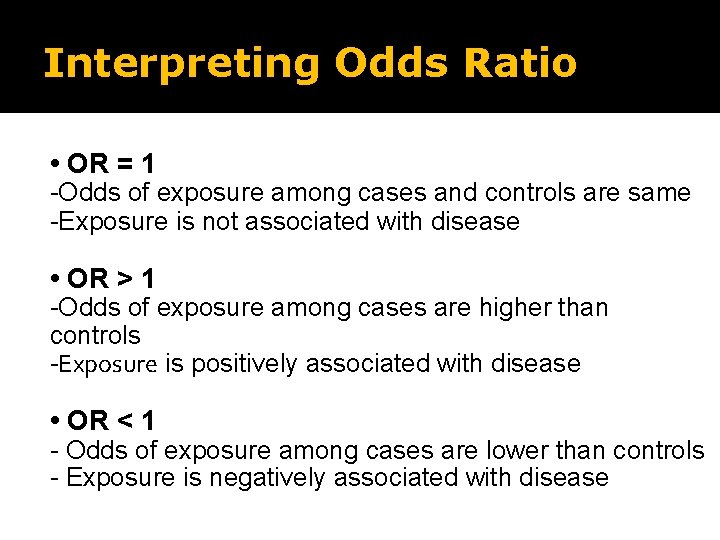
Interpreting Odds Ratio • OR = 1 -Odds of exposure among cases and controls are same -Exposure is not associated with disease • OR > 1 -Odds of exposure among cases are higher than controls -Exposure is positively associated with disease • OR < 1 - Odds of exposure among cases are lower than controls - Exposure is negatively associated with disease
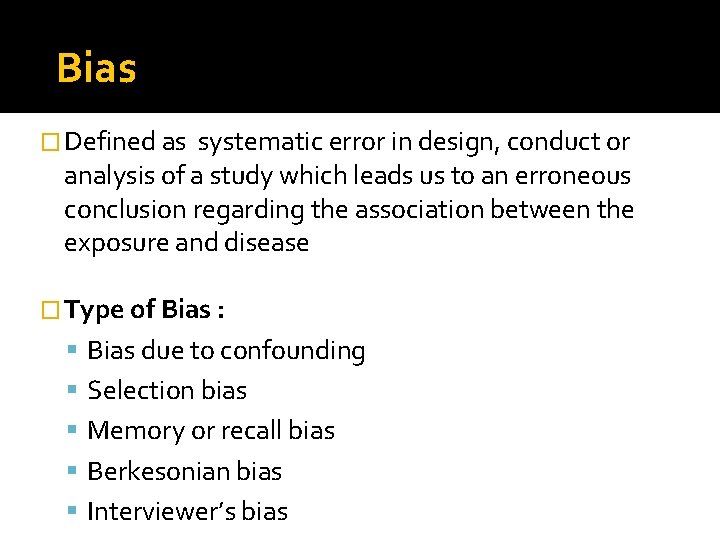
Bias � Defined as systematic error in design, conduct or analysis of a study which leads us to an erroneous conclusion regarding the association between the exposure and disease � Type of Bias : Bias due to confounding Selection bias Memory or recall bias Berkesonian bias Interviewer’s bias
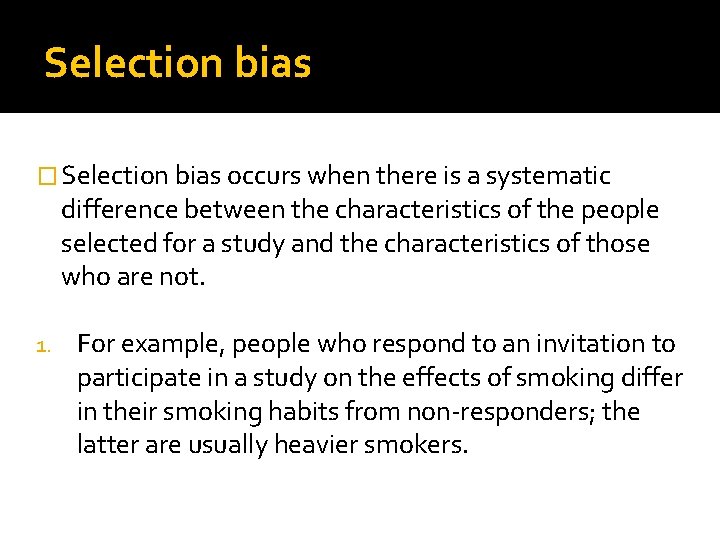
Selection bias � Selection bias occurs when there is a systematic difference between the characteristics of the people selected for a study and the characteristics of those who are not. 1. For example, people who respond to an invitation to participate in a study on the effects of smoking differ in their smoking habits from non-responders; the latter are usually heavier smokers.
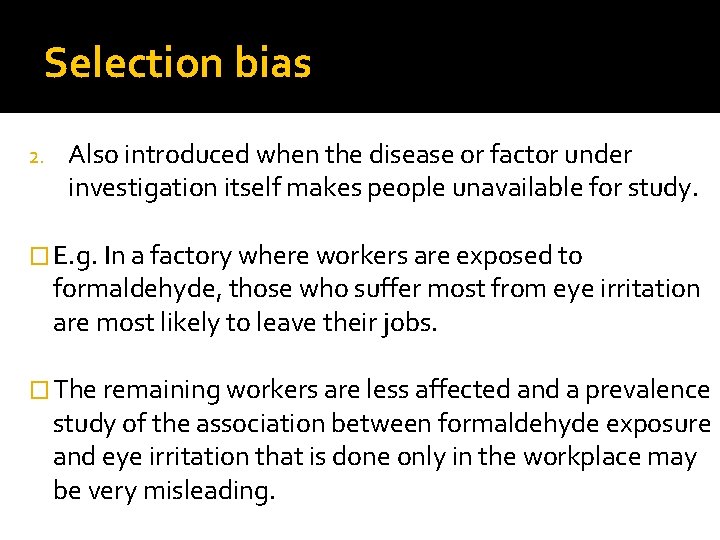
Selection bias 2. Also introduced when the disease or factor under investigation itself makes people unavailable for study. � E. g. In a factory where workers are exposed to formaldehyde, those who suffer most from eye irritation are most likely to leave their jobs. � The remaining workers are less affected and a prevalence study of the association between formaldehyde exposure and eye irritation that is done only in the workplace may be very misleading.
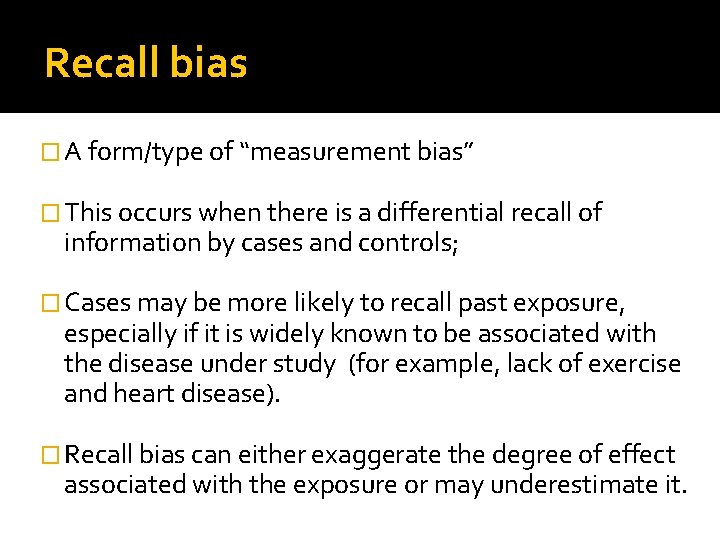
Recall bias � A form/type of “measurement bias” � This occurs when there is a differential recall of information by cases and controls; � Cases may be more likely to recall past exposure, especially if it is widely known to be associated with the disease under study (for example, lack of exercise and heart disease). � Recall bias can either exaggerate the degree of effect associated with the exposure or may underestimate it.
Berksonian bias � It occurs because patients with two concurrent diseases or health problems are more likely to be admitted to a hospital than those with a single condition. � For example, people who have both peptic ulcers and also smoke are more likely to be admitted to the hospital than people who have either of them. � A case control study trying to evaluate the relationship between smoking and peptic ulcers may therefore find a much stronger association between the two than would really exist in the general community.
Interviewer’s bias � When interviewer knows who the cases are, he/she may tend to question the cases more thoroughly than the controls regarding a positive history of the suspected causal factor � Can be eliminated by “ Blinding”. � ‘Double blinding’ – when both participant and doctor (investigator) are unaware of group allocation.
Advantages � Easy to carry out � Rapid and inexpensive � Requires fewer subjects � No risk to subjects � Suitable to investigate rare disease � Risk factors can be identified � Allows the study of several different etiological factors � No attrition problems as follow up is not required in future � Ethical problems are minimal
Disadvantages Problem of bias Selection of an appropriate control group may be difficult Can not estimate the relative risk Not suited for evaluation of therapy or prophylaxis of disease Do not distinguish between causes and associated factors Representativeness of cases and controls is difficult
A classic example The discovery of the relationship between thalidomide and limb defects in babies born in the Federal Republic of Germany in 1959 and 1960. � The study, done in 1961, compared affected children with normal children. Of 46 mothers whose babies had malformations, 41 had been given thalidomide between the fourth and ninth weeks of pregnancy, whereas none of the 300 control mothers, whose children were normal, had taken the drug during pregnancy. � Accurate timing of the drug intake was crucial for determining relevant exposure.
Thank you!