
Analysis of Winglets for Low Reynolds UAV Flight


- Slides: 14
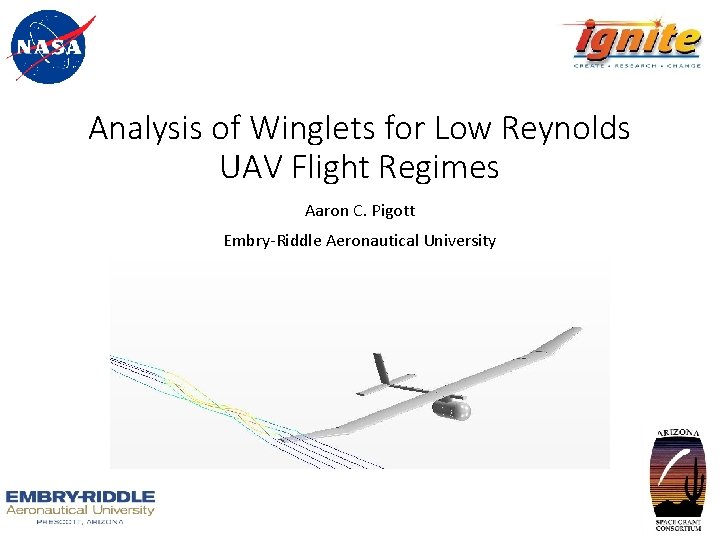
Analysis of Winglets for Low Reynolds UAV Flight Regimes Aaron C. Pigott Embry-Riddle Aeronautical University
Introduction and Overview • Introduction • Goal: Optimization of winglet sweep using STAR-CCM+ • Overview • • Boeing Aeros. PACE UAV Design Why Winglets? Winglet Design The Mesh The Physics Results Conclusion
Boeing Aeros. PACE • Collaborative senior design project with Boeing, Brigham Young University, Embry-Riddle Aeronautical University, Georgia Institute of Technology, Purdue University, and Tuskegee University • Objective: Successfully collaborate and design a hand-launchable Search and Rescue UAV • Winglet Analysis performed on Boeing Aeros. PACE UAV
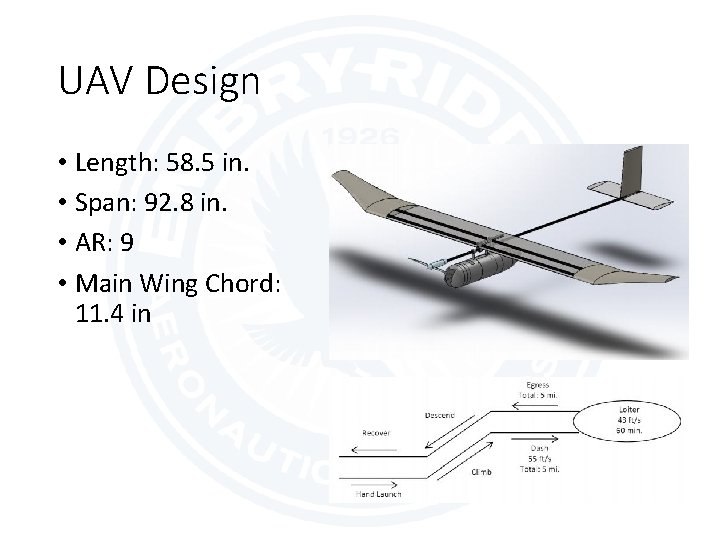
UAV Design • Length: 58. 5 in. • Span: 92. 8 in. • AR: 9 • Main Wing Chord: 11. 4 in
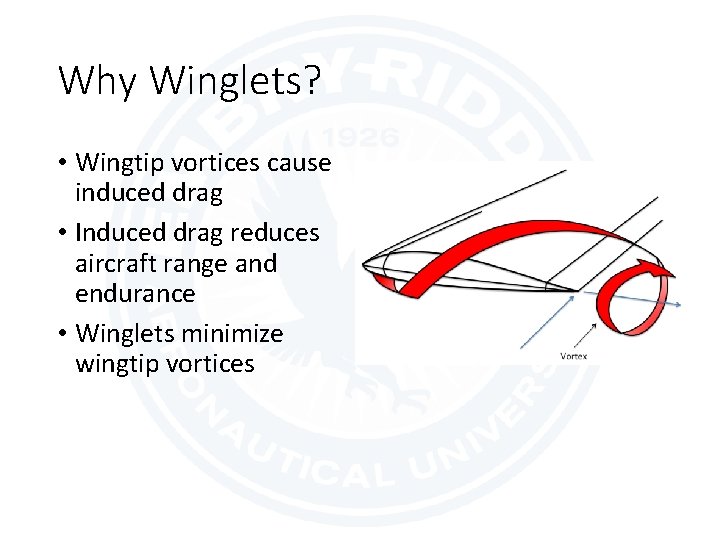
Why Winglets? • Wingtip vortices cause induced drag • Induced drag reduces aircraft range and endurance • Winglets minimize wingtip vortices
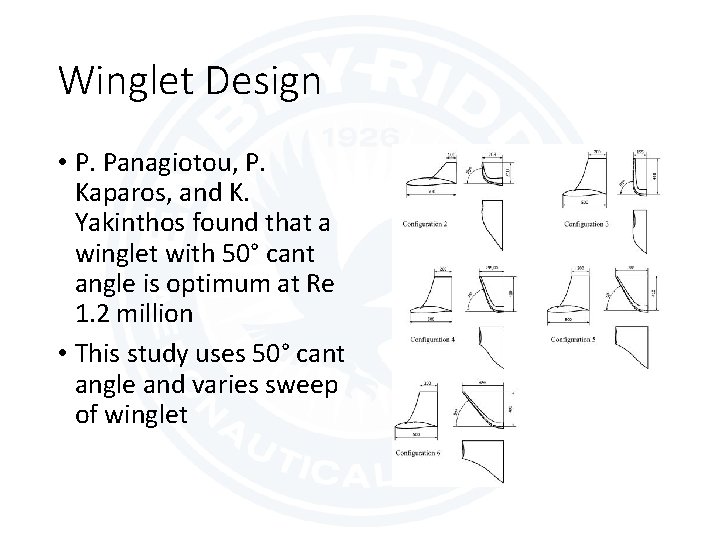
Winglet Design • P. Panagiotou, P. Kaparos, and K. Yakinthos found that a winglet with 50° cant angle is optimum at Re 1. 2 million • This study uses 50° cant angle and varies sweep of winglet
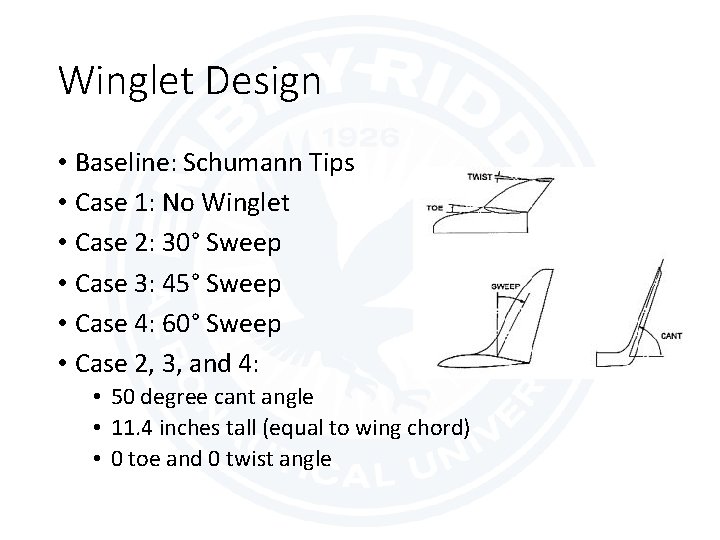
Winglet Design • Baseline: Schumann Tips • Case 1: No Winglet • Case 2: 30° Sweep • Case 3: 45° Sweep • Case 4: 60° Sweep • Case 2, 3, and 4: • 50 degree cant angle • 11. 4 inches tall (equal to wing chord) • 0 toe and 0 twist angle
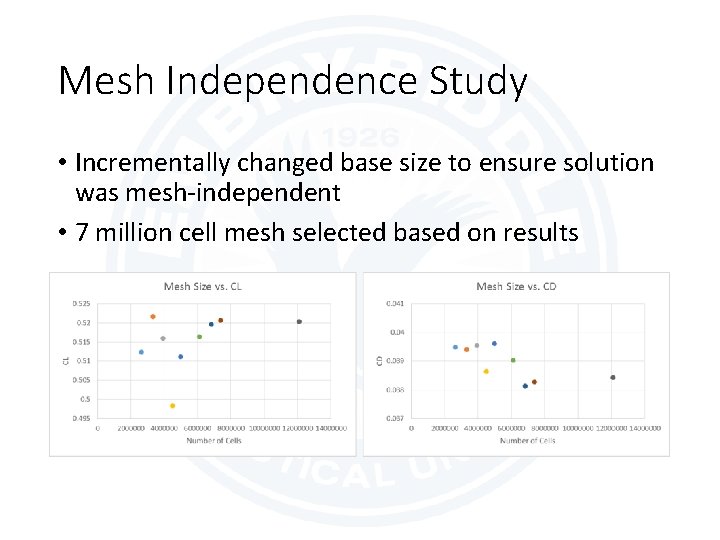
Mesh Independence Study • Incrementally changed base size to ensure solution was mesh-independent • 7 million cell mesh selected based on results
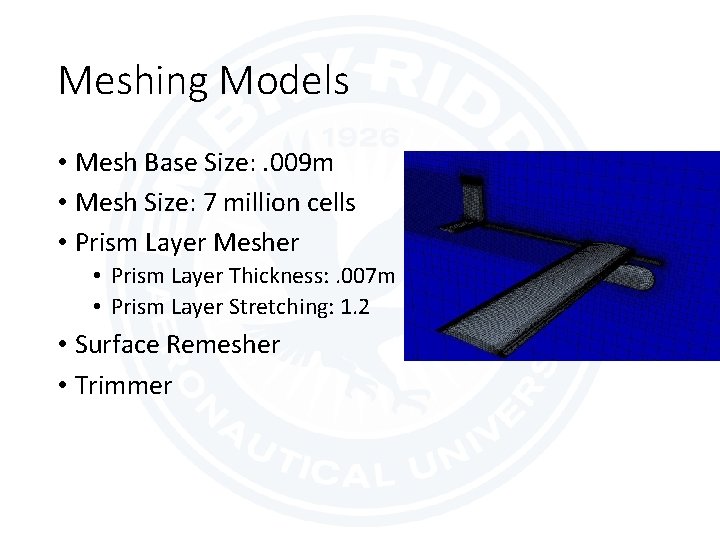
Meshing Models • Mesh Base Size: . 009 m • Mesh Size: 7 million cells • Prism Layer Mesher • Prism Layer Thickness: . 007 m • Prism Layer Stretching: 1. 2 • Surface Remesher • Trimmer
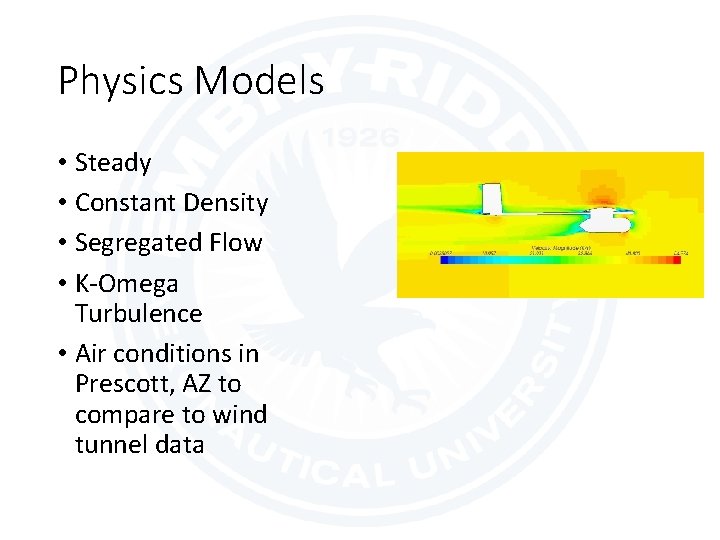
Physics Models • Steady • Constant Density • Segregated Flow • K-Omega Turbulence • Air conditions in Prescott, AZ to compare to wind tunnel data
Wind Tunnel • A wind tunnel model was used to verify CL and CD data for the baseline model Wind Tunnel vs. CFD Data Here
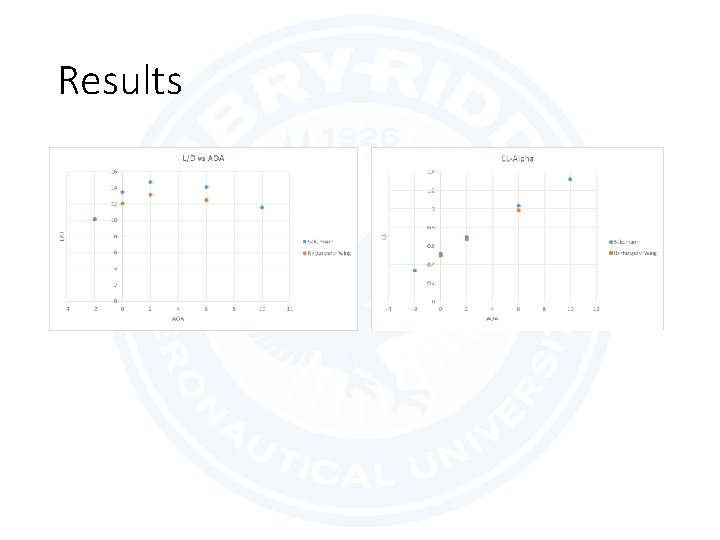
Results
Conclusion • Schumann tips reduced induced drag cause by wingtip vortices. CL/CD increased at each AOA • Variable wingtip conclusion here
Acknowledgements • Dr. Shigeo Hayashibara, ERAU • Joe Becar, Brigham Young University • Boeing Aeros. PACE Program