
Analysis of trends in Health Expenditure in OECD
- Slides: 26
Analysis of trends in Health Expenditure in OECD countries and Asia/Pacific countries and economies Training Course on Social Health Insurance 2012 National Health Insurance Corporation Seoul, 21 June 2012
Organisation for Economic Co-operation and Development The OECD provides a setting where Governments compare policy experiences, seek answers to common problems, identify good practice and co-ordinate domestic and international policies. For more than 40 years, the OECD has been one of the world’s largest and more reliable sources of comparable statistics 2
System of Health Accounts Background (1) The System of Health Accounts: proposes an integrated system of comprehensive and internationally comparable accounts provides a uniform framework of basic accounting rules and a set of standard tables for reporting health expenditure data 3
System of Health Accounts Background (2) The goal of the collaboration between OECD, EUROSTAT and WHO is to reduce the burden of data collection for the national authorities responsible for the provision of statistical information This joint effort also increases the use of international standards and definitions 4
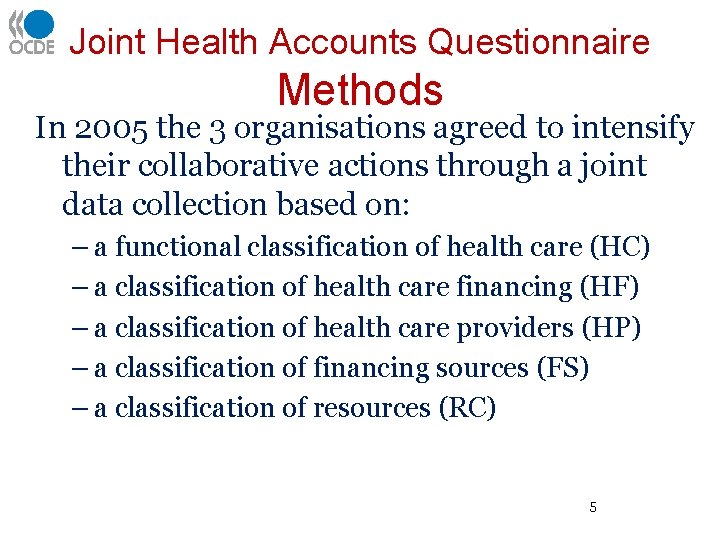
Joint Health Accounts Questionnaire Methods In 2005 the 3 organisations agreed to intensify their collaborative actions through a joint data collection based on: – a functional classification of health care (HC) – a classification of health care financing (HF) – a classification of health care providers (HP) – a classification of financing sources (FS) – a classification of resources (RC) 5
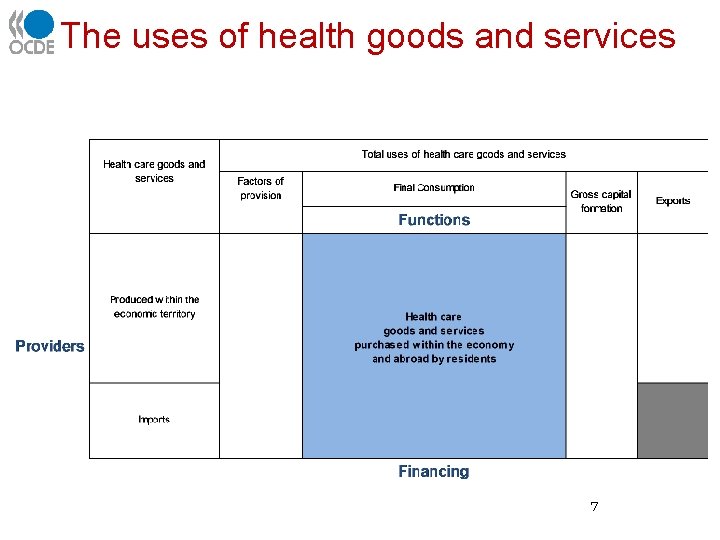
The uses of health goods and services 7
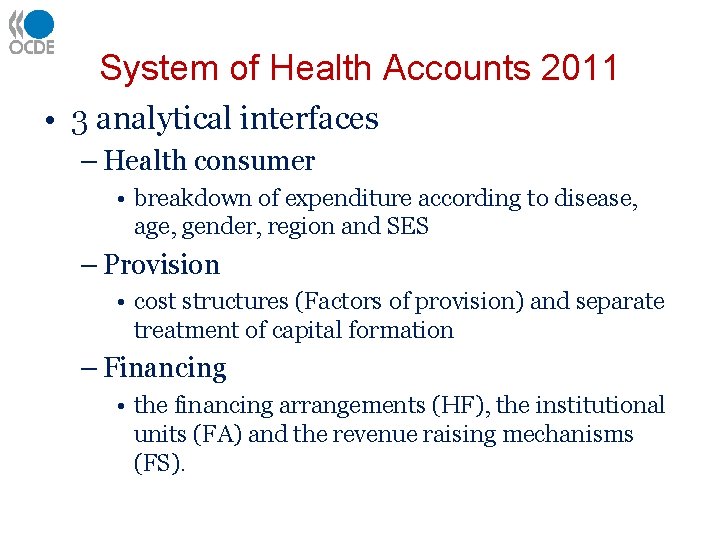
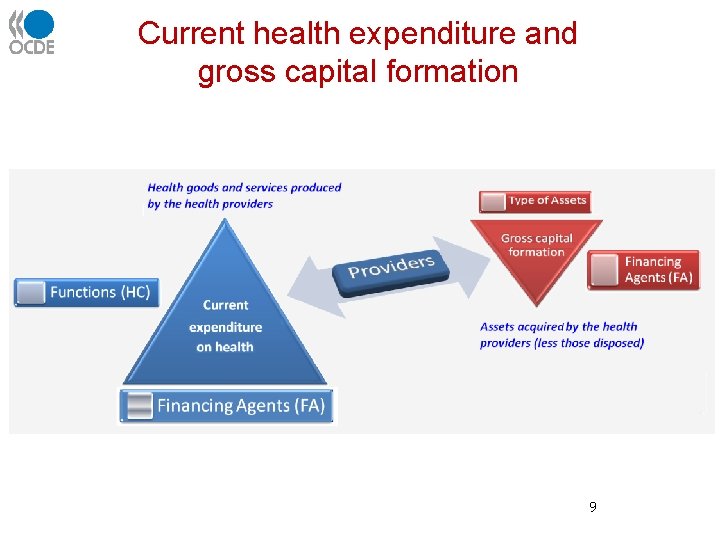
System of Health Accounts 2011 • 3 analytical interfaces – Health consumer • breakdown of expenditure according to disease, age, gender, region and SES – Provision • cost structures (Factors of provision) and separate treatment of capital formation – Financing • the financing arrangements (HF), the institutional units (FA) and the revenue raising mechanisms (FS).
Current health expenditure and gross capital formation 9
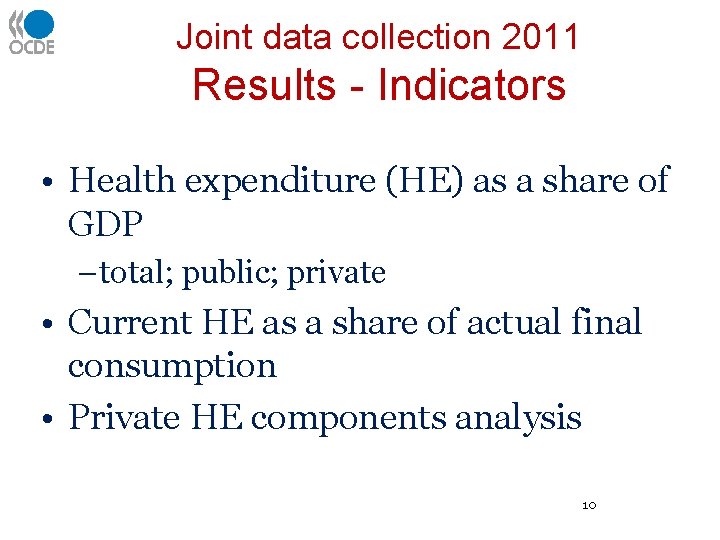
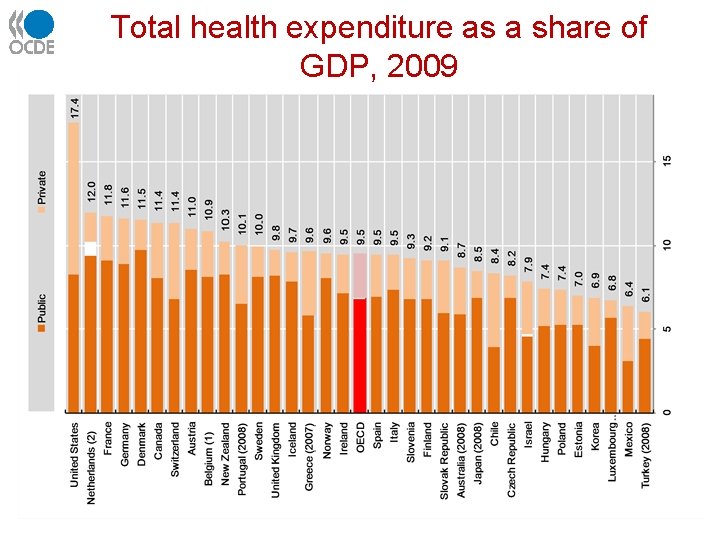
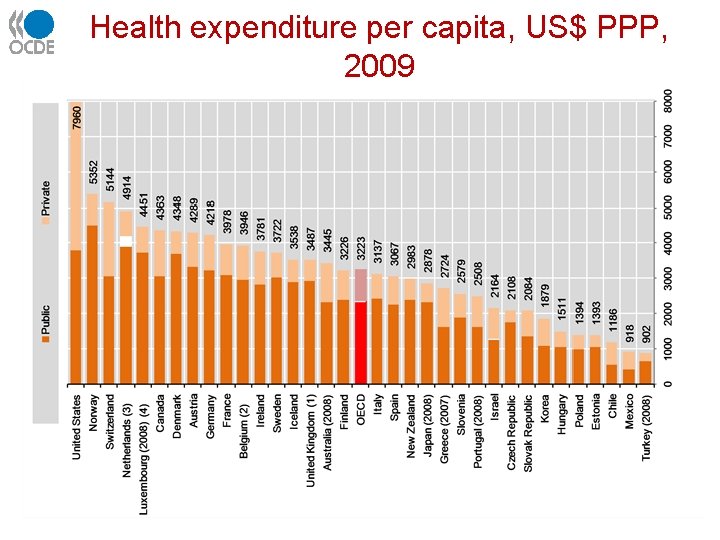
Joint data collection 2011 Results - Indicators • Health expenditure (HE) as a share of GDP – total; public; private • Current HE as a share of actual final consumption • Private HE components analysis 10
Total health expenditure as a share of GDP, 2009 11
Health expenditure per capita, US$ PPP, 2009 12
13
14
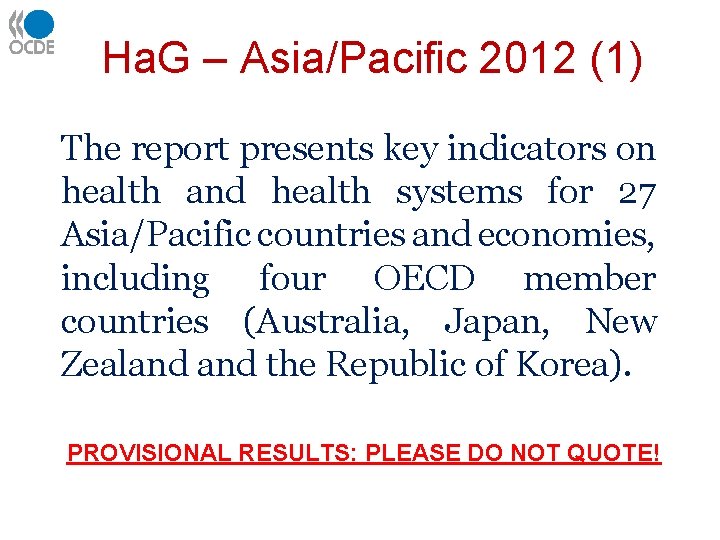
Ha. G – Asia/Pacific 2012 (1) The report presents key indicators on health and health systems for 27 Asia/Pacific countries and economies, including four OECD member countries (Australia, Japan, New Zealand the Republic of Korea). PROVISIONAL RESULTS: PLEASE DO NOT QUOTE!
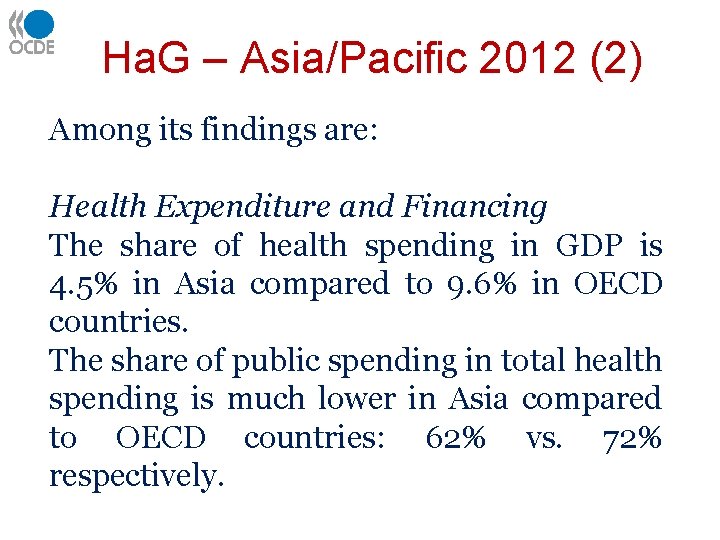
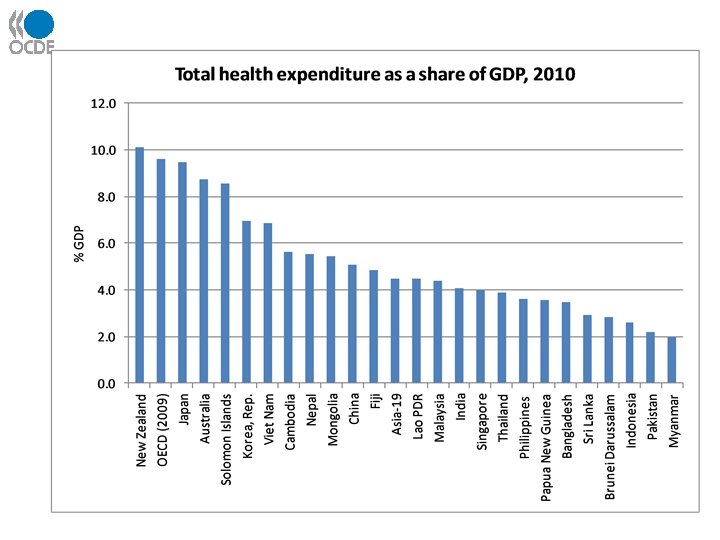
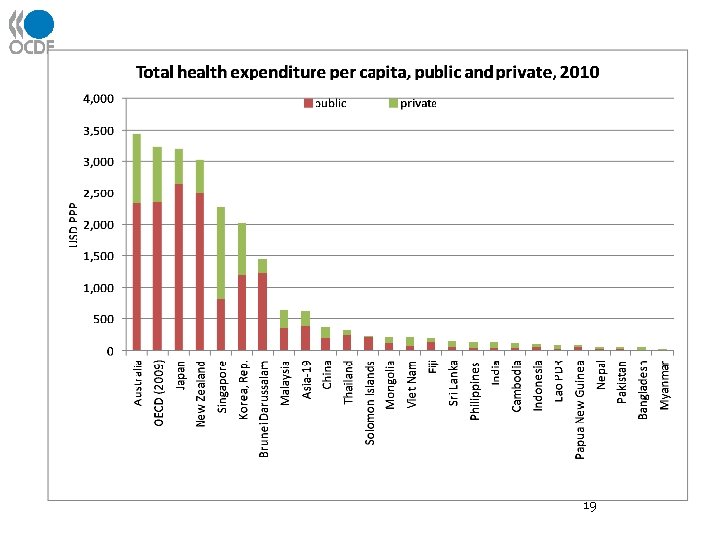
Ha. G – Asia/Pacific 2012 (2) Among its findings are: Health Expenditure and Financing The share of health spending in GDP is 4. 5% in Asia compared to 9. 6% in OECD countries. The share of public spending in total health spending is much lower in Asia compared to OECD countries: 62% vs. 72% respectively.
17
18
19
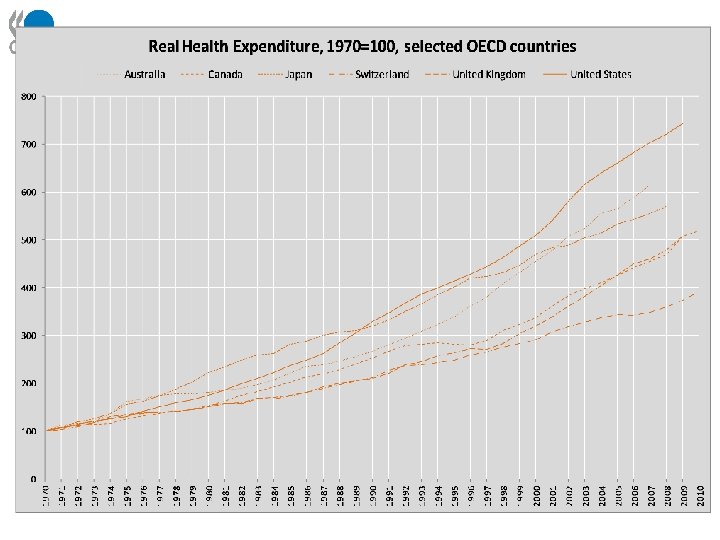
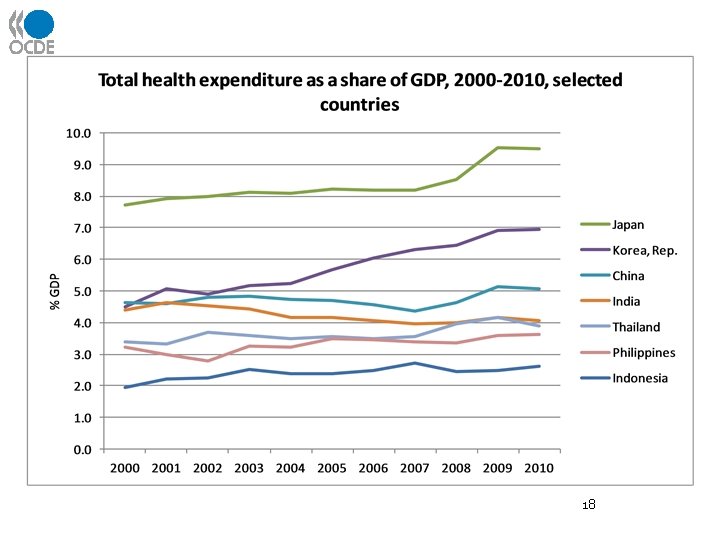
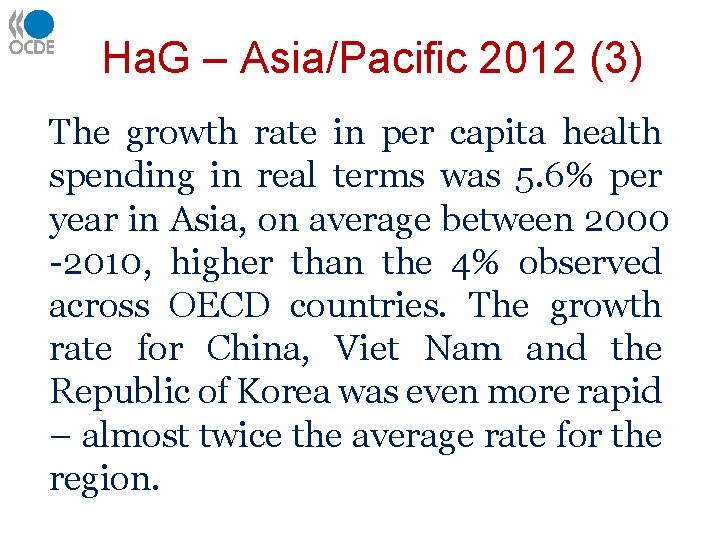
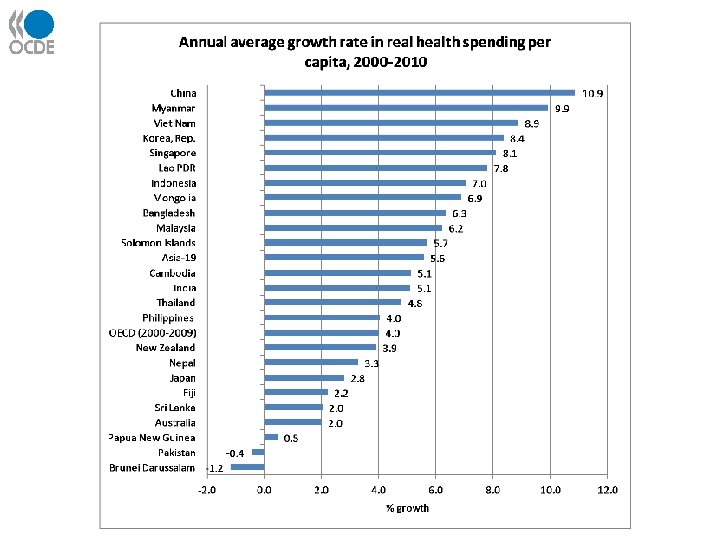
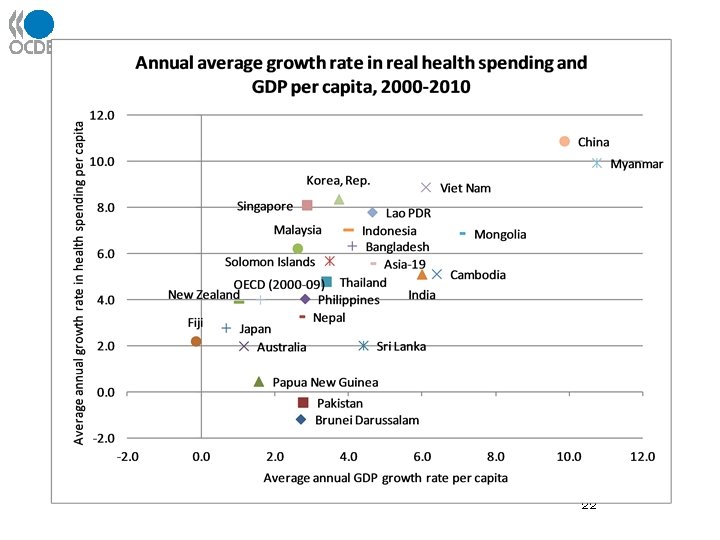
Ha. G – Asia/Pacific 2012 (3) The growth rate in per capita health spending in real terms was 5. 6% per year in Asia, on average between 2000 -2010, higher than the 4% observed across OECD countries. The growth rate for China, Viet Nam and the Republic of Korea was even more rapid – almost twice the average rate for the region.
21
22
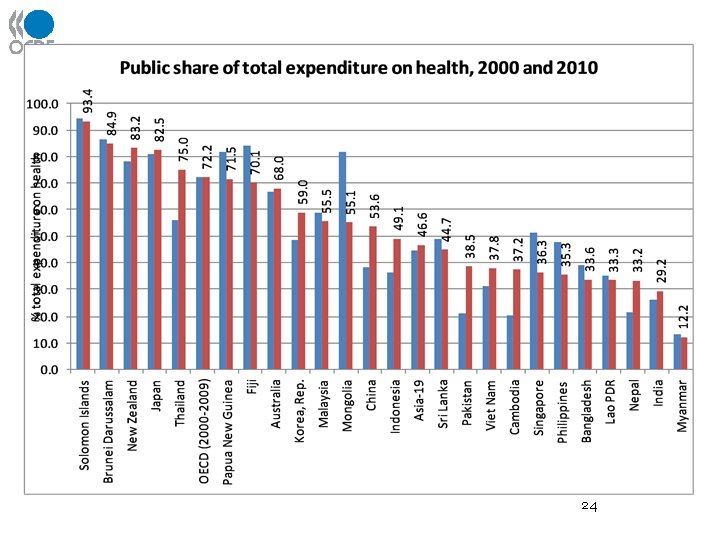
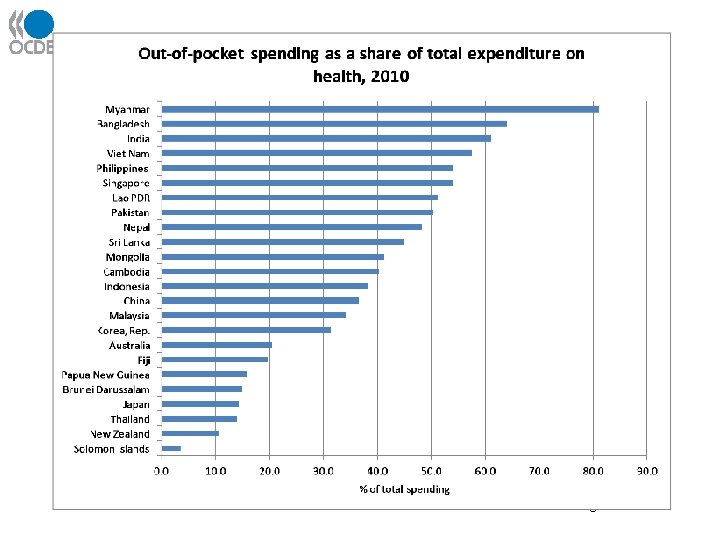
Ha. G – Asia/Pacific 2012 (4) The share of public spending decreased in Mongolia, Singapore and the Philippines, while it increased in Thailand, China, Indonesia, Cambodia and Nepal. A large part of private health spending is out-of-pocket.
24
25
Thank you for your attention! For further information, please visit our websites: Ø System of Health Accounts: www. oecd. org/health/sha Ø OECD-Eurostat-WHO Joint SHA Data Collection: www. oecd. org/health/sha/jointquestionnaire Ø OECD Korea Policy Centre: www. oecdkorea. org 26