
ANALYSIS OF THE TAXATION IN RUSSIA AND GREAT


- Slides: 19
ANALYSIS OF THE TAXATION IN RUSSIA AND GREAT BRITAIN Presenter: Kork Angelina Moscow, 2017
CONTENTS Ø Tax & Taxation Ø Taxation in Russia Ø Taxation in Great Britain Ø Three Taxes: • VAT • Income Tax • Tax on Profits Ø Comparisons Ø Conclusion
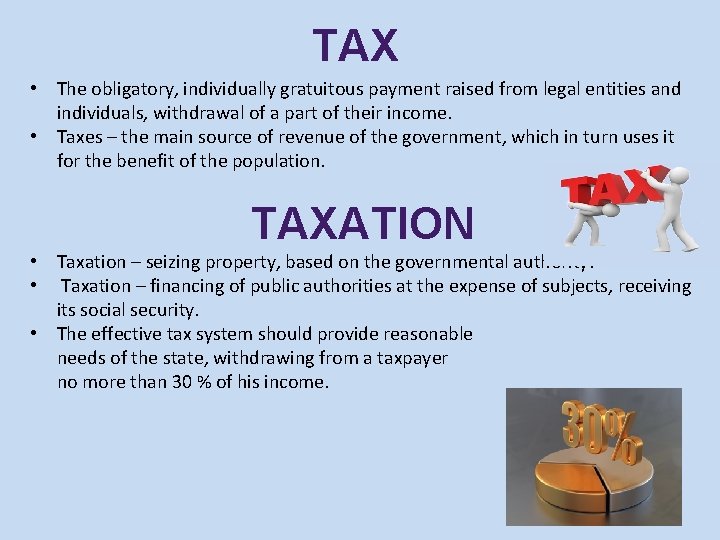
TAX • The obligatory, individually gratuitous payment raised from legal entities and individuals, withdrawal of a part of their income. • Taxes – the main source of revenue of the government, which in turn uses it for the benefit of the population. TAXATION • Taxation – seizing property, based on the governmental authority. • Taxation – financing of public authorities at the expense of subjects, receiving its social security. • The effective tax system should provide reasonable needs of the state, withdrawing from a taxpayer no more than 30 % of his income.
TAXATION IN RUSSIA
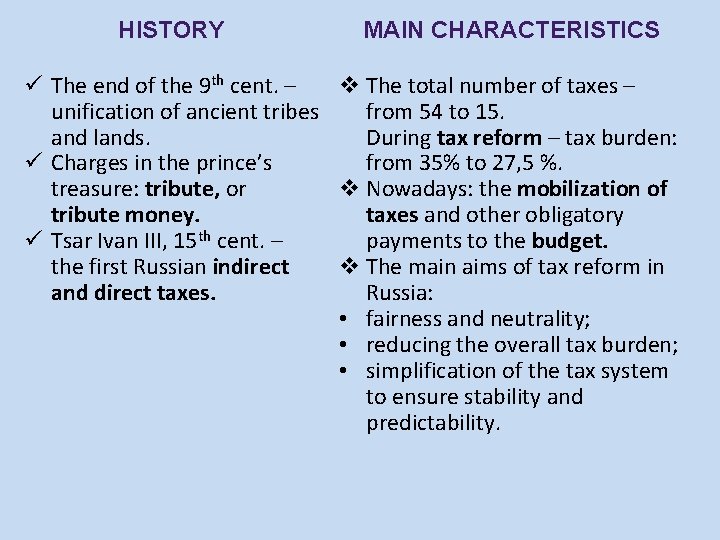
HISTORY MAIN CHARACTERISTICS ü The end of the 9 th cent. – v The total number of taxes – unification of ancient tribes from 54 to 15. and lands. During tax reform – tax burden: ü Charges in the prince’s from 35% to 27, 5 %. treasure: tribute, or v Nowadays: the mobilization of tribute money. taxes and other obligatory ü Tsar Ivan III, 15 th cent. – payments to the budget. the first Russian indirect v The main aims of tax reform in and direct taxes. Russia: • fairness and neutrality; • reducing the overall tax burden; • simplification of the tax system to ensure stability and predictability.
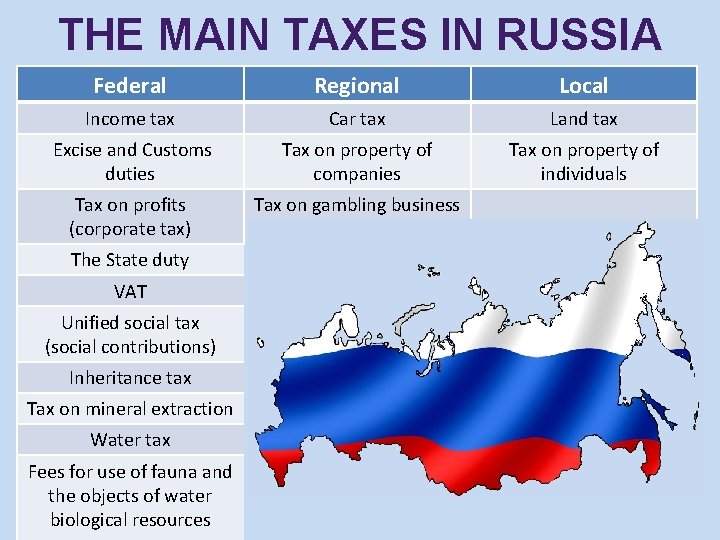
THE MAIN TAXES IN RUSSIA Federal Regional Local Income tax Car tax Land tax Excise and Customs duties Tax on property of companies Tax on property of individuals Tax on profits (corporate tax) Tax on gambling business The State duty VAT Unified social tax (social contributions) Inheritance tax Tax on mineral extraction Water tax Fees for use of fauna and the objects of water biological resources
TAXATION IN GREAT BRITAIN
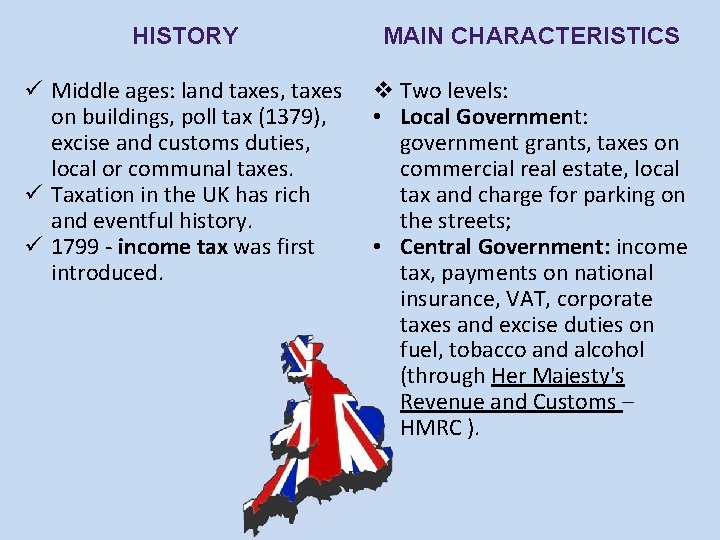
HISTORY MAIN CHARACTERISTICS ü Middle ages: land taxes, taxes on buildings, poll tax (1379), excise and customs duties, local or communal taxes. ü Taxation in the UK has rich and eventful history. ü 1799 - income tax was first introduced. v Two levels: • Local Government: government grants, taxes on commercial real estate, local tax and charge for parking on the streets; • Central Government: income tax, payments on national insurance, VAT, corporate taxes and excise duties on fuel, tobacco and alcohol (through Her Majesty's Revenue and Customs – HMRC ).
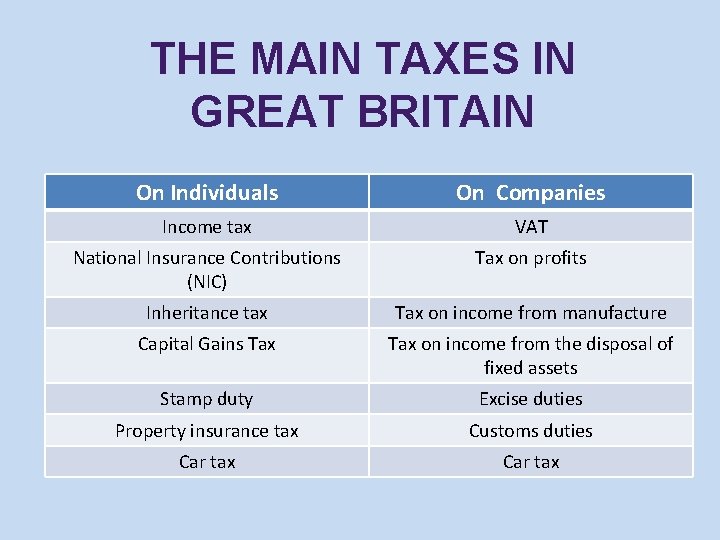
THE MAIN TAXES IN GREAT BRITAIN On Individuals On Companies Income tax VAT National Insurance Contributions (NIC) Tax on profits Inheritance tax Tax on income from manufacture Capital Gains Tax on income from the disposal of fixed assets Stamp duty Excise duties Property insurance tax Customs duties Car tax
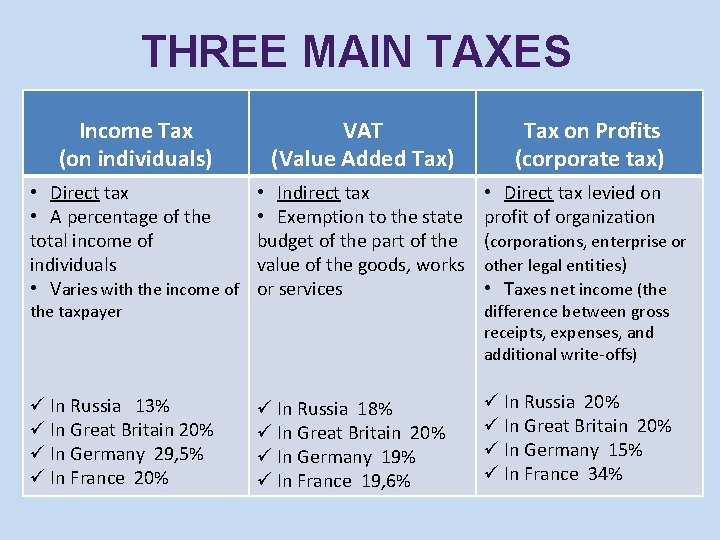
THREE MAIN TAXES Income Tax (on individuals) VAT (Value Added Tax) Tax on Profits (corporate tax) • Direct tax • A percentage of the total income of individuals • Varies with the income of • Indirect tax • Exemption to the state budget of the part of the value of the goods, works or services • Direct tax levied on profit of organization (corporations, enterprise or other legal entities) • Taxes net income (the ü In Russia 13% ü In Great Britain 20% ü In Germany 29, 5% ü In France 20% ü In Russia 18% ü In Great Britain 20% ü In Germany 19% ü In France 19, 6% ü In Russia 20% ü In Great Britain 20% ü In Germany 15% ü In France 34% the taxpayer difference between gross receipts, expenses, and additional write-offs)
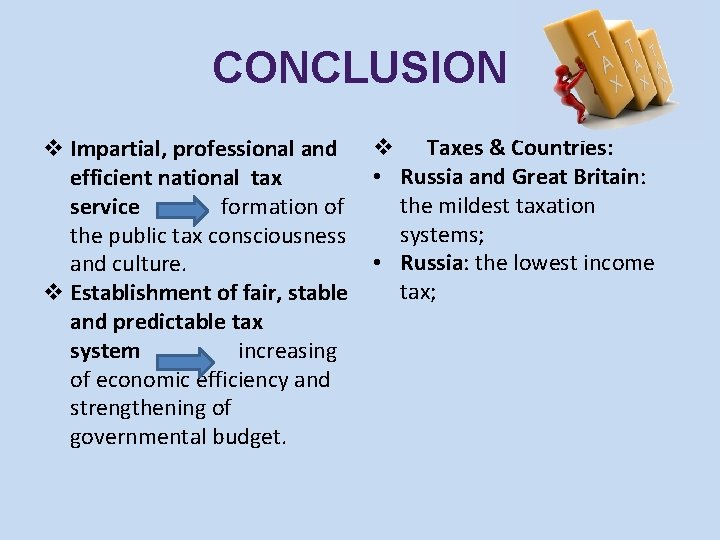
CONCLUSION v Impartial, professional and efficient national tax service formation of the public tax consciousness and culture. v Establishment of fair, stable and predictable tax system increasing of economic efficiency and strengthening of governmental budget. v Taxes & Countries: • Russia and Great Britain: the mildest taxation systems; • Russia: the lowest income tax;
THANK YOU FOR YOUR ATTENTION!