
Analysis of the phase shift error between A
Analysis of the phase shift error between A and B signals in BPMs BPM project
The phase shift problem • A phase shift between A and B signals may arise do to different time propagation delays of A and B in the front-end electronics. – The propagation time in cables is ~1 ns/ft. – A to B cable length mismatch of 1. 5 cm generates a phase shift of 1 degree. • A and B signals are individually processed by analog filters. Different relative phases in the analog filters will generate an A to B phase shift.
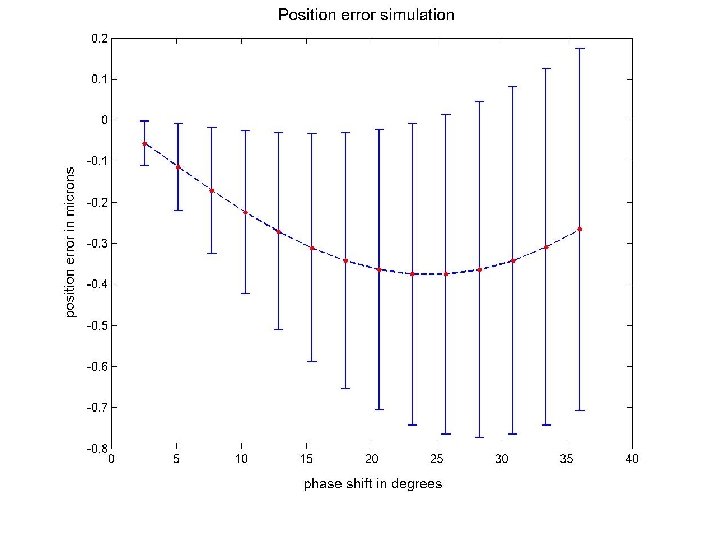
A to B signal shift simulation • The phase of B is advanced with respect to the phase of A in steps of 2. 57º (degrees) in the interval [0º, 36º]. • The simulation computes the error in position calculation as a function of the phase shift.
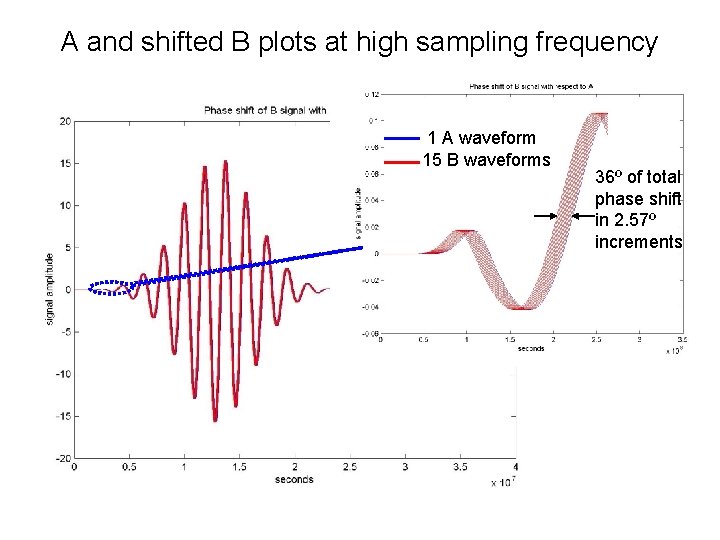
A and shifted B plots at high sampling frequency 1 A waveform 15 B waveforms 36º of total phase shift in 2. 57º increments
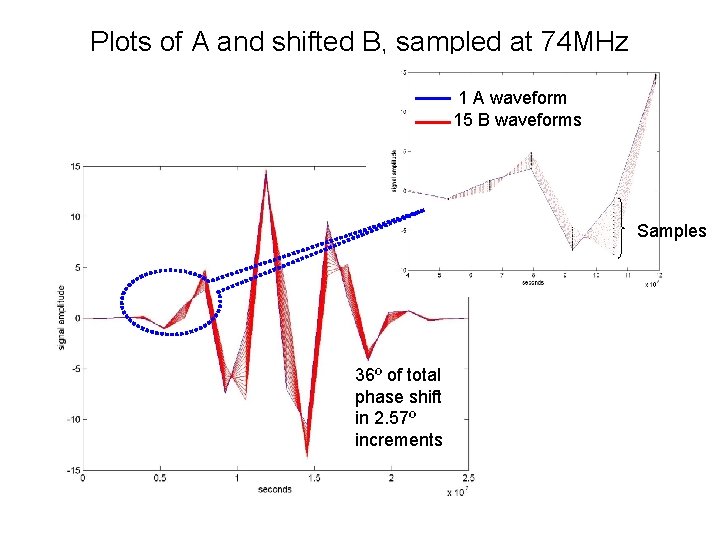
Plots of A and shifted B, sampled at 74 MHz 1 A waveform 15 B waveforms Samples 36º of total phase shift in 2. 57º increments
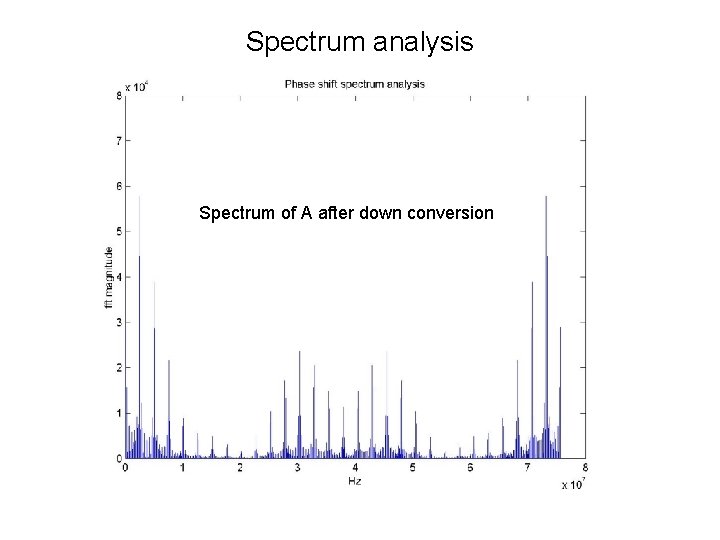
Spectrum analysis Spectrum of A after down conversion
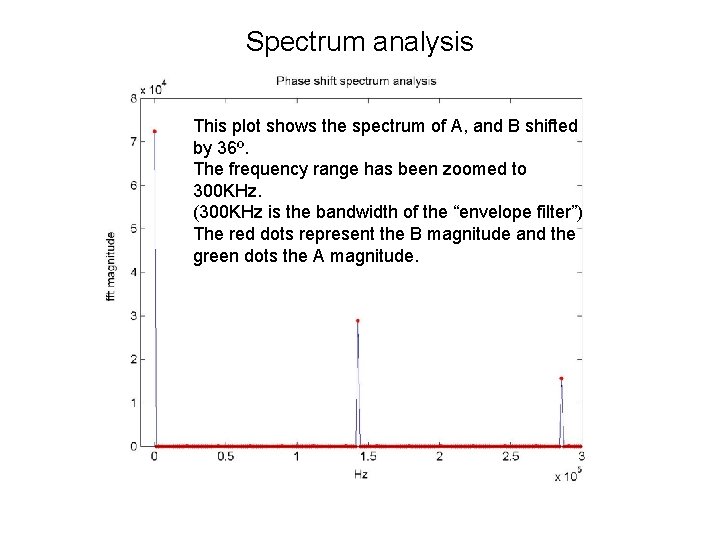
Spectrum analysis This plot shows the spectrum of A, and B shifted by 36º. The frequency range has been zoomed to 300 KHz. (300 KHz is the bandwidth of the “envelope filter”) The red dots represent the B magnitude and the green dots the A magnitude.
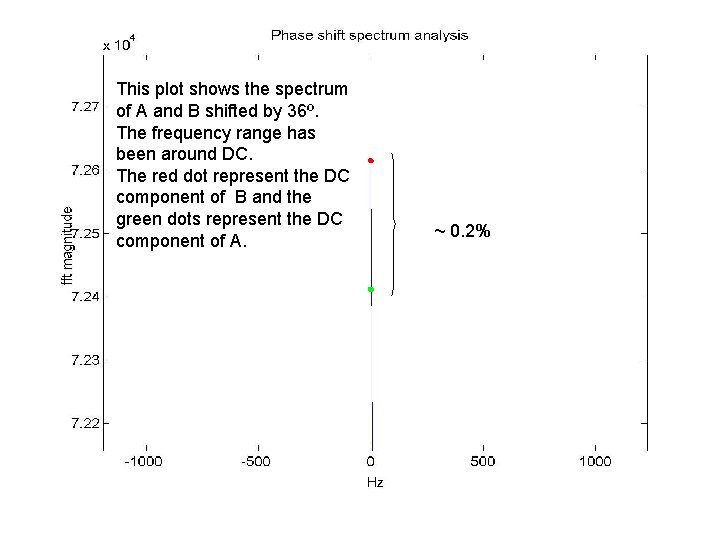
This plot shows the spectrum Spectrum of A and B shifted by 36º. The frequency range has been around DC. The red dot represent the DC component of B and the green dots represent the DC component of A. analysis ~ 0. 2%
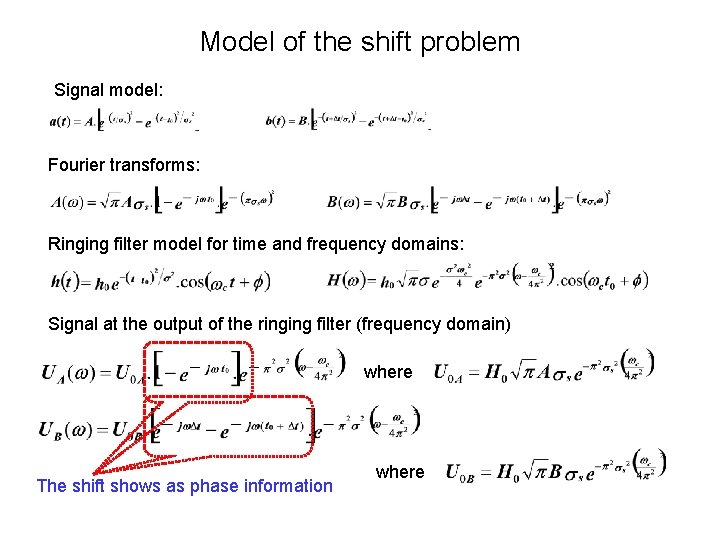
Model of the shift problem Signal model: Fourier transforms: Ringing filter model for time and frequency domains: Signal at the output of the ringing filter (frequency domain) where The shift shows as phase information where
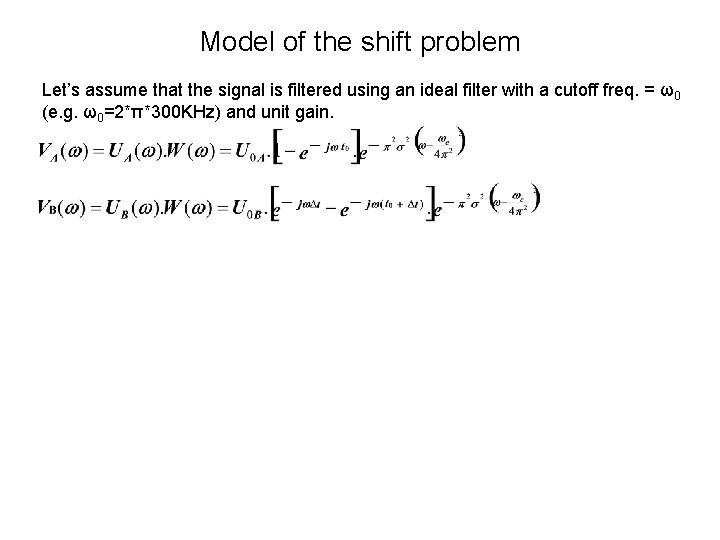
Model of the shift problem Let’s assume that the signal is filtered using an ideal filter with a cutoff freq. = ω0 (e. g. ω0=2*π*300 KHz) and unit gain.
- Slides: 11