
Analysis of the Iridium 33 Cosmos 2251 Collision




- Slides: 30
Analysis of the Iridium 33 -Cosmos 2251 Collision T. S. Kelso
Overview • Introduction • Anatomy of a Collision • Tracking a Collision • Impact on the Space Environment • Conclusions Pg 2 of 29
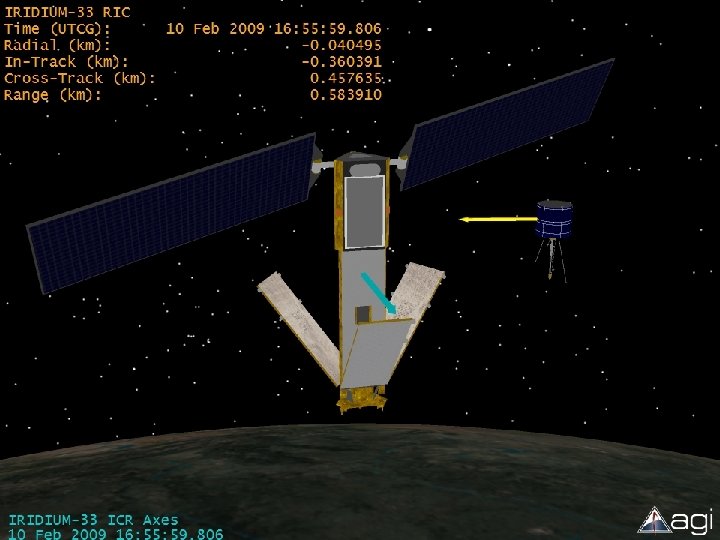
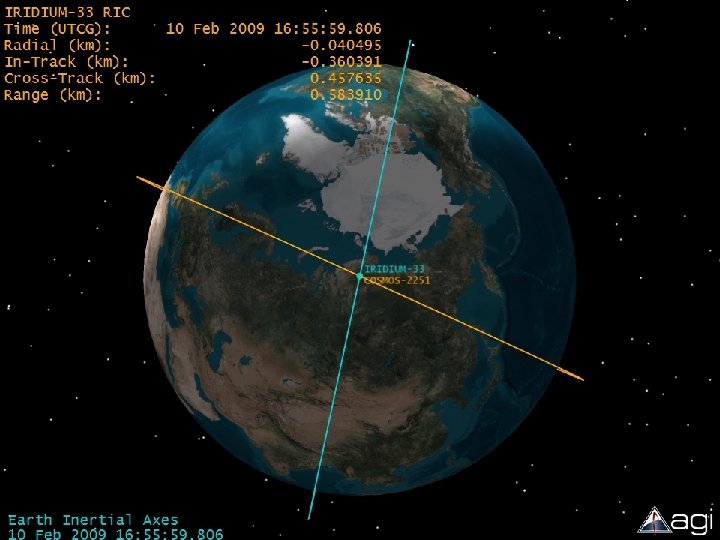
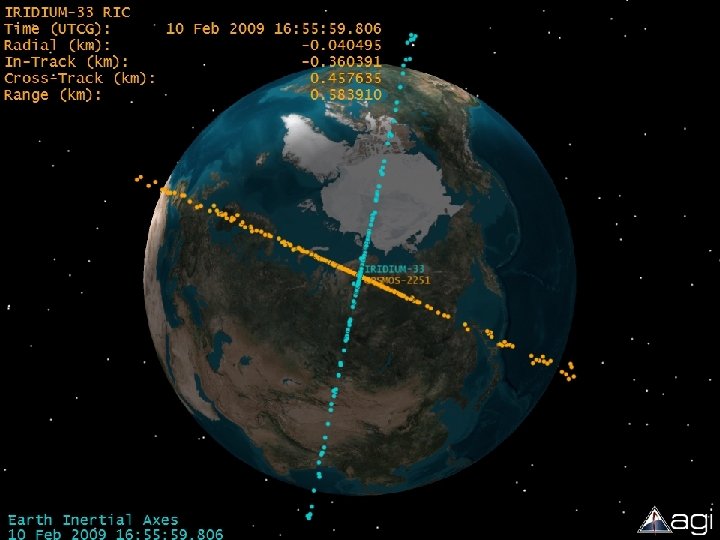
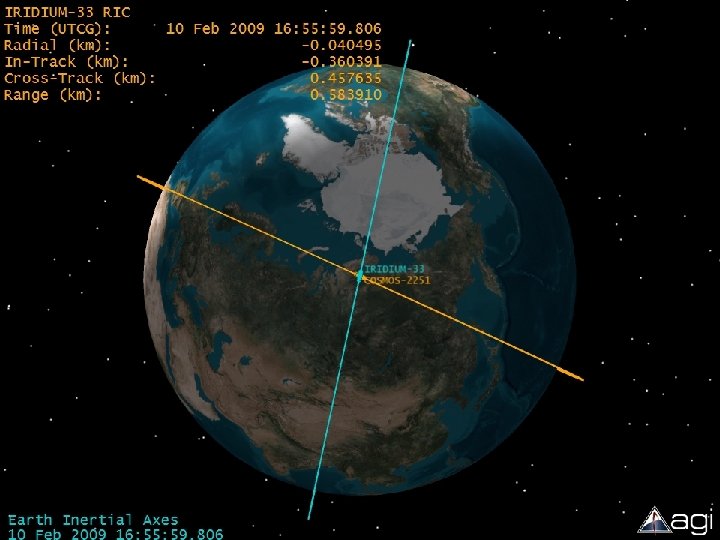
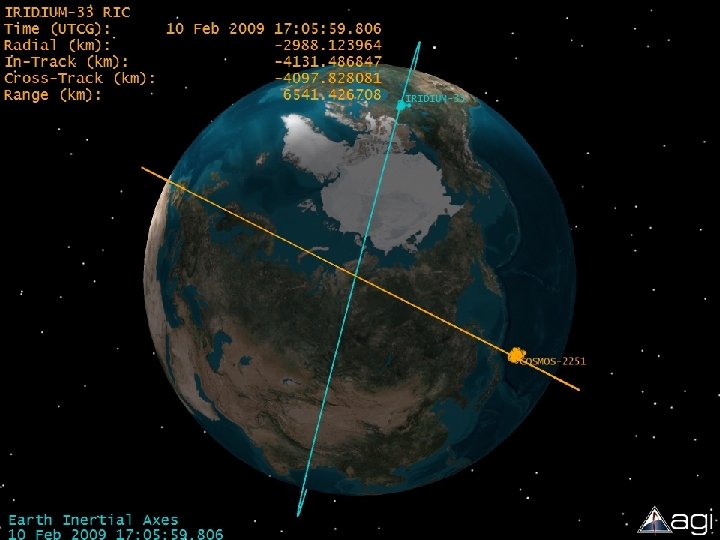
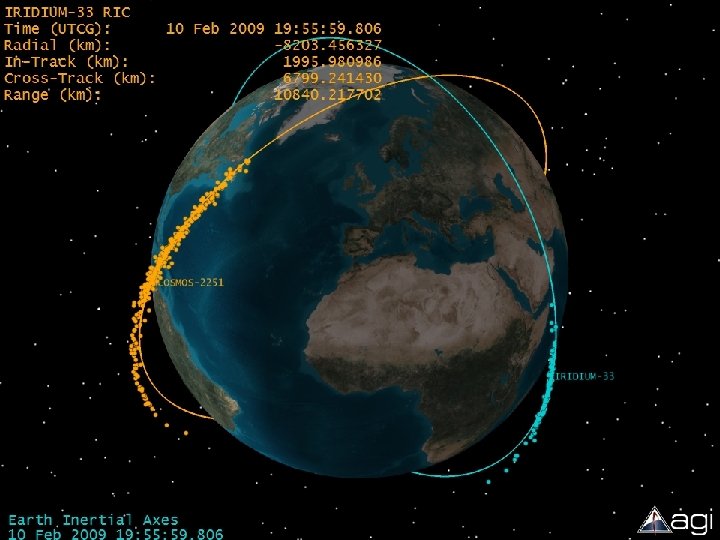
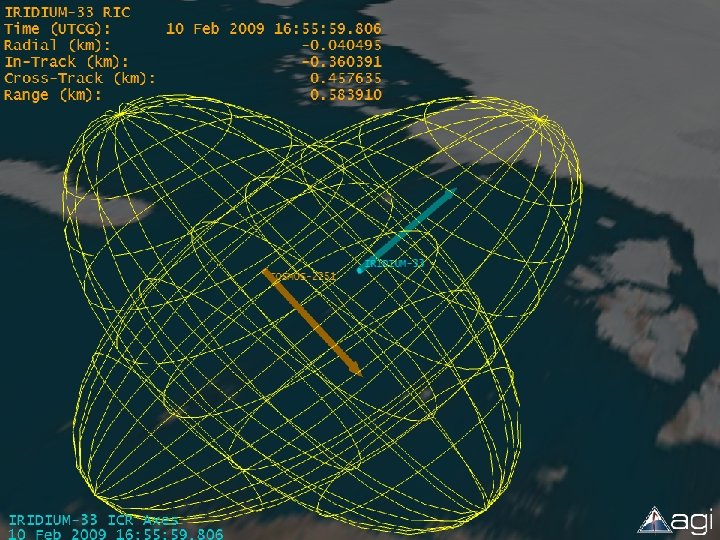
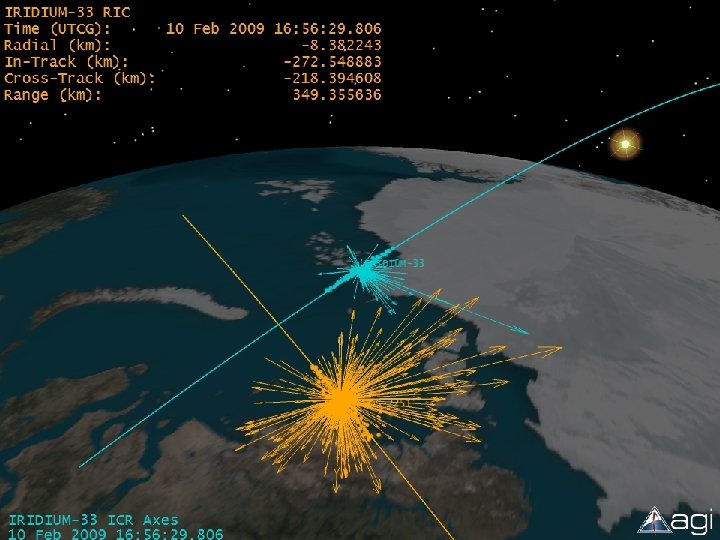
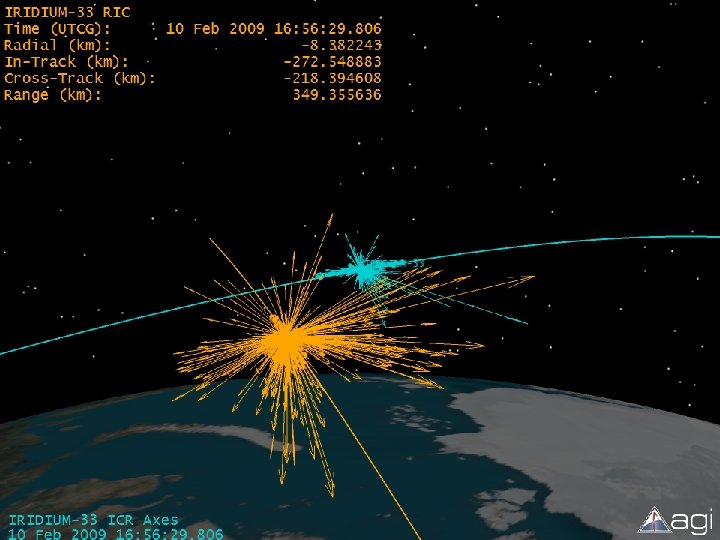
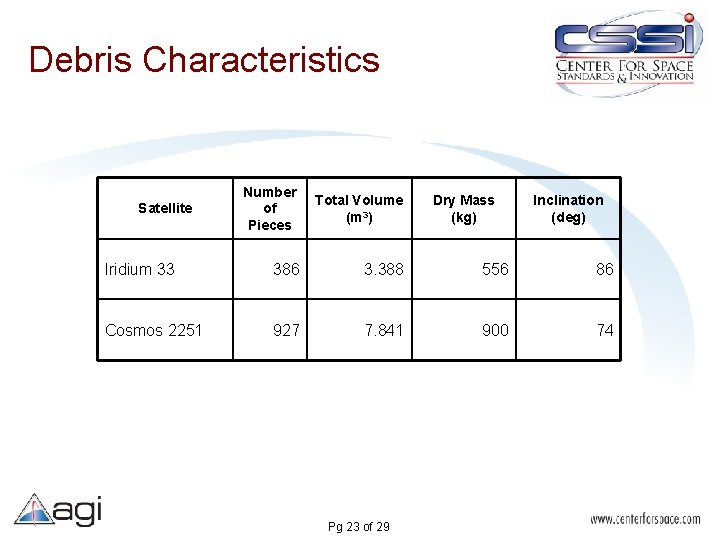
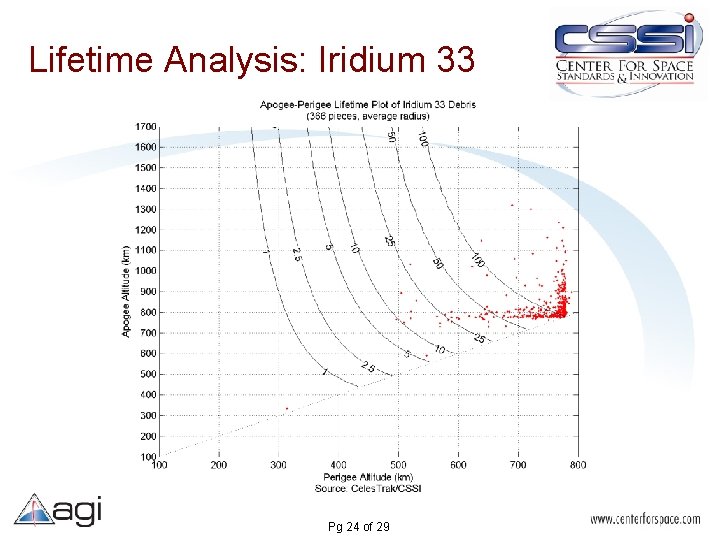
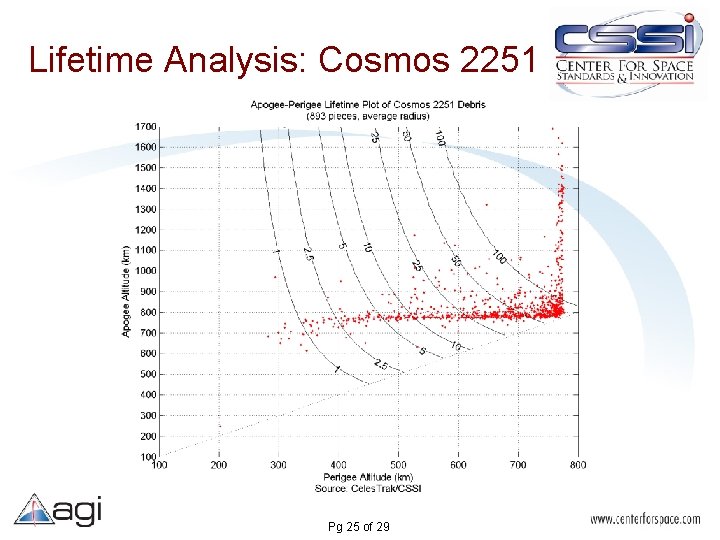
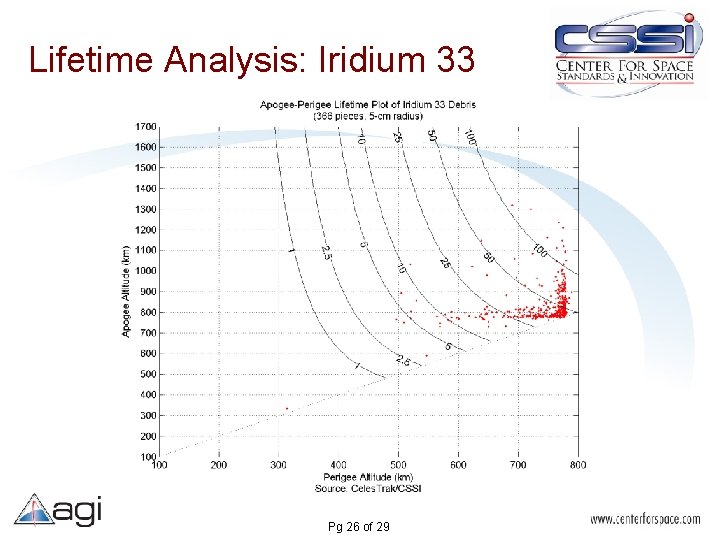
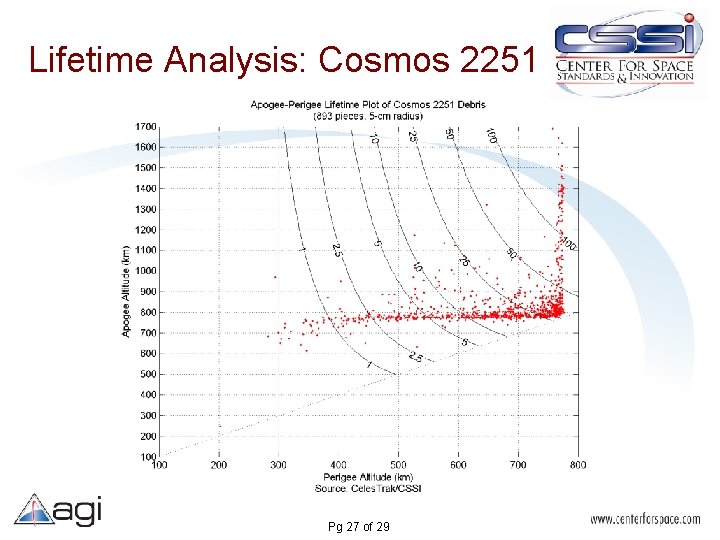
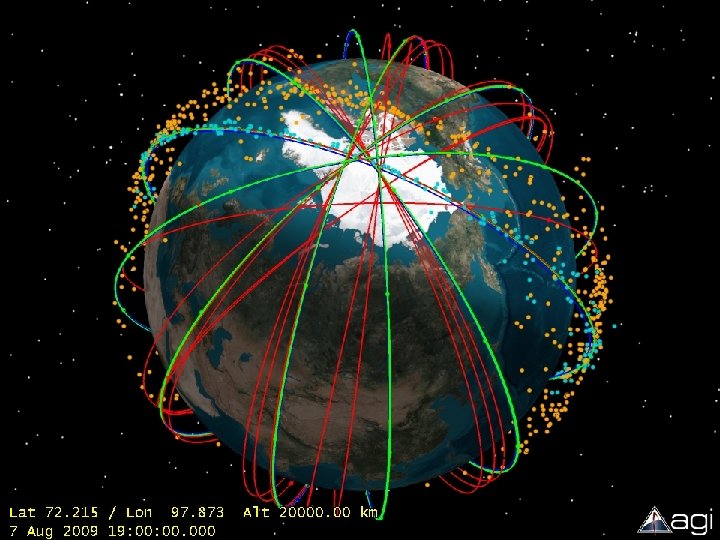
Introduction • What: Collision of Iridium 33 & Cosmos 2251 • When: 2009 Feb 10 @ 1656 UTC • Where: 72. 505 N, 97. 873 E, 788. 6 km altitude – Northern Siberia • Results (as of 2009 Aug 5): – 386 pieces of Iridium 33 debris (16 decayed) – 927 pieces of Cosmos 2251 debris (30 decayed) Pg 3 of 29
Anatomy of a Collision
Pg 5 of 29
Pg 6 of 29
Pg 7 of 29
Pg 8 of 29
Pg 9 of 29
Pg 10 of 29
Pg 11 of 29
Pg 12 of 29
Pg 13 of 29
Relative Velocities Pg 14 of 29
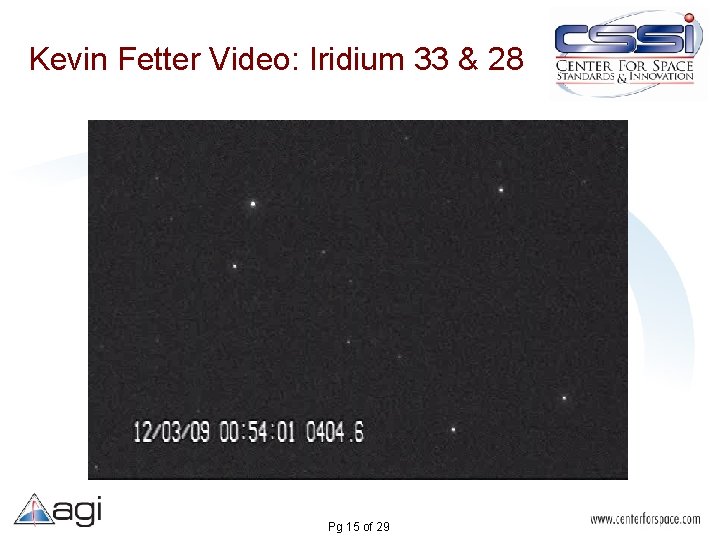
Kevin Fetter Video: Iridium 33 & 28 Pg 15 of 29
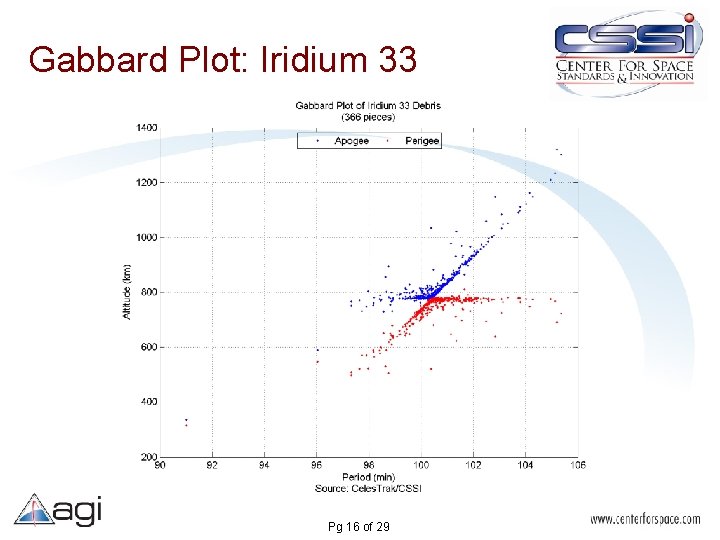
Gabbard Plot: Iridium 33 Pg 16 of 29
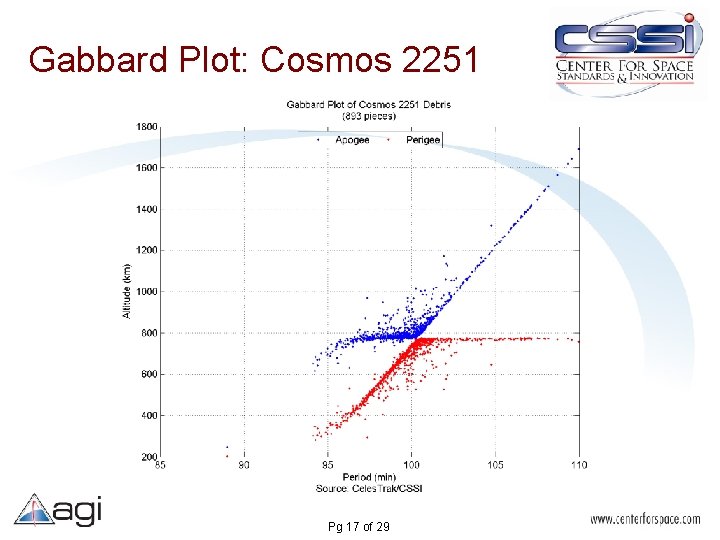
Gabbard Plot: Cosmos 2251 Pg 17 of 29
Tracking a Collision
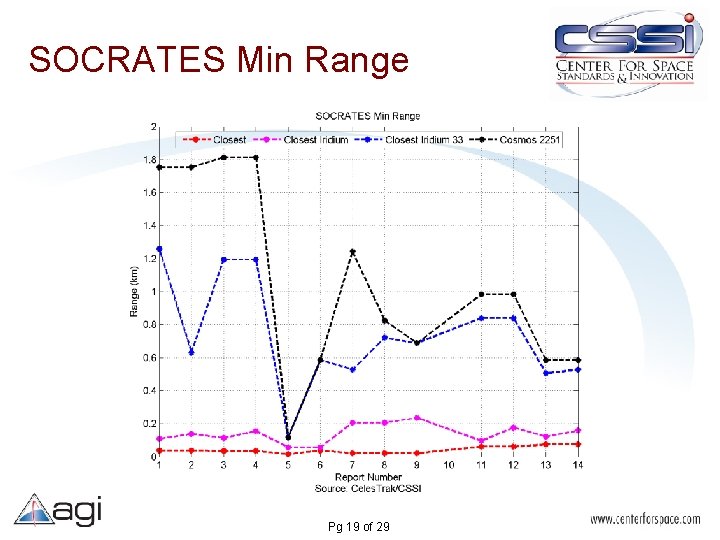
SOCRATES Min Range Pg 19 of 29
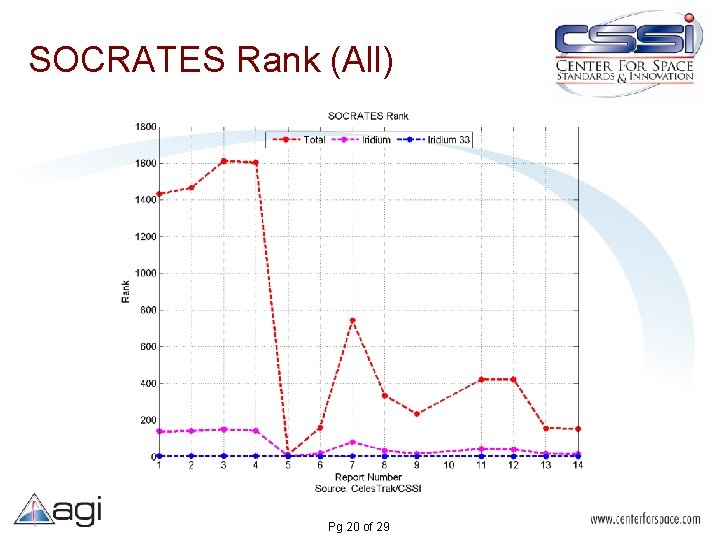
SOCRATES Rank (All) Pg 20 of 29
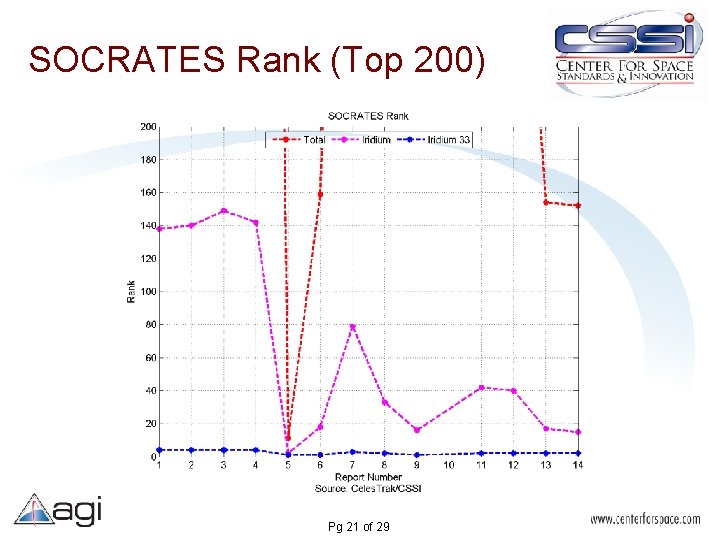
SOCRATES Rank (Top 200) Pg 21 of 29
Impact on the Space Environment
Debris Characteristics Number of Pieces Total Volume (m 3) Iridium 33 386 3. 388 556 86 Cosmos 2251 927 7. 841 900 74 Satellite Pg 23 of 29 Dry Mass (kg) Inclination (deg)
Lifetime Analysis: Iridium 33 Pg 24 of 29
Lifetime Analysis: Cosmos 2251 Pg 25 of 29
Lifetime Analysis: Iridium 33 Pg 26 of 29
Lifetime Analysis: Cosmos 2251 Pg 27 of 29
Pg 28 of 29
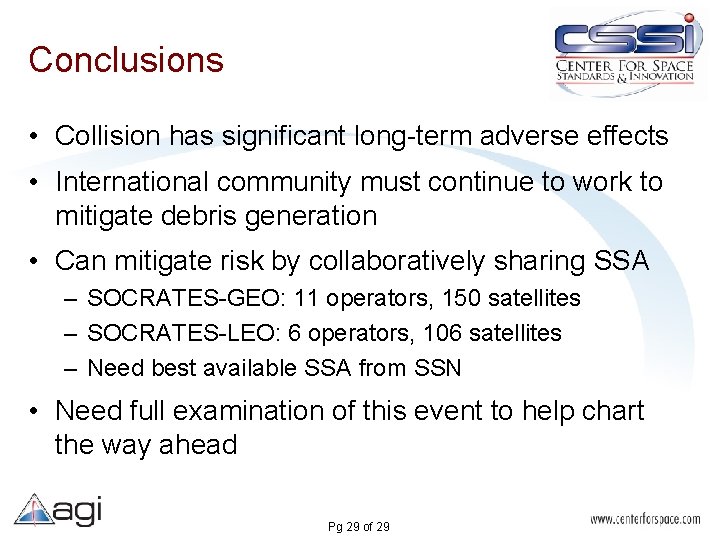
Conclusions • Collision has significant long-term adverse effects • International community must continue to work to mitigate debris generation • Can mitigate risk by collaboratively sharing SSA – SOCRATES-GEO: 11 operators, 150 satellites – SOCRATES-LEO: 6 operators, 106 satellites – Need best available SSA from SSN • Need full examination of this event to help chart the way ahead Pg 29 of 29
Questions?