
Analysis of Systems of Chemical Equations with Decision
- Slides: 14
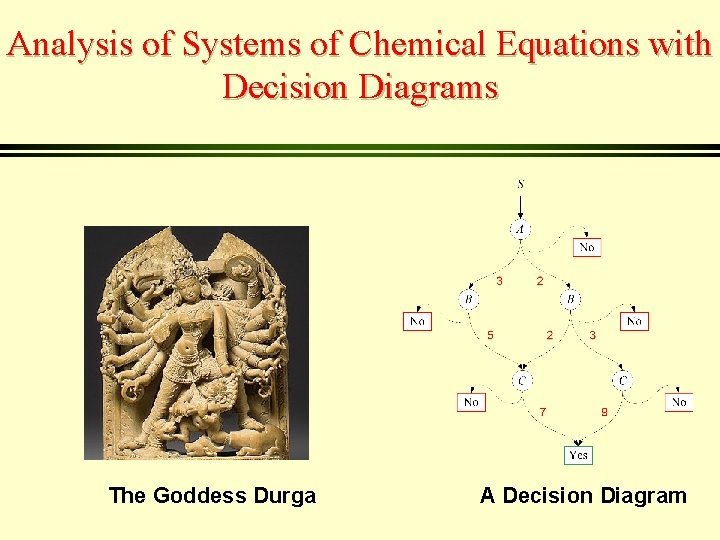
Analysis of Systems of Chemical Equations with Decision Diagrams The Goddess Durga A Decision Diagram
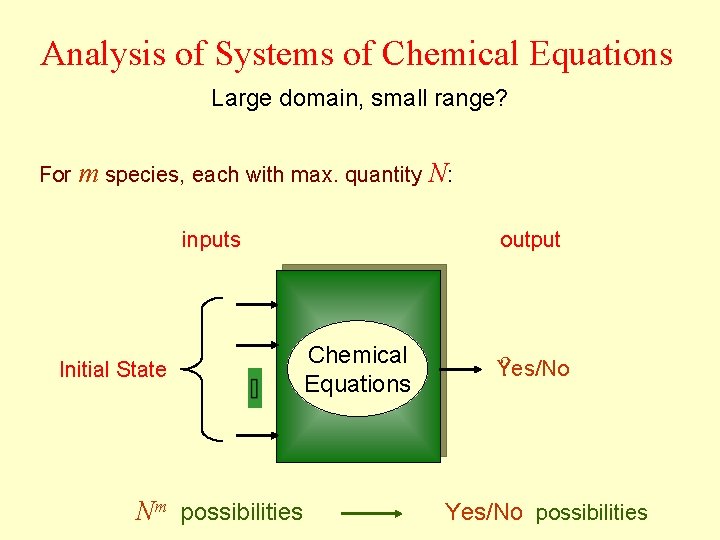
Analysis of Systems of Chemical Equations Large domain, small range? For m species, each with max. quantity N: inputs Initial State Nm possibilities output Chemical Equations ? Yes/No possibilities
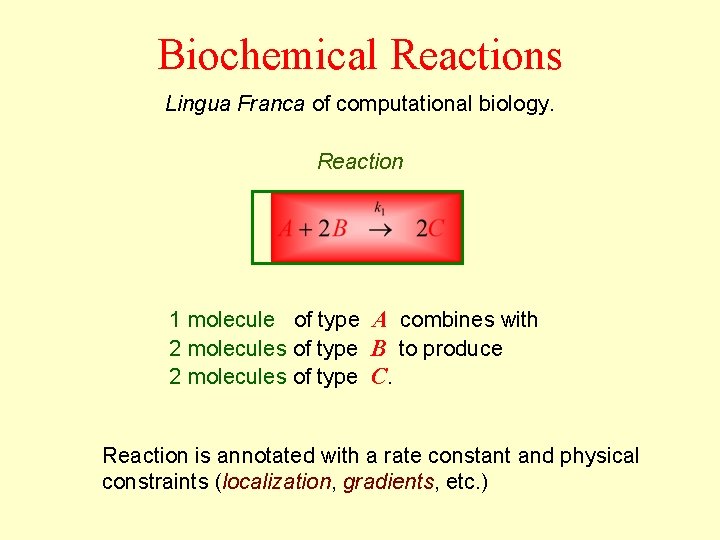
Biochemical Reactions Lingua Franca of computational biology. Reaction 1 molecule of type A combines with 2 molecules of type B to produce 2 molecules of type C. Reaction is annotated with a rate constant and physical constraints (localization, gradients, etc. )
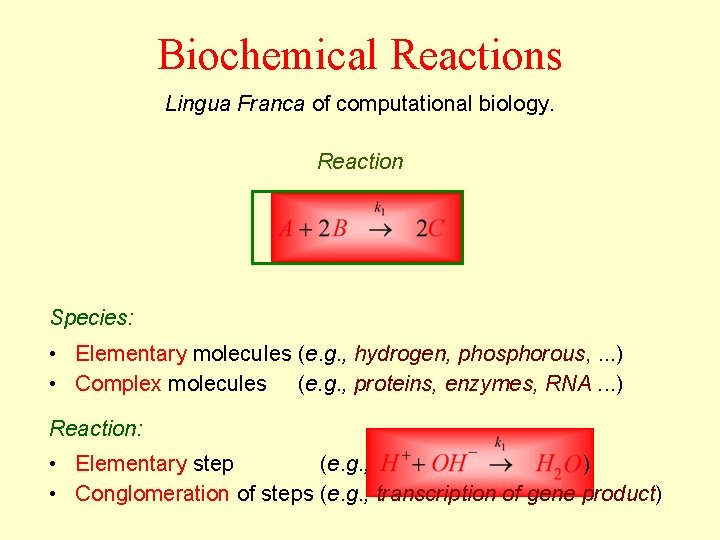
Biochemical Reactions Lingua Franca of computational biology. Reaction Species: • Elementary molecules (e. g. , hydrogen, phosphorous, . . . ) • Complex molecules (e. g. , proteins, enzymes, RNA. . . ) Reaction: • Elementary step (e. g. , ) • Conglomeration of steps (e. g. , transcription of gene product)
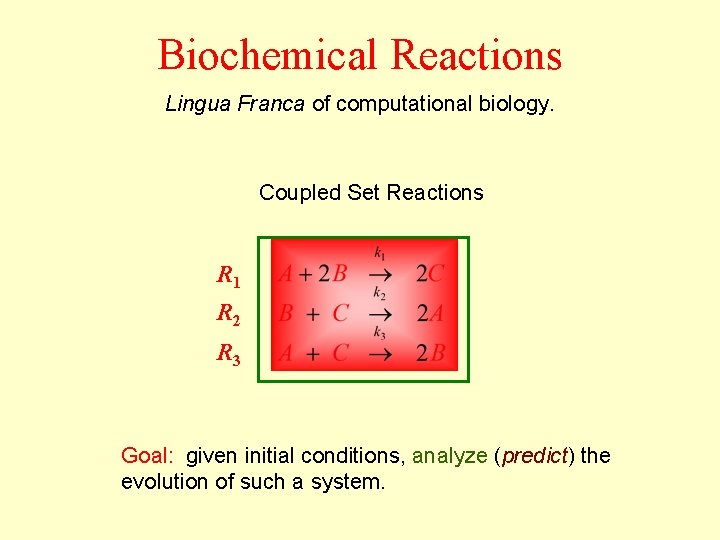
Biochemical Reactions Lingua Franca of computational biology. Coupled Set Reactions R 1 R 2 R 3 Goal: given initial conditions, analyze (predict) the evolution of such a system.
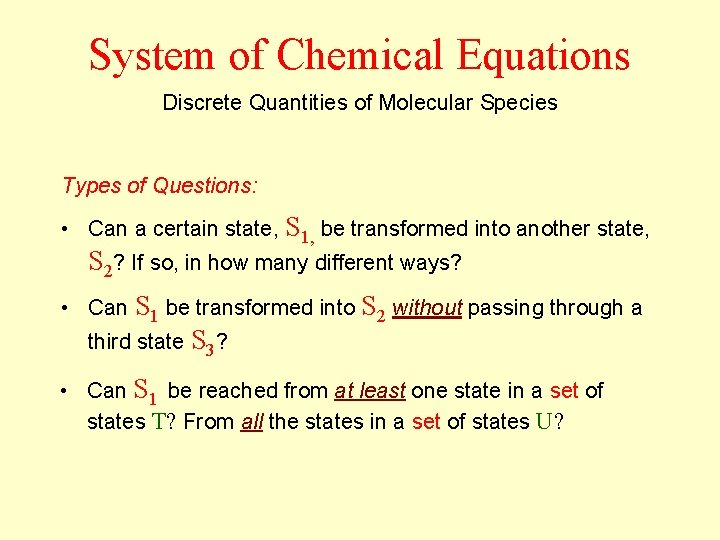
System of Chemical Equations Discrete Quantities of Molecular Species Types of Questions: • Can a certain state, S 1, be transformed into another state, S 2? If so, in how many different ways? S 2 • Can S 1 be transformed into S 2 without passing through a third state S 3? • Can S 1 be reached from at least one state in a set of states T? From all the states in a set of states U?
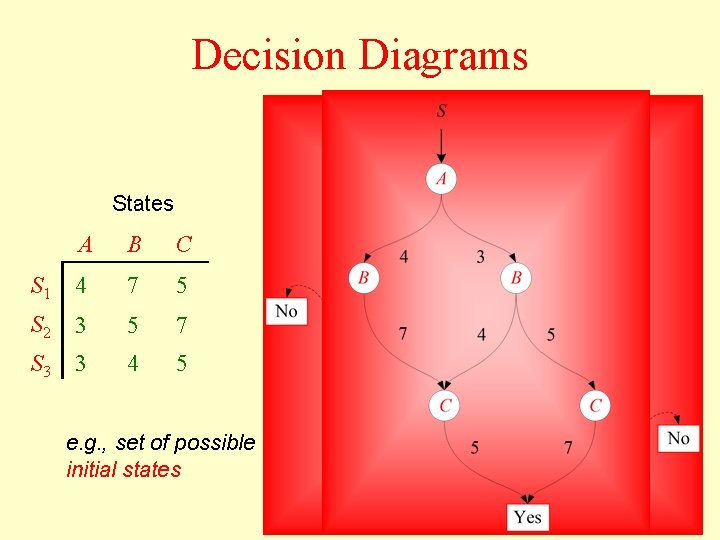
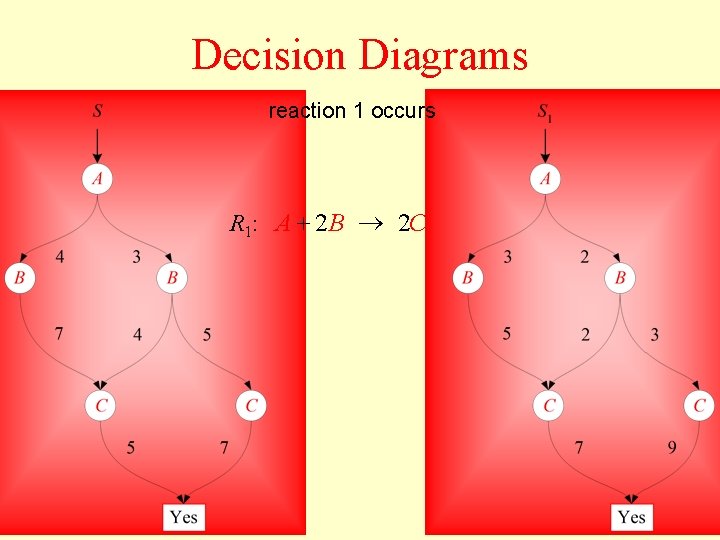
Decision Diagrams States A B C S 1 4 7 5 S 2 3 5 7 S 3 3 4 5 e. g. , set of possible initial states
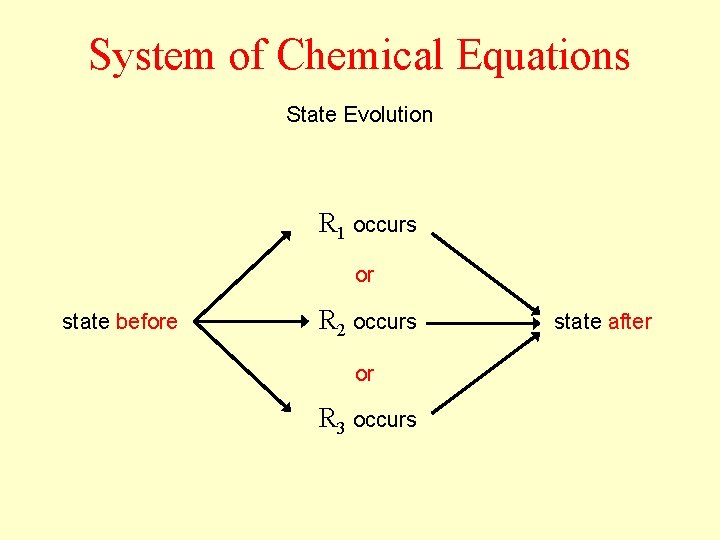
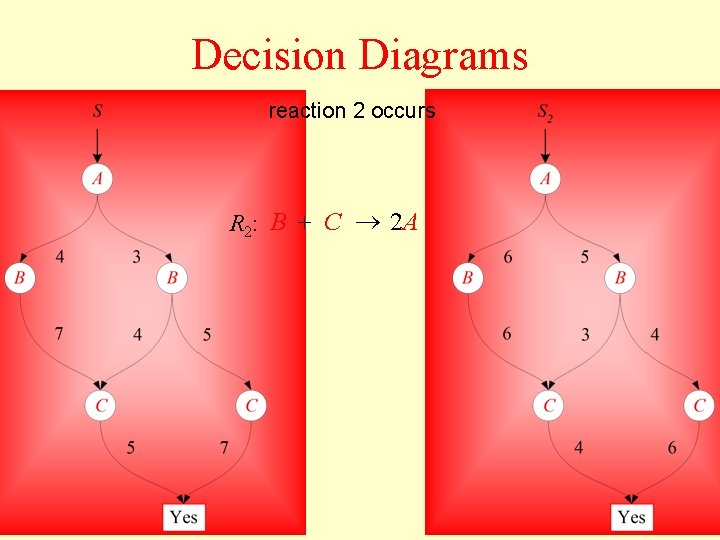
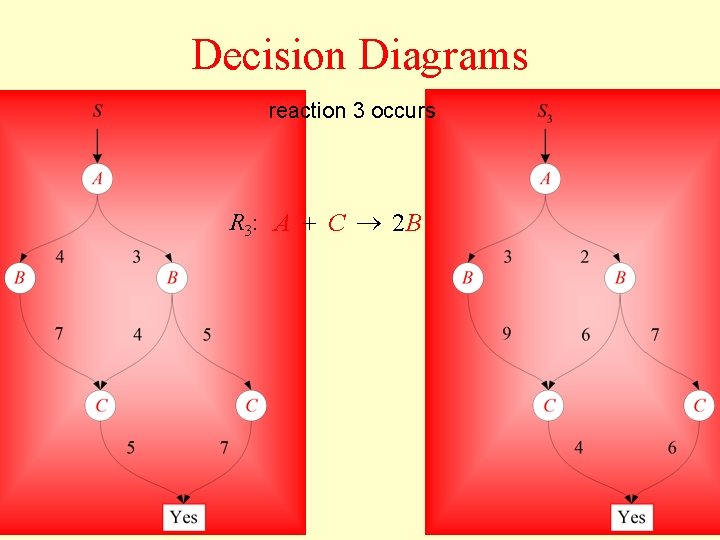
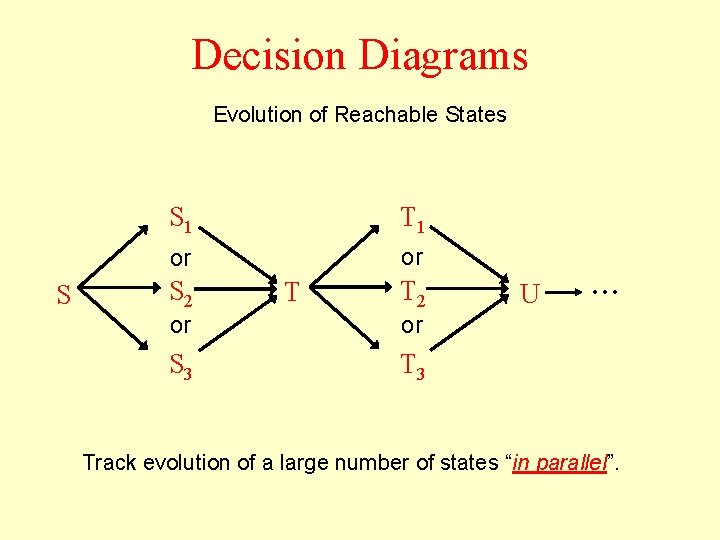
System of Chemical Equations State Evolution R 1 occurs or state before R 2 occurs or R 3 occurs state after
Decision Diagrams reaction 1 occurs R 1: A + 2 B ® 2 C
Decision Diagrams reaction 2 occurs R 2: B + C ® 2 A
Decision Diagrams reaction 3 occurs R 3: A + C ® 2 B
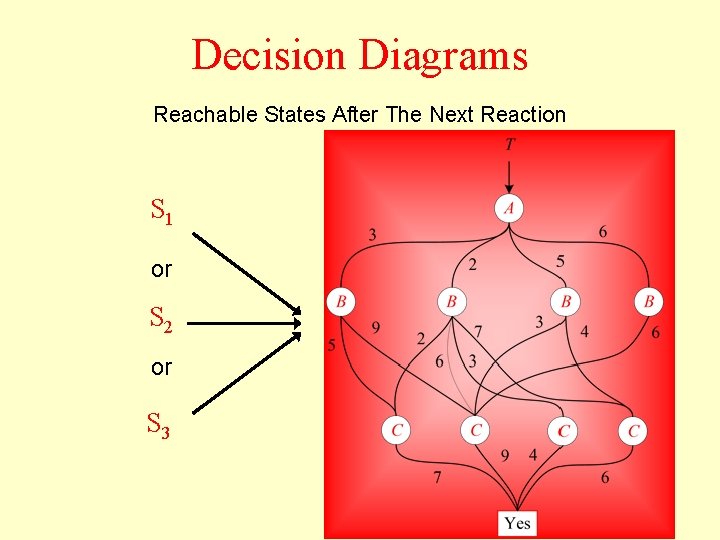
Decision Diagrams Reachable States After The Next Reaction S 1 or S 2 or S 3
Decision Diagrams Evolution of Reachable States S S 1 T 1 or or S 2 T T 2 or or S 3 T 3 U . . . Track evolution of a large number of states “in parallel”.
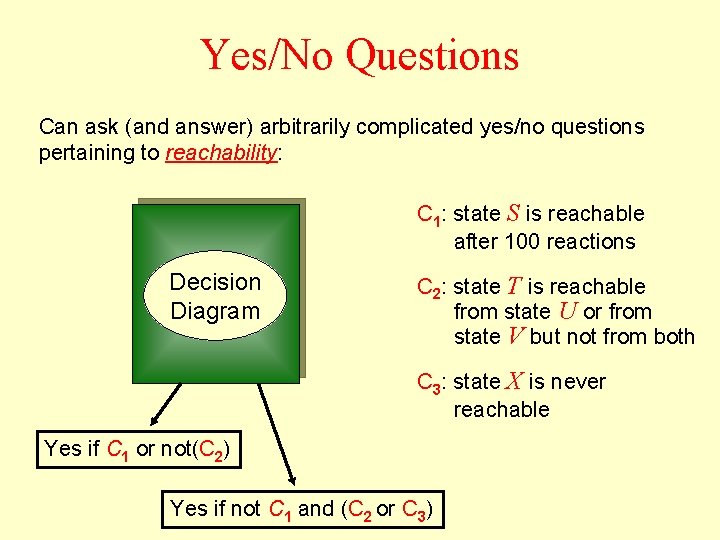
Yes/No Questions Can ask (and answer) arbitrarily complicated yes/no questions pertaining to reachability: C 1: state S is reachable after 100 reactions Decision Diagram C 2: state T is reachable from state U or from state V but not from both C 3: state X is never reachable Yes if C 1 or not(C 2) Yes if not C 1 and (C 2 or C 3)