
Analysis of Storage Failures Weekly Group Meeting Reza
![30 Reference [1] S. Z. Shazli, M. Abdul-Aziz, M. B. Tahoori, D. R. Kaeli.](https://slidetodoc.com/presentation_image_h2/ab63d07c116982f3219b7674c7ab78c5/image-30.jpg "30 Reference [1] S. Z. Shazli, M. Abdul-Aziz, M. B. Tahoori, D. R. Kaeli.")
- Slides: 30
Analysis of Storage Failures Weekly Group Meeting Reza eftekhary 1
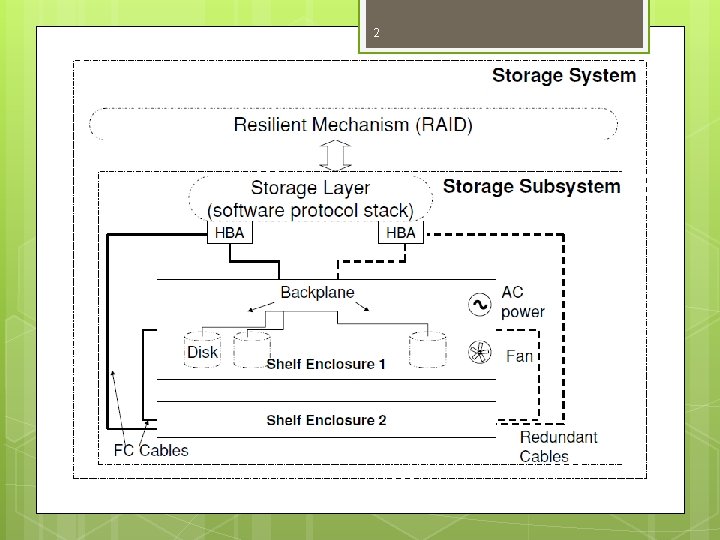
2
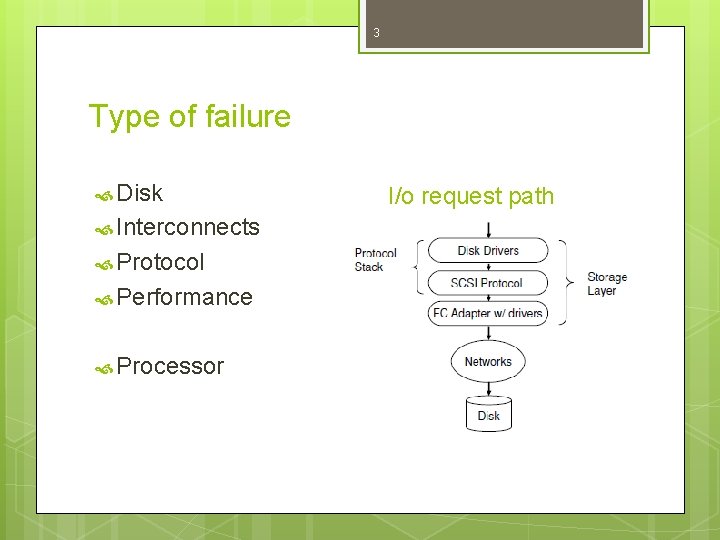
3 Type of failure Disk Interconnects Protocol Performance Processor I/o request path
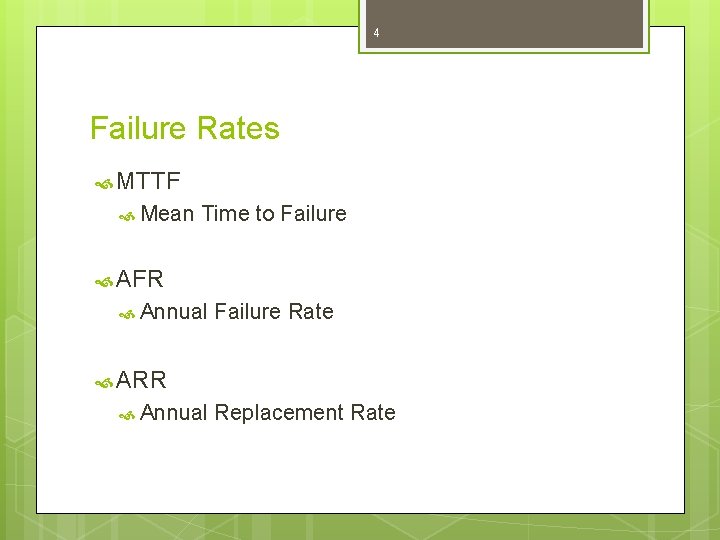
4 Failure Rates MTTF Mean Time to Failure AFR Annual Failure Rate ARR Annual Replacement Rate
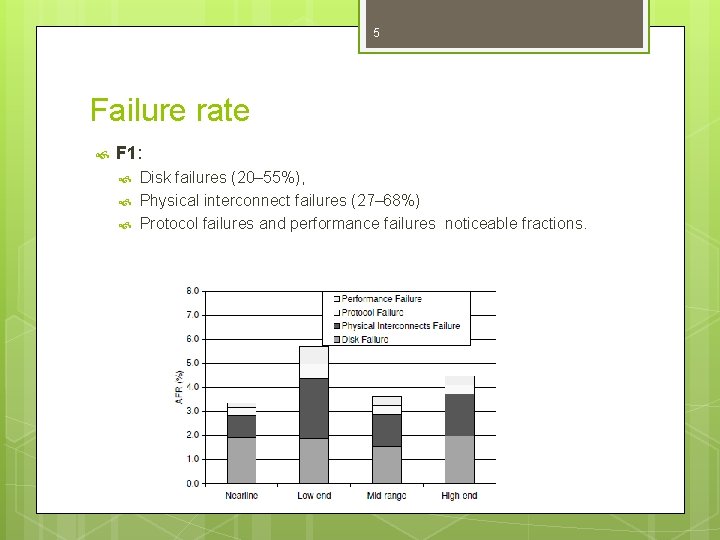
5 Failure rate F 1: Disk failures (20– 55%), Physical interconnect failures (27– 68%) Protocol failures and performance failures noticeable fractions.
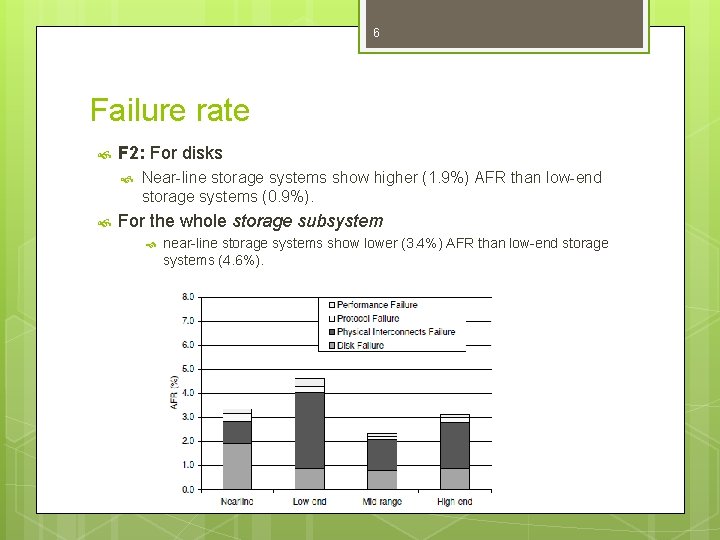
6 Failure rate F 2: For disks Near-line storage systems show higher (1. 9%) AFR than low-end storage systems (0. 9%). For the whole storage subsystem near-line storage systems show lower (3. 4%) AFR than low-end storage systems (4. 6%).
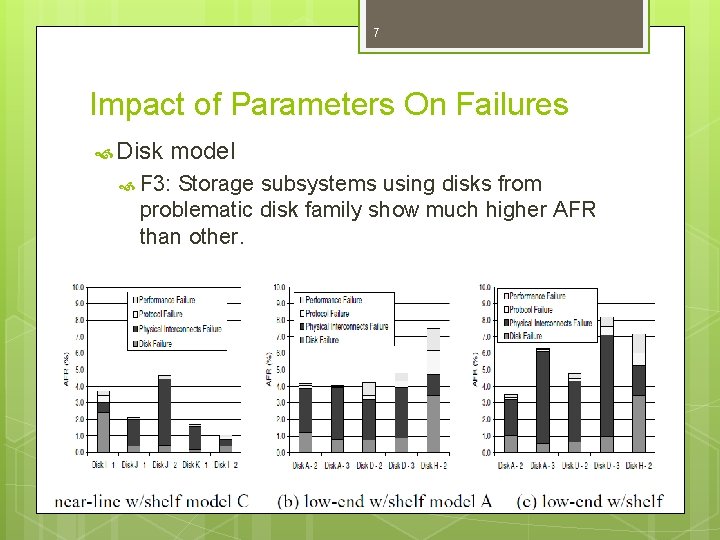
7 Impact of Parameters On Failures Disk model F 3: Storage subsystems using disks from problematic disk family show much higher AFR than other.
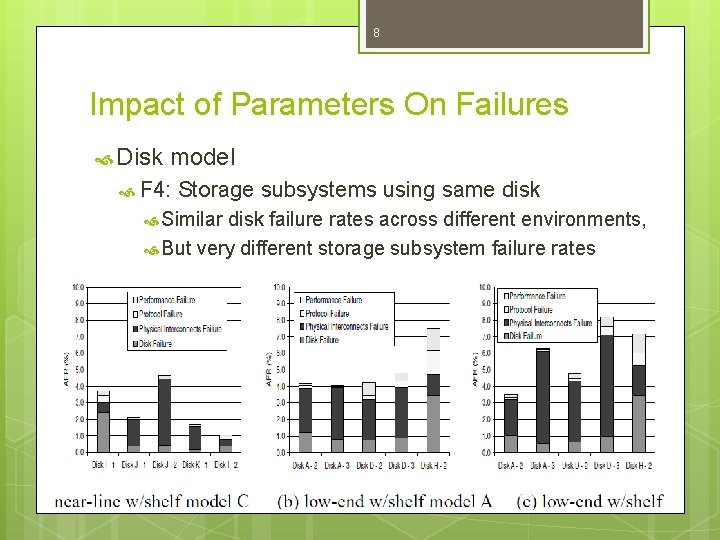
8 Impact of Parameters On Failures Disk model F 4: Storage subsystems using same disk Similar disk failure rates across different environments, But very different storage subsystem failure rates
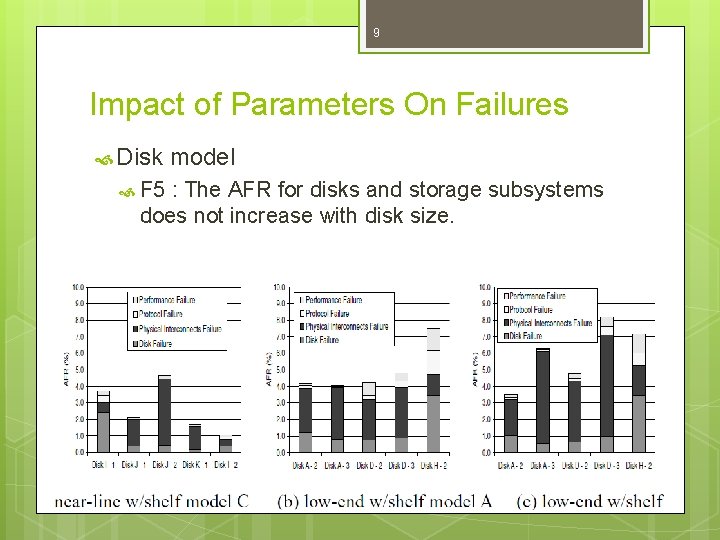
9 Impact of Parameters On Failures Disk F 5 model : The AFR for disks and storage subsystems does not increase with disk size.
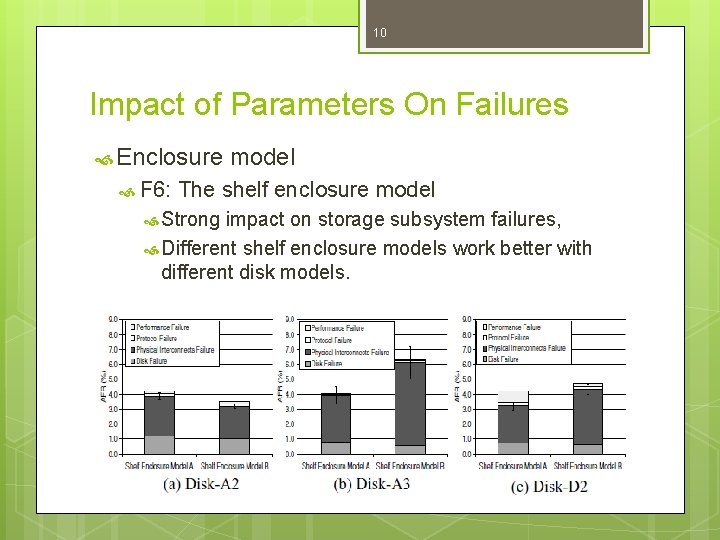
10 Impact of Parameters On Failures Enclosure F 6: model The shelf enclosure model Strong impact on storage subsystem failures, Different shelf enclosure models work better with different disk models.
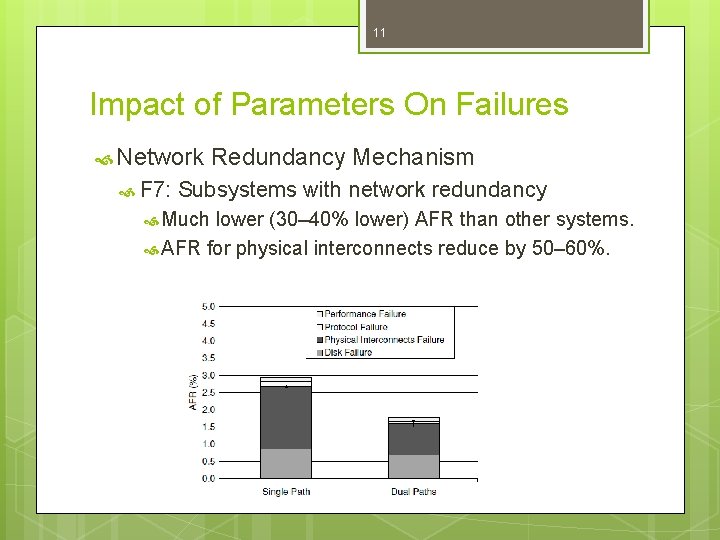
11 Impact of Parameters On Failures Network F 7: Redundancy Mechanism Subsystems with network redundancy Much lower (30– 40% lower) AFR than other systems. AFR for physical interconnects reduce by 50– 60%.
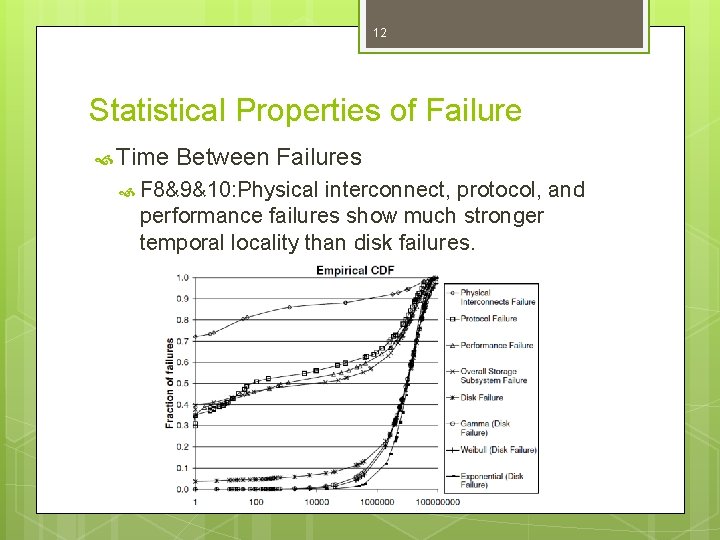
12 Statistical Properties of Failure Time Between Failures F 8&9&10: Physical interconnect, protocol, and performance failures show much stronger temporal locality than disk failures.
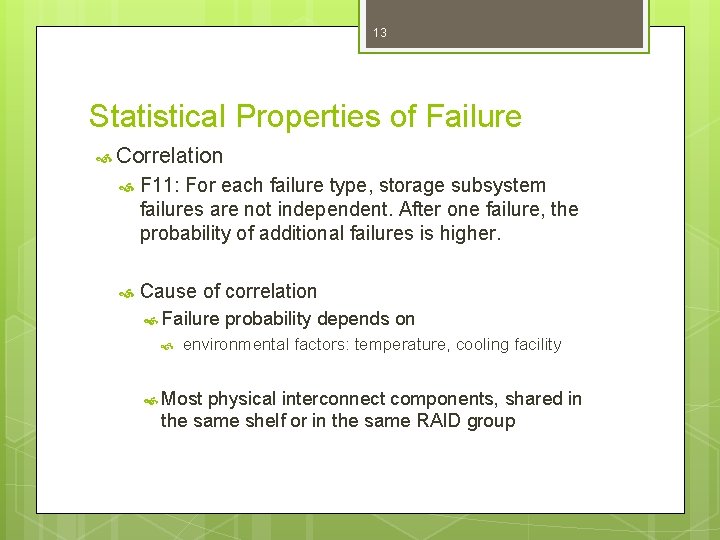
13 Statistical Properties of Failure Correlation F 11: For each failure type, storage subsystem failures are not independent. After one failure, the probability of additional failures is higher. Cause of correlation Failure probability depends on environmental factors: temperature, cooling facility Most physical interconnect components, shared in the same shelf or in the same RAID group
Analysis of Disk Failure 14
15 Disk Failure MTTF Mean Time to Failure AFR Annual Failure Rate ARR Annual Replacement Rate
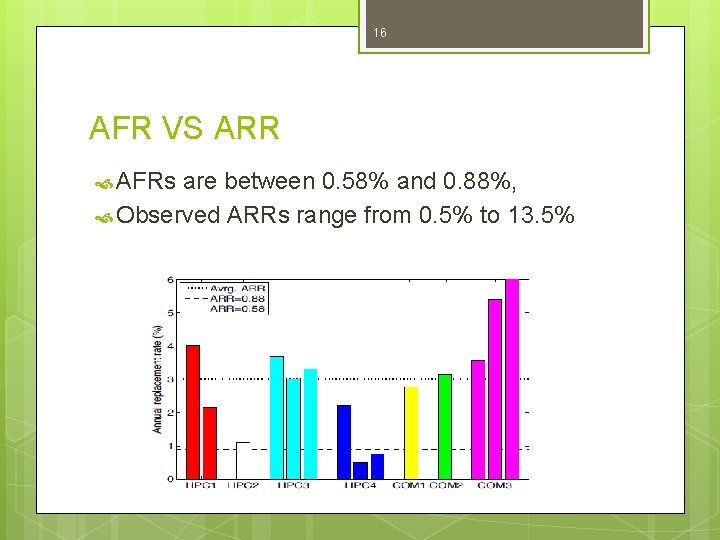
16 AFR VS ARR AFRs are between 0. 58% and 0. 88%, Observed ARRs range from 0. 5% to 13. 5%
17 Disk replacement rates O 1: Variation between datasheet MTTF and disk replacement rates The weighted average ARR was 3. 4 times larger than 0. 88%
18 Disk replacement rates O 2: For older systems (5 -8 years of age), ARR are bigger than AFR as much as a factor of 30. O 3: During the first few years of a system’s lifetime (< 3 years), the difference was as large as a factor of 6.
19 Disk replacement rates O 4: Same replacement rates of SCSI or FC disks. Disk independent factors, affect replacement rates more than component specific factors Like: operating conditions, usage and environmental factors, affect replacement rates more than component specific factors
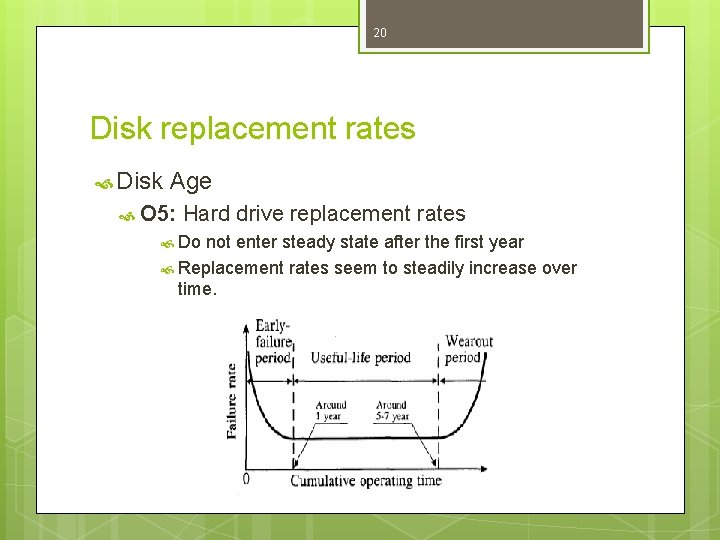
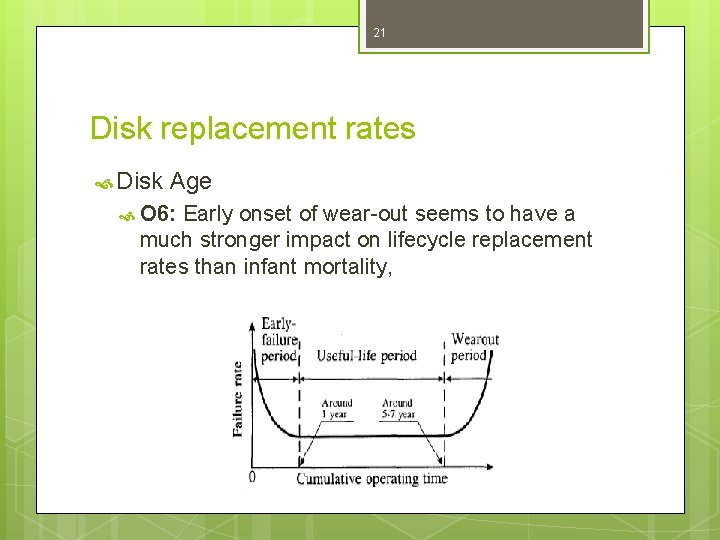
20 Disk replacement rates Disk Age O 5: Hard drive replacement rates Do not enter steady state after the first year Replacement rates seem to steadily increase over time.
21 Disk replacement rates Disk Age O 6: Early onset of wear-out seems to have a much stronger impact on lifecycle replacement rates than infant mortality,
22 Correlations Observation 7: Disk replacement counts exhibit significant levels of autocorrelation.
Processor Failure 23
24 Type of failure Hardware Errors Software Errors Power issues Radiation-induced errors. Soft errors Single Event Upset
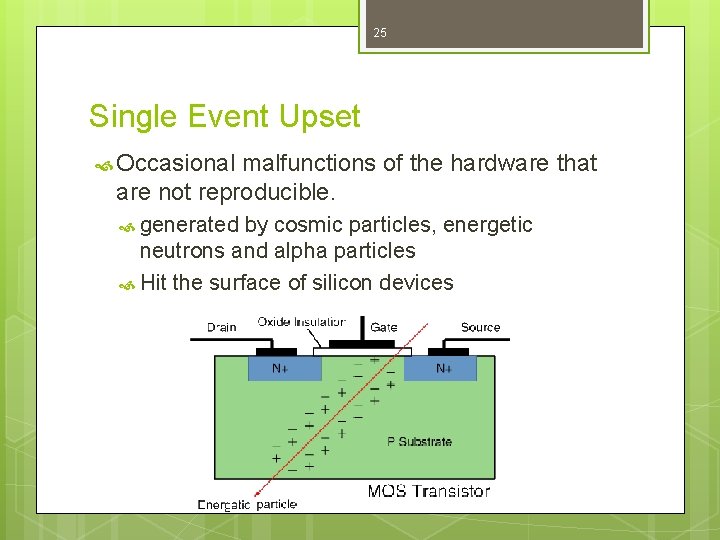
25 Single Event Upset Occasional malfunctions of the hardware that are not reproducible. generated by cosmic particles, energetic neutrons and alpha particles Hit the surface of silicon devices
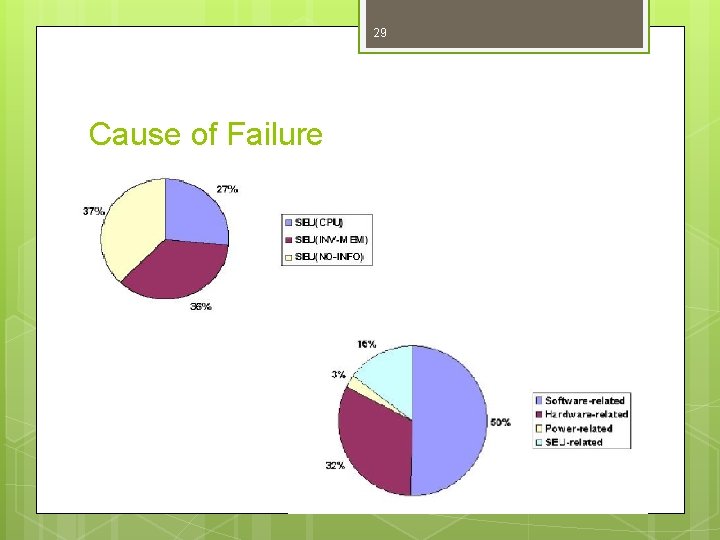
26 SEU Unavailability transient errors take the system to an invalid state Internal structure is not observable, so determining soft error rates is more challenging
27 Soft Error Rate Soft o Soft Error Sensitivity o o Probability of whether a soft error will cause an incorrect architectural state. Architectural vulnerability factor (AVF) o o Error Rate estimation Probability that a fault will cause an error in output. Using MCA o Enable system to diagnose, isolate MP failures
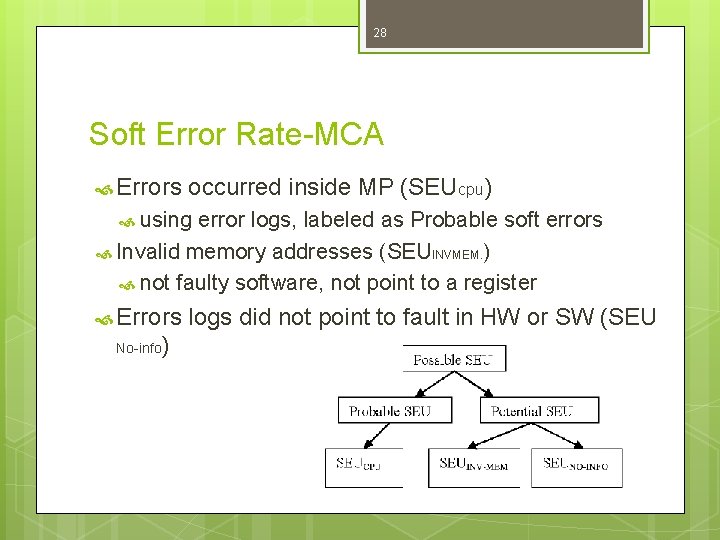
28 Soft Error Rate-MCA Errors occurred inside MP (SEUcpu) using error logs, labeled as Probable soft errors Invalid memory addresses (SEUINVMEM. ) not faulty software, not point to a register Errors No-info ) logs did not point to fault in HW or SW (SEU
29 Cause of Failure
30 Reference [1] S. Z. Shazli, M. Abdul-Aziz, M. B. Tahoori, D. R. Kaeli. "A Field Analysis of System-level Effects of Soft Errors Occurring in Microprocessors used in Information Systems". in Proceeding of Int’l Test Conf. (ITC 08), IEEE CS Press, 2008, pp. 1 -10. [2] Weihang Jiang , etl al. , “Are Disks the Dominant Contributor for Storage Failures? ” FAST 2008 [3] B. Schroeder and G. A. Gibson. “Disk Failures in the Real World: What Does an MTTF of 1, 000 Hours Mean to You? ”, In Proceedings of the 5 th USENIX Symposium on File and Storage Technologies (FAST ’ 07), San Jose, California, Feb. 2007.