
ANALYSIS OF REDUCTION METHANE RELEASE FROM RUMINANT ANIMALS
- Slides: 14
ANALYSIS OF REDUCTION METHANE RELEASE FROM RUMINANT ANIMALS MAINLY COWS AND SHEEP IN NEW ZEALAND
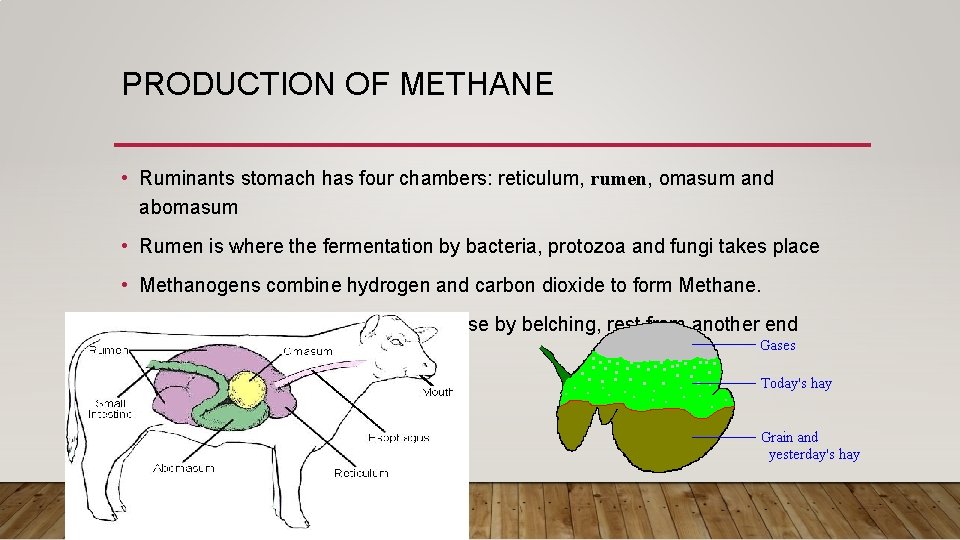
PRODUCTION OF METHANE • Ruminants stomach has four chambers: reticulum, rumen, omasum and abomasum • Rumen is where the fermentation by bacteria, protozoa and fungi takes place • Methanogens combine hydrogen and carbon dioxide to form Methane. • 85% come out through mouth and nose by belching, rest from another end
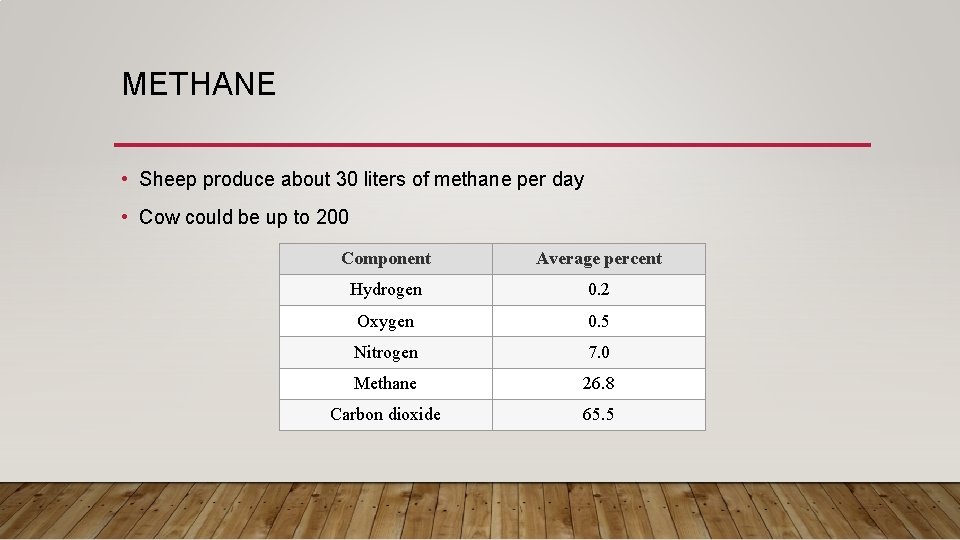
METHANE • Sheep produce about 30 liters of methane per day • Cow could be up to 200 Component Average percent Hydrogen 0. 2 Oxygen 0. 5 Nitrogen 7. 0 Methane 26. 8 Carbon dioxide 65. 5
DIETARY STRATEGY 1 • Manipulating nutrient composition of the diet • Increase concentration of grains to reduce protozoa population, alter acetate, reducing Methane • Shortcome: proportion of concentrates in diet may be over 50%, economic consequences ( limited in many cattle production system)
DIETARY STRATEGY 11 • Selection of plants with secondary compounds • Temperate legumes Mediaroom coronarium, Lespedeza cuneata, Lotus corniculatus and L. uliginosus) and Tropical legumes (Calliandra calothyrsus, Flemingia macrophylla ) with secondary compounds such as condensed tannins • CT is toxic for protozoa, fiber degrading and methanogenic archaea • Constrained by the area sown each year in livestock production regions
DIETARY STRATEGY III • Oil • Reduction in methane appears to be result inhibition of microbial flora protozoa • 27% of reduction in methane • Not sure if the reduction is long or short term • Effect of oil is not well defined
IONOPHORES • Monensin are antimicrobials change bacterial species in rumen, decrease in protozoa • Increase feed conversion efficiency and reduced amount of CH 4 produced per unit of dry matter consumed • Reduction range are really wide from different studies • Long-term effect is not sure
PROBIOTICS • Microbial feed additives to improve animal productivity • A potential technology to reduce methane • Directly reduce CH 4 in vitro, results not consistent • Suitable for all production • Limited utility to reduce CH 4
ORGANIC ACIDS • Increase propionate (VFA, carbon dioxide and hydrogen) to reduce hydrogen production • Less is available for conversion to CH 4 • Only vitro results • High cost
HALOGENATED COMPOUNDS • Chemical products such as bromochloromethane to reduce CH 4 • Reduce output by 54% when fed twice daily • Short term • Potentially toxic to ruminants and human
ANIMAL BREEDING AND SELECTION • Some breeds have lower CH 4 emissions per unit of intake • Example, cow from Northern Hemisphere produced 15% CH 4/kg than cows from New Zealand
IMMUNIZATION • Vaccine to improve animal performance by invoking an immune response in the rumen to protozoa and methanogens • Reduction by 11 -23% • Still developing
GENETIC TRANSFORMATION OF BACTERIA • Altering the fermentation characteristics of rumen microorganisms • Very early stage, need more explore • Acceptance by producer is debatable
CONCLUSION • No simple solution • Oil, organic acids and antibiotics-high cost and short term • Selection of animal breeds, selection of high quality forages and forage with secondary compound(CT) are options for now • More research needed for probiotics, genetic transformation of bacteria and vaccine in the future