
Analysis of Rankine Cycle with FWH P M








- Slides: 21
Analysis of Rankine Cycle with FWH P M V Subbarao Professor Mechanical Engineering Department Engineering solution to Carnotization of PGS…. .
Regeneration Cycle with Open FWH
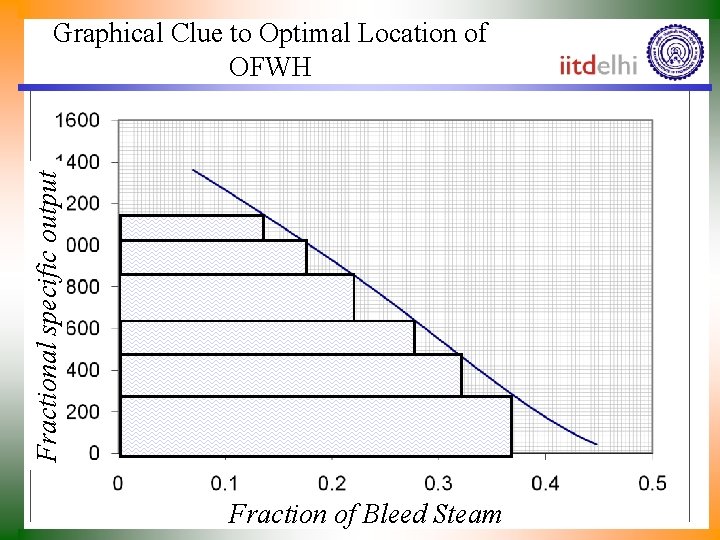
Fractional specific output Graphical Clue to Optimal Location of OFWH Fraction of Bleed Steam
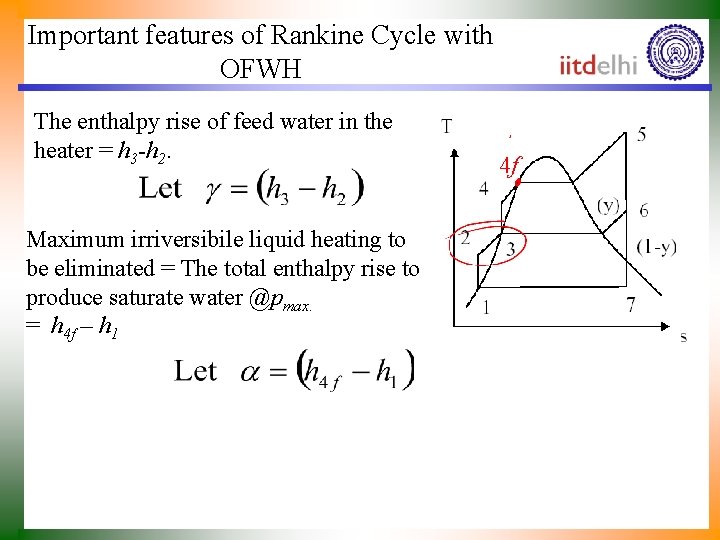
Important features of Rankine Cycle with OFWH The enthalpy rise of feed water in the heater = h 3 -h 2. Maximum irriversibile liquid heating to be eliminated = The total enthalpy rise to produce saturate water @pmax. = h 4 f – h 1 4 f PB
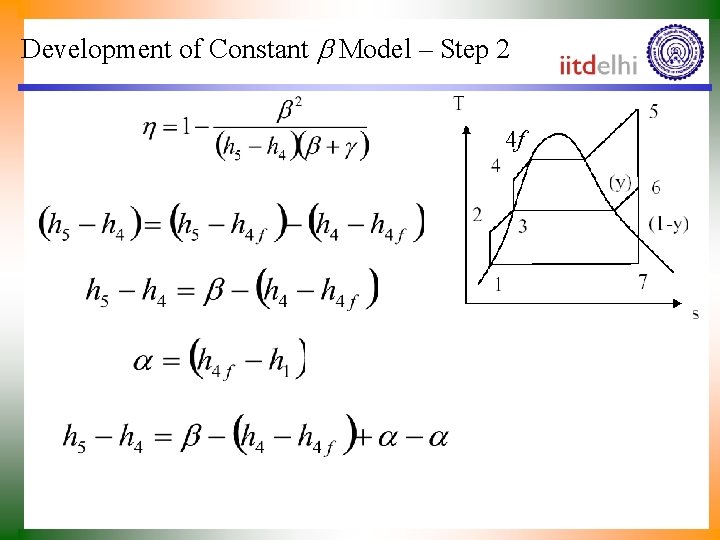
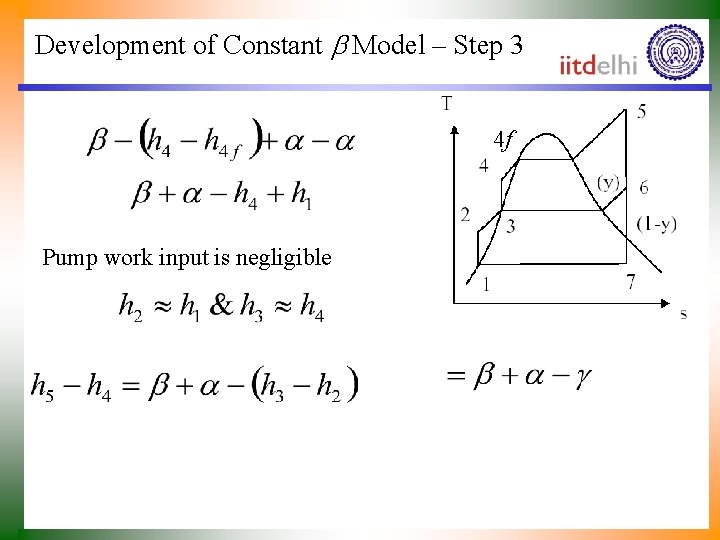
Mathematical Model for Optimal Location of OFWH Define hs- local enthalpy on the turbine expansion line at a given pressure. hf=Enthalpy of saturated water at that pressure. Valid Assumption: The turbine expansion line follows a path on the diagram such that the (hs-hf)=β = constant
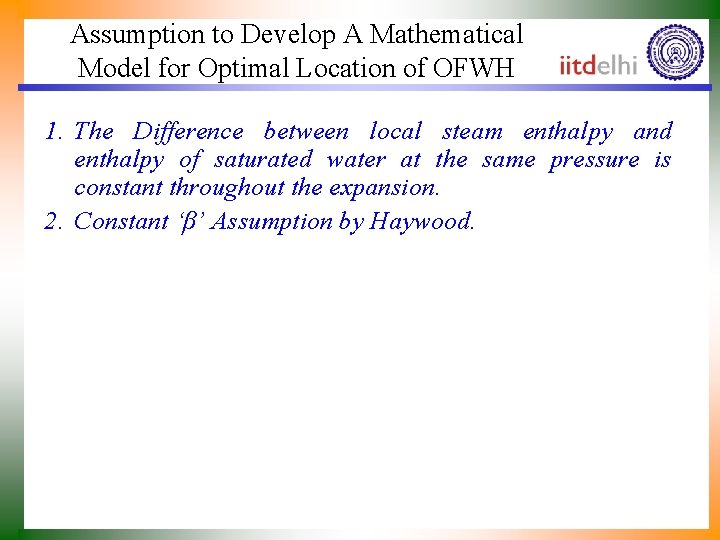
Assumption to Develop A Mathematical Model for Optimal Location of OFWH 1. The Difference between local steam enthalpy and enthalpy of saturated water at the same pressure is constant throughout the expansion. 2. Constant ‘β’ Assumption by Haywood.
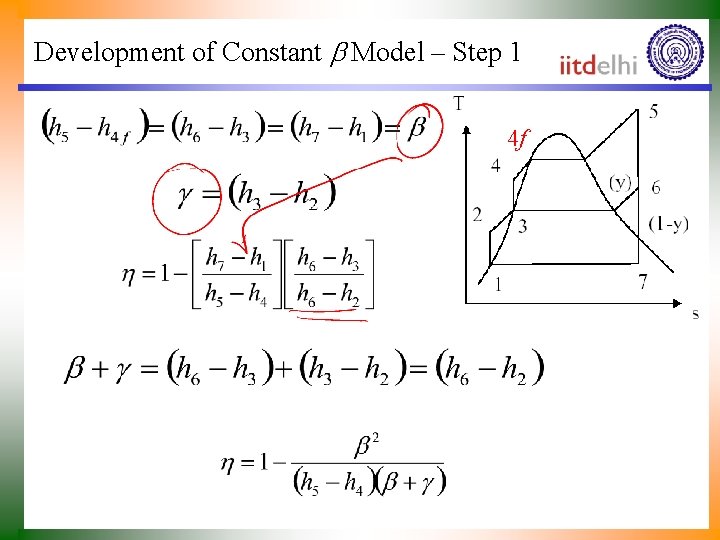
Development of Constant Model – Step 1 4 f
Development of Constant Model – Step 2 4 f
Development of Constant Model – Step 3 4 f Pump work input is negligible
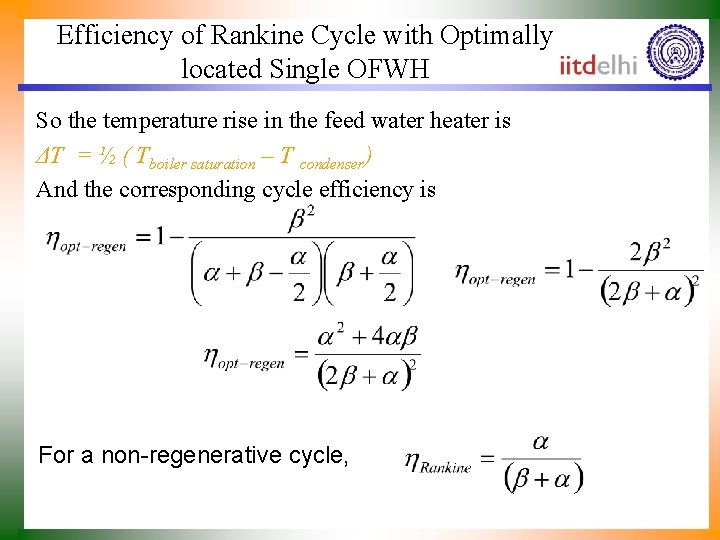
The Final Model The efficiency can be approximated as Here β and α are fixed and g is variable. So, there exist an optimum value of γ for which η is a maximum. On differentiation, There fore g= α/2 The cycle efficiency is maximum when the total enthalpy rise of feed water (h 4 f – h 1) from the condenser temperature to the boiler saturation temperature is divided equally between the feed water heater and the economizer ( i. e. h 4 f – h 4 = h 3 – h 2) in a single bleed cycle.
Efficiency of Rankine Cycle with Optimally located Single OFWH So the temperature rise in the feed water heater is ΔT = ½ ( Tboiler saturation – T condenser) And the corresponding cycle efficiency is For a non-regenerative cycle,
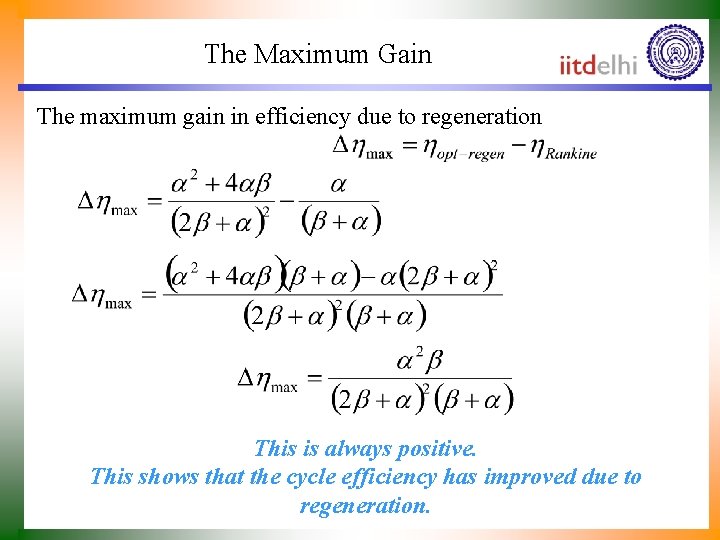
The Maximum Gain The maximum gain in efficiency due to regeneration This is always positive. This shows that the cycle efficiency has improved due to regeneration.
h 5 -h 6 Graphical Clue to Opt Multiple OFWHs
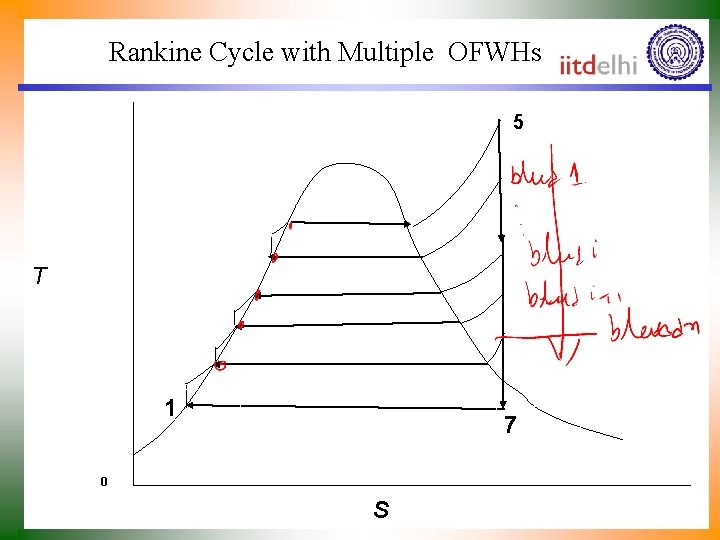
Rankine Cycle with Multiple OFWHs 5 T 1 7 0 S
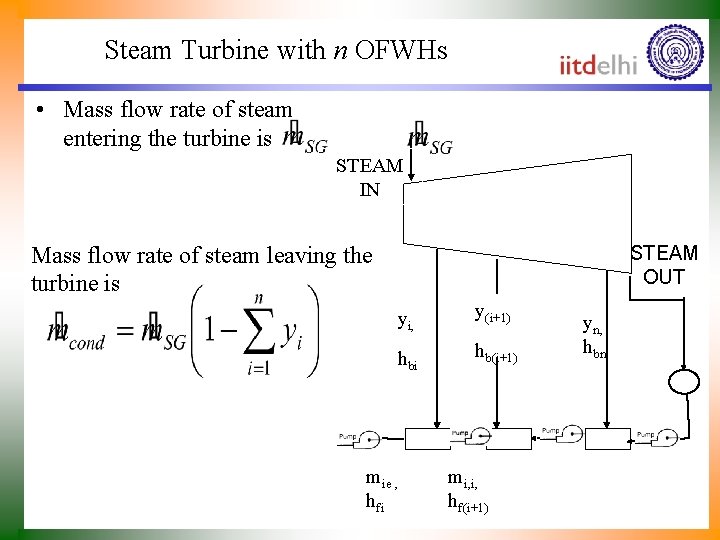
Steam Turbine with n OFWHs • Mass flow rate of steam entering the turbine is STEAM IN STEAM TURBINE Mass flow rate of steam leaving the turbine is STEAM OUT yi, y(i+1) hbi hb(i+1) mie , hfi mi, i, hf(i+1) yn, hbn
Open (Direct Contact) Feed Water Heater
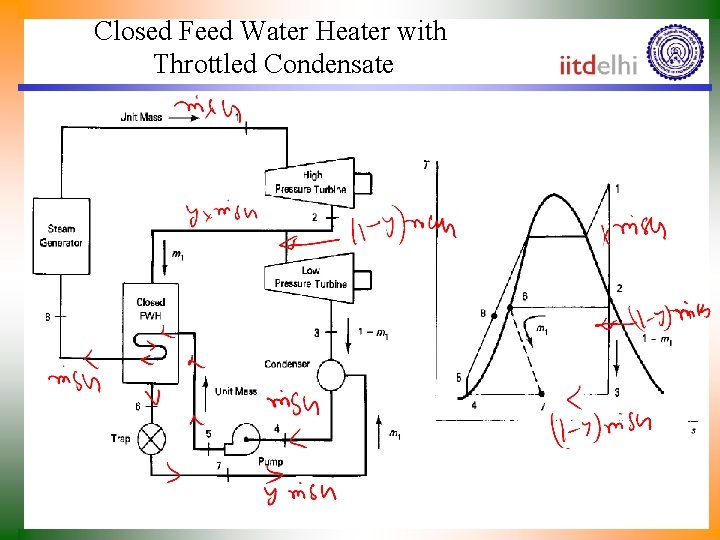
Closed Feed Water Heater with Throttled Condensate
Closed Feed Water Heater with Expanded Condensate
Rankine Cycle with two CFWHs Steam Turbine
Rankine Cycle with three CFWHs & one OFWH
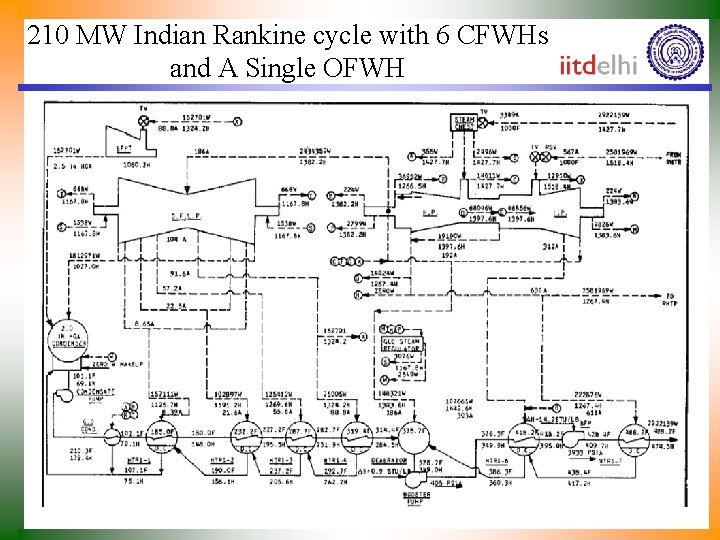
210 MW Indian Rankine cycle with 6 CFWHs and A Single OFWH