
Analysis of Infection of Trypanosoma cruzi Causative Agent
- Slides: 12
Analysis of Infection of Trypanosoma cruzi, Causative Agent of Chagas Disease, in Triatomine Insects from Southern Arizona Kayla Peck Acknowledgements: Teresa Gregory, Carolina Reisenman, John Hildebrand NASA Space Grant Symposium April 18, 2009
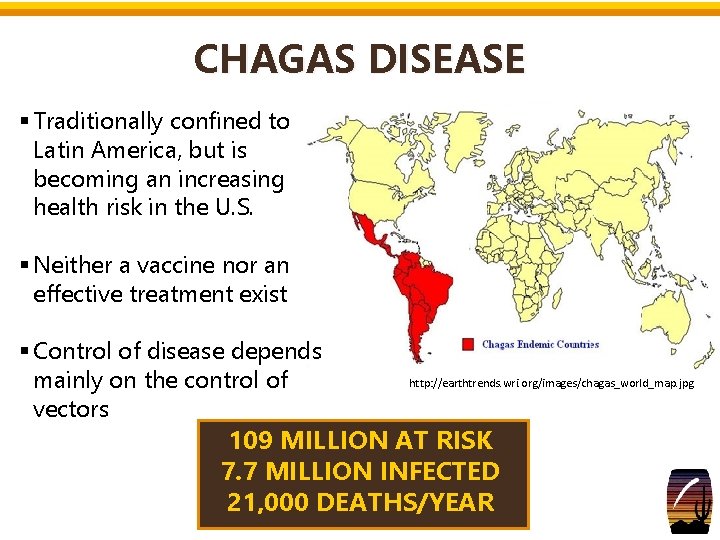
CHAGAS DISEASE § Traditionally confined to Latin America, but is becoming an increasing health risk in the U. S. § Neither a vaccine nor an effective treatment exist § Control of disease depends mainly on the control of vectors http: //earthtrends. wri. org/images/chagas_world_map. jpg 109 MILLION AT RISK 7. 7 MILLION INFECTED 21, 000 DEATHS/YEAR
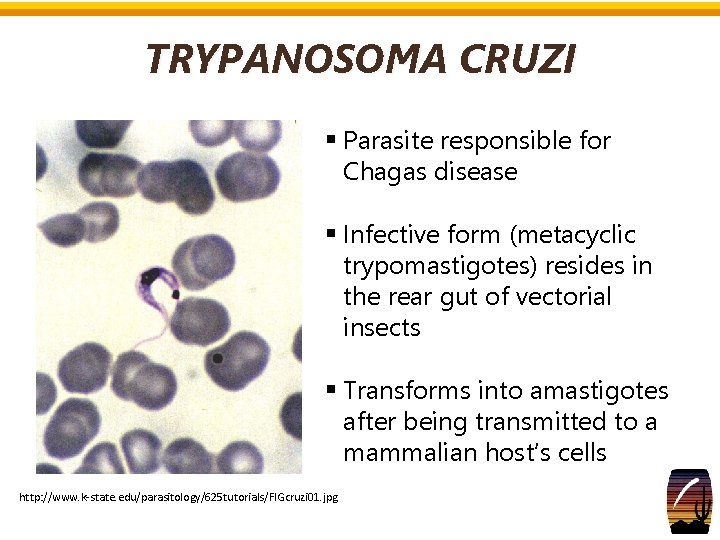
TRYPANOSOMA CRUZI § Parasite responsible for Chagas disease § Infective form (metacyclic trypomastigotes) resides in the rear gut of vectorial insects § Transforms into amastigotes after being transmitted to a mammalian host’s cells http: //www. k-state. edu/parasitology/625 tutorials/FIGcruzi 01. jpg
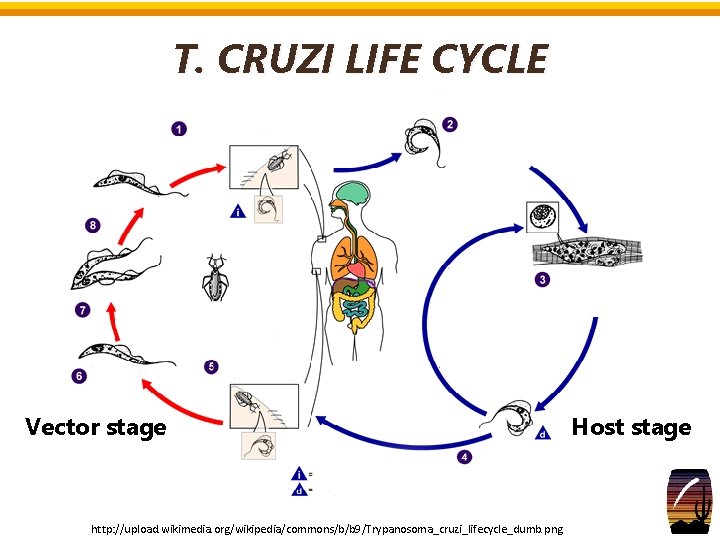
T. CRUZI LIFE CYCLE Vector stage http: //upload. wikimedia. org/wikipedia/commons/b/b 9/Trypanosoma_cruzi_lifecycle_dumb. png Host stage
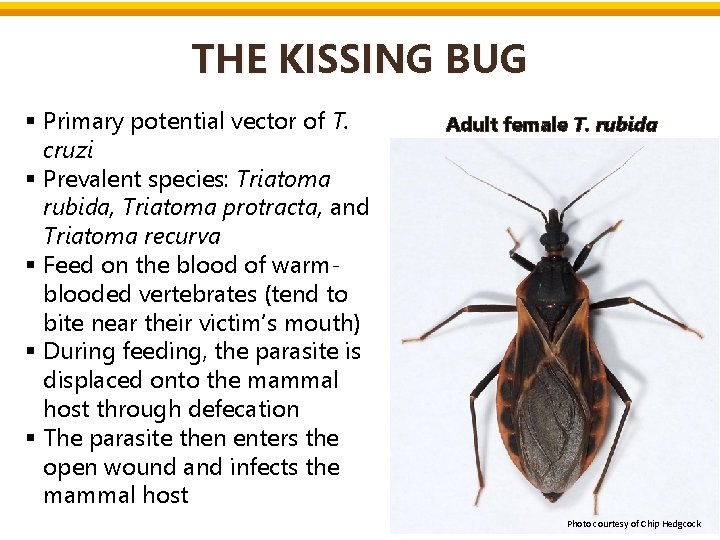
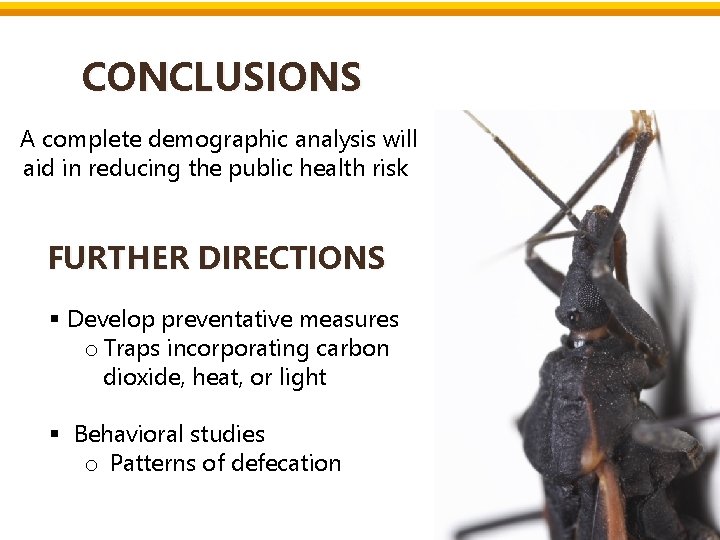
THE KISSING BUG § Primary potential vector of T. cruzi § Prevalent species: Triatoma rubida, Triatoma protracta, and Triatoma recurva § Feed on the blood of warmblooded vertebrates (tend to bite near their victim’s mouth) § During feeding, the parasite is displaced onto the mammal host through defecation § The parasite then enters the open wound and infects the mammal host Adult female T. rubida Photo courtesy of Chip Hedgcock
GOAL OF PROJECT 1. Determine if triatomine insects in the greater Tucson area are infected with Trypanosoma cruzi determine their vectorial capacity 2. Perform a demographic analysis between infected insects, location found, and other important variables 3. Develop preventative measures to reduce the potential risk of transmission of T. cruzi A PRELIMINARY STUDY IN 2005 CONFIRMED THE PRESENCE OF T. CRUZI IN THE GREATER TUCSON AREA TRIATOMINE POPULATION
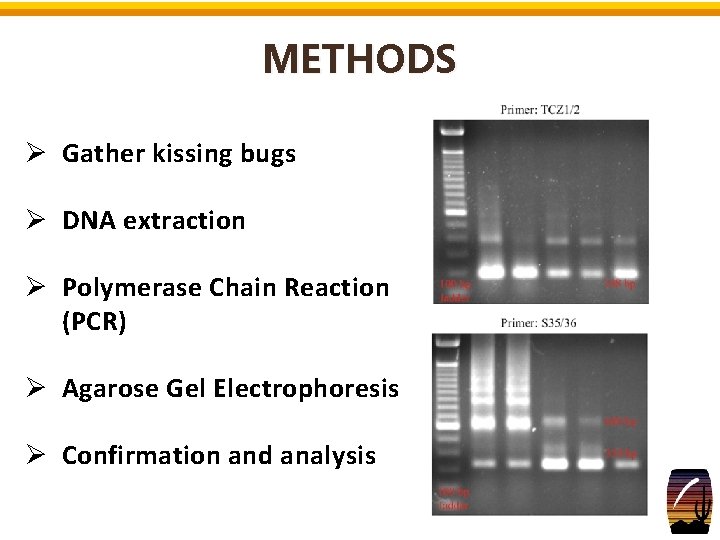
METHODS Ø Gather kissing bugs Ø DNA extraction Ø Polymerase Chain Reaction (PCR) Ø Agarose Gel Electrophoresis Ø Confirmation and analysis
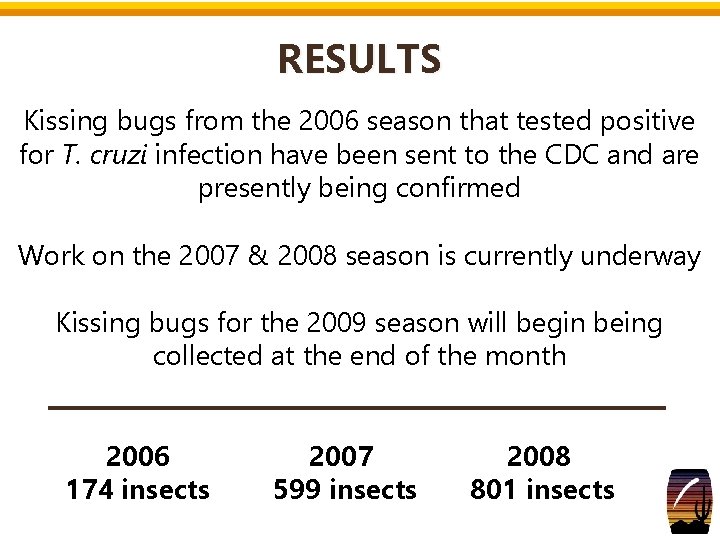
RESULTS Kissing bugs from the 2006 season that tested positive for T. cruzi infection have been sent to the CDC and are presently being confirmed Work on the 2007 & 2008 season is currently underway Kissing bugs for the 2009 season will begin being collected at the end of the month 2006 174 insects 2007 599 insects 2008 801 insects
CONCLUSIONS A complete demographic analysis will aid in reducing the public health risk FURTHER DIRECTIONS § Develop preventative measures o Traps incorporating carbon dioxide, heat, or light § Behavioral studies o Patterns of defecation
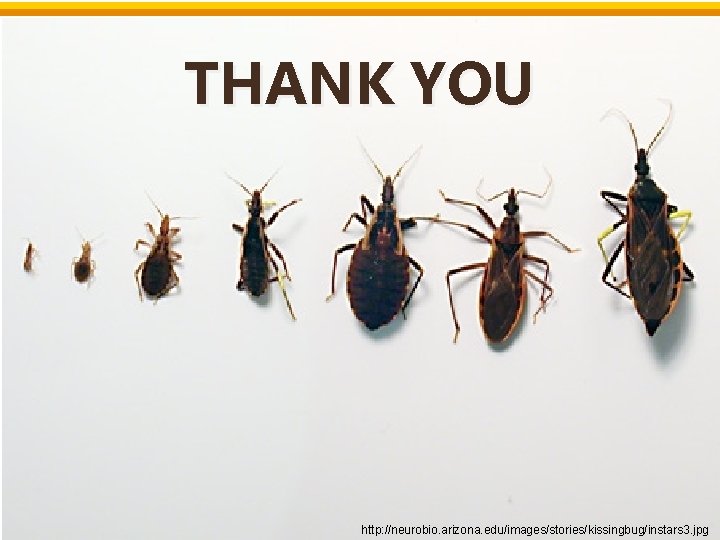
THANK YOU http: //neurobio. arizona. edu/images/stories/kissingbug/instars 3. jpg
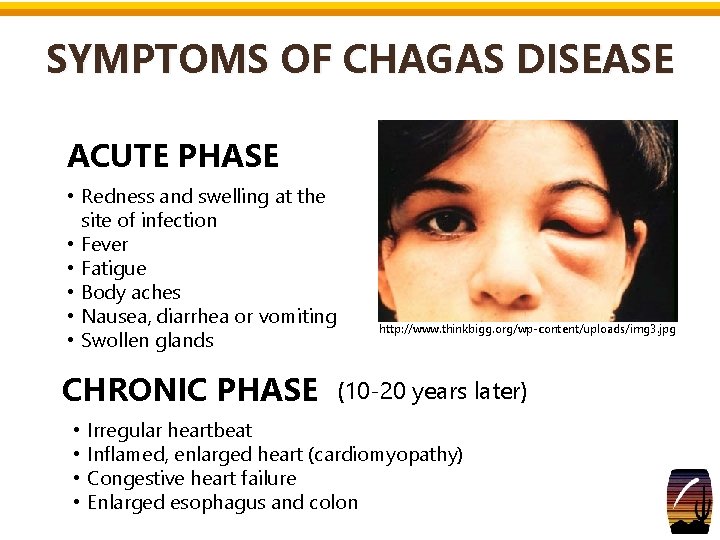
SYMPTOMS OF CHAGAS DISEASE ACUTE PHASE • Redness and swelling at the site of infection • Fever • Fatigue • Body aches • Nausea, diarrhea or vomiting • Swollen glands CHRONIC PHASE • • http: //www. thinkbigg. org/wp-content/uploads/img 3. jpg (10 -20 years later) Irregular heartbeat Inflamed, enlarged heart (cardiomyopathy) Congestive heart failure Enlarged esophagus and colon
TRANSMISSION § Infection by insect vector • Only 6 such human cases in the United States § Transfusion by contaminated blood • In 2007, the FDA licensed an assay allowing blood donors to be easily screened for T. cruzi § Mother to child (congenital)