
Analysis of Heat Transfer in Manufacturing Processes P
- Slides: 18
Analysis of Heat Transfer in Manufacturing Processes P M V Subbarao Professor Mechanical Engineering Department I I T Delhi An important Irreversibility !!!
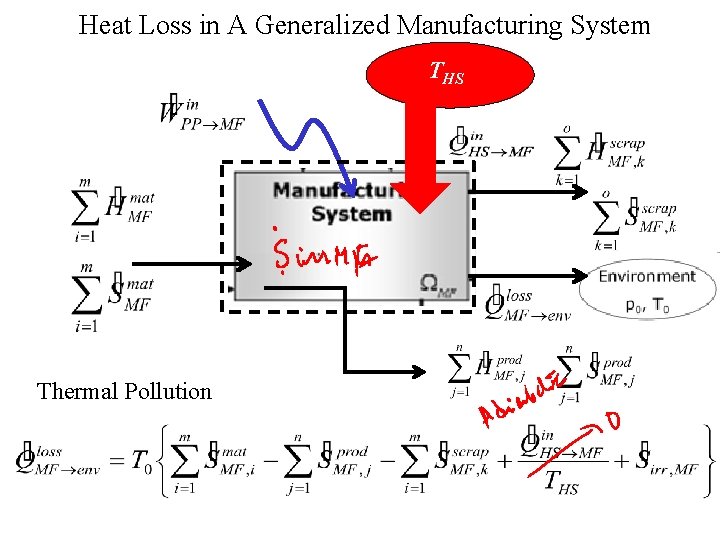
Heat Loss in A Generalized Manufacturing System THS Thermal Pollution
Heat Transfer Issues in Machining • The heat generated in cutting was one of the first and the foremost topics investigated in machining. • In 1798, Benjamin Thompson, investigated the heat generated in the boring of a cannon and developed the concept of mechanical equivalent of heat. • The exact relationship of which was established by Joule in 1850. • Taylor recognized the importance of heat in accelerating tool wear. • This lead to development of heat transfer model to predict tool temperature and the tool life. • A heat resistant material, termed as the high speed steel (HSS) was specially developed. • Methods to cool the tool and workpiece were introduced.
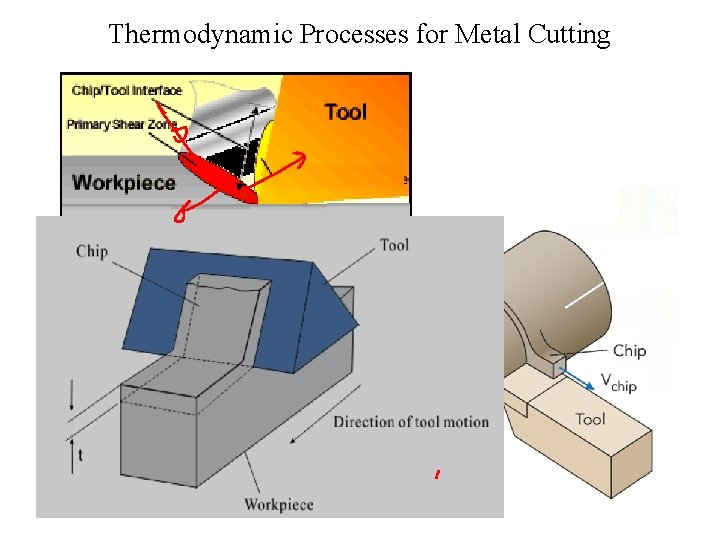
Thermodynamic Processes for Metal Cutting
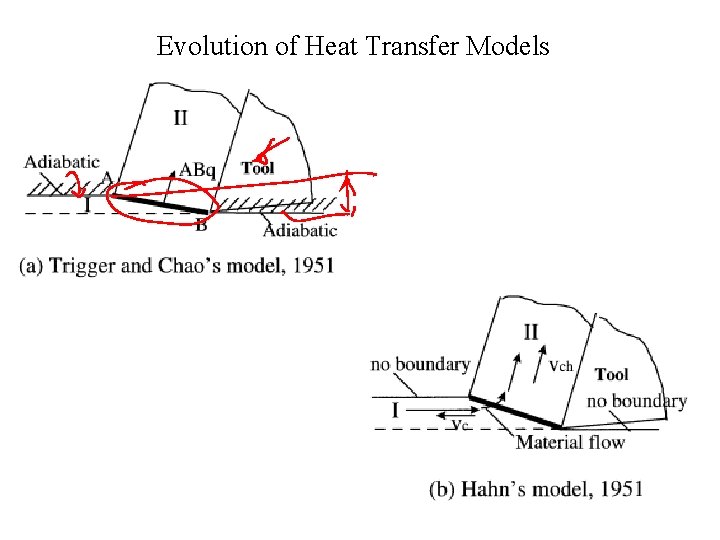
Evolution of Heat Transfer Models
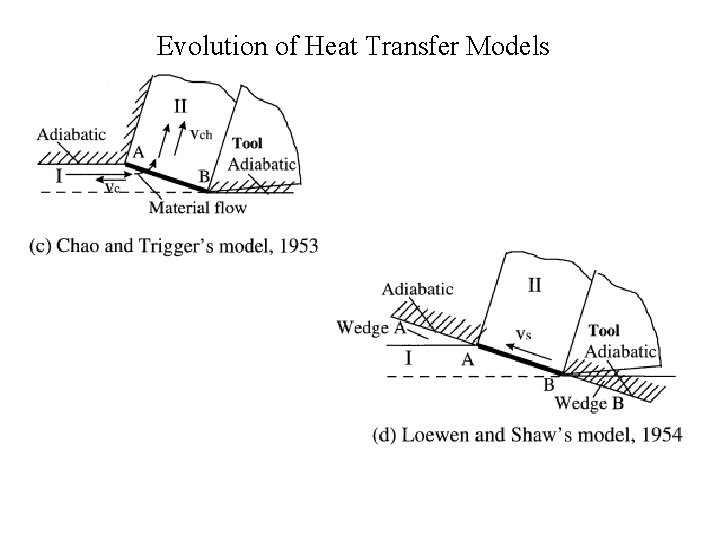
Evolution of Heat Transfer Models
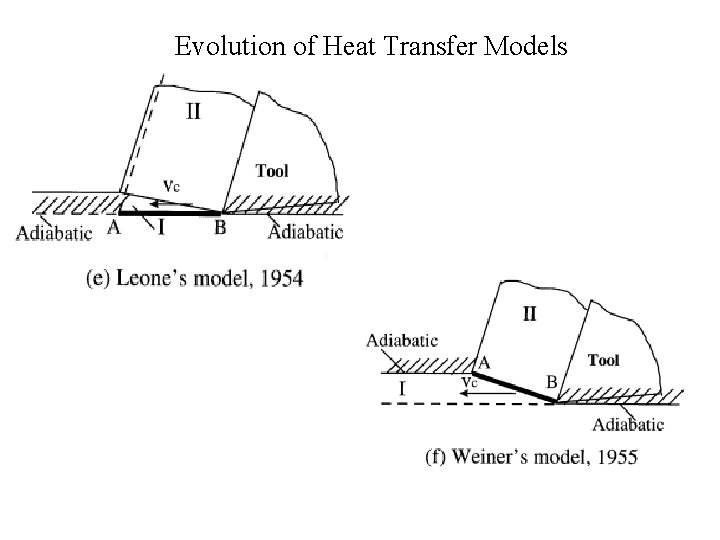
Evolution of Heat Transfer Models
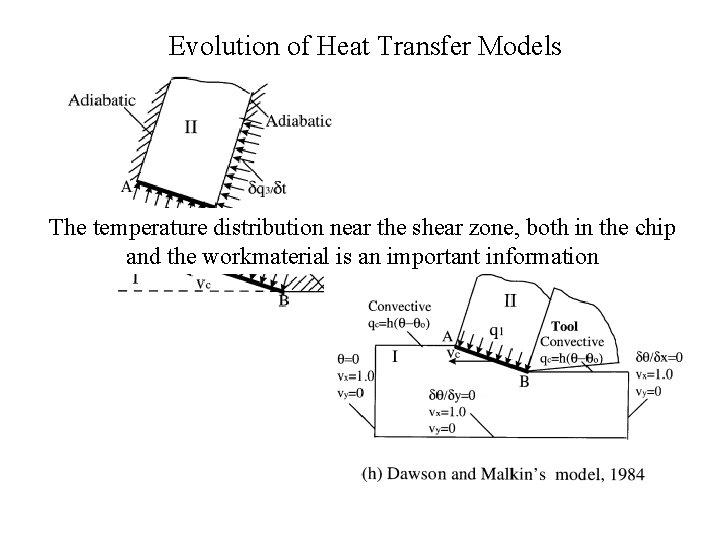
Evolution of Heat Transfer Models The temperature distribution near the shear zone, both in the chip and the workmaterial is an important information
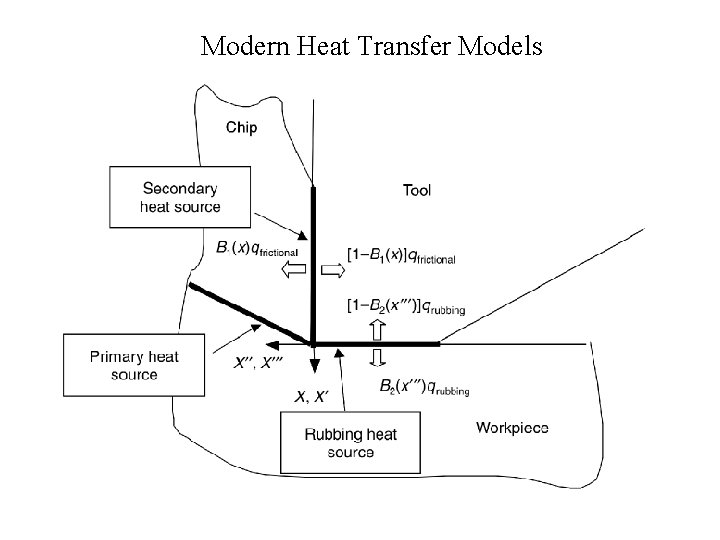
Modern Heat Transfer Models
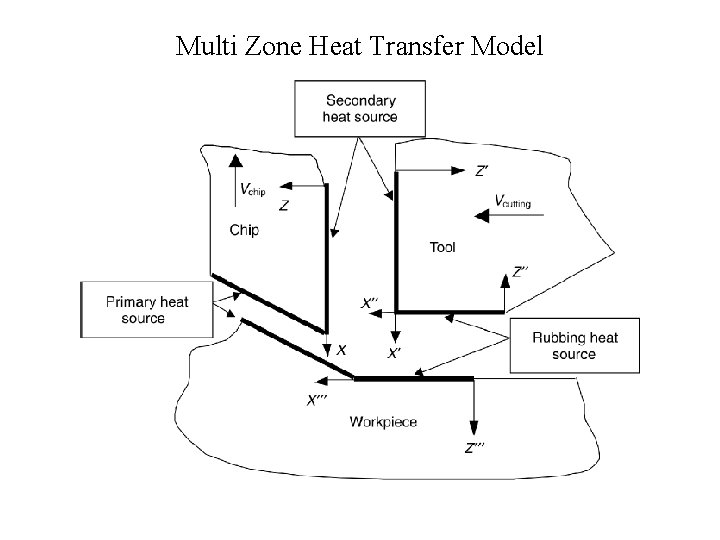
Multi Zone Heat Transfer Model
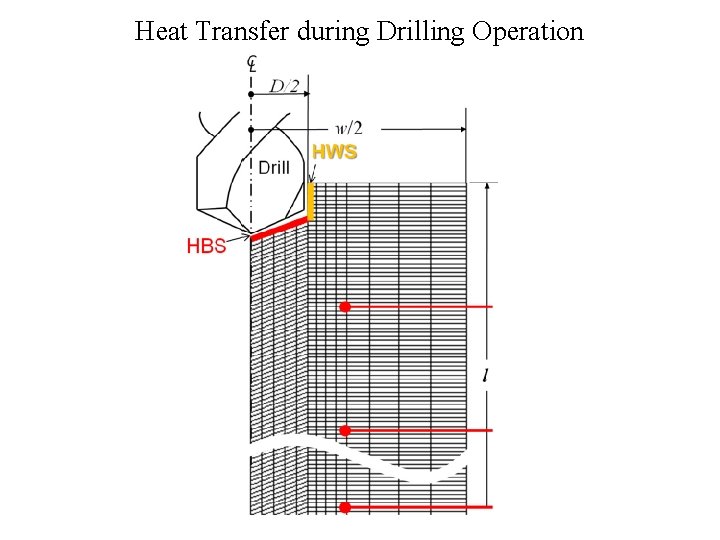
Heat Transfer during Drilling Operation
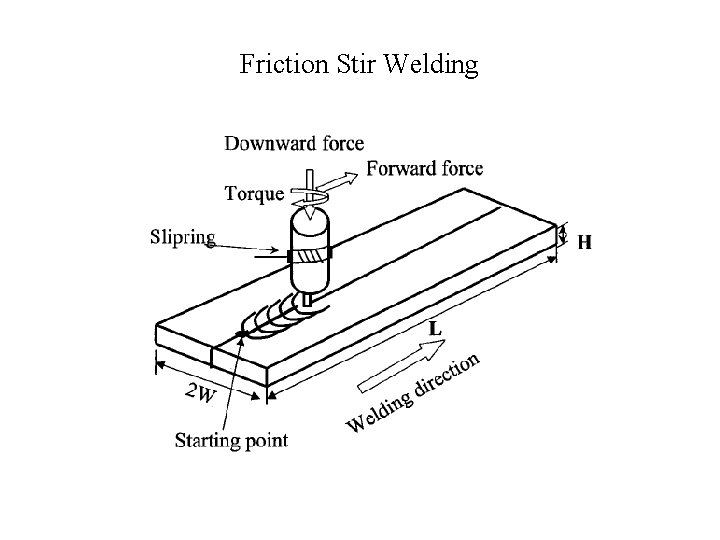
Friction Stir Welding
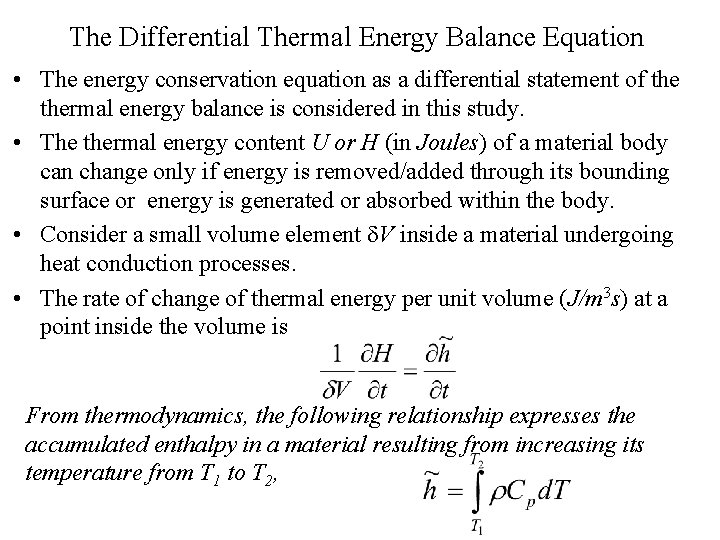
The Differential Thermal Energy Balance Equation • The energy conservation equation as a differential statement of thermal energy balance is considered in this study. • The thermal energy content U or H (in Joules) of a material body can change only if energy is removed/added through its bounding surface or energy is generated or absorbed within the body. • Consider a small volume element V inside a material undergoing heat conduction processes. • The rate of change of thermal energy per unit volume (J/m 3 s) at a point inside the volume is From thermodynamics, the following relationship expresses the accumulated enthalpy in a material resulting from increasing its temperature from T 1 to T 2,
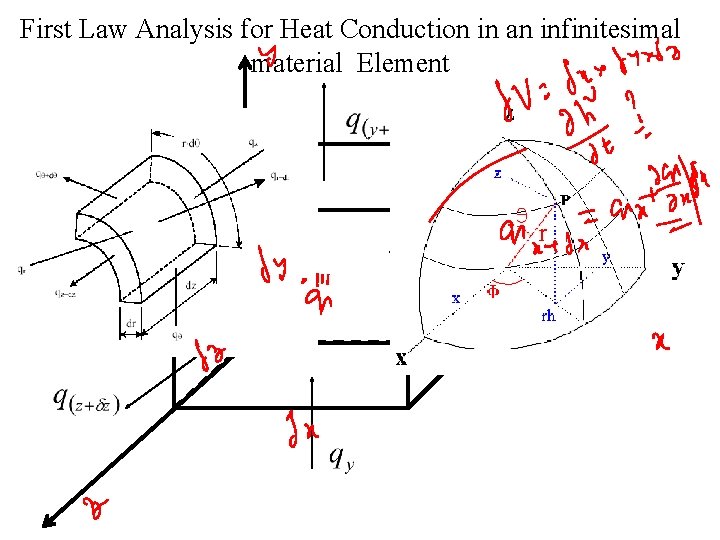
First Law Analysis for Heat Conduction in an infinitesimal material Element
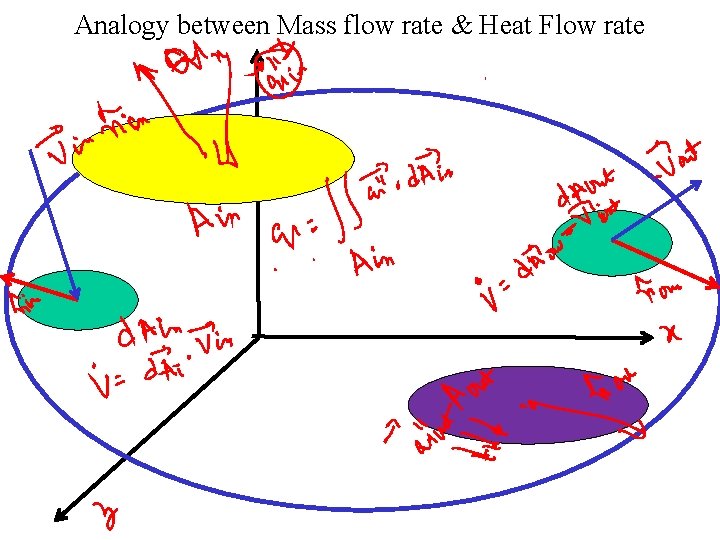
Analogy between Mass flow rate & Heat Flow rate
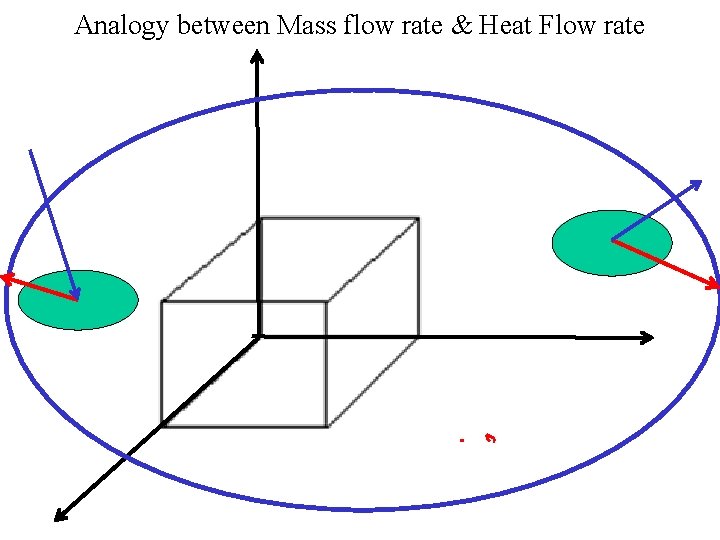
Analogy between Mass flow rate & Heat Flow rate
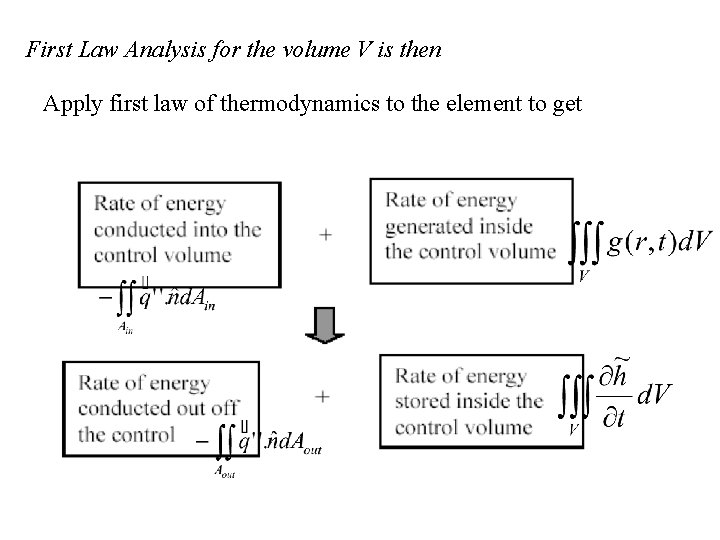
First Law Analysis for the volume V is then Apply first law of thermodynamics to the element to get
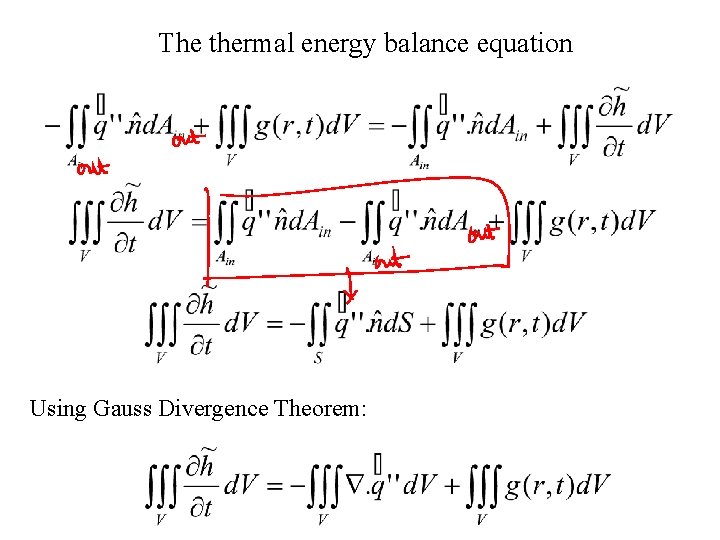
The thermal energy balance equation Using Gauss Divergence Theorem: