
Analysis of Gas Lift Transient Effects Henry Nickens


- Slides: 32
Analysis of Gas Lift Transient Effects Henry Nickens Adam Ballard BP - Houston
Gas Lift Instability • Steady-state methods for gas lift design and analysis do not capture the pressure/temperature transients that inevitably occur in an operating gas lifted well. • Transient well response occurs during: • – Unloading the well – Well shut-down – Normal well operation (e. g. , tubing/casing heading, multi-pointing) – Well kick off or shut-down with CT This paper presents analysis of gas lift instability for two design cases: 1. To aid in selection of optimum tubing size (5. 5 in vs 7 in) 2. To determine hydrate formation in CT gas lift after shut-down 2 of 32
Gas Lift Instabiliy • • OLGA 2000 version 4. 01 was used to model the wells – transient multi-phase flow simulator – developed by Scandpower Two cases are studied: 1. New well design to determine – optimum tubing size – Effect of injection rate, orifice size and wellhead pressure 2. CT gas lift shut-down to determine time to hydrate formation 3 of 32
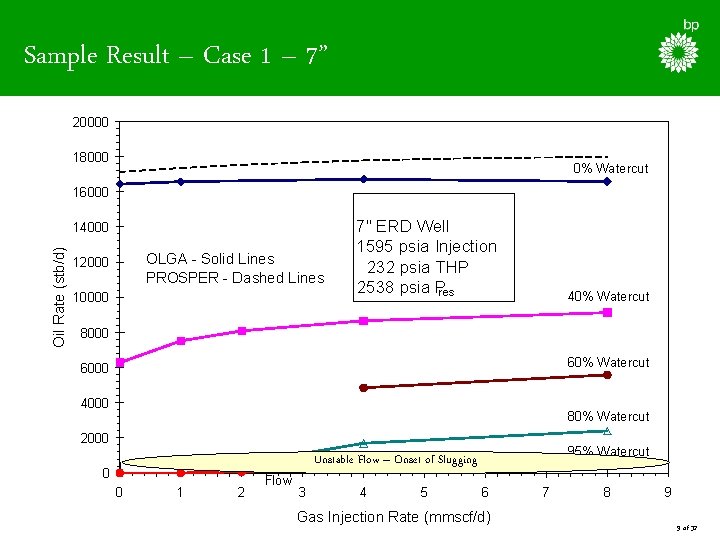
Gas Lift Instability – Case 1 A new well is to be drilled. Steady-state analysis shows that gas lifting 7 -inch tubing gives potentially much greater production than 5. 5 -inch tubing. What is the expected stability of the well for the range of expected injection rates, production rates and water cuts? The onset of instability (severe slugging) was calculated as a function of injection rate and water cut to define the expected operating window for instability. 4 of 32
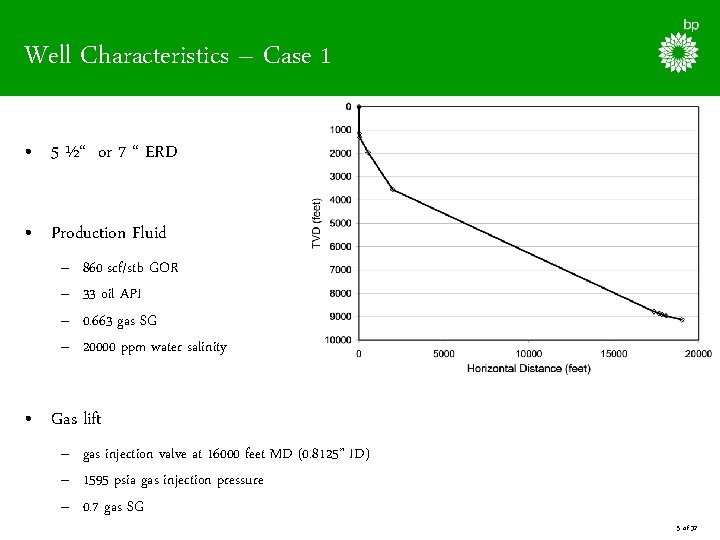
Well Characteristics – Case 1 • 5 ½“ or 7 “ ERD • Production Fluid – – 860 scf/stb GOR 33 oil API 0. 663 gas SG 20000 ppm water salinity • Gas lift – gas injection valve at 16000 feet MD (0. 8125” ID) – 1595 psia gas injection pressure – 0. 7 gas SG 5 of 32
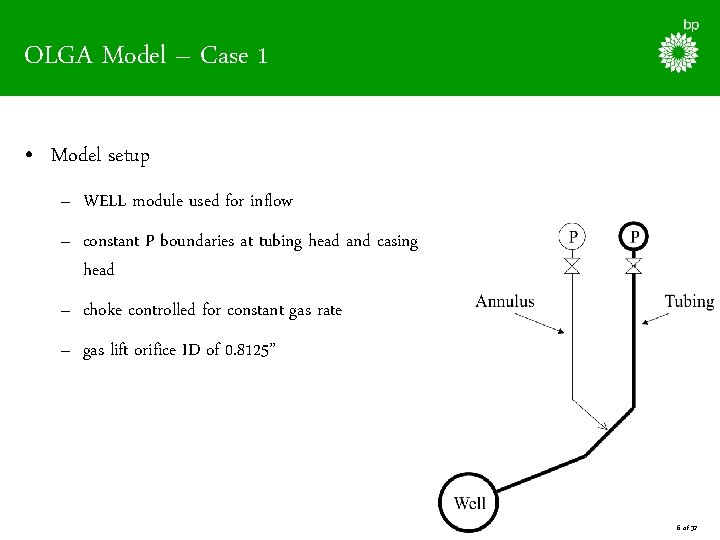
OLGA Model – Case 1 • Model setup – WELL module used for inflow – constant P boundaries at tubing head and casing head – choke controlled for constant gas rate – gas lift orifice ID of 0. 8125” 6 of 32
Comparison of OLGA with Steady. Simulators Case 1 State 7 of 32
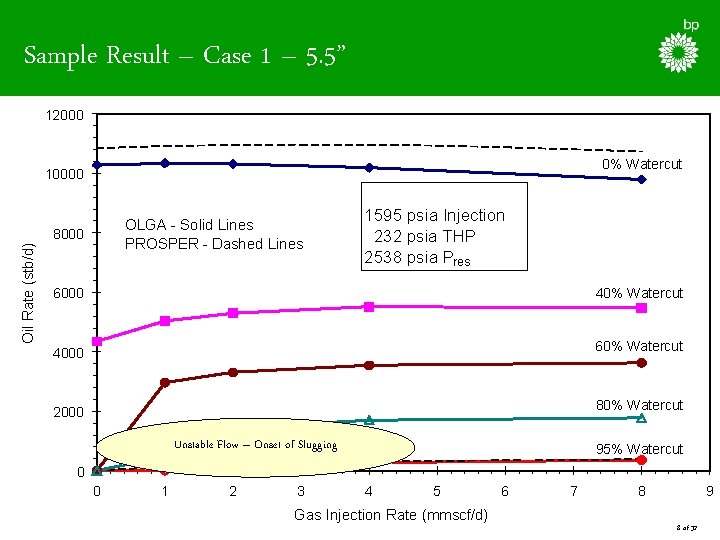
Sample Result – Case 1 – 5. 5” 12000 0% Watercut 10000 OLGA - Solid Lines PROSPER - Dashed Lines Oil Rate (stb/d) 8000 1595 psia Injection 232 psia THP 2538 psia Pres 6000 40% Watercut 4000 60% Watercut 80% Watercut 2000 Unstable Flow – Onset Transient Flowof Slugging 95% Watercut 0 0 1 2 3 4 5 6 7 8 9 Gas Injection Rate (mmscf/d) 8 of 32
Sample Result – Case 1 – 7” 20000 18000 0% Watercut 16000 Oil Rate (stb/d) 14000 OLGA - Solid Lines PROSPER - Dashed Lines 12000 10000 7" ERD Well 1595 psia Injection 232 psia THP 2538 psia Pres 40% Watercut 8000 60% Watercut 6000 4000 80% Watercut 2000 95% Watercut Unstable Flow – Onset of Slugging 0 0 1 2 Flow 3 4 5 6 Gas Injection Rate (mmscf/d) 7 8 9 9 of 32
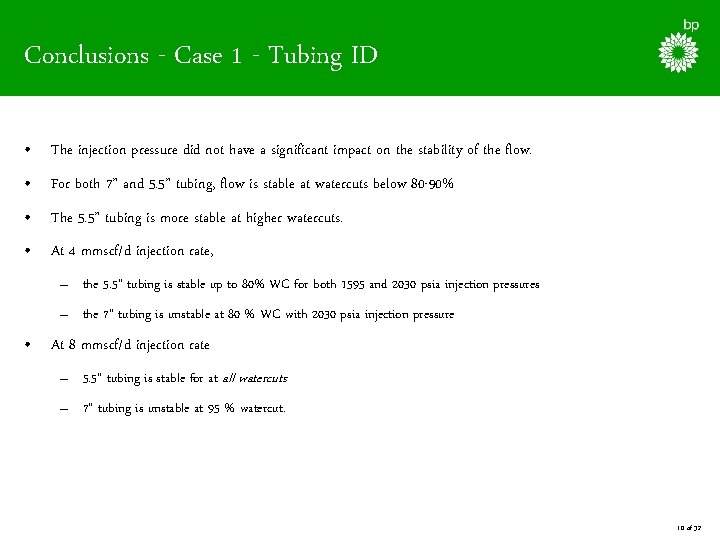
Conclusions - Case 1 - Tubing ID • The injection pressure did not have a significant impact on the stability of the flow. • For both 7” and 5. 5” tubing, flow is stable at watercuts below 80 -90% • The 5. 5” tubing is more stable at higher watercuts. • At 4 mmscf/d injection rate, – the 5. 5” tubing is stable up to 80% WC for both 1595 and 2030 psia injection pressures – the 7” tubing is unstable at 80 % WC with 2030 psia injection pressure • At 8 mmscf/d injection rate – 5. 5” tubing is stable for at all watercuts – 7” tubing is unstable at 95 % watercut. 10 of 32
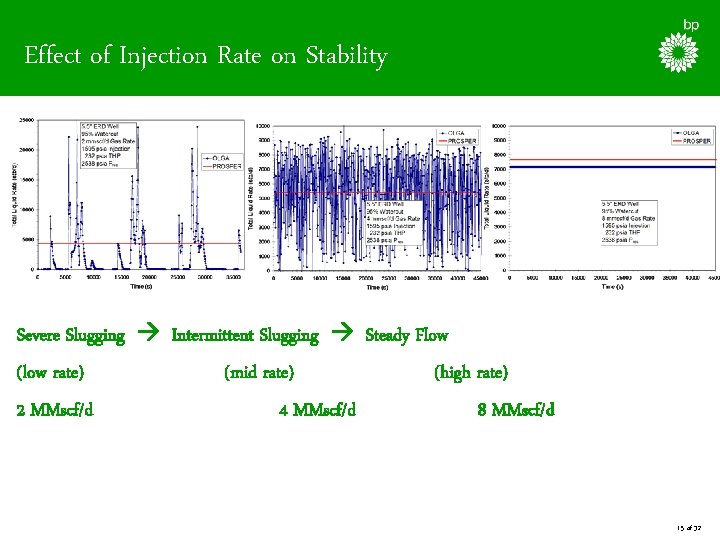
Effect of Injection Rate on Stability 11 of 32
2 MMscf/d Injection Rate - Case 1 12 of 32
4 MMscf/d Injection Rate - Case 1 13 of 32
8 MMscf/d Injection Rate - Case 1 14 of 32
Effect of Injection Rate on Stability Severe Slugging Intermittent Slugging Steady Flow (low rate) 2 MMscf/d (mid rate) 4 MMscf/d (high rate) 8 MMscf/d 15 of 32
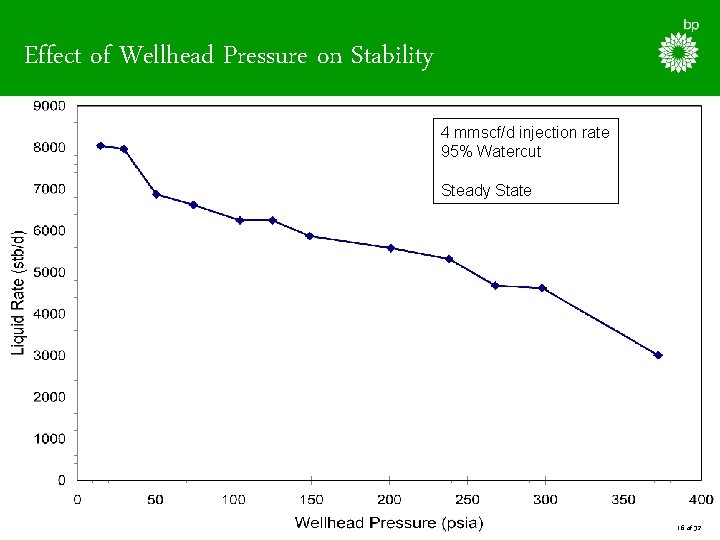
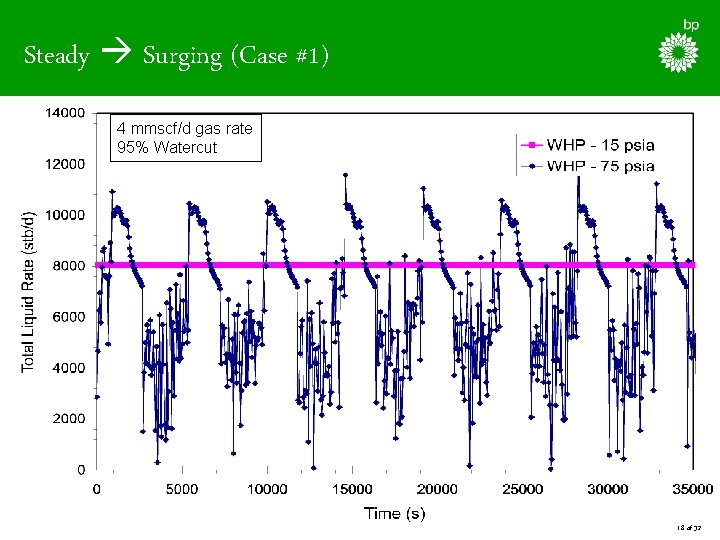
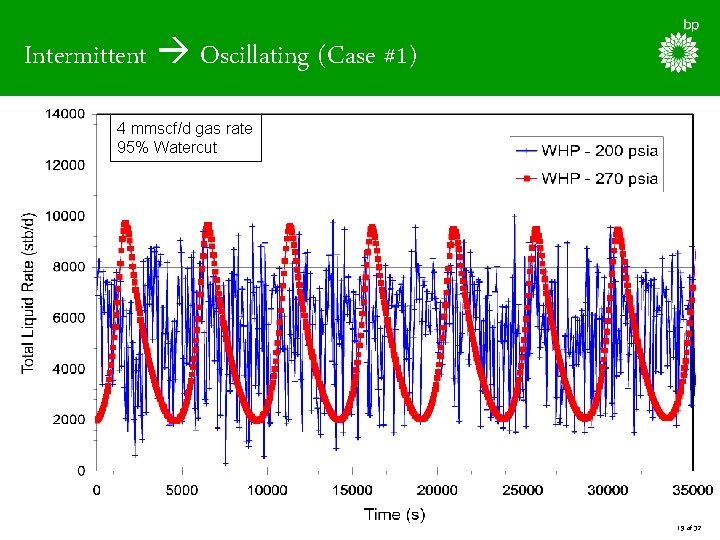
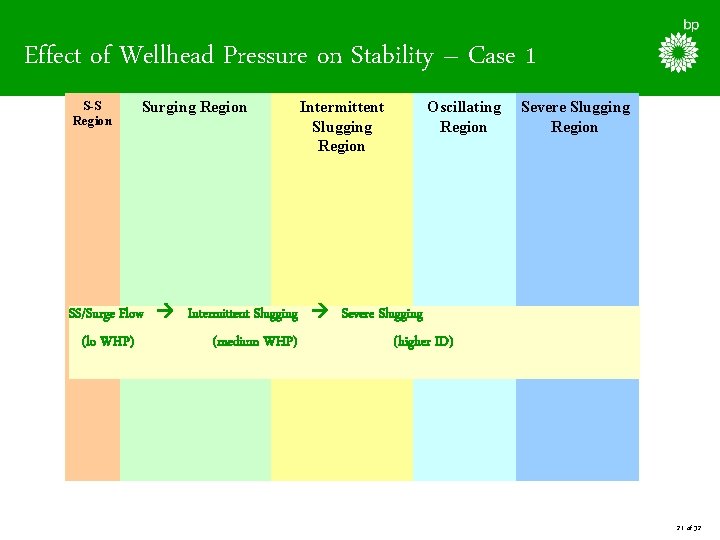
Effect of Wellhead Pressure on Stability 4 mmscf/d injection rate 95% Watercut Steady State 16 of 32
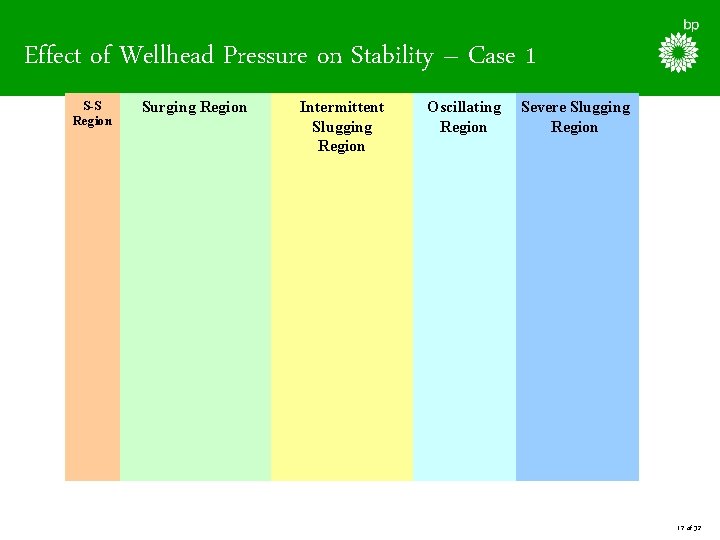
Effect of Wellhead Pressure on Stability – Case 1 S-S Region Surging Region Intermittent Slugging Region Oscillating Region Severe Slugging Region 17 of 32
Steady Surging (Case #1) 4 mmscf/d gas rate 95% Watercut 18 of 32
Intermittent Oscillating (Case #1) 4 mmscf/d gas rate 95% Watercut 19 of 32
Oscillating Severe (Case #1) 4 mmscf/d gas rate 95% Watercut 20 of 32
Effect of Wellhead Pressure on Stability – Case 1 S-S Region Surging Region Intermittent Slugging Region Oscillating Region Severe Slugging Region SS/Surge Flow Intermittent Slugging Severe Slugging (lo WHP) (medium WHP) (higher ID) 21 of 32
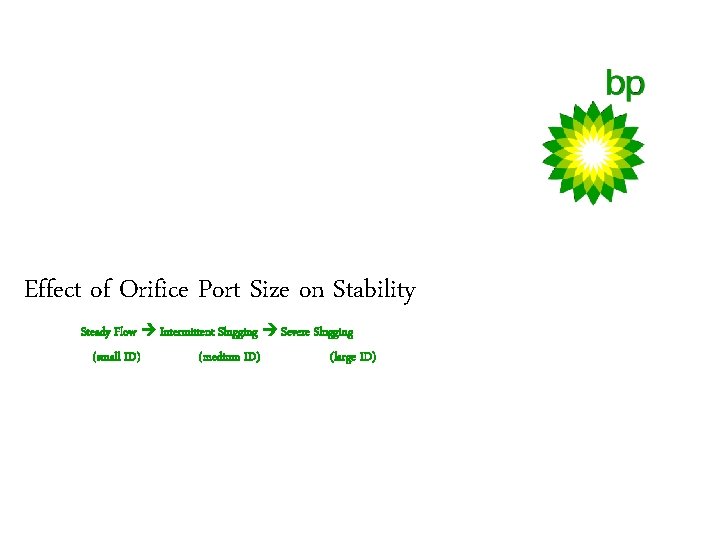
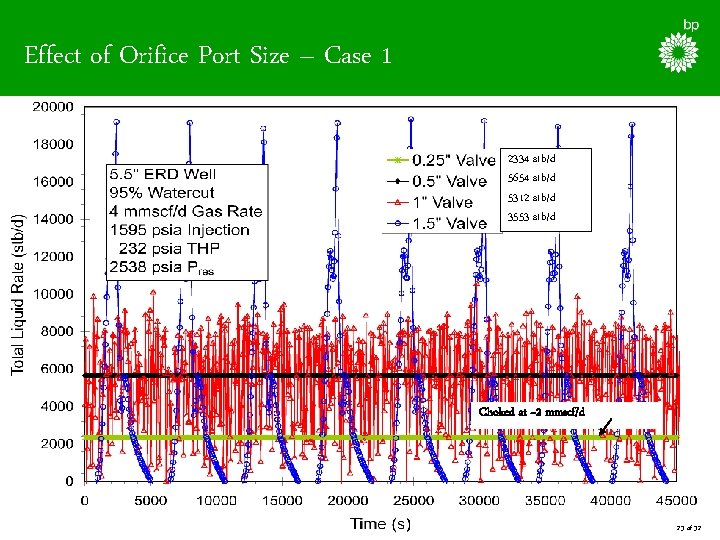
Effect of Orifice Port Size on Stability Steady Flow Intermittent Slugging Severe Slugging (small ID) (medium ID) (large ID)
Effect of Orifice Port Size – Case 1 2334 stb/d 5654 stb/d 5312 stb/d 3553 stb/d Choked at ~2 mmscf/d 23 of 32
Gas Lift Instability – Case 2 CT gas lift for a deepwater Go. M well is proposed. In addition to stability issues, hydrate formation is a major concern. OLGA is used to calculate the pressure and temperature transients during the CT gas lift shut -down period and the resultant effect on fluid temperature and hydrate formation. Hydrate Cool-Down Time after shut-in when the first hydrate is formed anywhere in the system. 24 of 32
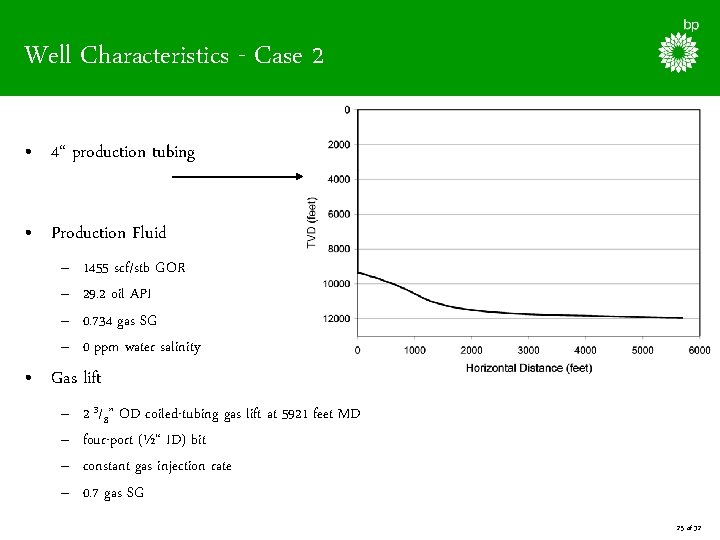
Well Characteristics - Case 2 • 4“ production tubing • Production Fluid – – 1455 scf/stb GOR 29. 2 oil API 0. 734 gas SG 0 ppm water salinity • Gas lift – – 2 3/8” OD coiled-tubing gas lift at 5921 feet MD four-port (½“ ID) bit constant gas injection rate 0. 7 gas SG 25 of 32
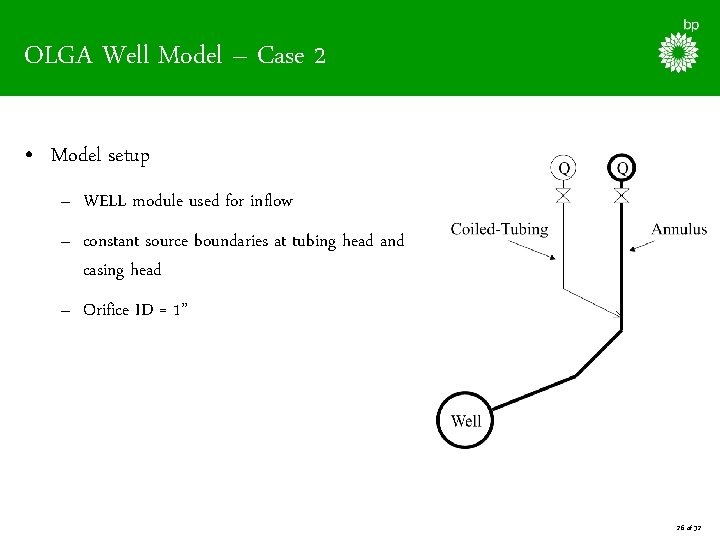
OLGA Well Model – Case 2 • Model setup – WELL module used for inflow – constant source boundaries at tubing head and casing head – Orifice ID = 1” 26 of 32
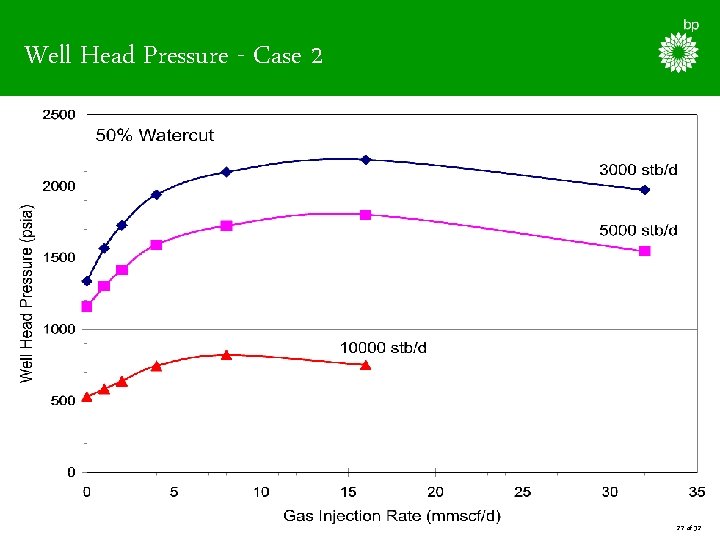
Well Head Pressure - Case 2 27 of 32
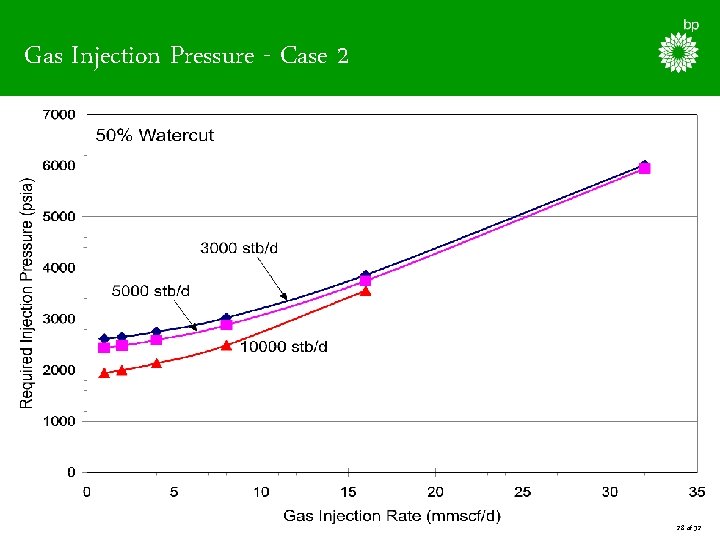
Gas Injection Pressure - Case 2 28 of 32
Well Head Temperature - Case 2 29 of 32
Cooldown Time to Hydrates - Case 2 30 of 32
Conclusions Transient flow calculation is a valuable tool for gas lift design and analysis to evaluate non-steady effects – Gas Lift stability analysis • Effect of injection gas rate, orifice size and wellhead pressure • Needs improved valve models for unloading, multi-pointing, stability related to unload valve problems – Gas Lift flow assurance studies • Cooldown to hydrate formation 31 of 32
32 of 32