
Analysis of different gridding methods using Surfer 7
- Slides: 19
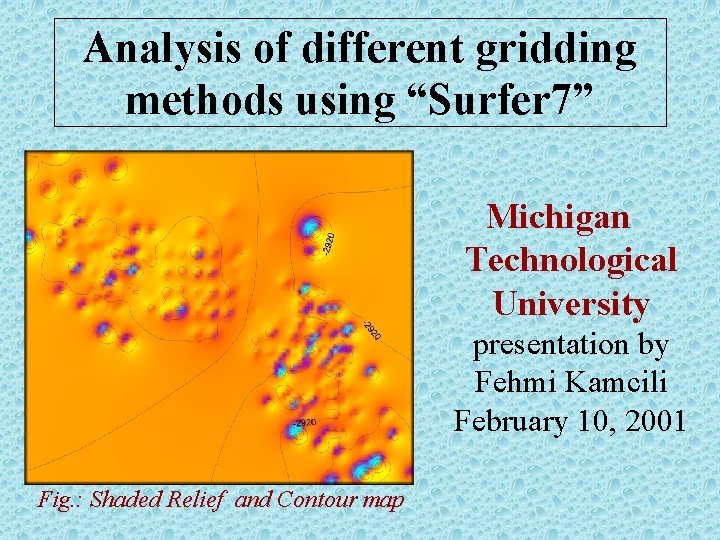
Analysis of different gridding methods using “Surfer 7” Michigan Technological University presentation by Fehmi Kamcili February 10, 2001 Fig. : Shaded Relief and Contour map
Analysis of different gridding methods using “Surfer 7” Table of content • Introduction • Grid Files • Grid Methods 1. Inverse Distance to a Power; 2. Kriging; 3. Minimum Curvature; 4. Modified Shepard’s Method; 5. Natural Neighbor; 6. Nearest Neighbor; 7. Polynomial Regression; 8. Radial Basis Function; 9. Triangulation w/ linear Interpolation • Best Results • Conclusion
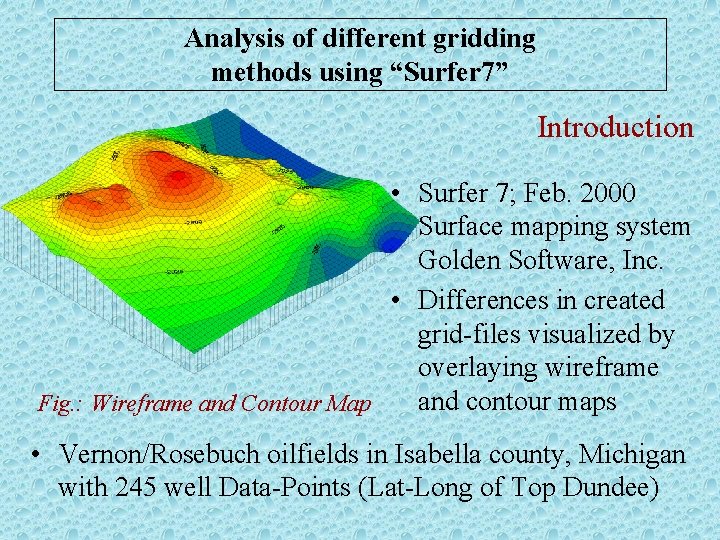
Analysis of different gridding methods using “Surfer 7” Introduction • Surfer 7; Feb. 2000 Surface mapping system Golden Software, Inc. • Differences in created grid-files visualized by overlaying wireframe and contour maps Fig. : Wireframe and Contour Map • Vernon/Rosebuch oilfields in Isabella county, Michigan with 245 well Data-Points (Lat-Long of Top Dundee)
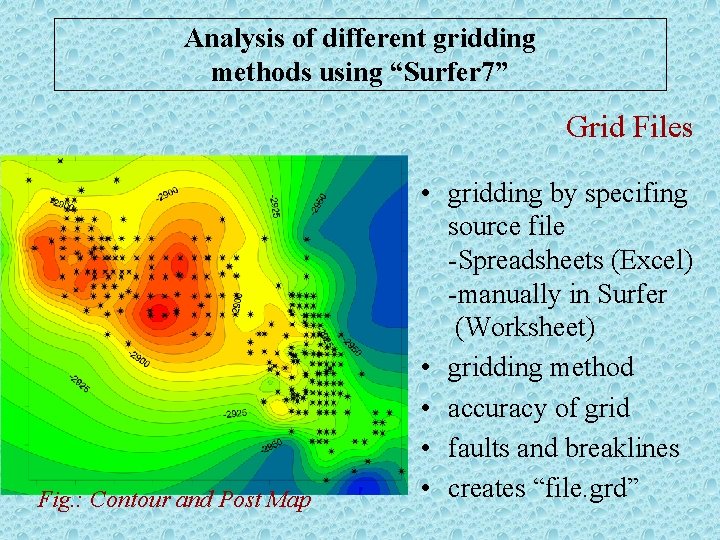
Analysis of different gridding methods using “Surfer 7” Grid Files Fig. : Contour and Post Map • gridding by specifing source file -Spreadsheets (Excel) -manually in Surfer (Worksheet) • gridding method • accuracy of grid • faults and breaklines • creates “file. grd”
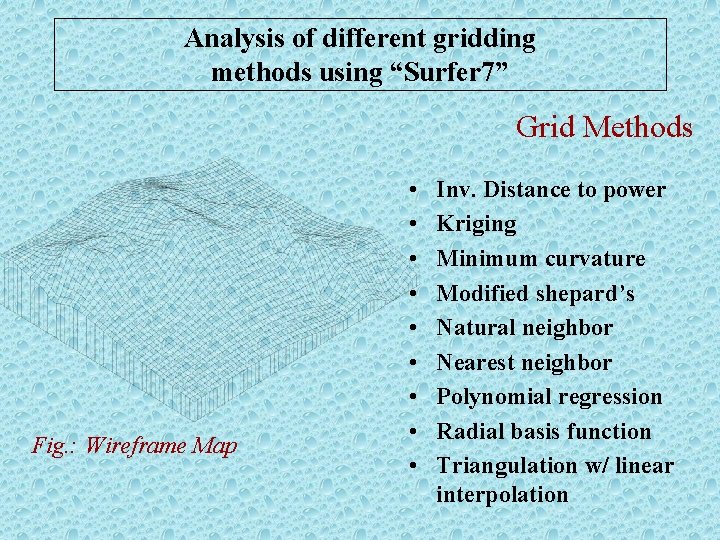
Analysis of different gridding methods using “Surfer 7” Grid Methods Fig. : Wireframe Map • • • Inv. Distance to power Kriging Minimum curvature Modified shepard’s Natural neighbor Nearest neighbor Polynomial regression Radial basis function Triangulation w/ linear interpolation
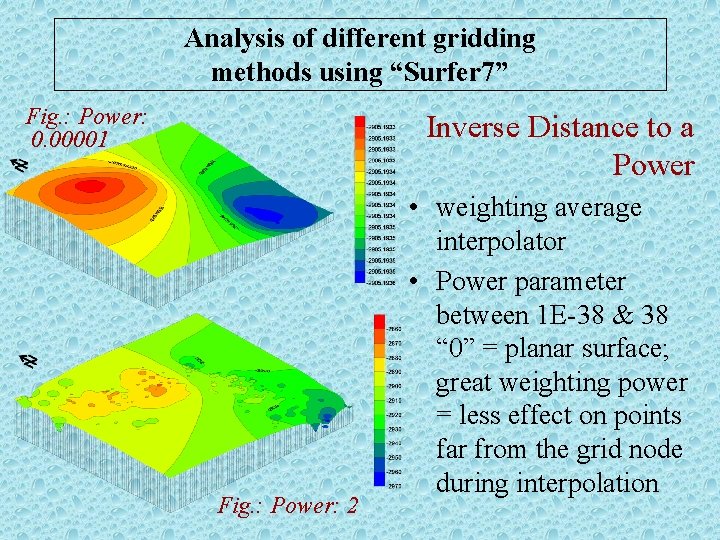
Analysis of different gridding methods using “Surfer 7” Fig. : Power: 0. 00001 Inverse Distance to a Power Fig. : Power: 2 • weighting average interpolator • Power parameter between 1 E-38 & 38 “ 0” = planar surface; great weighting power = less effect on points far from the grid node during interpolation
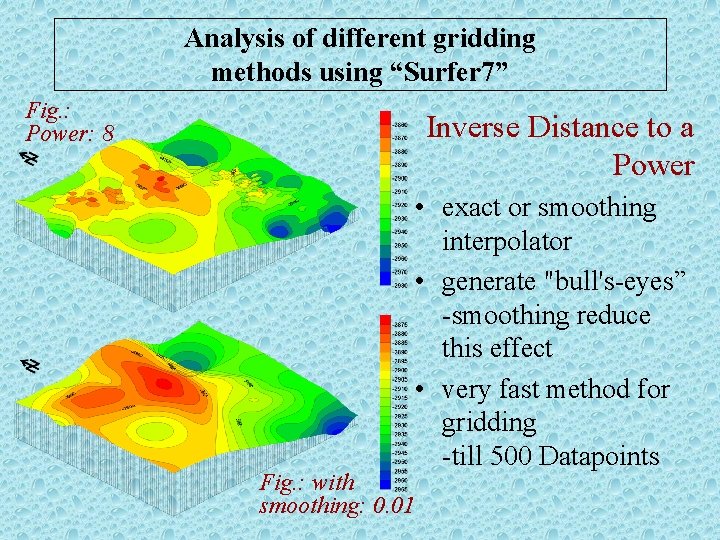
Analysis of different gridding methods using “Surfer 7” Fig. : Power: 8 Inverse Distance to a Power Fig. : with smoothing: 0. 01 • exact or smoothing interpolator • generate "bull's-eyes” -smoothing reduce this effect • very fast method for gridding -till 500 Datapoints
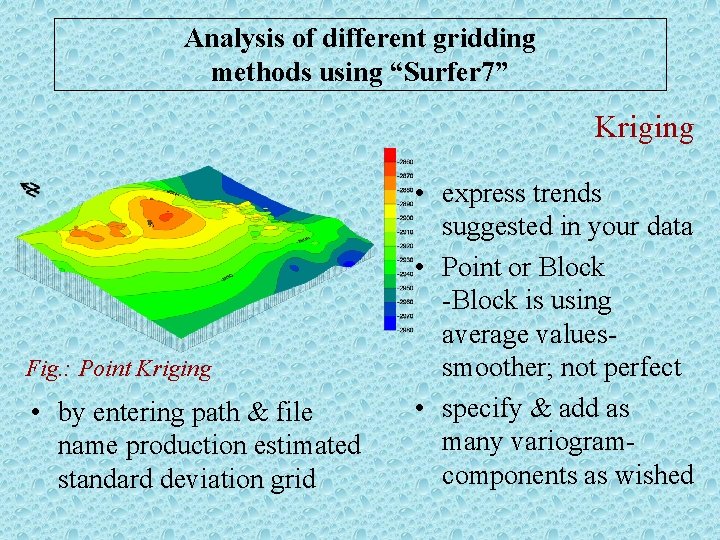
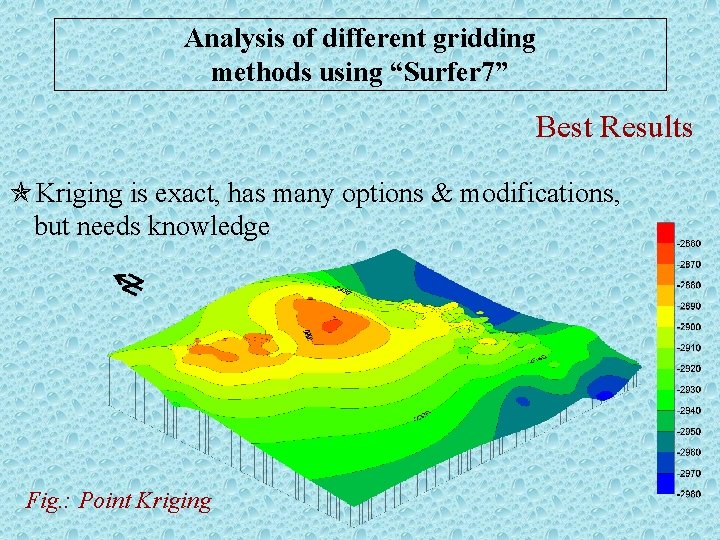
Analysis of different gridding methods using “Surfer 7” Kriging Fig. : Point Kriging • by entering path & file name production estimated standard deviation grid • express trends suggested in your data • Point or Block -Block is using average valuessmoother; not perfect • specify & add as many variogramcomponents as wished
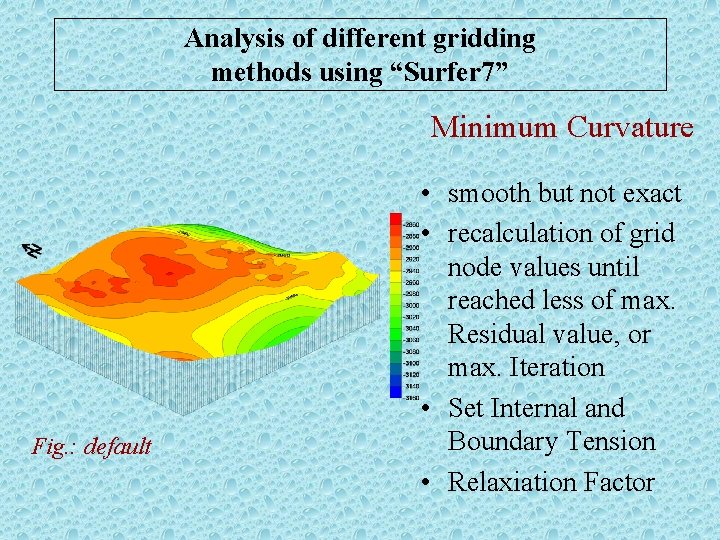
Analysis of different gridding methods using “Surfer 7” Minimum Curvature Fig. : default • smooth but not exact • recalculation of grid node values until reached less of max. Residual value, or max. Iteration • Set Internal and Boundary Tension • Relaxiation Factor
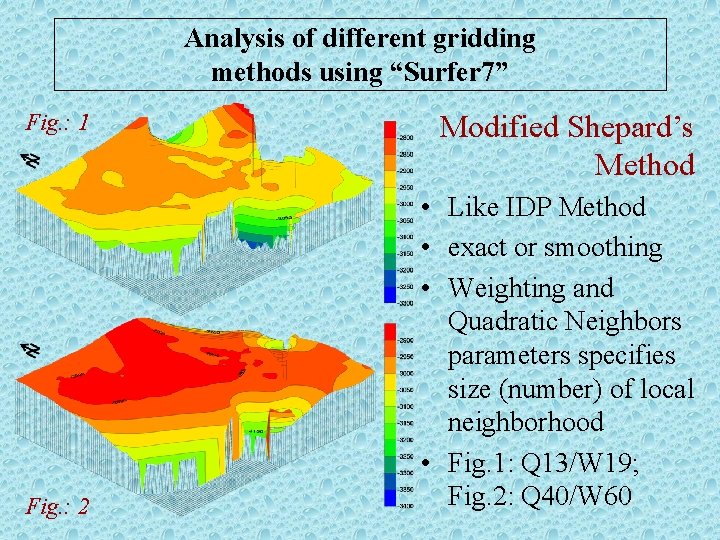
Analysis of different gridding methods using “Surfer 7” Fig. : 1 Fig. : 2 Modified Shepard’s Method • Like IDP Method • exact or smoothing • Weighting and Quadratic Neighbors parameters specifies size (number) of local neighborhood • Fig. 1: Q 13/W 19; Fig. 2: Q 40/W 60
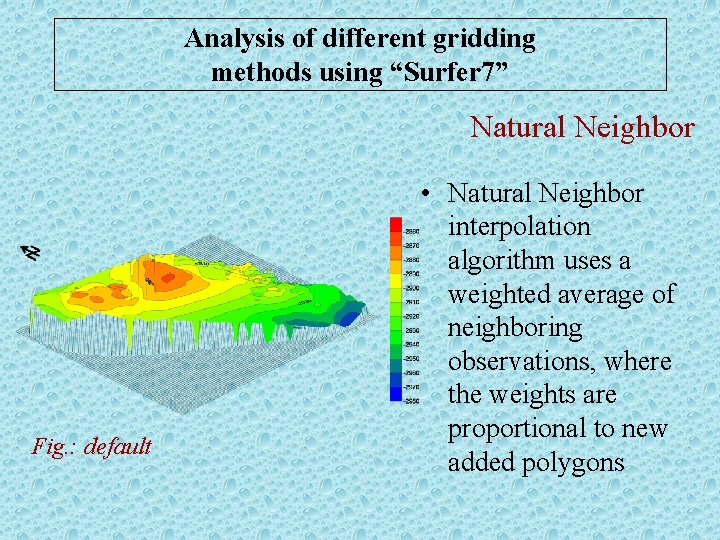
Analysis of different gridding methods using “Surfer 7” Natural Neighbor Fig. : default • Natural Neighbor interpolation algorithm uses a weighted average of neighboring observations, where the weights are proportional to new added polygons
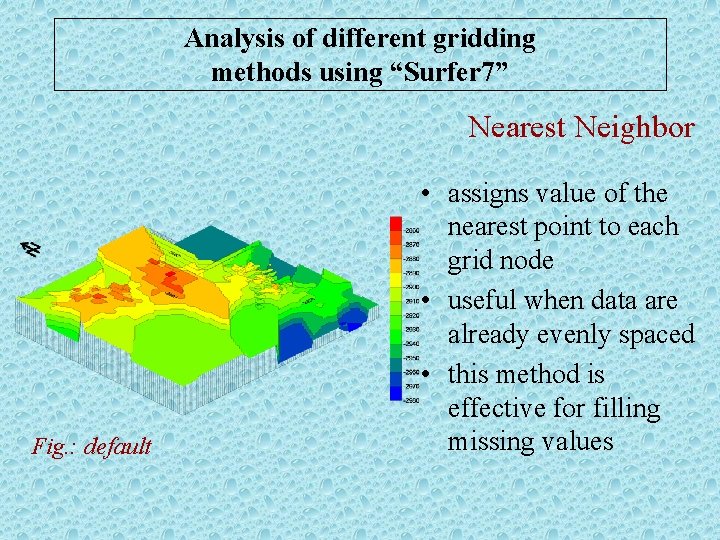
Analysis of different gridding methods using “Surfer 7” Nearest Neighbor Fig. : default • assigns value of the nearest point to each grid node • useful when data are already evenly spaced • this method is effective for filling missing values
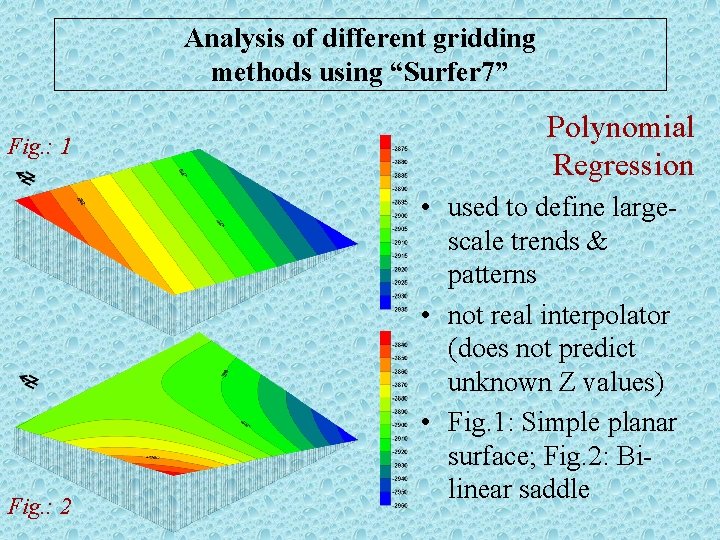
Analysis of different gridding methods using “Surfer 7” Fig. : 1 Fig. : 2 Polynomial Regression • used to define largescale trends & patterns • not real interpolator (does not predict unknown Z values) • Fig. 1: Simple planar surface; Fig. 2: Bilinear saddle
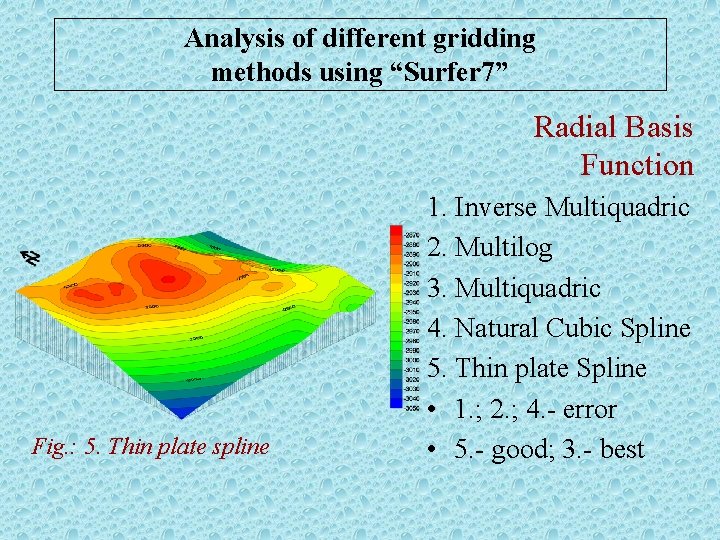
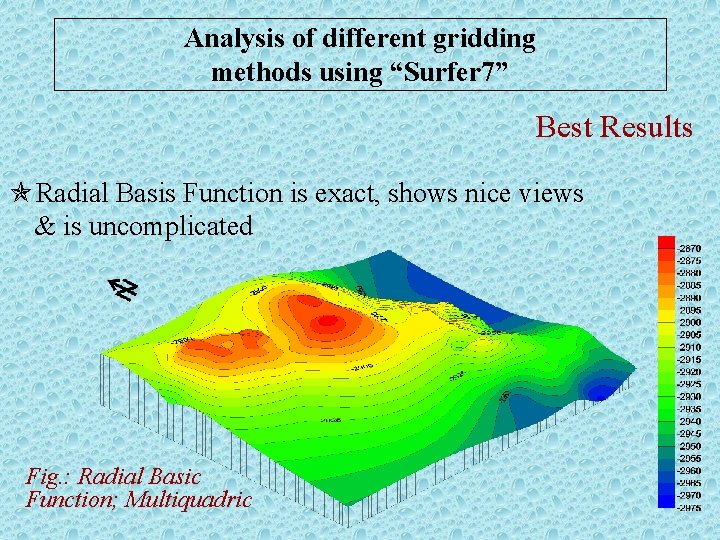
Analysis of different gridding methods using “Surfer 7” Radial Basis Function Fig. : 5. Thin plate spline 1. Inverse Multiquadric 2. Multilog 3. Multiquadric 4. Natural Cubic Spline 5. Thin plate Spline • 1. ; 2. ; 4. - error • 5. - good; 3. - best
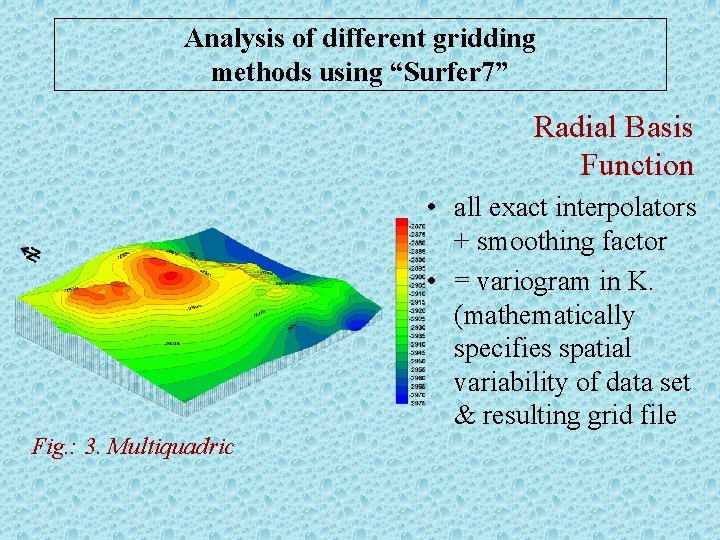
Analysis of different gridding methods using “Surfer 7” Radial Basis Function • all exact interpolators + smoothing factor • = variogram in K. (mathematically specifies spatial variability of data set & resulting grid file Fig. : 3. Multiquadric
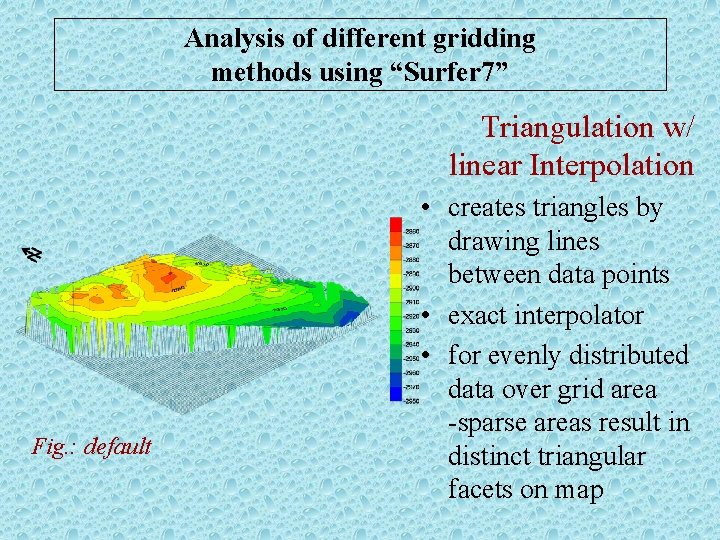
Analysis of different gridding methods using “Surfer 7” Triangulation w/ linear Interpolation Fig. : default • creates triangles by drawing lines between data points • exact interpolator • for evenly distributed data over grid area -sparse areas result in distinct triangular facets on map
Analysis of different gridding methods using “Surfer 7” Best Results Kriging is exact, has many options & modifications, but needs knowledge Fig. : Point Kriging
Analysis of different gridding methods using “Surfer 7” Best Results Radial Basis Function is exact, shows nice views & is uncomplicated Fig. : Radial Basic Function; Multiquadric
Analysis of different gridding methods using “Surfer 7” Conclusion • I did not consider all aspects & details • Surfer is very powerful for the 3 D-Visualization • Surfer 7 works: -fast & without consuming much disk space -uncomplicated with Object manager • All processes (gridding, mapping) can be automated with writing programs in Visual Basic • Help content is very useful & describes also background information