
Analysis of Diesel Cycle and Scope for Modification
- Slides: 23
Analysis of Diesel Cycle and Scope for Modification P M V Subbarao Professor Mechanical Engineering Department Creation of Rational Models for Engines…
A brief history of the diesel engine • 1897 -- Diesel built the first diesel engine at the Augsburg Maschinenfabrik. • 1898 -- Rudolph Diesel, filed a patent application • The single cylinder engine was used to power stationary machinery. • It weighed five tonnes and produced 20 hp at 172 rpm! • The engine operated at 26. 2% efficiency, a very significant improvement on the 20% achieved by the best gasoline engines of the time. • 1922 Benz introduces a 2 -cylinder, 30 hp 800 rpm tractor engine. • 1924 Benz introduces a 4 -cylinder, 50 hp 1000 rpm truck engine. • 1960 - 1970 Peugeot introduces the 404 Diesel followed by the 504 Diesel and the 204 Diesel, the first diesel-powered compact car
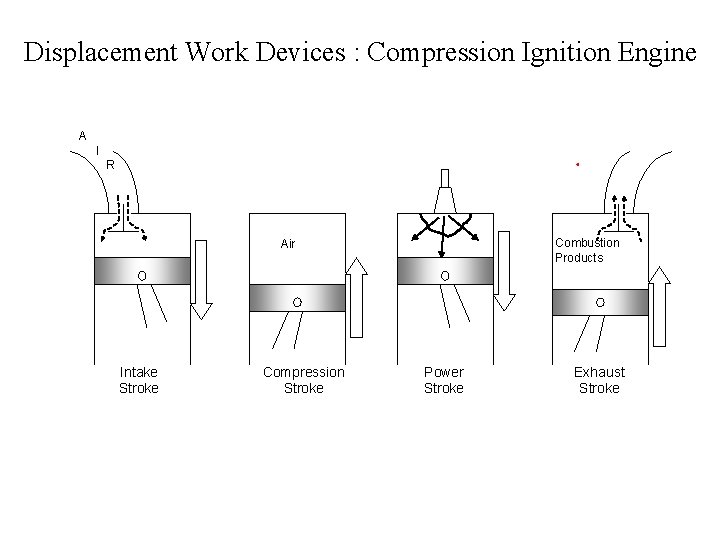
Displacement Work Devices : Compression Ignition Engine A I R Combustion Products Air Intake Stroke Compression Stroke Power Stroke Exhaust Stroke
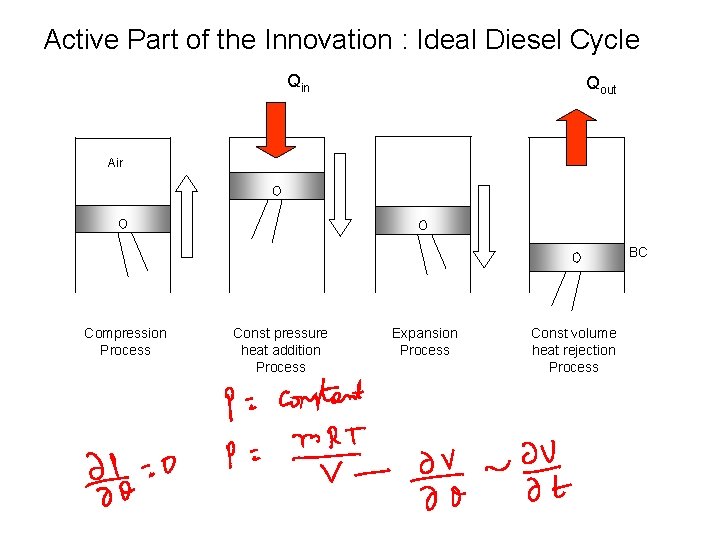
Active Part of the Innovation : Ideal Diesel Cycle Qin Qout Air BC Compression Process Const pressure heat addition Process Expansion Process Const volume heat rejection Process
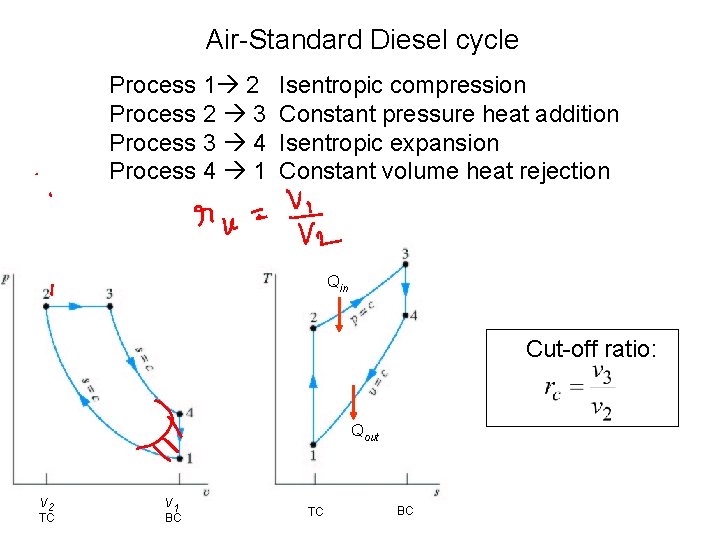
Air-Standard Diesel cycle Process 1 2 Process 2 3 Process 3 4 Process 4 1 Isentropic compression Constant pressure heat addition Isentropic expansion Constant volume heat rejection Qin Cut-off ratio: Qout v 2 TC v 1 BC TC BC
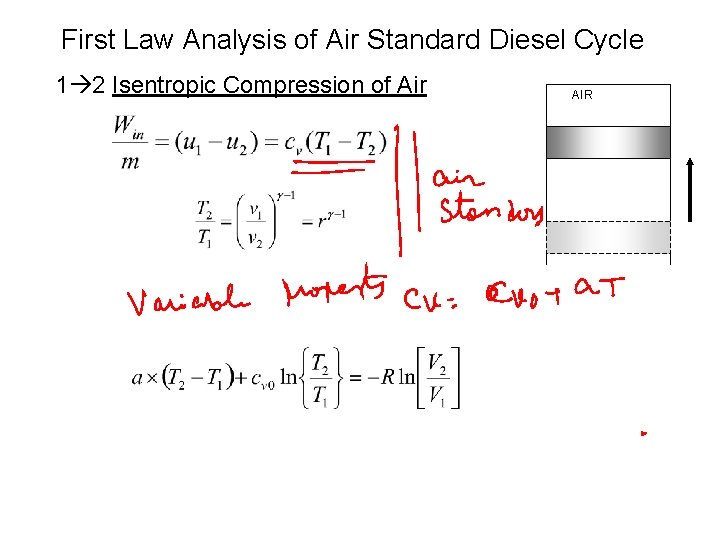
First Law Analysis of Air Standard Diesel Cycle 1 2 Isentropic Compression of Air AIR
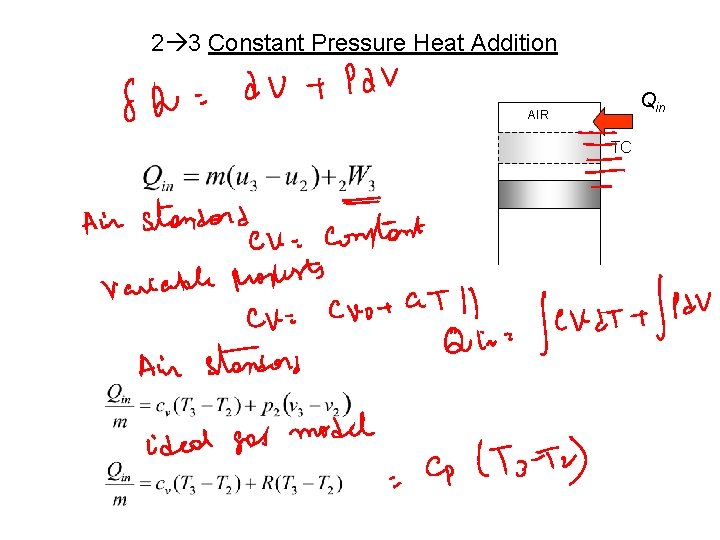
2 3 Constant Pressure Heat Addition Qin AIR TC
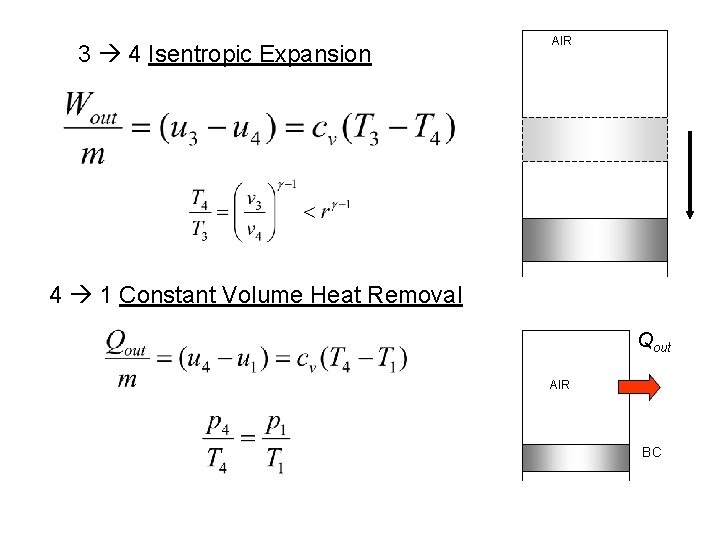
3 4 Isentropic Expansion AIR 4 1 Constant Volume Heat Removal Qout AIR BC
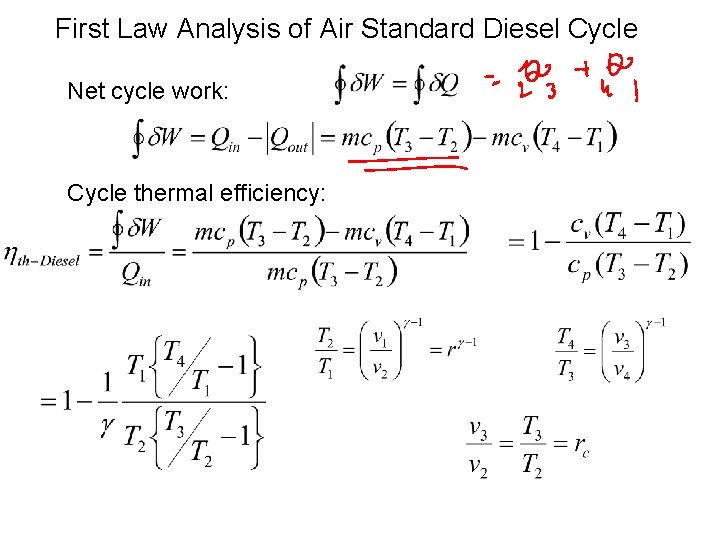
First Law Analysis of Air Standard Diesel Cycle Net cycle work: Cycle thermal efficiency:
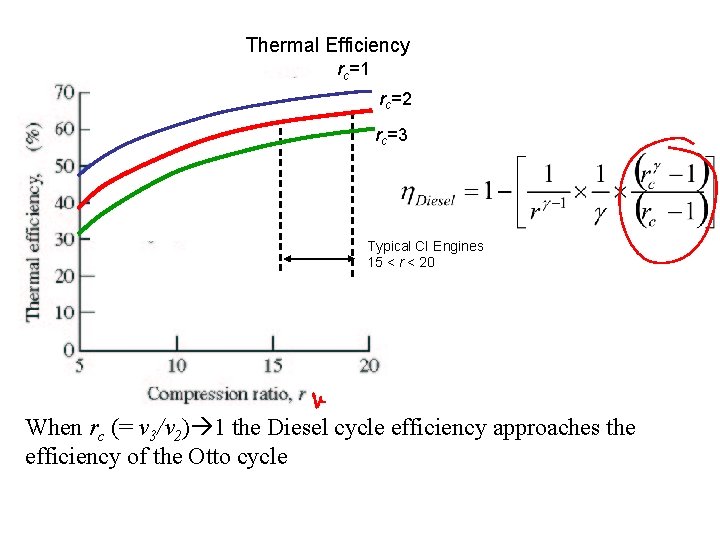
Thermal Efficiency rc=1 rc=2 rc=3 Typical CI Engines 15 < r < 20 When rc (= v 3/v 2) 1 the Diesel cycle efficiency approaches the efficiency of the Otto cycle
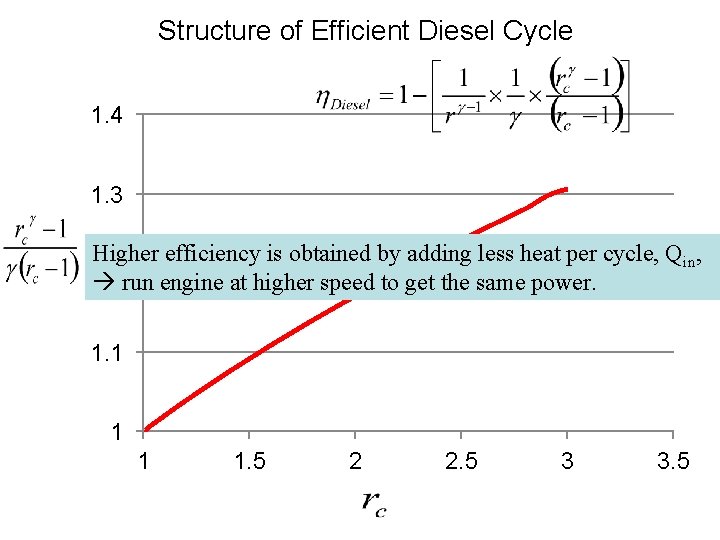
Structure of Efficient Diesel Cycle 1. 4 1. 3 Higher efficiency is obtained by adding less heat per cycle, Qin, 1. 2 run engine at higher speed to get the same power. 1. 1 1. 5 2 2. 5 3 3. 5
Multi Cylinder diesel engines • 1897 -- Diesel built the first diesel engine at the Augsburg Maschinenfabrik. • 1898 -- Rudolph Diesel, filed a patent application • The single cylinder engine was used to power stationary machinery. • It weighed five tonnes and produced 20 hp at 172 rpm! • The engine operated at 26. 2% efficiency, a very significant improvement on the 20% achieved by the best gasoline engines of the time. • 1922 Benz introduces a 2 -cylinder, 30 hp 800 rpm tractor engine. • 1924 Benz introduces a 4 -cylinder, 50 hp 1000 rpm truck engine. • 1960 - 1970 Peugeot introduces the 404 Diesel followed by the 504 Diesel and the 204 Diesel, the first diesel-powered compact car
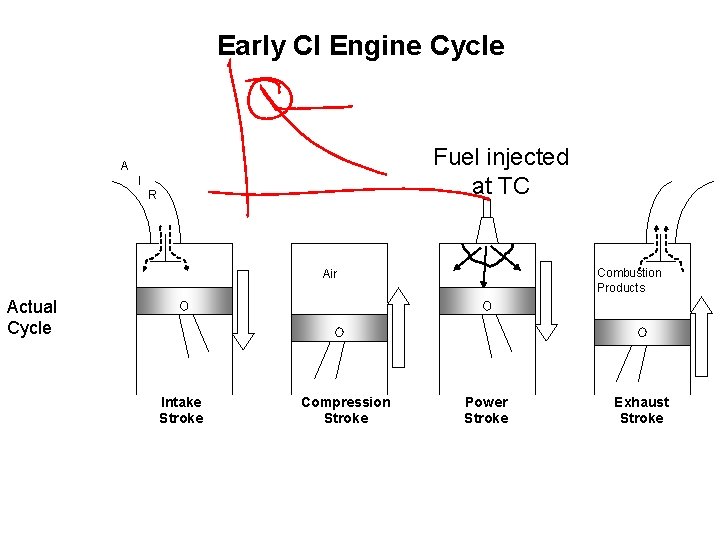
Early CI Engine Cycle Fuel injected at TC A I R Combustion Products Air Actual Cycle Intake Stroke Compression Stroke Power Stroke Exhaust Stroke
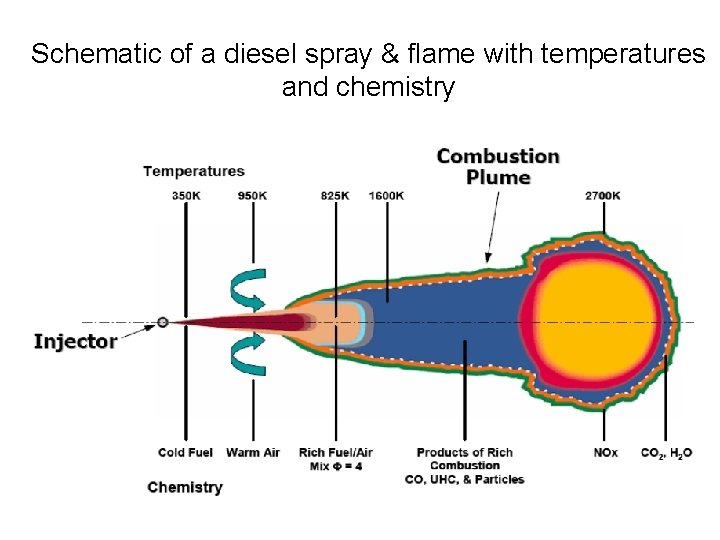
Schematic of a diesel spray & flame with temperatures and chemistry
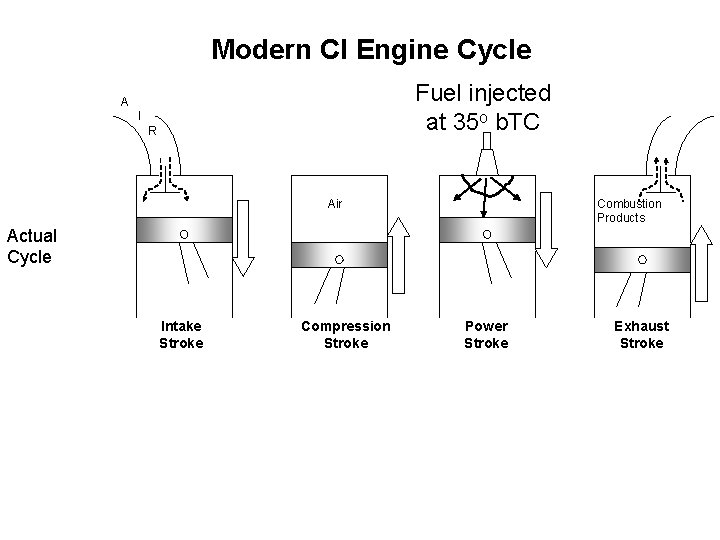
Modern CI Engine Cycle Fuel injected at 35 o b. TC A I R Air Combustion Products Actual Cycle Intake Stroke Compression Stroke Power Stroke Exhaust Stroke
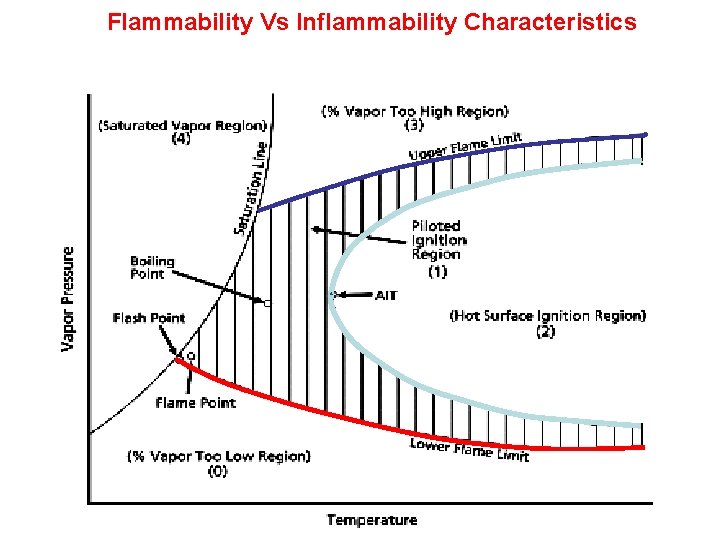
Flammability Vs Inflammability Characteristics
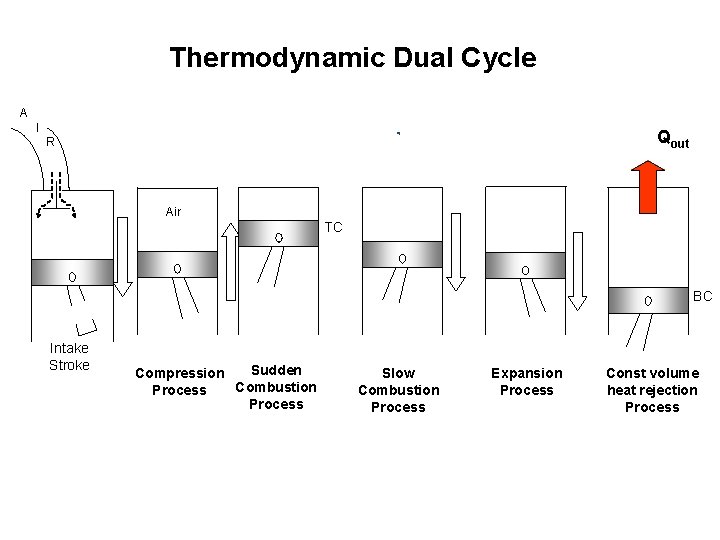
Thermodynamic Dual Cycle A I Qout R Air TC BC Intake Stroke Sudden Compression Combustion Process Slow Combustion Process Expansion Process Const volume heat rejection Process
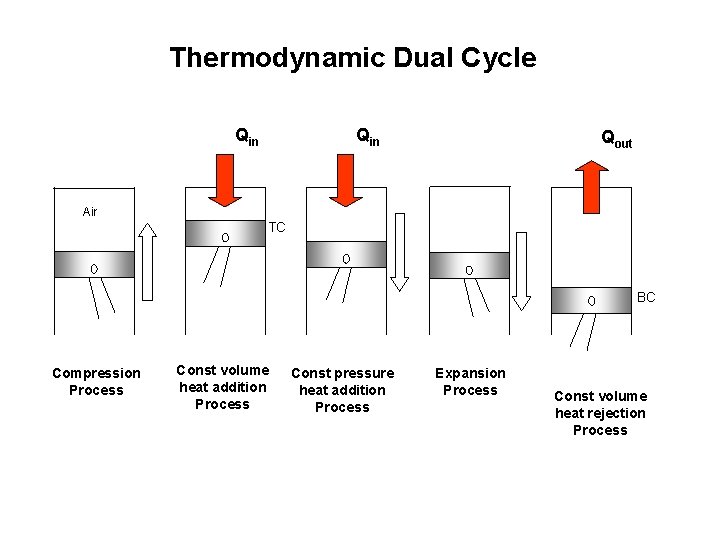
Thermodynamic Dual Cycle Qin Qout Air TC BC Compression Process Const volume heat addition Process Const pressure heat addition Process Expansion Process Const volume heat rejection Process
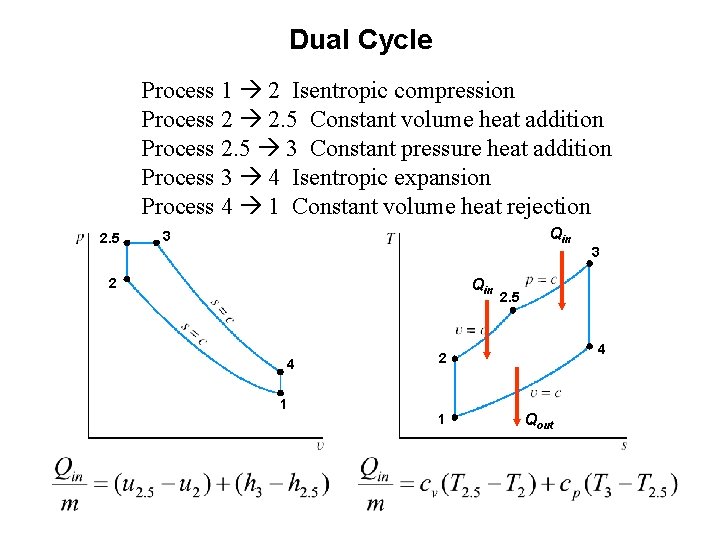
Dual Cycle Process 1 2 Isentropic compression Process 2 2. 5 Constant volume heat addition Process 2. 5 3 Constant pressure heat addition Process 3 4 Isentropic expansion Process 4 1 Constant volume heat rejection 2. 5 Qin 3 Qin 2 4 1 2. 5 4 2 1 3 Qout
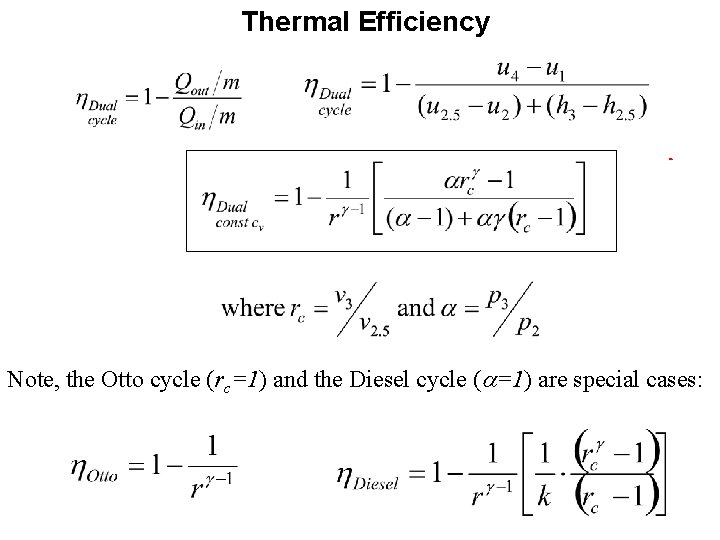
Thermal Efficiency Note, the Otto cycle (rc=1) and the Diesel cycle ( =1) are special cases:
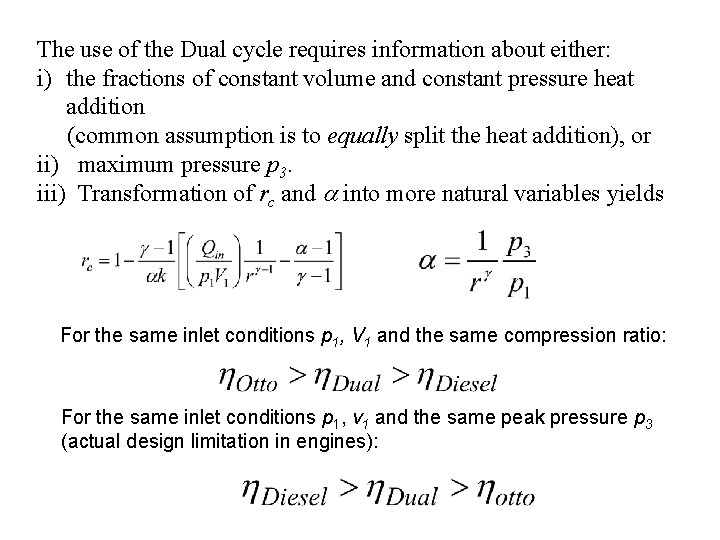
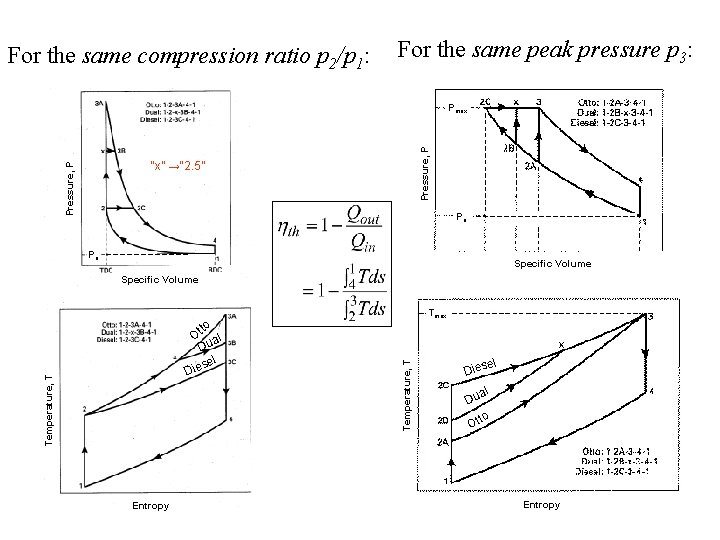
The use of the Dual cycle requires information about either: i) the fractions of constant volume and constant pressure heat addition (common assumption is to equally split the heat addition), or ii) maximum pressure p 3. iii) Transformation of rc and into more natural variables yields For the same inlet conditions p 1, V 1 and the same compression ratio: For the same inlet conditions p 1, v 1 and the same peak pressure p 3 (actual design limitation in engines):
For the same compression ratio p 2/p 1: For the same peak pressure p 3: Pressure, P Pmax Pressure, P “x” →“ 2. 5” Po Po Specific Volume Entropy Temperature, T D tto O al Du el ies Tmax el Dies al Du to Ot Entropy
Type of Fuel Vs Combustion Strategy • Highly volatile with High self Ignition Temperature: Spark Ignition after thorough mixing of air and fuel. • Less Volatile with low self Ignition Temperature: Compression Ignition , Almost simultaneous mixing & Ignition.