
Analysis of Control Systems in State Space imtiaz
- Slides: 14
Analysis of Control Systems in State Space imtiaz. hussain@faculty. muet. edu. pk
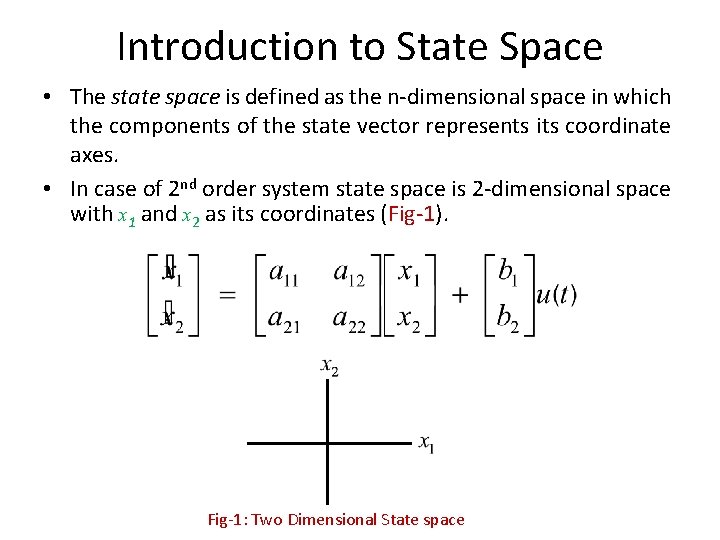
Introduction to State Space • The state space is defined as the n-dimensional space in which the components of the state vector represents its coordinate axes. • In case of 2 nd order system state space is 2 -dimensional space with x 1 and x 2 as its coordinates (Fig-1). Fig-1: Two Dimensional State space
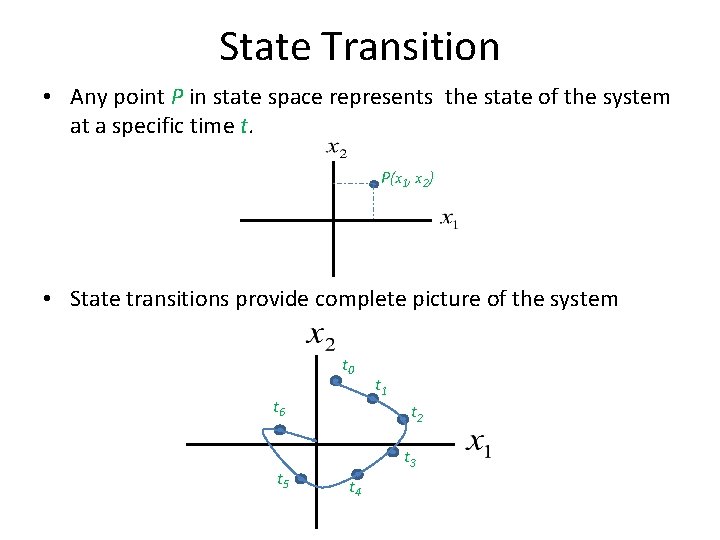
State Transition • Any point P in state space represents the state of the system at a specific time t. P(x 1, x 2) • State transitions provide complete picture of the system t 0 t 6 t 5 t 1 t 2 t 3 t 4
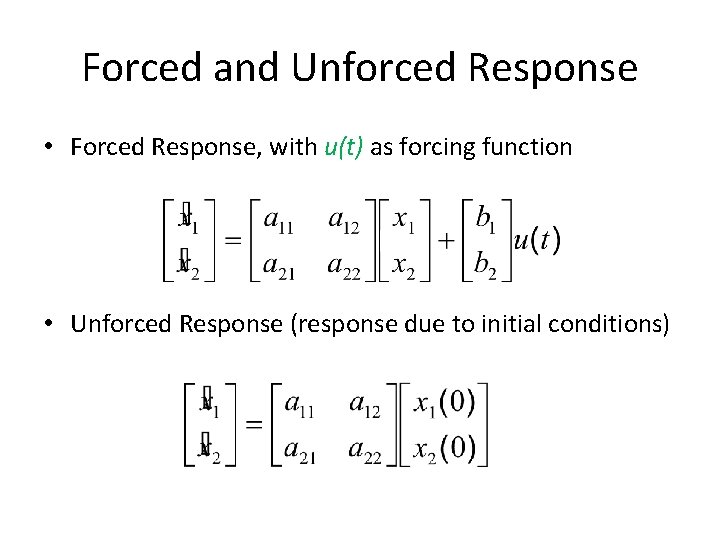
Forced and Unforced Response • Forced Response, with u(t) as forcing function • Unforced Response (response due to initial conditions)
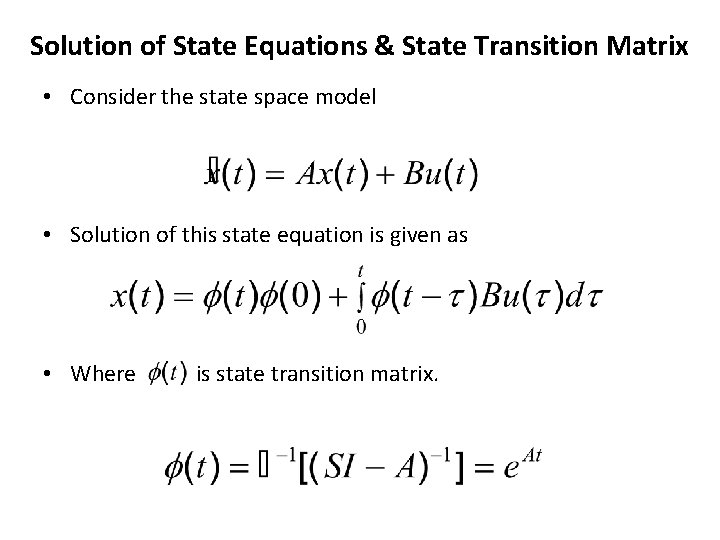
Solution of State Equations & State Transition Matrix • Consider the state space model • Solution of this state equation is given as • Where is state transition matrix.
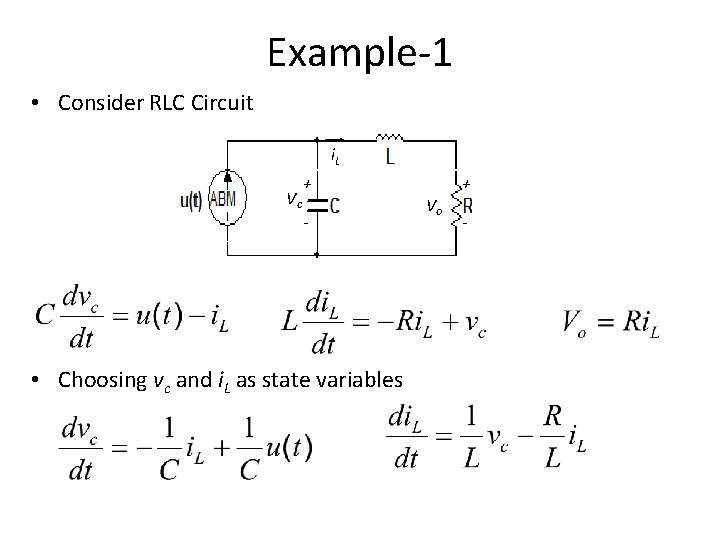
Example-1 • Consider RLC Circuit i. L Vc + - • Choosing vc and i. L as state variables Vo + -
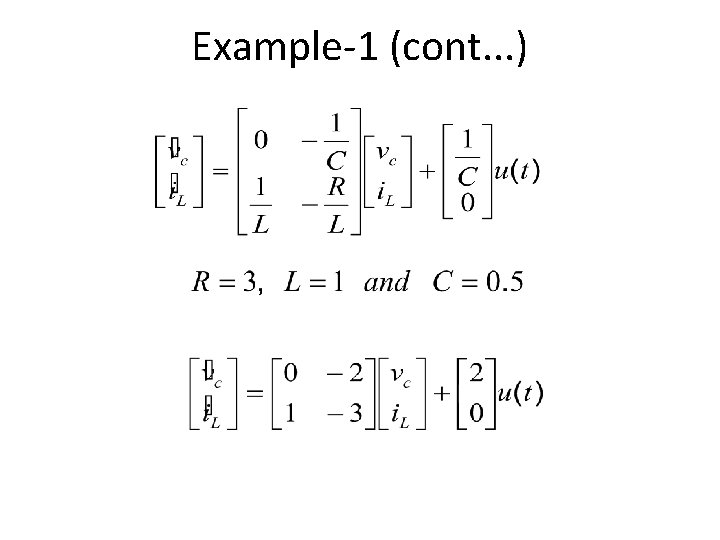
Example-1 (cont. . . )
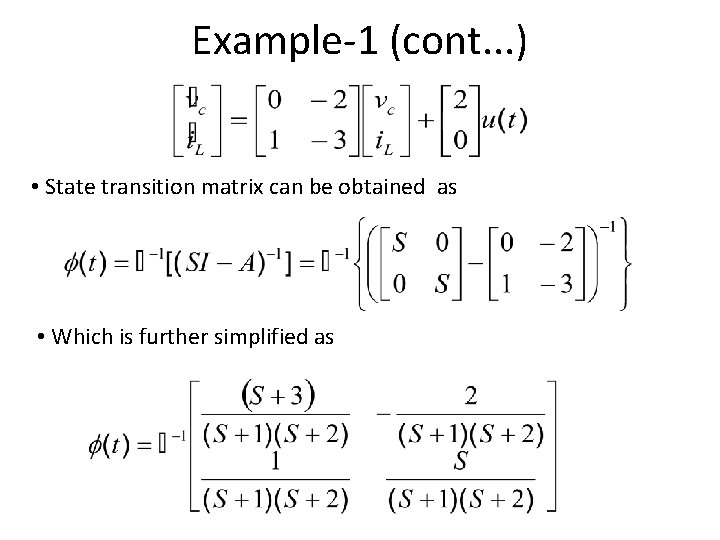
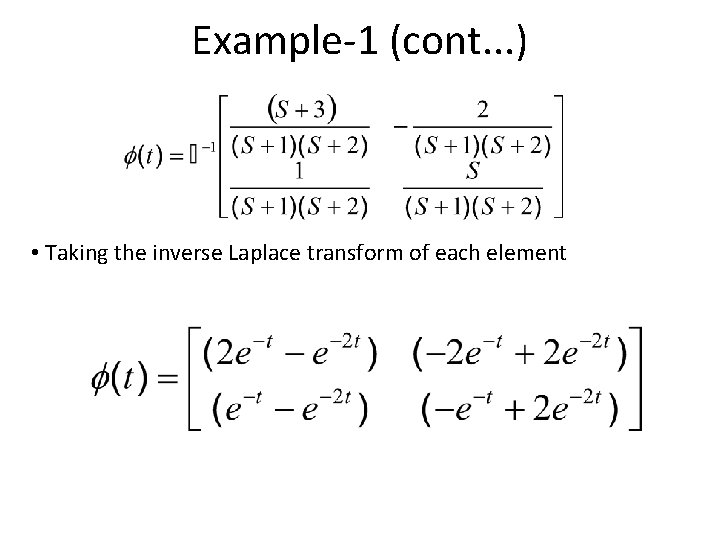
Example-1 (cont. . . ) • State transition matrix can be obtained as • Which is further simplified as
Example-1 (cont. . . ) • Taking the inverse Laplace transform of each element
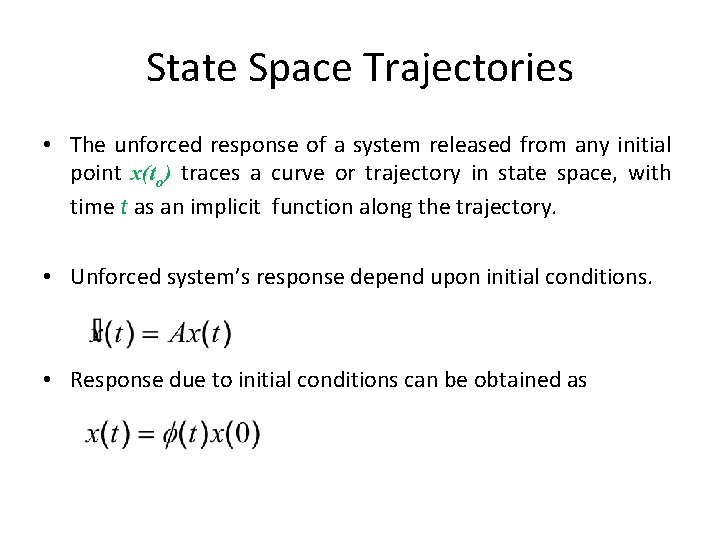
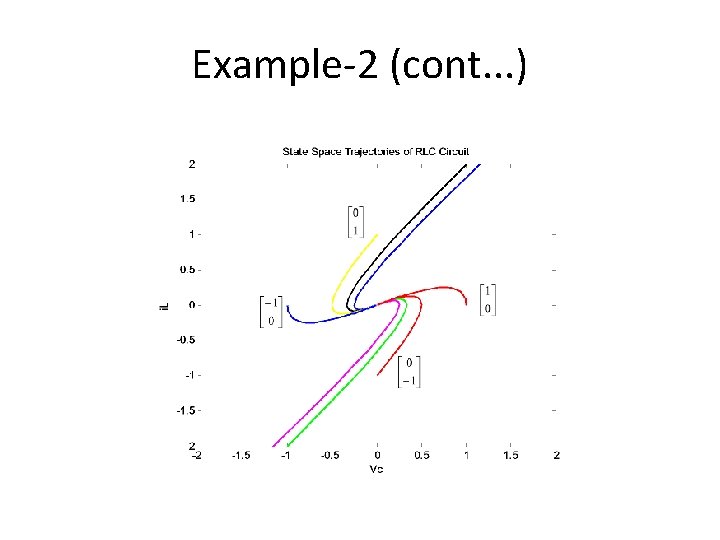
State Space Trajectories • The unforced response of a system released from any initial point x(to) traces a curve or trajectory in state space, with time t as an implicit function along the trajectory. • Unforced system’s response depend upon initial conditions. • Response due to initial conditions can be obtained as
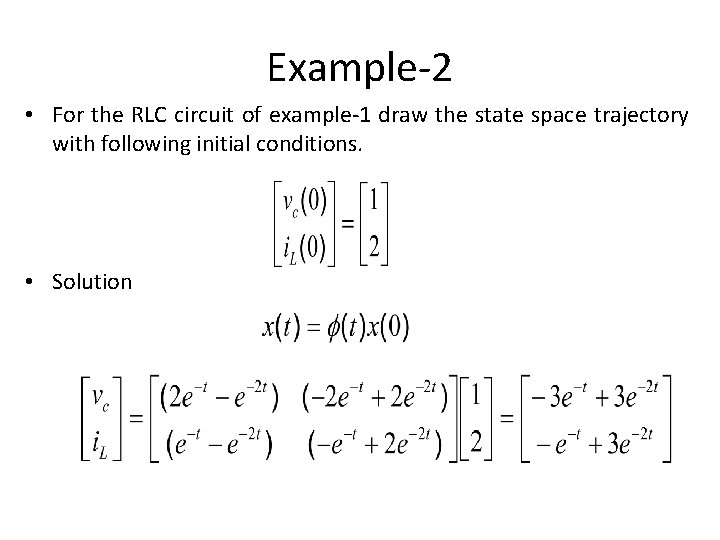
Example-2 • For the RLC circuit of example-1 draw the state space trajectory with following initial conditions. • Solution
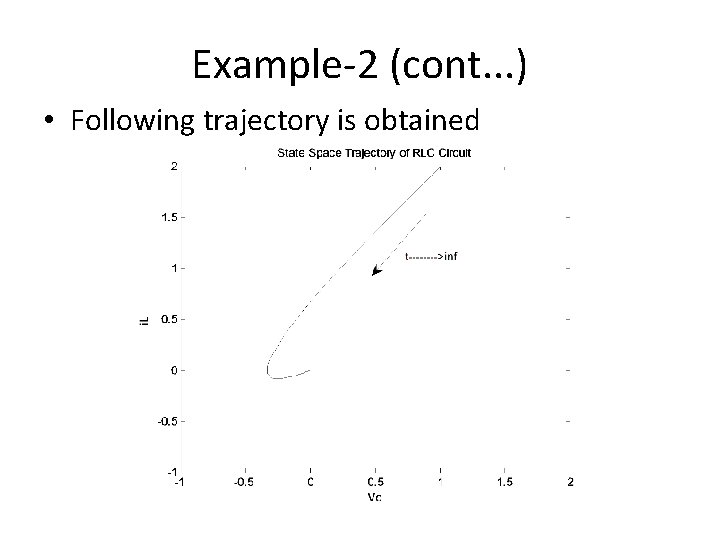
Example-2 (cont. . . ) • Following trajectory is obtained
Example-2 (cont. . . )
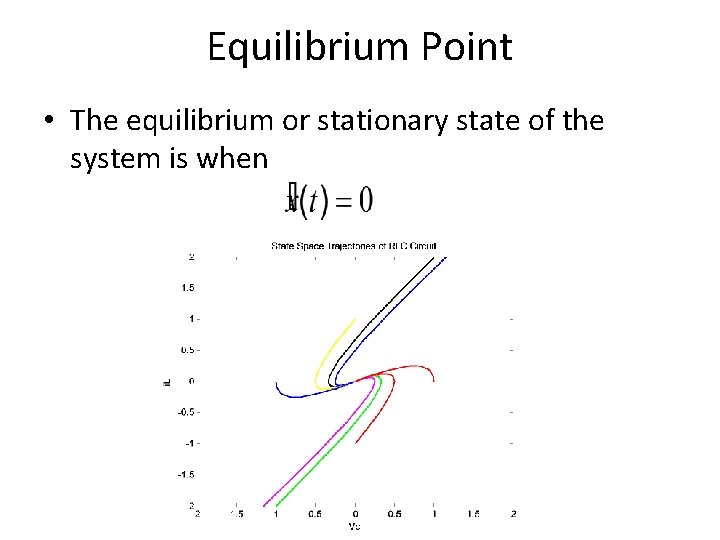
Equilibrium Point • The equilibrium or stationary state of the system is when