
Analysis of an Advertisement Analyzing Persuasive Techniques in



- Slides: 10
Analysis of an Advertisement Analyzing Persuasive Techniques in Advertising
Understanding persuasive techniques can help you evaluate messages that surround you and identify misleading information.
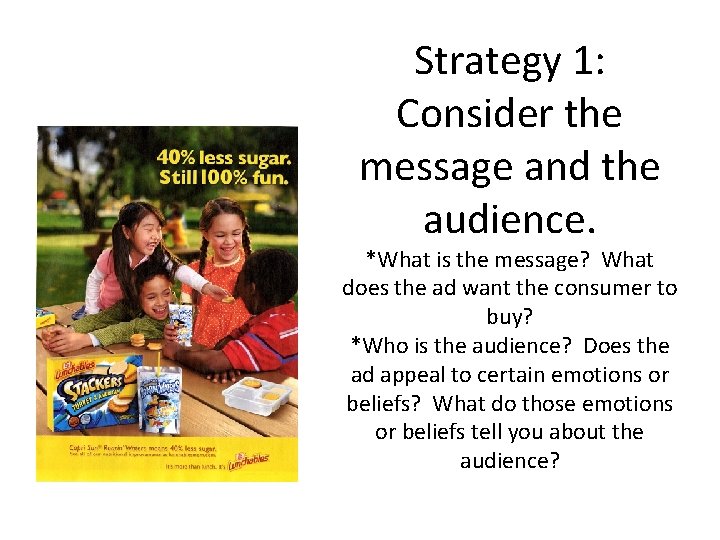
Strategy 1: Consider the message and the audience. *What is the message? What does the ad want the consumer to buy? *Who is the audience? Does the ad appeal to certain emotions or beliefs? What do those emotions or beliefs tell you about the audience?
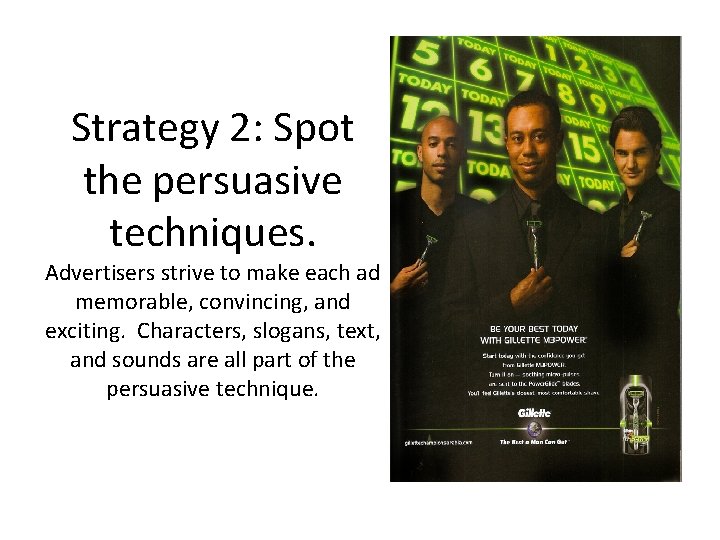
Strategy 2: Spot the persuasive techniques. Advertisers strive to make each ad memorable, convincing, and exciting. Characters, slogans, text, and sounds are all part of the persuasive technique.
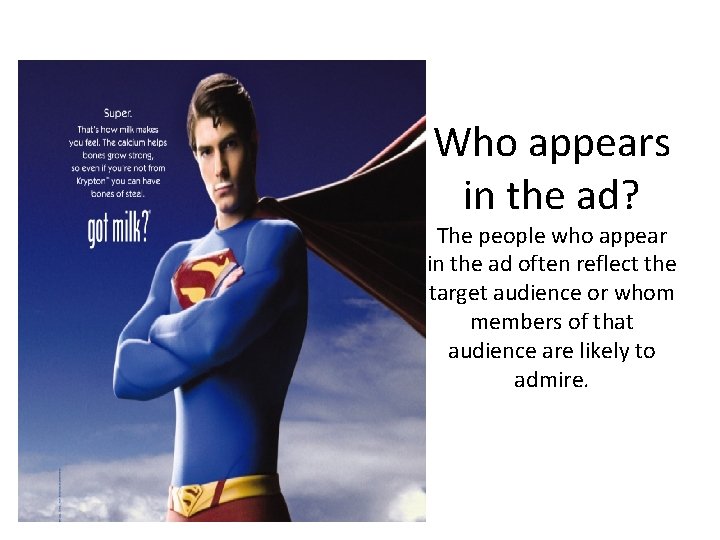
Who appears in the ad? The people who appear in the ad often reflect the target audience or whom members of that audience are likely to admire.
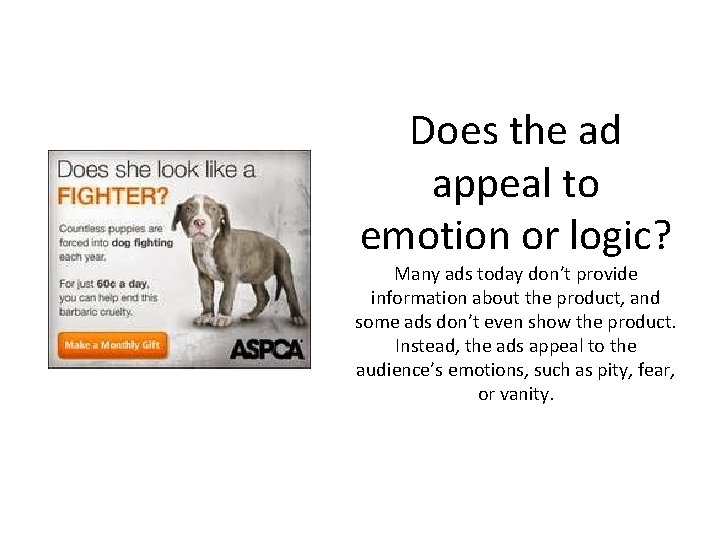
Does the ad appeal to emotion or logic? Many ads today don’t provide information about the product, and some ads don’t even show the product. Instead, the ads appeal to the audience’s emotions, such as pity, fear, or vanity.
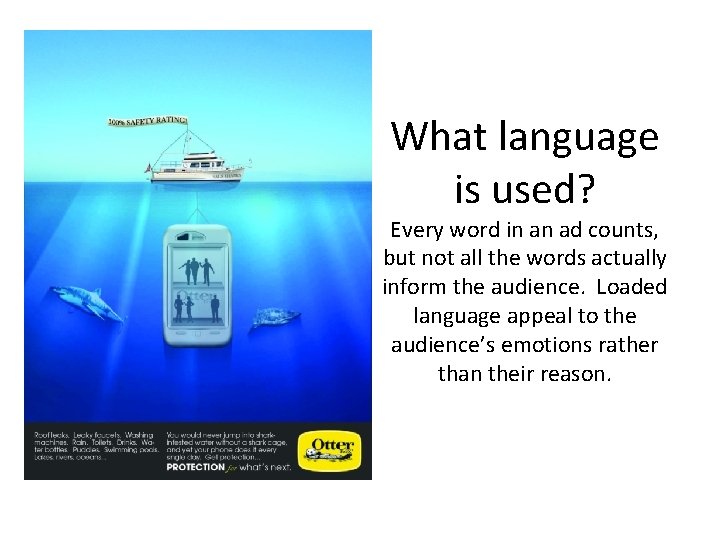
What language is used? Every word in an ad counts, but not all the words actually inform the audience. Loaded language appeal to the audience’s emotions rather than their reason.
Does the slogan stick? The best slogans are memorable and create an “image” of the product. Slogans should be memorable and catchy.
Strategy 3: Understand the intended effects on the target audience. Most ads don’t employ just one persuasive technique. They often use several. Ask yourself: Why do I think these techniques were chosen?