
Analysis of a 2 component Alloy Experiment 10
- Slides: 20
Analysis of a 2 -component Alloy Experiment 10
Problem • Determine the percent zinc in an alloy • Use information regarding the amount of hydrogen gas produced
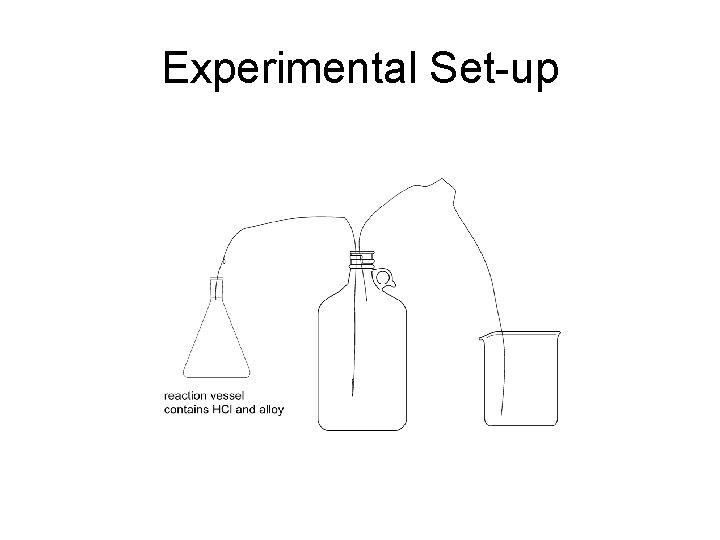
Experimental Set-up
• Fill Bottle with water and get a mass of the full bottle. • Add 50 -75 m. L of dilute (6 M) HCl to reaction flask and set up as in previous slide. • Secure all connections and add a weighed piece of alloy.
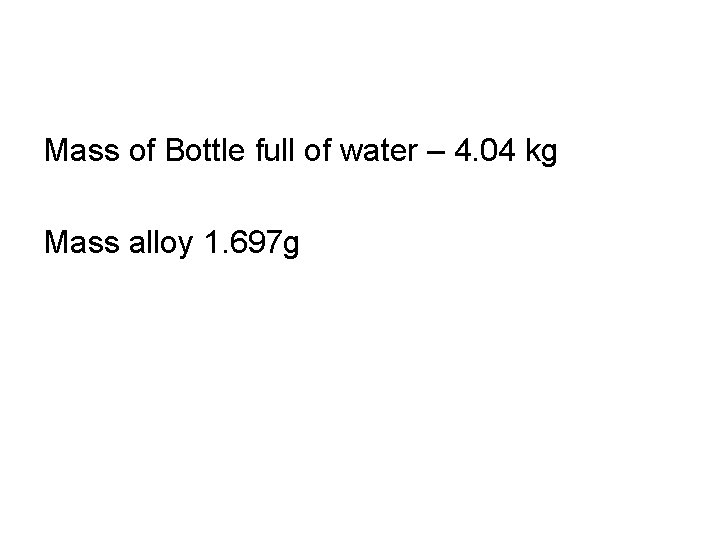
Mass of Bottle full of water – 4. 04 kg Mass alloy 1. 697 g
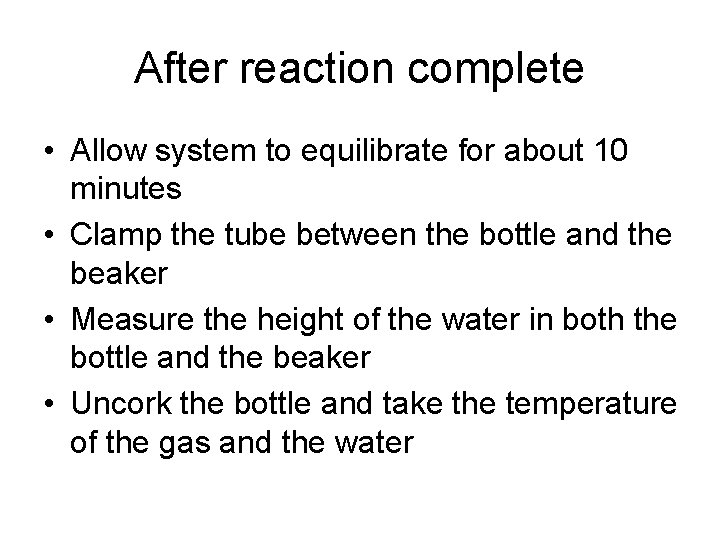
After reaction complete • Allow system to equilibrate for about 10 minutes • Clamp the tube between the bottle and the beaker • Measure the height of the water in both the bottle and the beaker • Uncork the bottle and take the temperature of the gas and the water
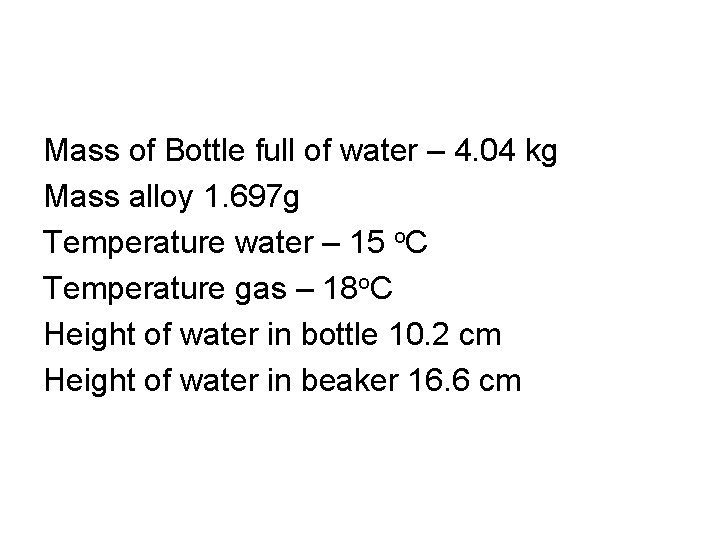
Mass of Bottle full of water – 4. 04 kg Mass alloy 1. 697 g Temperature water – 15 o. C Temperature gas – 18 o. C Height of water in bottle 10. 2 cm Height of water in beaker 16. 6 cm
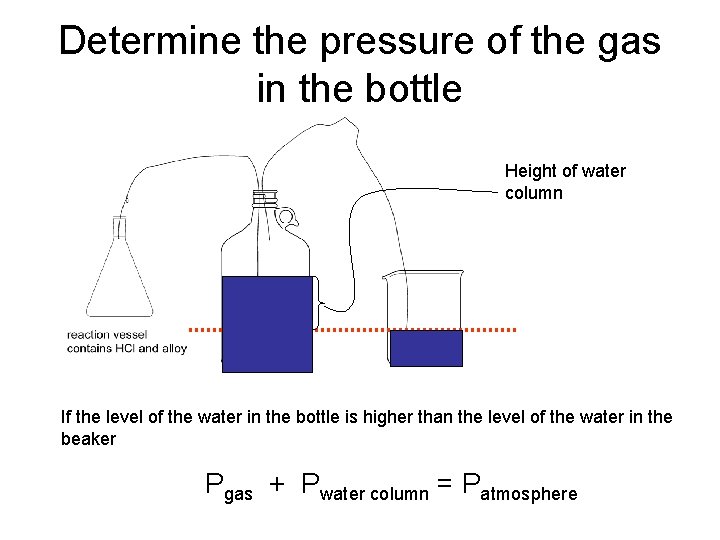
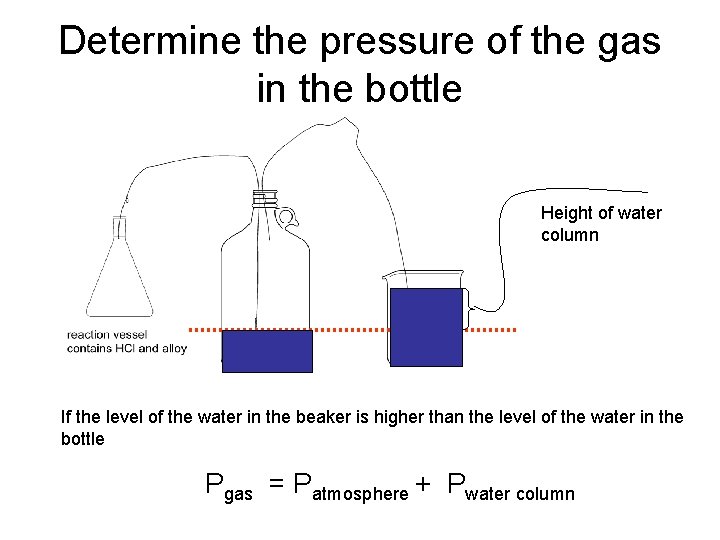
Determine the pressure of the gas in the bottle Height of water column If the level of the water in the bottle is higher than the level of the water in the beaker Pgas + Pwater column = Patmosphere
Determine the pressure of the gas in the bottle Height of water column If the level of the water in the beaker is higher than the level of the water in the bottle Pgas = Patmosphere + Pwater column
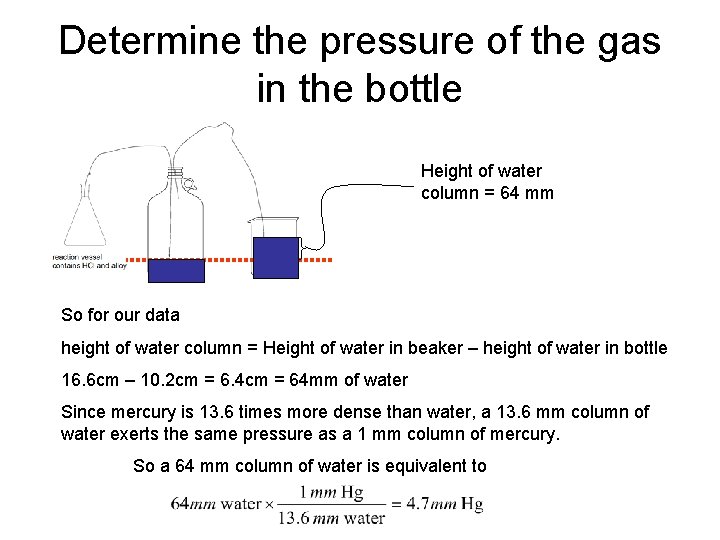
Determine the pressure of the gas in the bottle Height of water column = 64 mm So for our data height of water column = Height of water in beaker – height of water in bottle 16. 6 cm – 10. 2 cm = 6. 4 cm = 64 mm of water Since mercury is 13. 6 times more dense than water, a 13. 6 mm column of water exerts the same pressure as a 1 mm column of mercury. So a 64 mm column of water is equivalent to
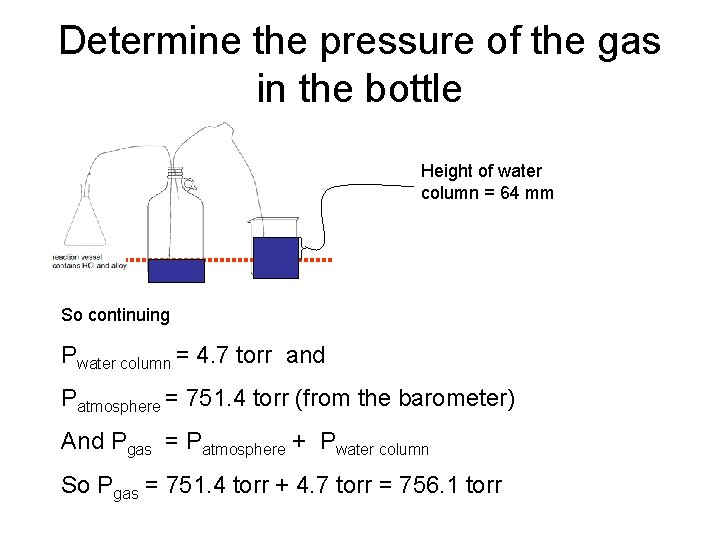
Determine the pressure of the gas in the bottle Height of water column = 64 mm So continuing Pwater column = 4. 7 torr and Patmosphere = 751. 4 torr (from the barometer) And Pgas = Patmosphere + Pwater column So Pgas = 751. 4 torr + 4. 7 torr = 756. 1 torr
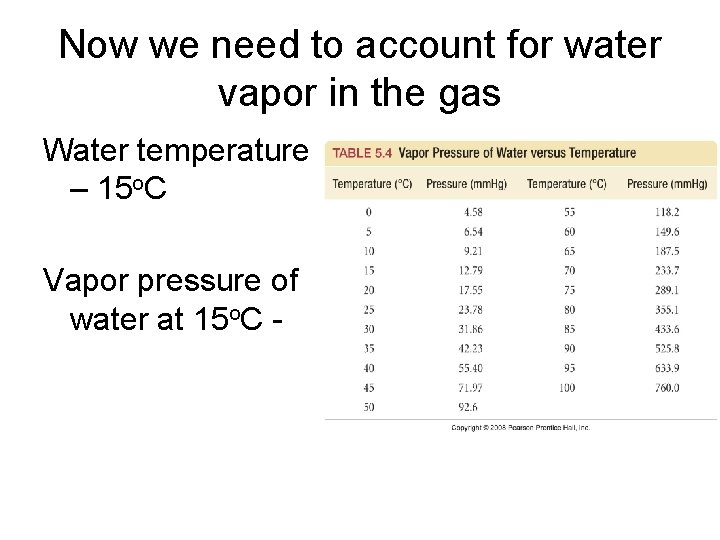
Now we need to account for water vapor in the gas Water temperature – 15 o. C Vapor pressure of water at 15 o. C -
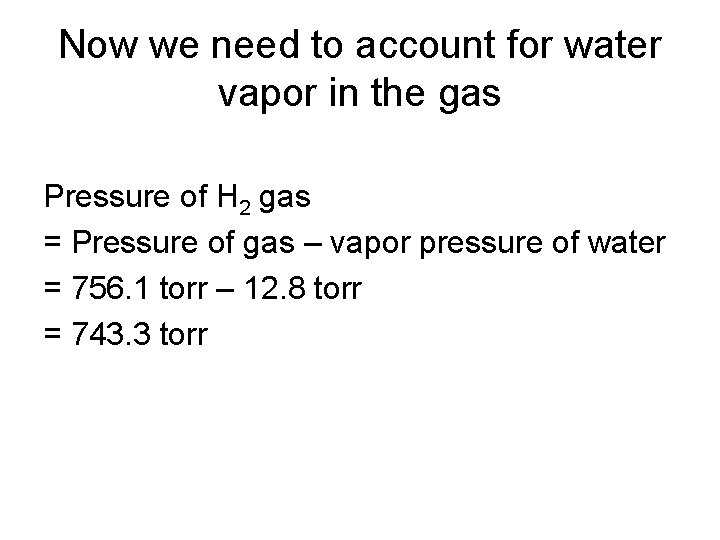
Now we need to account for water vapor in the gas Pressure of H 2 gas = Pressure of gas – vapor pressure of water = 756. 1 torr – 12. 8 torr = 743. 3 torr
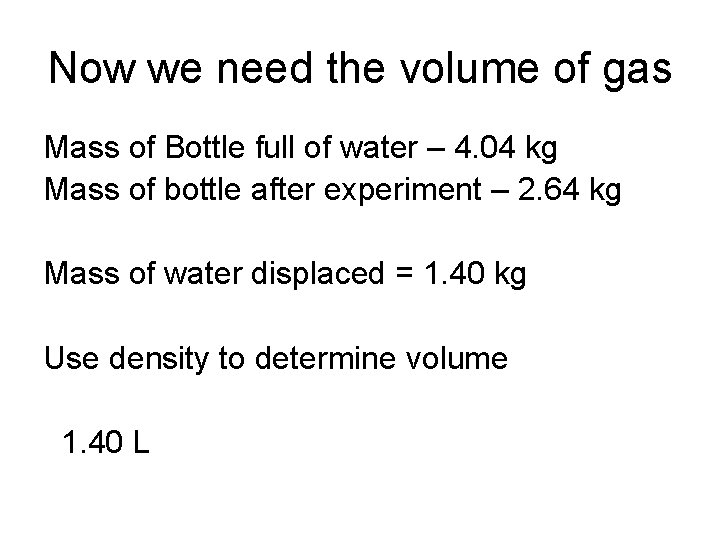
Now we need the volume of gas Mass of Bottle full of water – 4. 04 kg Mass of bottle after experiment – 2. 64 kg Mass of water displaced = 1. 40 kg Use density to determine volume 1. 40 L
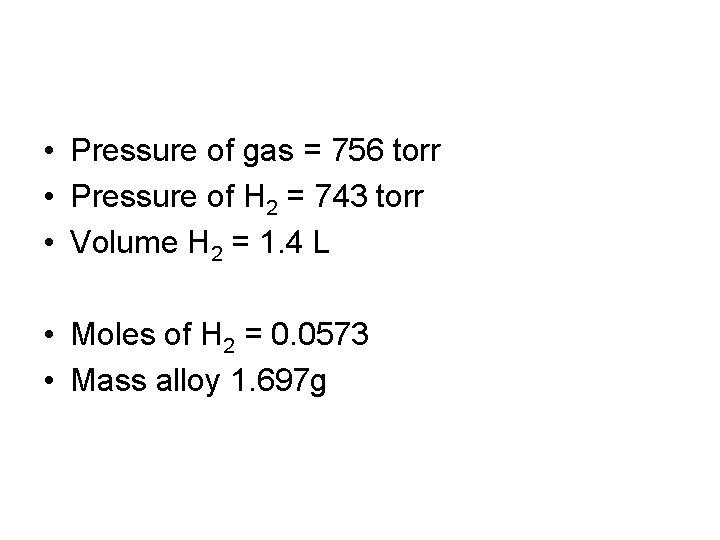
• Pressure of gas = 756 torr • Pressure of H 2 = 743 torr • Volume H 2 = 1. 4 L • Moles of H 2 = 0. 0573 • Mass alloy 1. 697 g
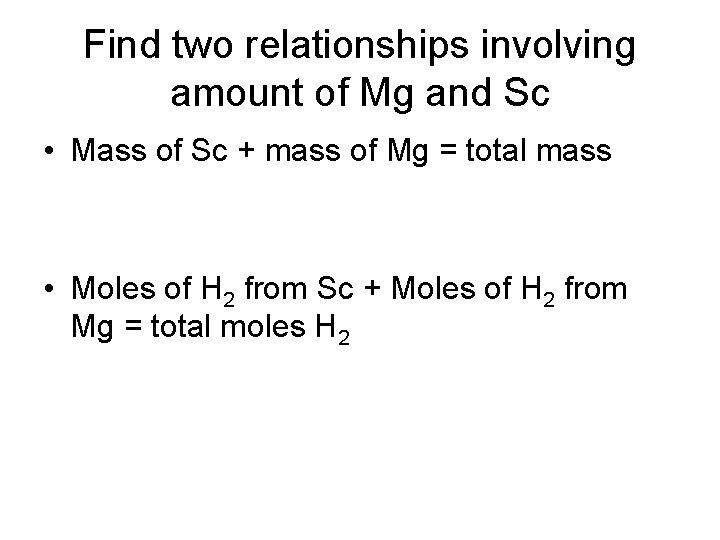
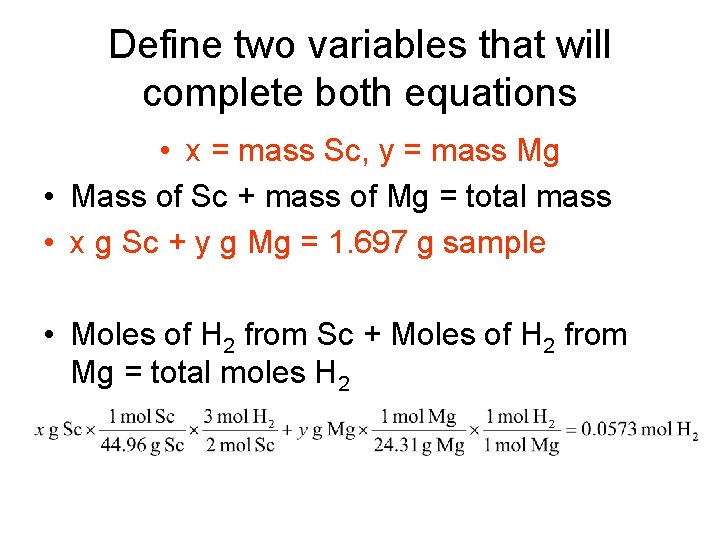
Find two relationships involving amount of Mg and Sc • Mass of Sc + mass of Mg = total mass • Moles of H 2 from Sc + Moles of H 2 from Mg = total moles H 2
Define two variables that will complete both equations • x = mass Sc, y = mass Mg • Mass of Sc + mass of Mg = total mass • x g Sc + y g Mg = 1. 697 g sample • Moles of H 2 from Sc + Moles of H 2 from Mg = total moles H 2
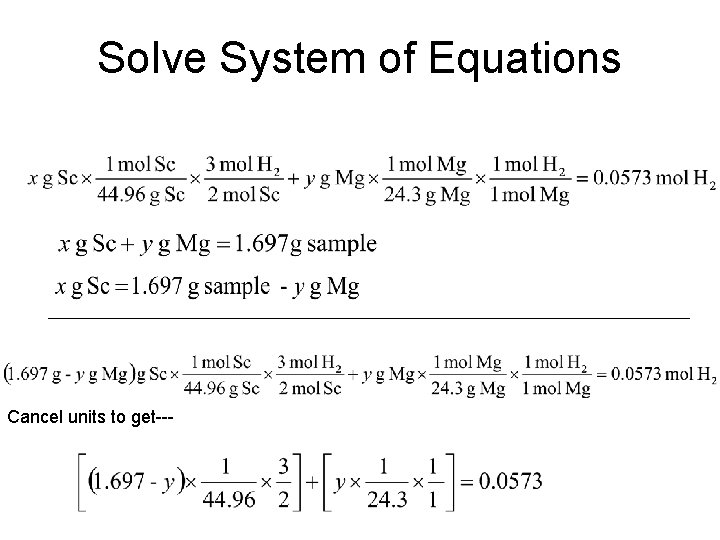
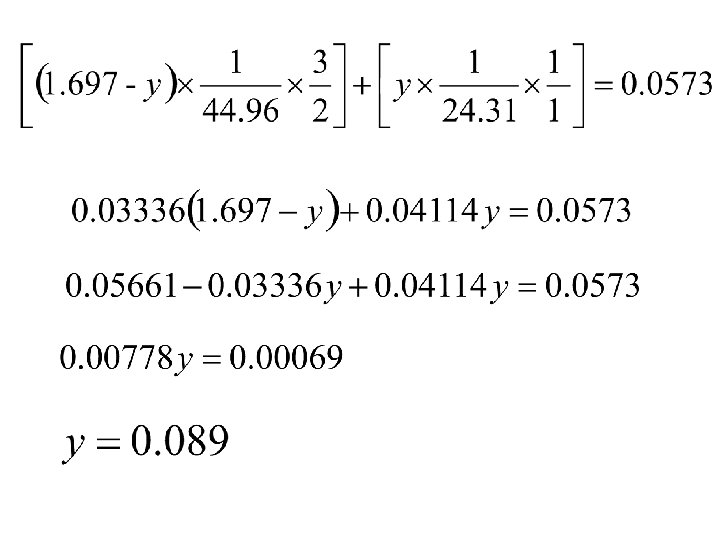
Solve System of Equations Cancel units to get---
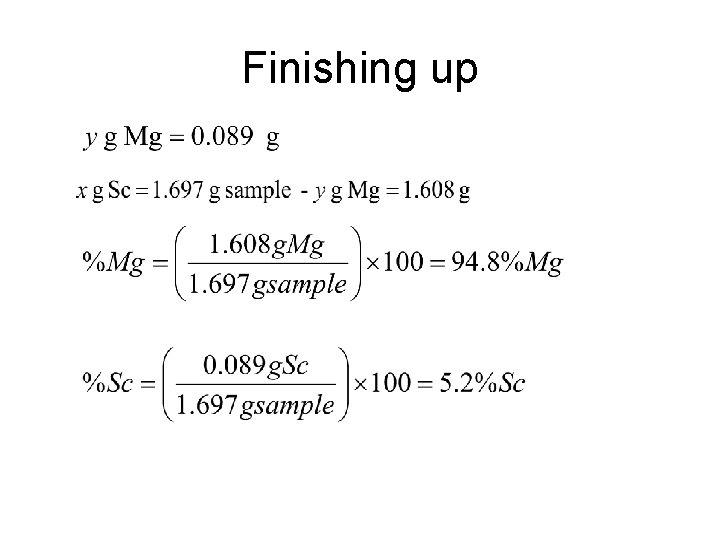
Finishing up