
Analysis Features Integrated Assessment Model from the International
- Slides: 7
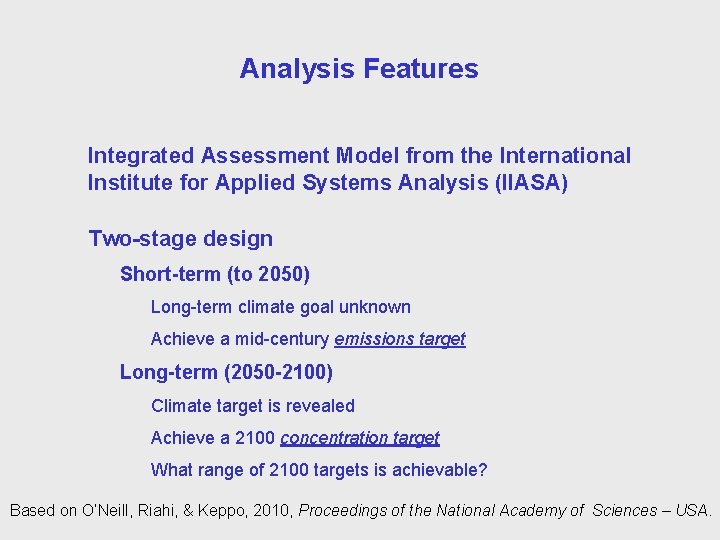
Analysis Features Integrated Assessment Model from the International Institute for Applied Systems Analysis (IIASA) Two-stage design Short-term (to 2050) Long-term climate goal unknown Achieve a mid-century emissions target Long-term (2050 -2100) Climate target is revealed Achieve a 2100 concentration target What range of 2100 targets is achievable? Based on O’Neill, Riahi, & Keppo, 2010, Proceedings of the National Academy of Sciences – USA.
CO 2 Emissions Mid-century target analysis A 2 Baseline Scenario
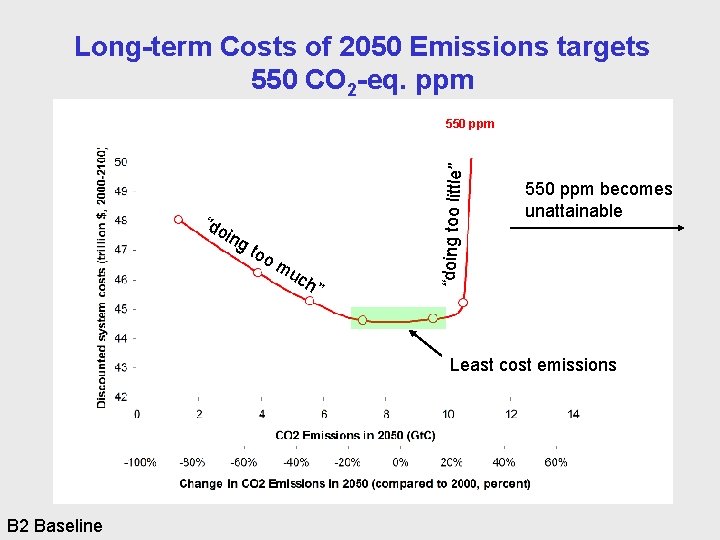
Long-term Costs of 2050 Emissions targets 550 CO 2 -eq. ppm “do ing too mu ch ” “doing too little” 550 ppm becomes unattainable Least cost emissions B 2 Baseline
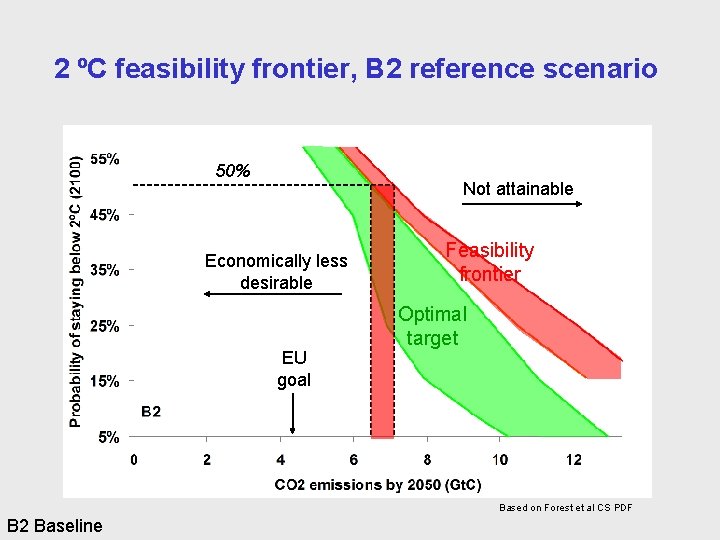
2 ºC feasibility frontier, B 2 reference scenario 50% Not attainable Economically less desirable EU goal Feasibility frontier Optimal target Based on Forest et al CS PDF B 2 Baseline
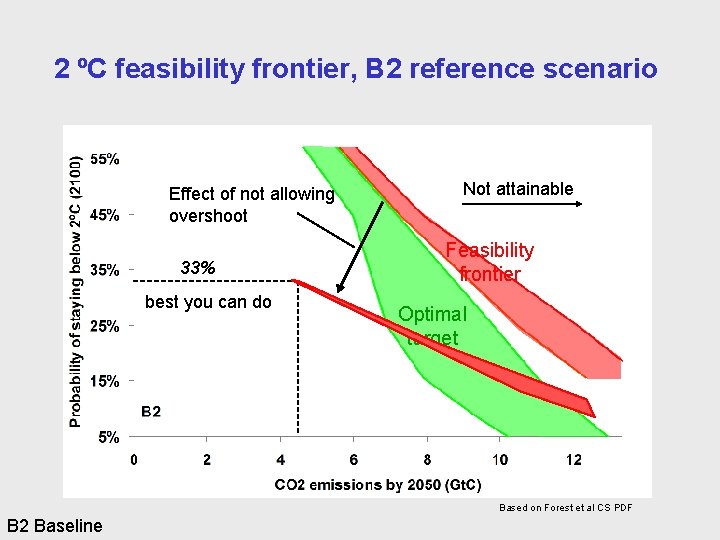
2 ºC feasibility frontier, B 2 reference scenario Effect of not allowing overshoot 33% best you can do Not attainable Feasibility frontier Optimal target Based on Forest et al CS PDF B 2 Baseline
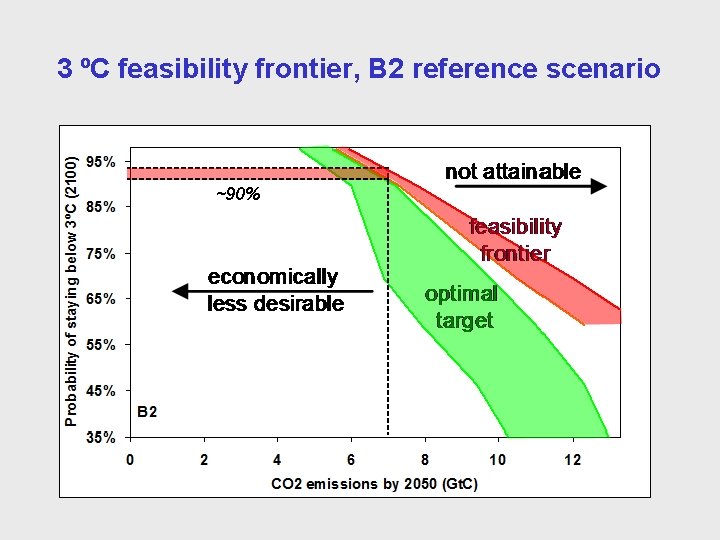
3 ºC feasibility frontier, B 2 reference scenario ~90%
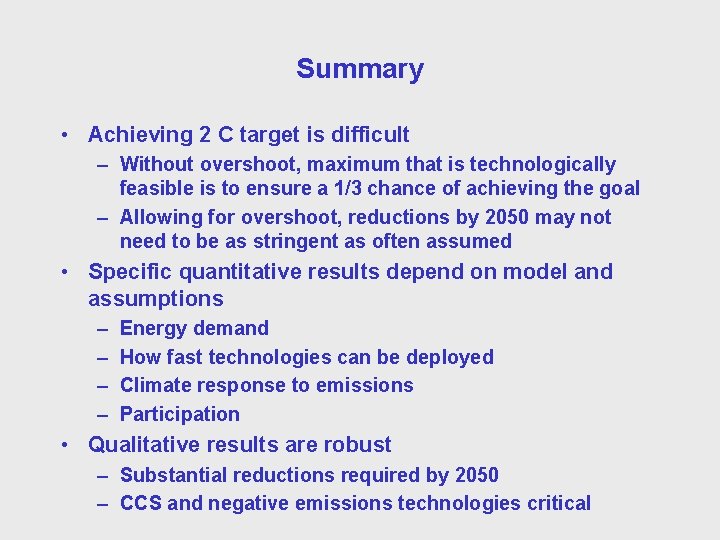
Summary • Achieving 2 C target is difficult – Without overshoot, maximum that is technologically feasible is to ensure a 1/3 chance of achieving the goal – Allowing for overshoot, reductions by 2050 may not need to be as stringent as often assumed • Specific quantitative results depend on model and assumptions – – Energy demand How fast technologies can be deployed Climate response to emissions Participation • Qualitative results are robust – Substantial reductions required by 2050 – CCS and negative emissions technologies critical