
Analysis and System Design Terminology Information System Analysis

- Slides: 66
Analysis and System Design Terminology Information System Analysis and Design Week 4
Definition Analysis An activity starts from early process in studied and evaluate some case System Some tools consist of human, machine or tools and procedure and concept collect become one to achieve aim Information Data processed to useful form to recipient
Systems Analysis and Design What is it? System organized set of related components established to accomplish certain task Natural Planned and placed by people Computer system A system that has computers as one of its components
Information Systems Analysis and Design A method used by companies to create and maintain systems that perform basic business functions Main goal is to improve employee efficiency by applying software solutions to key business tasks A structured approach must be used in order to ensure success
Information Systems Analysis and Design Systems Analyst performs analysis and design based upon: Understanding of organization’s objectives, structure and processes Knowledge of how to exploit information technology for advantage
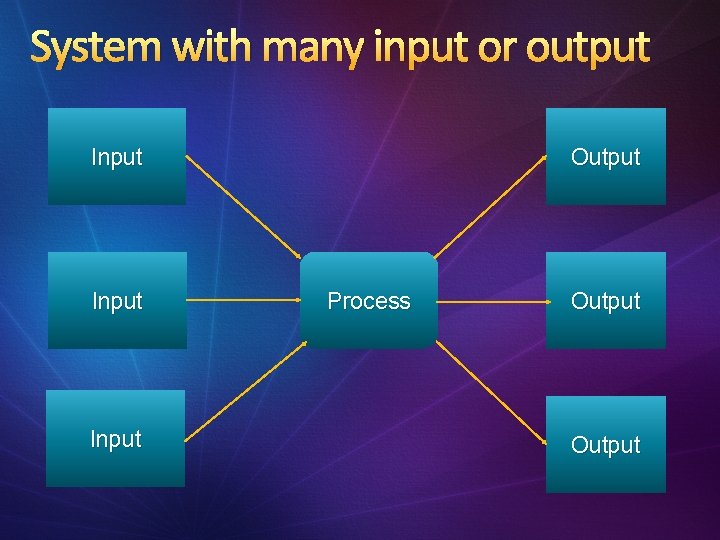
General Model of System 1. Simple Model system 2. System with many input or output
System with many input or output Input Output Process Output
Systems Analysis and Design: Core Concepts Major goal: to improve organizational systems by developing or acquiring software and training employees in its use Application software, or a system, supports organizational functions or processes
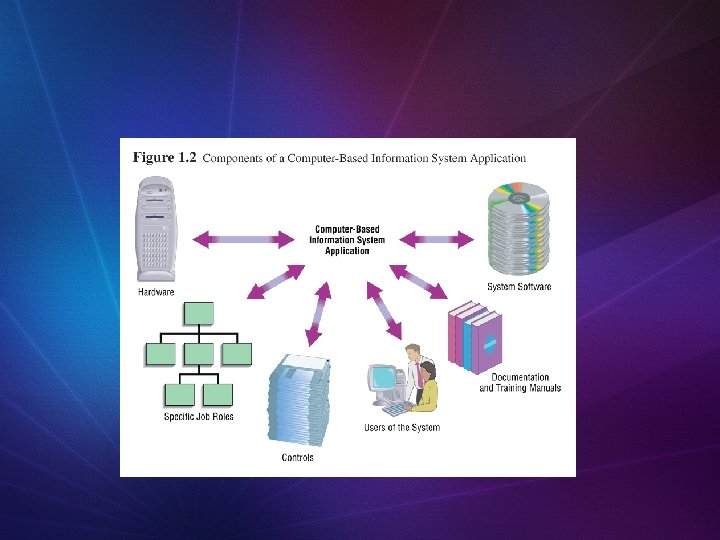
Systems Analysis and Design: Core Concepts System: Turns data into information and includes: Hardware and system software Documentation and training materials Job roles associated with the system Controls to prevent theft or fraud The people who use the software to perform their jobs
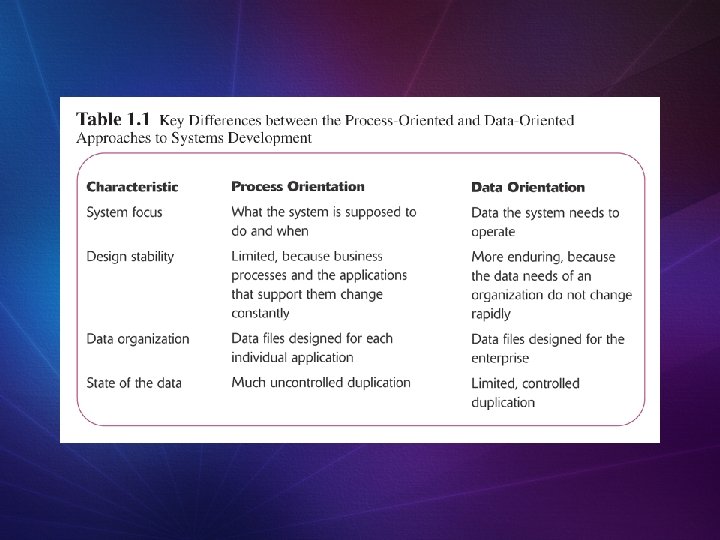
Approaches to Systems Development Process-Oriented Approach Focus is on flow, use and transformation of data in an information system Involves creating graphical representations such as data flow diagrams and charts Data are tracked from sources, through intermediate steps and to final destinations Natural structure of data is not specified Disadvantage: data files are tied to specific applications
Approaches to Systems Development Data-Oriented Approach Depicts ideal organization of data, independent of where and how data are used Data model describes kinds of data and business relationships among the data Business rules depict how organization captures and processes the data
System Analyst Expert in problem identification and prepared written documentation about how computer solved the problem. System analyst work together with user developed new system and repair current system
Systems Analyst Professional computer employee who performs analysis and design Change agent Overcome reluctance of users to change Typical career path Programmer / Analyst Systems Analyst
Systems Analyst Professional computer employee who performs analysis and design Change agent Overcome reluctance of users to change Typical career path Programmer / Analyst Systems Analyst
Systems Analyst Functions Coordination Schedules and system-related tasks Personnel Manager Programmers Users Vendors of computer equipment Mail room employees Contractors
Systems Analyst Functions Communication Oral presentations Written documentation Planning and design Plans and designs new system Involved from beginning of project through final implementation of the system
Systems Analyst Personal Qualities Analytical mind Good communication skills Self-discipline Self-direction Organizational skills Creativity Ability to work without tangible results
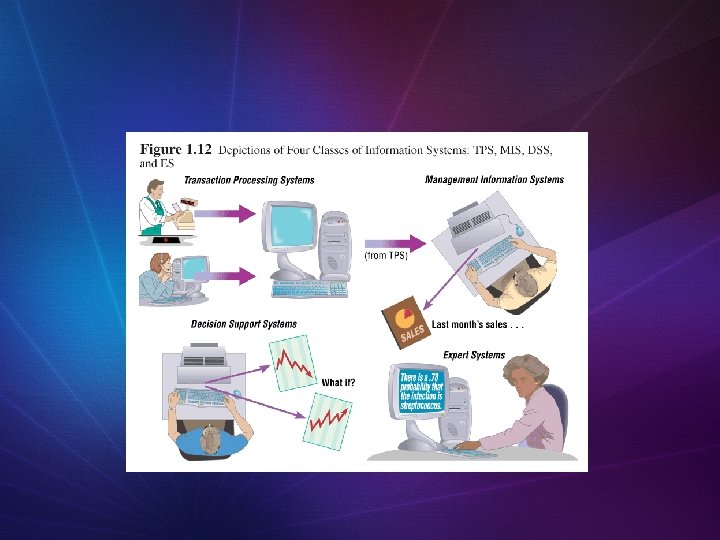
Types of Information Systems and Systems Development Transaction Processing Systems (TPS) Automate handling of data about business activities (transactions) Management Information Systems (MIS) Converts raw data from transaction processing system into meaningful form Decision Support Systems (DSS) Designed to help decision makers Provides interactive environment for decision making
Types of Information Systems and Systems Development Expert Systems (ES) Replicates decision-making process Knowledge representation describes the way an expert would approach the problem
Developing Information Systems and the SDLC System Development Methodology Standard process followed in an organization
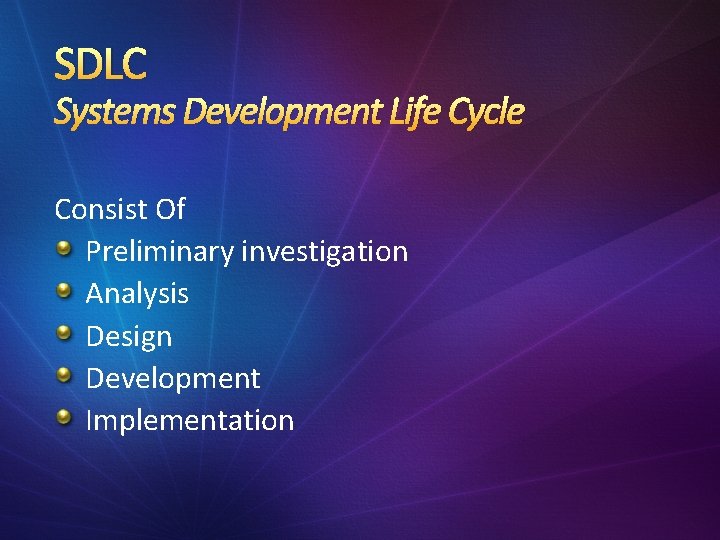
SDLC Systems Development Life Cycle Consist Of Preliminary investigation Analysis Design Development Implementation
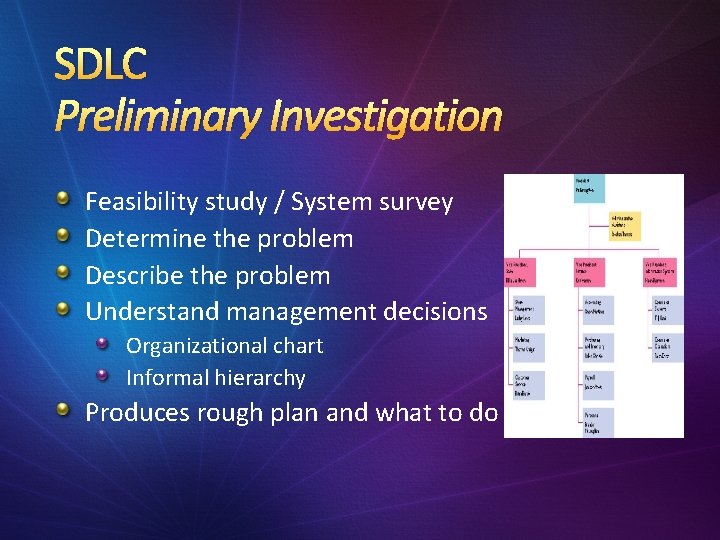
SDLC Preliminary Investigation Feasibility study / System survey Determine the problem Describe the problem Understand management decisions Organizational chart Informal hierarchy Produces rough plan and what to do
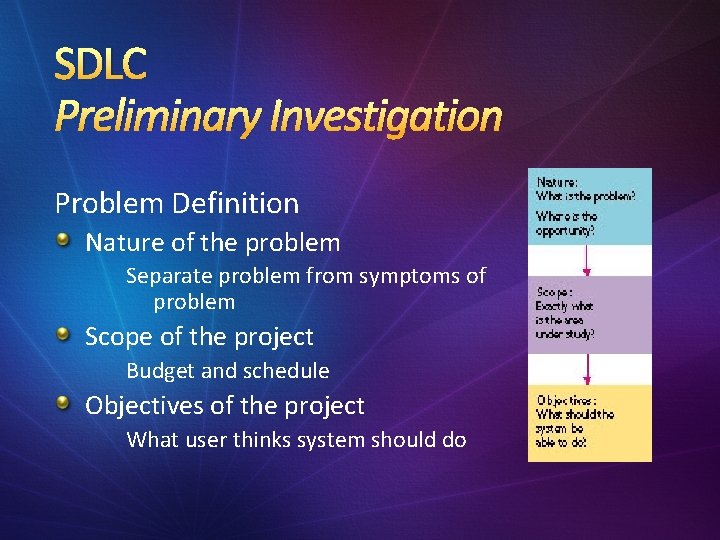
SDLC Preliminary Investigation Problem Definition Nature of the problem Separate problem from symptoms of problem Scope of the project Budget and schedule Objectives of the project What user thinks system should do
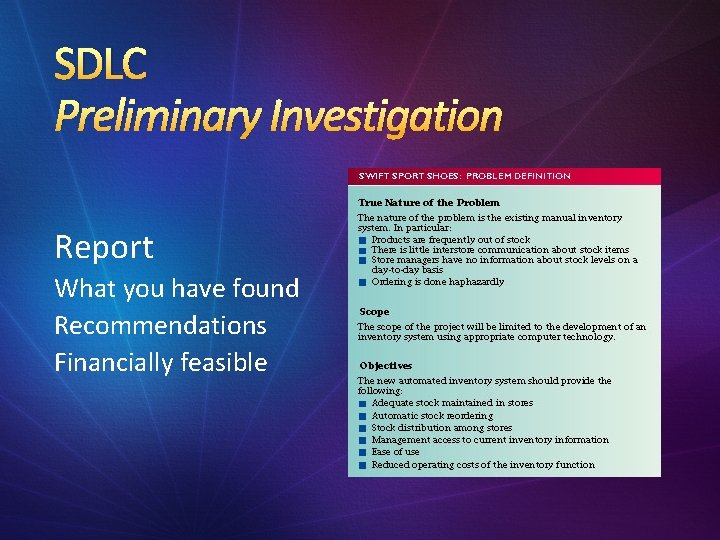
SDLC Preliminary Investigation Report What you have found Recommendations Financially feasible
SDLC Preliminary Investigation Resulting Management Decision Drop Fix a simple problem Authorize the analysis phase
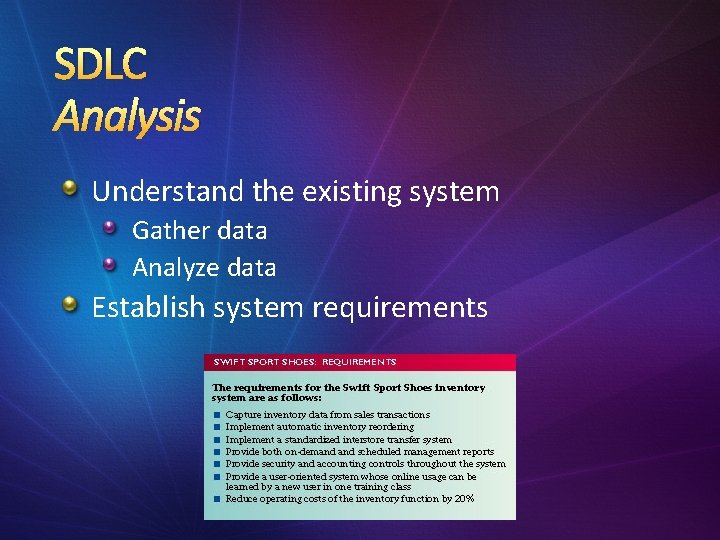
SDLC Analysis Understand the existing system Gather data Analyze data Establish system requirements
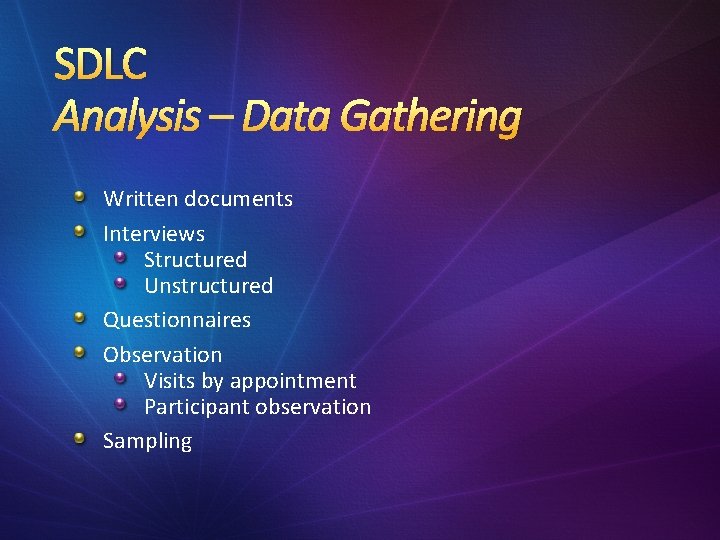
SDLC Analysis – Data Gathering Written documents Interviews Structured Unstructured Questionnaires Observation Visits by appointment Participant observation Sampling
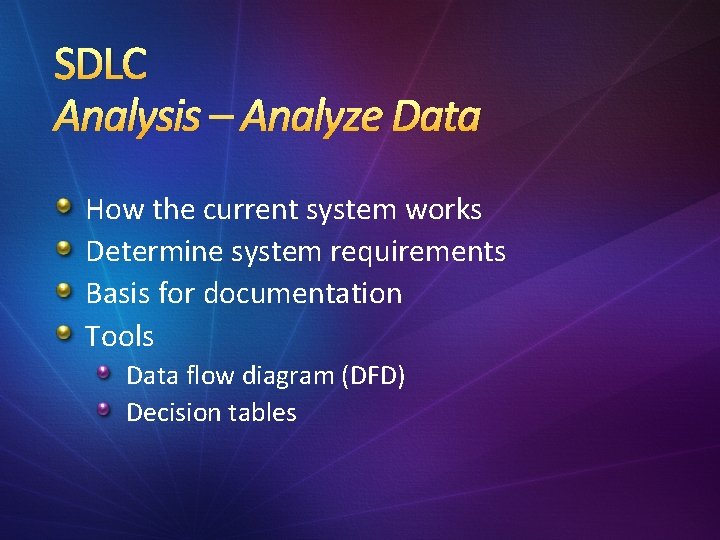
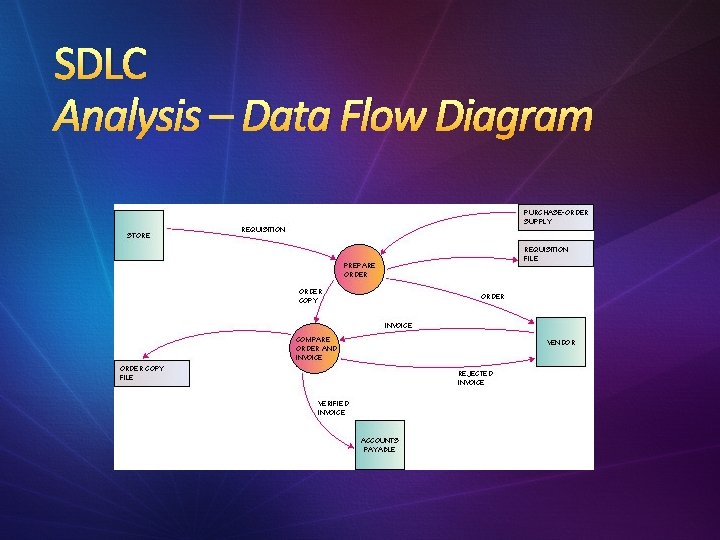
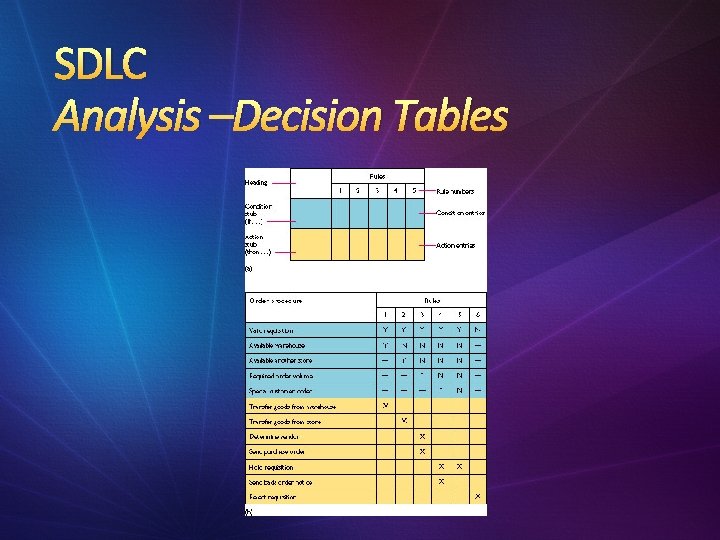
SDLC Analysis – Analyze Data How the current system works Determine system requirements Basis for documentation Tools Data flow diagram (DFD) Decision tables
SDLC Analysis – Data Flow Diagram
SDLC Analysis –Decision Tables
SDLC Analysis – System Requirements Detailed list of things the system must be able to do Design is based upon system requirements Agreement upon requirements is needed before proceeding
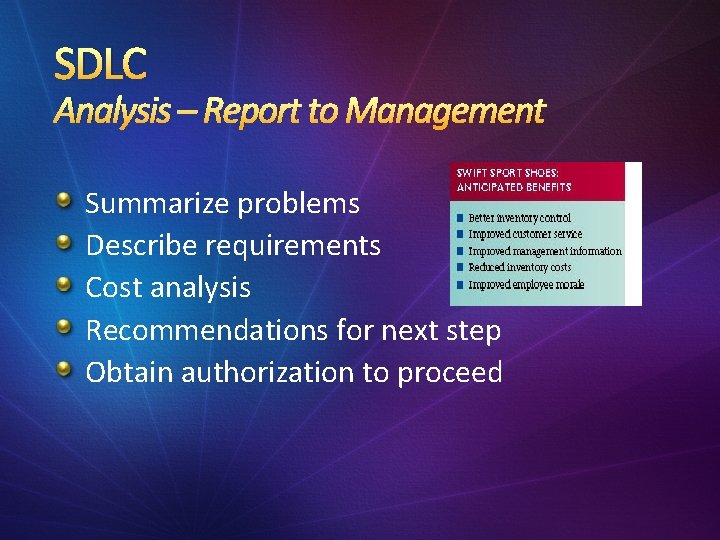
SDLC Analysis – Report to Management Summarize problems Describe requirements Cost analysis Recommendations for next step Obtain authorization to proceed
SDLC Design Planning the new system Two phases Preliminary design Detail design
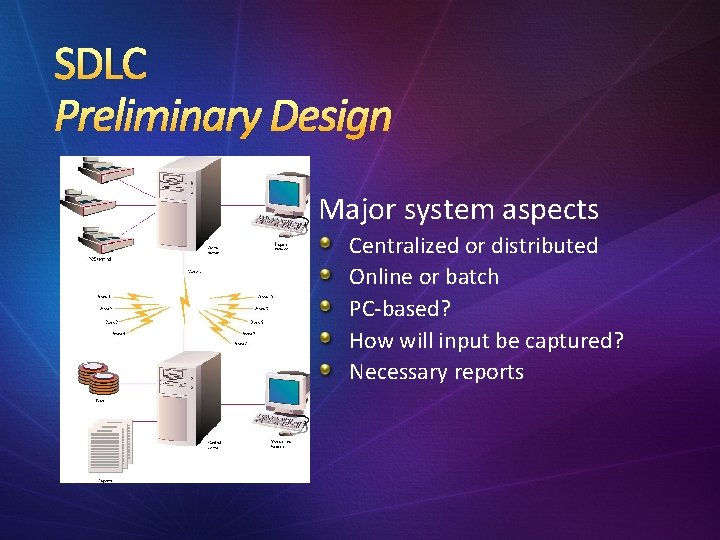
SDLC Preliminary Design Major system aspects Centralized or distributed Online or batch PC-based? How will input be captured? Necessary reports
SDLC Preliminary Design Make or buy decision Packaged software Meet at least 75% of requirements? Change business procedures for part or all of remainder? Customize for part of all of remainder? Custom software Programmers write code Outsourcing System is developed by external organization
SDLC Preliminary Design Create an overall plan Offer alternatives that meet requirements Explain differences Evaluate costs
SDLC Preliminary Design Build a prototype Limited working system of subset Does not need true functionality Output looks like anticipated system output Working model that can be modified and fine-tuned Uses high-level software tools – CASE Best for small-scale systems
SDLC Preliminary Design CASE tools Computer-Aided Software Engineering Supports specific analysis and design tasks Integrated environment that supports the entire systems development process
SDLC Preliminary Design Presentation All alternatives Selected plan Prototype of the system Obtain authorization to proceed
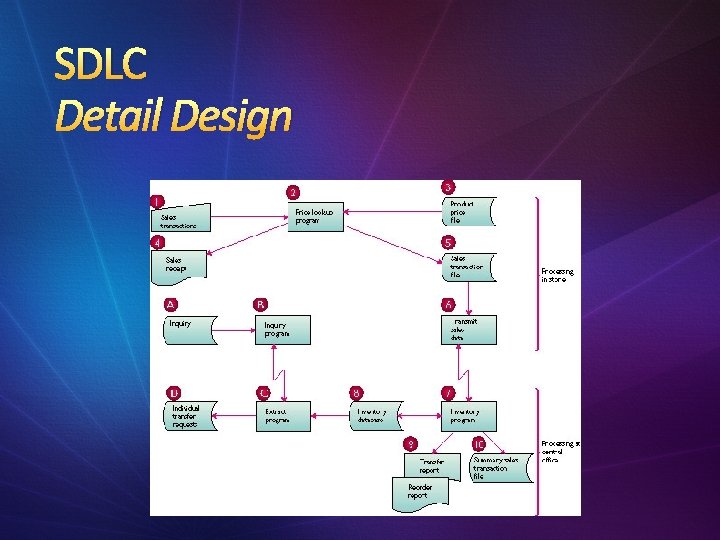
SDLC Detail Design Parts of detail design phase Output requirements Input requirements Files and databases Systems processing Systems controls and backup
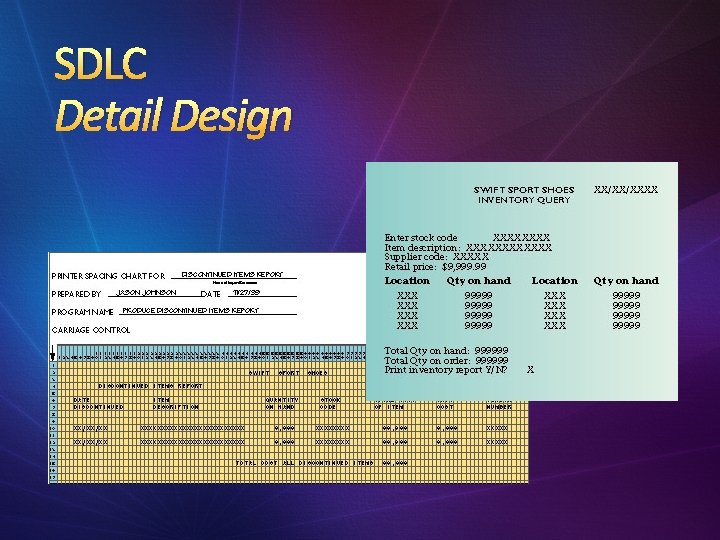
SDLC Detail Design Output requirements Medium Type of reports Contents
SDLC Detail Design
SDLC Detail Design Input requirements Medium Content Input forms Validation Volume
SDLC Detail Design Files and Databases Organization Access Format of records Coordinate with database administrator regarding external databases and updating
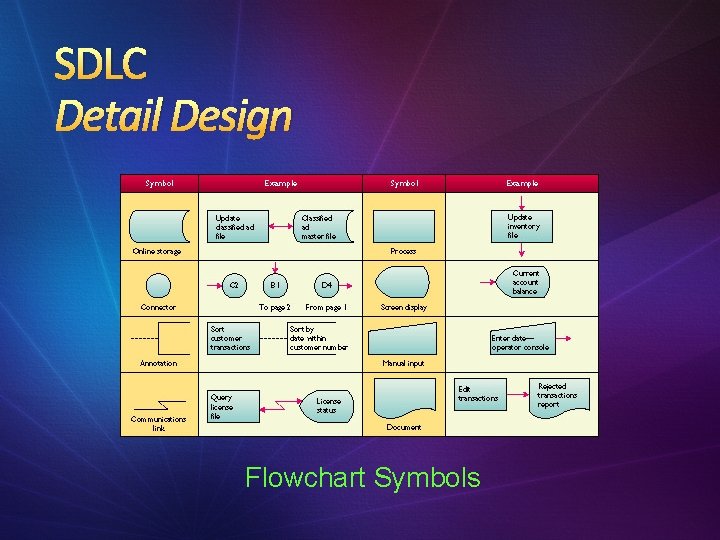
SDLC Detail Design Flowchart Symbols
SDLC Detail Design
SDLC Detail Design Systems Controls and Backup Insure that input is processed correctly Prevent fraud and tampering System journals Backup of system files
SDLC Detail Design Report to Management Detailed design specifications report Presentation Obtain authorization to proceed
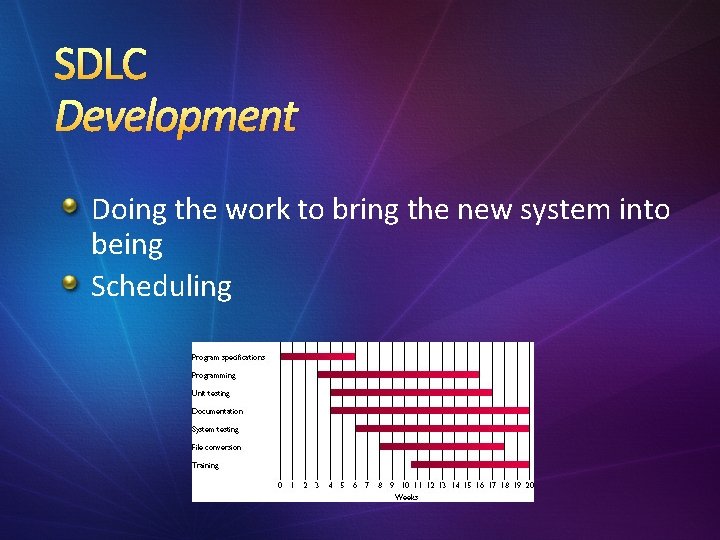
SDLC Development Doing the work to bring the new system into being Scheduling
SDLC Development Programming Refine the design Detailed logic flowcharts and pseudocode Testing Unit testing System testing Volume testing
SDLC Implementation Converting to the new system Training Equipment conversion File conversion System conversion Auditing Evaluation Maintenance
SDLC Implementation – Training Begin during testing User’s manual (Technical Writers) Hands-on Training consideration Space Equipment Data User’s schedules
SDLC Implementation – Conversion Equipment Planning Installation of new equipment File Manual to electronic Special programs to convert old format to new
SDLC Implementation – Conversion System Direct conversion Phased conversion Pilot conversion Parallel conversion
SDLC Implementation –Auditing Audit trail Trace output back to source
SDLC Implementation – Evaluation Working Meets original requirements Benefits Meets budget Improvements
SDLC Implementation – Maintenance Ongoing activity for life of system
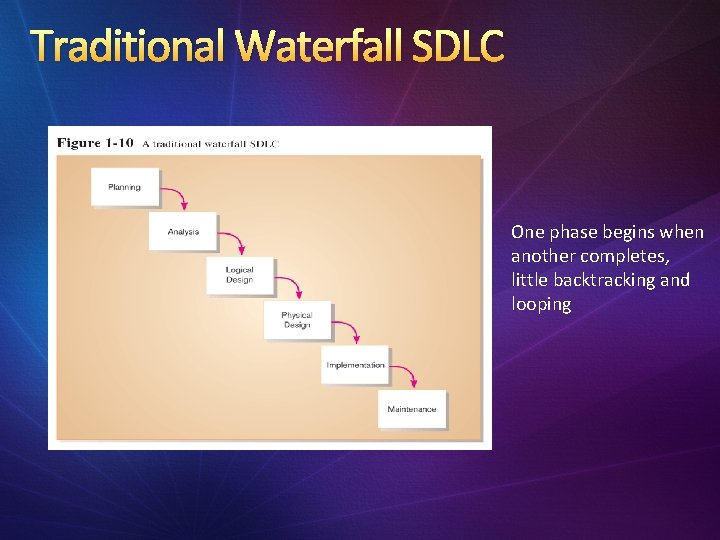
Traditional Waterfall SDLC One phase begins when another completes, little backtracking and looping
Problems with Waterfall Approach System requirements “locked in” after being determined (can't change) Limited user involvement (only in requirements phase) Too much focus on milestone deadlines of SDLC phases to the detriment of sound development practices
Alternatives to Traditional Waterfall SDLC Prototyping CASE tools Joint Application Design (JAD) Rapid Application Development (RAD) Agile Methodologies e. Xtreme Programming
Questions 1. Explain role of System Analyst in system development 2. Describe System Analyst capabilities needed to develop system 3. Find out and describe about TPS, MIS, DSS, ES
Question 2 Find out symbols of Flow Chart, Flow Map, Context Diagram, Data Flow Diagram and function of every diagram
To be Continue ….