
Analysis and Design of Multiple story building Prepared
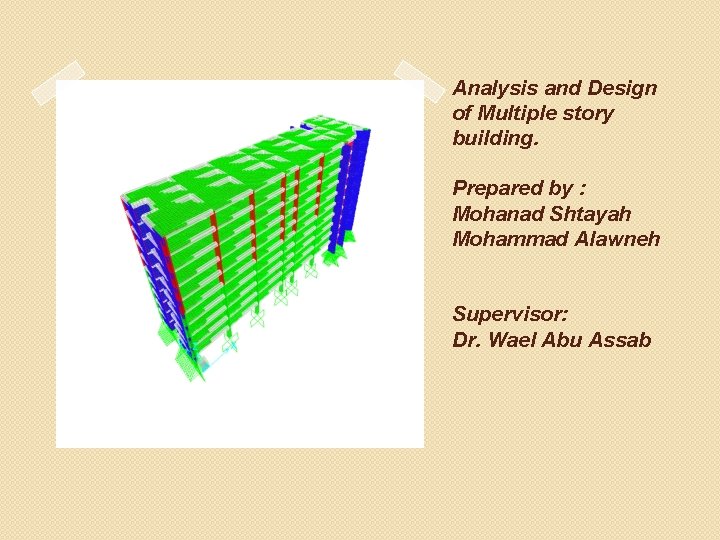
Analysis and Design of Multiple story building. Prepared by : Mohanad Shtayah Mohammad Alawneh Supervisor: Dr. Wael Abu Assab
Chapter One Lateral Forces Chapter Two Loads Affecting the Building Chapter Three Analysis and Design Using SAP 2000
Project Description � This project is a structural analysis and design for a building consists of ten storyes each story has an area of 893. 5 m 2. �Objectives : 1 - Do a 3 D analysis. 2 -Check if the design for gravity loads is sufficient to resist EQ loads.
CH 1 : Lateral Forces This chapter contains the following main topics: 1 - Types of lateral loads. 2 - History of EQ in Palestine. 3 - Lateral loads Resistant Structural Systems.
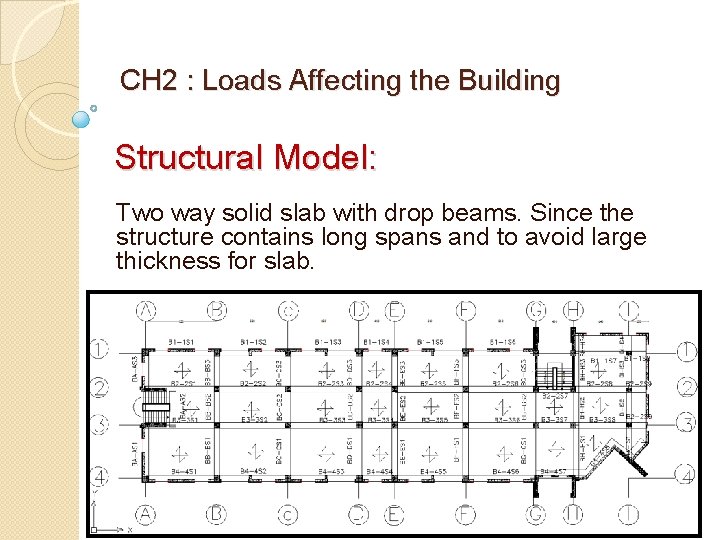
CH 2 : Loads Affecting the Building Structural Model: Two way solid slab with drop beams. Since the structure contains long spans and to avoid large thickness for slab.
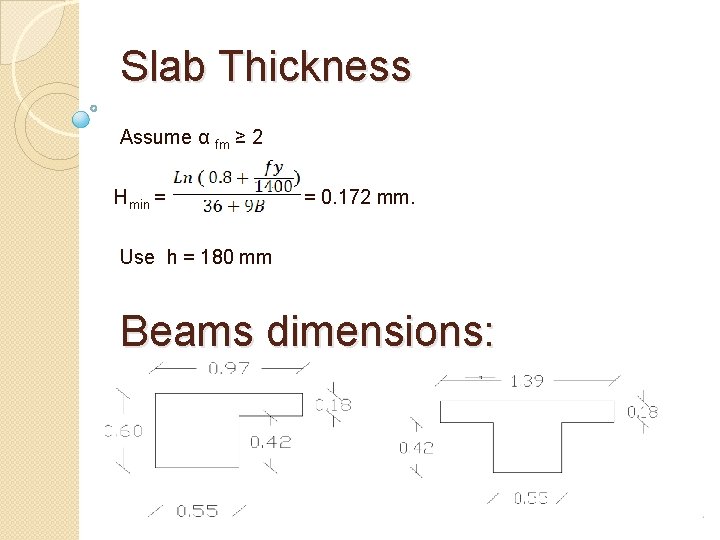
Slab Thickness Assume α fm ≥ 2 Hmin = = 0. 172 mm. Use h = 180 mm Beams dimensions:
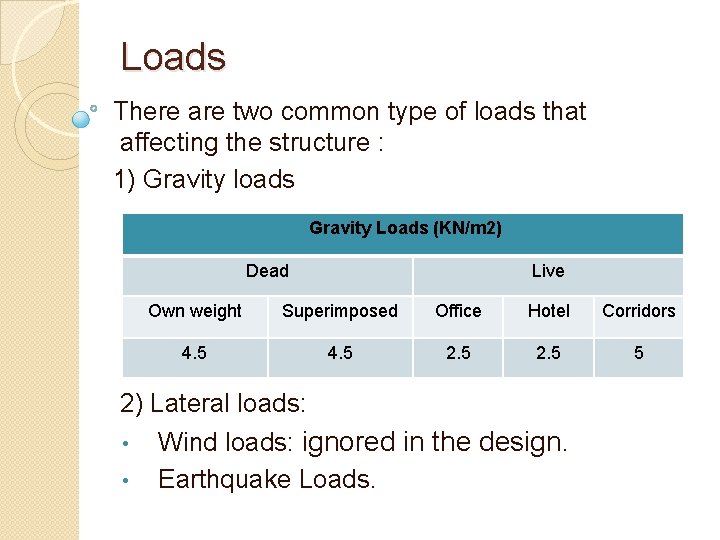
Loads There are two common type of loads that affecting the structure : 1) Gravity loads Gravity Loads (KN/m 2) Dead Live Own weight Superimposed Office Hotel Corridors 4. 5 2. 5 5 2) Lateral loads: • • Wind loads: ignored in the design. Earthquake Loads.
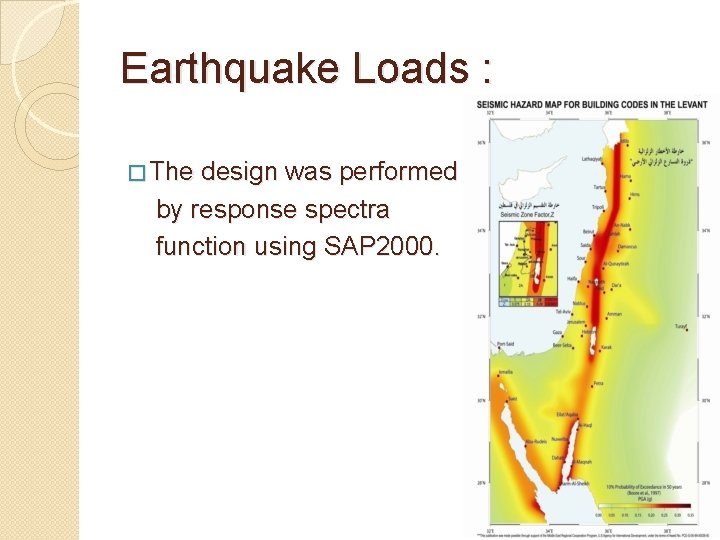
Earthquake Loads : � The design was performed by response spectra function using SAP 2000.
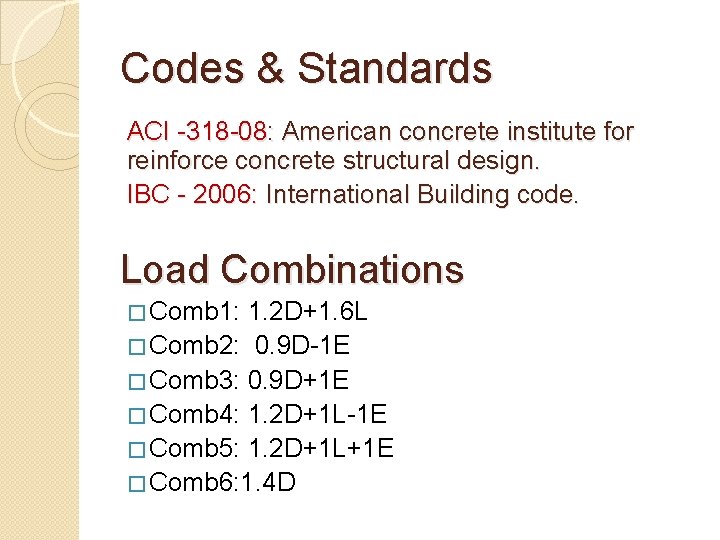
Codes & Standards ACI -318 -08: American concrete institute for reinforce concrete structural design. IBC - 2006: International Building code. Load Combinations � Comb 1: 1. 2 D+1. 6 L � Comb 2: 0. 9 D-1 E � Comb 3: 0. 9 D+1 E � Comb 4: 1. 2 D+1 L-1 E � Comb 5: 1. 2 D+1 L+1 E � Comb 6: 1. 4 D
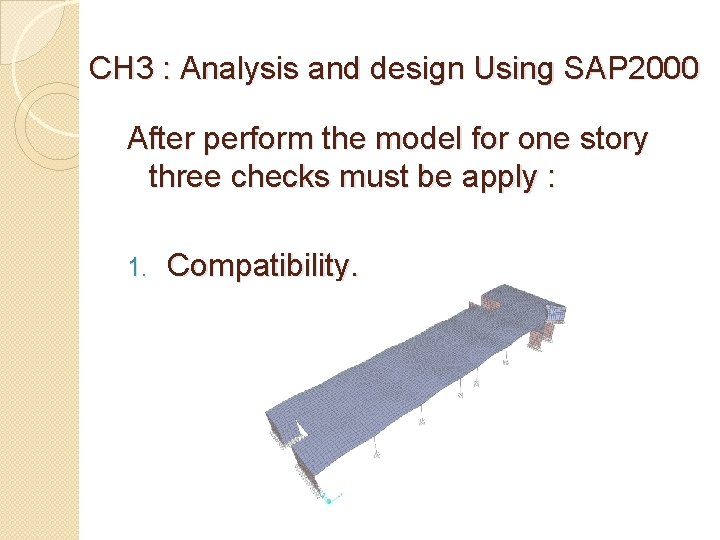
CH 3 : Analysis and design Using SAP 2000 After perform the model for one story three checks must be apply : 1. Compatibility.
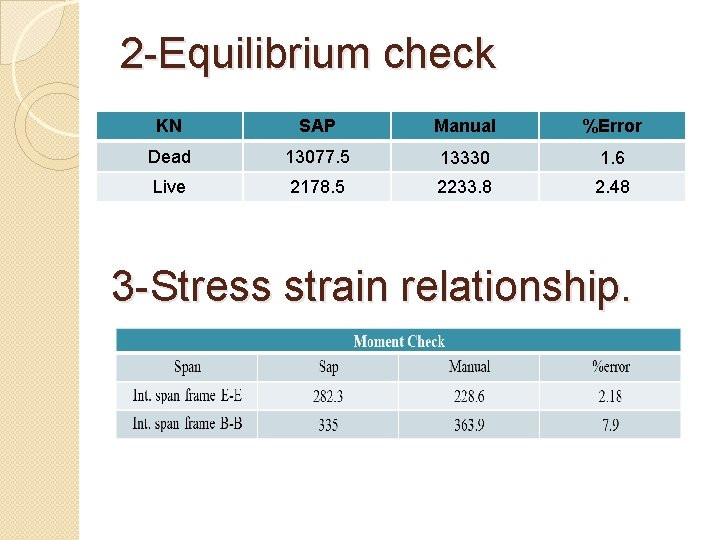
2 -Equilibrium check KN SAP Manual %Error Dead 13077. 5 13330 1. 6 Live 2178. 5 2233. 8 2. 48 3 -Stress strain relationship.
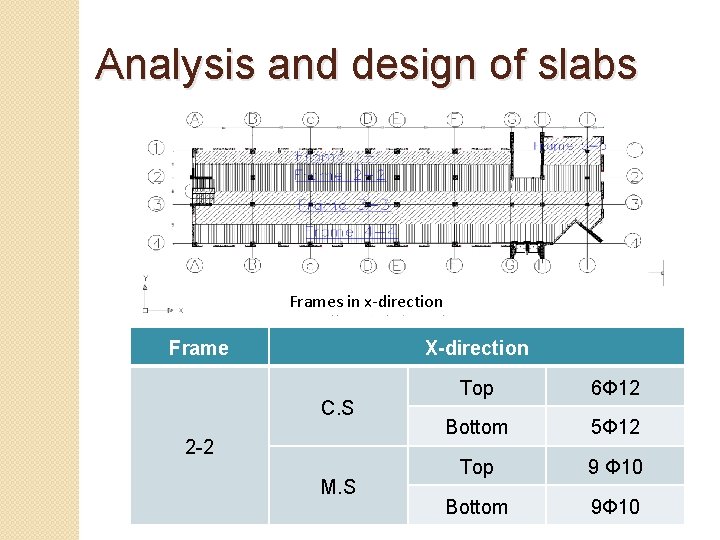
Analysis and design of slabs Frames in x-direction Frame X-direction C. S 2 -2 M. S Top 6Φ 12 Bottom 5Φ 12 Top 9 Φ 10 Bottom 9Φ 10
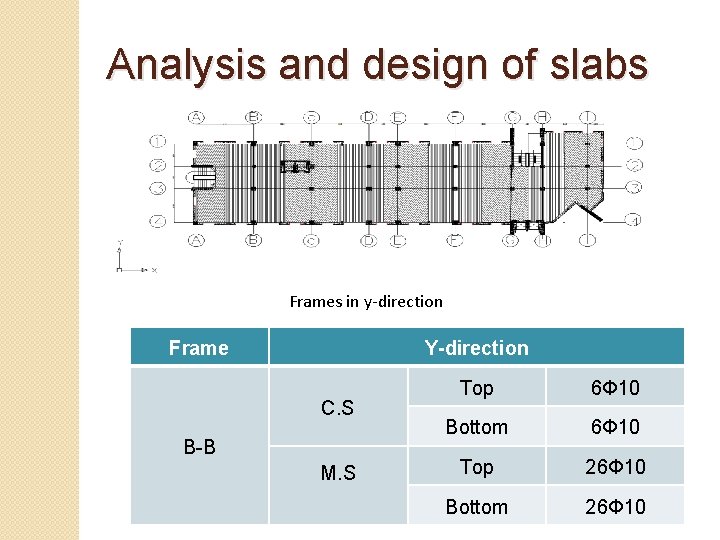
Analysis and design of slabs Frames in y-direction Frame Y-direction C. S B-B M. S Top 6Φ 10 Bottom 6Φ 10 Top 26Φ 10 Bottom 26Φ 10
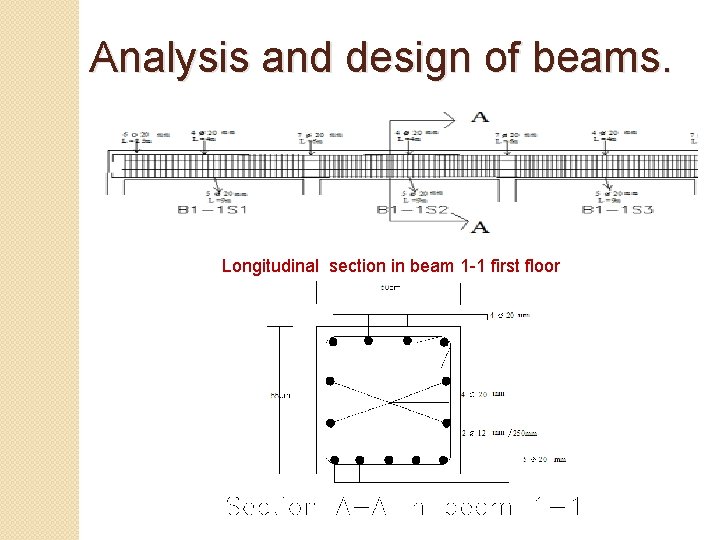
Analysis and design of beams. Longitudinal section in beam 1 -1 first floor
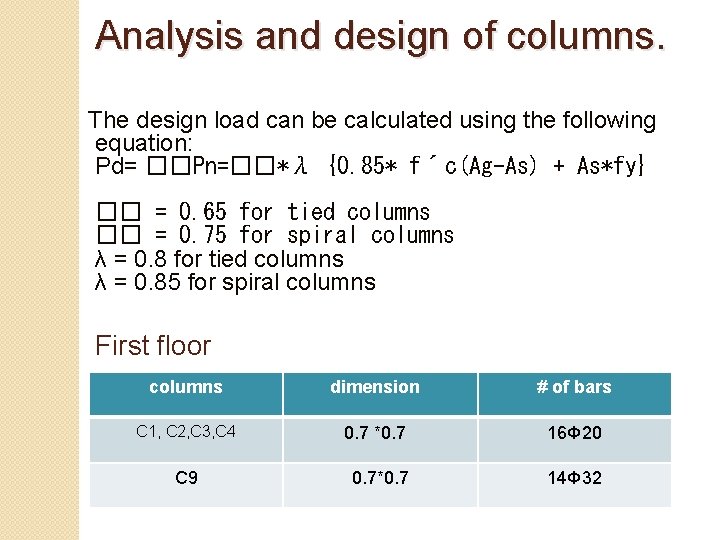
Analysis and design of columns. The design load can be calculated using the following equation: Pd= ��Pn=��*λ {0. 85* f´c(Ag-As) + As*fy} �� = 0. 65 for tied columns �� = 0. 75 for spiral columns λ = 0. 8 for tied columns λ = 0. 85 for spiral columns First floor columns dimension # of bars C 1, C 2, C 3, C 4 0. 7 *0. 7 16Φ 20 0. 7*0. 7 14Φ 32 C 9
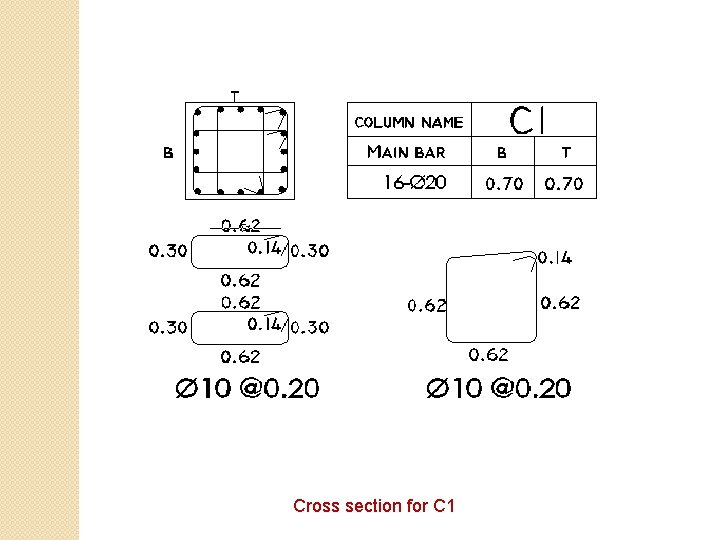
Cross section for C 1
Analysis and design of footings. Types of footing that been used: 1 - Single footings. 2 - Combined footings. 3 - Wall footings. The next slide shows the details of a single footing
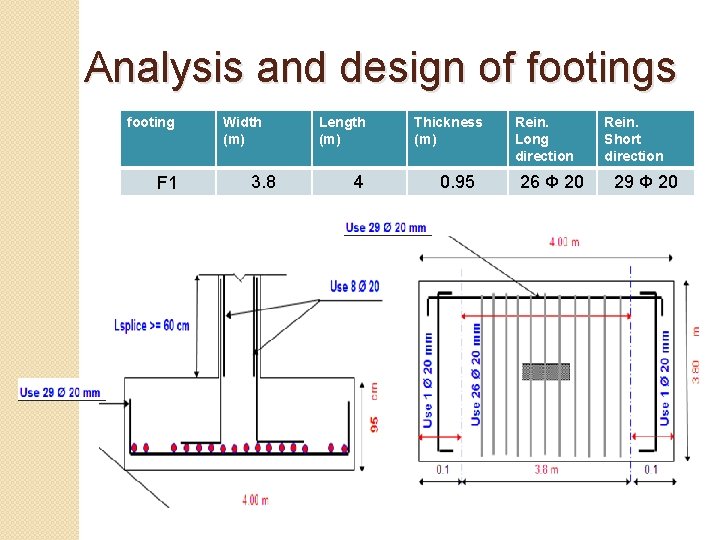
Analysis and design of footings footing F 1 Width (m) 3. 8 Length (m) 4 Thickness (m) 0. 95 Rein. Long direction 26 Φ 20 Rein. Short direction 29 Φ 20
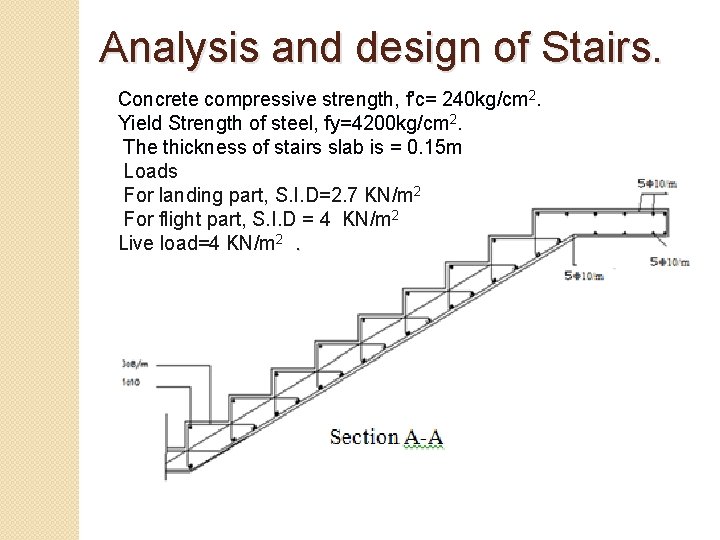
Analysis and design of Stairs. Concrete compressive strength, f'c= 240 kg/cm 2. Yield Strength of steel, fy=4200 kg/cm 2. The thickness of stairs slab is = 0. 15 m Loads For landing part, S. I. D=2. 7 KN/m 2 For flight part, S. I. D = 4 KN/m 2 Live load=4 KN/m 2.
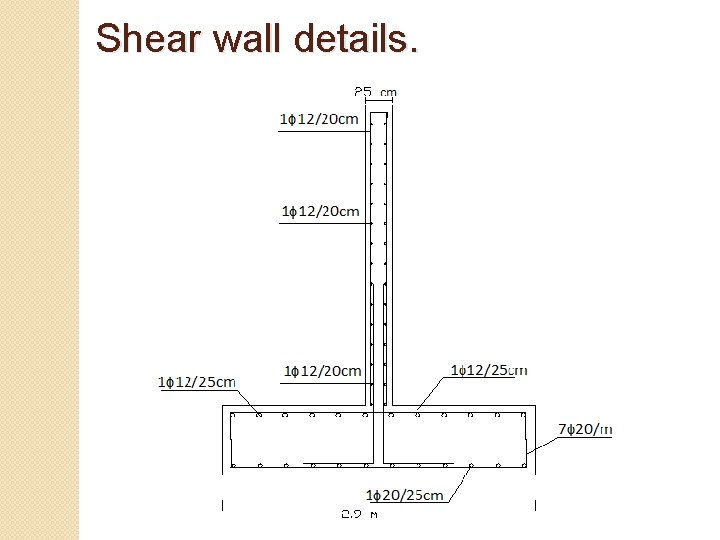
Shear wall details.
Earthquake design: 1. 2. The structure is subjected into EQ in X and Y directions using response spectra function. The design was performed for structural elements. NOTE There is no large difference between EQ and Gravity results.

The GOOD Design for Gravity Loads is Sufficient to resist Earthquake Loads

Thank You
- Slides: 23