
Analysing Media Content Narrative Narrative Narrative is to
- Slides: 13
Analysing Media Content Narrative
Narrative • Narrative is to do with how the story is told, and can be divided into two main areas: structure and conventions. • Narrative structure: the rules that tend to be followed when putting a story together and developing it. – e. g. Todorov’s normality-disruption-normality structure; Levi-Strauss and binary opposition; conflict; resolution (or non-resolution); etc. • Narrative conventions: established and expected ways of handling narrative, often related to genre. – e. g. cliffhangers; happy endings; enigmas; etc.
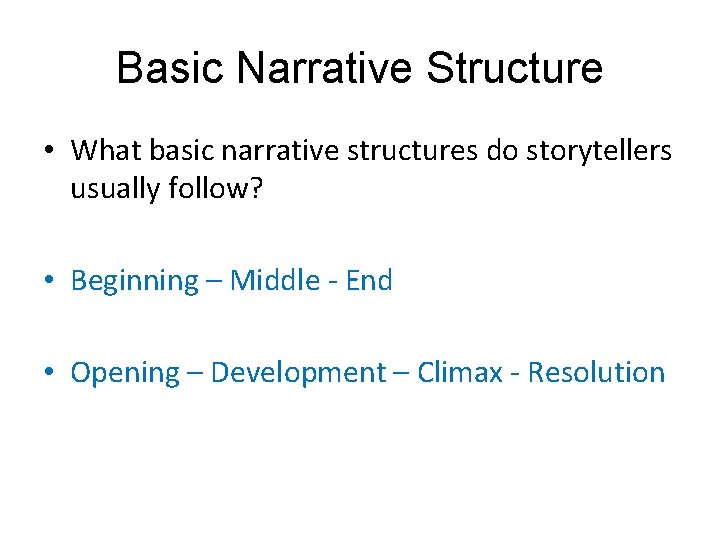
Basic Narrative Structure • What basic narrative structures do storytellers usually follow? • Beginning – Middle - End • Opening – Development – Climax - Resolution
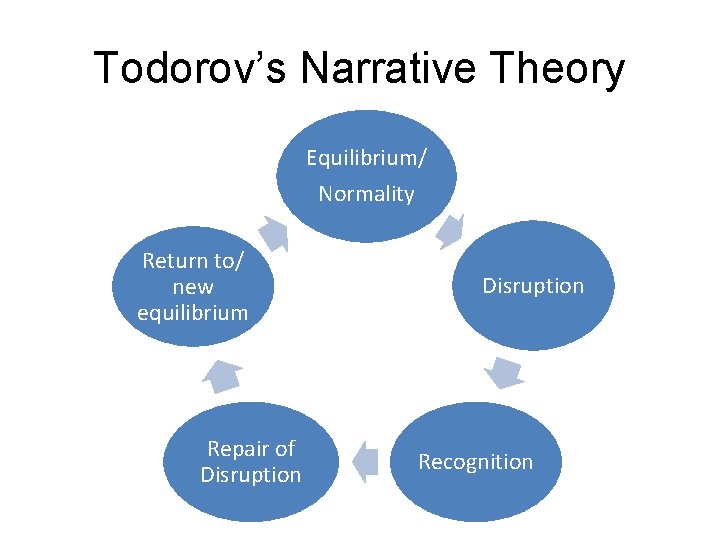
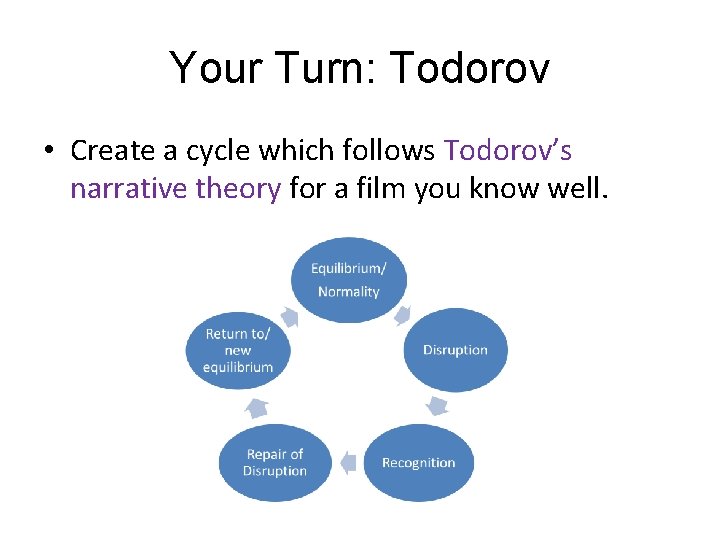
Todorov’s Narrative Theory Equilibrium/ Normality Return to/ new equilibrium Repair of Disruption Recognition
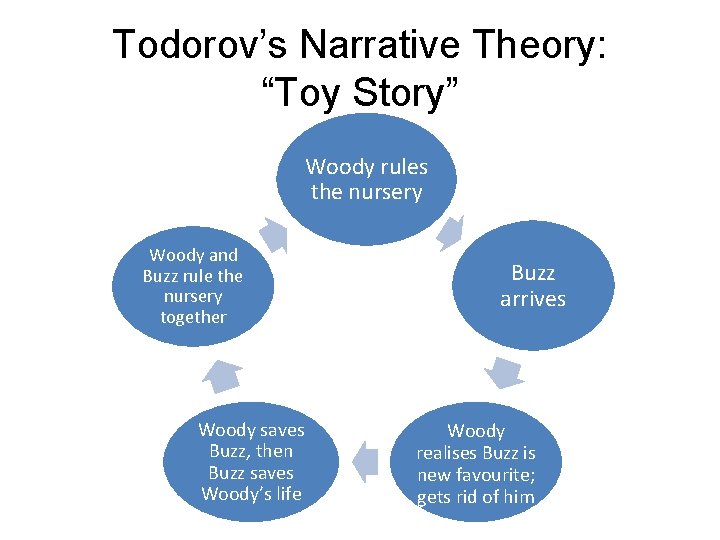
Todorov’s Narrative Theory: “Toy Story” Woody rules the nursery Woody and Buzz rule the nursery together Woody saves Buzz, then Buzz saves Woody’s life Buzz arrives Woody realises Buzz is new favourite; gets rid of him
Your Turn: Todorov • Create a cycle which follows Todorov’s narrative theory for a film you know well.
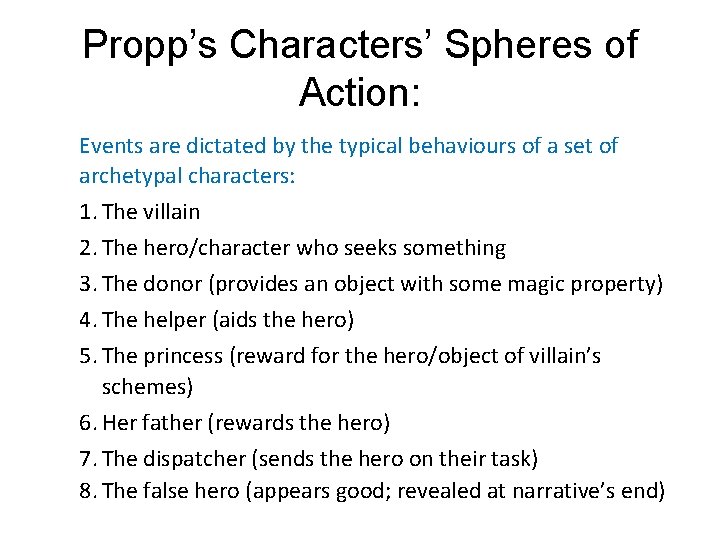
Propp’s Characters’ Spheres of Action: Events are dictated by the typical behaviours of a set of archetypal characters: 1. The villain 2. The hero/character who seeks something 3. The donor (provides an object with some magic property) 4. The helper (aids the hero) 5. The princess (reward for the hero/object of villain’s schemes) 6. Her father (rewards the hero) 7. The dispatcher (sends the hero on their task) 8. The false hero (appears good; revealed at narrative’s end)
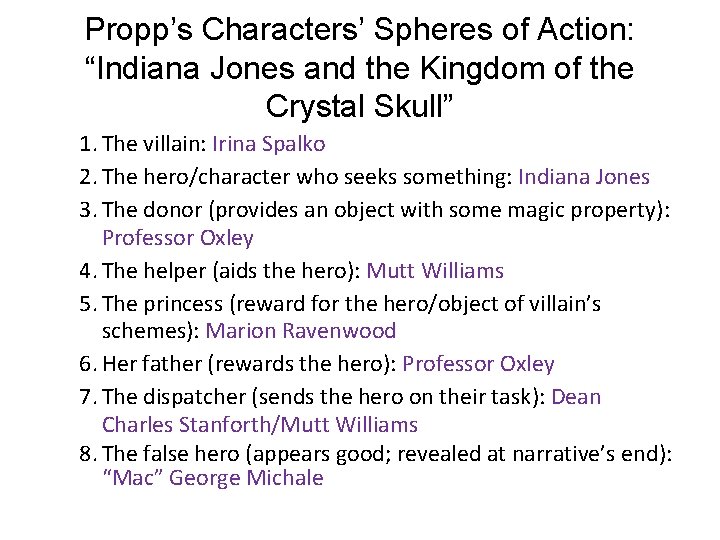
Propp’s Characters’ Spheres of Action: “Indiana Jones and the Kingdom of the Crystal Skull” 1. The villain: Irina Spalko 2. The hero/character who seeks something: Indiana Jones 3. The donor (provides an object with some magic property): Professor Oxley 4. The helper (aids the hero): Mutt Williams 5. The princess (reward for the hero/object of villain’s schemes): Marion Ravenwood 6. Her father (rewards the hero): Professor Oxley 7. The dispatcher (sends the hero on their task): Dean Charles Stanforth/Mutt Williams 8. The false hero (appears good; revealed at narrative’s end): “Mac” George Michale
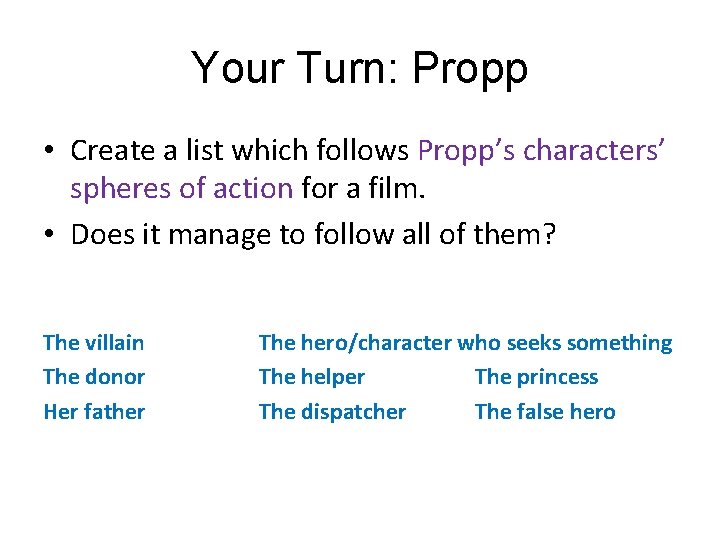
Your Turn: Propp • Create a list which follows Propp’s characters’ spheres of action for a film. • Does it manage to follow all of them? The villain The donor Her father The hero/character who seeks something The helper The princess The dispatcher The false hero
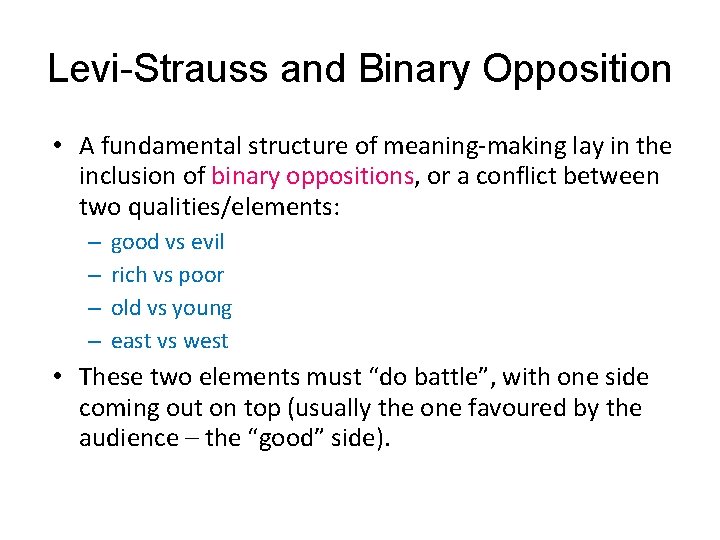
Levi-Strauss and Binary Opposition • A fundamental structure of meaning-making lay in the inclusion of binary oppositions, or a conflict between two qualities/elements: – – good vs evil rich vs poor old vs young east vs west • These two elements must “do battle”, with one side coming out on top (usually the one favoured by the audience – the “good” side).
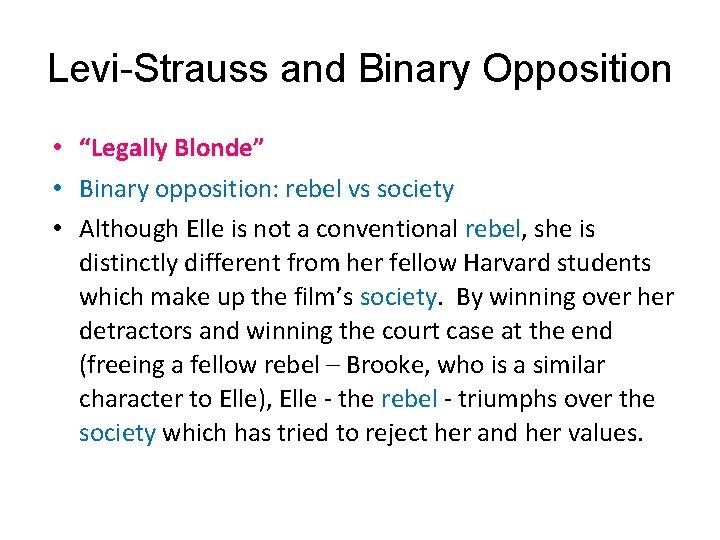
Levi-Strauss and Binary Opposition • “Legally Blonde” • Binary opposition: rebel vs society • Although Elle is not a conventional rebel, she is distinctly different from her fellow Harvard students which make up the film’s society. By winning over her detractors and winning the court case at the end (freeing a fellow rebel – Brooke, who is a similar character to Elle), Elle - the rebel - triumphs over the society which has tried to reject her and her values.
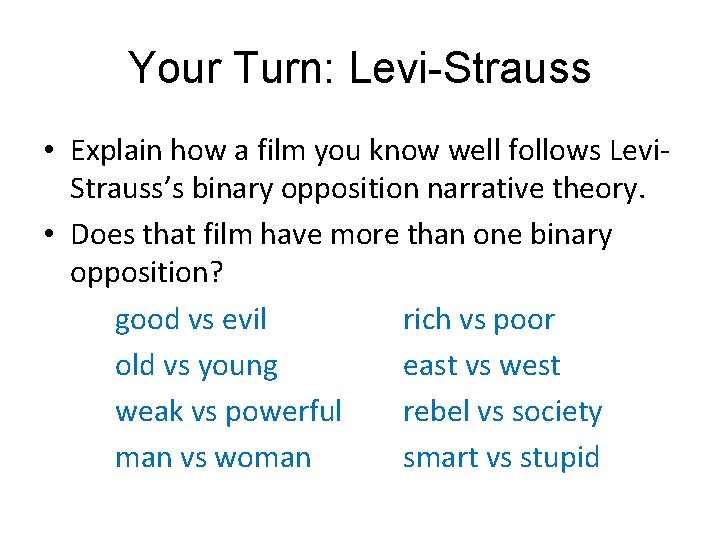
Your Turn: Levi-Strauss • Explain how a film you know well follows Levi. Strauss’s binary opposition narrative theory. • Does that film have more than one binary opposition? good vs evil rich vs poor old vs young east vs west weak vs powerful rebel vs society man vs woman smart vs stupid
Narrative Conventions • Narrative conventions are when a story develops in an established way, so the audience is able to guess how the story will progress. • These are often related to the genre of the text. – Examples are: cliffhangers, happy endings, enigmas. • You should be looking for where the conventions are followed, and for when the conventions are subverted. • List all the narrative conventions you can think of for five different genres. • Think of one film for each genre and assess whether it follows the conventions or subverts them.