
Analysing Atmosphere We are exploring and analysing methods



- Slides: 17
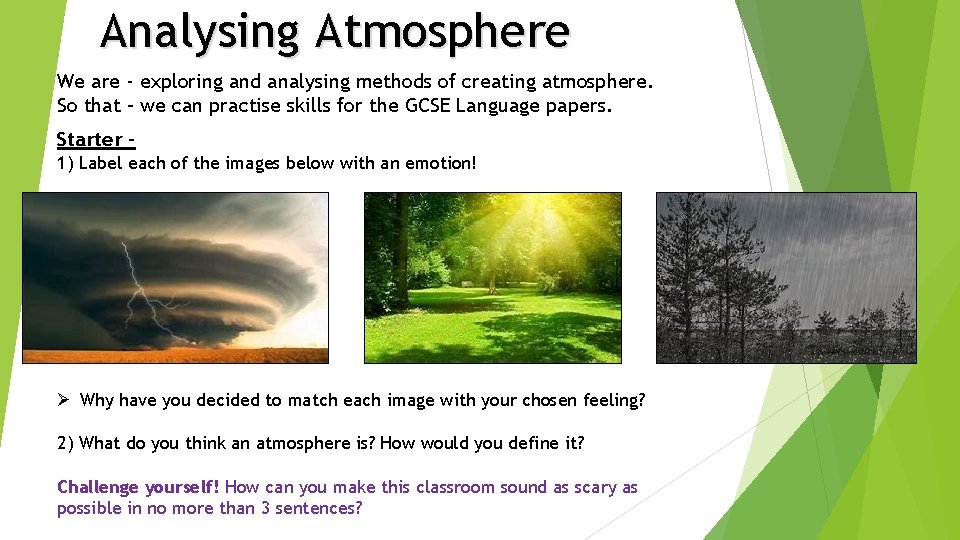
Analysing Atmosphere We are - exploring and analysing methods of creating atmosphere. So that – we can practise skills for the GCSE Language papers. Starter – 1) Label each of the images below with an emotion! Ø Why have you decided to match each image with your chosen feeling? 2) What do you think an atmosphere is? How would you define it? Challenge yourself! How can you make this classroom sound as scary as possible in no more than 3 sentences?
Key Vocabulary Atmosphere: 1) The envelope of gases surrounding the earth or another planet. 2) The pervading tone or mood of a place, situation, or creative work. Pathetic Fallacy – 1) When the weather or setting matches the mood or emotions of the characters. Can you draw an image both of these terms?
Our Goals… By the end of today’s lesson, we will: Ø Understand what atmosphere and pathetic fallacy are. Ø Analyse ways writers create atmosphere by exploring language techniques and annotating an extract. Ø To write a paragraph that analyses the writers methods Ø To write your own descriptive atmosphere using effective vocabulary and techniques
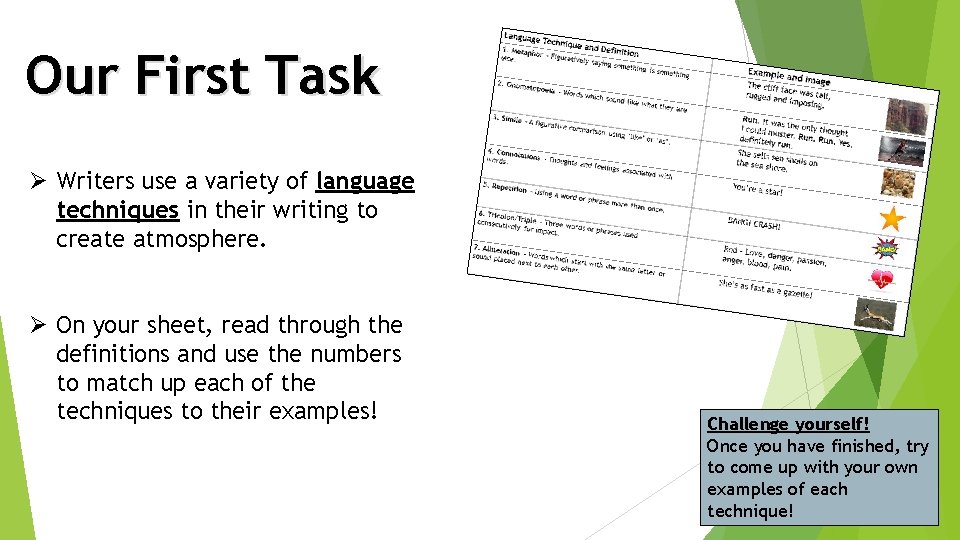
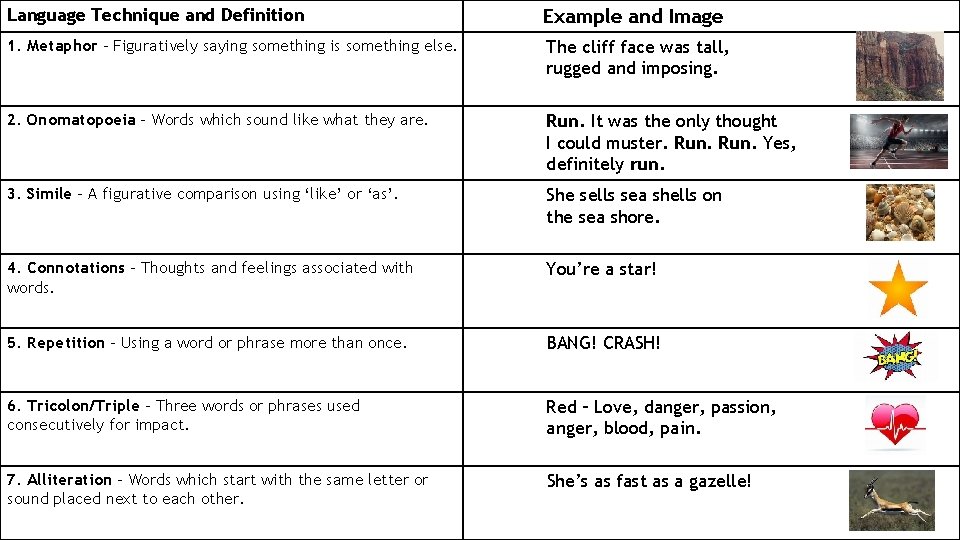
Our First Task Ø Writers use a variety of language techniques in their writing to create atmosphere. Ø On your sheet, read through the definitions and use the numbers to match up each of the techniques to their examples! Challenge yourself! Once you have finished, try to come up with your own examples of each technique!
Language Technique and Definition Example and Image 1. Metaphor – Figuratively saying something is something else. The cliff face was tall, rugged and imposing. 2. Onomatopoeia – Words which sound like what they are. Run. It was the only thought I could muster. Run. Yes, definitely run. 3. Simile – A figurative comparison using ‘like’ or ‘as’. She sells sea shells on the sea shore. 4. Connotations – Thoughts and feelings associated with words. You’re a star! 5. Repetition – Using a word or phrase more than once. BANG! CRASH! 6. Tricolon/Triple – Three words or phrases used consecutively for impact. Red – Love, danger, passion, anger, blood, pain. 7. Alliteration – Words which start with the same letter or sound placed next to each other. She’s as fast as a gazelle!
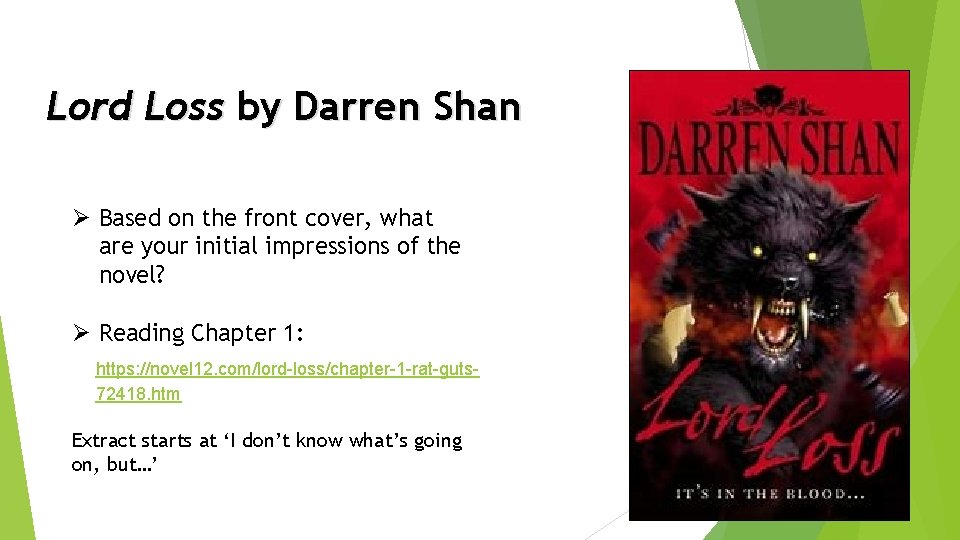
Lord Loss by Darren Shan Ø Based on the front cover, what are your initial impressions of the novel? Ø Reading Chapter 1: https: //novel 12. com/lord-loss/chapter-1 -rat-guts 72418. htm Extract starts at ‘I don’t know what’s going on, but…’
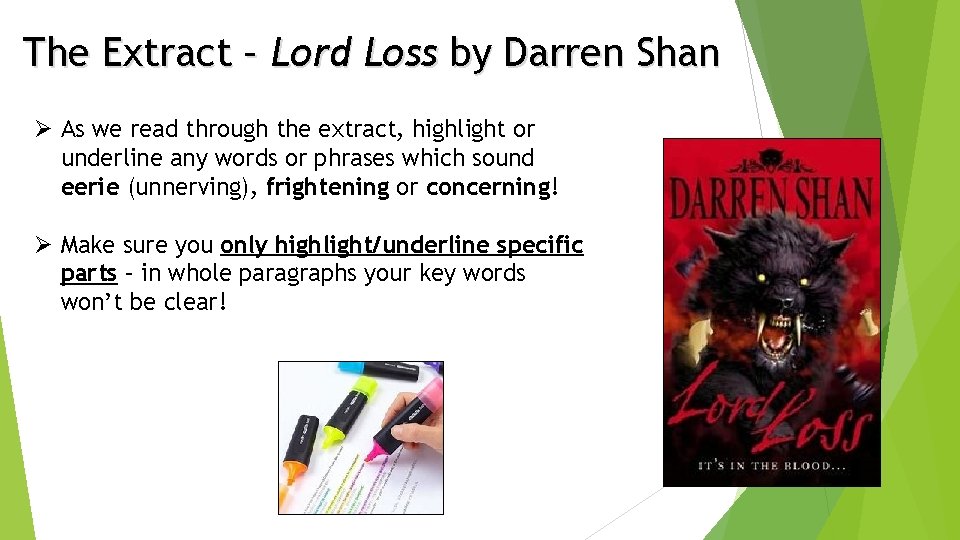
The Extract – Lord Loss by Darren Shan Ø As we read through the extract, highlight or underline any words or phrases which sound eerie (unnerving), frightening or concerning! Ø Make sure you only highlight/underline specific parts – in whole paragraphs your key words won’t be clear!
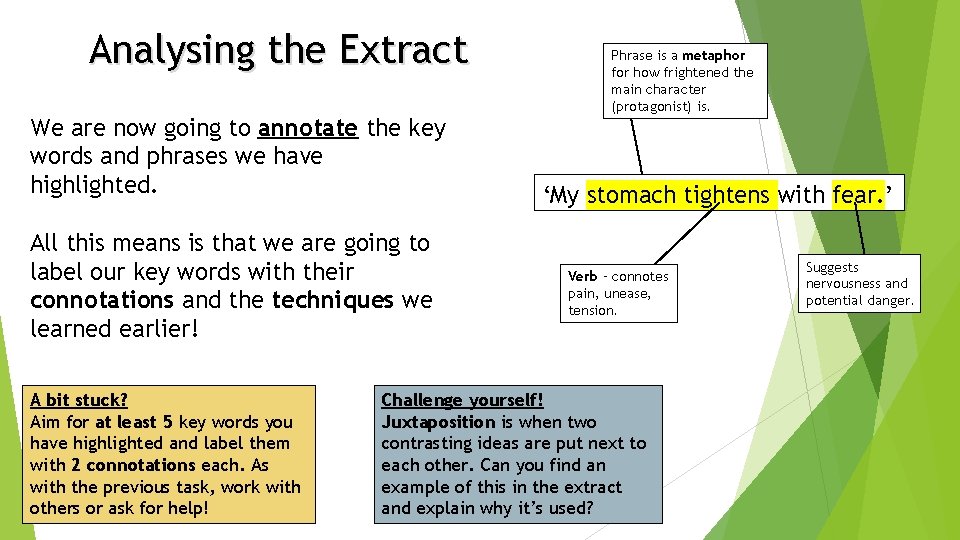
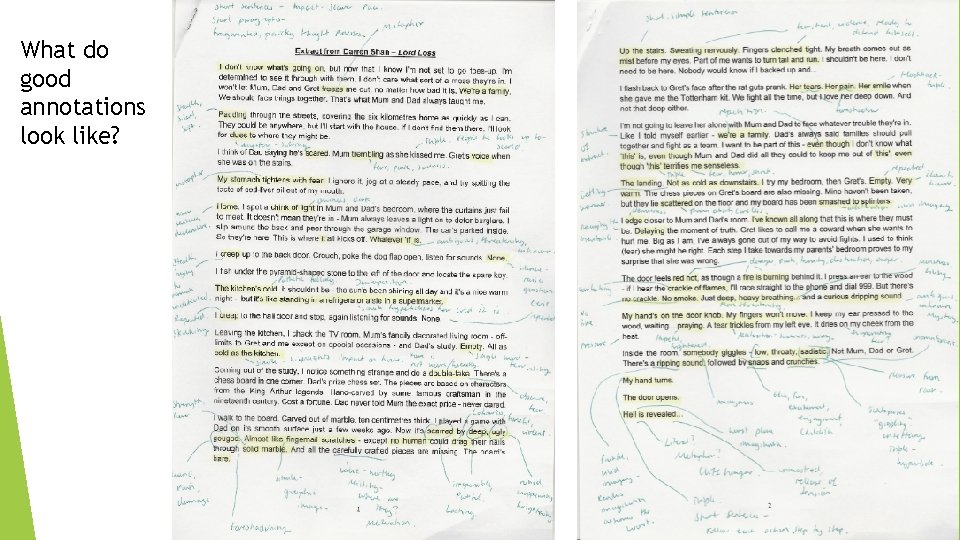
Analysing the Extract We are now going to annotate the key words and phrases we have highlighted. All this means is that we are going to label our key words with their connotations and the techniques we learned earlier! A bit stuck? Aim for at least 5 key words you have highlighted and label them with 2 connotations each. As with the previous task, work with others or ask for help! Phrase is a metaphor for how frightened the main character (protagonist) is. ‘My stomach tightens with fear. ’ Verb – connotes pain, unease, tension. Challenge yourself! Juxtaposition is when two contrasting ideas are put next to each other. Can you find an example of this in the extract and explain why it’s used? Suggests nervousness and potential danger.
What do good annotations look like?
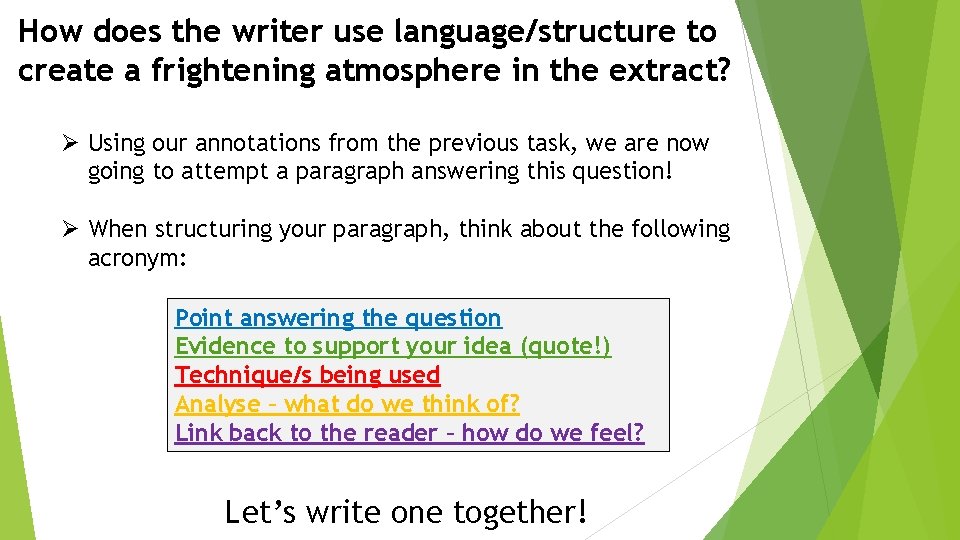
How does the writer use language/structure to create a frightening atmosphere in the extract? Ø Using our annotations from the previous task, we are now going to attempt a paragraph answering this question! Ø When structuring your paragraph, think about the following acronym: Point answering the question Evidence to support your idea (quote!) Technique/s being used Analyse – what do we think of? Link back to the reader – how do we feel? Let’s write one together!
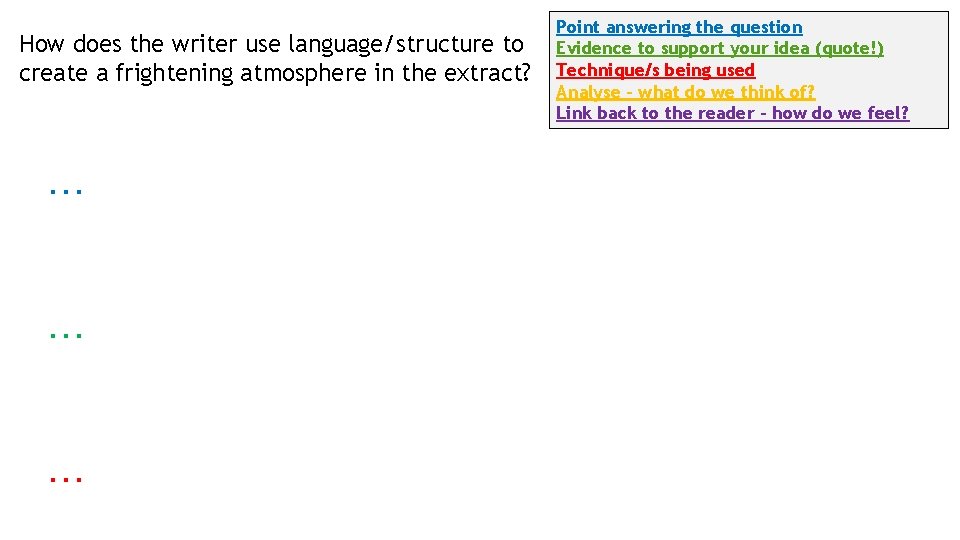
How does the writer use language/structure to create a frightening atmosphere in the extract? … … … Point answering the question Evidence to support your idea (quote!) Technique/s being used Analyse – what do we think of? Link back to the reader – how do we feel?
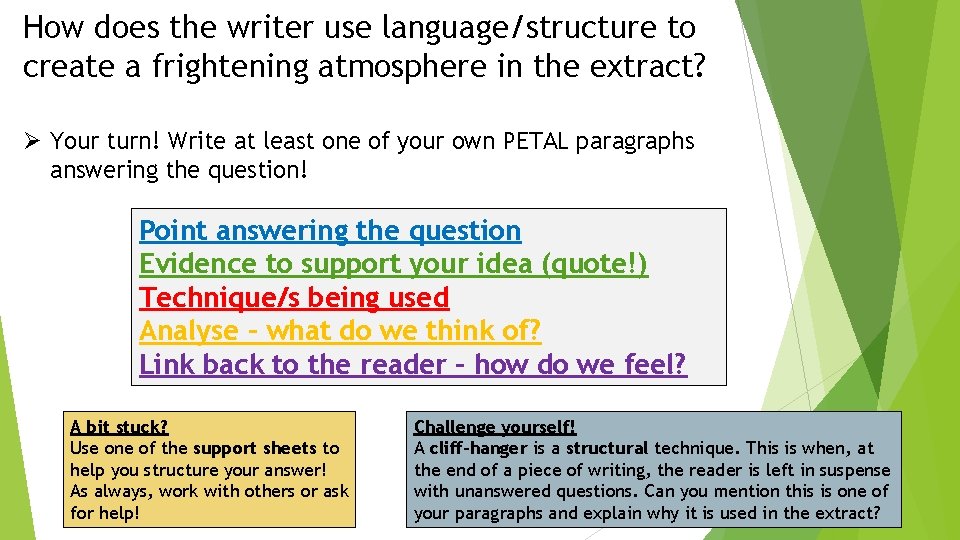
How does the writer use language/structure to create a frightening atmosphere in the extract? Ø Your turn! Write at least one of your own PETAL paragraphs answering the question! Point answering the question Evidence to support your idea (quote!) Technique/s being used Analyse – what do we think of? Link back to the reader – how do we feel? A bit stuck? Use one of the support sheets to help you structure your answer! As always, work with others or ask for help! Challenge yourself! A cliff-hanger is a structural technique. This is when, at the end of a piece of writing, the reader is left in suspense with unanswered questions. Can you mention this is one of your paragraphs and explain why it is used in the extract?
Plenary – Let’s hear some examples!
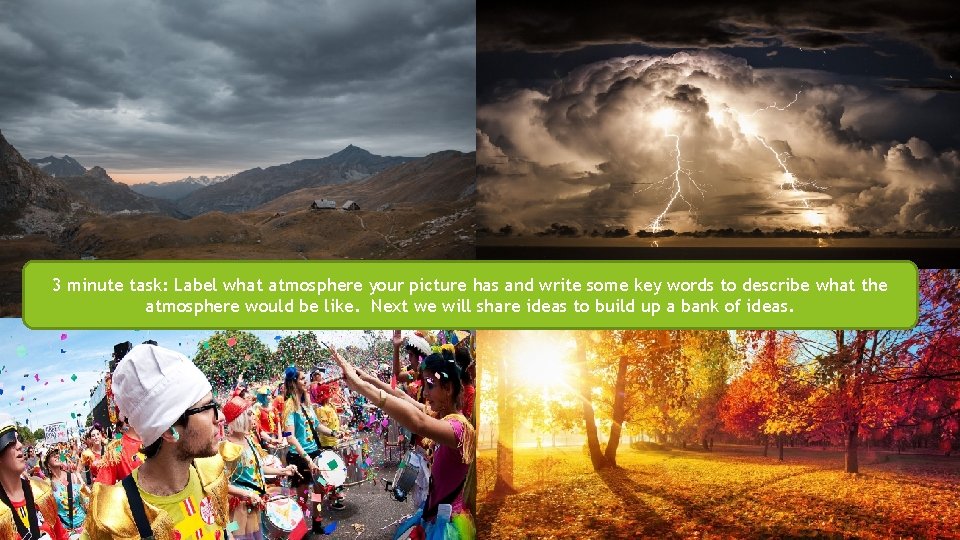
Now it’s your turn! Have a look at the pictures on the following slide and choose one to help you create a piece of writing with a very specific atmosphere…
3 minute task: Label what atmosphere your picture has and write some key words to describe what the atmosphere would be like. Next we will share ideas to build up a bank of ideas.
Next you need to picture your house. You are going to write a description of a search for another person in this house (perhaps you are desperate to tell this person some good/bad/sad news – you could introduce this at the start). The house and character that you describe should have the atmosphere you chose (cold/electric/stormy/happy). Try to litter your description with key words that would connote the atmosphere and mood of the place and character/s. Finally, annotate your own writing for techniques and effective vocabulary you have used to create a specific atmosphere Too hard? Write a description of the picture you chose with a vivid atmosphere 15 Minutes Too easy? Try to use at least 5 different language techniques you have studied in English
Extension Task Show you can vary your style. Re-write your paragraph with an opposite atmosphere!