
Analog and Digital Transmission Interfaces and Multiplexing Physical
- Slides: 26
Analog and Digital Transmission Interfaces and Multiplexing (Physical Layer) Lita Lidyawati 2012
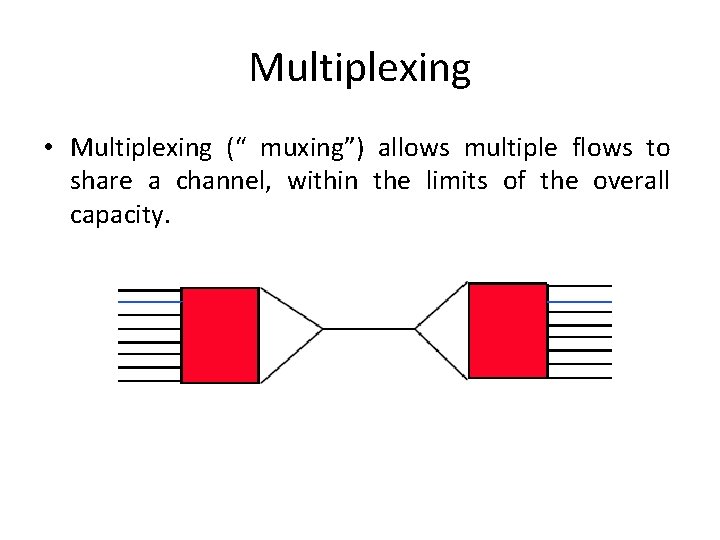
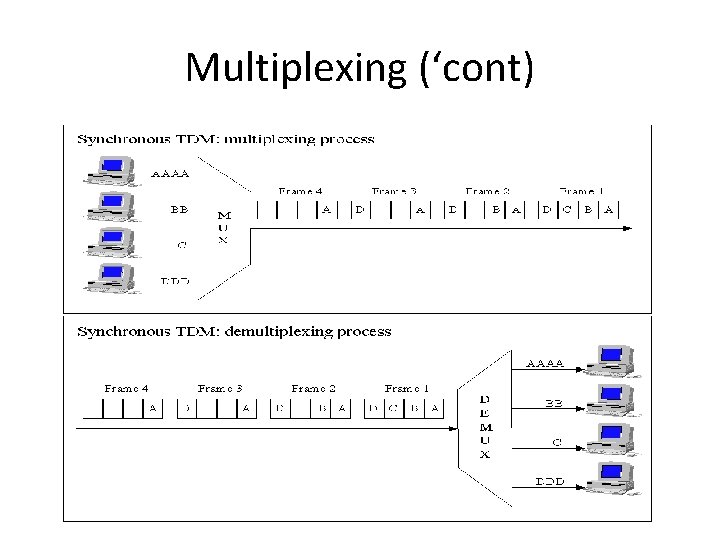
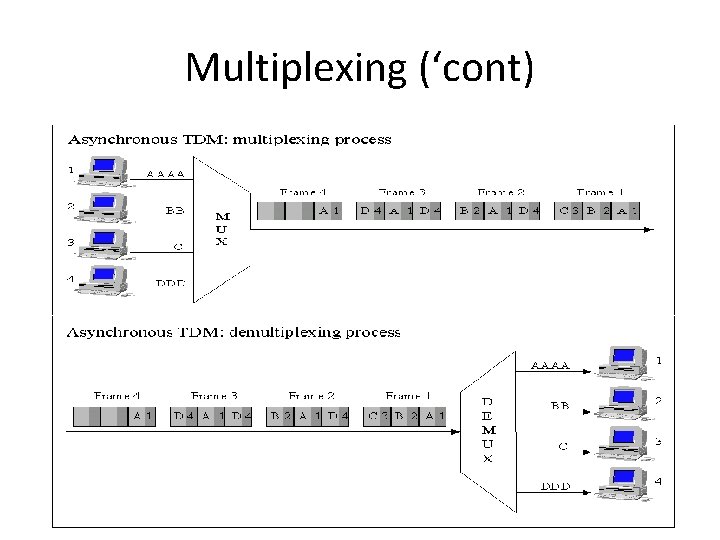
Multiplexing • Multiplexing (“ muxing”) allows multiple flows to share a channel, within the limits of the overall capacity.
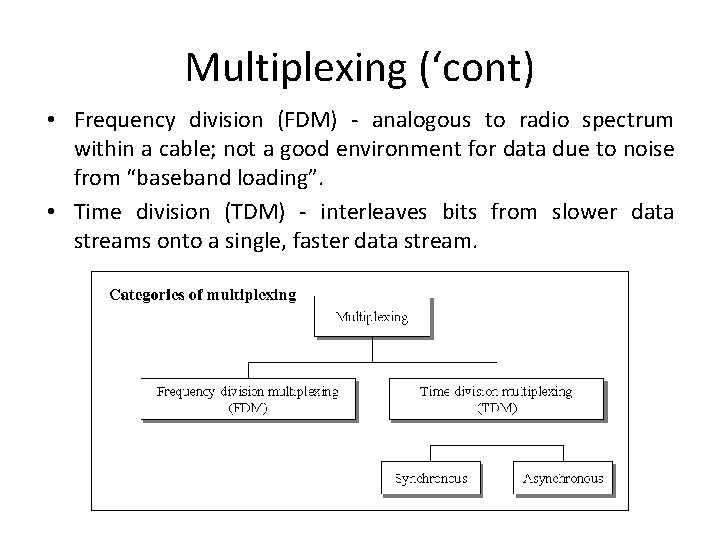
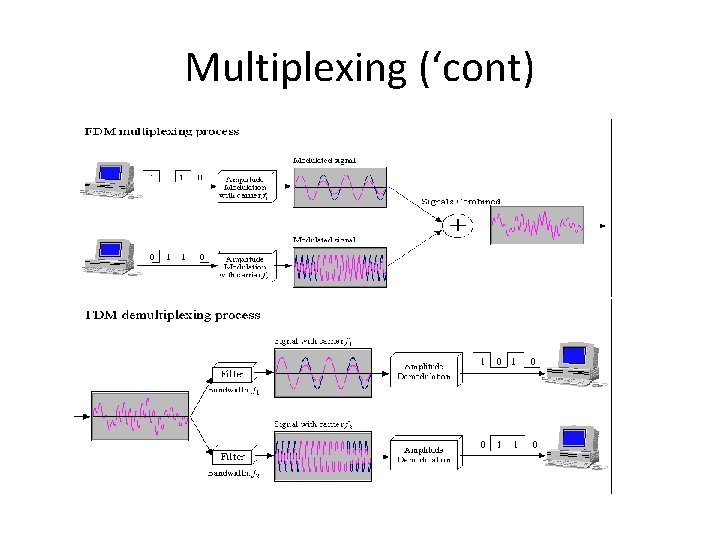
Multiplexing (‘cont) • Frequency division (FDM) - analogous to radio spectrum within a cable; not a good environment for data due to noise from “baseband loading”. • Time division (TDM) - interleaves bits from slower data streams onto a single, faster data stream.
Multiplexing (‘cont)
Multiplexing (‘cont)
Multiplexing (‘cont)
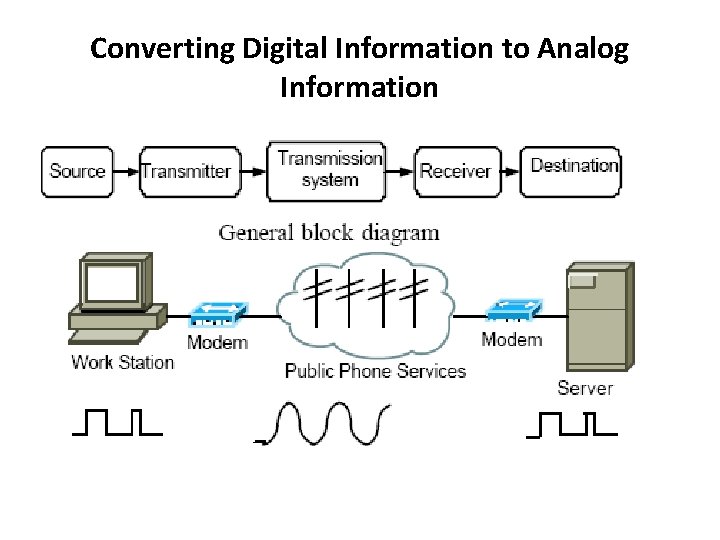
Converting Digital Information to Analog Information
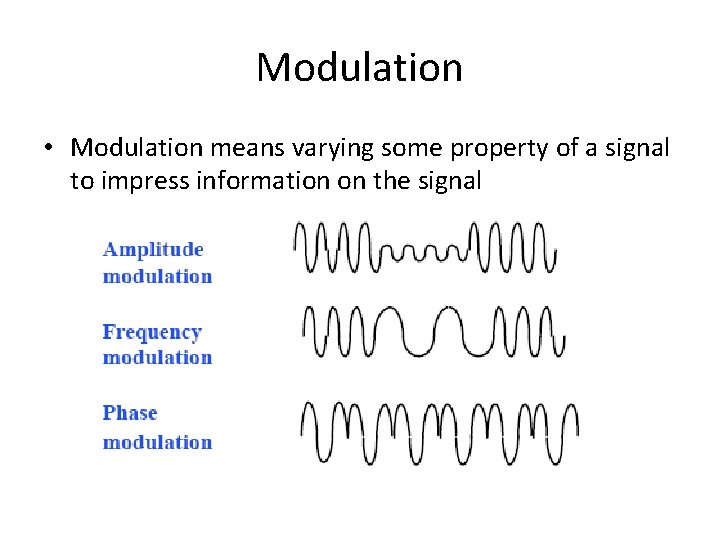
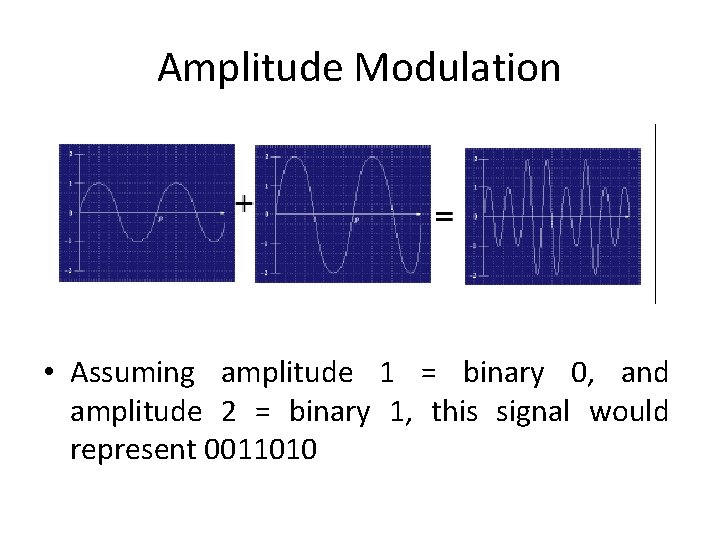
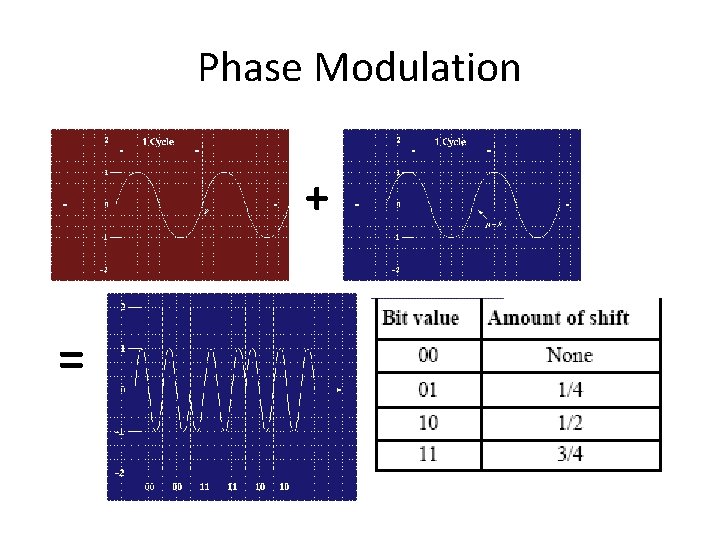
Modulation • Modulation means varying some property of a signal to impress information on the signal
Amplitude Modulation • Assuming amplitude 1 = binary 0, and amplitude 2 = binary 1, this signal would represent 0011010
Phase Modulation + =
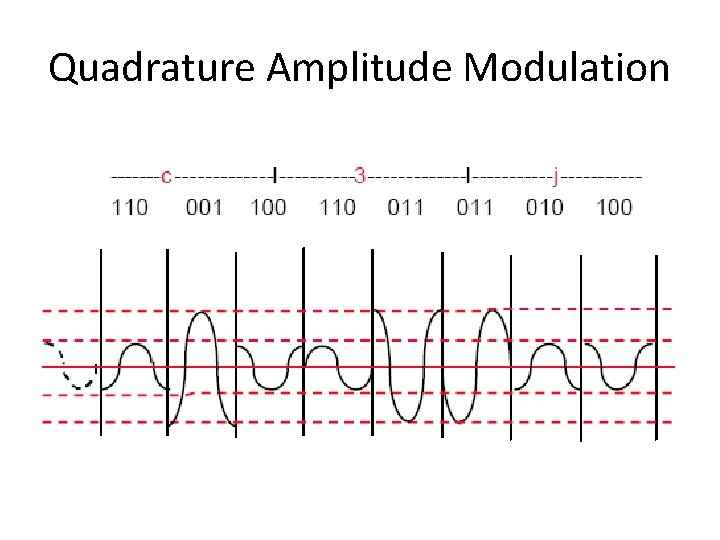
Quadrature Amplitude Modulation
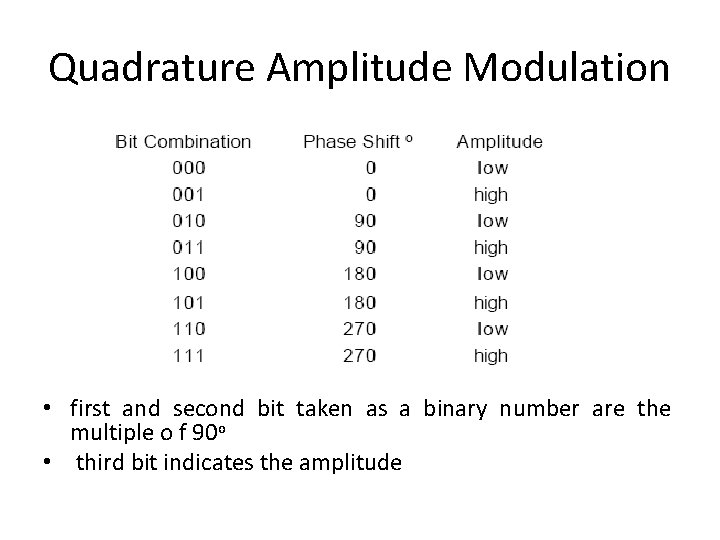
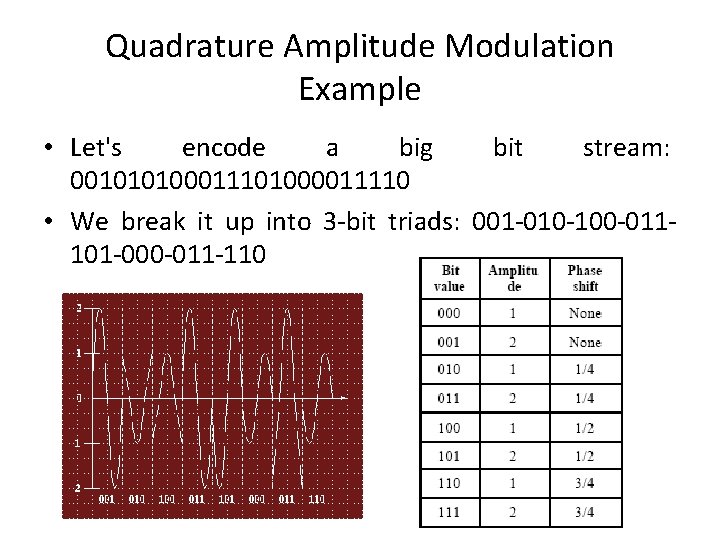
Quadrature Amplitude Modulation • first and second bit taken as a binary number are the multiple o f 90 o • third bit indicates the amplitude
Quadrature Amplitude Modulation Example • Let's encode a big bit stream: 001010100011101000011110 • We break it up into 3 -bit triads: 001 -010 -100 -011101 -000 -011 -110
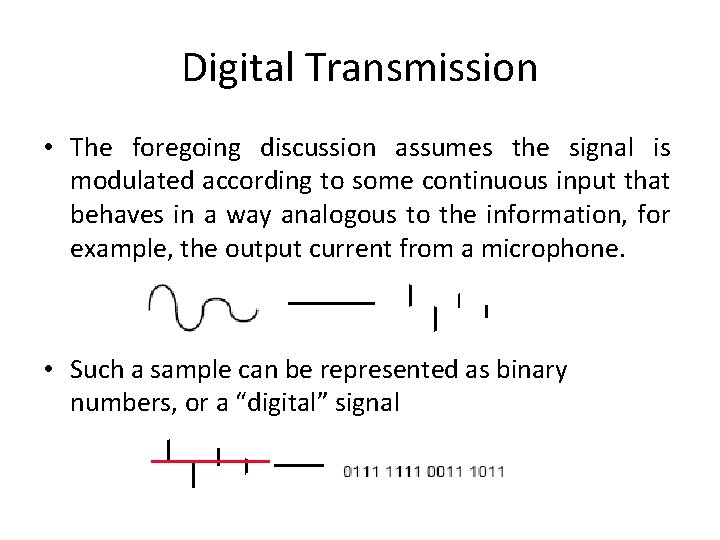
Digital Transmission • The foregoing discussion assumes the signal is modulated according to some continuous input that behaves in a way analogous to the information, for example, the output current from a microphone. • Such a sample can be represented as binary numbers, or a “digital” signal
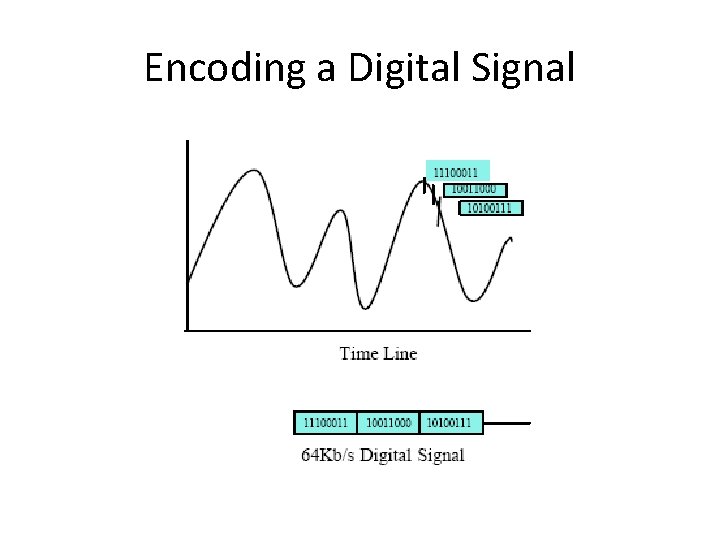
Encoding a Digital Signal • An encoder samples, or measures the amplitude of the incoming analog signal 8, 000 times a second • The amplitude of each sample is given a pre-established 8 digit binary code, which is determined by the height of the sample. • Each 8 -digit binary code is transmitted behind the 8 -digit binary code of the previously encoded sample in the conversation, creating a signal of 64, 000 b/s (8, 000 samples a second at 8 bits per sample.
Encoding a Digital Signal
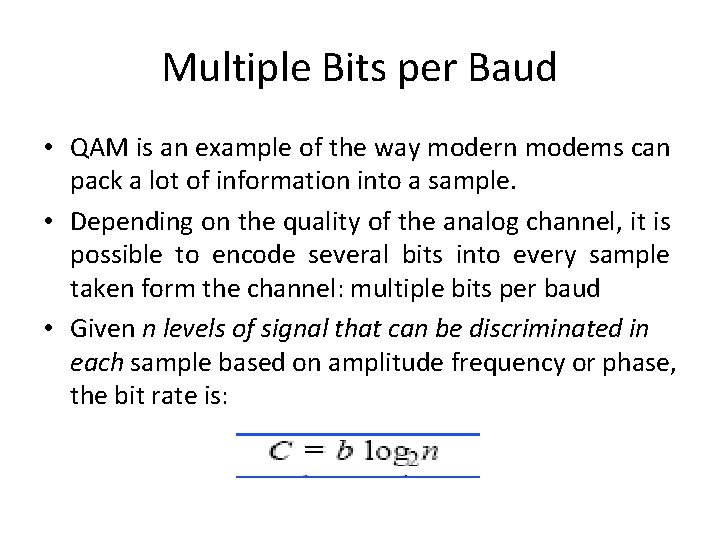
Multiple Bits per Baud • QAM is an example of the way modern modems can pack a lot of information into a sample. • Depending on the quality of the analog channel, it is possible to encode several bits into every sample taken form the channel: multiple bits per baud • Given n levels of signal that can be discriminated in each sample based on amplitude frequency or phase, the bit rate is:
Multiple Bits per Baud • where C is the channel capacity as before and b is the signalling rate (also called sampling rate or baud rate) • Shannon’s law defines the absolute limit for C
Multiple Bits per Baud • Sample analog voice signal at the Nyquist rate = 2 f. H (twice the highest frequency if f. L= 0), or 2 X 4000 Hz = 8000 samples per second • Convert each sample to an 8 -bit binary number (called quantizing) using Pulse Code Modulation (PCM) • Send this digital data as 8 (bit samples) X 8000 (samples per second), or 64, 000 bps
Digital Transmission of Voice • A group of 24 voice channels requires – 24 X 64 kbps = 1, 536, 000 bps – which can fit on a T 1 carrier channel
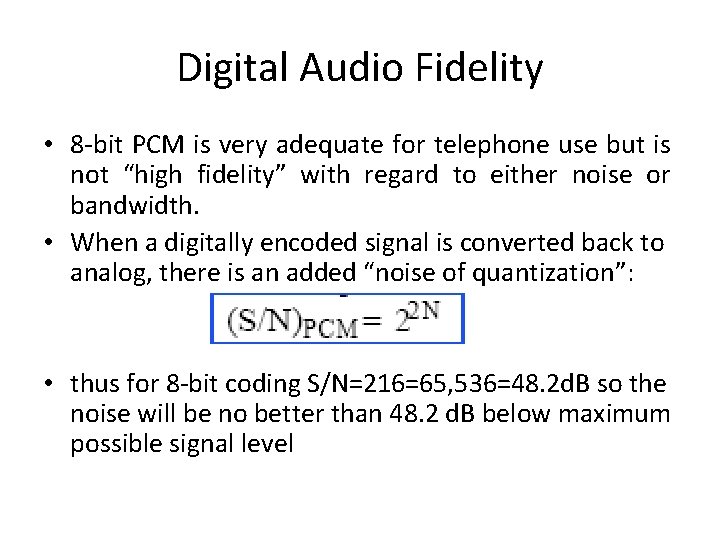
Digital Audio Fidelity • 8 -bit PCM is very adequate for telephone use but is not “high fidelity” with regard to either noise or bandwidth. • When a digitally encoded signal is converted back to analog, there is an added “noise of quantization”: • thus for 8 -bit coding S/N=216=65, 536=48. 2 d. B so the noise will be no better than 48. 2 d. B below maximum possible signal level
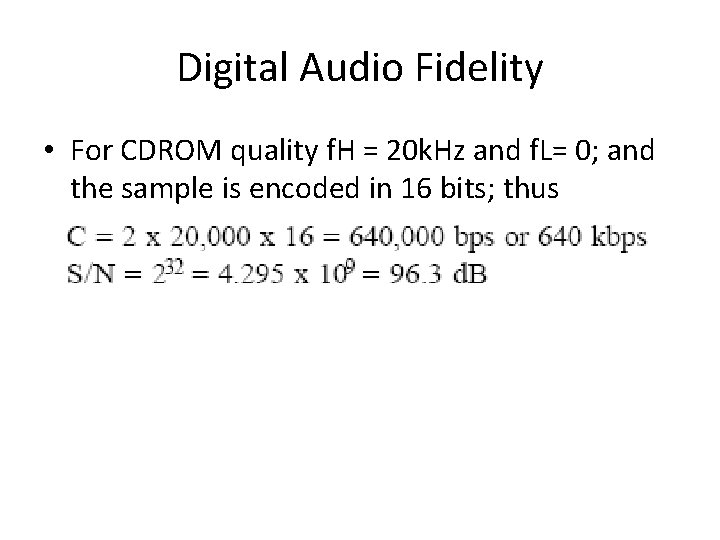
Digital Audio Fidelity • For CDROM quality f. H = 20 k. Hz and f. L= 0; and the sample is encoded in 16 bits; thus
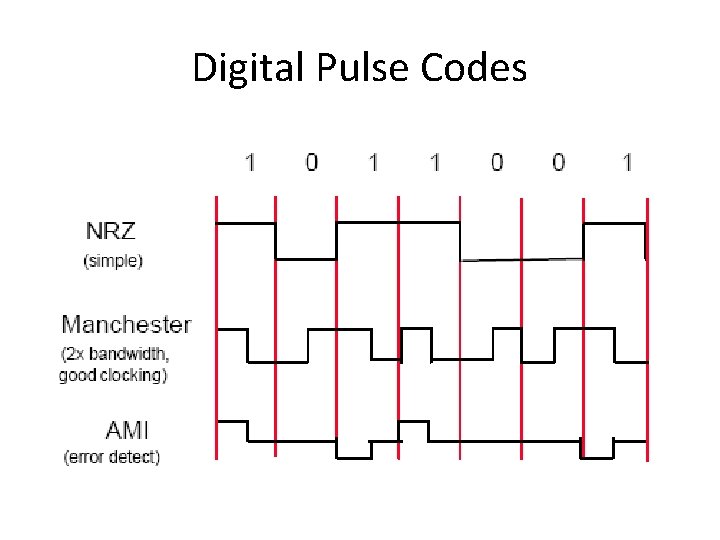
Digital Pulse Codes • Purpose: Make efficient use of available bandwidth while avoiding errors (also may be designed to eliminate DC component, as required by some media) – Non-Return to Zero-L (NRZ-L): straight binary data – Manchester: 01 = 1; 10 = 0 (two baud per bit); guarantees an equal number of ones and zeros; requires 2 x bandwidth in medium – Bipolar alternate mark inversion (AMI): a pulse for each one; every pulse changes polarity
Digital Pulse Codes
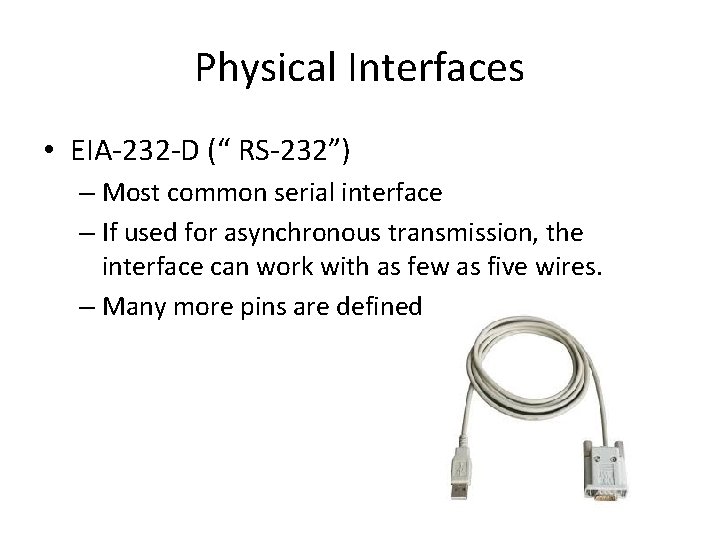
Physical Interfaces • EIA-232 -D (“ RS-232”) – Most common serial interface – If used for asynchronous transmission, the interface can work with as few as five wires. – Many more pins are defined
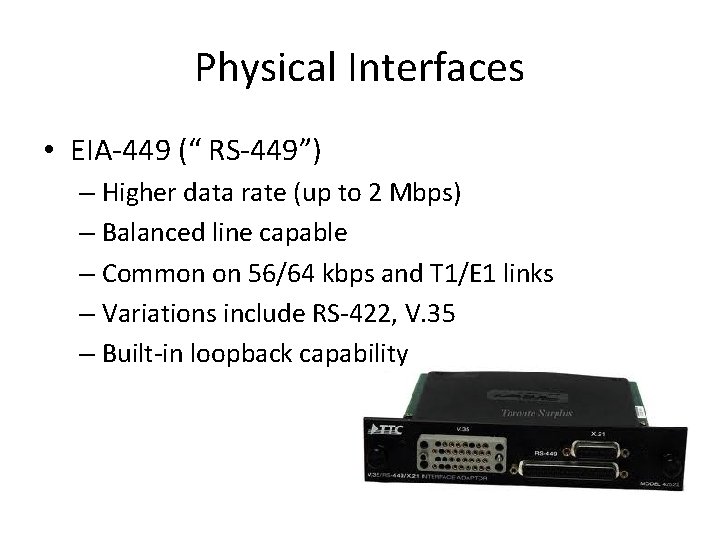
Physical Interfaces • EIA-449 (“ RS-449”) – Higher data rate (up to 2 Mbps) – Balanced line capable – Common on 56/64 kbps and T 1/E 1 links – Variations include RS-422, V. 35 – Built-in loopback capability