
Analisis Difraksi SinarX XRay Diffraction Analysis Crystal Structure











- Slides: 54
Analisis Difraksi Sinar-X (X-Ray Diffraction Analysis)
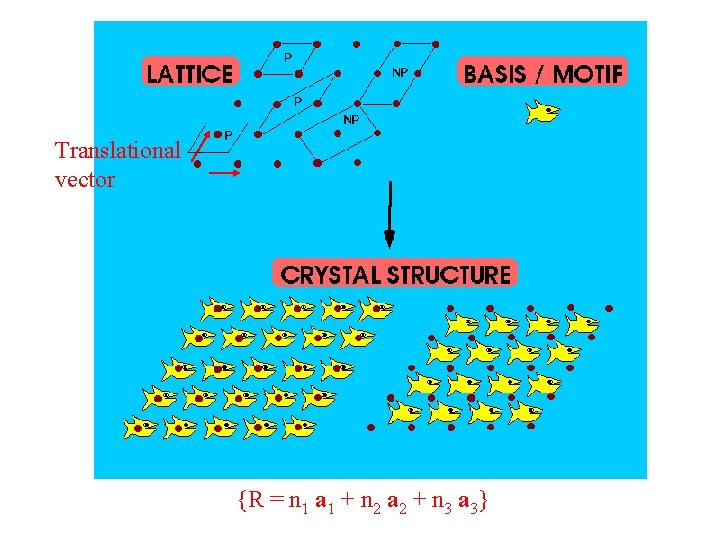
Crystal Structure Reading: Ashcroft 4 -7 Ideal Crystal: Mengandung susunan atom/ion secara periodik Direpresentasikan oleh titik kisi Sekelompok atoms yang membentuk titik kisi Basis LATTICE = Kisi susunan titik dalam ruang yang memiliki lingkungan identik antara satu dengan lainnya CRYSTAL STRUCTURE = Susunan atom (kelompok atom) yang berulang. It can be described by associating with each lattice point a group of atoms called the MOTIF (BASIS)
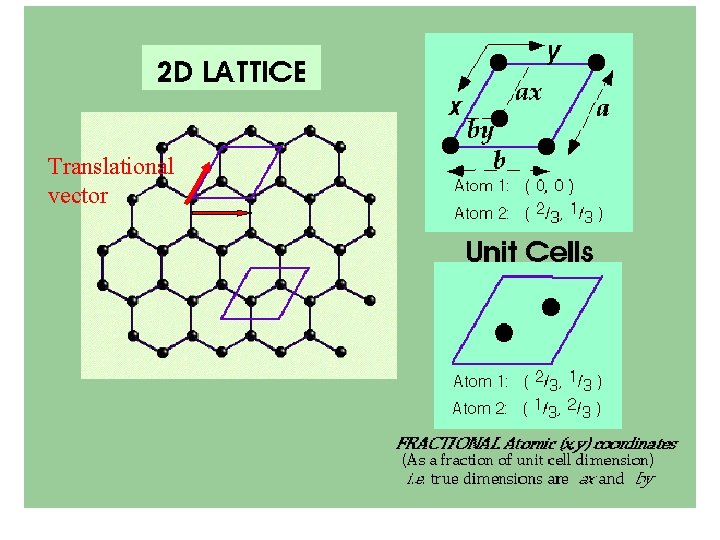
Translational vector {R = n 1 a 1 + n 2 a 2 + n 3 a 3}
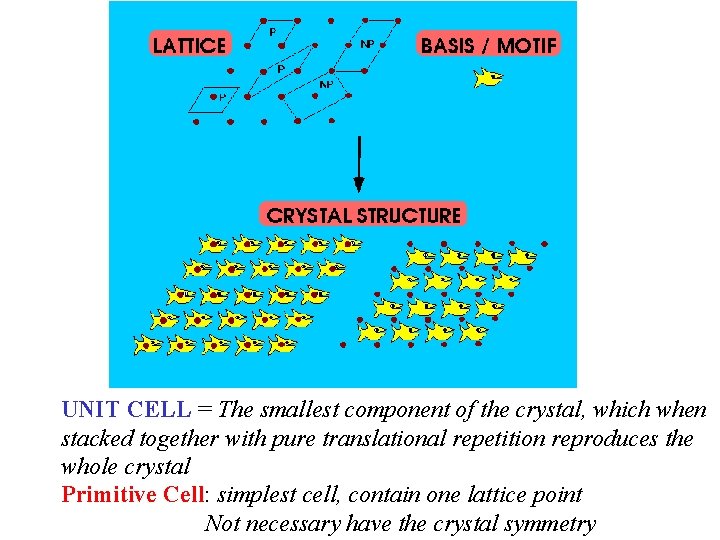
UNIT CELL = The smallest component of the crystal, which when stacked together with pure translational repetition reproduces the whole crystal Primitive Cell: simplest cell, contain one lattice point Not necessary have the crystal symmetry
Conventional cell vs. Primitive Cell Reflecting the symmetry Different Basis
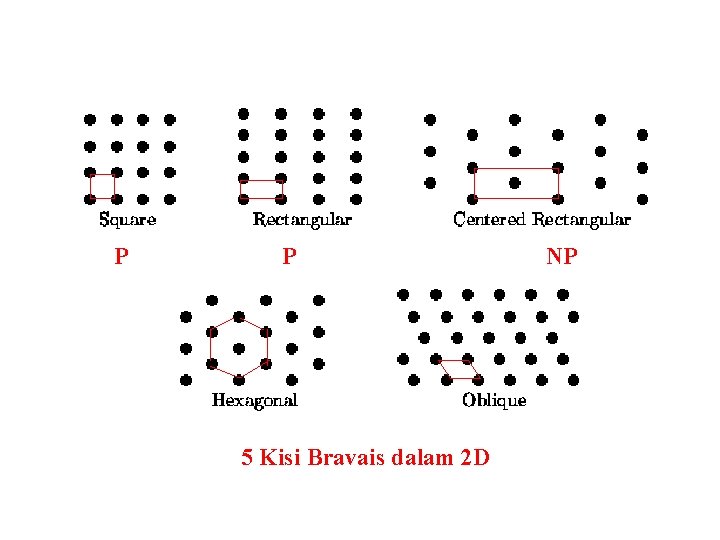
P P 5 Kisi Bravais dalam 2 D NP
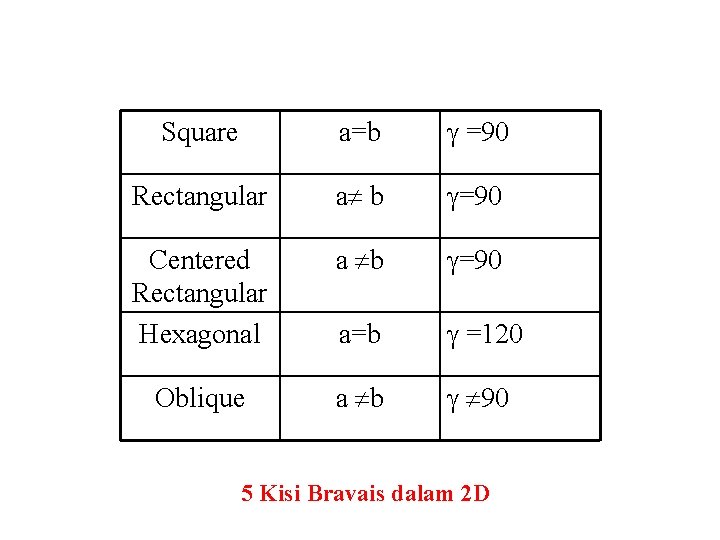
Square a=b =90 Rectangular a b =90 Centered Rectangular Hexagonal a b =90 a=b =120 Oblique a b 90 5 Kisi Bravais dalam 2 D
Translational vector
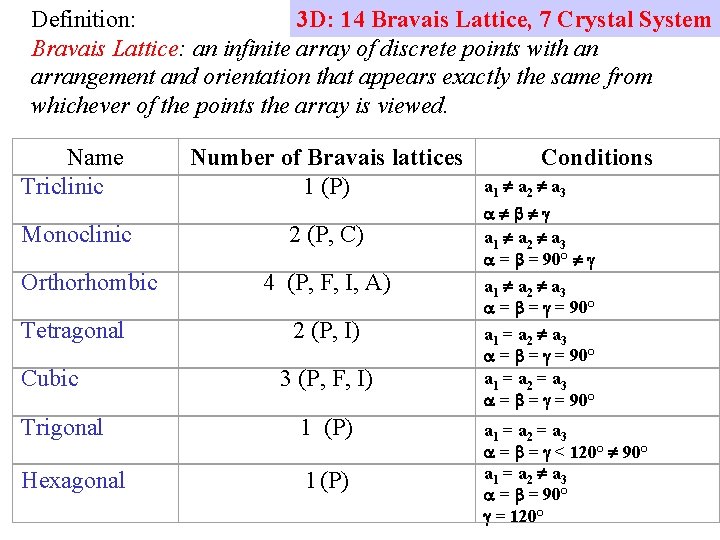
Definition: 3 D: 14 Bravais Lattice, 7 Crystal System Bravais Lattice: an infinite array of discrete points with an arrangement and orientation that appears exactly the same from whichever of the points the array is viewed. Name Triclinic Monoclinic Orthorhombic Tetragonal Cubic Number of Bravais lattices 1 (P) 2 (P, C) 4 (P, F, I, A) 2 (P, I) 3 (P, F, I) Trigonal 1 (P) Hexagonal 1 (P) Conditions a 1 ¹ a 2 ¹ a 3 a¹b¹g a 1 ¹ a 2 ¹ a 3 a = b = 90° ¹ g a 1 ¹ a 2 ¹ a 3 a = b = g = 90° a 1 = a 2 = a 3 a = b = g < 120° ¹ 90° a 1 = a 2 ¹ a 3 a = b = 90° g = 120°
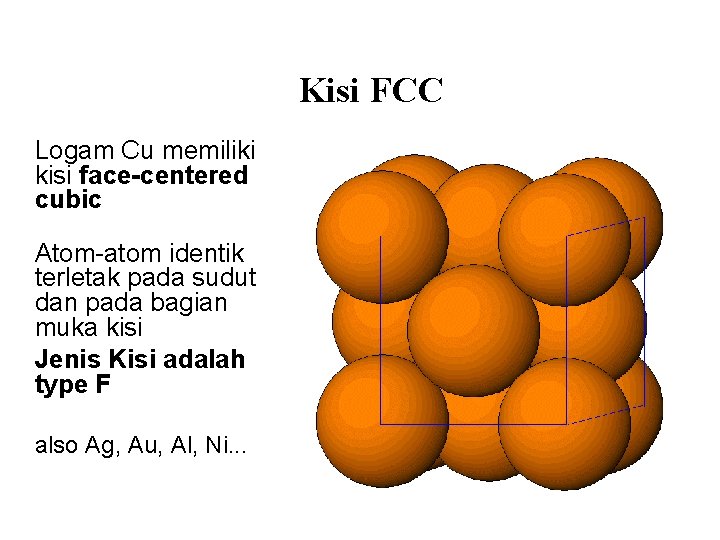
Kisi FCC Logam Cu memiliki kisi face-centered cubic Atom-atom identik terletak pada sudut dan pada bagian muka kisi Jenis Kisi adalah type F also Ag, Au, Al, Ni. . .
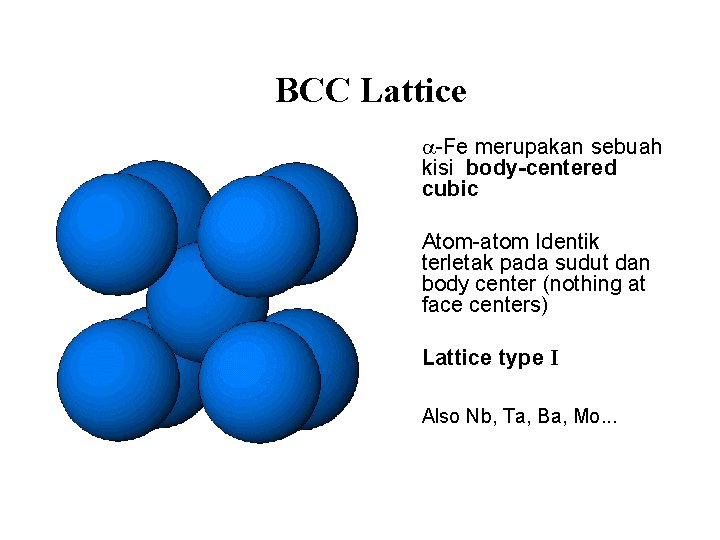
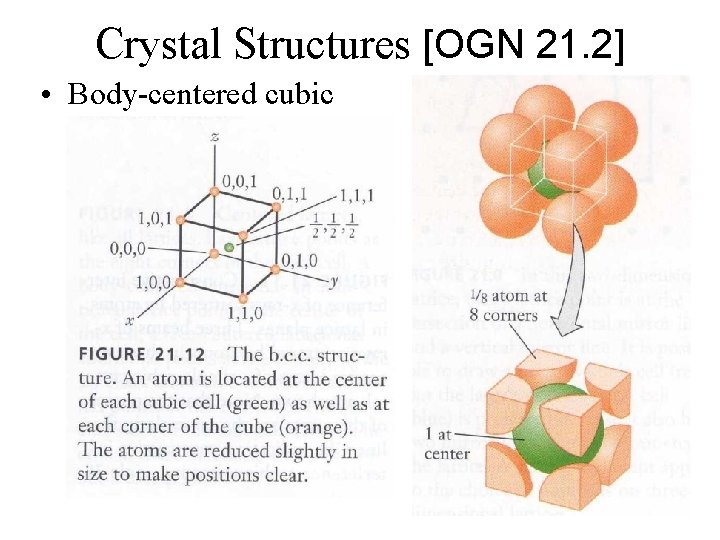
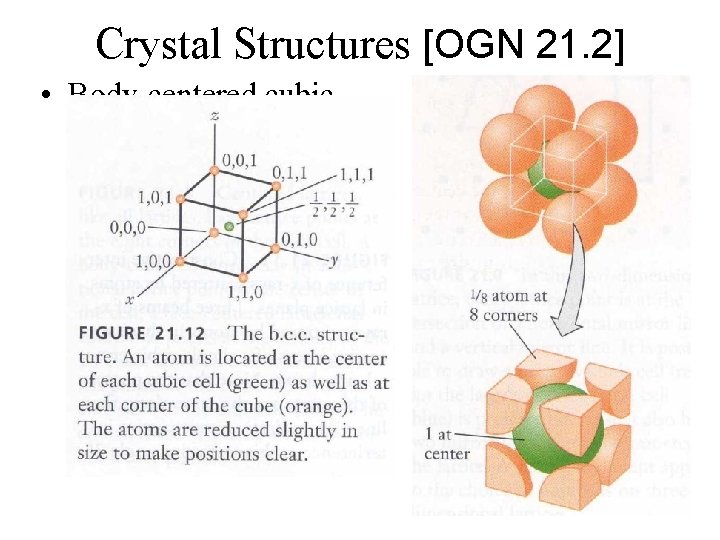
BCC Lattice -Fe merupakan sebuah kisi body-centered cubic Atom-atom Identik terletak pada sudut dan body center (nothing at face centers) Lattice type I Also Nb, Ta, Ba, Mo. . .
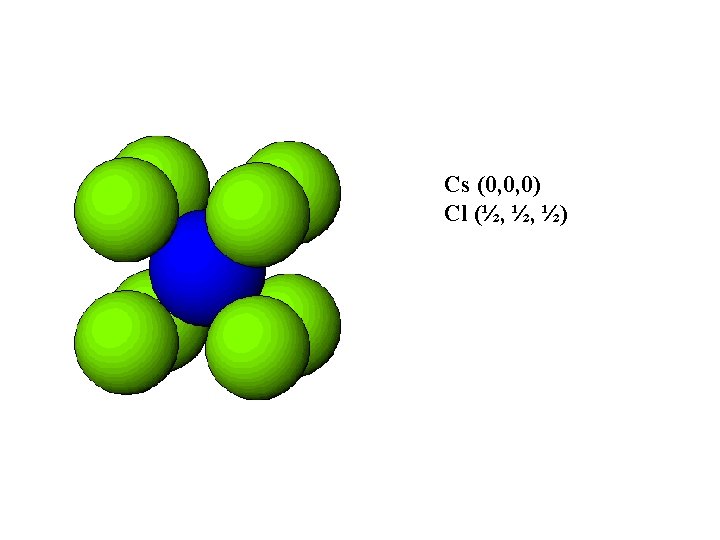
Simple Cubic Lattice Caesium Chloride (Cs. Cl) is primitive cubic Different atoms at corners and body center. NOT body centered, therefore. Lattice type P Also Cu. Zn, Cs. Br, Li. Ag
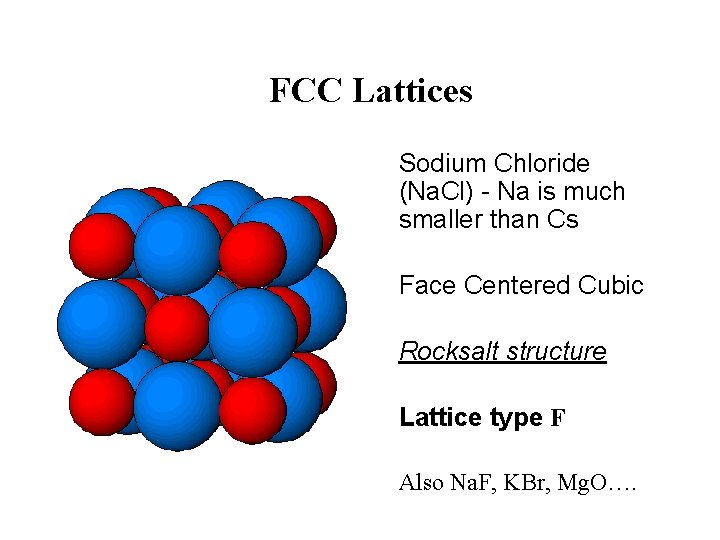
FCC Lattices Sodium Chloride (Na. Cl) - Na is much smaller than Cs Face Centered Cubic Rocksalt structure Lattice type F Also Na. F, KBr, Mg. O….
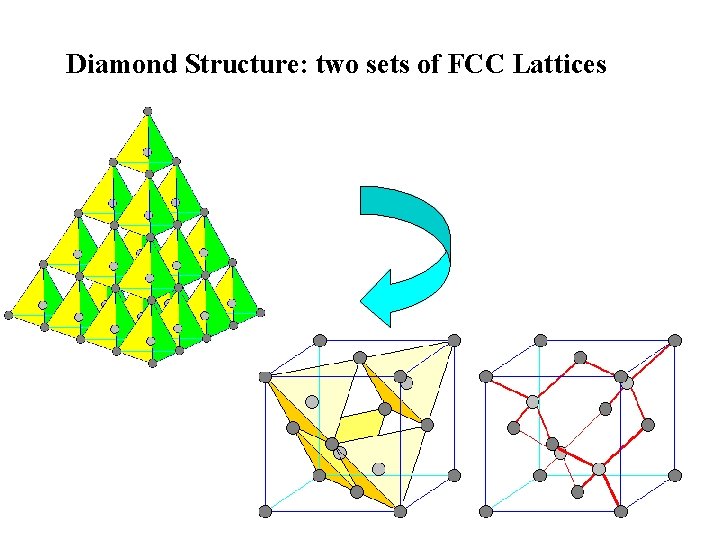
Diamond Structure: two sets of FCC Lattices
Tetragonal: P, I One 4 -fold axes Why not F tetragonal?
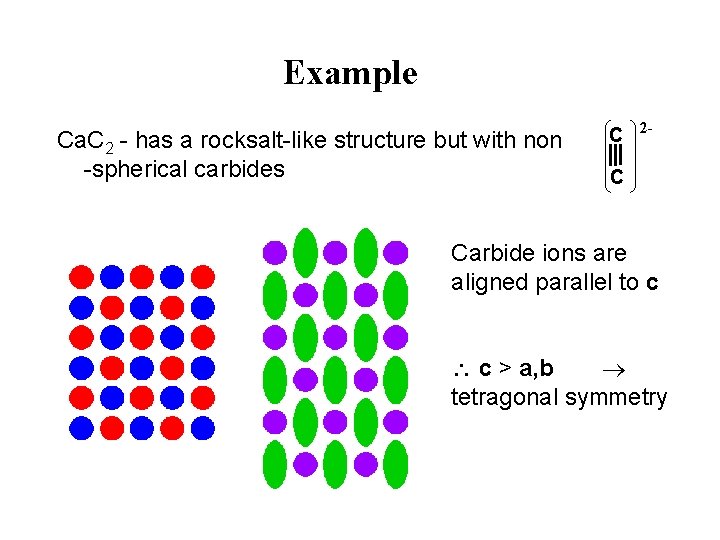
Example Ca. C 2 - has a rocksalt-like structure but with non -spherical carbides C 2 - C Carbide ions are aligned parallel to c c > a, b tetragonal symmetry
Orthorhombic: P, I, F, C C F
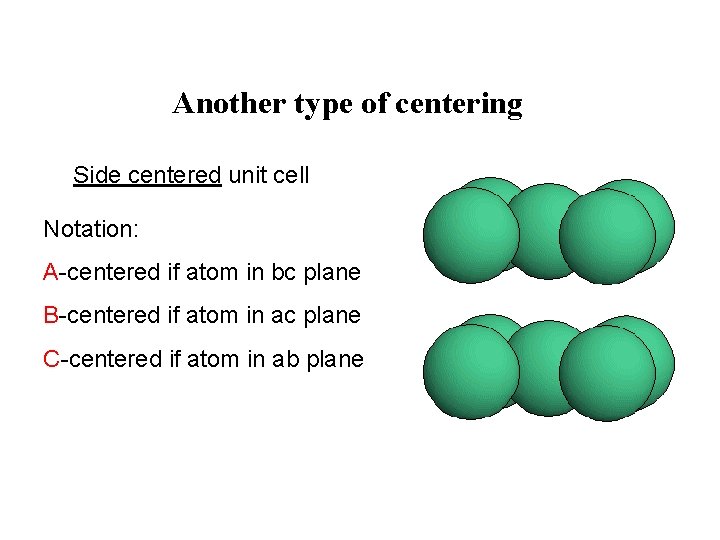
Another type of centering Side centered unit cell Notation: A-centered if atom in bc plane B-centered if atom in ac plane C-centered if atom in ab plane
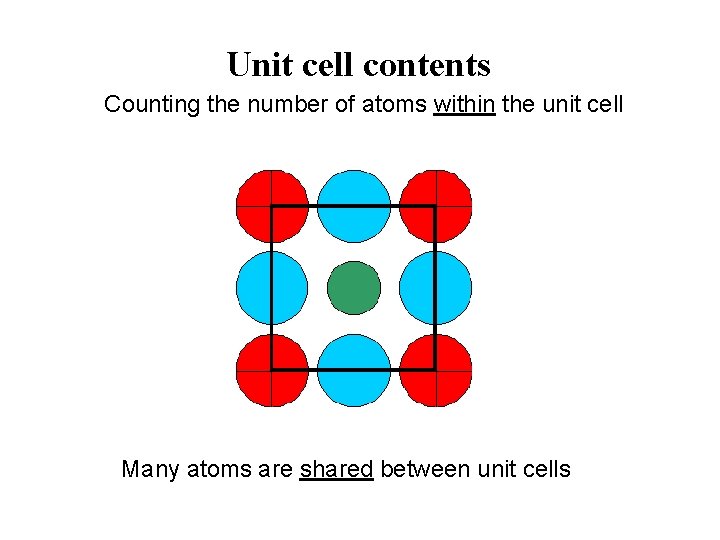
Unit cell contents Counting the number of atoms within the unit cell Many atoms are shared between unit cells
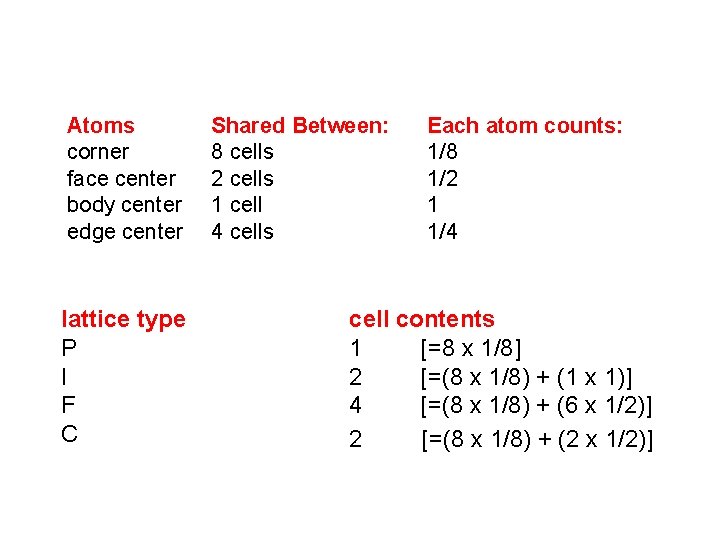
Atoms corner face center body center edge center lattice type P I F C Shared Between: 8 cells 2 cells 1 cell 4 cells Each atom counts: 1/8 1/2 1 1/4 cell contents 1 [=8 x 1/8] 2 [=(8 x 1/8) + (1 x 1)] 4 [=(8 x 1/8) + (6 x 1/2)] 2 [=(8 x 1/8) + (2 x 1/2)]
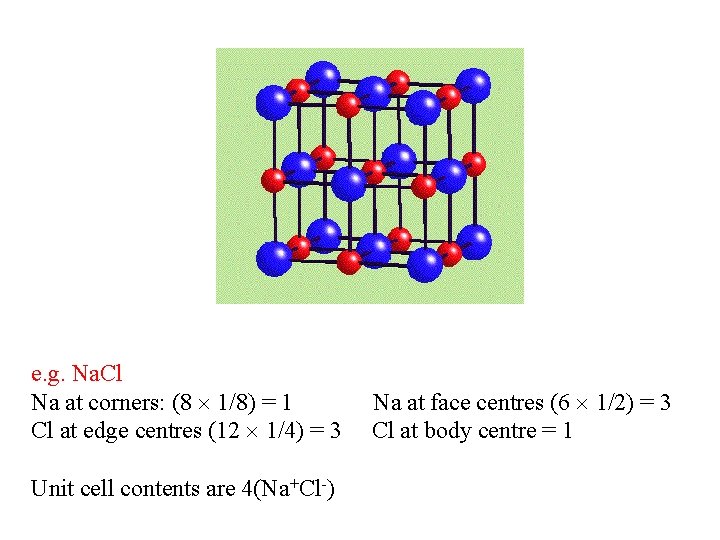
e. g. Na. Cl Na at corners: (8 1/8) = 1 Cl at edge centres (12 1/4) = 3 Unit cell contents are 4(Na+Cl-) Na at face centres (6 1/2) = 3 Cl at body centre = 1
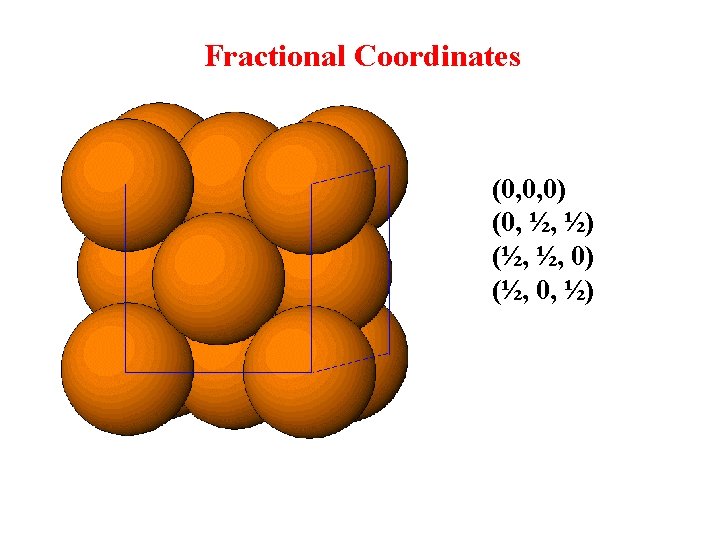
Fractional Coordinates (0, 0, 0) (0, ½, ½) (½, ½, 0) (½, 0, ½)
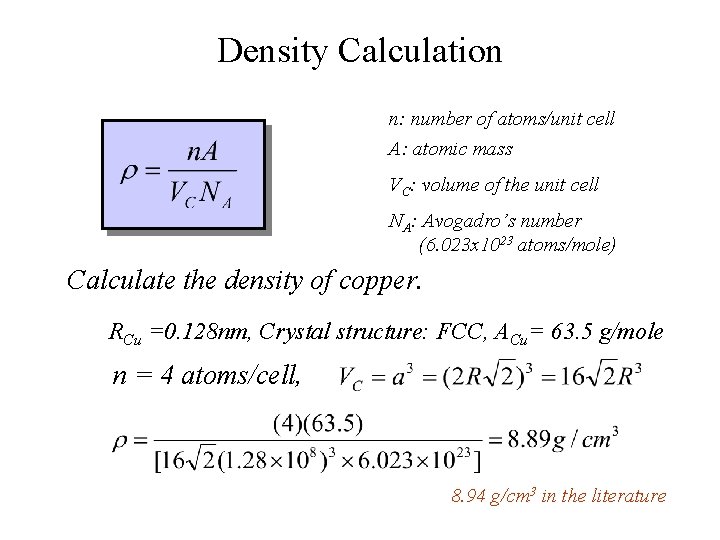
Density Calculation n: number of atoms/unit cell A: atomic mass VC: volume of the unit cell NA: Avogadro’s number (6. 023 x 1023 atoms/mole) Calculate the density of copper. RCu =0. 128 nm, Crystal structure: FCC, ACu= 63. 5 g/mole n = 4 atoms/cell, 8. 94 g/cm 3 in the literature
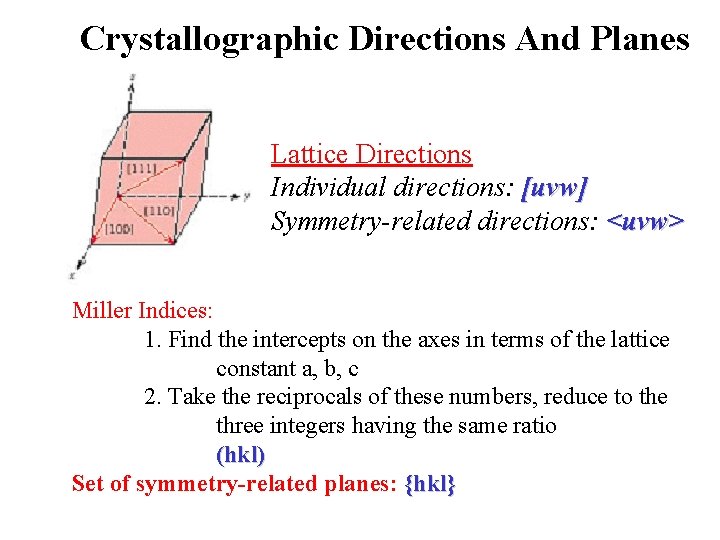
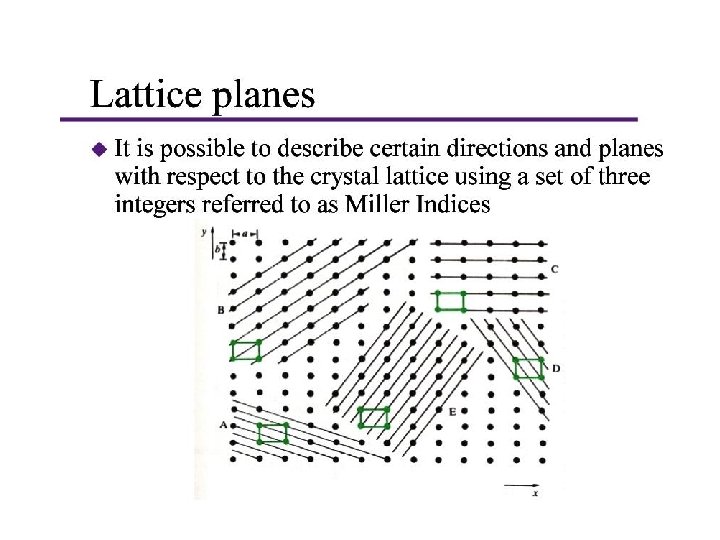
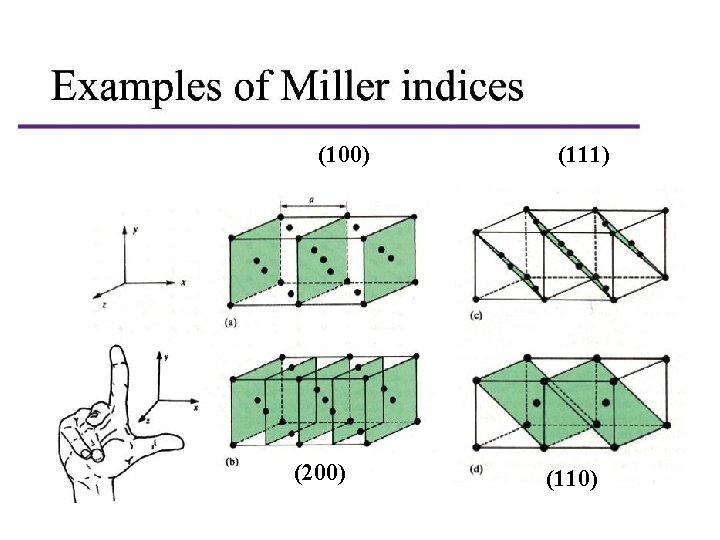
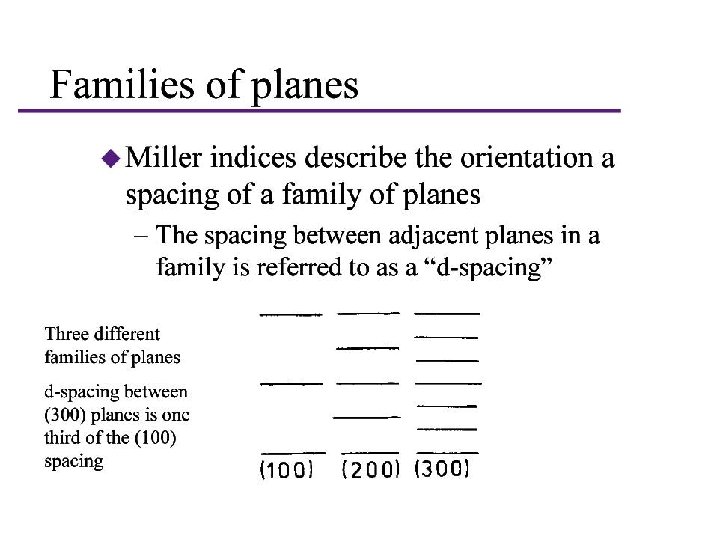
Crystallographic Directions And Planes Lattice Directions Individual directions: [uvw] Symmetry-related directions: <uvw> Miller Indices: 1. Find the intercepts on the axes in terms of the lattice constant a, b, c 2. Take the reciprocals of these numbers, reduce to the three integers having the same ratio (hkl) Set of symmetry-related planes: {hkl}
Crystal Structures [OGN 21. 2] • Body-centered cubic (BCC)
(100) (200) (111) (110)
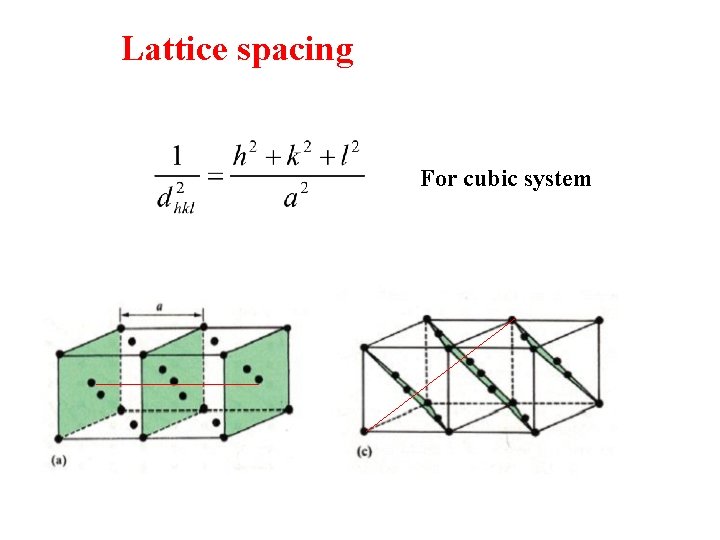
Lattice spacing For cubic system
Crystal Structure Analysis X-ray diffraction Essence of diffraction: Bragg Diffraction
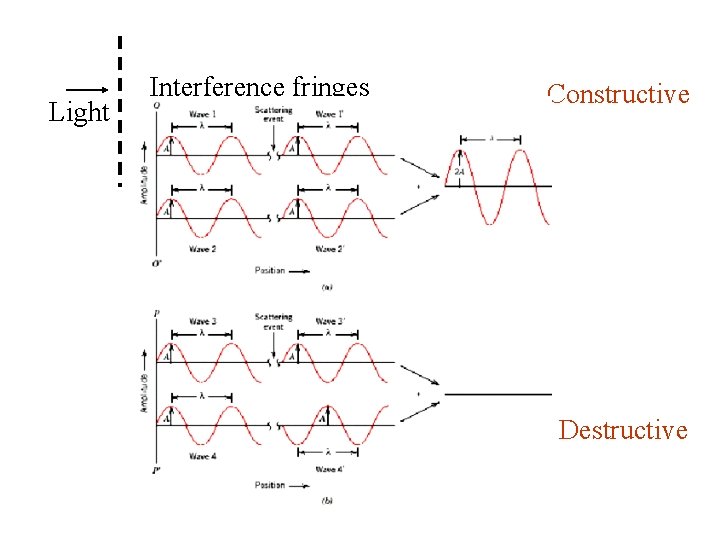
Light Interference fringes Constructive Destructive
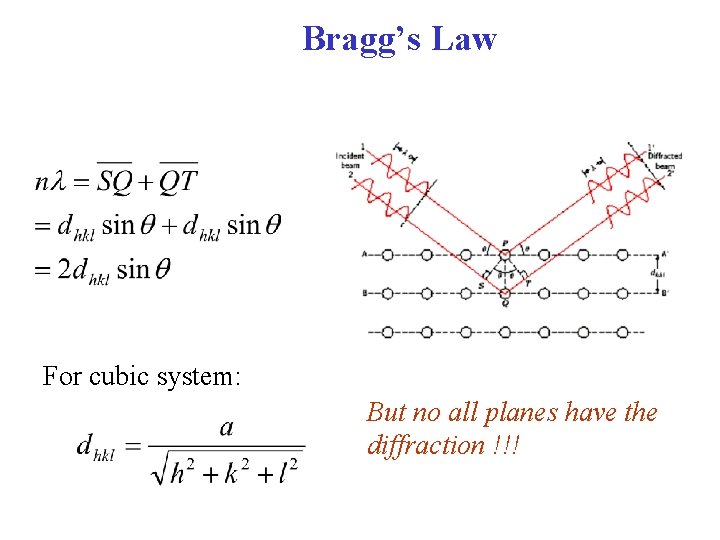
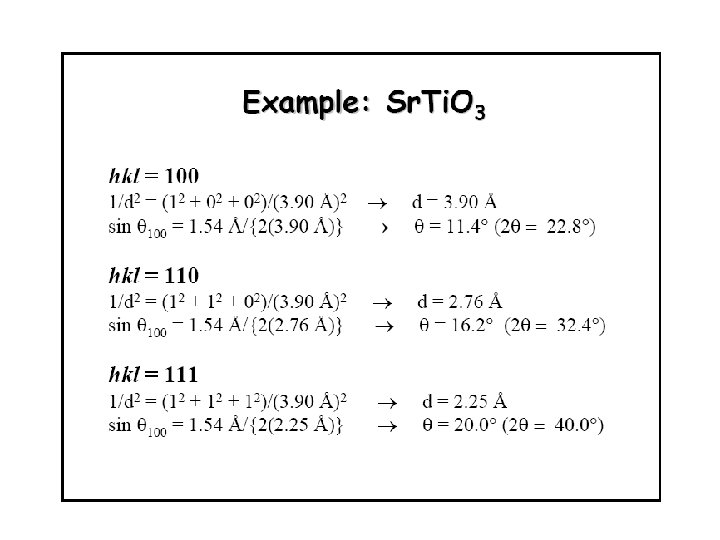
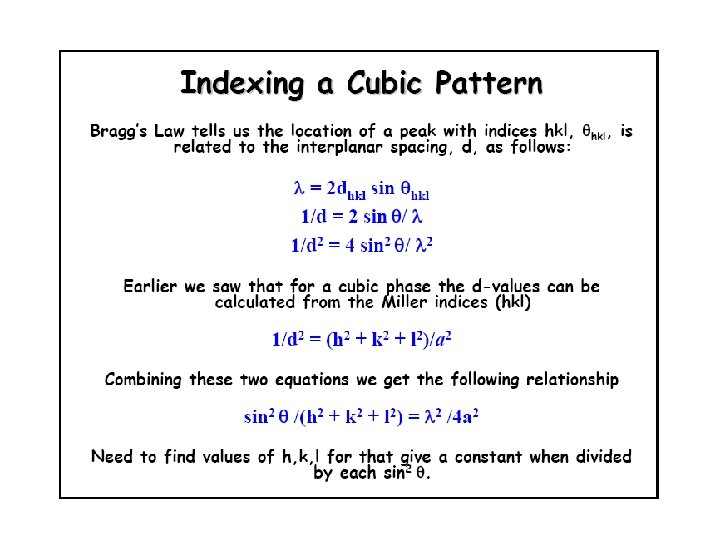
Bragg’s Law For cubic system: But no all planes have the diffraction !!!
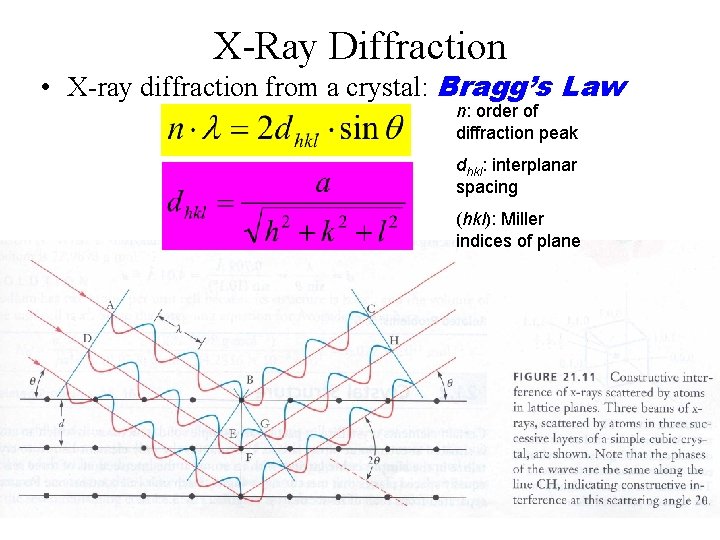
X-Ray Diffraction • X-ray diffraction from a crystal: Bragg’s Law n: order of diffraction peak dhkl: interplanar spacing (hkl): Miller indices of plane
Crystal Structures [OGN 21. 2] • Body-centered cubic (BCC)
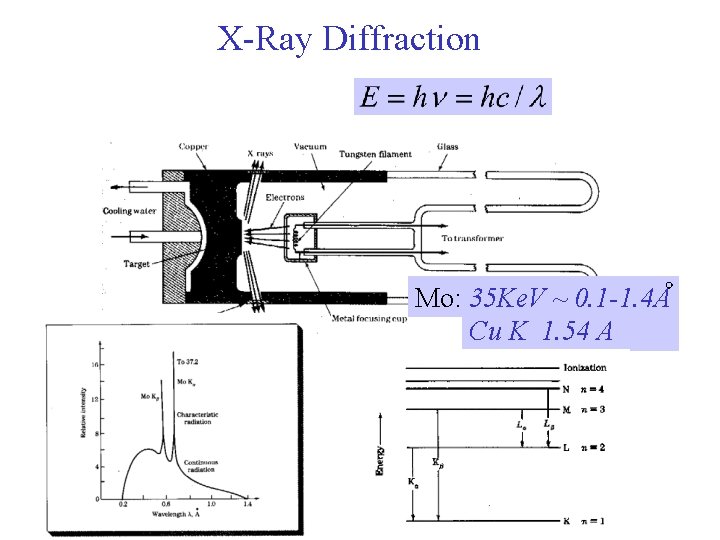
X-Ray Diffraction Mo: 35 Ke. V ~ 0. 1 -1. 4 A Cu K 1. 54 A
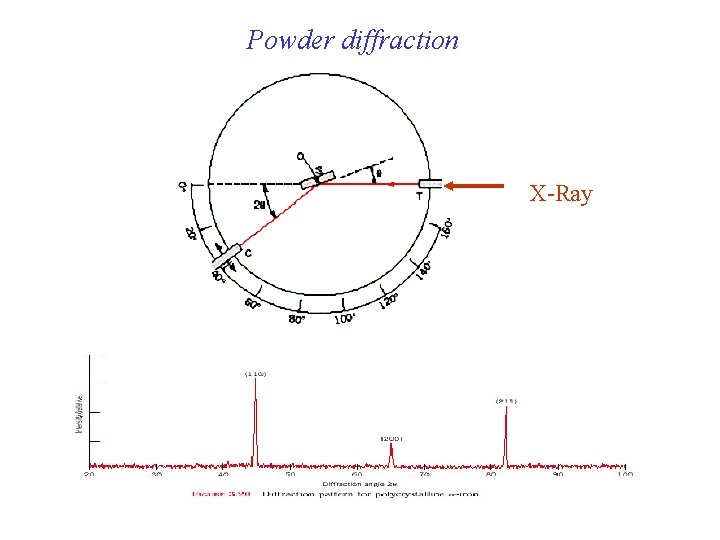
Powder diffraction X-Ray (200) (211)
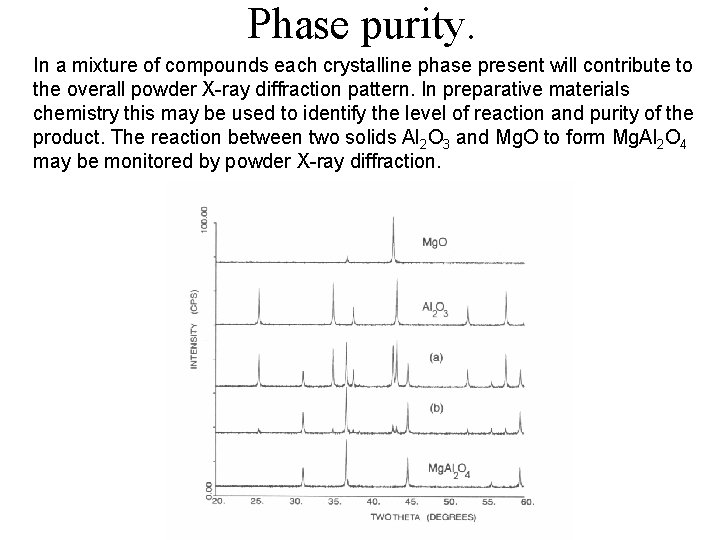
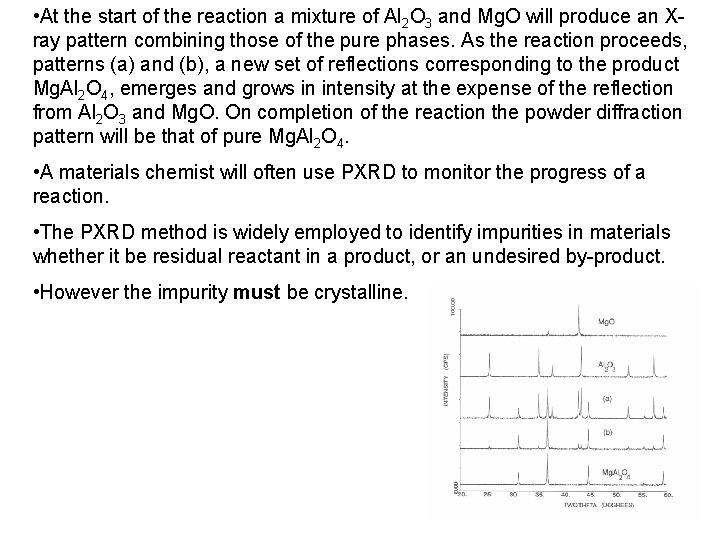
Phase purity. In a mixture of compounds each crystalline phase present will contribute to the overall powder X-ray diffraction pattern. In preparative materials chemistry this may be used to identify the level of reaction and purity of the product. The reaction between two solids Al 2 O 3 and Mg. O to form Mg. Al 2 O 4 may be monitored by powder X-ray diffraction.
• At the start of the reaction a mixture of Al 2 O 3 and Mg. O will produce an Xray pattern combining those of the pure phases. As the reaction proceeds, patterns (a) and (b), a new set of reflections corresponding to the product Mg. Al 2 O 4, emerges and grows in intensity at the expense of the reflection from Al 2 O 3 and Mg. O. On completion of the reaction the powder diffraction pattern will be that of pure Mg. Al 2 O 4. • A materials chemist will often use PXRD to monitor the progress of a reaction. • The PXRD method is widely employed to identify impurities in materials whether it be residual reactant in a product, or an undesired by-product. • However the impurity must be crystalline.
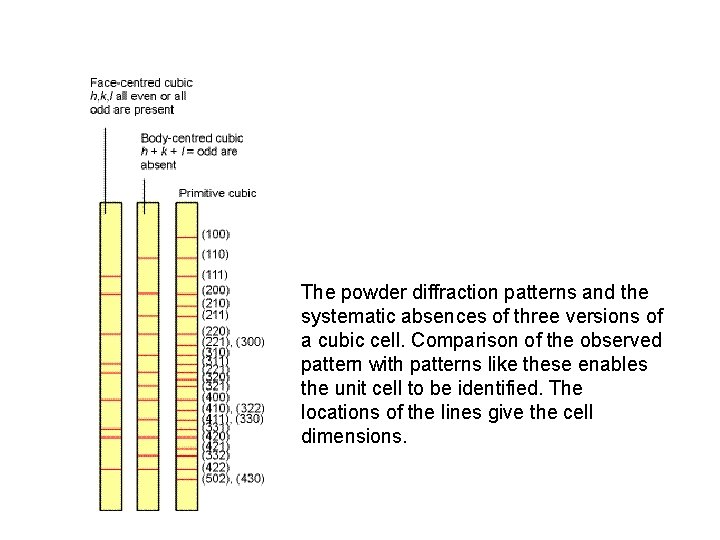
The powder diffraction patterns and the systematic absences of three versions of a cubic cell. Comparison of the observed pattern with patterns like these enables the unit cell to be identified. The locations of the lines give the cell dimensions.
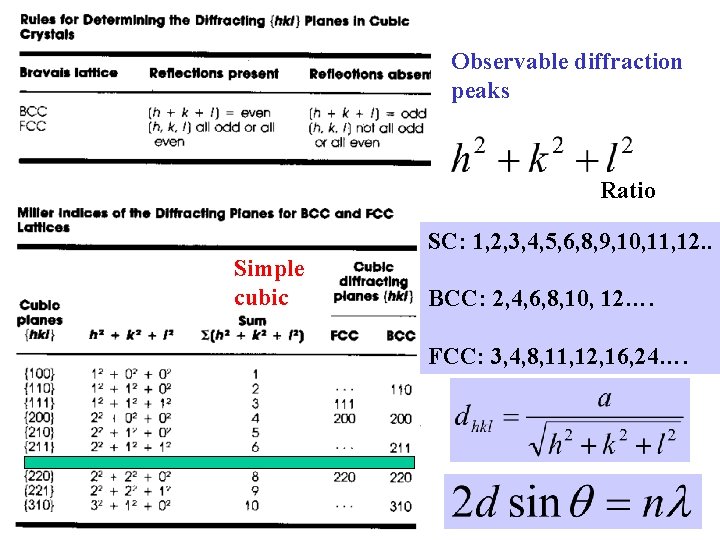
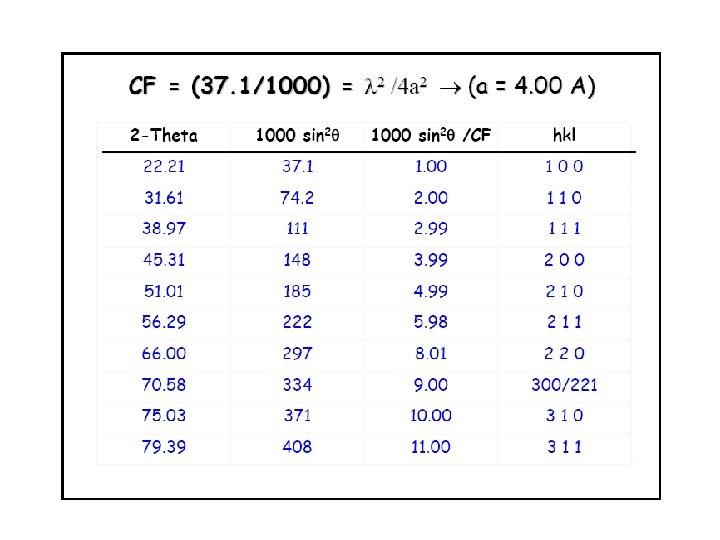
Observable diffraction peaks Ratio SC: 1, 2, 3, 4, 5, 6, 8, 9, 10, 11, 12. . Simple cubic BCC: 2, 4, 6, 8, 10, 12…. FCC: 3, 4, 8, 11, 12, 16, 24….
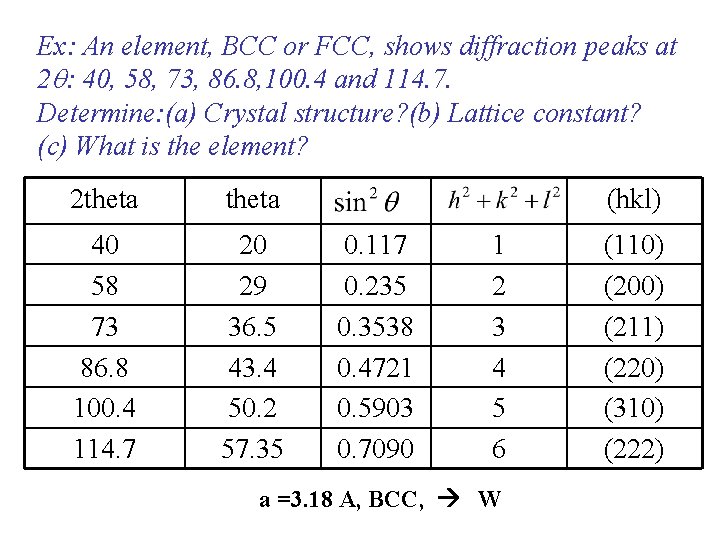
Ex: An element, BCC or FCC, shows diffraction peaks at 2 q: 40, 58, 73, 86. 8, 100. 4 and 114. 7. Determine: (a) Crystal structure? (b) Lattice constant? (c) What is the element? 2 theta 40 58 73 86. 8 100. 4 114. 7 20 29 36. 5 43. 4 50. 2 57. 35 (hkl) 0. 117 0. 235 0. 3538 0. 4721 0. 5903 0. 7090 1 2 3 4 5 6 a =3. 18 A, BCC, W (110) (200) (211) (220) (310) (222)