
Anaesthesia for ENT and dental procedures Dr S
- Slides: 13
Anaesthesia for ENT and dental procedures Dr S Spijkerman
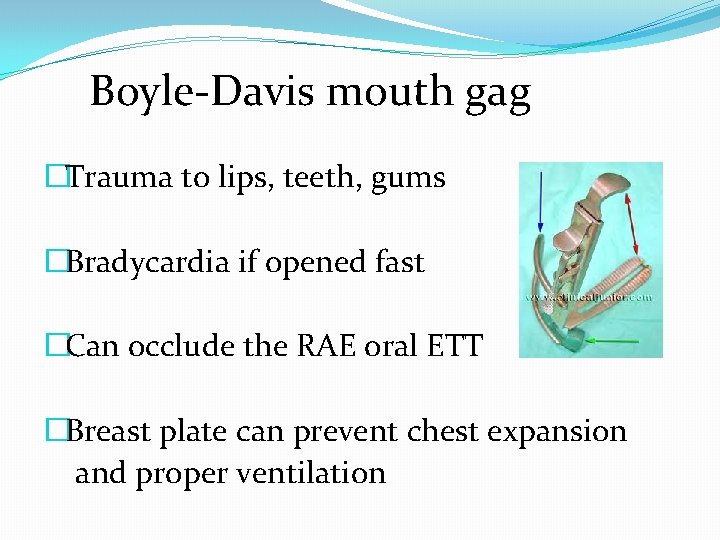
Anaesthesia for adenotonsillectomy �Airway is shared with the surgeon �Risk of complications with Boyle-Davis mouth gag �Day case surgery – needs to be awake post-operatively �Painful procedure �Risk of post-operative bleeding �Risk of post-operative nausea and vomiting
Pre-operative management �Usual NPO guidelines apply – solids: >6 h - breast milk: >4 h - clear fluids: >2 h �Pre-op evaluation: assess for obstructive sleep apnoea with pulmonary hypertension and right heart failure! �Premed: Paracetamol syrup with Tilidine drops OR Paracetamol syrup with Midazolam po
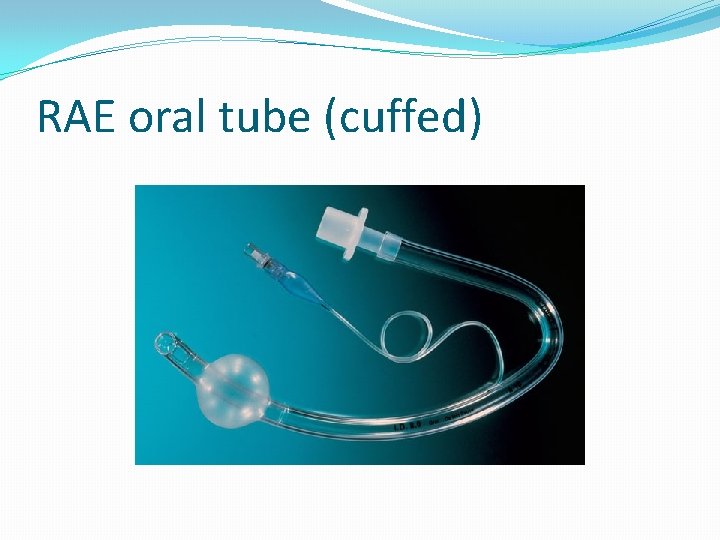
Intra-operative management �Atropine prepared (not given routinely but MUST be prepared in case of bradycardia) �Suxamethonium prepared (not given routinely but MUST be prepared in case of laryngospasm) �Inhalation induction (mostly sevoflurane) �IV access (very NB – do not start without) �Opioid (sufentanil etc) and small dose propofol �Intubate with oral RAE tube (uncuffed if <4 yr) �Throat pack �Muscle relaxants not routinely given in children
RAE oral tube (cuffed)
Boyle-Davis mouth gag �Trauma to lips, teeth, gums �Bradycardia if opened fast �Can occlude the RAE oral ETT �Breast plate can prevent chest expansion and proper ventilation
After surgery: �Turn sevoflurane down �Remove throat pack �Inspect tonsillar beds for bleeding �Extubate awake �Place in recovery position (not head down – venous congestion) �Observe for bleeding in recovery room – excessive swallowing, vomiting of blood, overt bleeding �Post-op analgesia: paracetamol, Tilidine (not NSAID’s)
Post-tonsillectomy bleeding �Classification: Primary: Bleeding within 24 h of tonsillectomy (mostly due to haemostatic problem) 2. Secondary: Bleeding after 24 h (mostly due to infection) 1. � 3 Main problems for the anaesthetist: 1. Hypovolaemia due to haemorrhage 2. Full stomach due to swallowed blood 3. Difficult airway (bleeding, swelling)
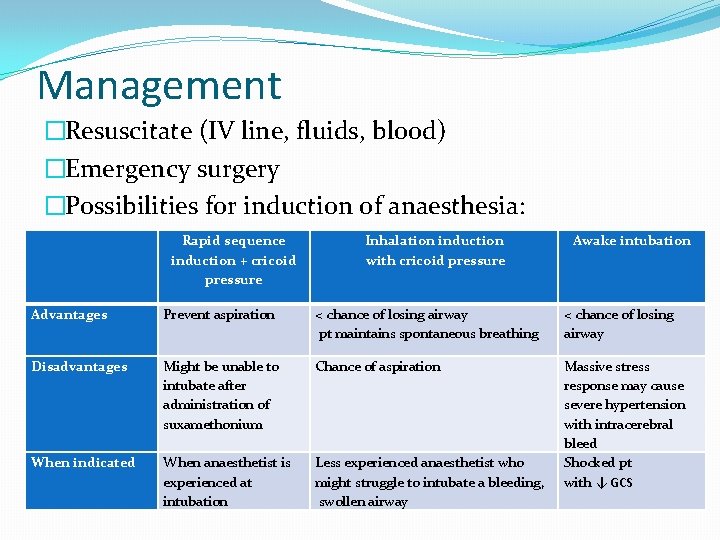
Management �Resuscitate (IV line, fluids, blood) �Emergency surgery �Possibilities for induction of anaesthesia: Rapid sequence induction + cricoid pressure Inhalation induction with cricoid pressure Awake intubation Advantages Prevent aspiration < chance of losing airway pt maintains spontaneous breathing < chance of losing airway Disadvantages Might be unable to intubate after administration of suxamethonium Chance of aspiration When indicated When anaesthetist is experienced at intubation Less experienced anaesthetist who might struggle to intubate a bleeding, swollen airway Massive stress response may cause severe hypertension with intracerebral bleed Shocked pt with ↓ GCS
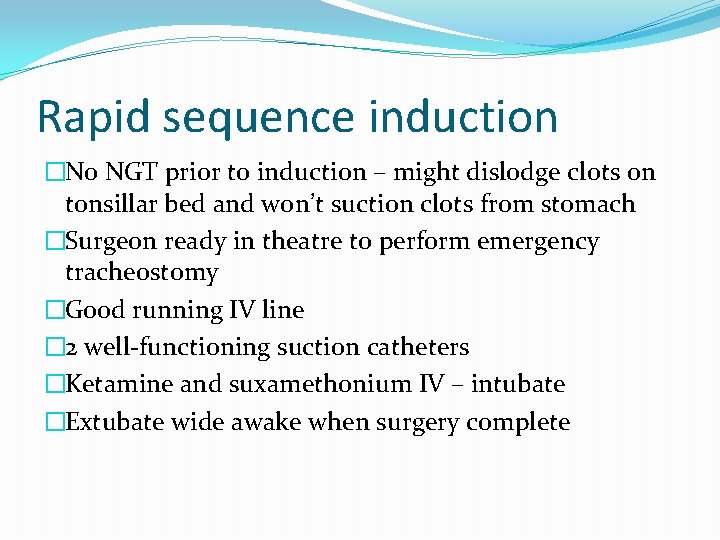
Rapid sequence induction �No NGT prior to induction – might dislodge clots on tonsillar bed and won’t suction clots from stomach �Surgeon ready in theatre to perform emergency tracheostomy �Good running IV line � 2 well-functioning suction catheters �Ketamine and suxamethonium IV – intubate �Extubate wide awake when surgery complete
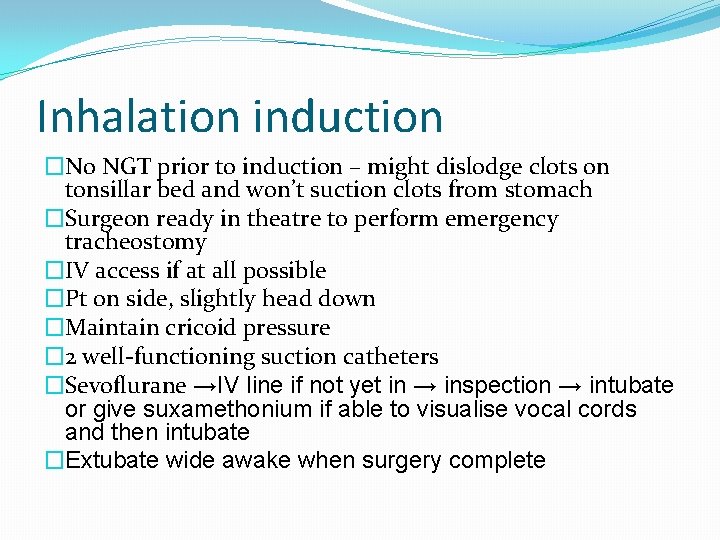
Inhalation induction �No NGT prior to induction – might dislodge clots on tonsillar bed and won’t suction clots from stomach �Surgeon ready in theatre to perform emergency tracheostomy �IV access if at all possible �Pt on side, slightly head down �Maintain cricoid pressure � 2 well-functioning suction catheters �Sevoflurane →IV line if not yet in → inspection → intubate or give suxamethonium if able to visualise vocal cords and then intubate �Extubate wide awake when surgery complete
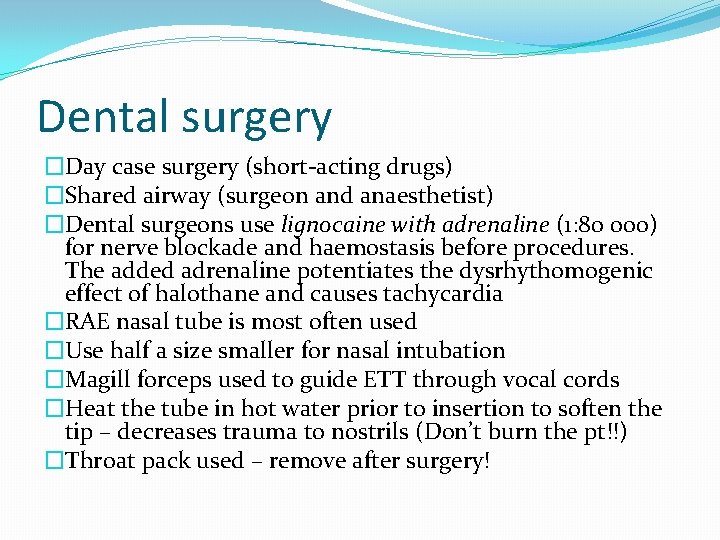
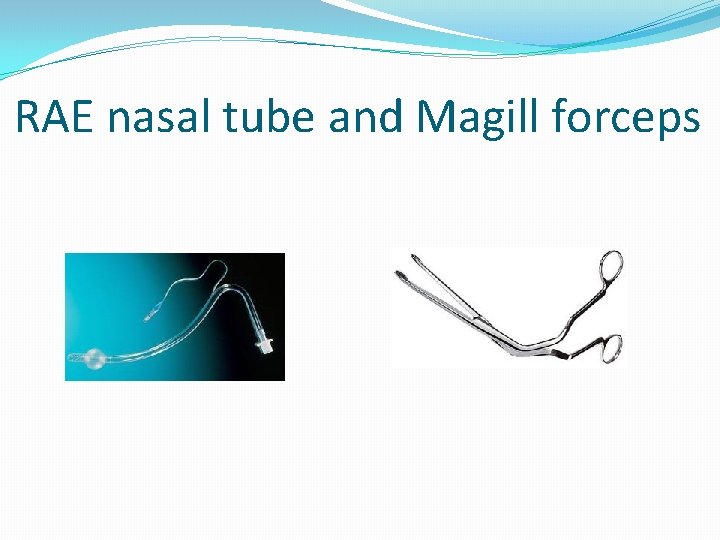
Dental surgery �Day case surgery (short-acting drugs) �Shared airway (surgeon and anaesthetist) �Dental surgeons use lignocaine with adrenaline (1: 80 000) for nerve blockade and haemostasis before procedures. The added adrenaline potentiates the dysrhythomogenic effect of halothane and causes tachycardia �RAE nasal tube is most often used �Use half a size smaller for nasal intubation �Magill forceps used to guide ETT through vocal cords �Heat the tube in hot water prior to insertion to soften the tip – decreases trauma to nostrils (Don’t burn the pt!!) �Throat pack used – remove after surgery!
RAE nasal tube and Magill forceps