
ANAEROBIC RESPIRATION Use a model to illustrate that
ANAEROBIC RESPIRATION Use a model to illustrate that cellular respiration is a chemical process whereby the bonds of food molecules and oxygen molecules are broken and the bonds in new compounds are formed resulting in a net transfer of energy
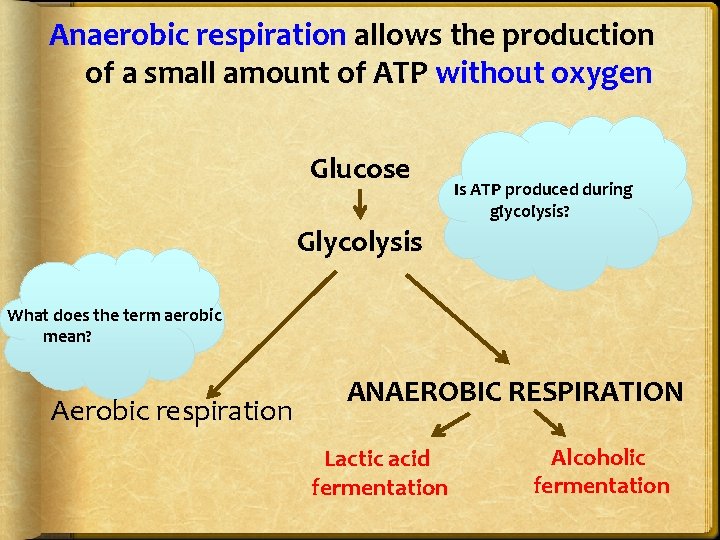
Anaerobic respiration allows the production of a small amount of ATP without oxygen Glucose Is ATP produced during glycolysis? Glycolysis What does the term aerobic mean? Aerobic respiration ANAEROBIC RESPIRATION Lactic acid fermentation Alcoholic fermentation
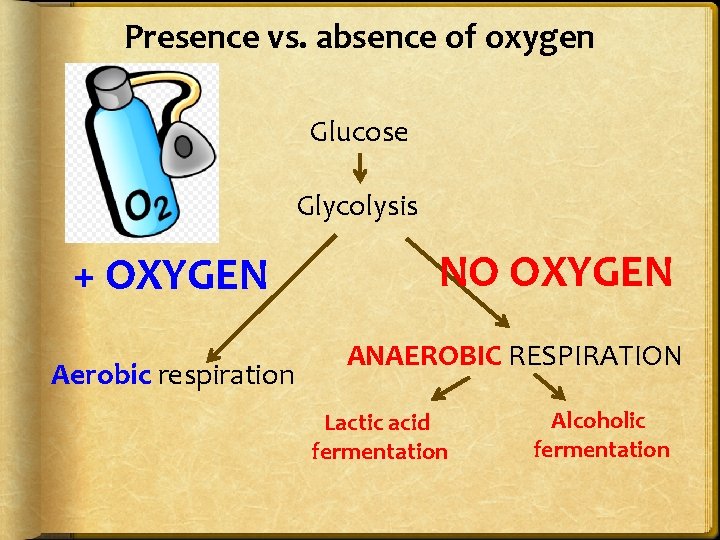
Presence vs. absence of oxygen Glucose Glycolysis + OXYGEN Aerobic respiration NO OXYGEN ANAEROBIC RESPIRATION Lactic acid fermentation Alcoholic fermentation
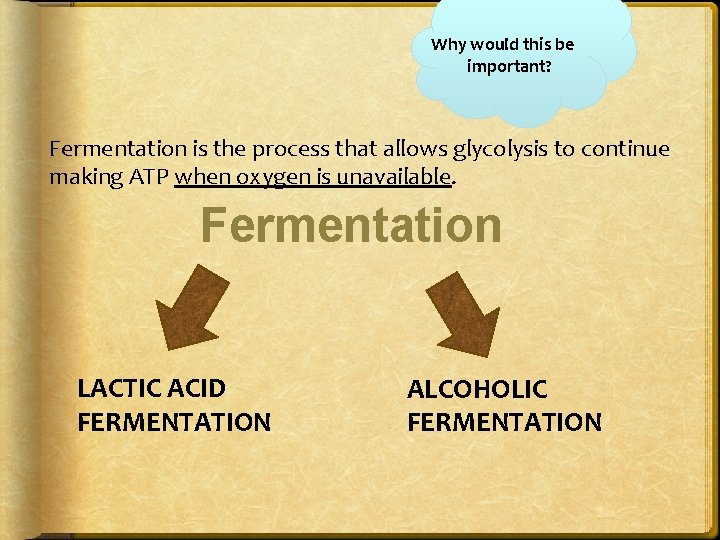
Why would this be important? Fermentation is the process that allows glycolysis to continue making ATP when oxygen is unavailable. Fermentation LACTIC ACID FERMENTATION ALCOHOLIC FERMENTATION
Lactic acid fermentation
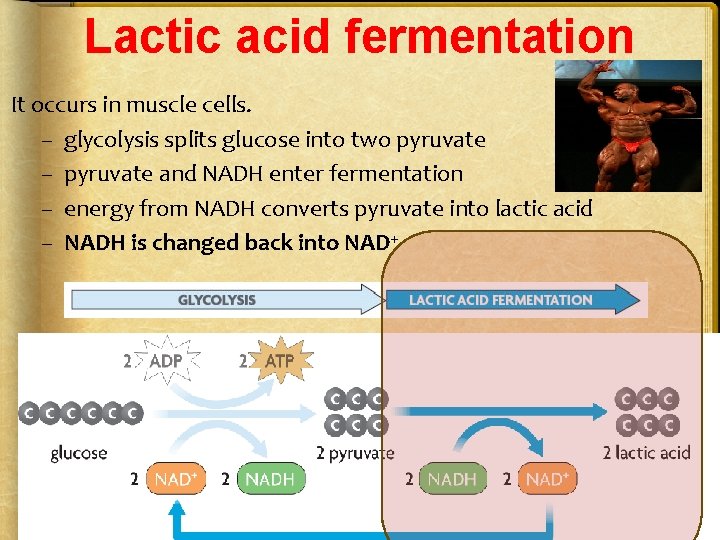
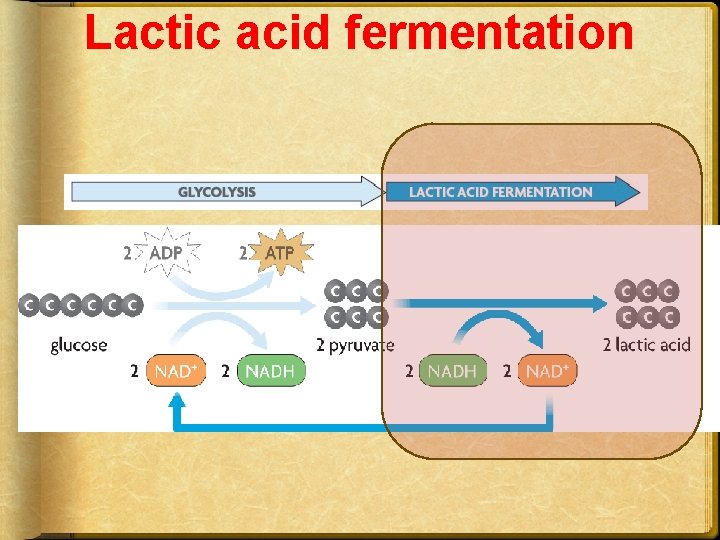
Lactic acid fermentation It occurs in muscle cells. – glycolysis splits glucose into two pyruvate – pyruvate and NADH enter fermentation – energy from NADH converts pyruvate into lactic acid – NADH is changed back into NAD+
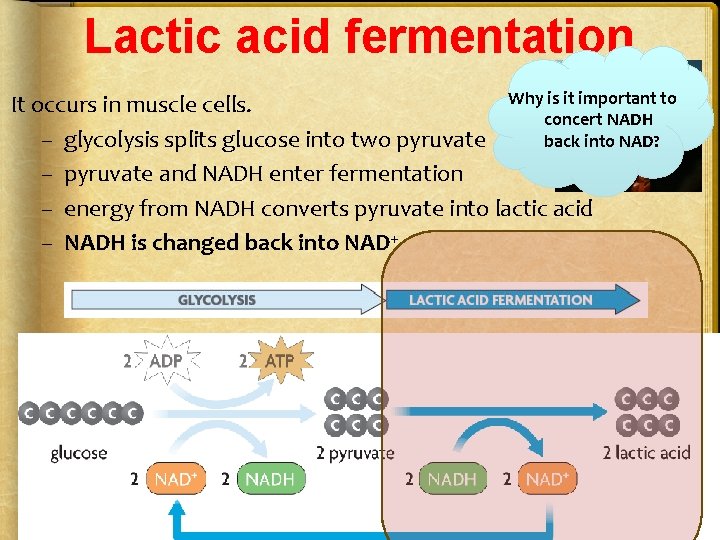
Lactic acid fermentation Why is it important to It occurs in muscle cells. concert NADH – glycolysis splits glucose into two pyruvate back into NAD? – pyruvate and NADH enter fermentation – energy from NADH converts pyruvate into lactic acid – NADH is changed back into NAD+
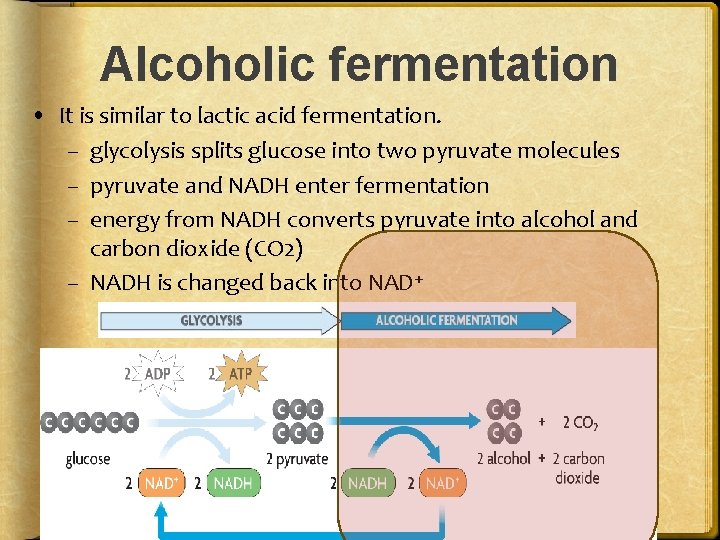
Alcoholic fermentation • It is similar to lactic acid fermentation. – glycolysis splits glucose into two pyruvate molecules – pyruvate and NADH enter fermentation – energy from NADH converts pyruvate into alcohol and carbon dioxide (CO 2) – NADH is changed back into NAD+
Alcoholic Fermentation Some organisms carry out alcoholic fermentation. This was discovered by Louis Pasteur in his study of the chemistry of wines. Yeasts break down the sugars in the juice to pyruvate by glycolysis, then the pyruvate is dismantled to give CO 2 and ETHANOL. If the fermentation continues until all the sugar is used, a dry wine is produced. If fermentation is stopped before all the sugar is used, then a sweet wine is produced.
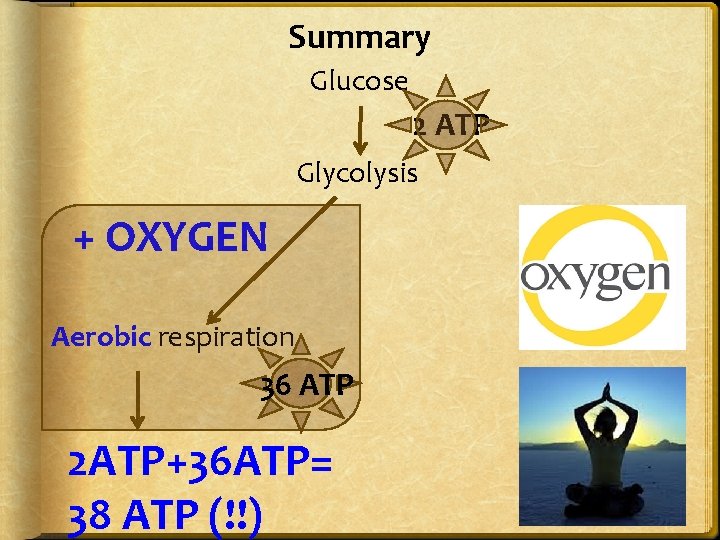
Summary Glucose 2 ATP Glycolysis + OXYGEN Aerobic respiration 36 ATP 2 ATP+36 ATP= 38 ATP (!!)
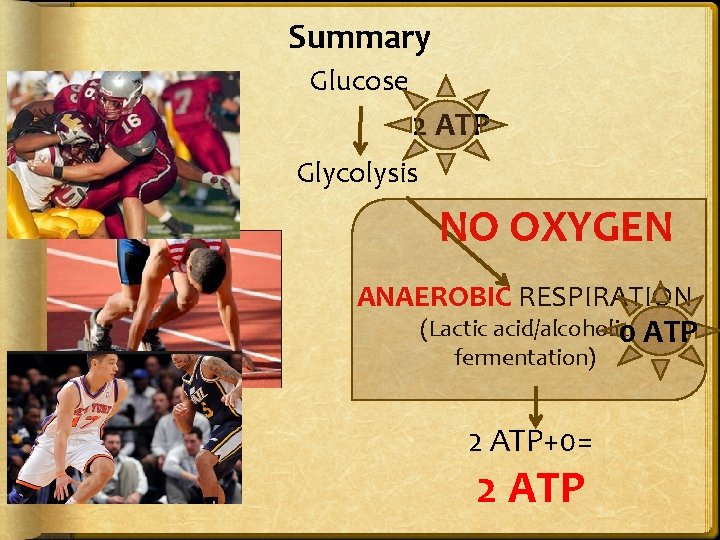
Summary Glucose 2 ATP Glycolysis NO OXYGEN ANAEROBIC RESPIRATION (Lactic acid/alcoholic 0 ATP fermentation) 2 ATP+0= 2 ATP
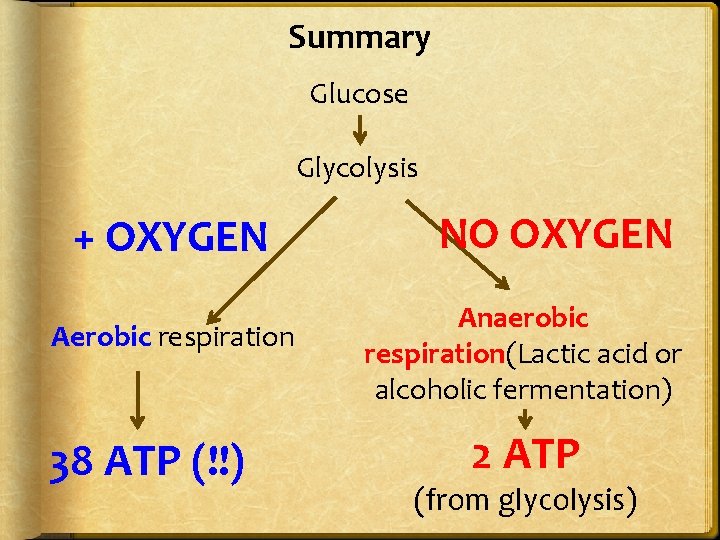
Summary Glucose Glycolysis + OXYGEN Aerobic respiration 38 ATP (!!) NO OXYGEN Anaerobic respiration(Lactic acid or alcoholic fermentation) 2 ATP (from glycolysis)
- Slides: 12