
Anaerobic digestion Azra Vajzovic April 29 th 2008
“Anaerobic digestion” Azra Vajzovic April 29 th, 2008
Outline n Anaerobic digestion n History n Process n Applications n Examples
Anaerobic digestion n Process in which microorganisms break down biodegradable material in the absence of oxygen producing biogas. n Soils n Streams n Oceans n Wastewater sludge and organic waste treatment
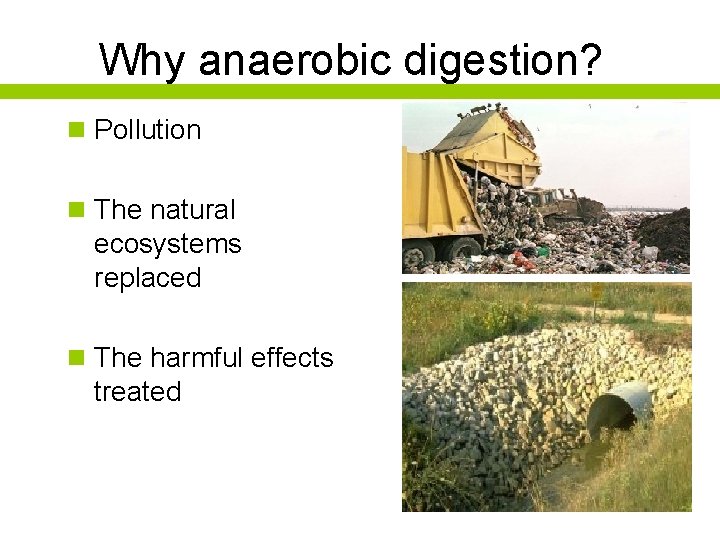
Why anaerobic digestion? n Pollution n The natural ecosystems replaced n The harmful effects treated
History • XVI-R. Boyle and S. Hale, sediments • 1859 -1 st anaerobic digester in Bombay • 1930 s-academic recognition in the discovery of anaerobic bacteria • 1930 -40 s optimization of growth conditions for methanogenic bacteria (Germany & France-manure) • 1970’s reserves of fossil fuels finite
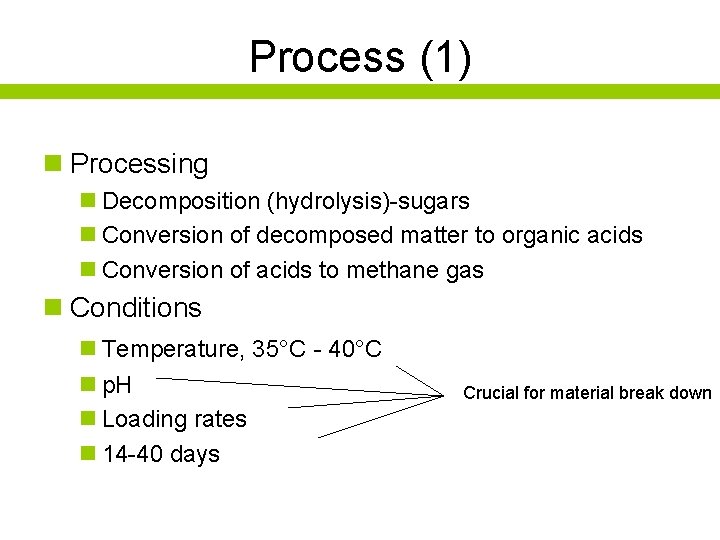
Process (1) n Processing n Decomposition (hydrolysis)-sugars n Conversion of decomposed matter to organic acids n Conversion of acids to methane gas n Conditions n Temperature, 35°C - 40°C n p. H n Loading rates n 14 -40 days Crucial for material break down
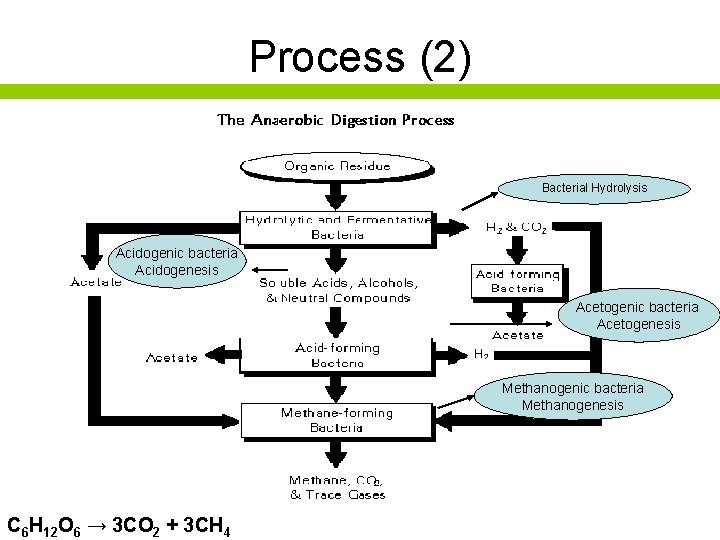
Process (2) Bacterial Hydrolysis Acidogenic bacteria Acidogenesis Acetogenic bacteria Acetogenesis Methanogenic bacteria Methanogenesis C 6 H 12 O 6 → 3 CO 2 + 3 CH 4
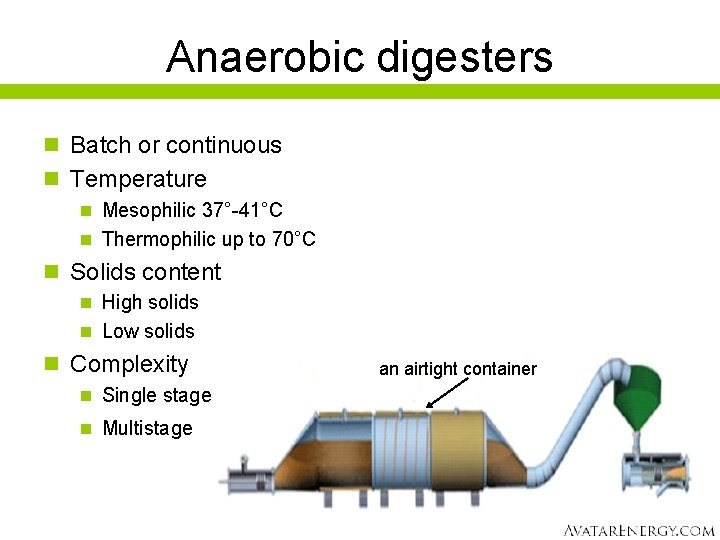
Anaerobic digesters n Batch or continuous n Temperature n Mesophilic 37°-41°C n Thermophilic up to 70°C n Solids content n High solids n Low solids n Complexity n Single stage n Multistage an airtight container
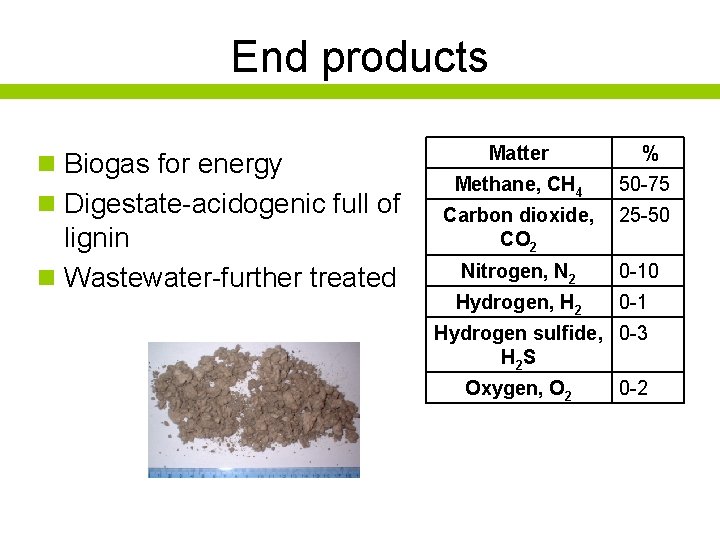
End products n Biogas for energy n Digestate-acidogenic full of lignin n Wastewater-further treated Matter % Methane, CH 4 50 -75 Carbon dioxide, CO 2 25 -50 Nitrogen, N 2 0 -10 Hydrogen, H 2 0 -1 Hydrogen sulfide, 0 -3 H 2 S Oxygen, O 2 0 -2
Use of biogas n Heat/electricity with a microturbine n Fuel for cars, buses, and trains-replacing fossil fuels n Reducing methane emission from landfills n In natural gas grid n Digestate used as fertilizer n Smell - reduced up to 80% n Attract subsidies/renewable energy
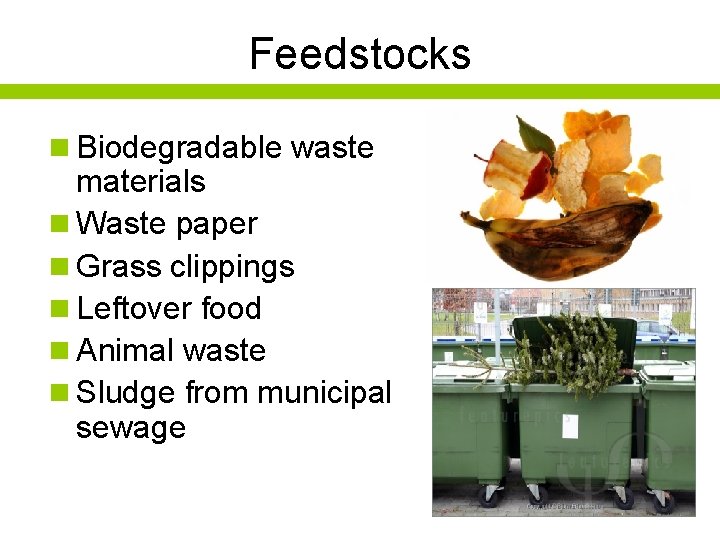
Feedstocks n Biodegradable waste materials n Waste paper n Grass clippings n Leftover food n Animal waste n Sludge from municipal sewage
Estimated Cost n For a 1, 500 cow dairy n Biogas ~60% methane n Estimated Costs per 1, 000 ft 3 biomethane n Capital Cost ~$3. 10 n Operating Cost ~$0. 60
California - Royal Farms No. 1 • From waste to energy • Fuels a 70 -100 kilowatt (k. W) enginegenerator, able to meet electricity and heat monthly demand.
Sweden-first biogas train n Run 600 km (372 miles), reached 130 km/h (80 mph) n Sweden's east coast between Linkoeping and Vaestervik. (September 2005) n 54 passengers, two biogas bus engines organic sludge from farm n 1 cow » about 4 km (2. 5 miles) on the train n Sweden has 779 biogas buses The biogas train might eventually replace diesel or electric trains
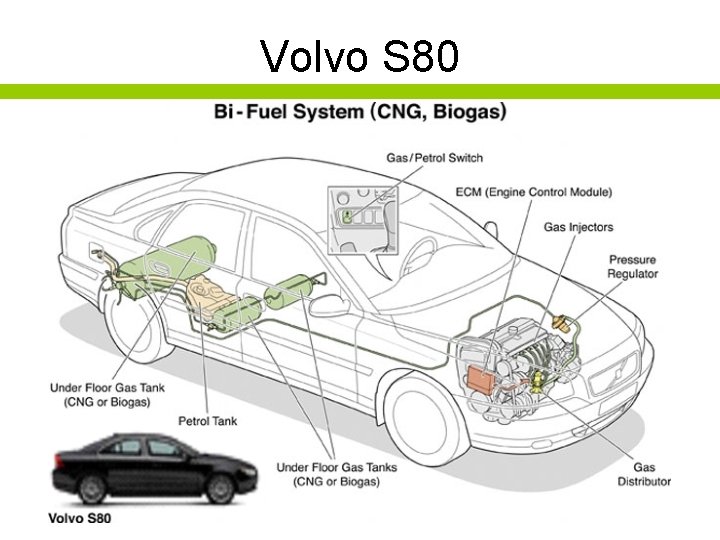
Volvo S 80
Pros and cons of biomethane fuel Pros: n An alternative to fossil fuel n Sourced from waste n Reduces greenhouse gas n Clean emissions n Good fuel efficiency n Better performance than liquid fuels n Higher octane rating Cons: n Infrastructure is nonexistent n Requires cars to be converted n No government support
References § http: //news. bbc. co. uk/2/hi/europe/4112926. stm § http: //en. wikipedia. org/wiki/Anaerobic_digestion § http: //www. consumerenergycenter. org/renewables/biom ass/digester_landfill. html § http: //www. avatarenergy. com/index. php? option=com_fro ntpage
- Slides: 17