
Anaerobic Codigestion of Biomass for Methane Production Recent
Anaerobic Co-digestion of Biomass for Methane Production : Recent Research Achievements Wei Wu CE 521
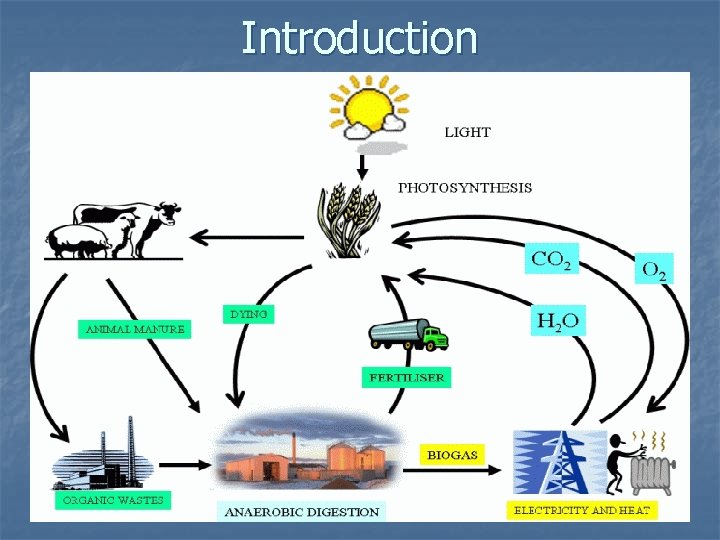
Introduction
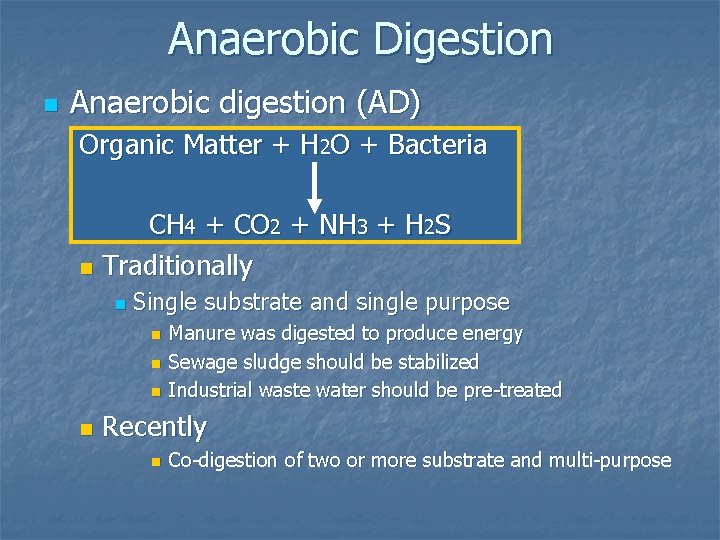
Anaerobic Digestion n Anaerobic digestion (AD) Organic Matter + H 2 O + Bacteria CH 4 + CO 2 + NH 3 + H 2 S n Traditionally n Single substrate and single purpose n n Manure was digested to produce energy Sewage sludge should be stabilized Industrial waste water should be pre-treated Recently n Co-digestion of two or more substrate and multi-purpose
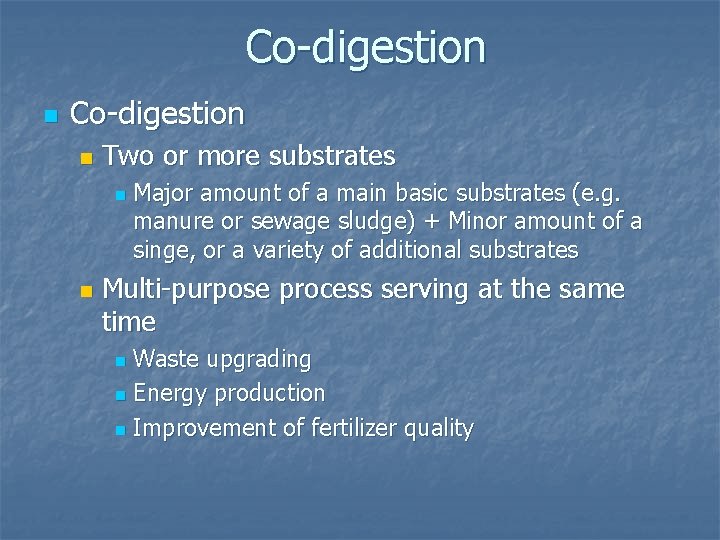
Co-digestion n Two or more substrates n n Major amount of a main basic substrates (e. g. manure or sewage sludge) + Minor amount of a singe, or a variety of additional substrates Multi-purpose process serving at the same time Waste upgrading n Energy production n Improvement of fertilizer quality n
Co-digestion—Cont. n Factors impact the production of biogas n n n n n The type of waste being digested Its concentration Its temperature The presence of toxic materials The p. H and alkalinity The hydraulic retention time The solids retention time The ration of food to microorganism The rate of digester loading The rate at which toxic end products of digestion are removed
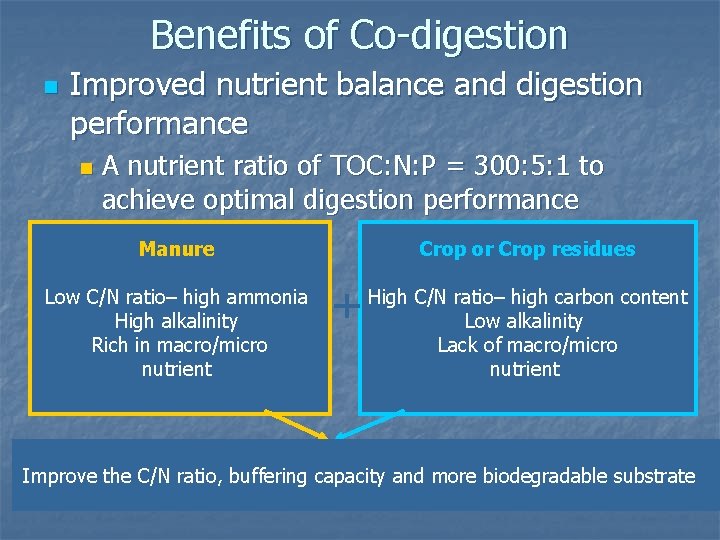
Benefits of Co-digestion n Improved nutrient balance and digestion performance n A nutrient ratio of TOC: N: P = 300: 5: 1 to achieve optimal digestion performance Manure Crop or Crop residues Low C/N ratio– high ammonia High alkalinity Rich in macro/micro nutrient High C/N ratio– high carbon content Low alkalinity Lack of macro/micro nutrient Improve the C/N ratio, buffering capacity and more biodegradable substrate
Benefits of Co-digestion n Effective utilization of digester volumes n Help to utilize the availability of free capacities n n n Co- digestion of energy crops and manure resulted in the doubling of the plant capacity from 500 k. W to 1000 k. W retaining the digester volume (Lindorfer et al. , 2007) The wide distribution of sewage treatment plants minimizes transportation costs Equalization of particulate, floating, settling, acidifying etc. wastes, through dilution by manure
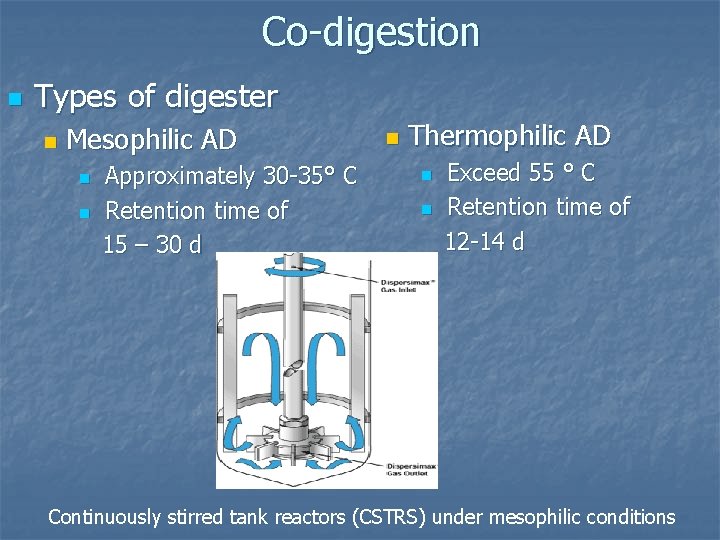
Co-digestion n Types of digester n Mesophilic AD n n Approximately 30 -35° C Retention time of 15 – 30 d n Thermophilic AD n n Exceed 55 ° C Retention time of 12 -14 d Continuously stirred tank reactors (CSTRS) under mesophilic conditions
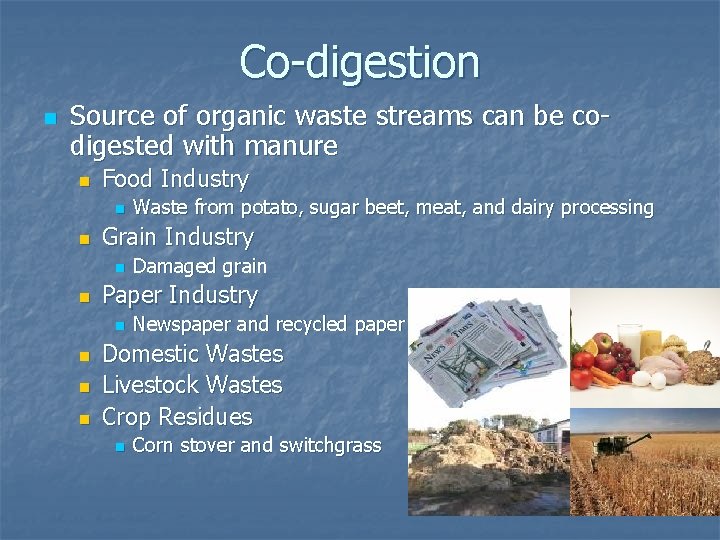
Co-digestion n Source of organic waste streams can be codigested with manure n Food Industry n n Grain Industry n n Damaged grain Paper Industry n n Waste from potato, sugar beet, meat, and dairy processing Newspaper and recycled paper Domestic Wastes Livestock Wastes Crop Residues n Corn stover and switchgrass
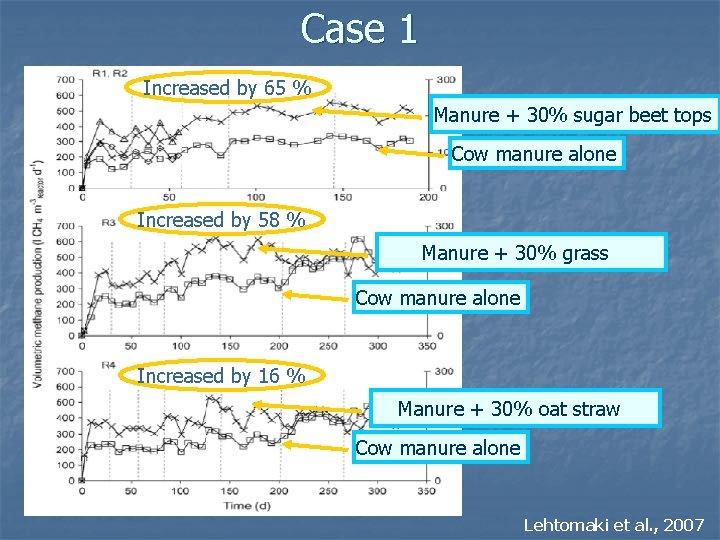
Case 1 Increased by 65 % Manure + 30% sugar beet tops Cow manure alone Increased by 58 % Manure + 30% grass Cow manure alone Increased by 16 % Manure + 30% oat straw Cow manure alone Lehtomaki et al. , 2007
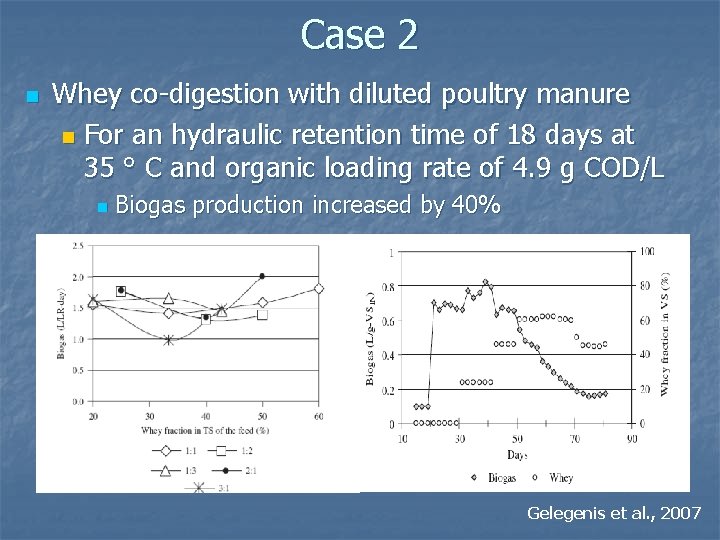
Case 2 n Whey co-digestion with diluted poultry manure n For an hydraulic retention time of 18 days at 35 ° C and organic loading rate of 4. 9 g COD/L n Biogas production increased by 40% Gelegenis et al. , 2007
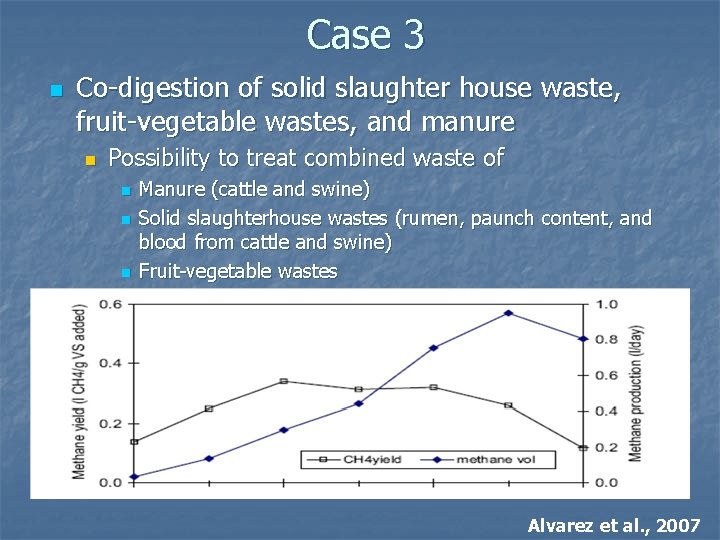
Case 3 n Co-digestion of solid slaughter house waste, fruit-vegetable wastes, and manure n Possibility to treat combined waste of n n n Manure (cattle and swine) Solid slaughterhouse wastes (rumen, paunch content, and blood from cattle and swine) Fruit-vegetable wastes Alvarez et al. , 2007
Drawbacks of Co-digestion n n Increased digester effluent chemical oxygen demand (COD) Additional pretreatment requirements Increased mixing requirements Wastewater treatment requirements High utilization degree required
Conclusion n Co-digestion offers several possible ecological, technological, and economical advantages There is very limited research, specifically in the U. S. , that characterizes the digestibility of a number of the waste streams The potential economic impact of fully utilizing alternative waste streams with AD of manure seems to be great, but economic analysis must be done to quantify this information

- Slides: 15