
AN UPDATE ON SEPSIS S Dr Ruth Thomas





- Slides: 81
AN UPDATE ON SEPSIS S Dr Ruth Thomas Consultant in Anaesthetics and ICM Clinical Lead for Sepsis, DCH
CONTENTS Why is sepsis important? The changing face of sepsis The challenges Sepsis-3 Management of sepsis in primary care Sepsis in DCH Conclusion
SEPSIS IS. . . A time-critical condition that can lead to organ damage, multiorgan failure and death. It is caused by the body's own dysregulated immune response to an infection.
WHY IS IT IMPORTANT? 150 000 hospital admissions per year equivalent to 600 cases in Dorset County Hospital per year if a patient has sepsis, chance of dying 30% (5 x STEMI or stroke) the incidence is rising (10% per year)
ECONOMIC BURDEN 70% of patients with sepsis need HDU or ICU Average Annual cost for critical care bed: £ 1500/day cost to NHS: £ 2. 5 billion
THE CHANGING FACE OF SEPSIS…
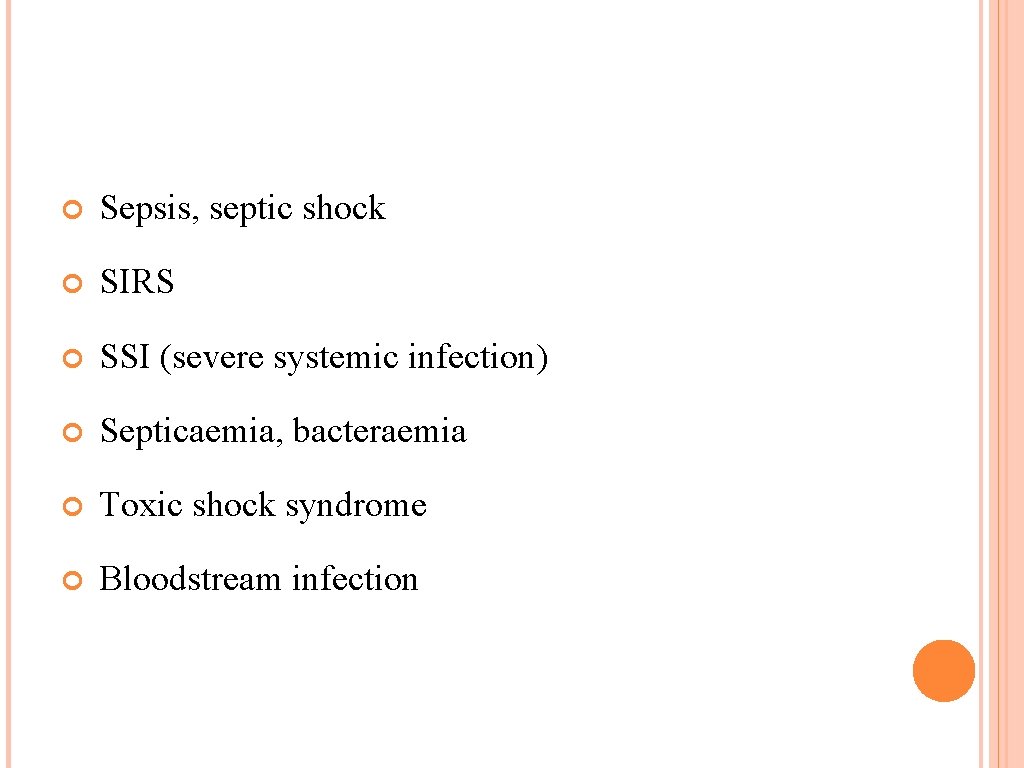
Sepsis, septic shock SIRS SSI (severe systemic infection) Septicaemia, bacteraemia Toxic shock syndrome Bloodstream infection
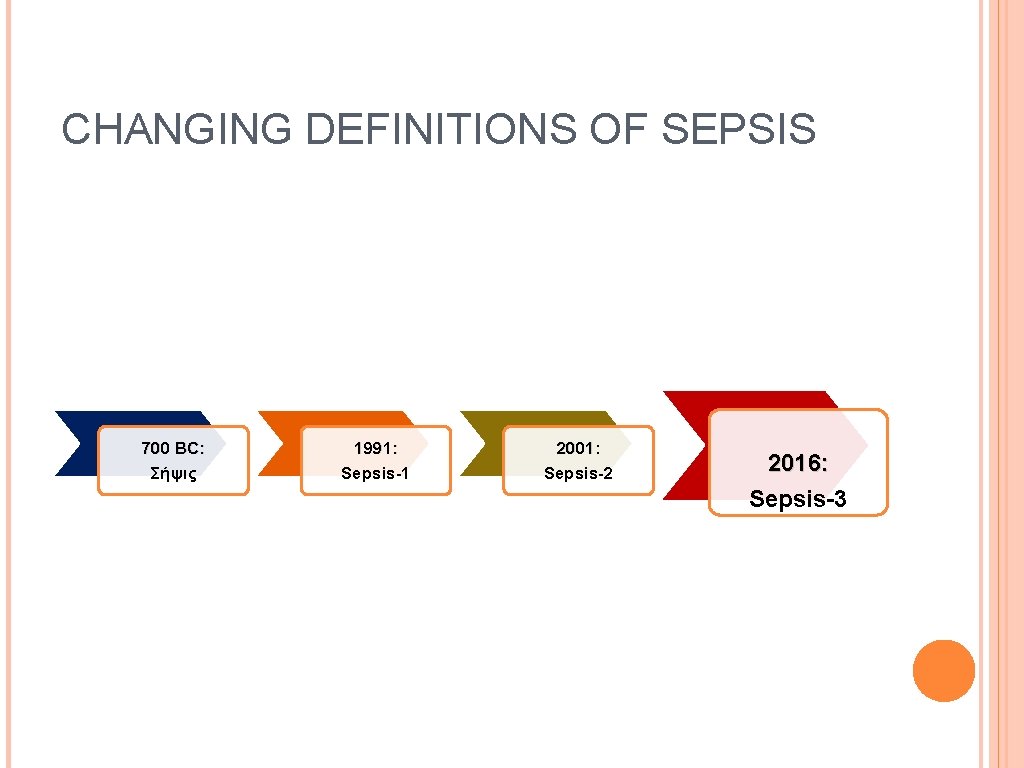
CHANGING DEFINITIONS OF SEPSIS 700 BC: Σήψις 1991: Sepsis-1 2001: Sepsis-2 2016: Sepsis-3
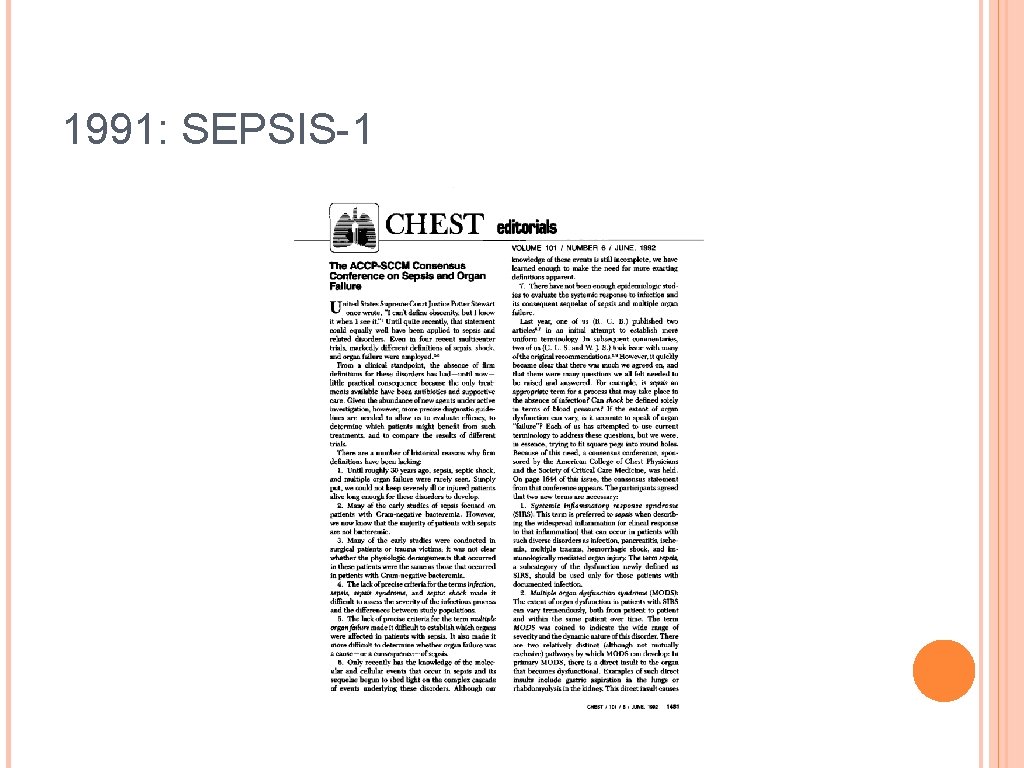
1991: SEPSIS-1
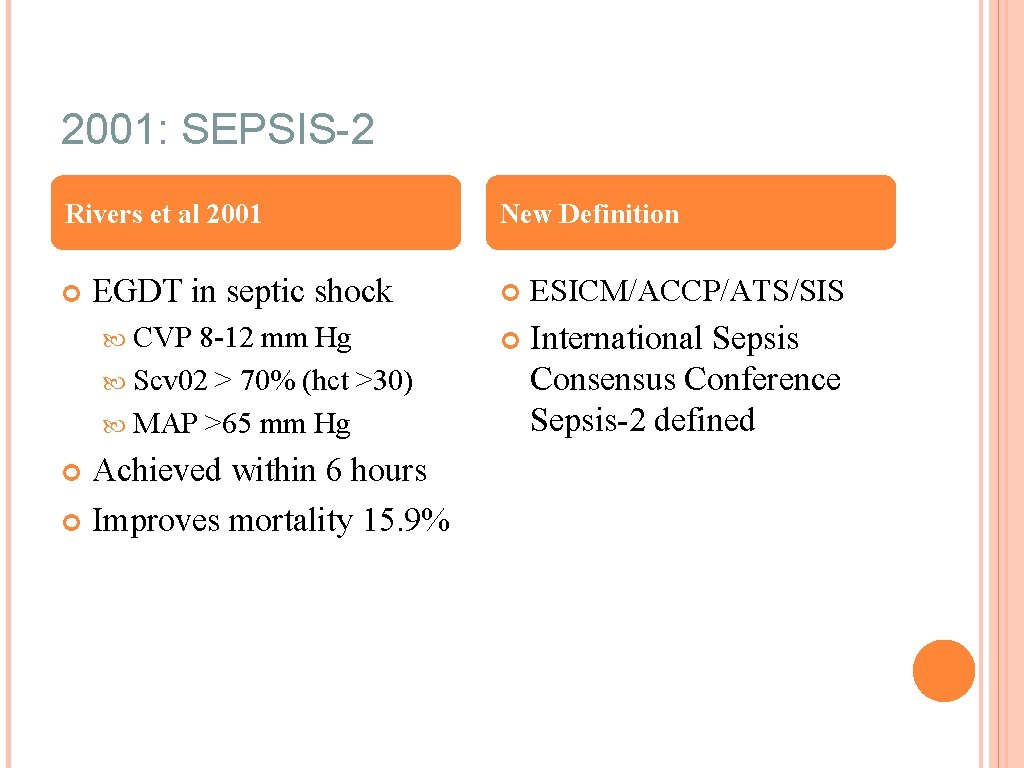
2001: SEPSIS-2 Rivers et al 2001 EGDT in septic shock CVP 8 -12 mm Hg Scv 02 > 70% (hct >30) MAP >65 mm Hg Achieved within 6 hours Improves mortality 15. 9% New Definition ESICM/ACCP/ATS/SIS International Sepsis Consensus Conference Sepsis-2 defined
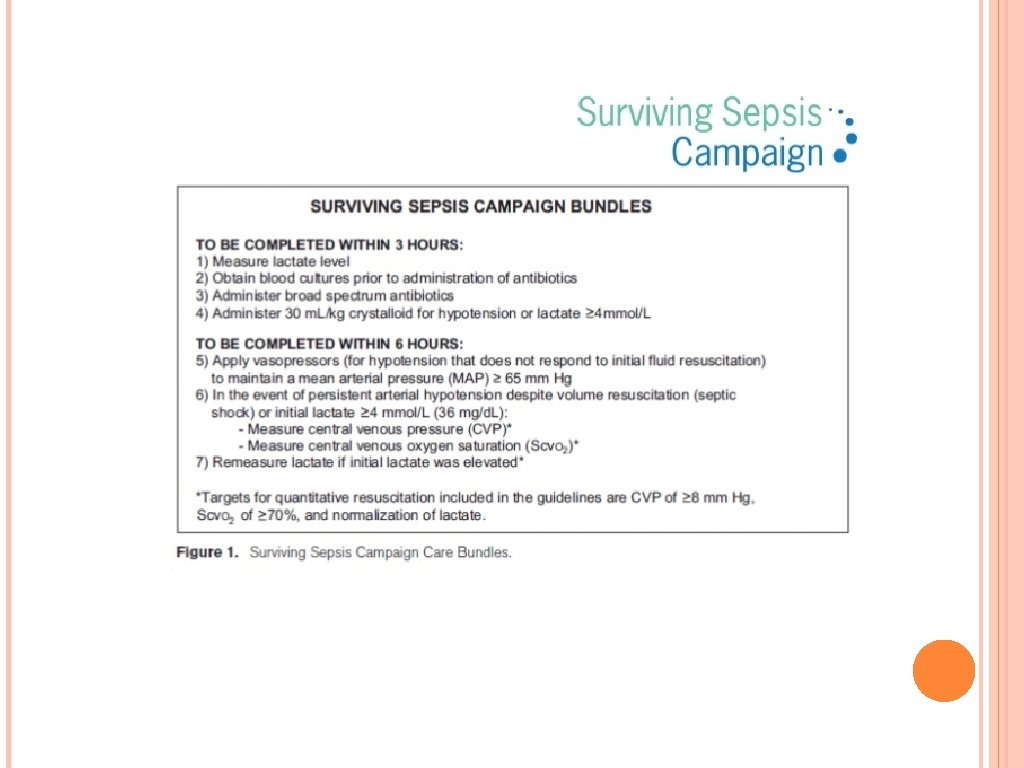
2004: SURVIVING SEPSIS CAMPAIGN PUBLISHED
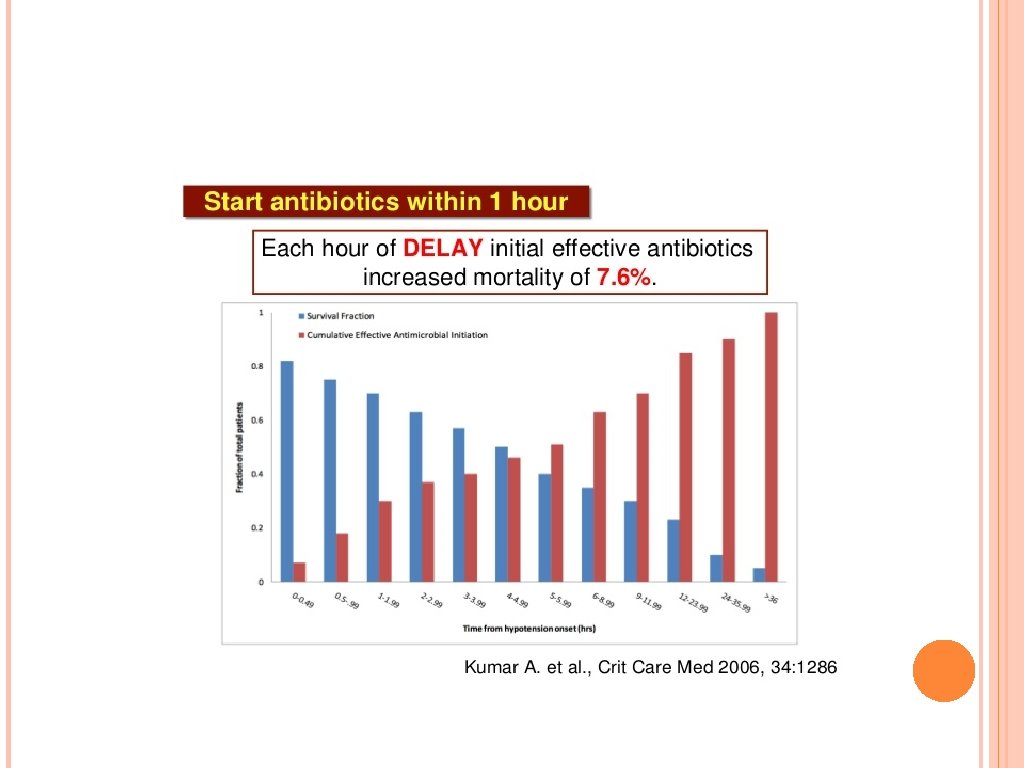
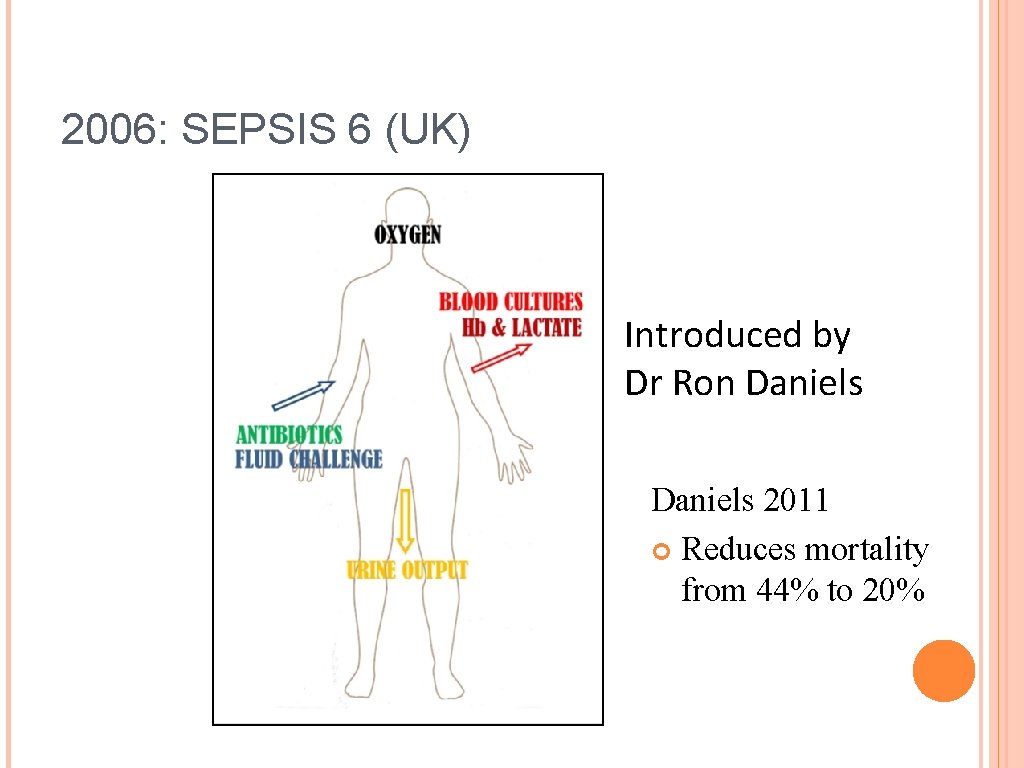
2006: SEPSIS 6 (UK) Introduced by Dr Ron Daniels 2011 Reduces mortality from 44% to 20%
2012
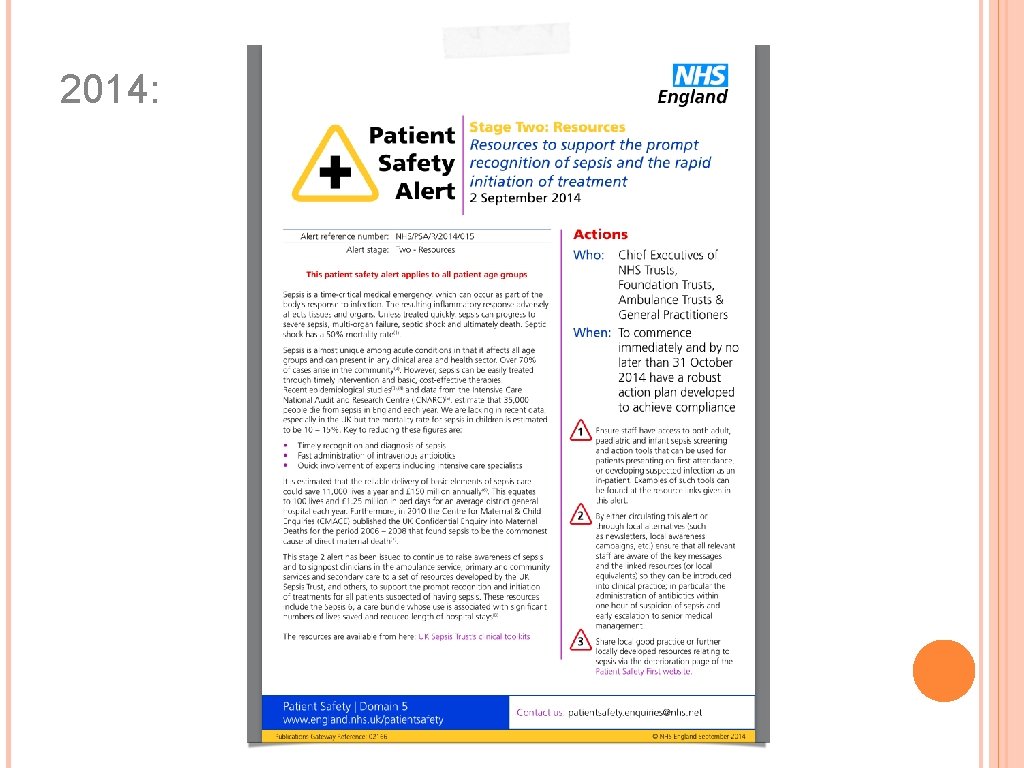
2014:
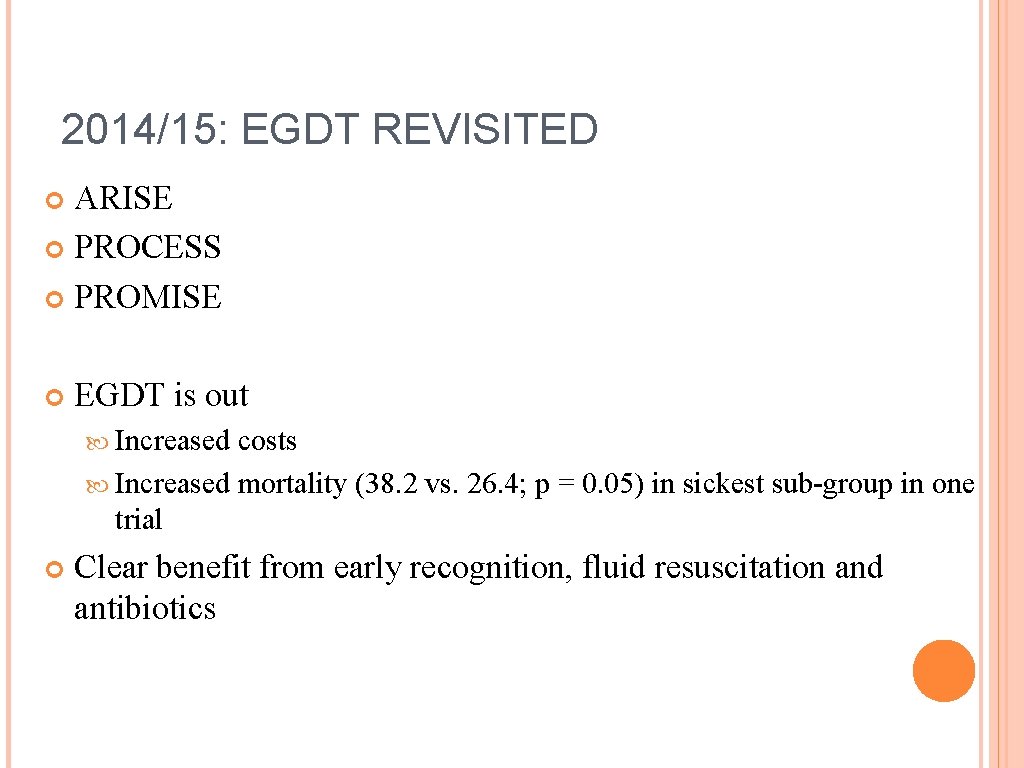
2014/15: EGDT REVISITED ARISE PROCESS PROMISE EGDT is out Increased costs Increased mortality (38. 2 vs. 26. 4; p = 0. 05) in sickest sub-group in one trial Clear benefit from early recognition, fluid resuscitation and antibiotics
THE CHALLENGES (AND THE REASONS BEHIND MULTIPLE CHANGES IN DEFINITIONS)
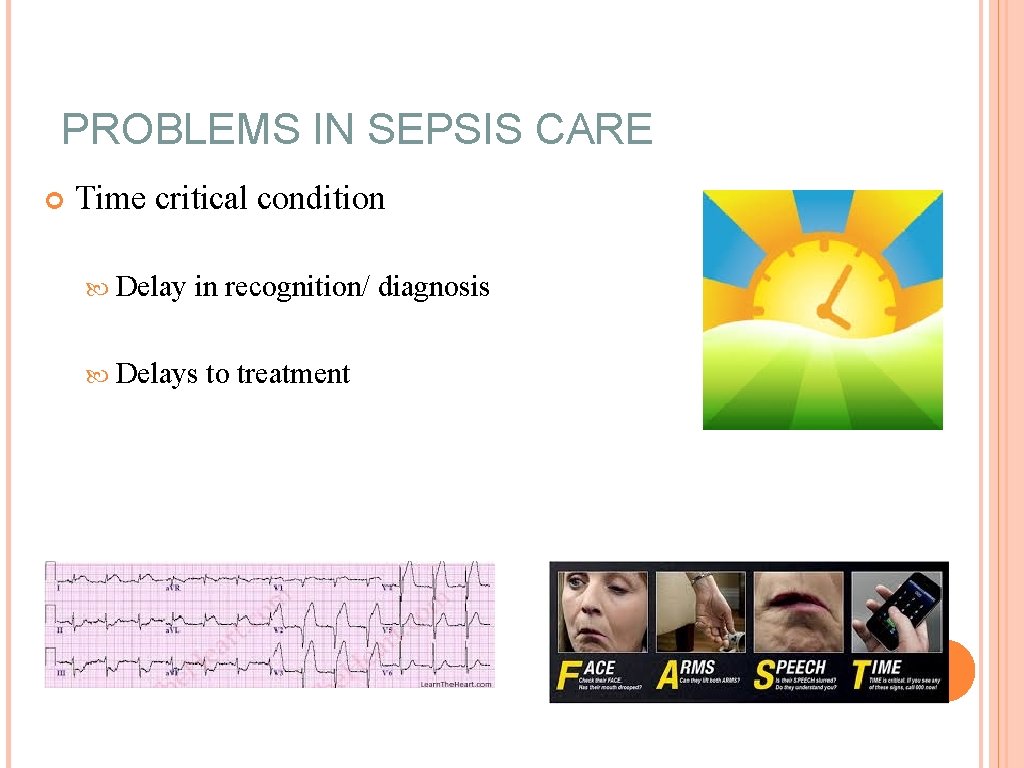
PROBLEMS IN SEPSIS CARE Time critical condition Delay in recognition/ diagnosis Delays to treatment
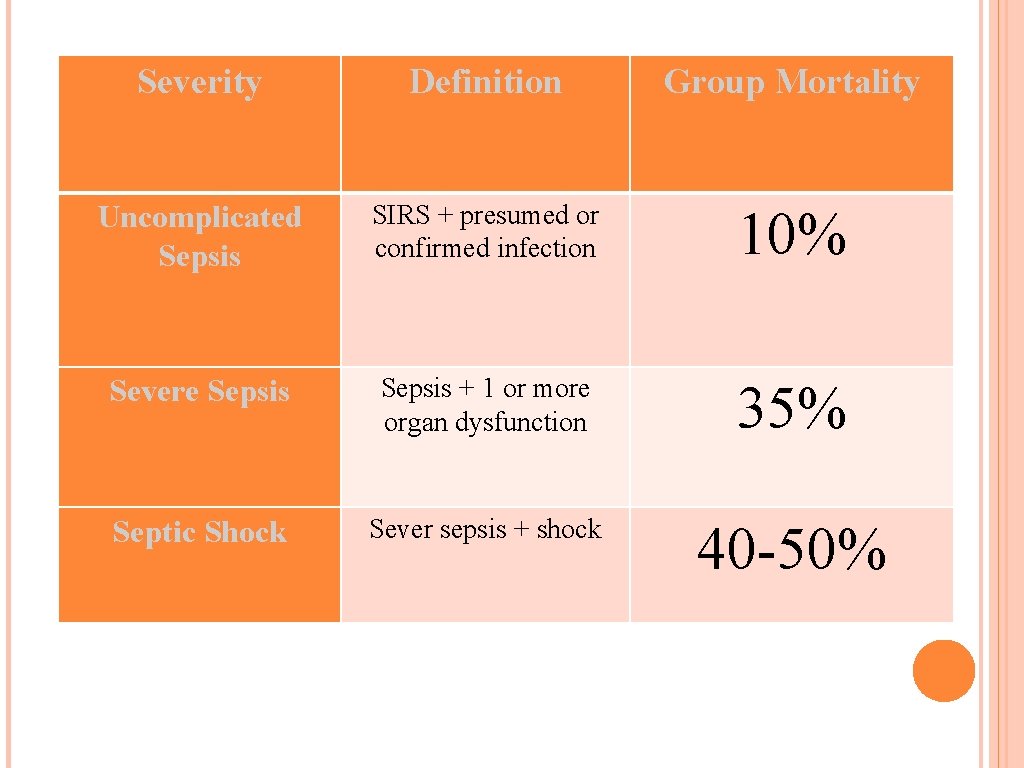
Severity Definition Group Mortality Uncomplicated Sepsis SIRS + presumed or confirmed infection 10% Severe Sepsis + 1 or more organ dysfunction 35% Septic Shock Sever sepsis + shock 40 -50%
RECOGNISING…
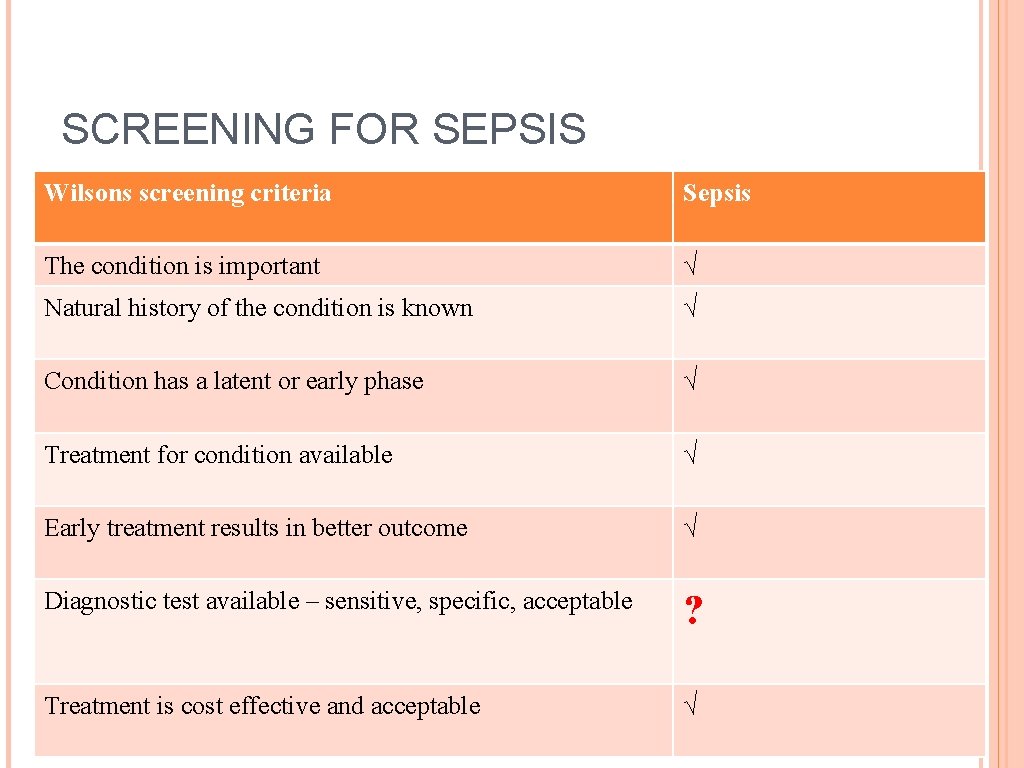
SCREENING FOR SEPSIS Wilsons screening criteria Sepsis The condition is important √ Natural history of the condition is known √ Condition has a latent or early phase √ Treatment for condition available √ Early treatment results in better outcome √ Diagnostic test available – sensitive, specific, acceptable ? Treatment is cost effective and acceptable √
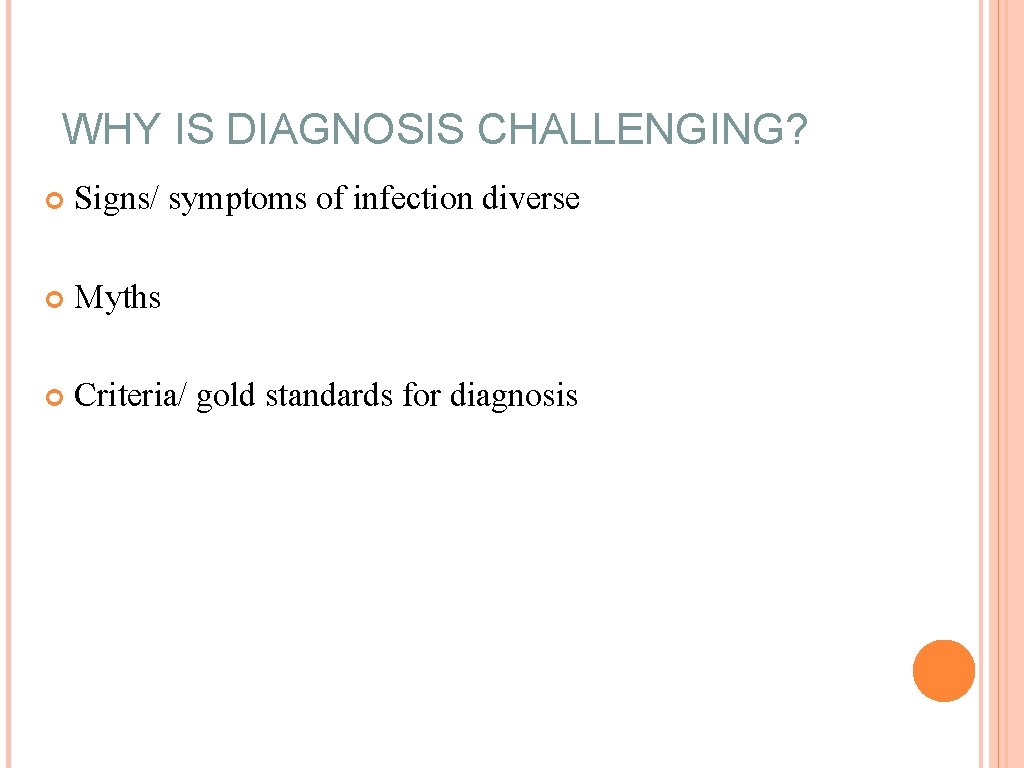
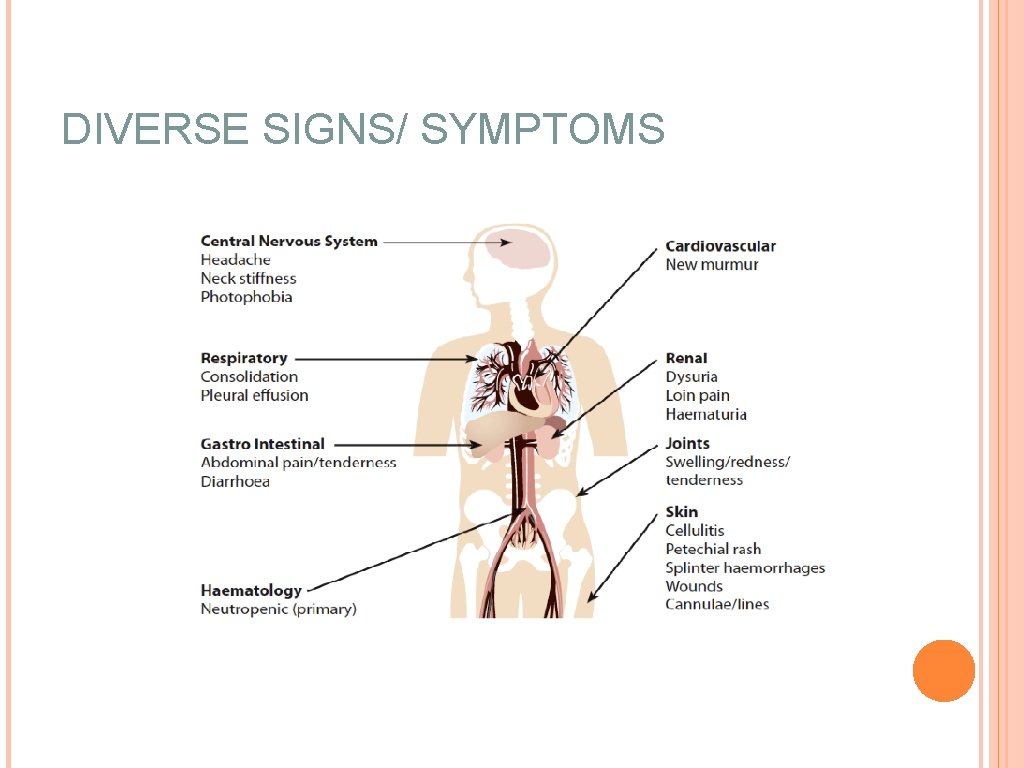
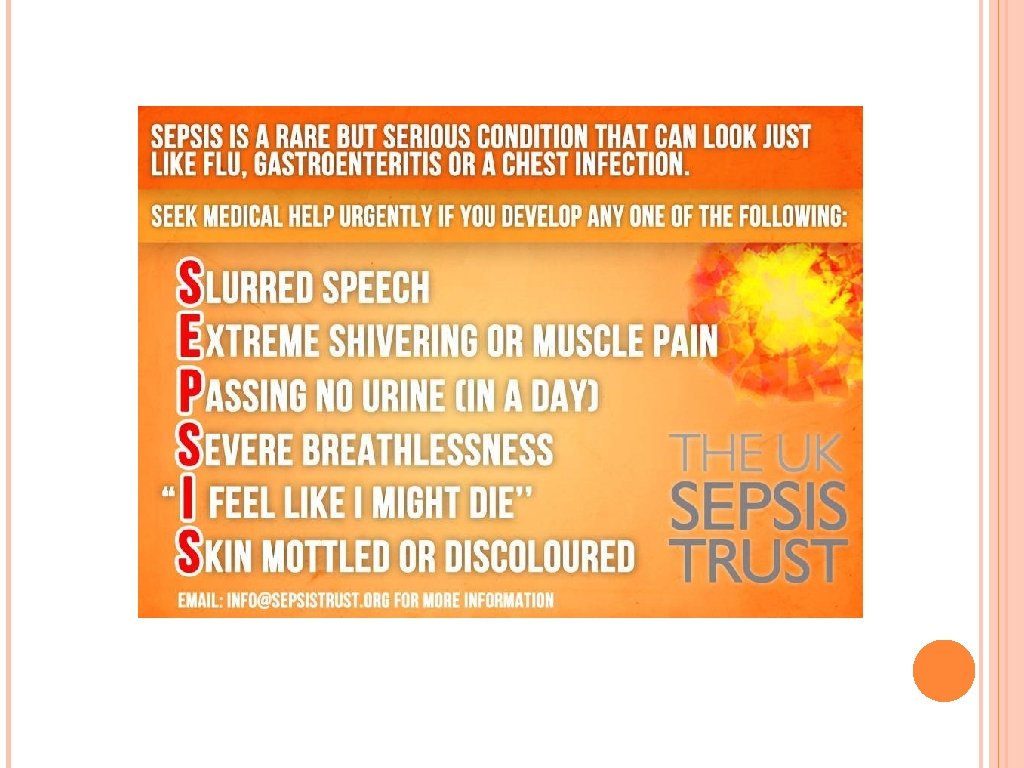
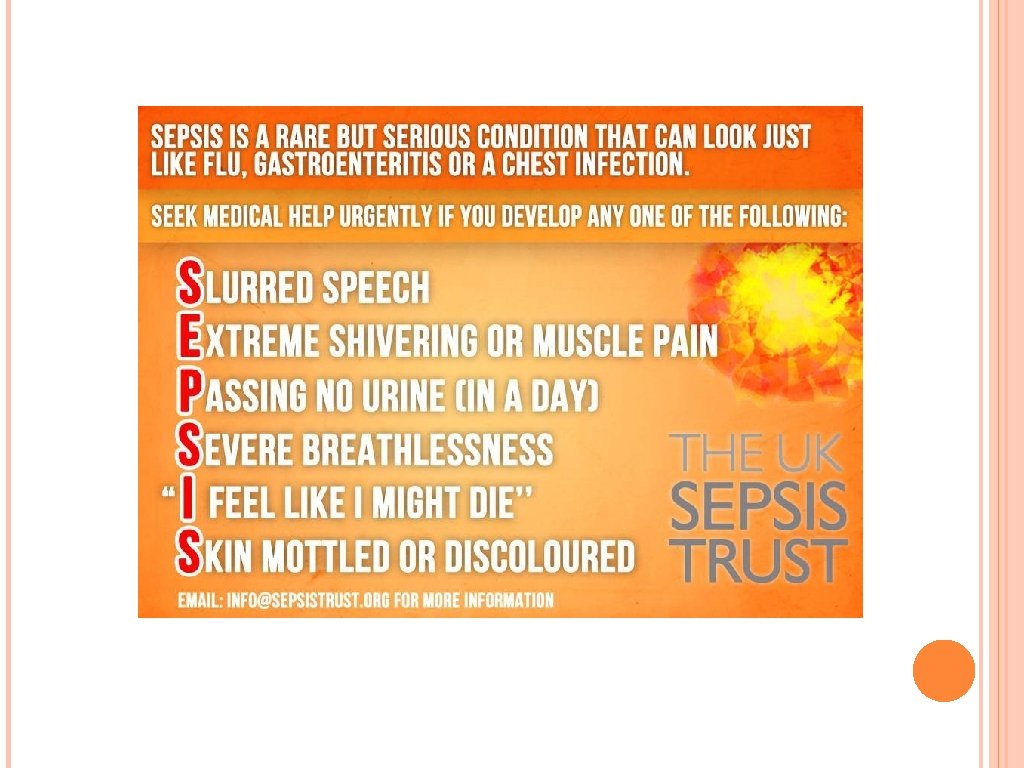
WHY IS DIAGNOSIS CHALLENGING? Signs/ symptoms of infection diverse Myths Criteria/ gold standards for diagnosis
DIVERSE SIGNS/ SYMPTOMS
Fever WCC/ CRP
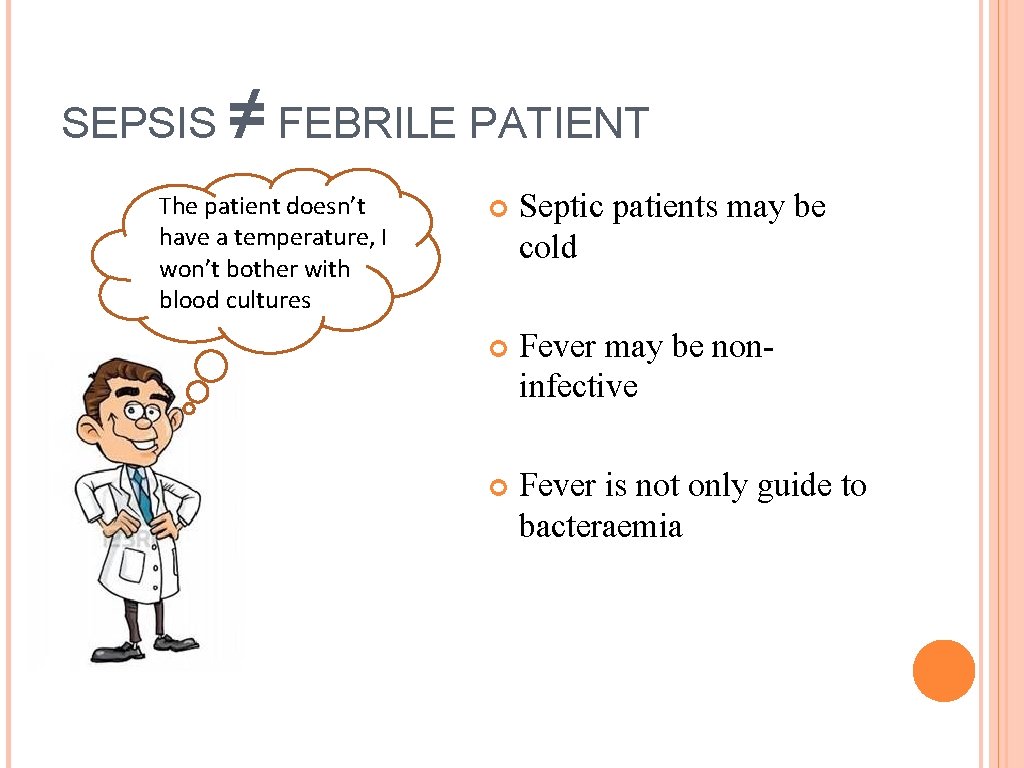
SEPSIS ≠ FEBRILE PATIENT The patient doesn’t have a temperature, I won’t bother with blood cultures Septic patients may be cold Fever may be noninfective Fever is not only guide to bacteraemia
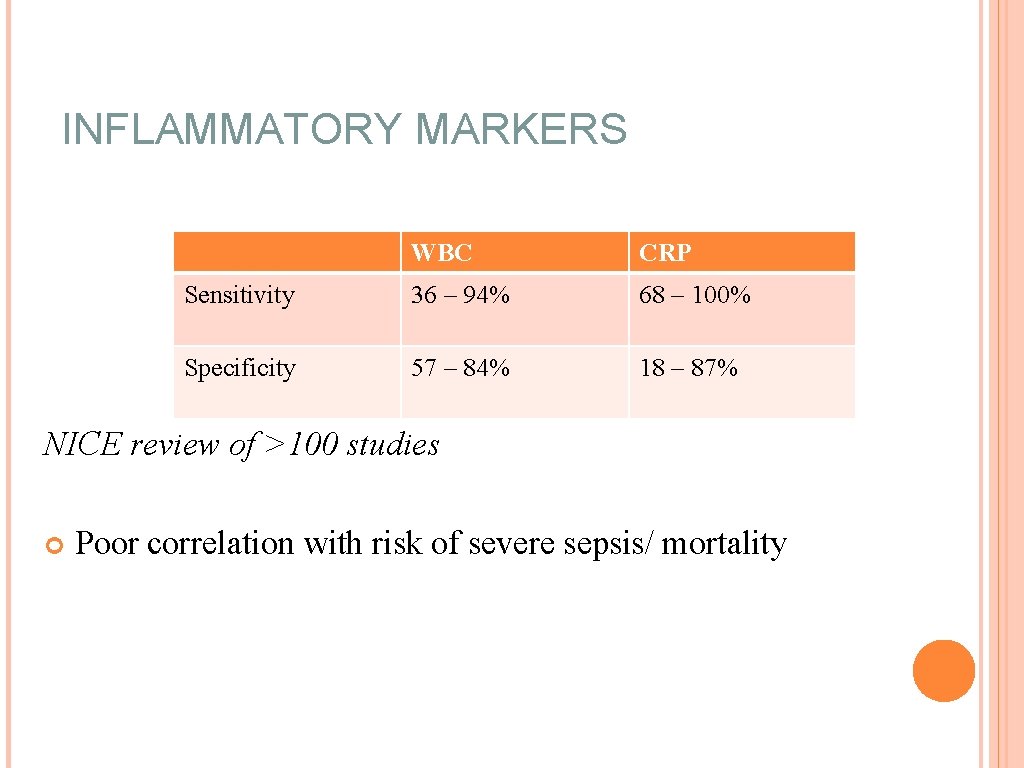
INFLAMMATORY MARKERS WBC CRP Sensitivity 36 – 94% 68 – 100% Specificity 57 – 84% 18 – 87% NICE review of >100 studies Poor correlation with risk of severe sepsis/ mortality
SEPSIS-3 (2016)
SIRS NON-SPECIFIC
SIRS – NOT SENSITIVE Kaukonen et al 2015
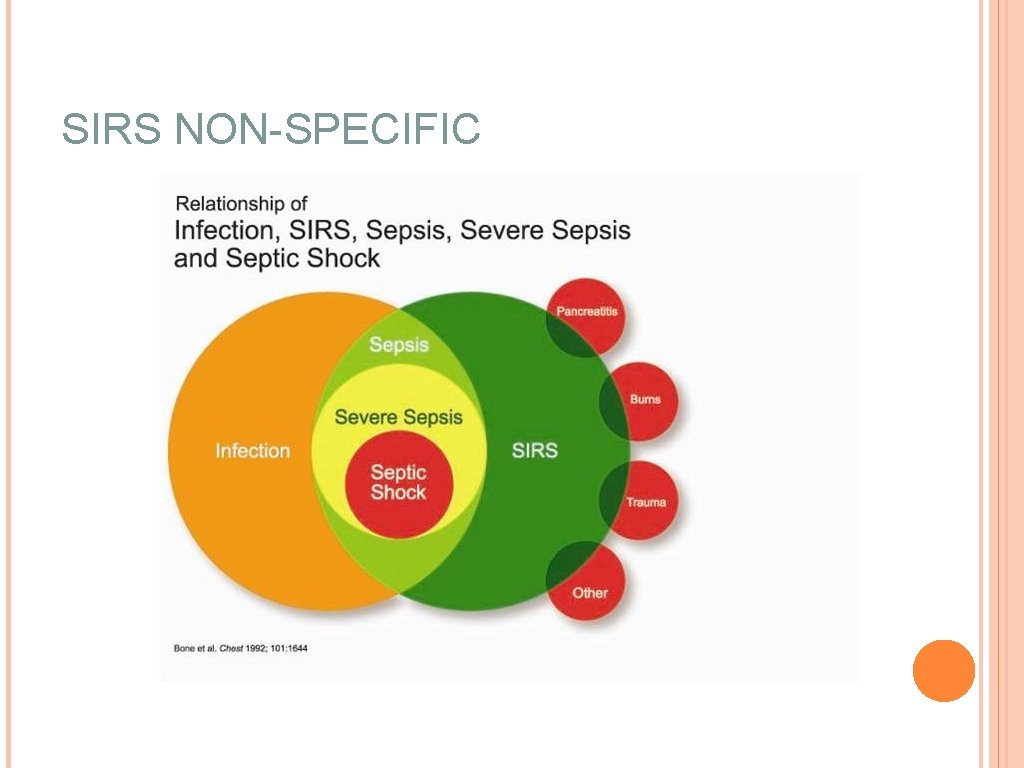
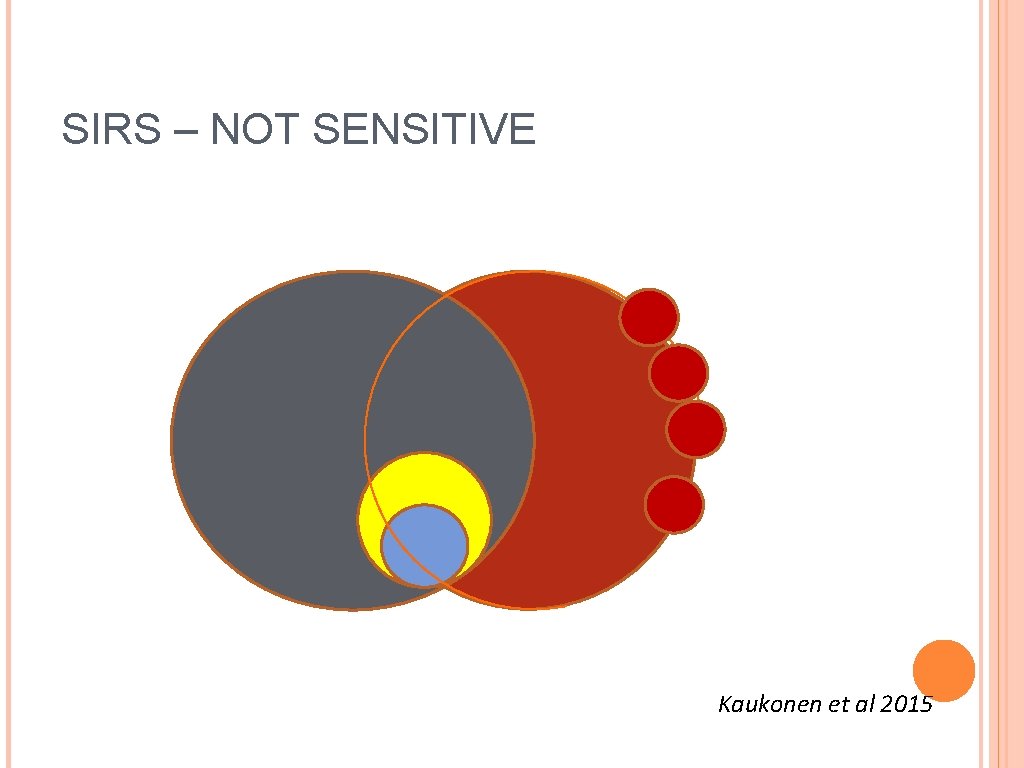
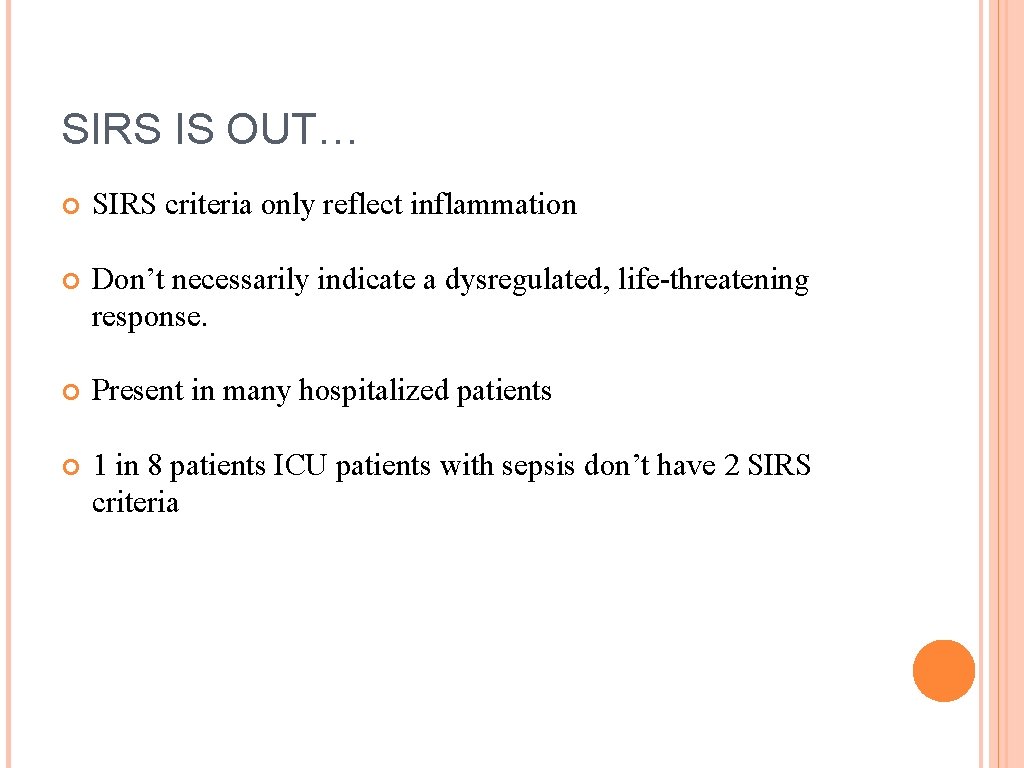
SIRS IS OUT… SIRS criteria only reflect inflammation Don’t necessarily indicate a dysregulated, life-threatening response. Present in many hospitalized patients 1 in 8 patients ICU patients with sepsis don’t have 2 SIRS criteria
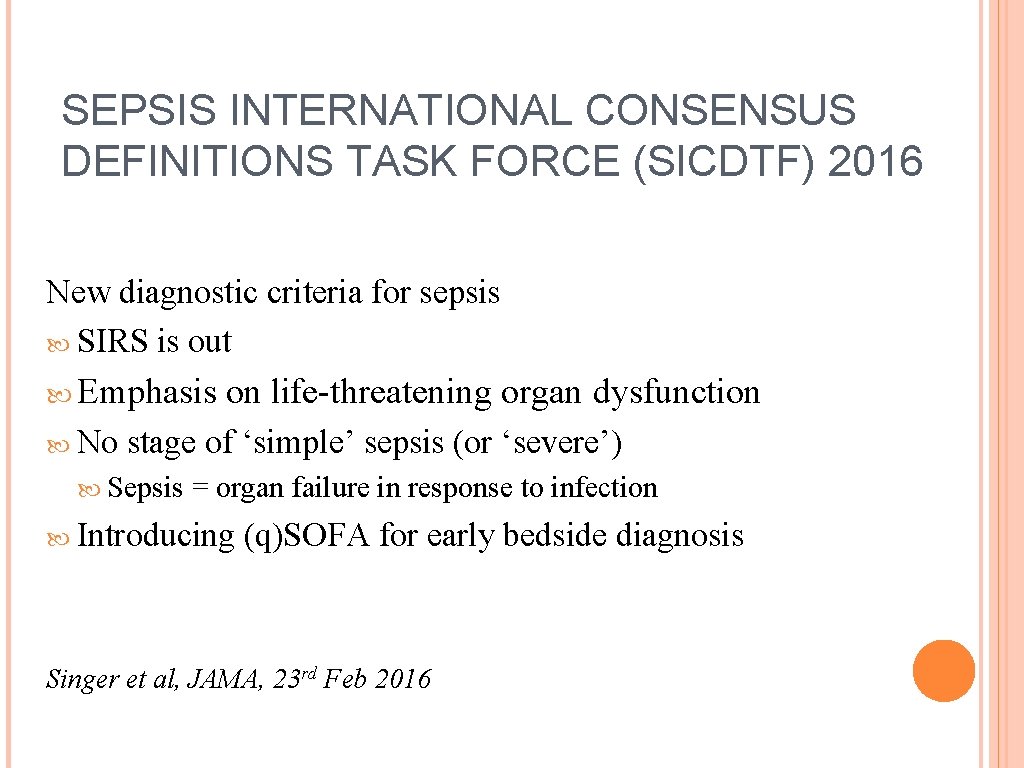
SEPSIS INTERNATIONAL CONSENSUS DEFINITIONS TASK FORCE (SICDTF) 2016 New diagnostic criteria for sepsis SIRS is out Emphasis No on life-threatening organ dysfunction stage of ‘simple’ sepsis (or ‘severe’) Sepsis = organ failure in response to infection Introducing (q)SOFA for early bedside diagnosis Singer et al, JAMA, 23 rd Feb 2016
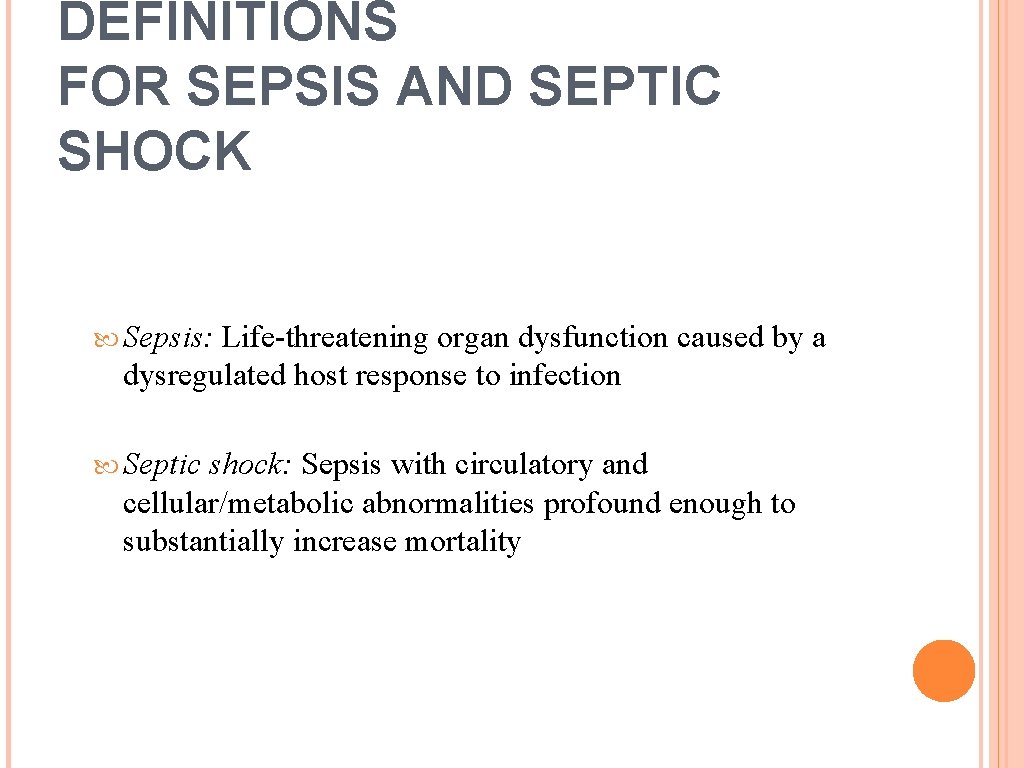
DEFINITIONS FOR SEPSIS AND SEPTIC SHOCK Sepsis: Life-threatening organ dysfunction caused by a dysregulated host response to infection Septic shock: Sepsis with circulatory and cellular/metabolic abnormalities profound enough to substantially increase mortality
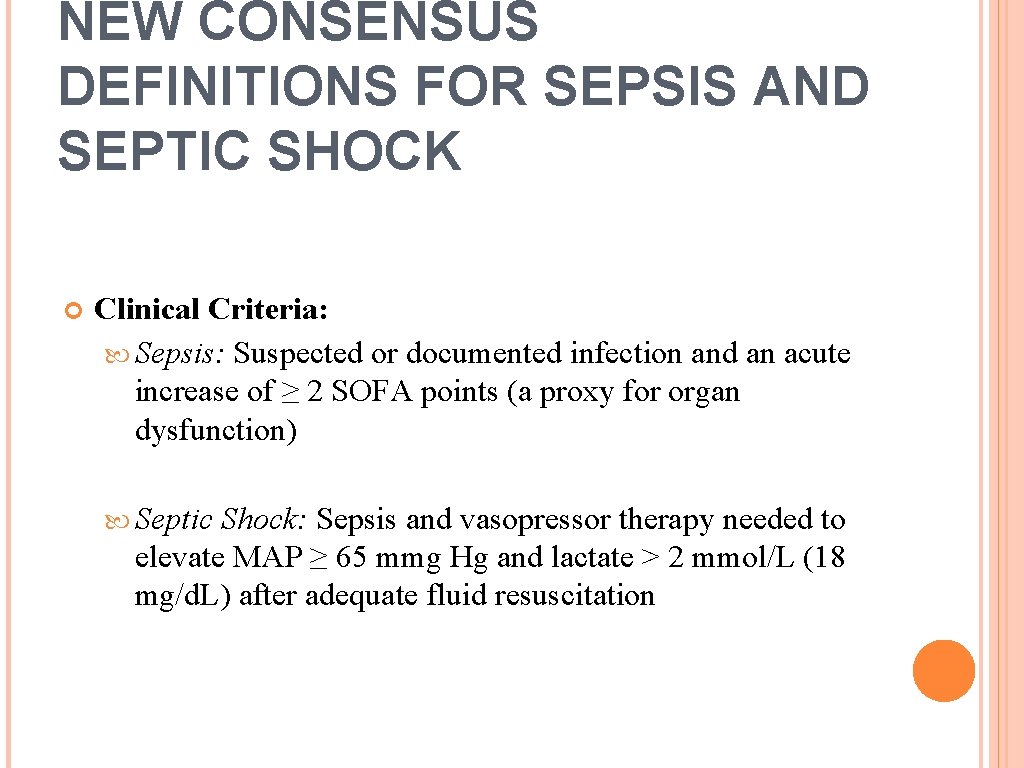
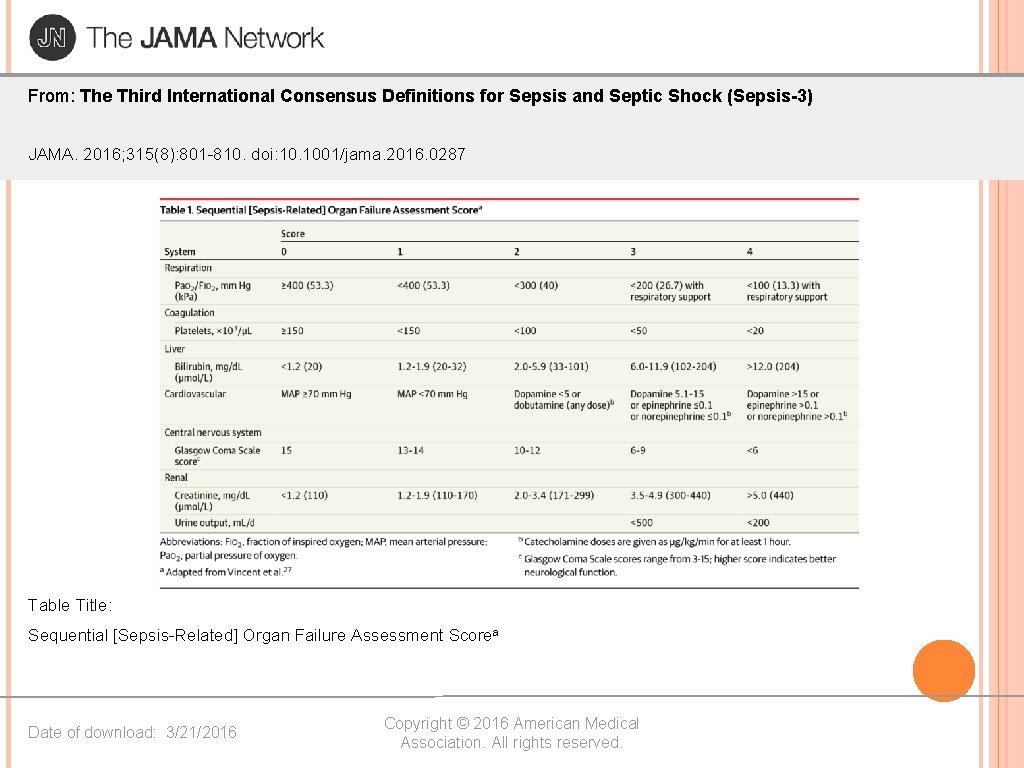
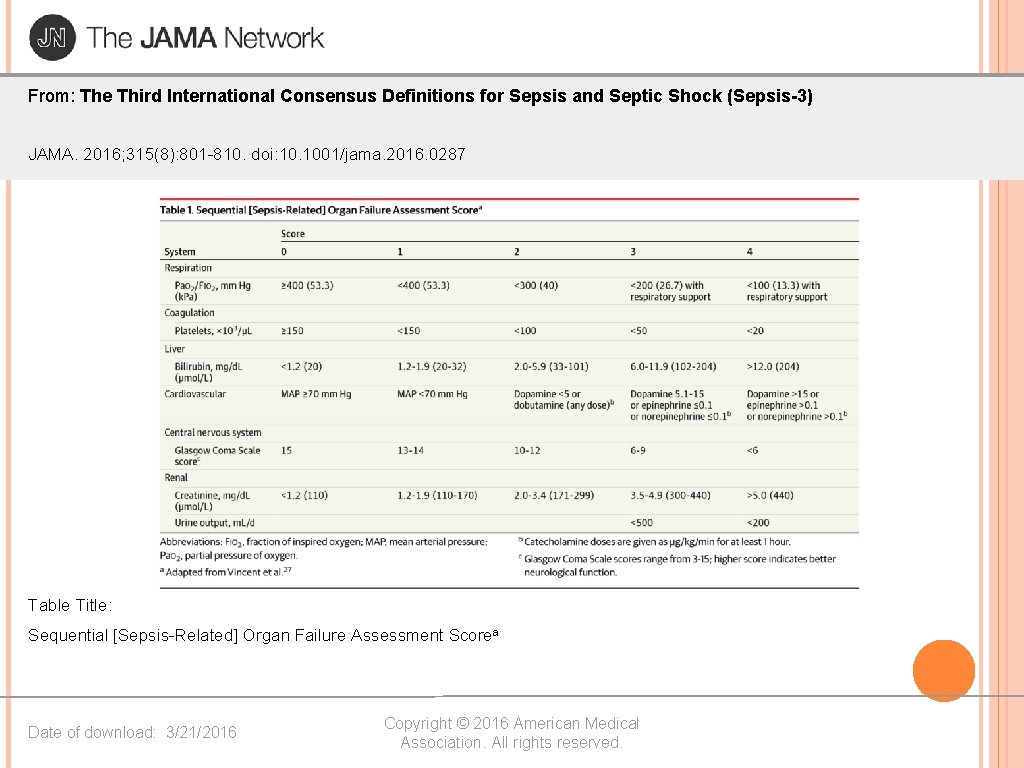
NEW CONSENSUS DEFINITIONS FOR SEPSIS AND SEPTIC SHOCK Clinical Criteria: Sepsis: Suspected or documented infection and an acute increase of ≥ 2 SOFA points (a proxy for organ dysfunction) Septic Shock: Sepsis and vasopressor therapy needed to elevate MAP ≥ 65 mmg Hg and lactate > 2 mmol/L (18 mg/d. L) after adequate fluid resuscitation
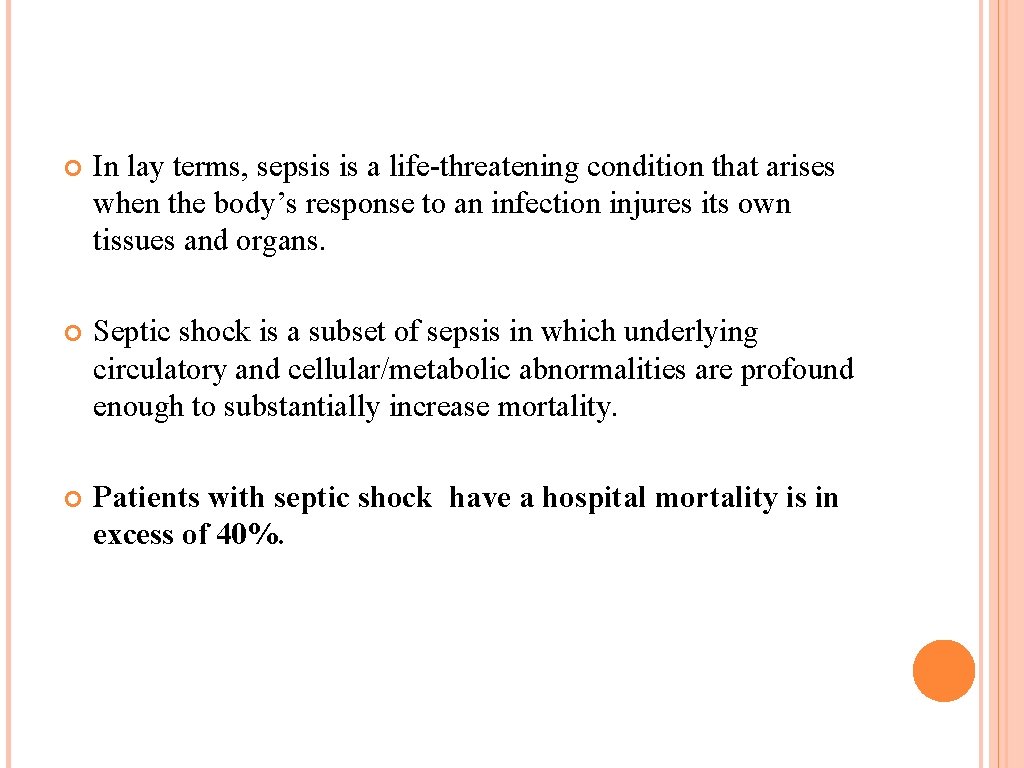
In lay terms, sepsis is a life-threatening condition that arises when the body’s response to an infection injures its own tissues and organs. Septic shock is a subset of sepsis in which underlying circulatory and cellular/metabolic abnormalities are profound enough to substantially increase mortality. Patients with septic shock have a hospital mortality is in excess of 40%.
From: The Third International Consensus Definitions for Sepsis and Septic Shock (Sepsis-3) JAMA. 2016; 315(8): 801 -810. doi: 10. 1001/jama. 2016. 0287 Table Title: Sequential [Sepsis-Related] Organ Failure Assessment Scorea Date of download: 3/21/2016 Copyright © 2016 American Medical Association. All rights reserved.
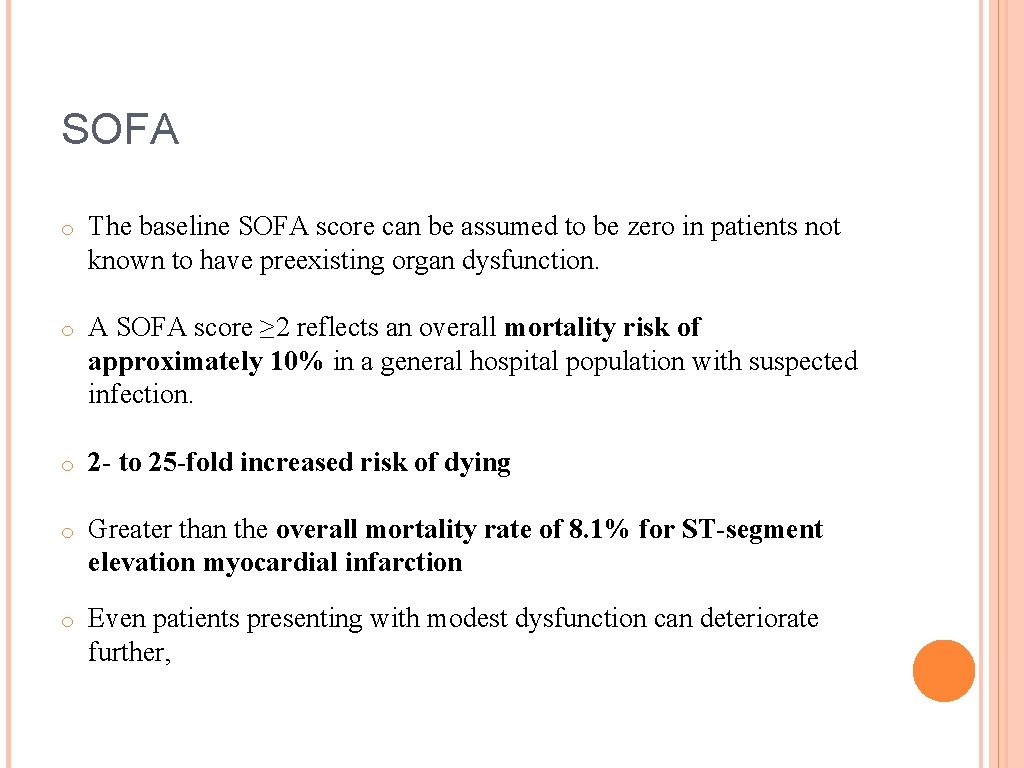
SOFA o The baseline SOFA score can be assumed to be zero in patients not known to have preexisting organ dysfunction. o A SOFA score ≥ 2 reflects an overall mortality risk of approximately 10% in a general hospital population with suspected infection. o 2 - to 25 -fold increased risk of dying o Greater than the overall mortality rate of 8. 1% for ST-segment elevation myocardial infarction o Even patients presenting with modest dysfunction can deteriorate further,
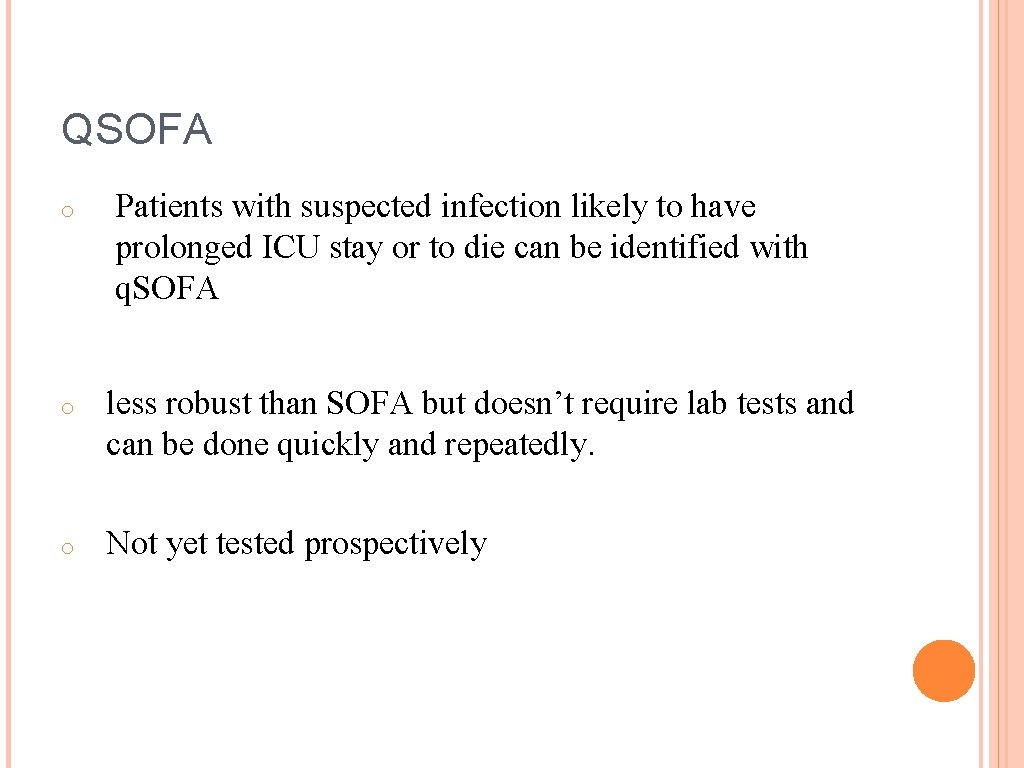
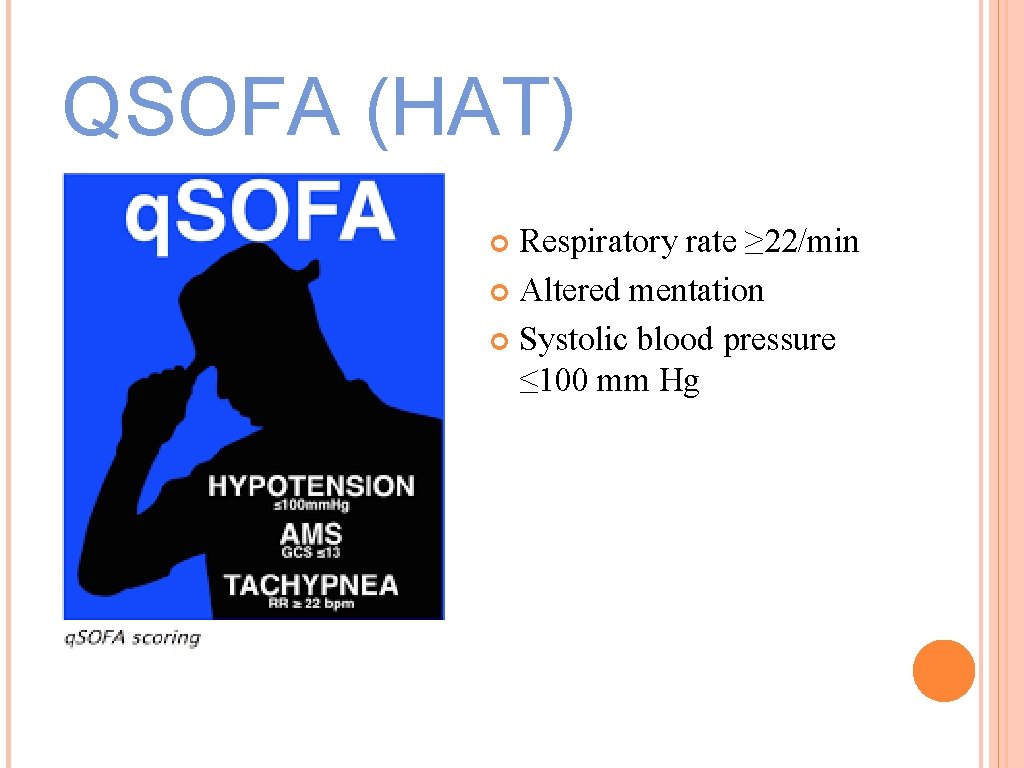
QSOFA o Patients with suspected infection likely to have prolonged ICU stay or to die can be identified with q. SOFA o less robust than SOFA but doesn’t require lab tests and can be done quickly and repeatedly. o Not yet tested prospectively
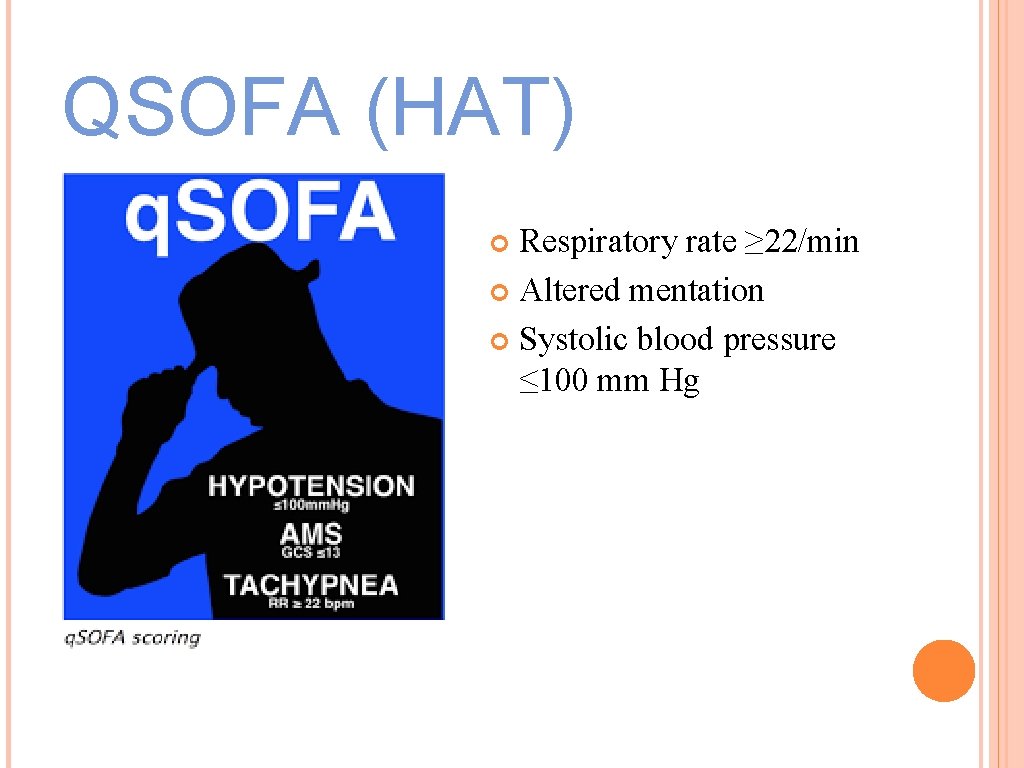
QSOFA (HAT) Respiratory rate ≥ 22/min Altered mentation Systolic blood pressure ≤ 100 mm Hg
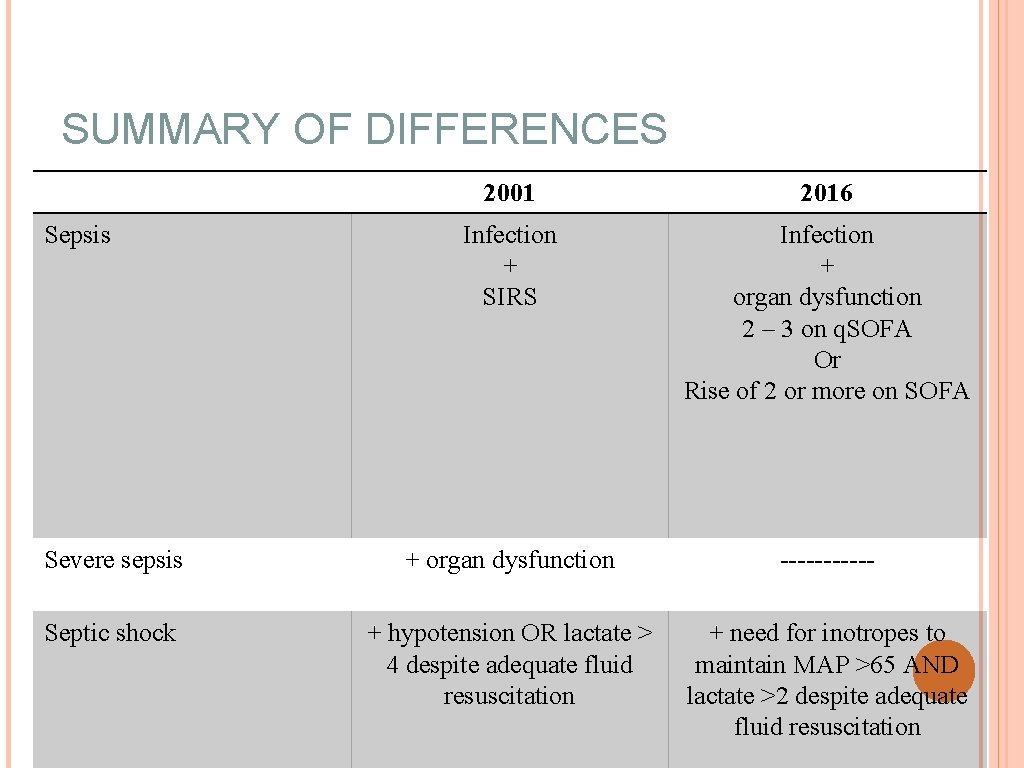
SUMMARY OF DIFFERENCES 2001 2016 Infection + SIRS Infection + organ dysfunction 2 – 3 on q. SOFA Or Rise of 2 or more on SOFA Severe sepsis + organ dysfunction ------ Septic shock + hypotension OR lactate > 4 despite adequate fluid resuscitation + need for inotropes to maintain MAP >65 AND lactate >2 despite adequate fluid resuscitation Sepsis
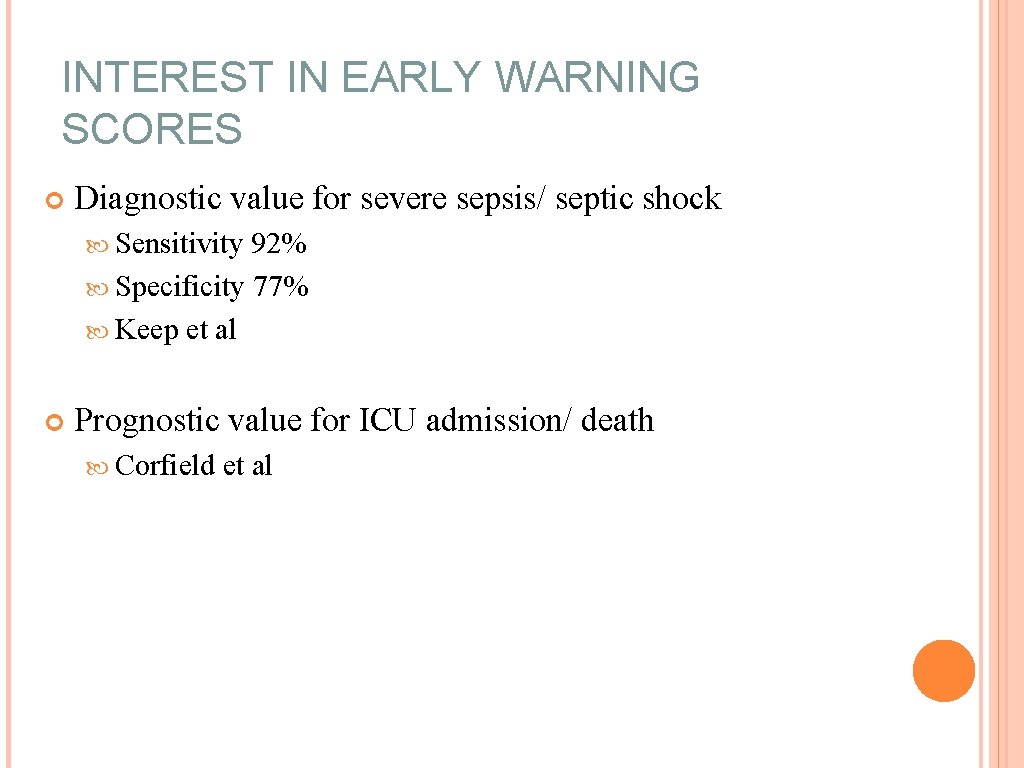
INTEREST IN EARLY WARNING SCORES Diagnostic value for severe sepsis/ septic shock Sensitivity 92% Specificity 77% Keep et al Prognostic value for ICU admission/ death Corfield et al
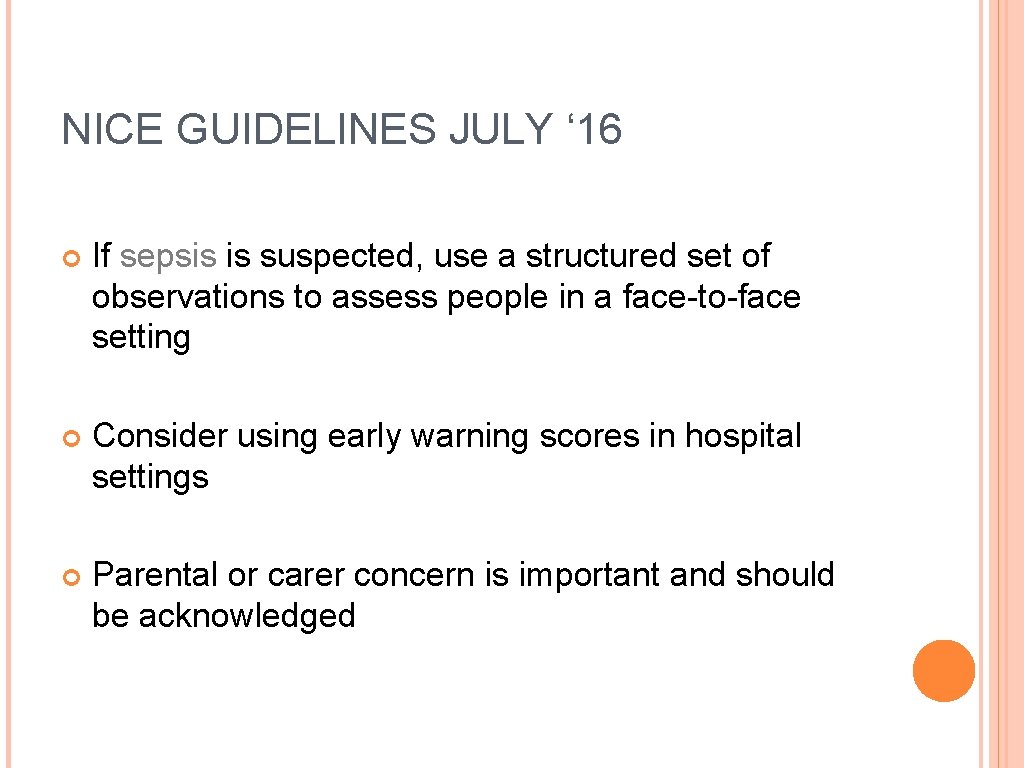
NICE GUIDELINES JULY ‘ 16 If sepsis is suspected, use a structured set of observations to assess people in a face-to-face setting Consider using early warning scores in hospital settings Parental or carer concern is important and should be acknowledged
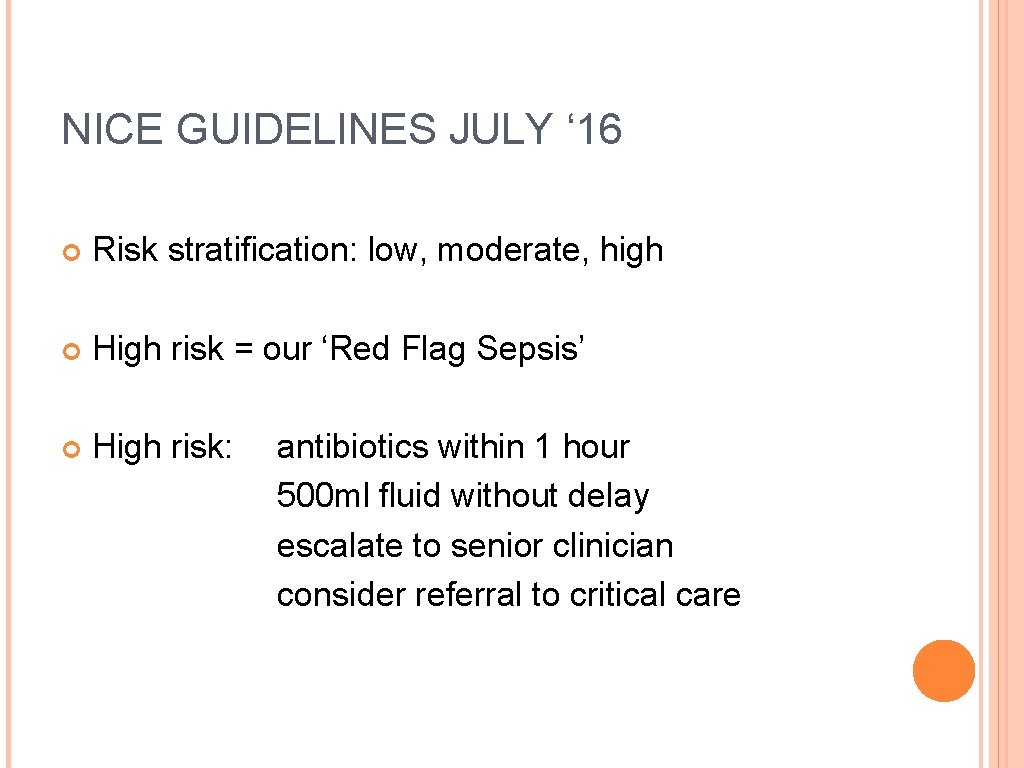
NICE GUIDELINES JULY ‘ 16 Risk stratification: low, moderate, high High risk = our ‘Red Flag Sepsis’ High risk: antibiotics within 1 hour 500 ml fluid without delay escalate to senior clinician consider referral to critical care
NICE GUIDELINES RECOMMENDATIONS (JULY 2016) Use of EWS Use of ‘red flags’ Sepsis 6 Senior involvement
CQUIN 2015/16 Part A (Improving early diagnosis) Screening Part B (Delivering treatment early) Delivery of antibiotics within one hour
MANAGEMENT IN THE PRIMARY CARE SETTING
RATIONALE FOR FOCUS IN PRIMARY CARE A CEM audit of sepsis and septic shock found antibiotics within the first hour in only 32% of patients NCEPOD report ‘Just say Sepsis’ found room for improvement in almost 39% of GP cases Expert reviewers found that 80% of infections giving rise to sepsis originated in the community 54% of patients with a hospital discharge diagnosis of sepsis had sepsis on arrival to hospital.
RECOGNITION FRAMEWORK challenges and opportunities around reliable sepsis identification in a primary care clinical judgement remains of paramount importance. some patients might be identified earlier with greater awareness and targeted clinical assessment risk stratification framework designed to support clinical decision-making.
balancing the academic definitions for sepsis with a pragmatic, risk-stratifying framework recommended by NICE
NEW CONSENSUS DEFINITIONS FOR SEPSIS AND SEPTIC SHOCK Clinical Criteria: Sepsis: Suspected or documented infection and an acute increase of ≥ 2 SOFA points (a proxy for organ dysfunction) Septic Shock: Sepsis and vasopressor therapy needed to elevate MAP ≥ 65 mmg Hg and lactate > 2 mmol/L (18 mg/d. L) after adequate fluid resuscitation
From: The Third International Consensus Definitions for Sepsis and Septic Shock (Sepsis-3) JAMA. 2016; 315(8): 801 -810. doi: 10. 1001/jama. 2016. 0287 Table Title: Sequential [Sepsis-Related] Organ Failure Assessment Scorea Date of download: 3/21/2016 Copyright © 2016 American Medical Association. All rights reserved.
QSOFA (HAT) Respiratory rate ≥ 22/min Altered mentation Systolic blood pressure ≤ 100 mm Hg
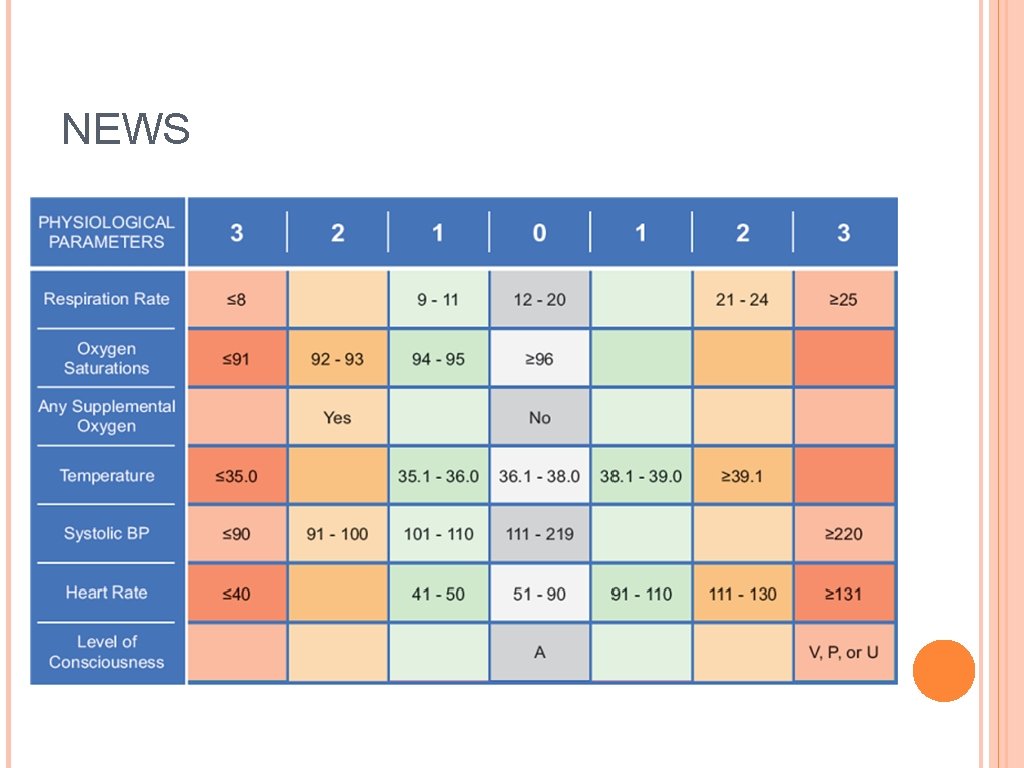
DEFINING SEPSIS IN THE COMMUNITY Sepsis: two potential surrogates for SOFA are: q-SOFA proposed 2. National Early Warning Score (NEWS). 1. Septic shock: hypotension in the presence of presumed infection appropriate surrogate in community
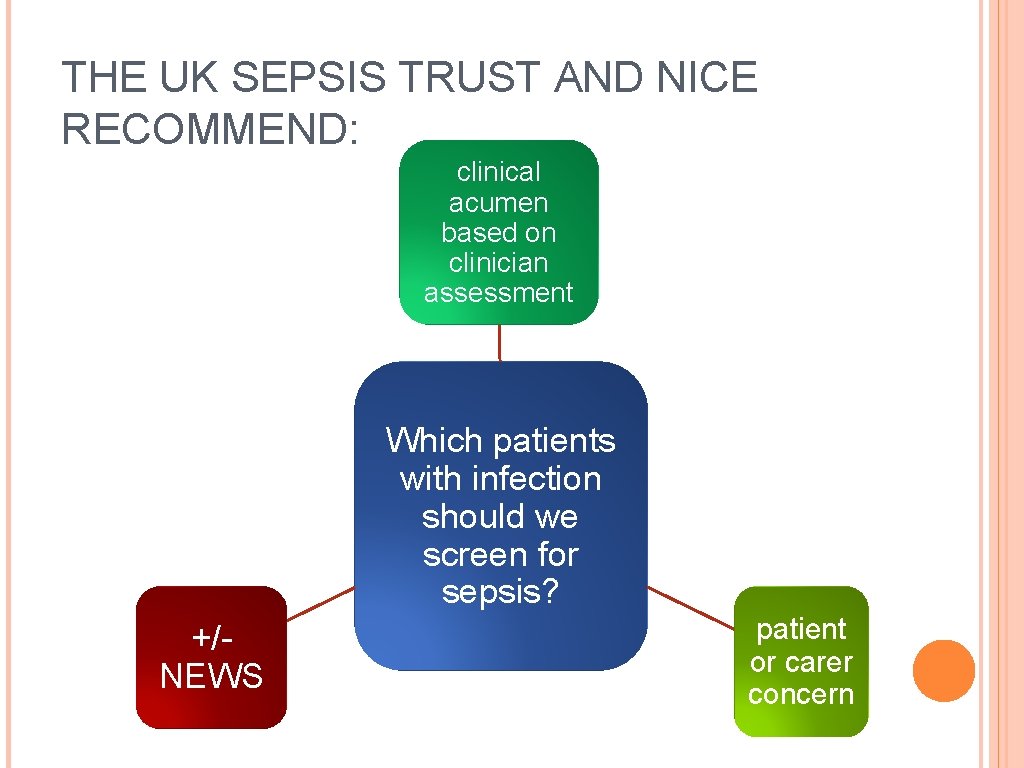
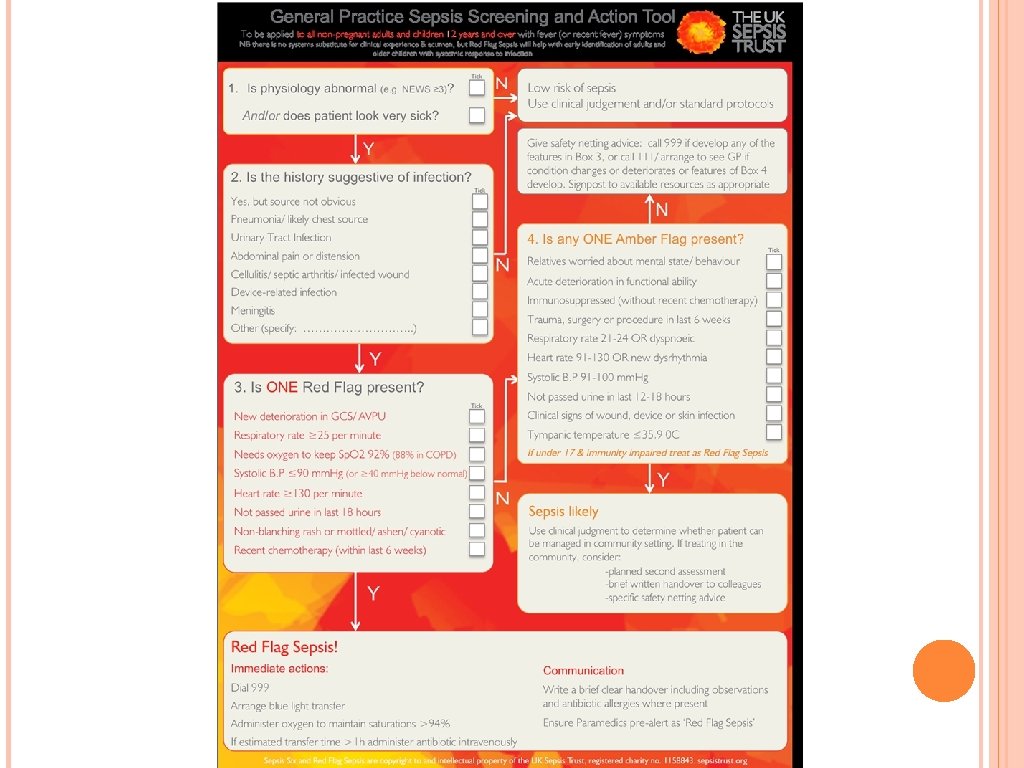
THE UK SEPSIS TRUST AND NICE RECOMMEND: clinical acumen based on clinician assessment Which patients with infection should we screen for sepsis? +/NEWS patient or carer concern
NEWS
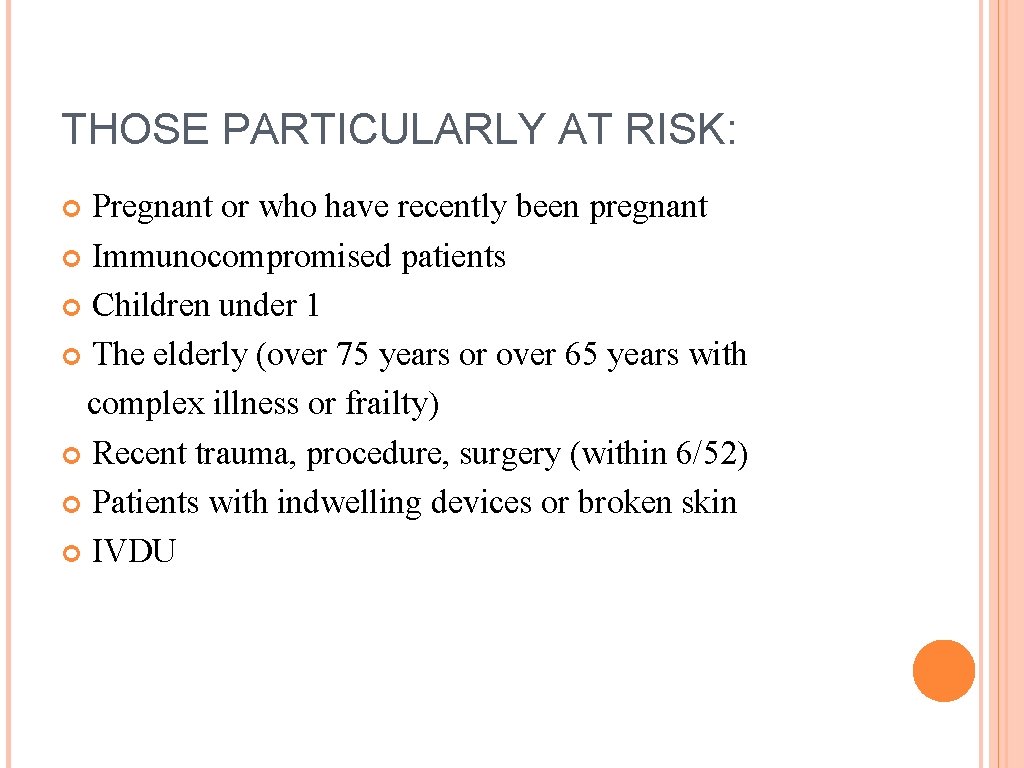
THOSE PARTICULARLY AT RISK: Pregnant or who have recently been pregnant Immunocompromised patients Children under 1 The elderly (over 75 years or over 65 years with complex illness or frailty) Recent trauma, procedure, surgery (within 6/52) Patients with indwelling devices or broken skin IVDU
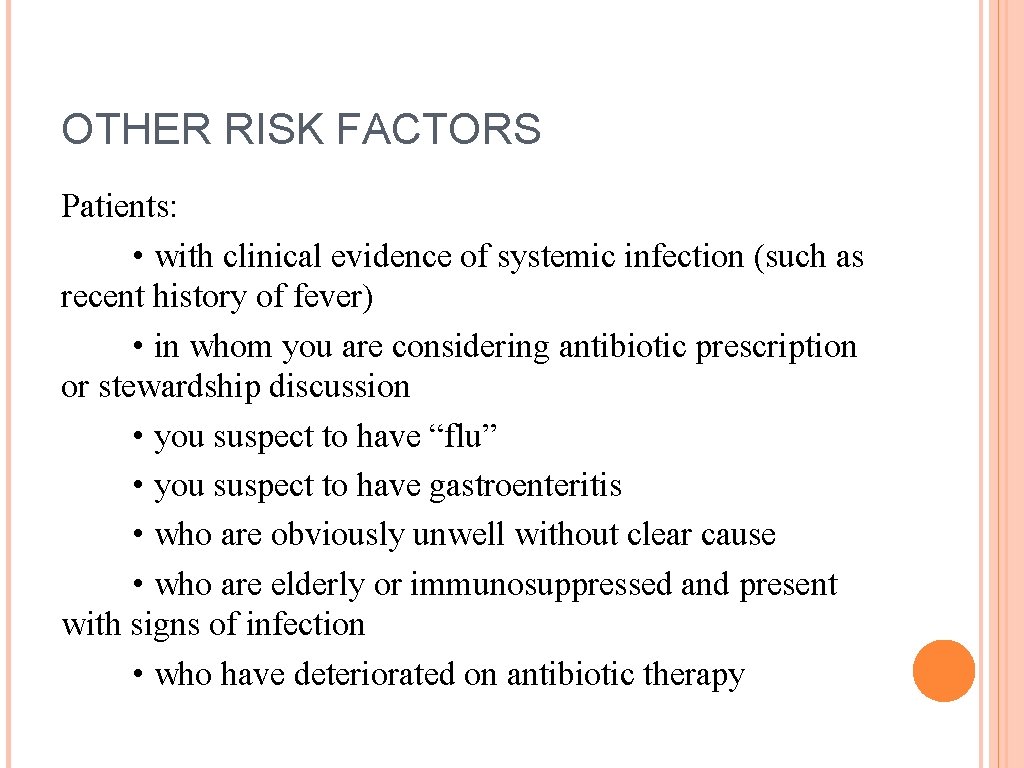
OTHER RISK FACTORS Patients: • with clinical evidence of systemic infection (such as recent history of fever) • in whom you are considering antibiotic prescription or stewardship discussion • you suspect to have “flu” • you suspect to have gastroenteritis • who are obviously unwell without clear cause • who are elderly or immunosuppressed and present with signs of infection • who have deteriorated on antibiotic therapy
Could this be sepsis?
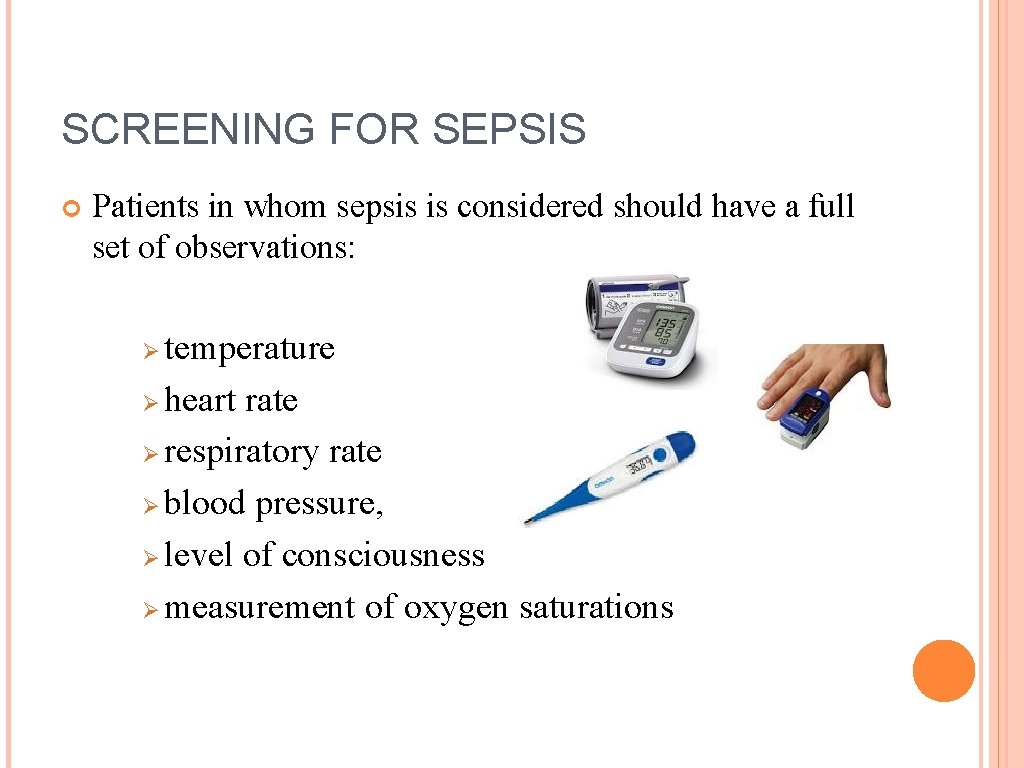
SCREENING FOR SEPSIS Patients in whom sepsis is considered should have a full set of observations: temperature Ø heart rate Ø respiratory rate Ø blood pressure, Ø level of consciousness Ø measurement of oxygen saturations Ø
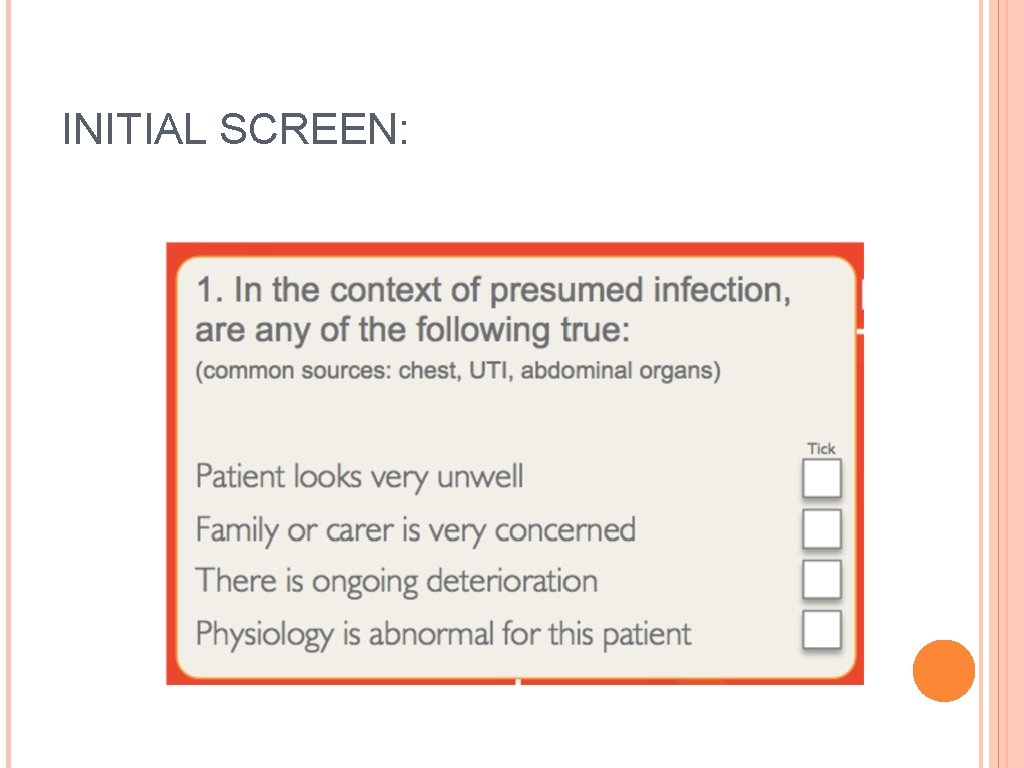
INITIAL SCREEN:
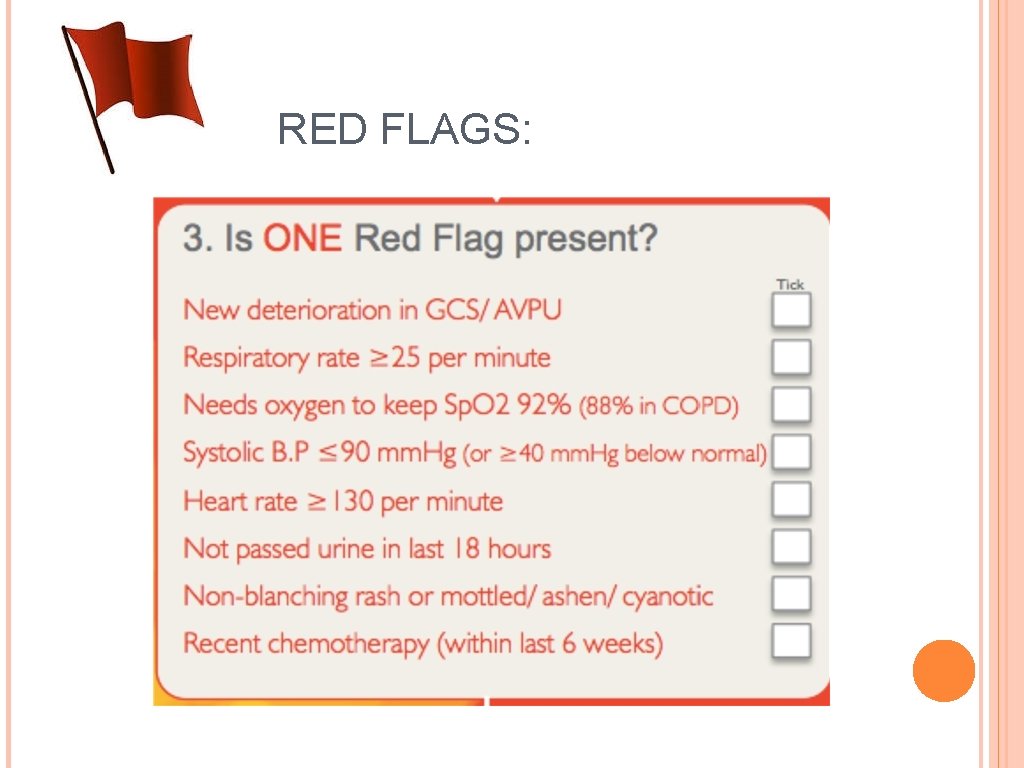
RED FLAGS:
Any patient with presumed sepsis + one or more Red Flags should be immediately transferred to hospital
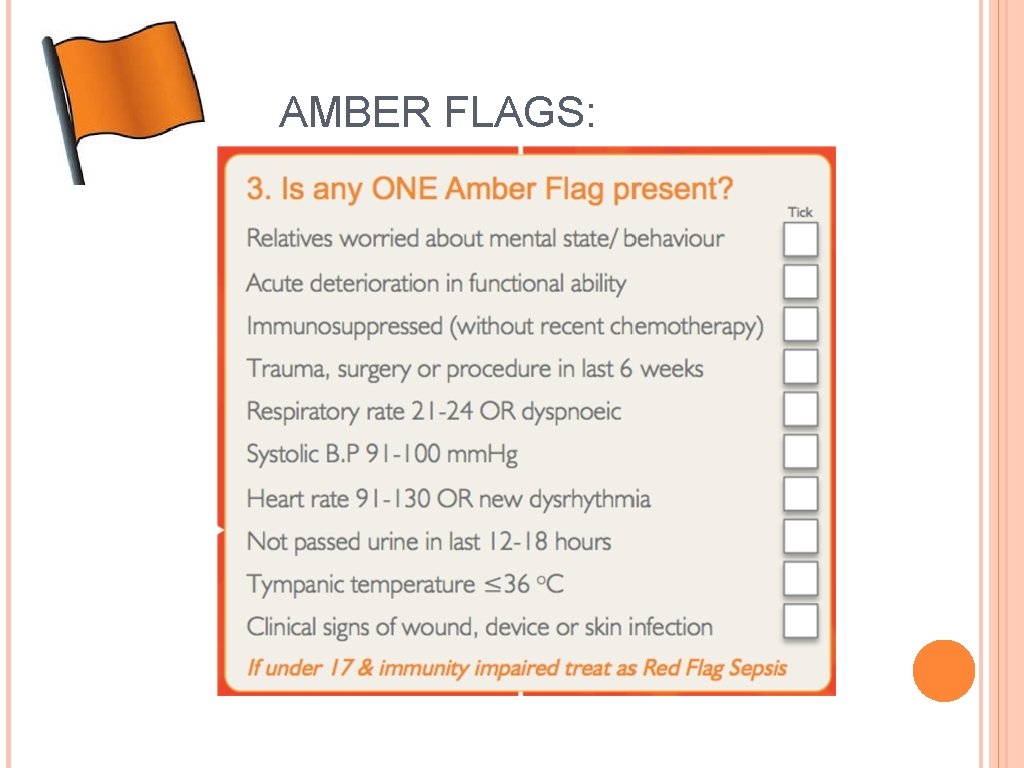
AMBER FLAGS:
The presence of any ONE amber flag should prompt a binary clinical decision: clinical judgement paramount
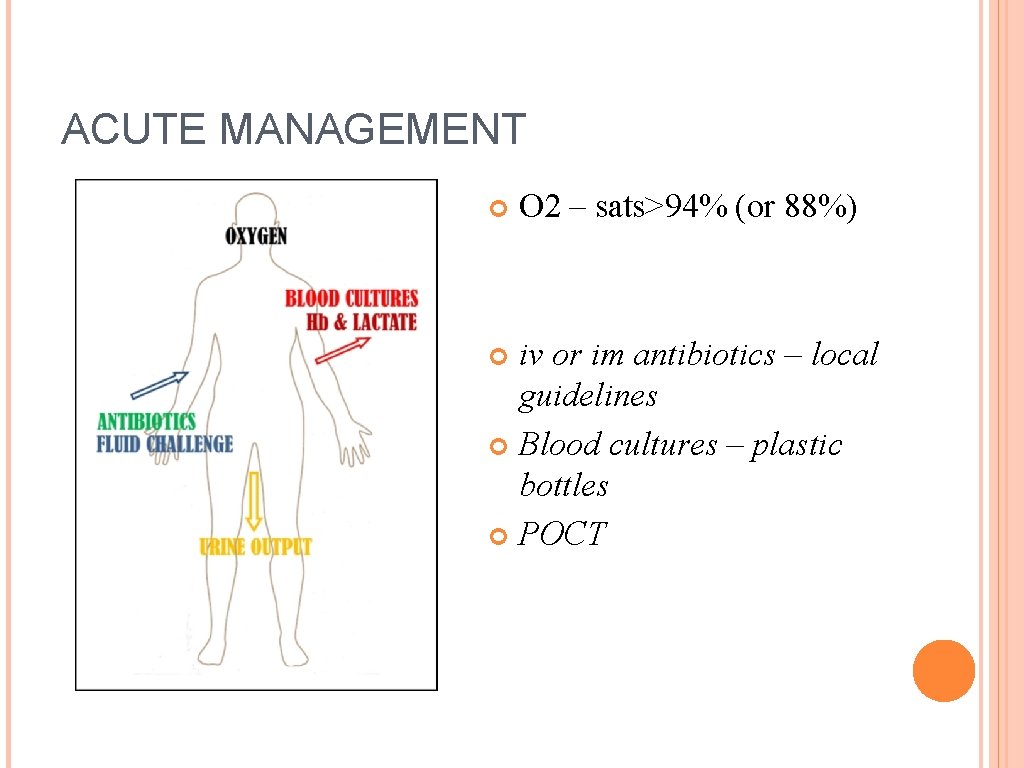
ACUTE MANAGEMENT O 2 – sats>94% (or 88%) iv or im antibiotics – local guidelines Blood cultures – plastic bottles POCT
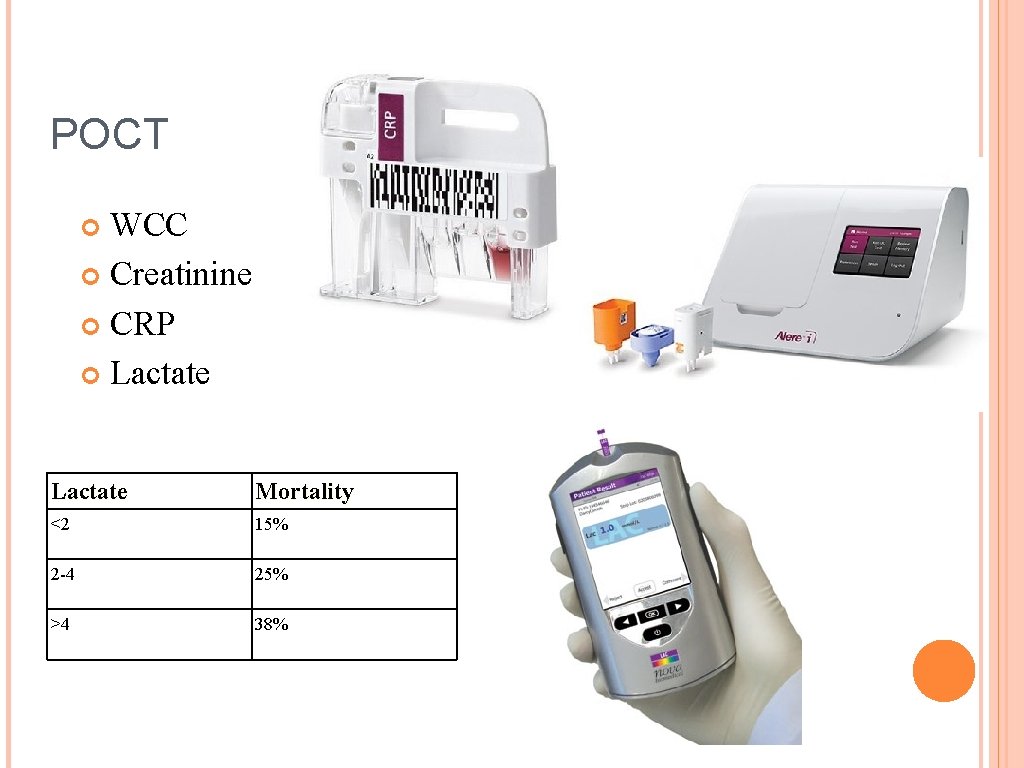
POCT WCC Creatinine CRP Lactate Mortality <2 15% 2 -4 25% >4 38%
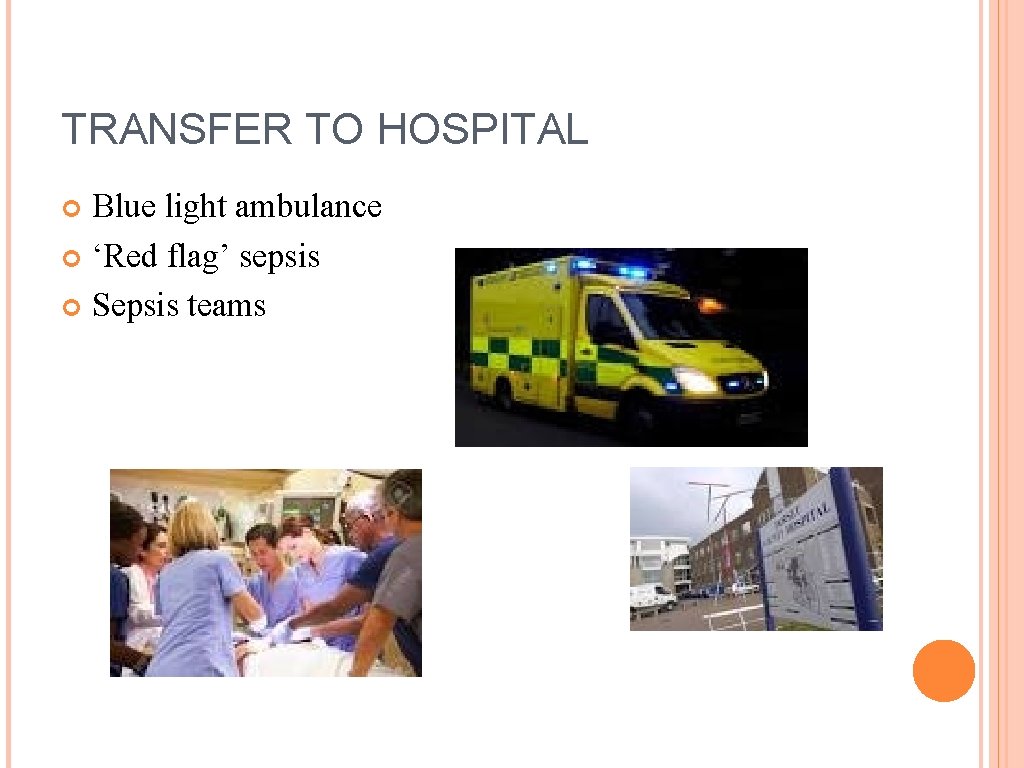
TRANSFER TO HOSPITAL Blue light ambulance ‘Red flag’ sepsis Sepsis teams
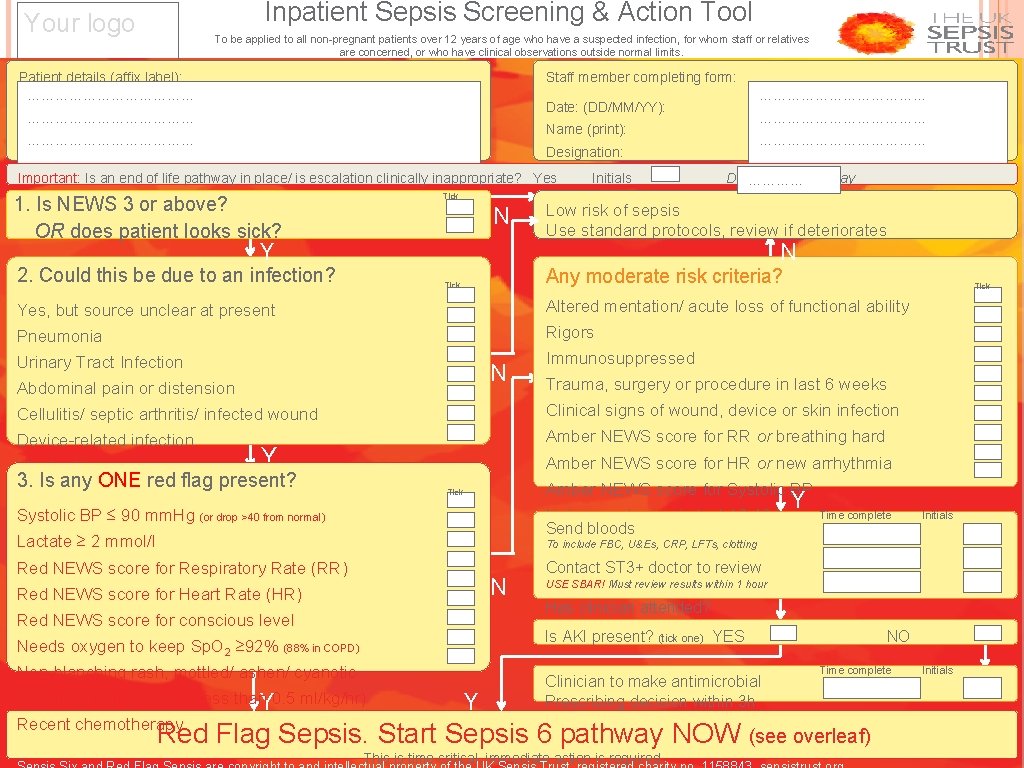
SEPSIS AT DCH
Inpatient Sepsis Screening & Action Tool Your logo To be applied to all non-pregnant patients over 12 years of age who have a suspected infection, for whom staff or relatives are concerned, or who have clinical observations outside normal limits. Patient details (affix label): ………………. . . Staff member completing form: ………………. . . Date: (DD/MM/YY): ……………………………… Name (print): ……………… Designation: ……………… Signature: Important: Is an end of life pathway in place/ is escalation clinically inappropriate? Yes Initials Tick 1. Is NEWS 3 or above? OR does patient looks sick? N Y ……………………………… Discontinue …………pathway Low risk of sepsis Use standard protocols, review if deteriorates N 2. Could this be due to an infection? Any moderate risk criteria? Tick Yes, but source unclear at present Altered mentation/ acute loss of functional ability Pneumonia Rigors Urinary Tract Infection Immunosuppressed N Abdominal pain or distension Trauma, surgery or procedure in last 6 weeks Cellulitis/ septic arthritis/ infected wound Clinical signs of wound, device or skin infection Device-related infection Amber NEWS score for RR or breathing hard Meningitis Y Amber NEWS score for HR or new arrhythmia 3. Is any ONE red flag present? Other (specify: ……………. . ) Systolic BP ≤ 90 mm. Hg (or drop >40 from normal) Amber NEWS score for Systolic BP Tick Y Not passed urine in last 12 -18 hours Time complete Send bloods Initials Temperature < CRP, 36 OC To include FBC, U&Es, LFTs, clotting Lactate ≥ 2 mmol/l Red NEWS score for Respiratory Rate (RR) N Red NEWS score for Heart Rate (HR) Red NEWS score for conscious level Contact ST 3+ doctor to review USE SBAR! Must review results within 1 hour Has clinician attended? Is AKI present? (tick one) YES Needs oxygen to keep Sp. O 2 ≥ 92% (88% in COPD) Non-blanching rash, mottled/ ashen/ cyanotic Oliguria (from history or less than. Y 0. 5 ml/kg/hr) Y Clinician to make antimicrobial Prescribing decision within 3 h Recent chemotherapy NO Time complete Red Flag Sepsis. Start Sepsis 6 pathway NOW (see overleaf) This is time critical, immediate action is required. Initials
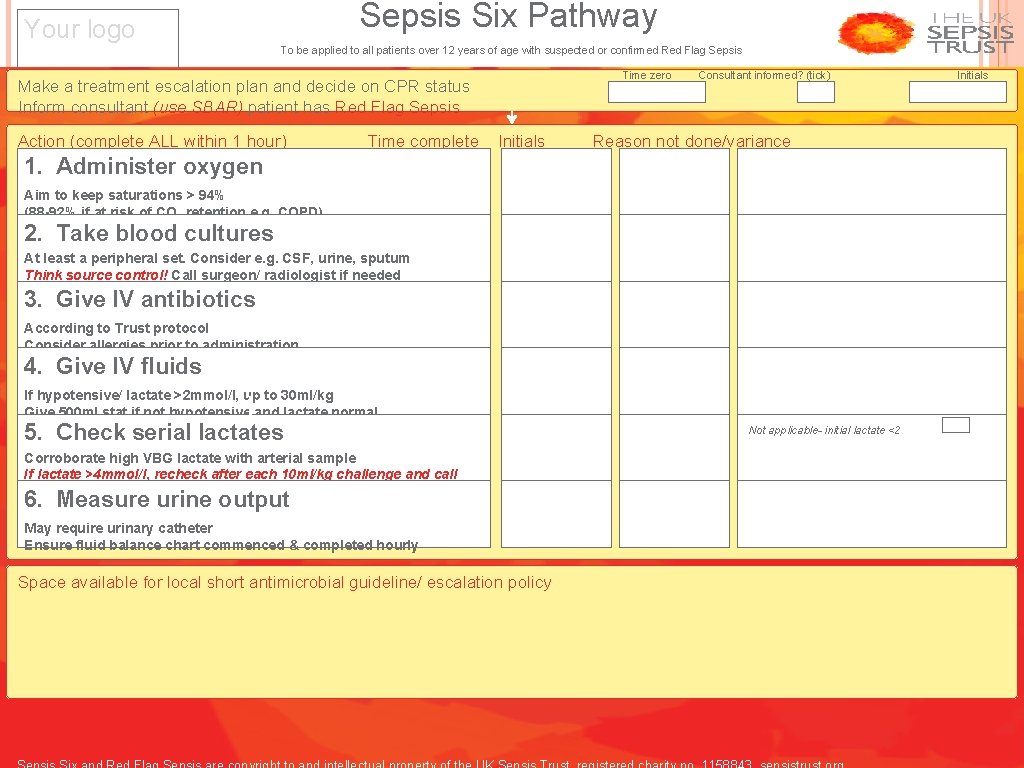
Sepsis Six Pathway Your logo To be applied to all patients over 12 years of age with suspected or confirmed Red Flag Sepsis Time zero Make a treatment escalation plan and decide on CPR status Inform consultant (use SBAR) patient has Red Flag Sepsis Action (complete ALL within 1 hour) Time complete Initials Consultant informed? (tick) Reason not done/variance 1. Administer oxygen Aim to keep saturations > 94% (88 -92% if at risk of CO 2 retention e. g. COPD) 2. Take blood cultures At least a peripheral set. Consider e. g. CSF, urine, sputum Think source control! Call surgeon/ radiologist if needed CXR and urinalysis for all adults 3. Give IV antibiotics According to Trust protocol Consider allergies prior to administration 4. Give IV fluids If hypotensive/ lactate >2 mmol/l, up to 30 ml/kg Give 500 ml stat if not hypotensive and lactate normal 5. Check serial lactates Corroborate high VBG lactate with arterial sample If lactate >4 mmol/l, recheck after each 10 ml/kg challenge and call Critical Care 6. Measure urine output May require urinary catheter Ensure fluid balance chart commenced & completed hourly Space available for local short antimicrobial guideline/ escalation policy Not applicable- initial lactate <2 Initials
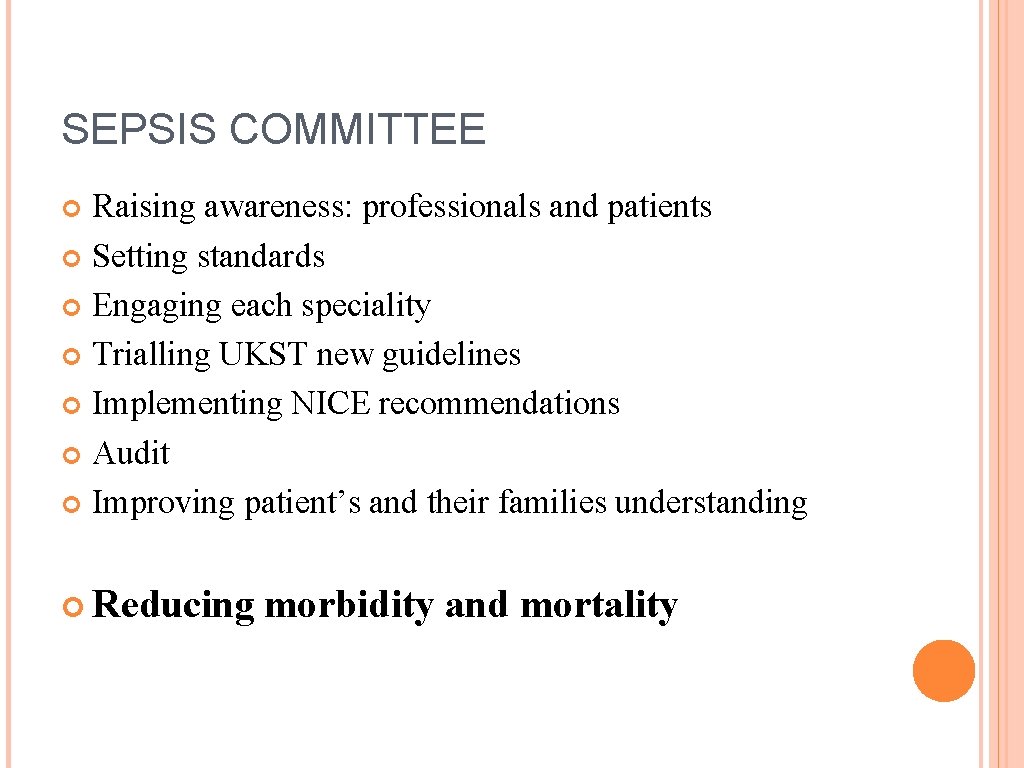
SEPSIS COMMITTEE Raising awareness: professionals and patients Setting standards Engaging each speciality Trialling UKST new guidelines Implementing NICE recommendations Audit Improving patient’s and their families understanding Reducing morbidity and mortality
CONCLUSION
SEPSIS What differentiates sepsis from infection is an aberrant or dysregulated host response and the presence of organ dysfunction Sepsis is a time critical illness Mortality = 30% JAMA. 2016; 315(8): 801 -810. doi: 10. 1001/jama. 2016. 0287
Could this be sepsis?
RED FLAG SEPSIS Immediate discussion with a senior doctor Immediate request for 999 Ambulance Handover Where available, oxygen Where transfer times long consider: Ø intravenous antibiotics Ø fluid therapy Instruct Paramedics to pre-alert as Red Flag Sepsis
AMBER FLAG SEPSIS Document home or hospital Discuss with senior within 30 min Full set of observations If hospital: ? acuity of transfer handover If to home: written and verbal safety netting scheduled review within 24 hours
ANY QUESTIONS?