
AN OVERVIEW OF THE QUINAULT INDIAN NATIONs ONGOING
- Slides: 14
AN OVERVIEW OF THE QUINAULT INDIAN NATION's ONGOING INVOLVEMENT WITH THE EXCHANGE NETWORK GRANT PROGRAM NCAI Tribal Exchange Network Meeting Palm Springs, CA April 2008
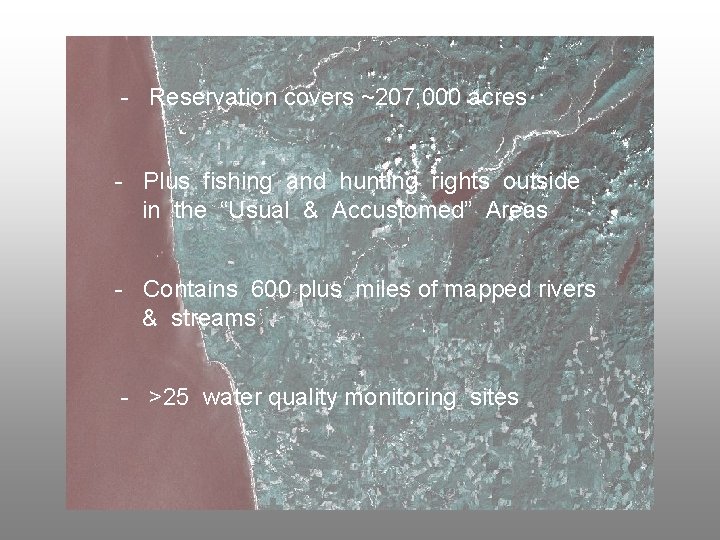
- Reservation covers ~207, 000 acres - Plus fishing and hunting rights outside in the “Usual & Accustomed” Areas - Contains 600 plus miles of mapped rivers & streams - >25 water quality monitoring sites
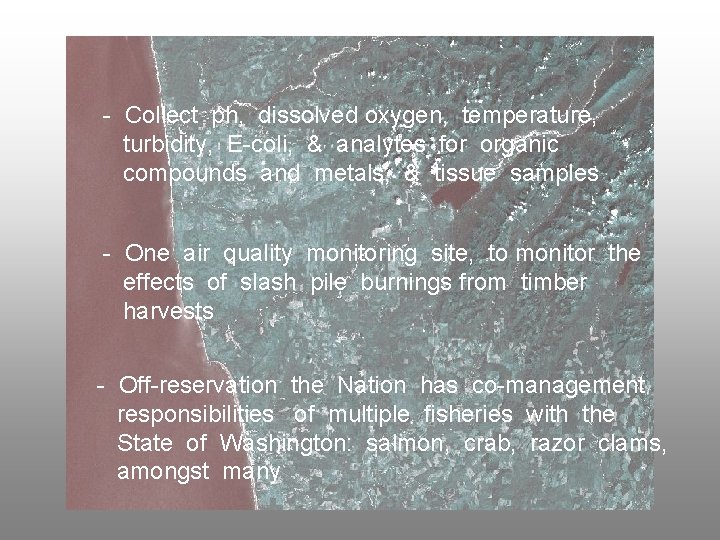
- Collect ph, dissolved oxygen, temperature, turbidity, E-coli, & analytes for organic compounds and metals, & tissue samples - One air quality monitoring site, to monitor the effects of slash pile burnings from timber harvests - Off-reservation the Nation has co-management responsibilities of multiple fisheries with the State of Washington: salmon, crab, razor clams, amongst many
- The air and water quality programs have been ongoing for 7+ years – much data has been collected - Both programs are supported by EPA-funding - EPA funding of the water quality program comes from several grants: - 106 funding - 319 funding - GAP funding
Past Activities: - Applied for and received an Exchange Network Readiness Grant in FY 2004 - This grant was primarily used to “beef up” the tribal network’s infrastructure: - Purchased new server, GIS workstations - Built up principal network backbone to transmit data at gigabit speed - Funded training for server administration and intranet mapping capability development
The “Business” Drivers: : - The Quinault Nation has business needs to consolidate the accumulated water quality data into a unified database to make the - information more usable and accessible - The EPA has mandated water quality data reporting for its 106 -funded grants since 2006, prior to that it was voluntary - Application by the Nation for “treatment as a “state” by the EPA with respect to water quality standards
- The Northwest Indian Fisheries Commission has received an Exchange Network grant to establish a WQX node, along with providing outreach - and technical support to its member tribes - The Nation is a Commission member tribe, and has been designated one of two pilots for testing - The Water Quality Exchange has “matured” with regards to standards and developed schemas
The Future: - The Nation has submitted a grant proposal for a second round of Exchange Network funding - This grant’s principal goals are: - Consolidate all water quality data into a a single database - Map the existing water quality data to the WQX schema and establish workflows to incorporate future data
- Migrate this database to SQL Server 2005 to provide secure, managed, multi-user access to the data - establish a client node and test its connection to the NWIFC WQX node, in anticipation of establishing a production node - Provide for an additional server to allow for the separation of applications server and the data management server functions
- Support tribal participation in the Exchange Network’s governance structure, specifically the Network Technical Group (NTG) - Extend the network’s gigabit transmission to the tribal Planning department located in the lower village to enhance their data access capabilities
Some Issues & Concerns: - Tribal concern over the release of data into the “public” domain – its uses and potential adverse impacts - The ability to attract and keep the IT personnel necessary to operate and maintain the exchange infrastructure, given the constant changes that arise from ongoing changes in the associated technologies - The desire to see the incorporation of geospatial capabilities to the Exchange Network. See the data in the context of a “map” - like in Google Earth
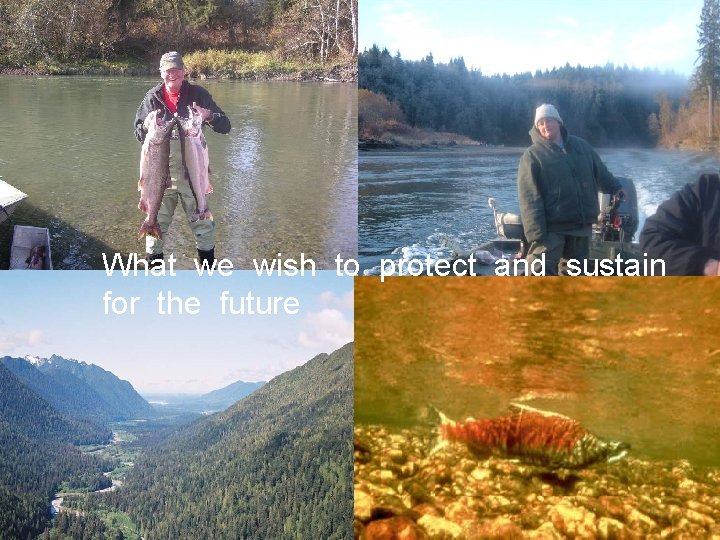
What we wish to protect and sustain for the future
THANK YOU Questions: Please contact Tony Hartrich, QDNR GIS Program Manager Phone: 360 -276 -8215, ext. 479 e-mail: thartrich@quinault. org