
An Overview of the Element of Colour Why
- Slides: 13
An Overview of the Element of Colour
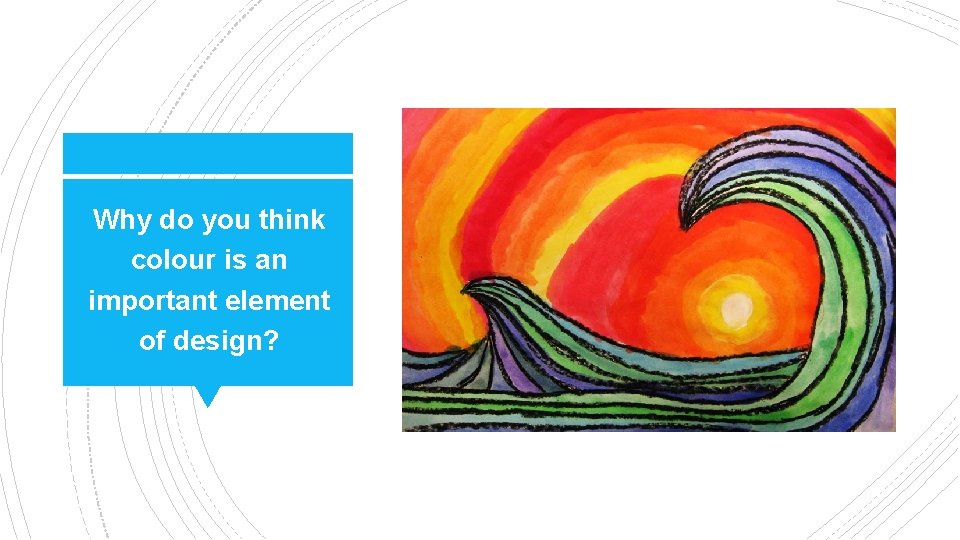
Why do you think colour is an important element of design?
§ Colour is one of the most expressive elements of design. § Colour can evoke Why bother with colour? various emotions and ideas. § Colour can also trigger our senses.
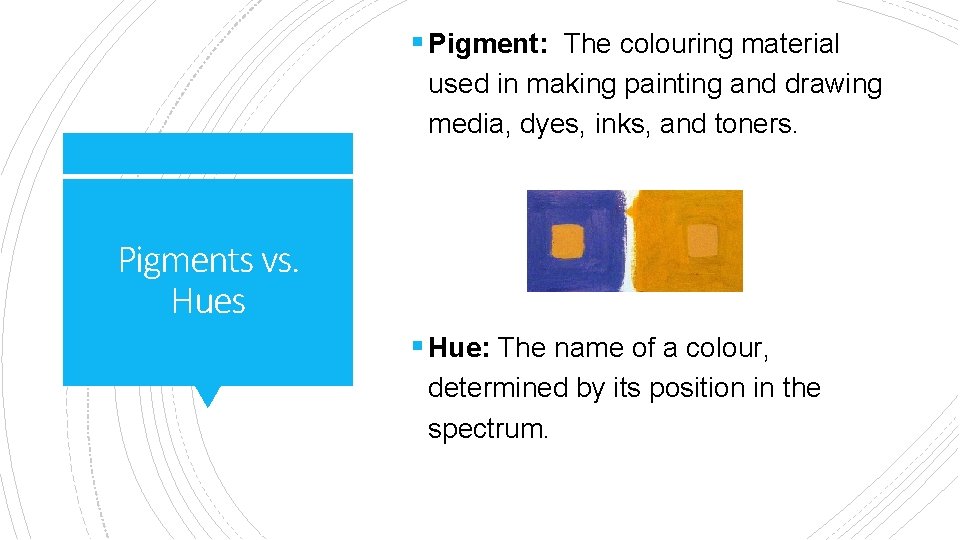
§ Pigment: The colouring material used in making painting and drawing media, dyes, inks, and toners. Pigments vs. Hues § Hue: The name of a colour, determined by its position in the spectrum.
§ 1. Hue: The name of a colour, What are the properties of colour? determined by its position in the spectrum. § 2. Value: An element of design that refers to the lightness or darkness of grays and colours. § 3. Intensity: The strength, brightness, or purity of a colour.
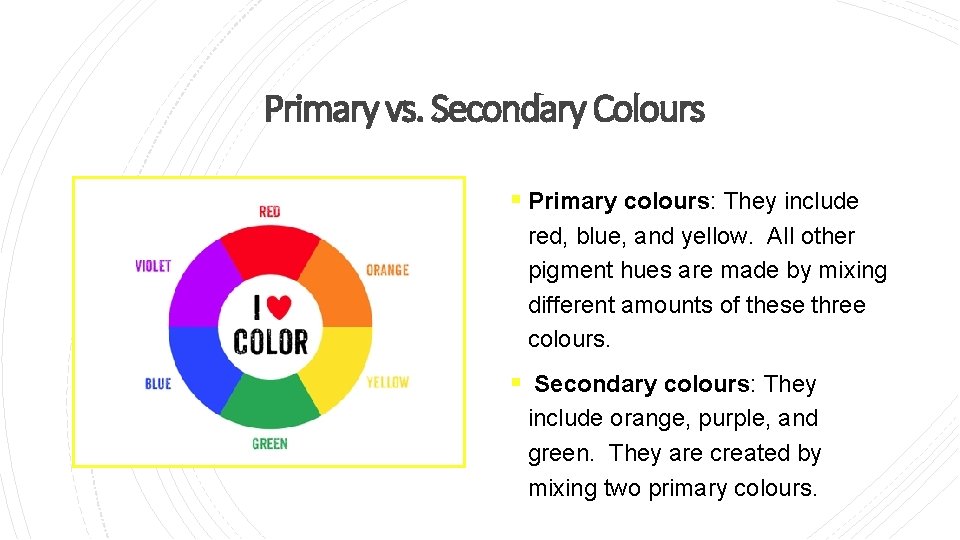
Primary vs. Secondary Colours § Primary colours: They include red, blue, and yellow. All other pigment hues are made by mixing different amounts of these three colours. § Secondary colours: They include orange, purple, and green. They are created by mixing two primary colours.
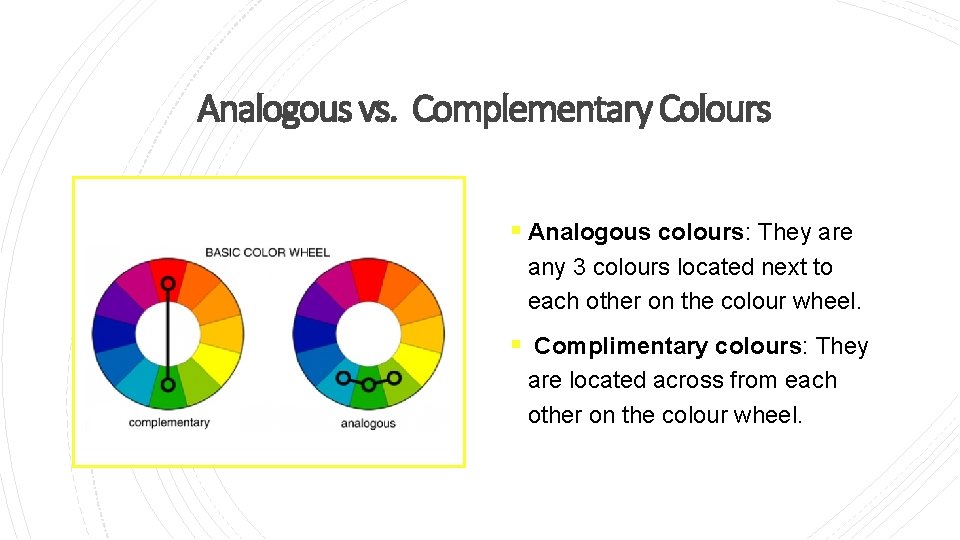
Analogous vs. Complementary Colours § Analogous colours: They are any 3 colours located next to each other on the colour wheel. § Complimentary colours: They are located across from each other on the colour wheel.
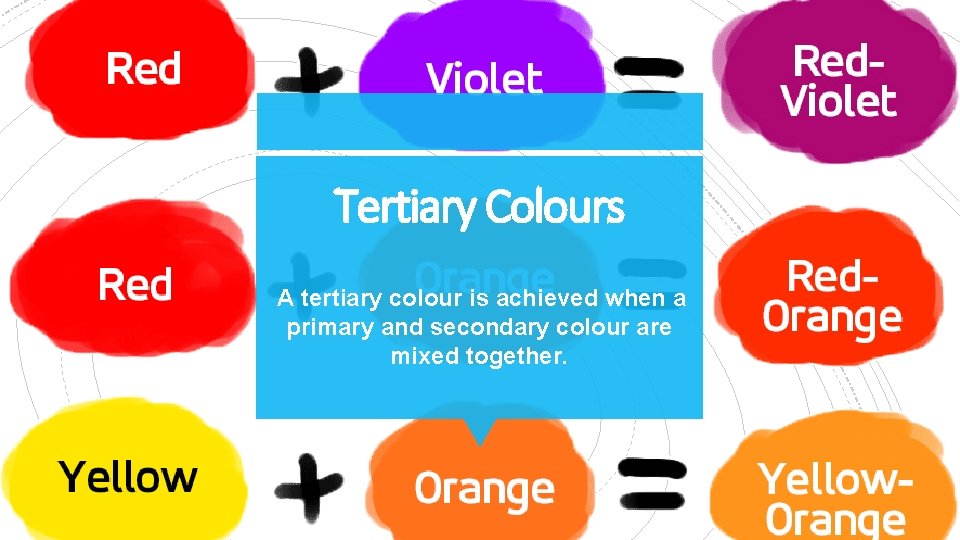
Tertiary Colours A tertiary colour is achieved when a primary and secondary colour are mixed together.
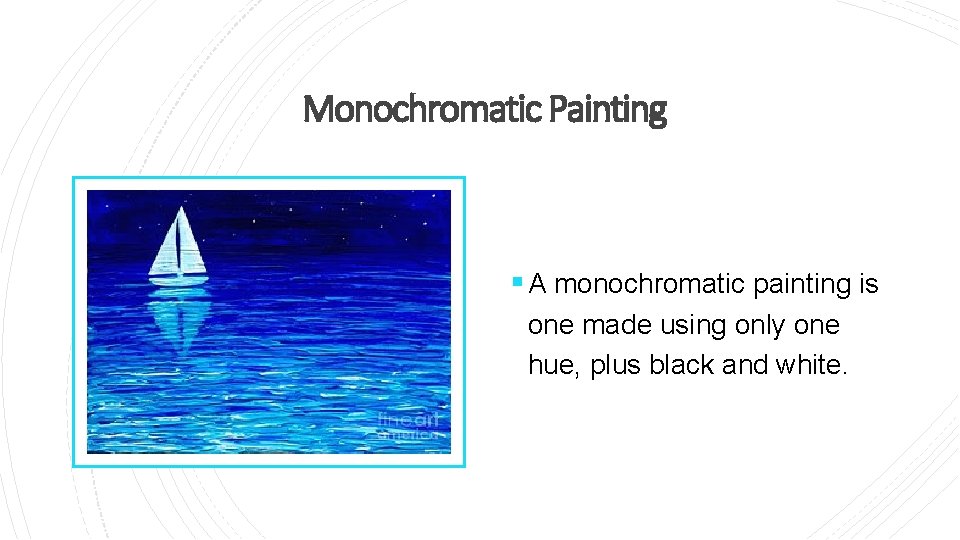
Monochromatic Painting § A monochromatic painting is one made using only one hue, plus black and white.
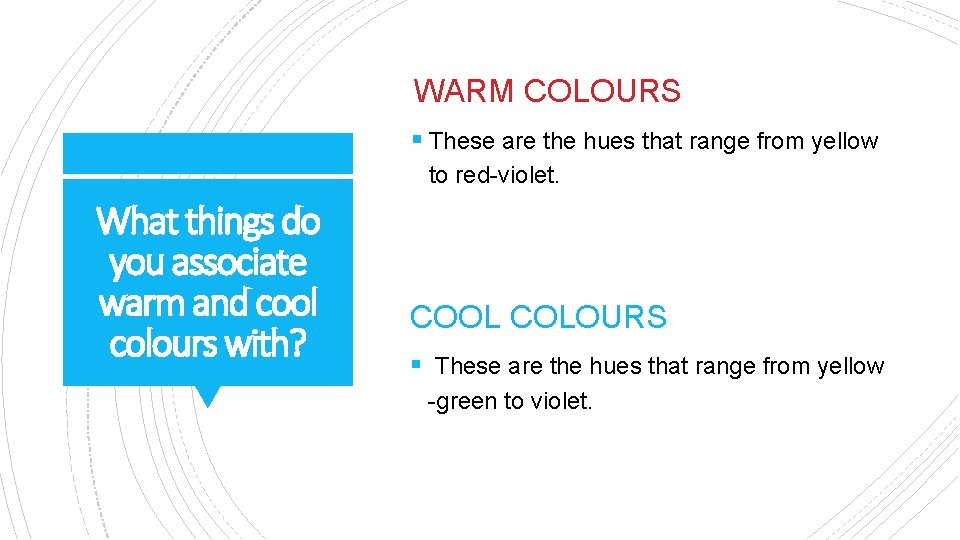
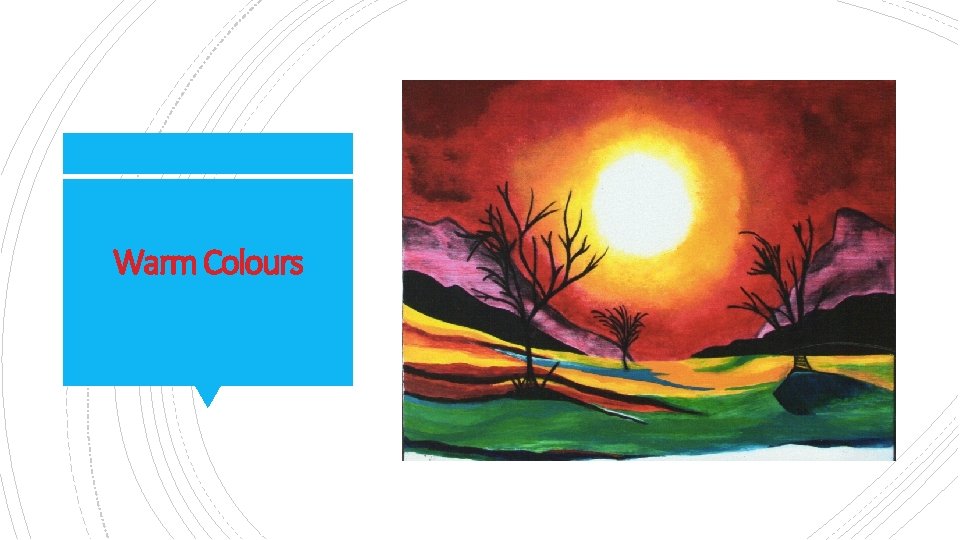
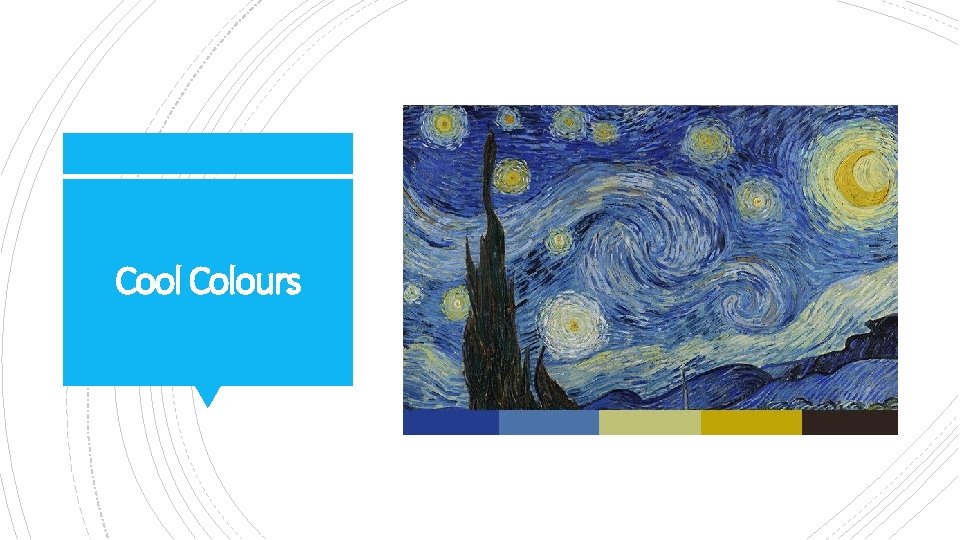
WARM COLOURS § These are the hues that range from yellow to red-violet. What things do you associate warm and cool colours with? COOL COLOURS § These are the hues that range from yellow -green to violet.
Warm Colours
Cool Colours
Source § Gatto, Joseph, et al. Exploring Visual Design. Massachuesetts: Davis Publications, Inc.