
An overview of PNH Pathophysiology New Diagnostic Guidelines

- Slides: 47
An overview of PNH: Pathophysiology, New Diagnostic Guidelines and EQA Stephen Richards stephen. richards 2@nhs. net St James’s University Hospital, Leeds, United Kingdom
Paroxysmal Nocturnal Haemoglobinuria § Clinical aspects of PNH § New ICCS Guidelines § EQA and PNH testing 2
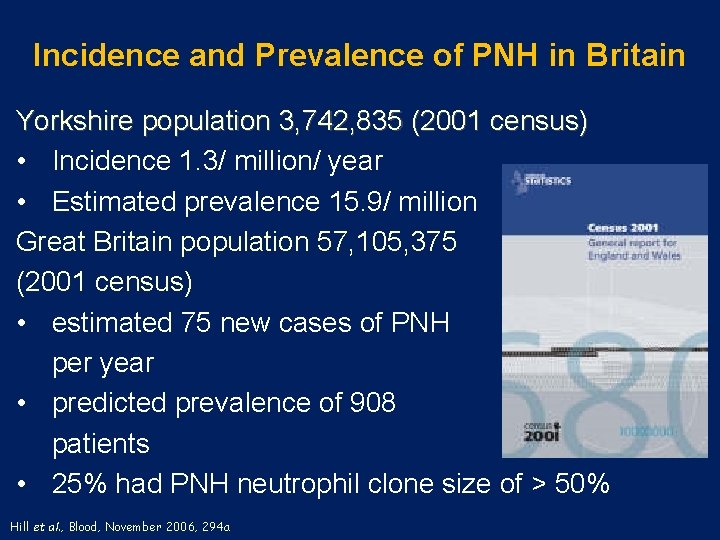
Incidence and Prevalence of PNH in Britain Yorkshire population 3, 742, 835 (2001 census) • Incidence 1. 3/ million/ year • Estimated prevalence 15. 9/ million Great Britain population 57, 105, 375 (2001 census) • estimated 75 new cases of PNH per year • predicted prevalence of 908 patients • 25% had PNH neutrophil clone size of > 50% Hill et al. , Blood, November 2006, 294 a
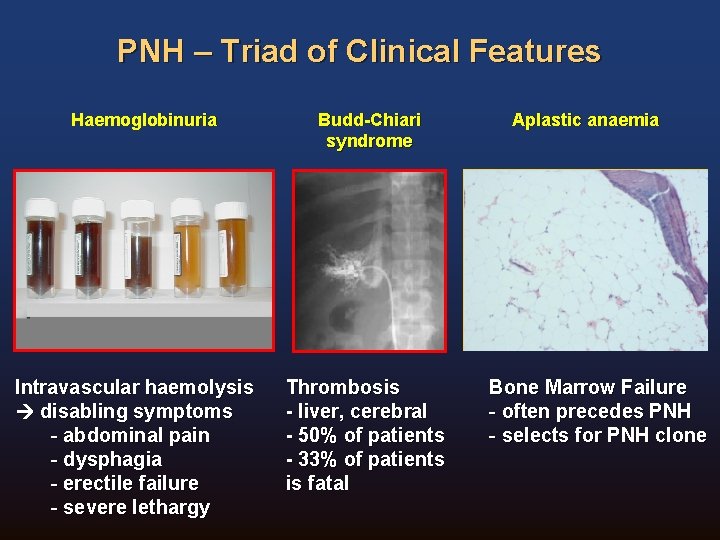
PNH – Triad of Clinical Features Haemoglobinuria Intravascular haemolysis disabling symptoms - abdominal pain - dysphagia - erectile failure - severe lethargy Budd-Chiari syndrome Thrombosis - liver, cerebral - 50% of patients - 33% of patients is fatal Aplastic anaemia Bone Marrow Failure - often precedes PNH - selects for PNH clone
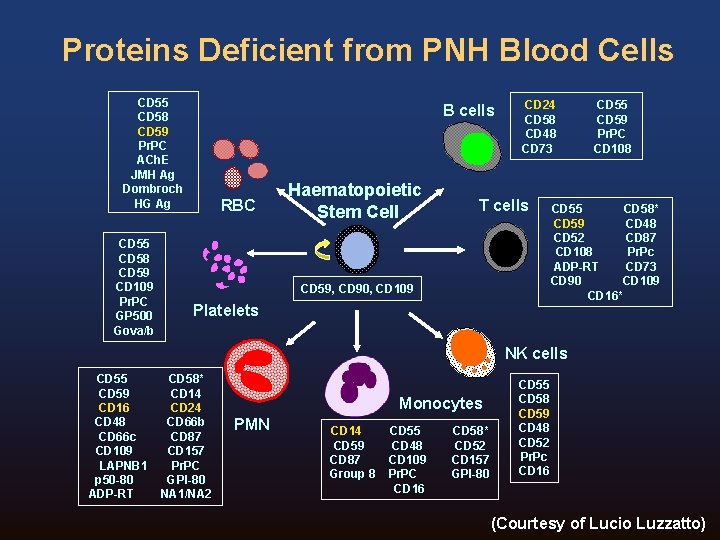
Proteins Deficient from PNH Blood Cells CD 55 CD 58 CD 59 Pr. PC ACh. E JMH Ag Dombroch HG Ag CD 55 CD 58 CD 59 CD 109 Pr. PC GP 500 Gova/b B cells RBC Haematopoietic Stem Cell CD 24 CD 58 CD 48 CD 73 T cells CD 59, CD 90, CD 109 Platelets CD 55 CD 59 Pr. PC CD 108 CD 55 CD 58* CD 59 CD 48 CD 52 CD 87 CD 108 Pr. Pc ADP-RT CD 73 CD 90 CD 109 CD 16* NK cells CD 55 CD 59 CD 16 CD 48 CD 66 c CD 109 LAPNB 1 p 50 -80 ADP-RT CD 58* CD 14 CD 24 CD 66 b CD 87 CD 157 Pr. PC GPI-80 NA 1/NA 2 Monocytes PMN CD 14 CD 59 CD 87 Group 8 CD 55 CD 48 CD 109 Pr. PC CD 16 CD 58* CD 52 CD 157 GPI-80 CD 55 CD 58 CD 59 CD 48 CD 52 Pr. Pc CD 16 (Courtesy of Lucio Luzzatto)
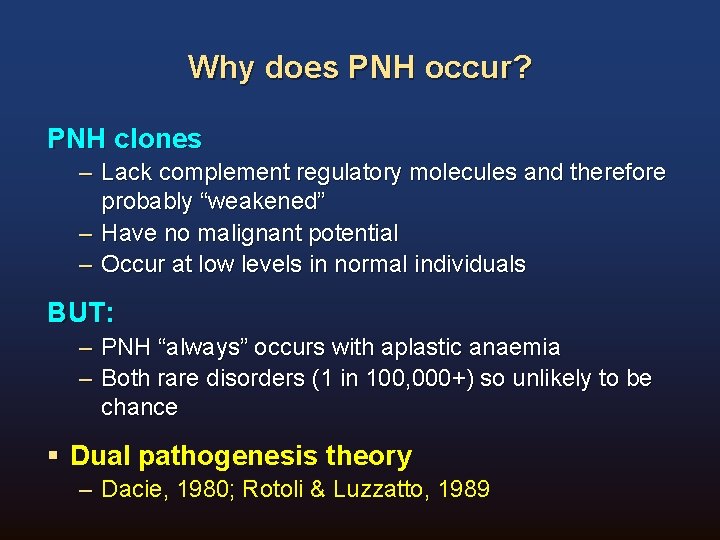
Why does PNH occur? PNH clones – Lack complement regulatory molecules and therefore probably “weakened” – Have no malignant potential – Occur at low levels in normal individuals BUT: – PNH “always” occurs with aplastic anaemia – Both rare disorders (1 in 100, 000+) so unlikely to be chance § Dual pathogenesis theory – Dacie, 1980; Rotoli & Luzzatto, 1989
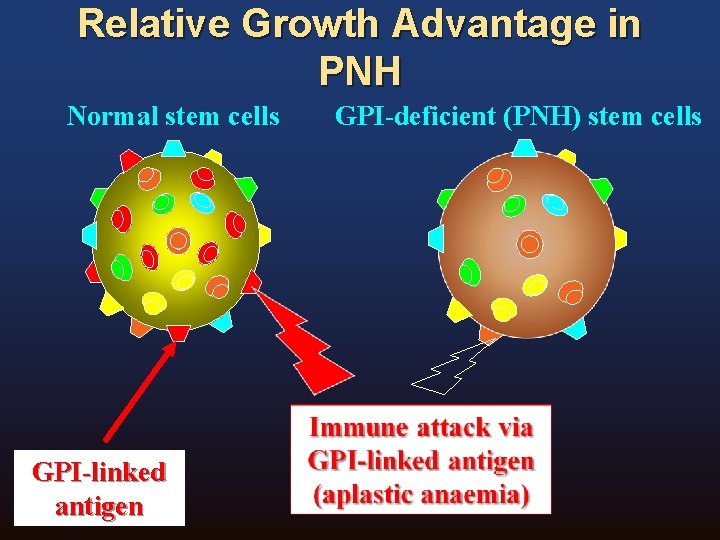
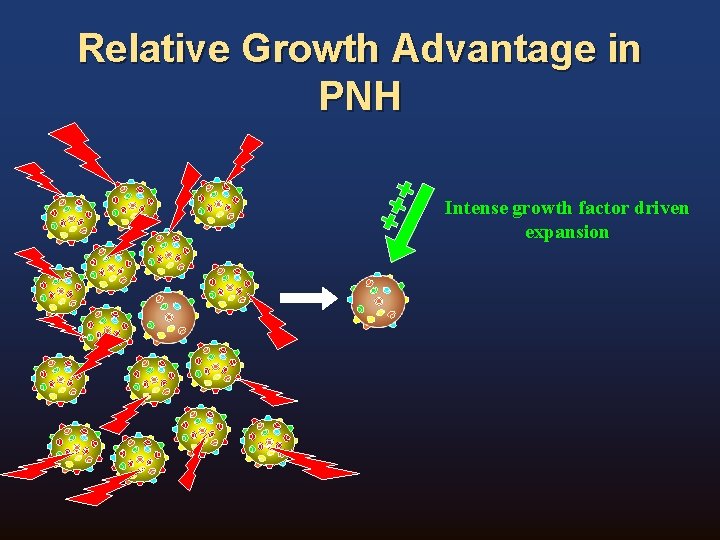
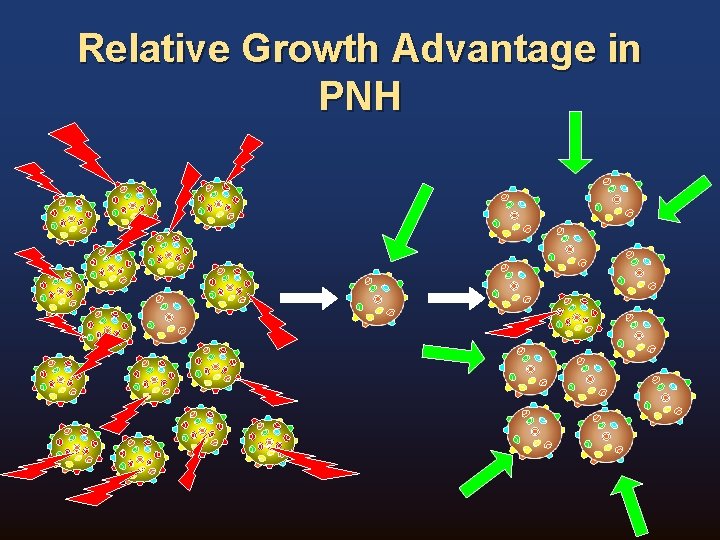
Relative Growth Advantage in PNH Normal stem cells GPI-linked antigen GPI-deficient (PNH) stem cells
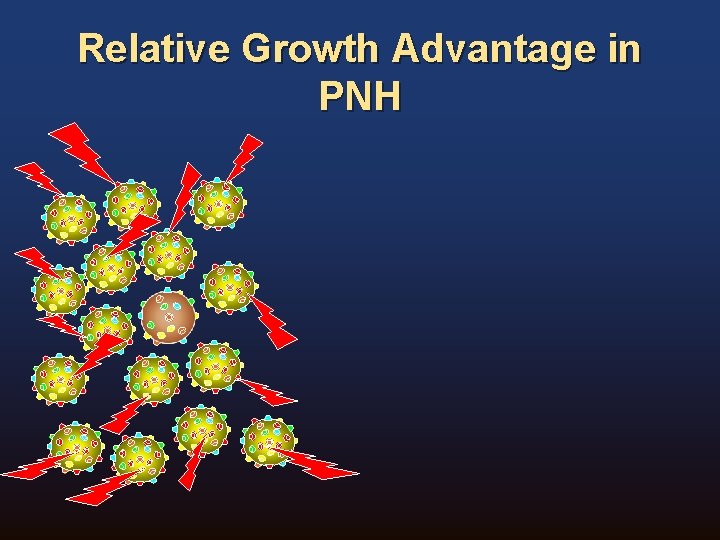
Relative Growth Advantage in PNH
Relative Growth Advantage in PNH Intense growth factor driven expansion
Relative Growth Advantage in PNH
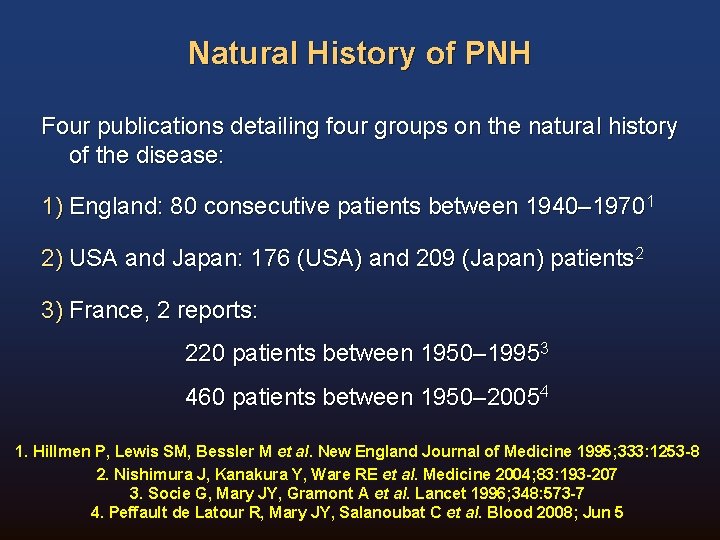
Natural History of PNH Four publications detailing four groups on the natural history of the disease: 1) England: 80 consecutive patients between 1940– 19701 2) USA and Japan: 176 (USA) and 209 (Japan) patients 2 3) France, 2 reports: 220 patients between 1950– 19953 460 patients between 1950– 20054 1. Hillmen P, Lewis SM, Bessler M et al. New England Journal of Medicine 1995; 333: 1253 -8 2. Nishimura J, Kanakura Y, Ware RE et al. Medicine 2004; 83: 193 -207 3. Socie G, Mary JY, Gramont A et al. Lancet 1996; 348: 573 -7 4. Peffault de Latour R, Mary JY, Salanoubat C et al. Blood 2008; Jun 5
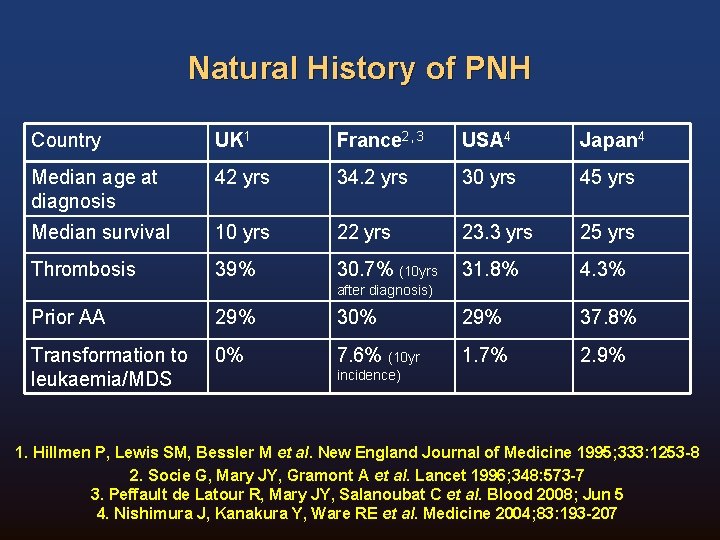
Natural History of PNH Country UK 1 France 2, 3 USA 4 Japan 4 Median age at diagnosis 42 yrs 34. 2 yrs 30 yrs 45 yrs Median survival 10 yrs 22 yrs 23. 3 yrs 25 yrs Thrombosis 39% 30. 7% (10 yrs 31. 8% 4. 3% after diagnosis) Prior AA 29% 30% 29% 37. 8% Transformation to leukaemia/MDS 0% 7. 6% (10 yr 1. 7% 2. 9% incidence) 1. Hillmen P, Lewis SM, Bessler M et al. New England Journal of Medicine 1995; 333: 1253 -8 2. Socie G, Mary JY, Gramont A et al. Lancet 1996; 348: 573 -7 3. Peffault de Latour R, Mary JY, Salanoubat C et al. Blood 2008; Jun 5 4. Nishimura J, Kanakura Y, Ware RE et al. Medicine 2004; 83: 193 -207
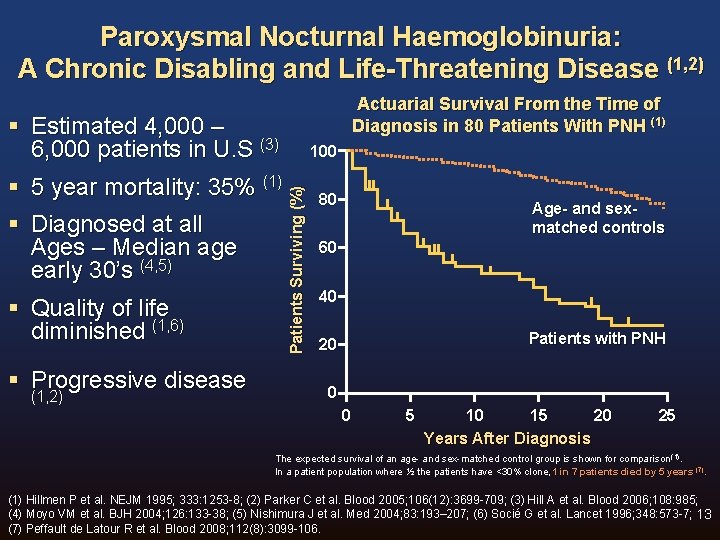
Paroxysmal Nocturnal Haemoglobinuria: A Chronic Disabling and Life-Threatening Disease (1, 2) § Diagnosed at all Ages – Median age early 30’s (4, 5) § Quality of life diminished (1, 6) § Progressive disease (1, 2) 100 Patients Surviving (%) § Estimated 4, 000 – 6, 000 patients in U. S (3) § 5 year mortality: 35% (1) Actuarial Survival From the Time of Diagnosis in 80 Patients With PNH (1) 80 Age- and sexmatched controls 60 40 Patients with PNH 20 0 0 5 10 15 20 Years After Diagnosis 25 The expected survival of an age- and sex-matched control group is shown for comparison (1). In a patient population where ½ the patients have <30% clone, 1 in 7 patients died by 5 years (7). (1) Hillmen P et al. NEJM 1995; 333: 1253 -8; (2) Parker C et al. Blood 2005; 106(12): 3699 -709; (3) Hill A et al. Blood 2006; 108: 985; (4) Moyo VM et al. BJH 2004; 126: 133 -38; (5) Nishimura J et al. Med 2004; 83: 193– 207; (6) Socié G et al. Lancet 1996; 348: 573 -7; 13 (7) Peffault de Latour R et al. Blood 2008; 112(8): 3099 -106.
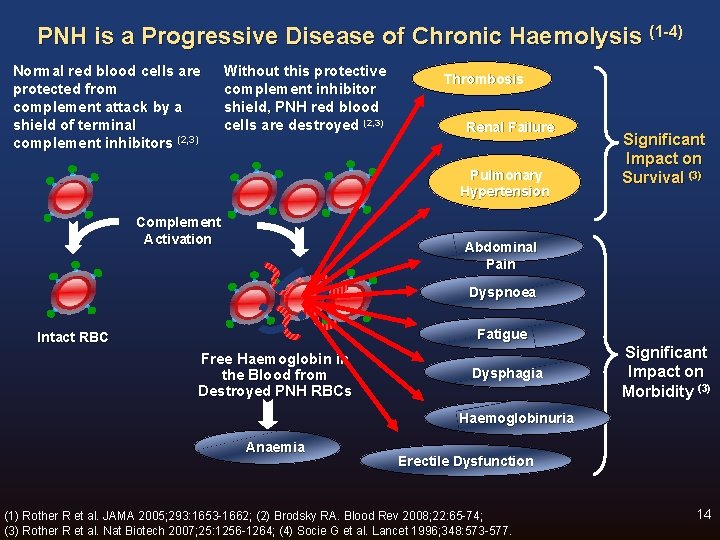
PNH is a Progressive Disease of Chronic Haemolysis (1 -4) Normal red blood cells are protected from complement attack by a shield of terminal complement inhibitors (2, 3) Without this protective complement inhibitor shield, PNH red blood cells are destroyed (2, 3) Thrombosis Renal Failure Pulmonary Hypertension Complement Activation Significant Impact on Survival (3) Abdominal Pain Dyspnoea Fatigue Intact RBC Free Haemoglobin in the Blood from Destroyed PNH RBCs Dysphagia Significant Impact on Morbidity (3) Haemoglobinuria Anaemia Erectile Dysfunction (1) Rother R et al. JAMA 2005; 293: 1653 -1662; (2) Brodsky RA. Blood Rev 2008; 22: 65 -74; (3) Rother R et al. Nat Biotech 2007; 25: 1256 -1264; (4) Socie G et al. Lancet 1996; 348: 573 -577. 14
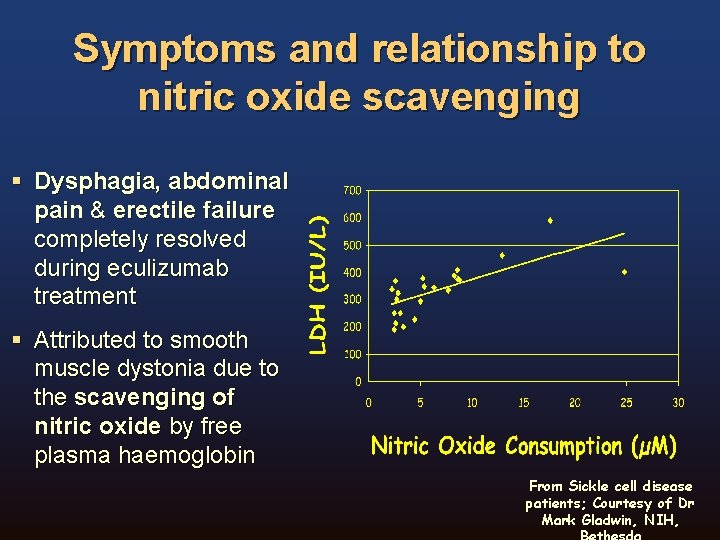
Symptoms and relationship to nitric oxide scavenging § Dysphagia, abdominal pain & erectile failure completely resolved during eculizumab treatment § Attributed to smooth muscle dystonia due to the scavenging of nitric oxide by free plasma haemoglobin From Sickle cell disease patients; Courtesy of Dr Mark Gladwin, NIH,
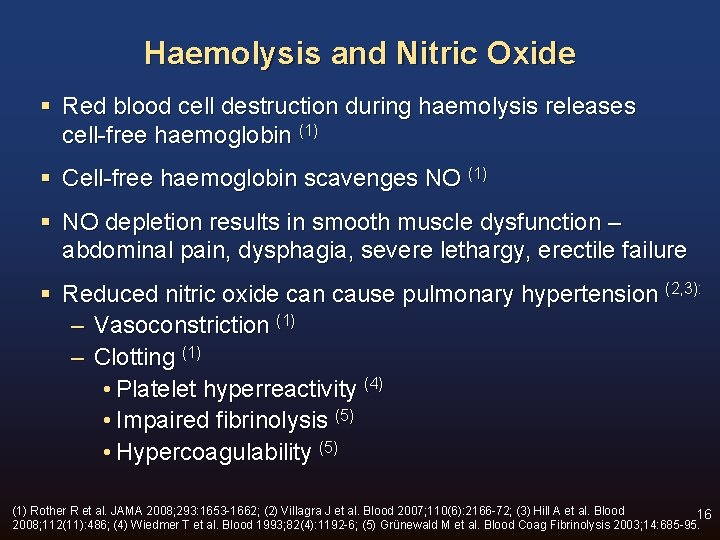
Haemolysis and Nitric Oxide § Red blood cell destruction during haemolysis releases cell-free haemoglobin (1) § Cell-free haemoglobin scavenges NO (1) § NO depletion results in smooth muscle dysfunction – abdominal pain, dysphagia, severe lethargy, erectile failure § Reduced nitric oxide can cause pulmonary hypertension (2, 3): – Vasoconstriction (1) – Clotting (1) • Platelet hyperreactivity (4) • Impaired fibrinolysis (5) • Hypercoagulability (5) (1) Rother R et al. JAMA 2008; 293: 1653 -1662; (2) Villagra J et al. Blood 2007; 110(6): 2166 -72; (3) Hill A et al. Blood 16 2008; 112(11): 486; (4) Wiedmer T et al. Blood 1993; 82(4): 1192 -6; (5) Grünewald M et al. Blood Coag Fibrinolysis 2003; 14: 685 -95.
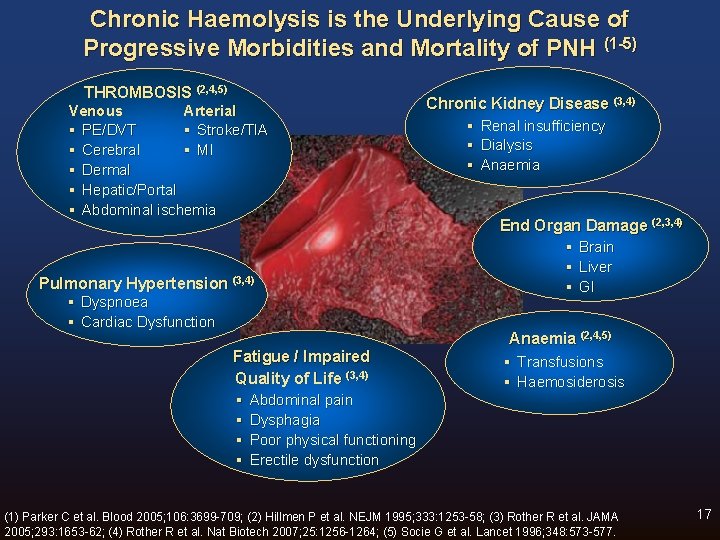
Chronic Haemolysis is the Underlying Cause of Progressive Morbidities and Mortality of PNH (1 -5) THROMBOSIS (2, 4, 5) Venous Arterial § PE/DVT § Stroke/TIA § Cerebral § MI § Dermal § Hepatic/Portal § Abdominal ischemia Pulmonary Hypertension (3, 4) § Dyspnoea § Cardiac Dysfunction Fatigue / Impaired Quality of Life (3, 4) § Abdominal pain § Dysphagia § Poor physical functioning § Erectile dysfunction Chronic Kidney Disease (3, 4) § Renal insufficiency § Dialysis § Anaemia End Organ Damage (2, 3, 4) § Brain § Liver § GI Anaemia (2, 4, 5) § Transfusions § Haemosiderosis (1) Parker C et al. Blood 2005; 106: 3699 -709; (2) Hillmen P et al. NEJM 1995; 333: 1253 -58; (3) Rother R et al. JAMA 2005; 293: 1653 -62; (4) Rother R et al. Nat Biotech 2007; 25: 1256 -1264; (5) Socie G et al. Lancet 1996; 348: 573 -577. 17
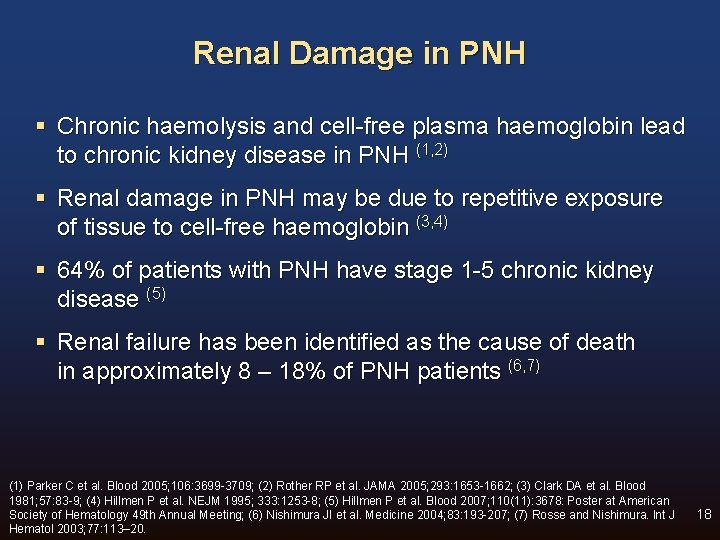
Renal Damage in PNH § Chronic haemolysis and cell-free plasma haemoglobin lead to chronic kidney disease in PNH (1, 2) § Renal damage in PNH may be due to repetitive exposure of tissue to cell-free haemoglobin (3, 4) § 64% of patients with PNH have stage 1 -5 chronic kidney disease (5) § Renal failure has been identified as the cause of death in approximately 8 – 18% of PNH patients (6, 7) (1) Parker C et al. Blood 2005; 106: 3699 -3709; (2) Rother RP et al. JAMA 2005; 293: 1653 -1662; (3) Clark DA et al. Blood 1981; 57: 83 -9; (4) Hillmen P et al. NEJM 1995; 333: 1253 -8; (5) Hillmen P et al. Blood 2007; 110(11): 3678: Poster at American Society of Hematology 49 th Annual Meeting; (6) Nishimura JI et al. Medicine 2004; 83: 193 -207; (7) Rosse and Nishimura. lnt J Hematol 2003; 77: 113– 20. 18
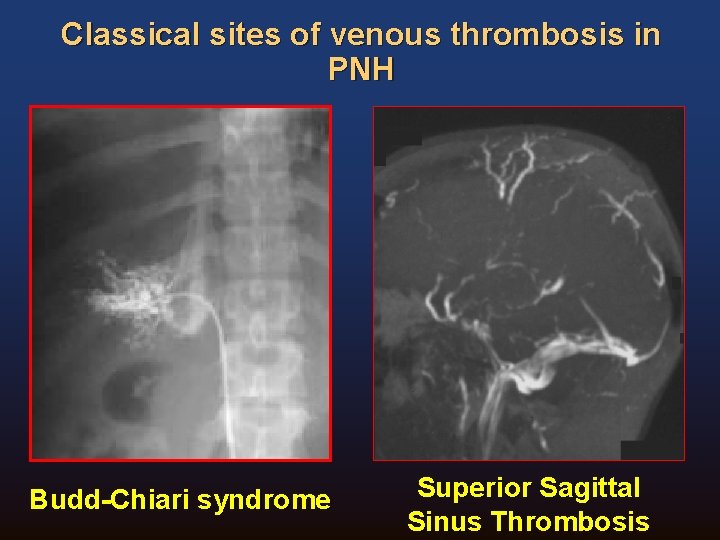
Classical sites of venous thrombosis in PNH Budd-Chiari syndrome Superior Sagittal Sinus Thrombosis
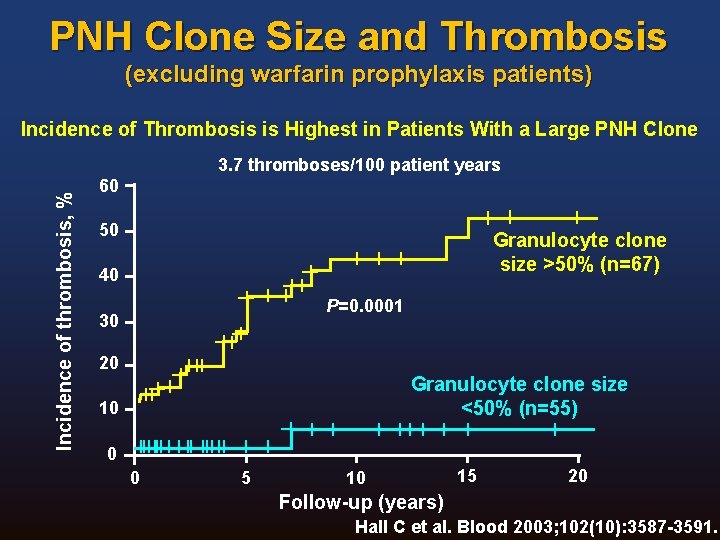
PNH Clone Size and Thrombosis (excluding warfarin prophylaxis patients) Incidence of Thrombosis is Highest in Patients With a Large PNH Clone Incidence of thrombosis, % 3. 7 thromboses/100 patient years 60 50 Granulocyte clone size >50% (n=67) 40 P=0. 0001 30 20 Granulocyte clone size <50% (n=55) 10 0 0 5 10 15 20 Follow-up (years) Hall C et al. Blood 2003; 102(10): 3587 -3591.
Laboratory Investigation of PNH • Flow cytometry immunophenotyping is the method of choice for PNH testing • Diagnosis or identification of PNH cells by demonstrating deficiency of GPI-linked proteins from granulocytes/monocytes/red cells • There is little guidance or consensus on the best approach or for labs wanting to set up PNH testing
Laboratory Investigation of PNH Background In 2008 the Clinical Cytometry Society sponsored a workshop on PNH testing § Approximately 100 attendees from flow cytometry community § Out of this workshop came the desire to produce a consensus document that addressed many of the issues raised at this meeting §
The need for a consensus guideline for PNH immunophenotyping § The disease is rare and most labs have limited experience in PNH testing § Clinical documents have recommended testing, including “high sensitivity” testing, without specifying how this should be done § Flow cytometry is method of choice for PNH testing, but many different approaches exist § Some external QA/proficiency testing data have shown a wide range in ability of labs to detect abnormal PNH populations Parker et al, Blood 2005; 106: 3699, Sutherland et al, Am J Clin Pathol 132: 564, 2009; Richards et al Cytometry B 76: 47 2009
Consensus Committee Michael J Borowitz, MD, Ph. D Johns Hopkins Fiona E Craig, MD University of Pittsburgh Joseph A Di. Giuseppe, MD, Ph. D Hartford Hospital Andrea Illingworth, MS Dahl-Chase Diagnostic Services Stephen J Richards, Ph. D NHS, Leeds UK Wendell F Rosse, MD Duke University Robert D Sutherland, Ph. D Toronto General Hospital Carl T Wittwer, MD, Ph. D University of Utah
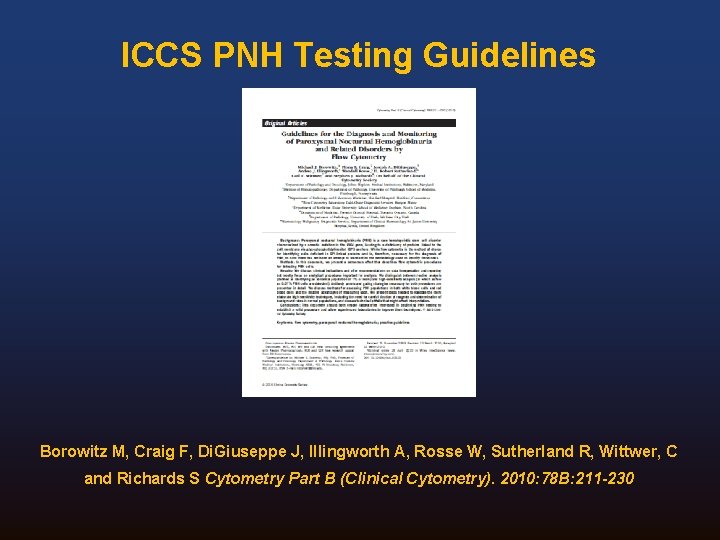
ICCS PNH Testing Guidelines Borowitz M, Craig F, Di. Giuseppe J, Illingworth A, Rosse W, Sutherland R, Wittwer, C and Richards S Cytometry Part B (Clinical Cytometry). 2010: 78 B: 211 -230
Recommendations in the ICCS PNH Testing Guidelines Document Recommendations tried to strike a balance between the virtues of standardization and the fact that there are limited data comparing methods; many approaches can be shown to work § Many of the recommendations are based on the authors’ experiences of ‘what works’ rather than systematic evaluation. §
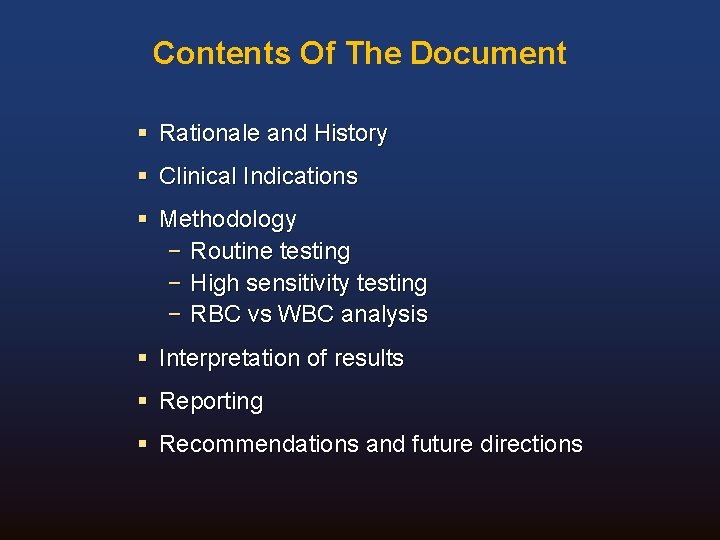
Contents Of The Document § Rationale and History § Clinical Indications § Methodology − Routine testing − High sensitivity testing − RBC vs WBC analysis § Interpretation of results § Reporting § Recommendations and future directions
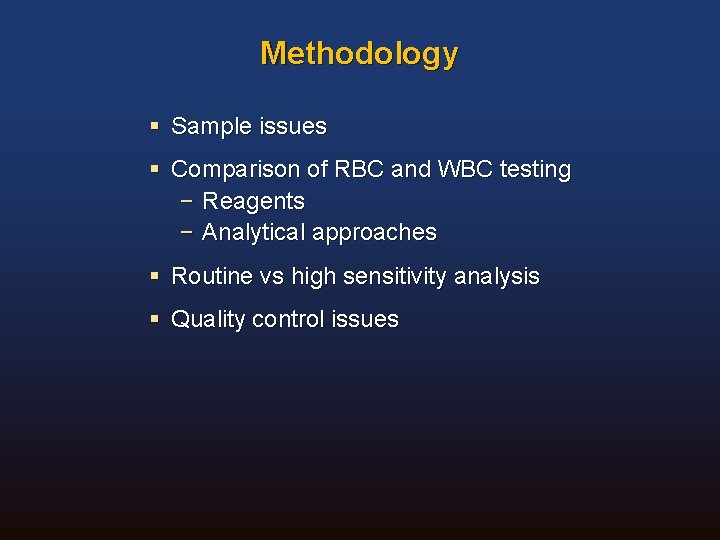
Methodology § Sample issues § Comparison of RBC and WBC testing − Reagents − Analytical approaches § Routine vs high sensitivity analysis § Quality control issues
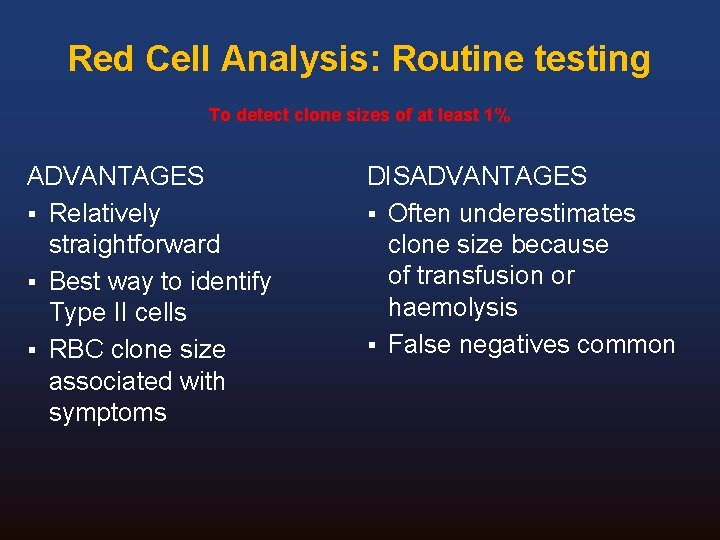
Red Cell Analysis: Routine testing To detect clone sizes of at least 1% ADVANTAGES § Relatively straightforward § Best way to identify Type II cells § RBC clone size associated with symptoms DISADVANTAGES § Often underestimates clone size because of transfusion or haemolysis § False negatives common
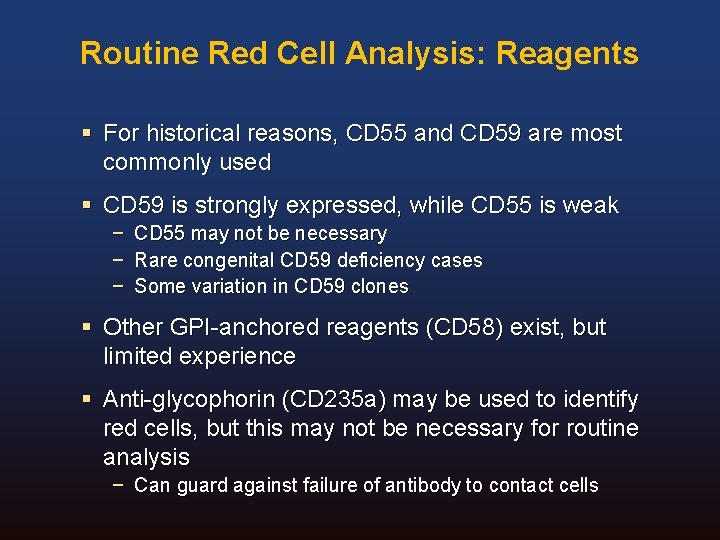
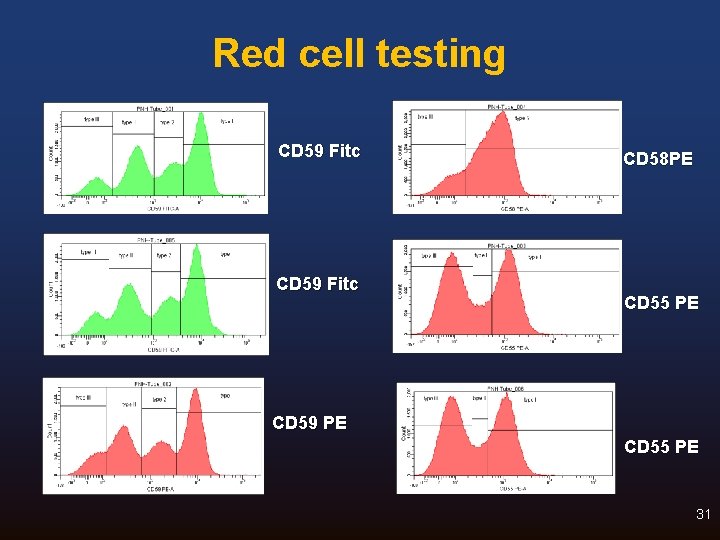
Routine Red Cell Analysis: Reagents § For historical reasons, CD 55 and CD 59 are most commonly used § CD 59 is strongly expressed, while CD 55 is weak − CD 55 may not be necessary − Rare congenital CD 59 deficiency cases − Some variation in CD 59 clones § Other GPI-anchored reagents (CD 58) exist, but limited experience § Anti-glycophorin (CD 235 a) may be used to identify red cells, but this may not be necessary for routine analysis − Can guard against failure of antibody to contact cells
Red cell testing CD 59 Fitc CD 58 PE CD 55 PE CD 59 PE CD 55 PE 31
Leucocyte Analysis: Routine testing § Granulocyte PNH clone probably gives most accurate estimate of PNH clone size § Monocyte clones can usually be determined in same tube and confirms granulocyte result, though because monocytes are less numerous, precision is lower § Type II granulocytes can occasionally be recognized but red cells are typically better for this purpose § Lymphocytes are not a suitable target for testing
Leucocyte Analysis: Reagents § CD 55 and CD 59 were used historically but these are not optimal § CD 16, CD 66 b, CD 24 are most commonly used GPI-linked markers for granulocytes § CD 14 is often used for monocytes but some normal dendritic cells are CD 14 -negative and gate like monocytes § FLAER is the most versatile reagent for detecting PNH white cells
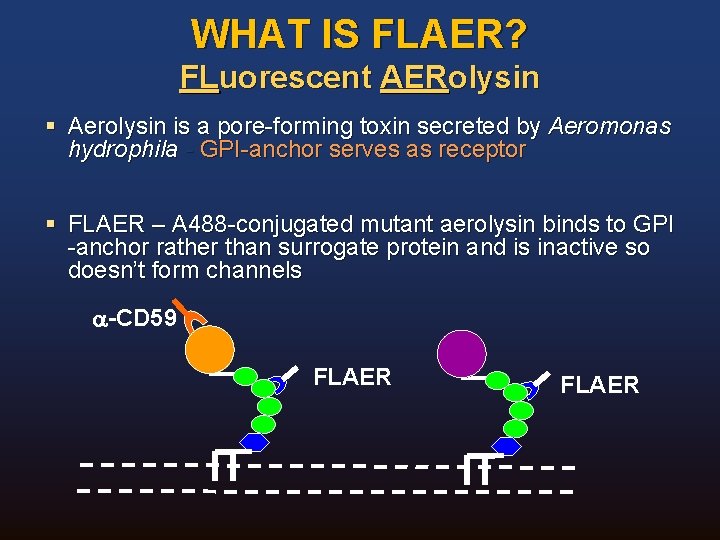
WHAT IS FLAER? FLuorescent AERolysin § Aerolysin is a pore-forming toxin secreted by Aeromonas hydrophila - GPI-anchor serves as receptor § FLAER – A 488 -conjugated mutant aerolysin binds to GPI -anchor rather than surrogate protein and is inactive so doesn’t form channels a-CD 59 FLAER
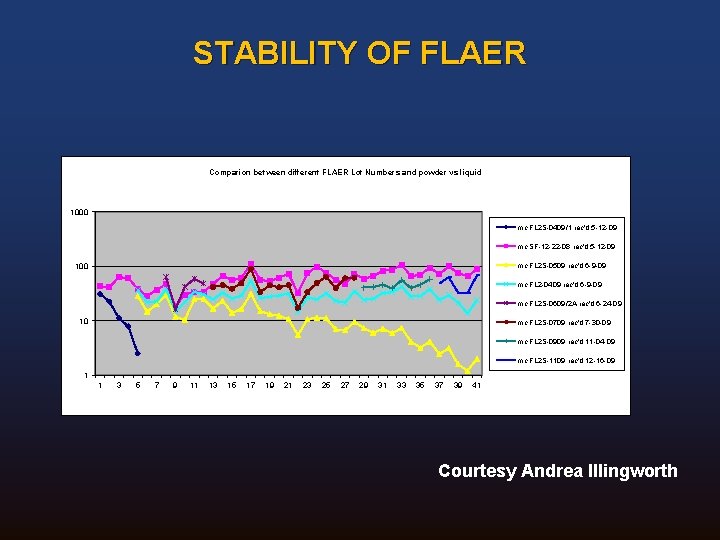
FLAER STABILITY § Original formulation was lyophilized, requiring aliquoting and freezing § Reconstituted FLAER was unstable § Stability problems better with more recent lots § New liquid formulation exists which is also stable, and can be treated more or less like any other monoclonal antibody – Sensitive to light and temperature
STABILITY OF FLAER Comparion between different FLAER Lot Numbers and powder vs liquid 1000 mc FL 2 S-0409/1 rec'd 5 -12 -09 mc SF-12 -22 -08 rec'd 5 -12 -09 mc FL 2 S-0509 rec'd 6 -9 -09 100 mc FL 2 -0409 rec'd 6 -9 -09 mc FL 2 S-0609/2 A rec'd 6 -24 -09 10 mc FL 2 S-0709 rec'd 7 -30 -09 mc FL 2 S-0909 rec'd 11 -04 -09 mc FL 2 S-1109 rec'd 12 -16 -09 1 1 3 5 7 9 11 13 15 17 19 21 23 25 27 29 31 33 35 37 39 41 Courtesy Andrea Illingworth
Routine Analysis: Summary § Adequate for detection of all cases of hemolytic PNH § White cell analysis necessary as screen as too many false negatives with red cell screening assay alone § Preferred granulocyte reagents are CD 24, CD 66 b, CD 16, FLAER § Gating usually not critical § Can obtain reasonable results with as few as 5 -10 K cells of interest
High Sensitivity Assays: Special concerns § Need to collect more events § Requirement for an extensive study of normals to determine background rates § Essential to use multiparameter gating to ensure purity of the population used for the denominator § Need to combine two GPI-linked WBC markers to maximize sensitivity § FLAER particularly useful; because it is absent from both grans and monos an impure gate will not lead to interpretation of a small PNH clone when none is present
Guideline Summary I § Broad agreement on the need for a consensus guideline § Document reviews and clarifies clinical recommendations § Blood identified as preferred sample § Approach to routine and high sensitivity analysis addressed separately
Guideline Summary II § Granulocyte analysis provides better estimate of size of PNH clone than RBC analysis § Thus, routine red cell analysis not recommended without white cell analysis, though a granulocyte screening assay may be viable, especially in labs with low prevalence of PNH § Lymphocyte analysis not recommended because of lifespan of lymphocytes
Guideline Summary III § For high sensitivity WBC analysis, essential to use an antibody for gating, and to assess two different GPIanchored markers, though in routine analysis this may not be necessary § FLAER and CD 24 are recommended as preferred granulocyte reagents, and CD 59 is the best single RBC reagent; CD 55 is not acceptable by itself § Further research with other markers may result in revisions to these recommendations
EQA For PNH testing § What kind of scheme? § Screening vs high sensitivity (MRD) testing § What material? § What methodology? § Educational aspects § Scoring/performance issues § Molecular testing
EQA For PNH testing § What kind of scheme? § ‘rare disease’ testing § What cells to test? § Single sample sent out to participating laboratories § Exchange fresh material between small number of laboratories § List mode data
EQA For PNH testing § Screening vs high sensitivity (MRD) testing – Screening (~1%) – MRD 0. 01% § Methodology – Standardised procedure – Instrument set-up – Antibodies/reagents – Fluorochromes – Target populations
EQA For PNH testing § What material? § Small groups: exchange of known fresh patient samples § Large International schemes: stabilized material. § Good statistical data but may perform differently compared to fresh material § Large volume of material required from patients with low counts § Any role for molecular screening for PIG-A mutations § Deep sequencing techniques
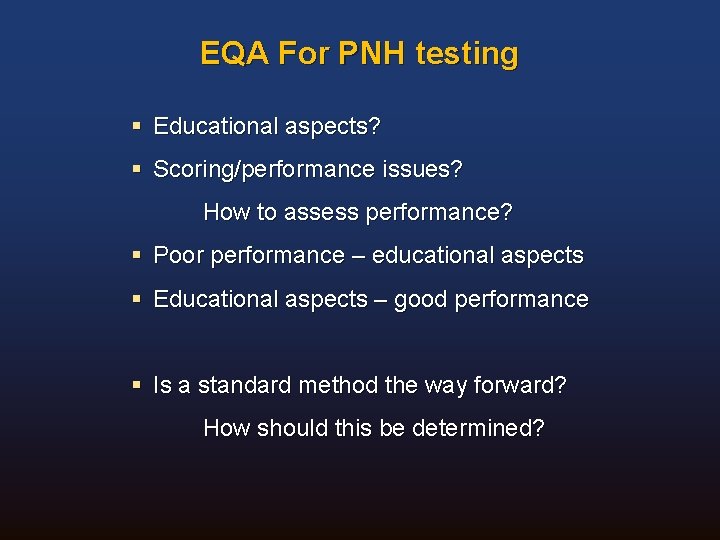
EQA For PNH testing § Educational aspects? § Scoring/performance issues? How to assess performance? § Poor performance – educational aspects § Educational aspects – good performance § Is a standard method the way forward? How should this be determined?
Acknowledgements Leeds NCG PNH Team Stephen Richards Louise Arnold Gemma Brooksbank Alison Freemantle Peter Hillmen Tracy Downing Angela Barlow Jane Bower Anita Hill Richard Kelly HMDS Anita, Brad, Matt, Fiona, David Swirsky. Alexion Europe UKNEQAS LI David Barnett, Liam, Alison, Matthew CCS PNH Guideline team Michael Borowitz and all who took time to read and comment on the document Leeds NCG PNH Team Thank you