
An overview of ongoing point cloud compression standardization


- Slides: 19
An overview of ongoing point cloud compression standardization activities: video-based (V-PCC) and geometry-based (G-PCC) D. Graziosi 1, O. Nakagami 2, S. Kuma 2, A. Zaghetto 1, T. Suzuki 2 and A. Tabatabai 1 1 R & D Center US San Jose Laboratory, Sony Corporation of America, San Jose, USA 2 R & D Center, Sony Corporation, Shinagawa-ku, Japan 1
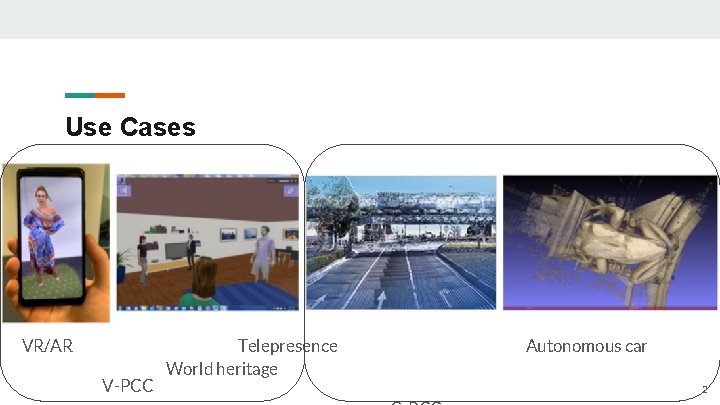
Use Cases VR/AR V-PCC Telepresence World heritage Autonomous car 2
PCC Standardization ● LIDAR point cloud compression (L-PCC) for dynamically acquired data ● Surface point cloud compression for (S-PCC) for static point cloud data ● Video-based point cloud compression (V-PCC) for dynamic content ● Video-based (V-PCC) ● Geometry-based (G-PCC) 3
V-PCC 4
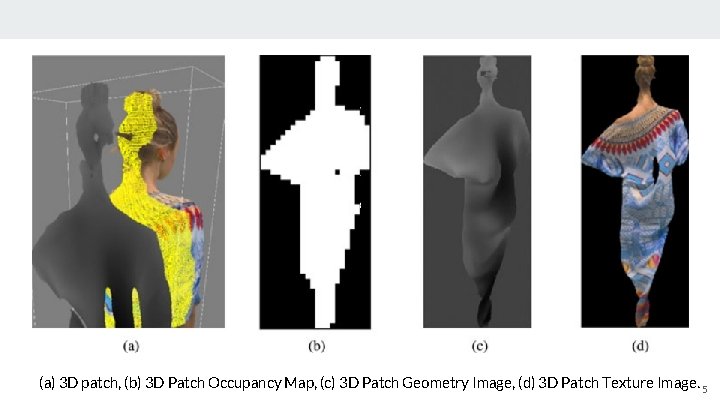
(a) 3 D patch, (b) 3 D Patch Occupancy Map, (c) 3 D Patch Geometry Image, (d) 3 D Patch Texture Image. 5
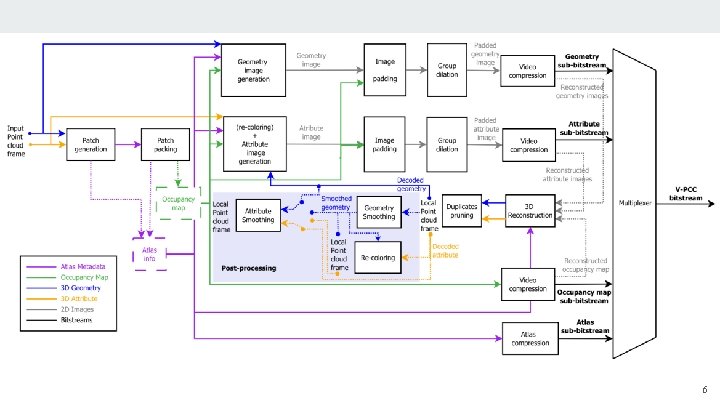
6
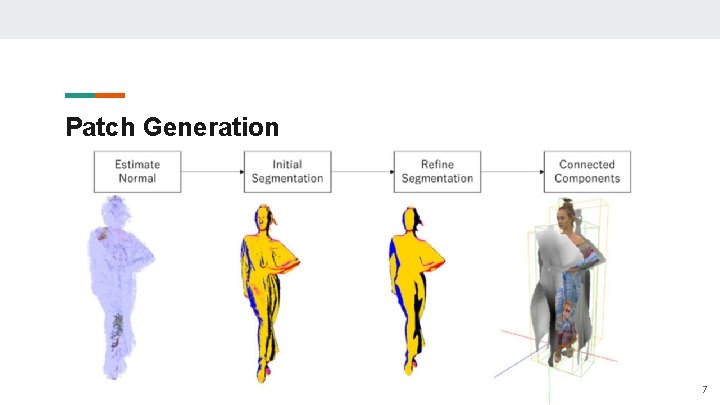
Patch Generation 7
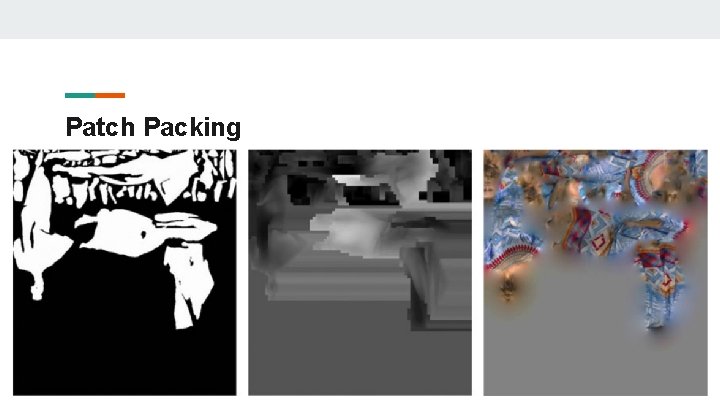
Patch Packing 8
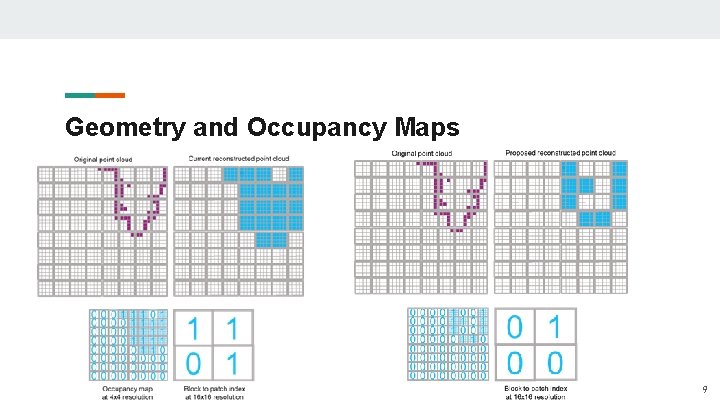
Geometry and Occupancy Maps 9
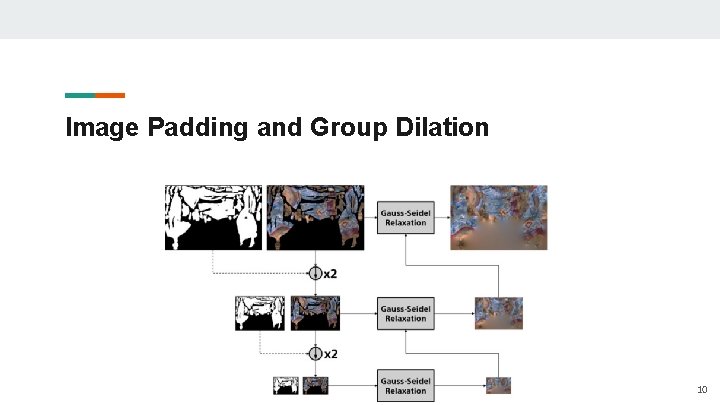
Image Padding and Group Dilation 10
Re-Coloring and Video Compression ● Nearest point from the original point cloud ● Color converted from RGB 444 to YUV 420 11
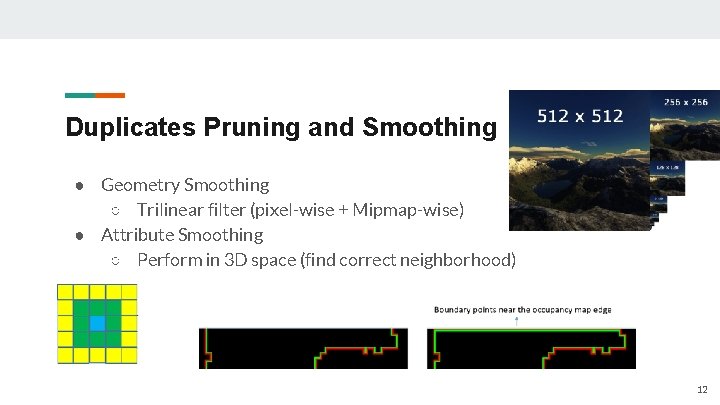
Duplicates Pruning and Smoothing ● Geometry Smoothing ○ Trilinear filter (pixel-wise + Mipmap-wise) ● Attribute Smoothing ○ Perform in 3 D space (find correct neighborhood) 12
G-PCC 13
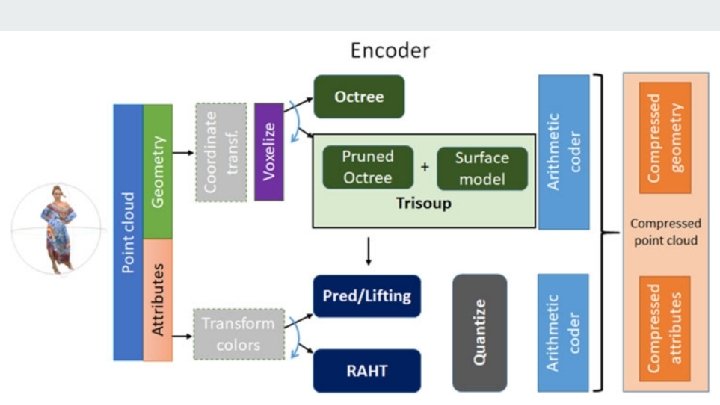
14
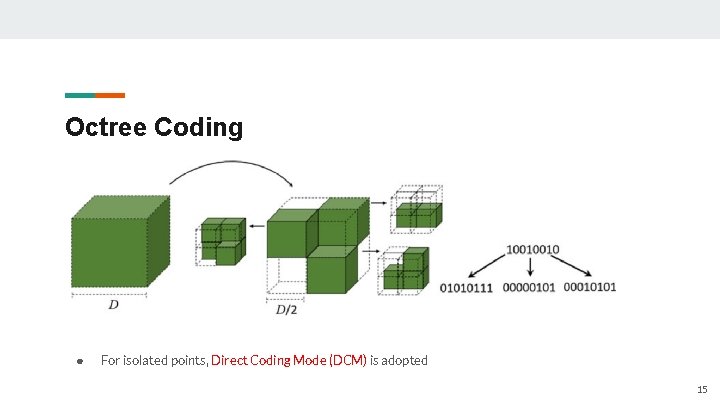
Octree Coding ● For isolated points, Direct Coding Mode (DCM) is adopted 15
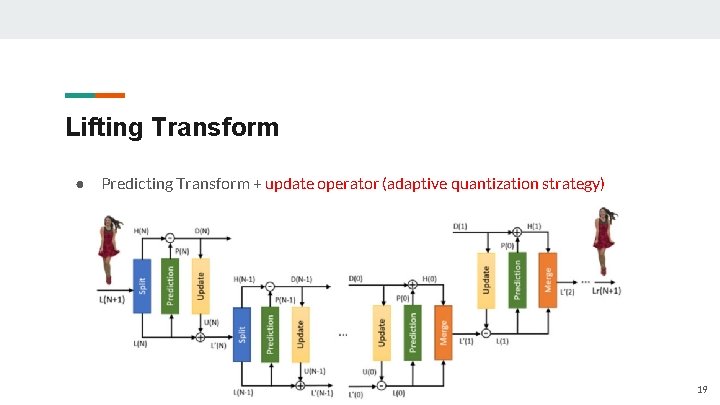
Attribute Encoding ● RAHT (Region-Adaptive Hierarchical/Haar Transform) ● Predicting Transform ● Lifting Transform 16
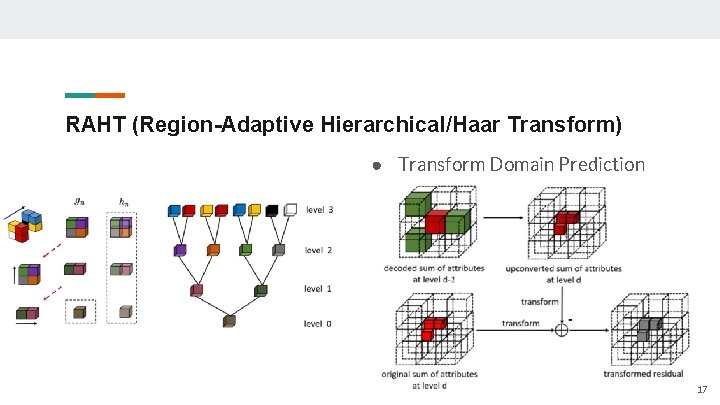
RAHT (Region-Adaptive Hierarchical/Haar Transform) ● Transform Domain Prediction 17
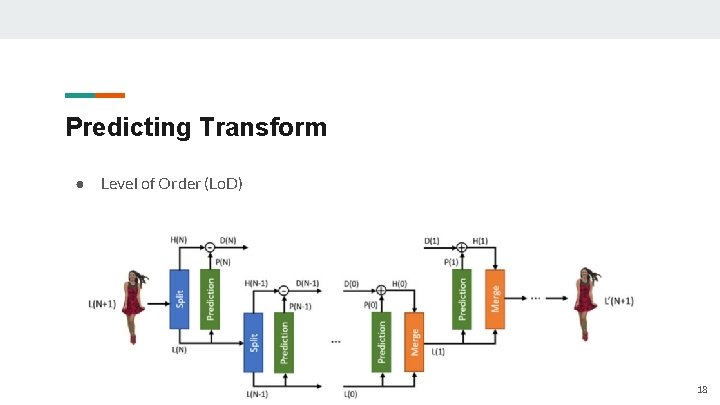
Predicting Transform ● Level of Order (Lo. D) 18
Lifting Transform ● Predicting Transform + update operator (adaptive quantization strategy) 19