
An overview of IC Systems in APR 1400
- Slides: 13
An overview of I&C Systems in APR 1400 Parvaiz Ahmed Khand December 28, 2007
Table of Contents �Introduction � Objective & scope of study �Classification of I&C systems in APR 1400 �Reactor protection System �Further Work 2
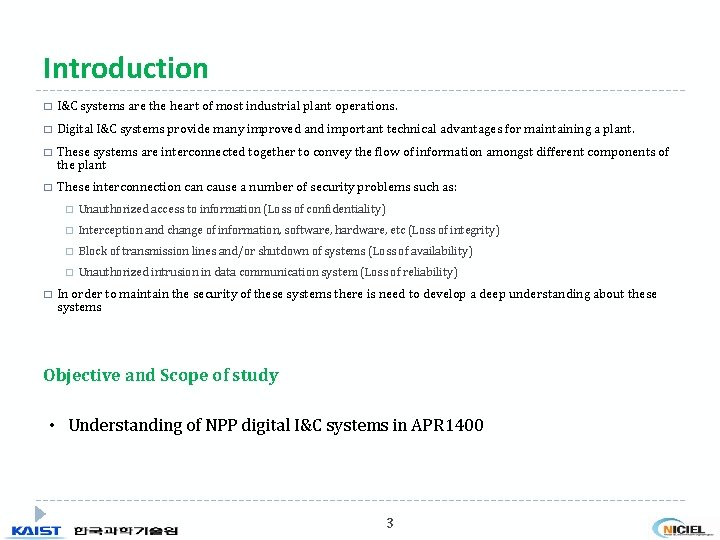
Introduction � I&C systems are the heart of most industrial plant operations. � Digital I&C systems provide many improved and important technical advantages for maintaining a plant. � These systems are interconnected together to convey the flow of information amongst different components of the plant � These interconnection cause a number of security problems such as: � � Unauthorized access to information (Loss of confidentiality) � Interception and change of information, software, hardware, etc (Loss of integrity) � Block of transmission lines and/or shutdown of systems (Loss of availability) � Unauthorized intrusion in data communication system (Loss of reliability) In order to maintain the security of these systems there is need to develop a deep understanding about these systems Objective and Scope of study • Understanding of NPP digital I&C systems in APR 1400 3
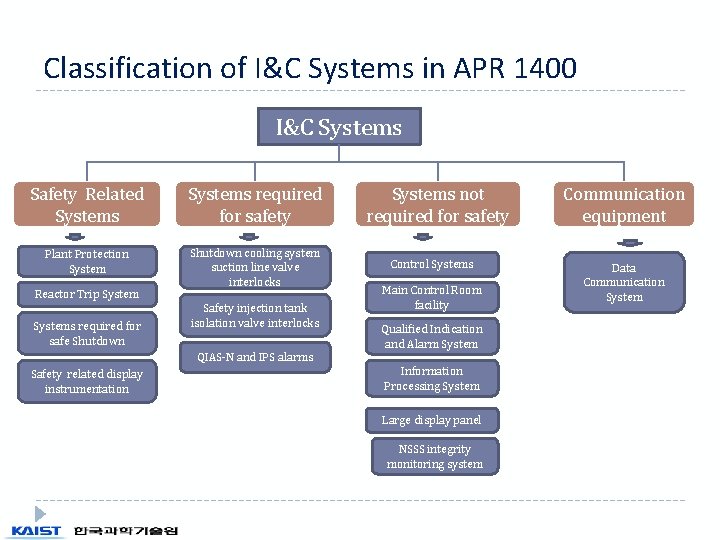
Classification of I&C Systems in APR 1400 I&C Systems Safety Related Systems required for safety Plant Protection System Shutdown cooling system suction line valve interlocks Reactor Trip Systems required for safe Shutdown Safety injection tank isolation valve interlocks QIAS-N and IPS alarms Safety related display instrumentation Systems not required for safety Control Systems Main Control Room facility Qualified Indication and Alarm System Information Processing System Large display panel NSSS integrity monitoring system Communication equipment Data Communication System
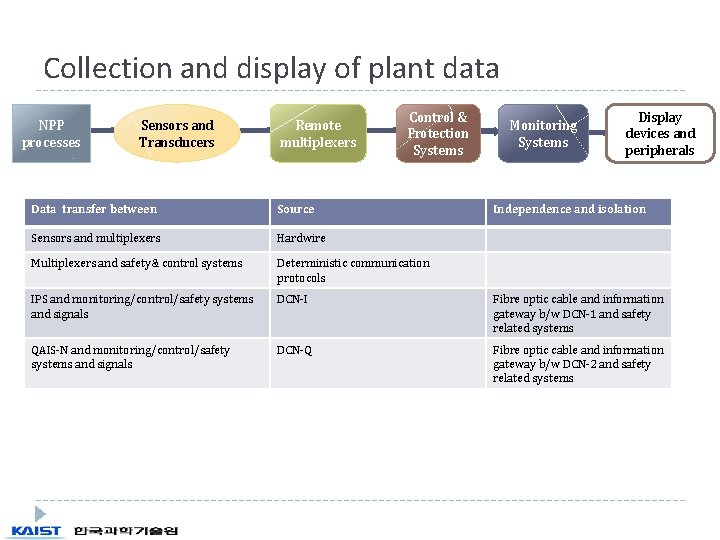
Collection and display of plant data NPP processes Sensors and Transducers Remote multiplexers Control & Protection Systems Monitoring Systems Display devices and peripherals Data transfer between Source Independence and isolation Sensors and multiplexers Hardwire Multiplexers and safety& control systems Deterministic communication protocols IPS and monitoring/control/safety systems and signals DCN-I Fibre optic cable and information gateway b/w DCN-1 and safety related systems QAIS-N and monitoring/control/safety systems and signals DCN-Q Fibre optic cable and information gateway b/w DCN-2 and safety related systems
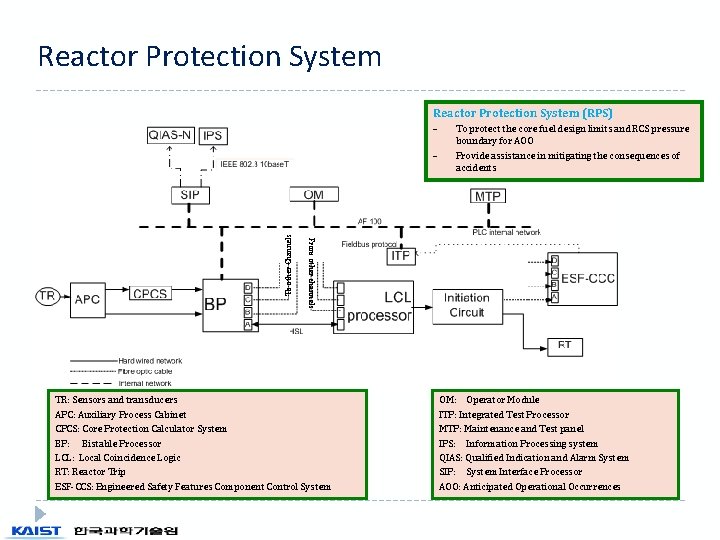
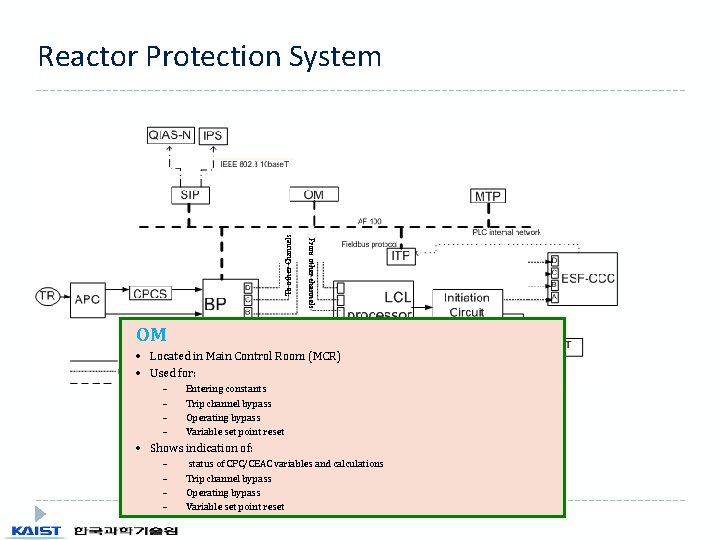
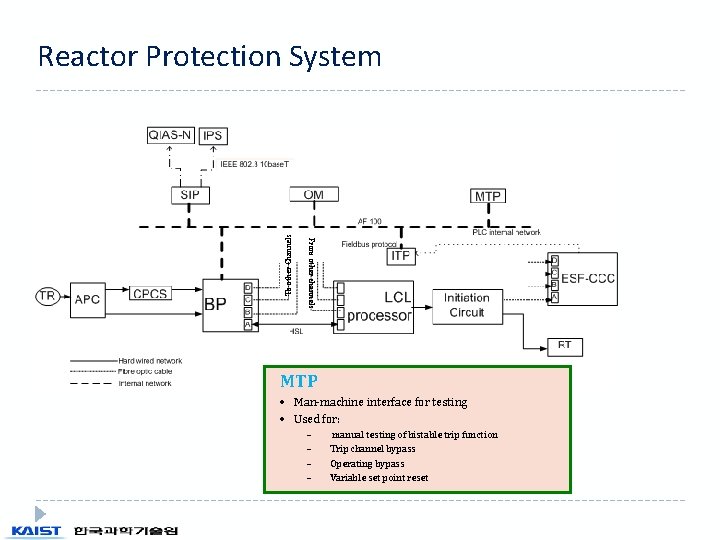
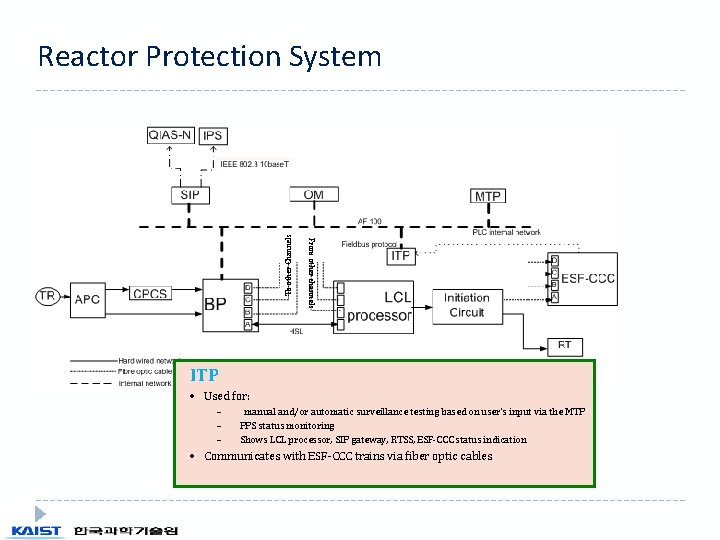
Reactor Protection System (RPS) – From other channels To other Channels – To protect the core fuel design limits and RCS pressure boundary for AOO Provide assistance in mitigating the consequences of accidents TR: Sensors and transducers APC: Auxiliary Process Cabinet CPCS: Core Protection Calculator System BP: Bistable Processor LCL: Local Coincidence Logic RT: Reactor Trip ESF-CCS: Engineered Safety Features Component Control System OM: Operator Module ITP: Integrated Test Processor MTP: Maintenance and Test panel IPS: Information Processing system QIAS: Qualified Indication and Alarm System SIP: System Interface Processor AOO: Anticipated Operational Occurrences
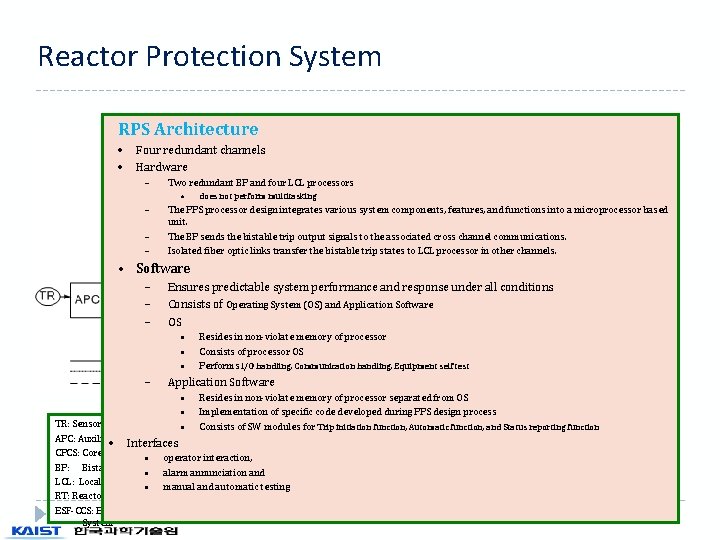
Reactor Protection System RPS Architecture Four redundant channels Hardware – Two redundant BP and four LCL processors • – The PPS processor design integrates various system components, features, and functions into a microprocessor based unit. The BP sends the bistable trip output signals to the associated cross channel communications. Isolated fiber optic links transfer the bistable trip states to LCL processor in other channels. • Software – – – Ensures predictable system performance and response under all conditions Consists of Operating System (OS) and Application Software OS • • • – From other channels – – does not perform multitasking To other Channels • • Resides in non-violate memory of processor Consists of processor OS Performs I/O handling, Communication handling, Equipment self test Application Software • Resides in non-violate memory of processor separated from OS • Implementation of specific code developed during PPS design process TR: Sensors and transducers • Consists of SW modules for Trip initiation OM: Operator Module function, Automatic function, and Status reporting function APC: Auxiliary Process Cabinet ITP: Integrated Test Processor • Interfaces CPCS: Core Protection Calculator System MTP: Maintenance and Test panel • operator interaction, BP: Bistable Processor IPS: Information Processing system • alarm annunciation and LCL: Local Coincidence Logic QIAS: Qualified Indication and Alarm System • manual and automatic testing RT: Reactor Trip SIP: System Interface Processor ESF-CCS: Engineered Safety Features Component Control System
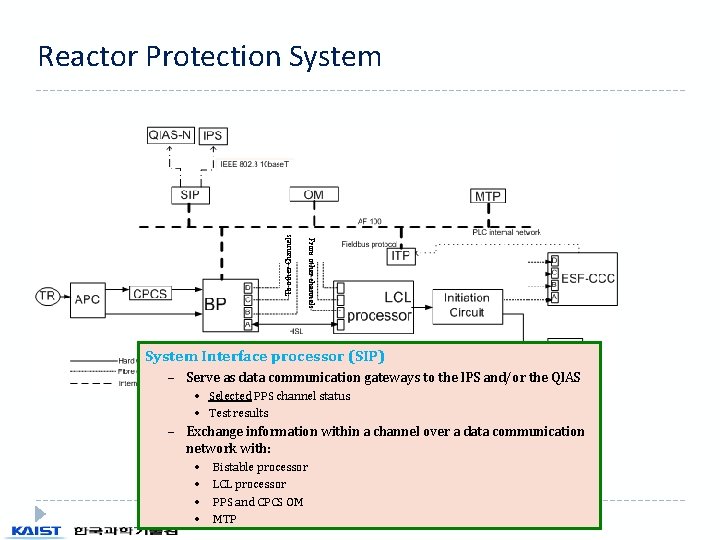
From other channels To other Channels Reactor Protection System Interface processor (SIP) – Serve as data communication gateways to the IPS and/or the QIAS • Selected PPS channel status • Test results – Exchange information within a channel over a data communication network with: • • Bistable processor LCL processor PPS and CPCS OM MTP
From other channels To other Channels Reactor Protection System OM • Located in Main Control Room (MCR) • Used for: – – Entering constants Trip channel bypass Operating bypass Variable set point reset • Shows indication of: – – status of CPC/CEAC variables and calculations Trip channel bypass Operating bypass Variable set point reset
From other channels To other Channels Reactor Protection System MTP • Man-machine interface for testing • Used for: – – manual testing of bistable trip function Trip channel bypass Operating bypass Variable set point reset
From other channels To other Channels Reactor Protection System ITP • Used for: – – – manual and/or automatic surveillance testing based on user’s input via the MTP PPS status monitoring Shows LCL processor, SIP gateway, RTSS, ESF-CCC status indication • Communicates with ESF-CCC trains via fiber optic cables
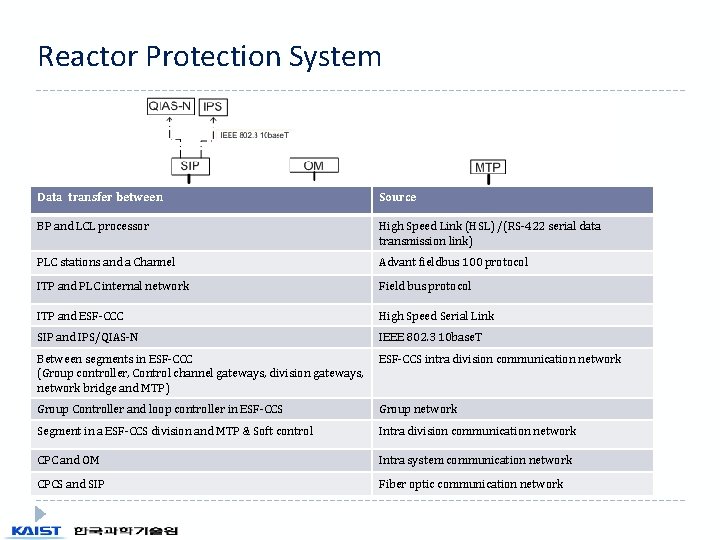
Reactor Protection System PLC stations and a Channel ITP and PLC internal network From other channels BP and LCL processor Source To other Channels Data transfer between High Speed Link (HSL) /(RS-422 serial data transmission link) Advant fieldbus 100 protocol Field bus protocol ITP and ESF-CCC High Speed Serial Link SIP and IPS/QIAS-N IEEE 802. 3 10 base. T Between segments in ESF-CCC (Group controller, Control channel gateways, division gateways, network bridge and MTP) ESF-CCS intra division communication network Group Controller and loop controller in ESF-CCS Group network Segment in a ESF-CCS division and MTP & Soft control Intra division communication network CPC and OM Intra system communication network CPCS and SIP Fiber optic communication network
Further Study �Identification of systems that can be important for security � Security mechanisms in communication equipment � Access control systems � External Connectivity � Plant Local Area Network (LAN) architecture � Remote access/ 3 rd party access 13