
An Overview of Community Protection System in Sunsari
- Slides: 24
An Overview of Community Protection System in Sunsari District, Nepal 29 th September, 2010 Geneva By: Inu Adhikari, PLC Chairperson Sunsari, Nepal
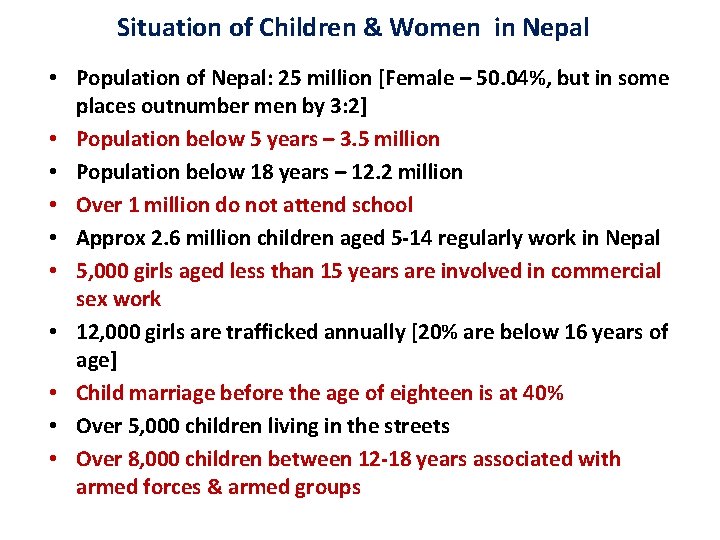
Situation of Children & Women in Nepal • Population of Nepal: 25 million [Female – 50. 04%, but in some places outnumber men by 3: 2] • Population below 5 years – 3. 5 million • Population below 18 years – 12. 2 million • Over 1 million do not attend school • Approx 2. 6 million children aged 5 -14 regularly work in Nepal • 5, 000 girls aged less than 15 years are involved in commercial sex work • 12, 000 girls are trafficked annually [20% are below 16 years of age] • Child marriage before the age of eighteen is at 40% • Over 5, 000 children living in the streets • Over 8, 000 children between 12 -18 years associated with armed forces & armed groups
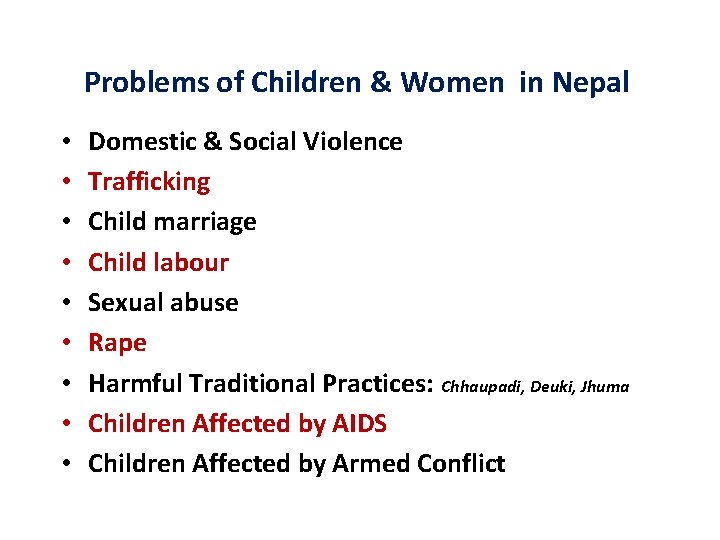
Problems of Children & Women in Nepal • • • Domestic & Social Violence Trafficking Child marriage Child labour Sexual abuse Rape Harmful Traditional Practices: Chhaupadi, Deuki, Jhuma Children Affected by AIDS Children Affected by Armed Conflict
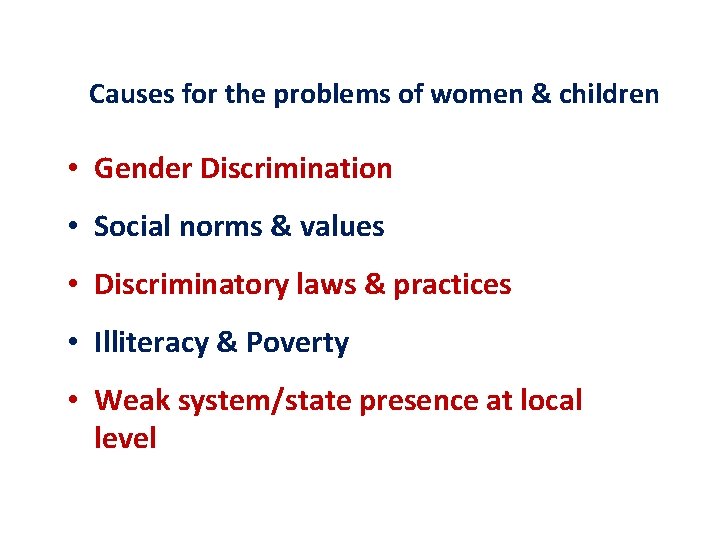
Causes for the problems of women & children • Gender Discrimination • Social norms & values • Discriminatory laws & practices • Illiteracy & Poverty • Weak system/state presence at local level
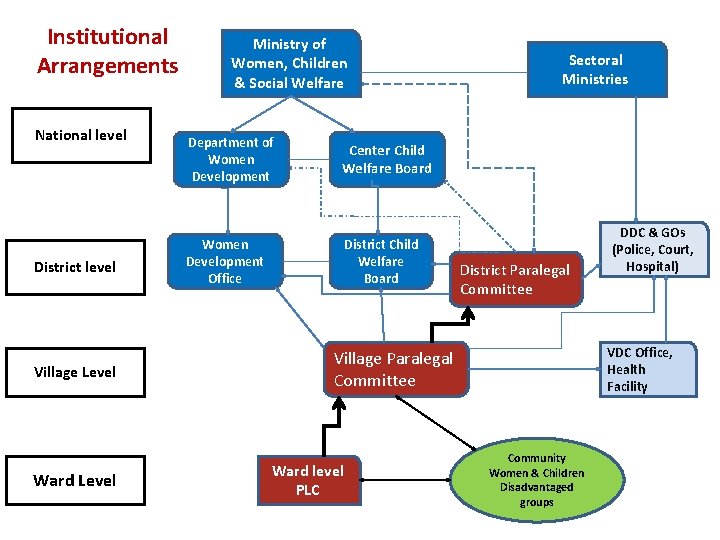
Institutional Arrangements National level District level Village Level Ward Level Ministry of Women, Children & Social Welfare Department of Women Development Center Child Welfare Board Women Development Office District Child Welfare Board Sectoral Ministries District Paralegal Committee VDC Office, Health Facility Village Paralegal Committee Ward level PLC DDC & GOs (Police, Court, Hospital) Community Women & Children Disadvantaged groups
Para-legal Committees (PLC)
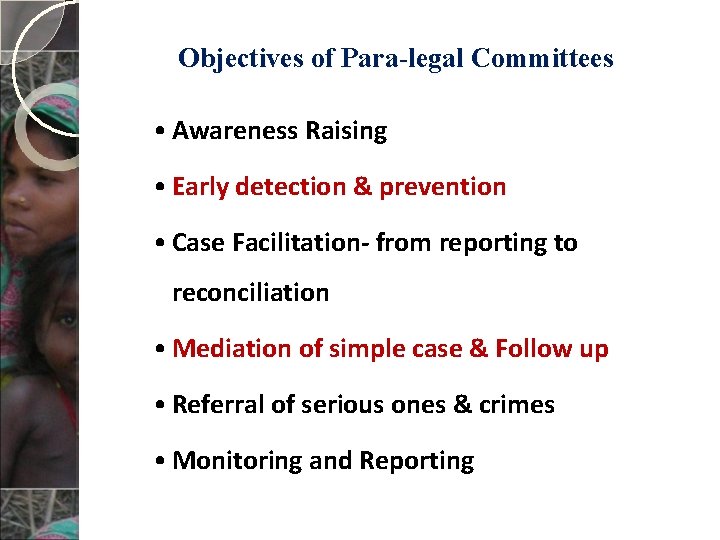
Objectives of Para-legal Committees • Awareness Raising • Early detection & prevention • Case Facilitation- from reporting to reconciliation • Mediation of simple case & Follow up • Referral of serious ones & crimes • Monitoring and Reporting
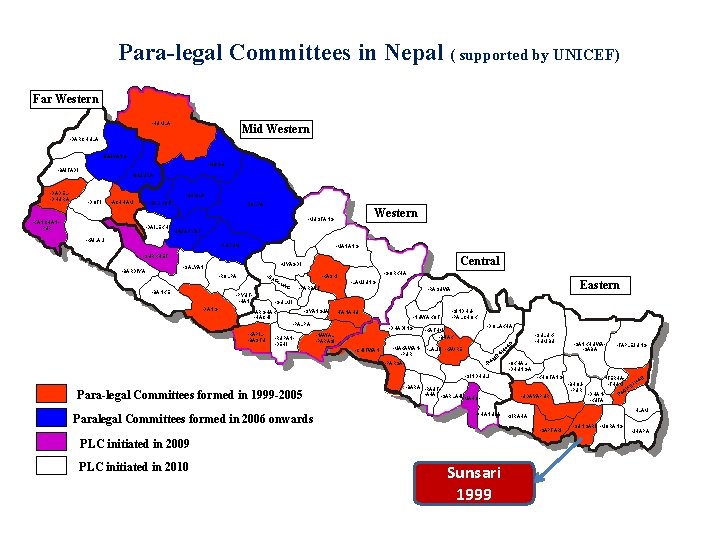
Para-legal Committees in Nepal ( supported by UNICEF) Far Western • HUMLA Mid Western • DARCHULA • BAJHANG • MUGU • BAITADI • DADEL • DHURA • BAJURA • JUMLA • DOTI • ACHHAM • KALIKOT • DOLPA Western • MUSTANG • KANCHAN • PUR • DAILEKH • JAJARKOT • KAILALI • RUKUM • MANANG • SURKHET Central • MYAGDI • SALYAN • BARDIYA • B • A • G • • ROLPA • BANKE L • U • N • G • PYUT • HAN • DANG • KASKI • GORKHA Eastern • LAMJUNG • PARBAT • RASUWA • GULMI • SYANGJA • ARGHAK • HACHI • TANAHU • PALPA • KAPIL • BASTU • RUPAN • DEHI • NUWAKOT • DHADING • NAWAL • PARASI • CHITWAN • SINDHU • PALCHOK • DOLAKHA • KATHM • BHAK • SULUK • HUMBU A • P • MAKAWAN- • LALIT • KAVRE • PUR H • • H • C E • M • • A • • PARSA • R Para-legal Committees formed in 1999 -2005 Paralegal Committees formed in 2006 onwards • DHANUSA • KHOTANG • UDAYAPUR PLC initiated in 2010 Sunsari 1999 • BHOJ • PUR R • TERHA • • THUM E • T • H • A • C • DHAN • P • • KUTA • ILAM • SIRAHA • SAPTARI PLC initiated in 2009 • TAPLEJUNG • OKHAL • DHUNGA • SINDHULI • BARA • RAUT • AHAT • SARLAHI • MAHO • TARI • SANKHUWA • SABA • SUNSARI • MORANG • JHAPA
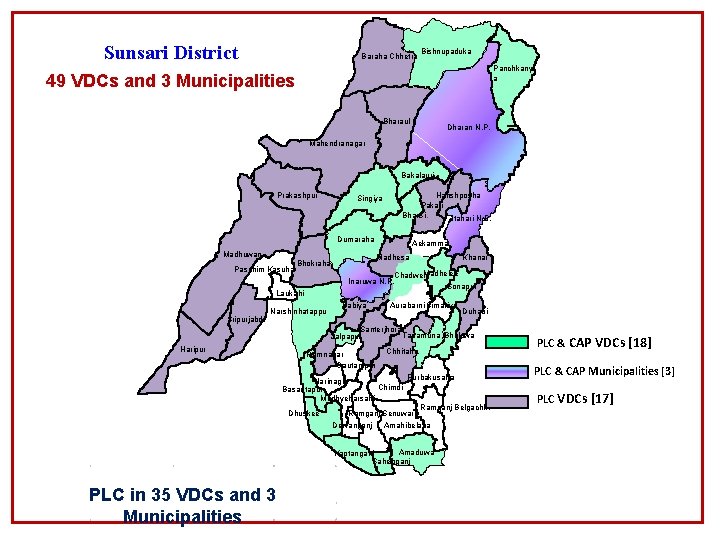
Sunsari District Baraha Chhetra Bishnupaduka Panchkany a 49 VDCs and 3 Municipalities Barahachhetra Bharaul Dharan N. P. Mahendranagar Bakalauri Prakashpur Singiya Hanshposha Pakali Bha. Si. Itahari N. P. Dumaraha Madhuwan Paschim Kasuha Madhesa Bhokraha Khanar Madhelee Chadwela Inaruwa N. P. Sonapur Laukahi Sripurjabdi Aekamma Narshinhatappu Babiya Aurabarni Simariya Duhabi Santerjhora Tanamuna Bhaluwa Jalpapur Haripur Ramnagar Gautampur Chhitaha Purbakusaha Harinagar Chimdi Basantapur Madhyeharsahi Ramganj Belgachhi Dhuskee Ramganj Senuwari Dewanganj Amahibelaha Amaduwa Kaptanganj Sahebganj PLC in 35 VDCs and 3 Municipalities PLC & CAP VDCs [18] PLC & CAP Municipalities [3] PLC VDCs [17]
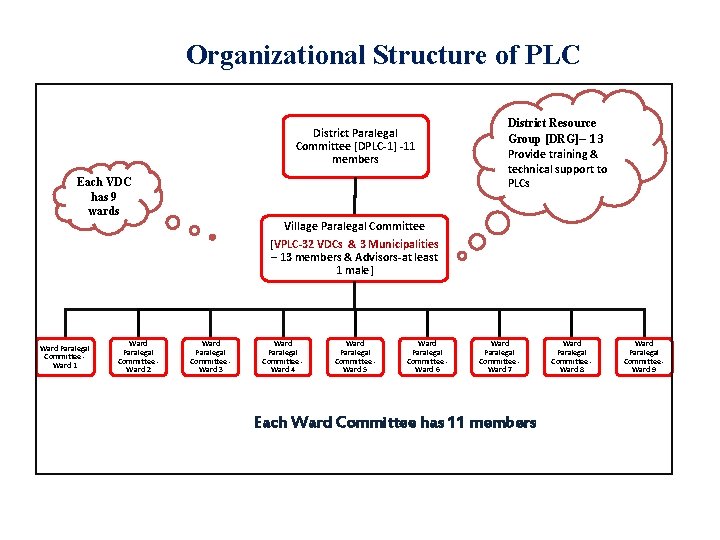
Organizational Structure of PLC District Paralegal Committee [DPLC-1] -11 members Each VDC has 9 wards District Resource Group [DRG]– 13 Provide training & technical support to PLCs Village Paralegal Committee [VPLC-32 VDCs & 3 Municipalities – 13 members & Advisors-at least 1 male] Ward Paralegal Committee Ward 1 Ward Paralegal Committee Ward 2 Ward Paralegal Committee Ward 3 Ward Paralegal Committee Ward 4 Ward Paralegal Committee Ward 5 Ward Paralegal Committee Ward 6 Ward Paralegal Committee Ward 7 Each Ward Committee has 11 members Ward Paralegal Committee Ward 8 Ward Paralegal Committee Ward 9
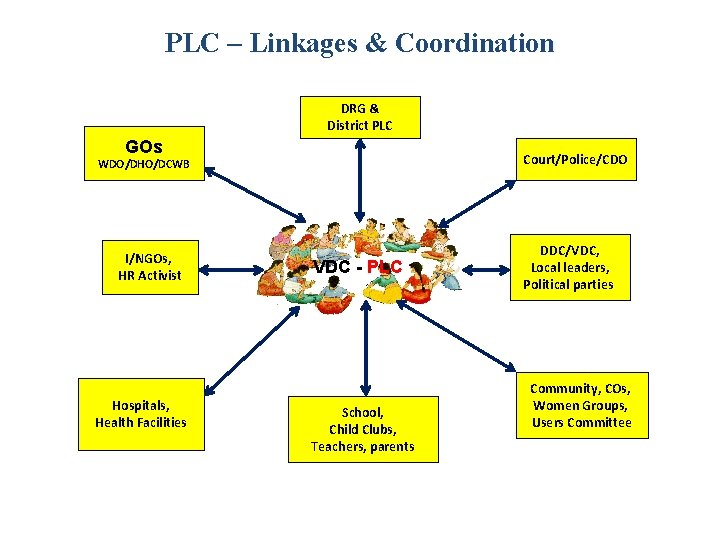
PLC – Linkages & Coordination DRG & District PLC GOs Court/Police/CDO WDO/DHO/DCWB I/NGOs, HR Activist Hospitals, Health Facilities VDC - PLC School, Child Clubs, Teachers, parents DDC/VDC, Local leaders, Political parties Community, COs, Women Groups, Users Committee
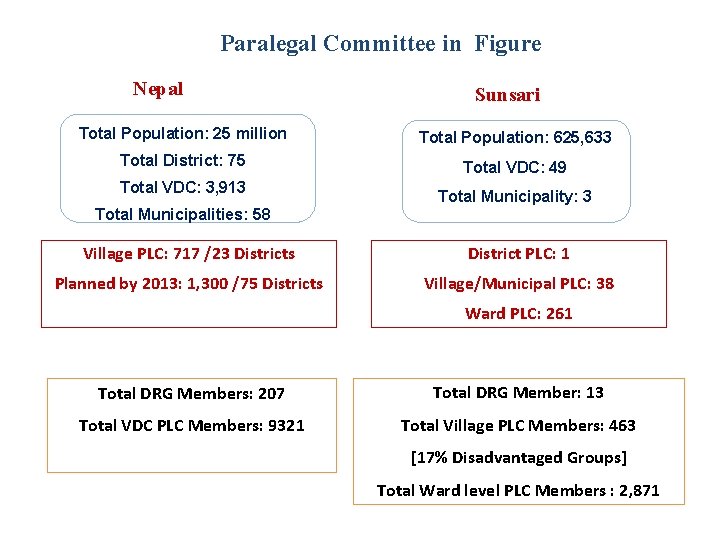
Paralegal Committee in Figure Nepal Sunsari Total Population: 25 million Total Population: 625, 633 Total District: 75 Total VDC: 49 Total VDC: 3, 913 Total Municipality: 3 Total Municipalities: 58 Village PLC: 717 /23 Districts District PLC: 1 Planned by 2013: 1, 300 /75 Districts Village/Municipal PLC: 38 Ward PLC: 261 Total DRG Members: 207 Total DRG Member: 13 Total VDC PLC Members: 9321 Total Village PLC Members: 463 [17% Disadvantaged Groups] Total Ward level PLC Members : 2, 871
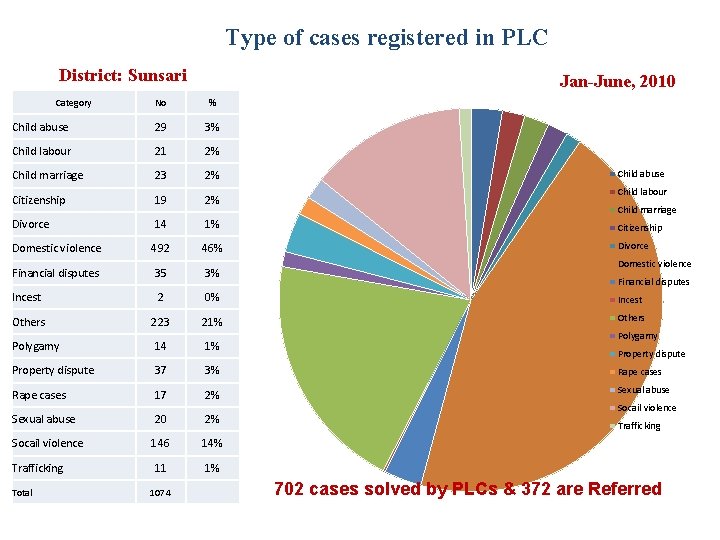
Type of cases registered in PLC District: Sunsari Category Jan-June, 2010 No % Child abuse 29 3% Child labour 21 2% Child marriage 23 2% Citizenship 19 2% Divorce 14 1% Domestic violence 492 46% Financial disputes 35 3% Incest 2 0% Incest Others 223 21% Others Polygamy 14 1% Property dispute 37 3% Rape cases 17 2% Sexual abuse 20 2% Socail violence 146 14% Trafficking 11 1% 1074 Total Child abuse Child labour Child marriage Citizenship Divorce Domestic violence Financial disputes Polygamy Property dispute Socail violence Trafficking 702 cases solved by PLCs & 372 are Referred
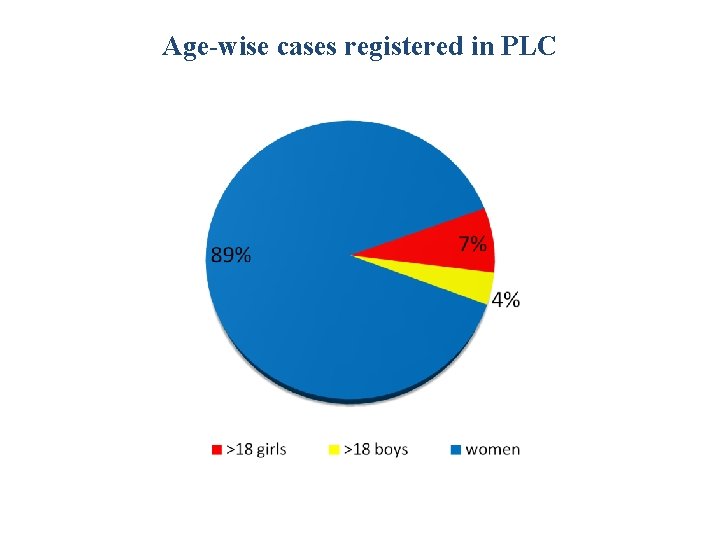
Age-wise cases registered in PLC
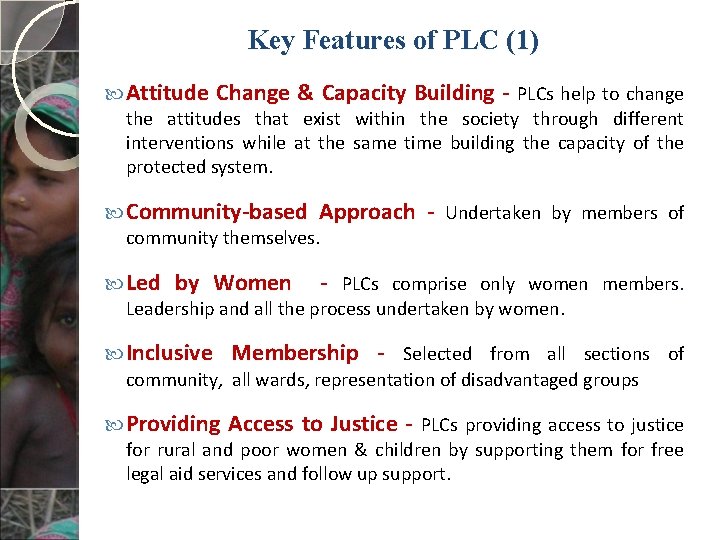
Key Features of PLC (1) Attitude Change & Capacity Building - PLCs help to change the attitudes that exist within the society through different interventions while at the same time building the capacity of the protected system. Community-based Approach community themselves. - Undertaken by members of Led by Women - PLCs comprise only women members. Leadership and all the process undertaken by women. Inclusive Membership - Selected from all sections of community, all wards, representation of disadvantaged groups Providing Access to Justice - PLCs providing access to justice for rural and poor women & children by supporting them for free legal aid services and follow up support.
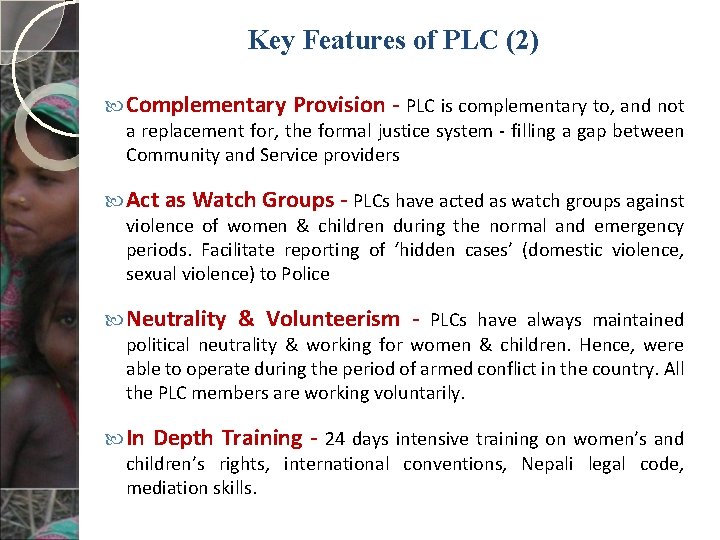
Key Features of PLC (2) Complementary Provision - PLC is complementary to, and not a replacement for, the formal justice system - filling a gap between Community and Service providers Act as Watch Groups - PLCs have acted as watch groups against violence of women & children during the normal and emergency periods. Facilitate reporting of ‘hidden cases’ (domestic violence, sexual violence) to Police Neutrality & Volunteerism - PLCs have always maintained political neutrality & working for women & children. Hence, were able to operate during the period of armed conflict in the country. All the PLC members are working voluntarily. In Depth Training - 24 days intensive training on women’s and children’s rights, international conventions, Nepali legal code, mediation skills.
Some issues/Challenges in PLC Threats to PLC members by conflicting parties. Threats to guardians especially in reporting the young girls case. Increasing no. of rape cases on young girl child. Reporting of children’s cases. Need to focus prevention & awareness among parents, young girls & community [curative v/s preventive]. Weak protection services at District level for referred cases. Extending the programme throughout the country (even by 2013 only 33% of the country will have a PLC)
Case no. 1 Three Girls (12, 14, 15 Years) from disadvantaged community of Sunsari were convinced and brought by their own relative (Aunt) to Kathmandu for domestic work. Later on, they were forced to work in Cabin Restaurant for commercial sex work. Somehow, one of them, contacted Paralegal Committee (PLC) and with the help of PLC that case was reported to the police. The case was then exposed to the family members & community. With the support of PLC, all the three girls were freed. The aunt was imprisoned and the girls were provided NRs. 25, 000 as compensation.
Case no. 2 A man has raped a woman & a 3 yrs old girl, but neither case was reported to PLC, nor exposed to anyone. The family members & the relatives hide those cases in the name of social prestige & norms. As a consequence, he was encouraged to attempt such cases time & again. After a few month, he again raped his own baby niece aged just 16 months. This case was then reported to the PLC by her mother. The PLC has supported her to report the case to the police. The PLC coordinated with District Resource Group to provide free legal aid service for the family. The crime was then proved and the man was imprisoned by the Court. The PLC & Women Development Office have provided the medical support for the baby.
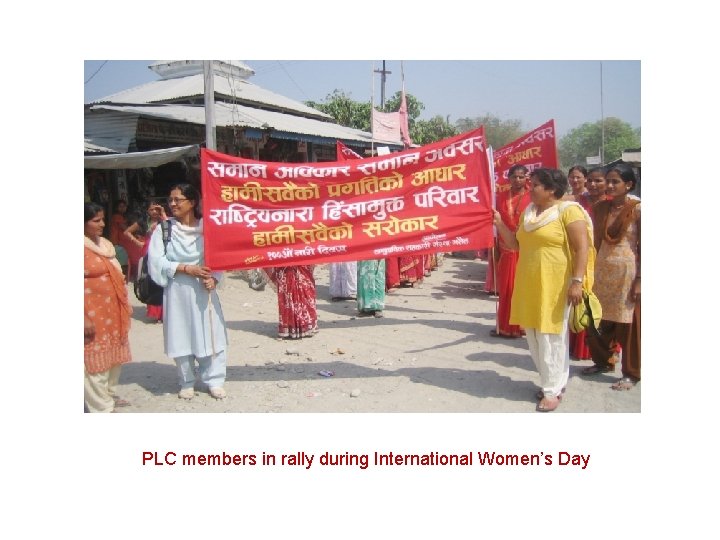
PLC members in rally during International Women’s Day
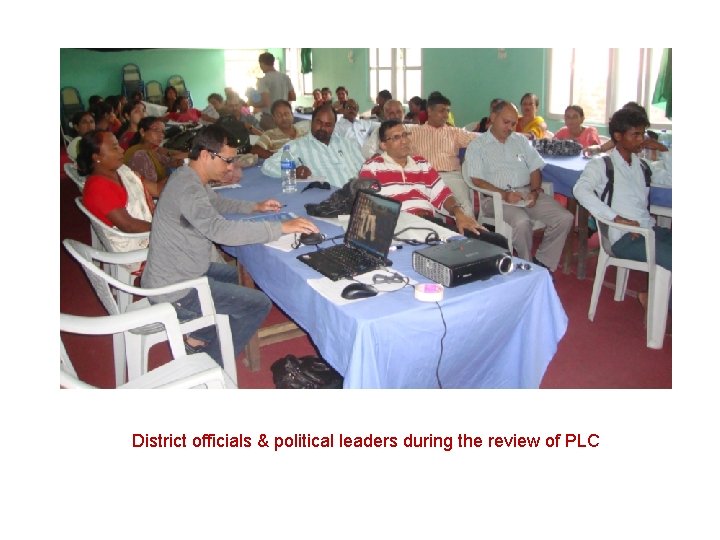
District officials & political leaders during the review of PLC
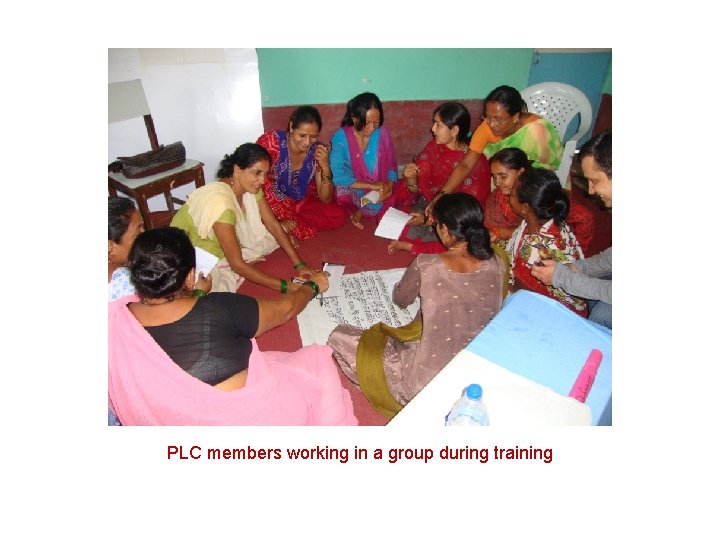
PLC members working in a group during training
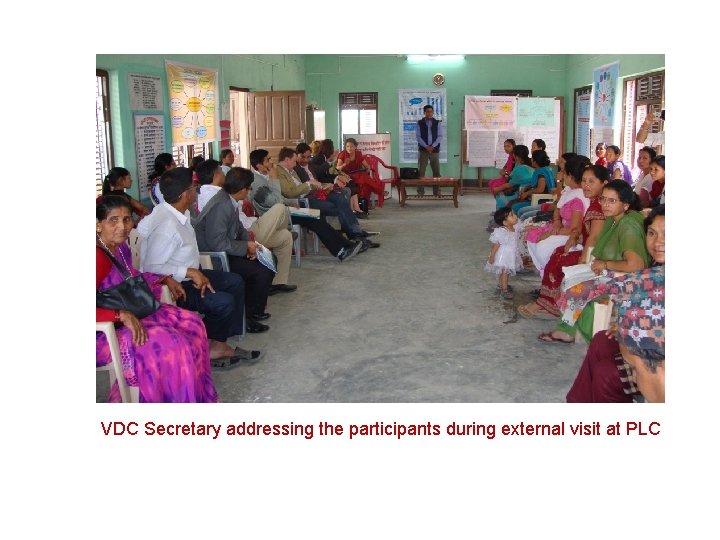
VDC Secretary addressing the participants during external visit at PLC
Thank you