
An Overview of Cage Culture Claude E Boyd
An Overview of Cage Culture Claude E. Boyd Professor Emeritus School of Fisheries, Aquaculture and Aquatic Sciences Auburn University, Auburn, Alabama 36849 USA
Most Common Species Cultured in Cages • Tilapia – throughout tropics • Salmon – Norway and Chile are major producers, but there are several other nations with large amounts of salmon cage culture. Marine. • Trout – Scotland • Common carp – several Asian countries • Vietnamese catfish (Tra and Basa) • Several marine fish species
Advantages of Cage Culture • Applicable to most species of fish • Does not require space on land for grow-out • High density makes management logistics simple • Can be used in most types of water bodies • Inexpensive Infrastructure and simple technology • Consumes very little water
Types of Cages Wooden boxes with slats and openings between Wire cages Mesh cages – nylon or plastic Highly variable in size Smallest are about 1 m 3 Largest are 1, 500 m 3 or more Floating or submerged
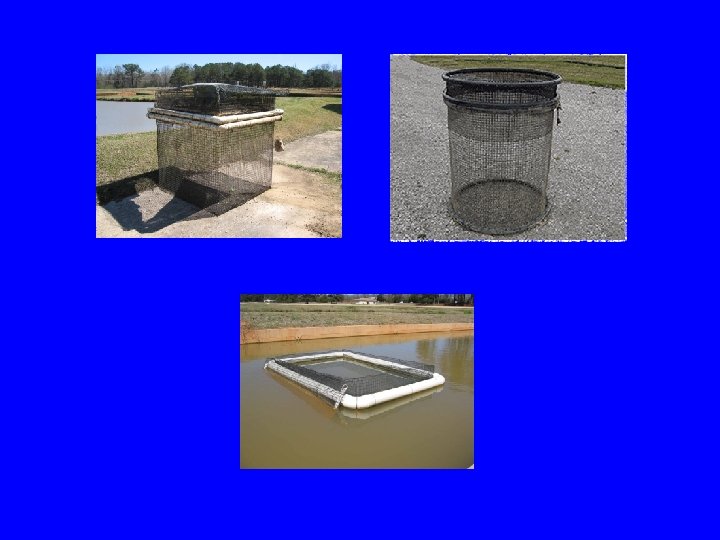
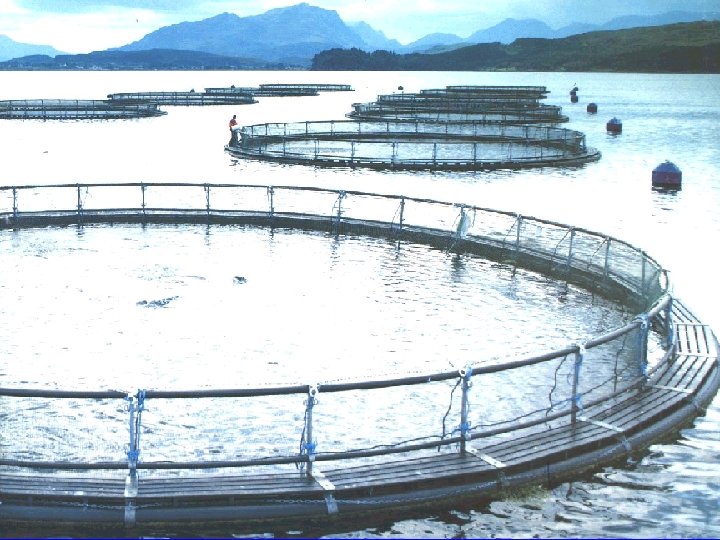
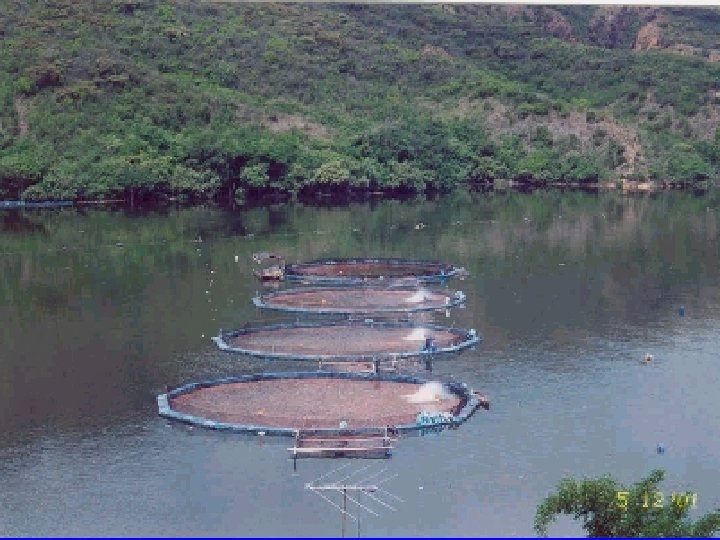
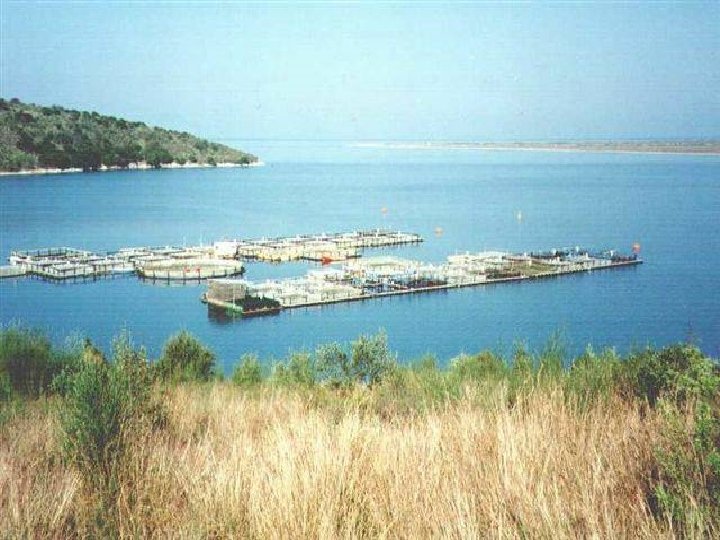
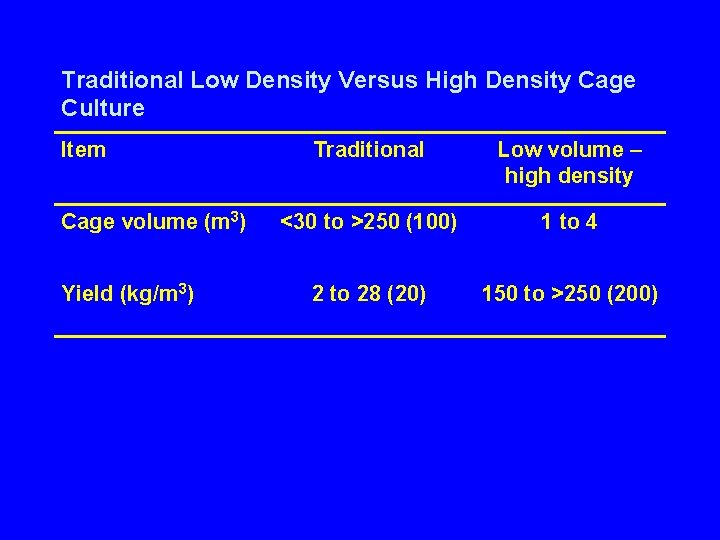
Traditional Low Density Versus High Density Cage Culture Item Cage volume (m 3) Yield (kg/m 3) Traditional Low volume – high density <30 to >250 (100) 1 to 4 2 to 28 (20) 150 to >250 (200)
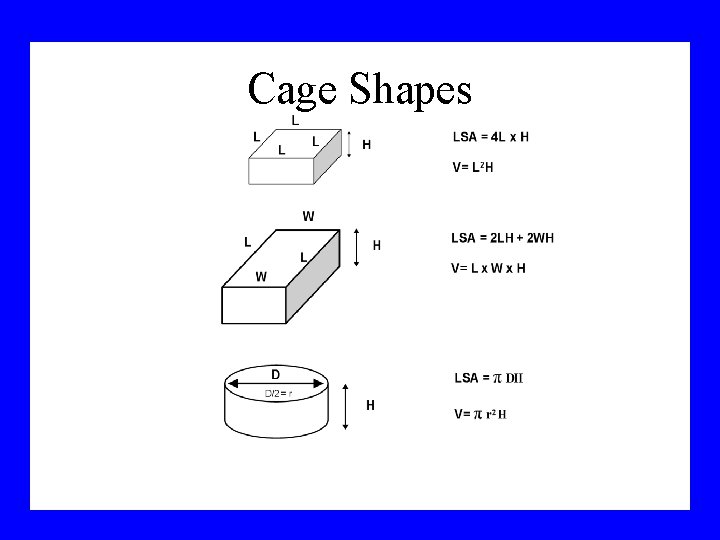
Cage Shapes
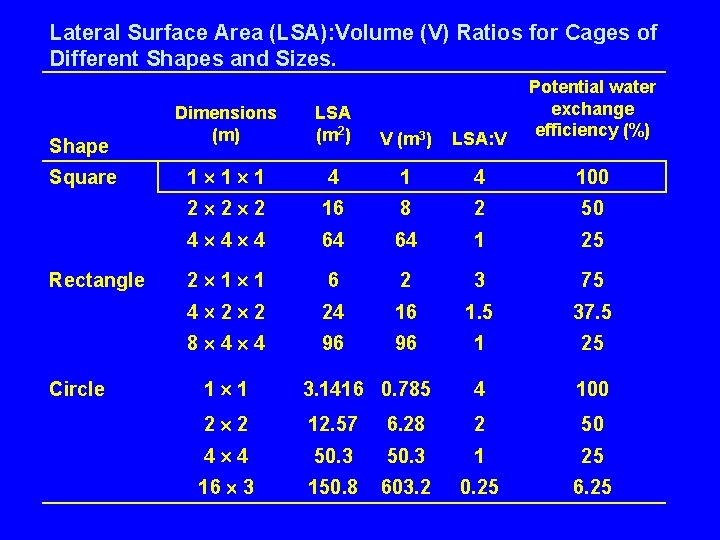
Lateral Surface Area (LSA): Volume (V) Ratios for Cages of Different Shapes and Sizes. Shape Square Rectangle Circle Dimensions (m) LSA (m 2) V (m 3) LSA: V Potential water exchange efficiency (%) 1 1 1 4 100 2 2 2 16 8 2 50 4 4 4 64 64 1 25 2 1 1 6 2 3 75 4 2 2 24 16 1. 5 37. 5 8 4 4 96 96 1 25 1 1 3. 1416 0. 785 4 100 2 2 12. 57 6. 28 2 50 4 4 50. 3 1 25 16 3 150. 8 603. 2 0. 25 6. 25
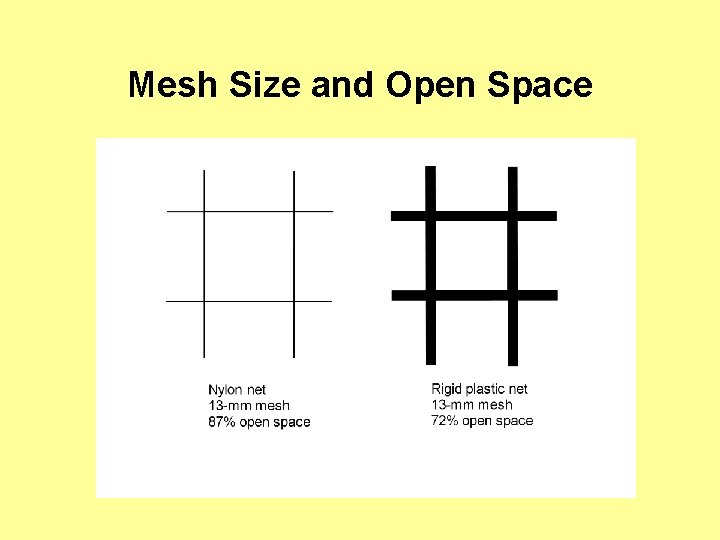
Mesh Size and Open Space
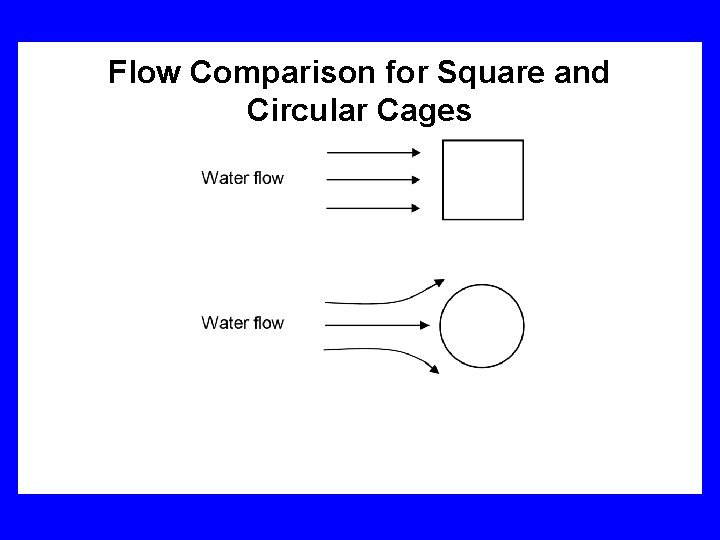
Flow Comparison for Square and Circular Cages
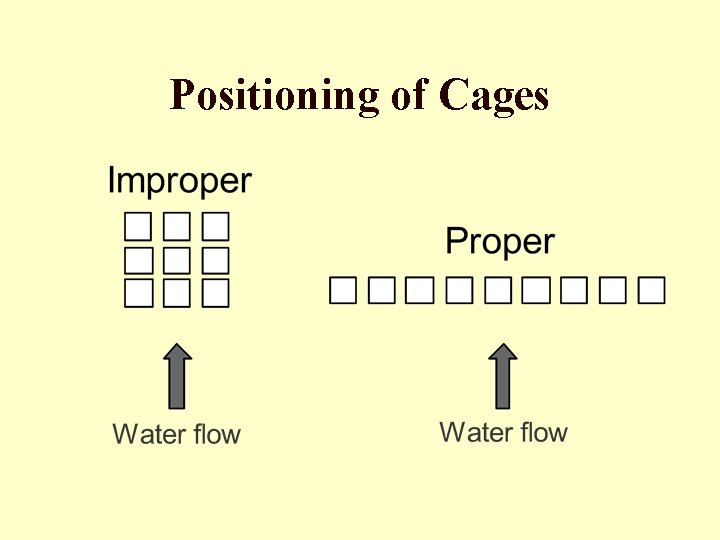
Positioning of Cages
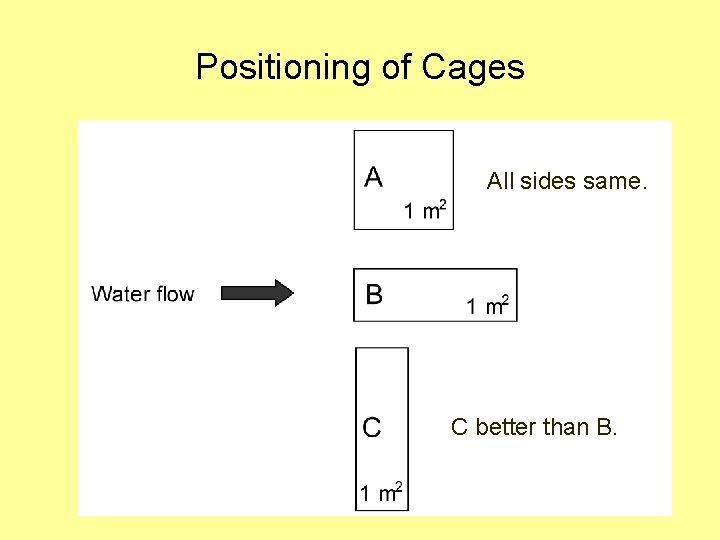
Positioning of Cages All sides same. C better than B.
Guidelines for Selecting Cage Sites in Lakes and Reservoirs • Pollution free and with low productivity – water clear or mildly green and transparency 100 cm. • No more than 50% of depth devoid of dissolved oxygen during period of thermal stratification. • Water level changes should be known. Minimum depth at least 1 m deeper than cage bottoms. • Wind patterns and water currents understood and considered in selecting cage sites. • Avoid sites with aquatic macrophyte infestations. • Security of fish in cages should be considered.
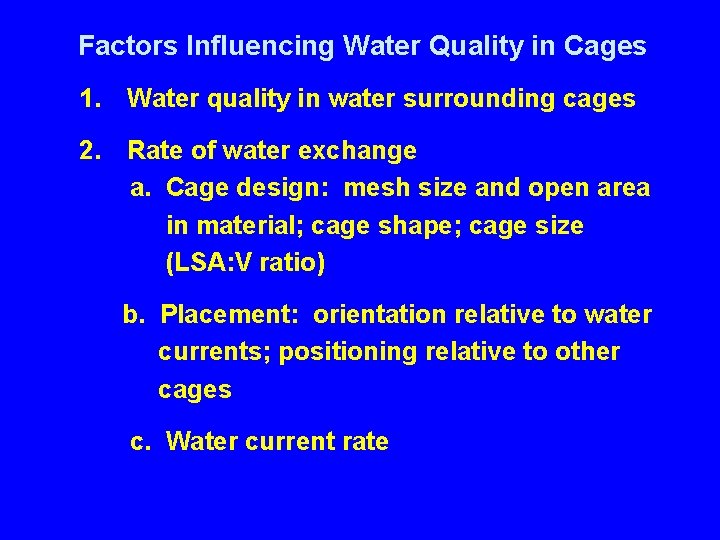
Factors Influencing Water Quality in Cages 1. Water quality in water surrounding cages 2. Rate of water exchange a. Cage design: mesh size and open area in material; cage shape; cage size (LSA: V ratio) b. Placement: orientation relative to water currents; positioning relative to other cages c. Water current rate
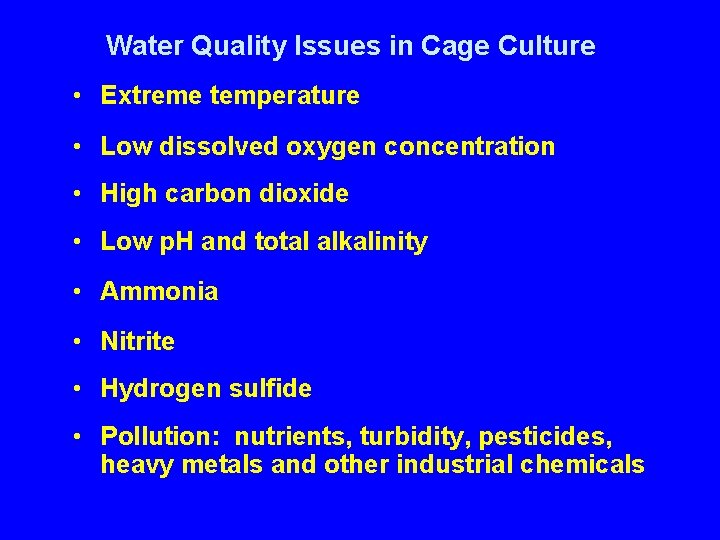
Water Quality Issues in Cage Culture • Extreme temperature • Low dissolved oxygen concentration • High carbon dioxide • Low p. H and total alkalinity • Ammonia • Nitrite • Hydrogen sulfide • Pollution: nutrients, turbidity, pesticides, heavy metals and other industrial chemicals
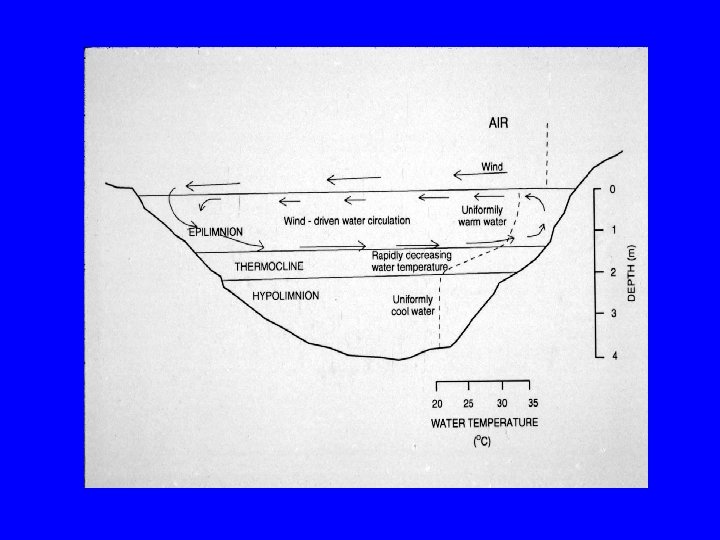
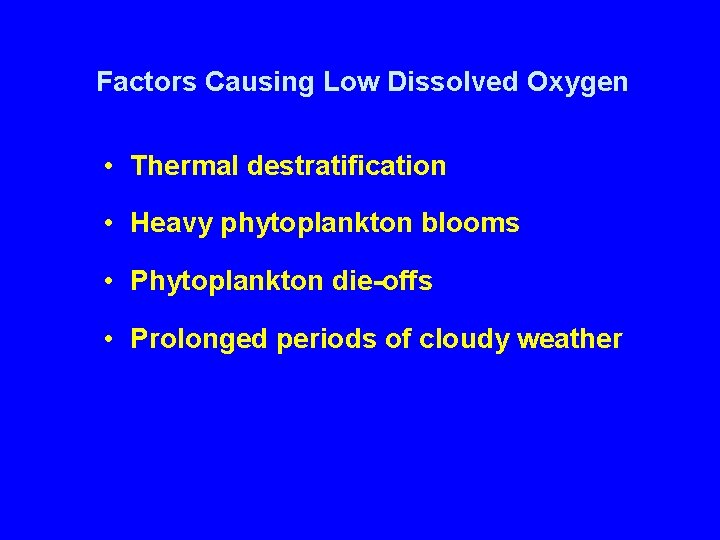
Factors Causing Low Dissolved Oxygen • Thermal destratification • Heavy phytoplankton blooms • Phytoplankton die-offs • Prolonged periods of cloudy weather
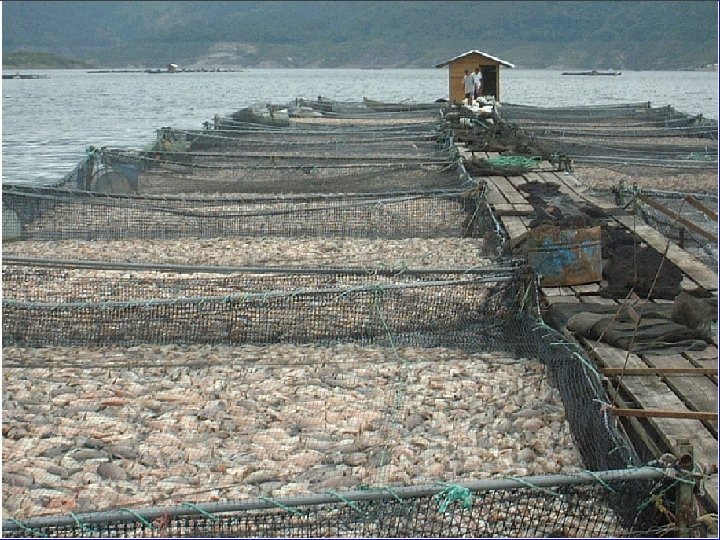
Factors Causing Thermal Destratification • Decreasing air temperature from summer to fall • Weather fronts with heavy rain and wind • Periods of cloudy, cooler weather • Phytoplankton die-offs
Good Management Practices for Cage Culture • Cages should be designed and constructed to facilitate water exchange and to prevent escapes. • Cages should be installed in macrophyte-free areas with good water quality and water exchange. • Cages should be positioned to enhance water exchange. • Cages should be moved frequently enough to prevent excessive sedimentation. • Apply feeds conservatively to minimize wastes. • When cages are removed for cleaning, debris removed should not be discharged into public waters.
Good Management Practices for Cage Culture • Remove dead fish daily for responsible disposal. • Collect feed bags and other solids wastes for responsible disposal. • Cages should not interfere with navigation or other uses of the water body. • Discourage birds and other predators by nonlethal means. • Wastes from feeding should not exceed the carrying capacity of the containing water body. • Monitor water quality in the containing water body.
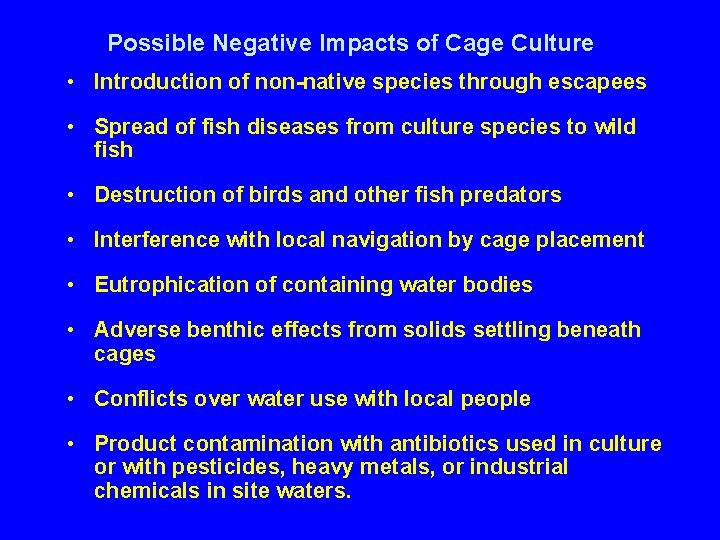
Possible Negative Impacts of Cage Culture • Introduction of non-native species through escapees • Spread of fish diseases from culture species to wild fish • Destruction of birds and other fish predators • Interference with local navigation by cage placement • Eutrophication of containing water bodies • Adverse benthic effects from solids settling beneath cages • Conflicts over water use with local people • Product contamination with antibiotics used in culture or with pesticides, heavy metals, or industrial chemicals in site waters.
- Slides: 25