
An overview of bacterial and viral infections of
An overview of bacterial and viral infections of the upper respiratory tract. Injury to mucociliary apparatus Physiology Module Dr Jalees Khalid Khan Pathology Deptt. KEMU. Lahore
Upper respitaory infections Upper respiratory tract infections are the most common human affliction. Major share of time lost from work and school. Most common cause of antibiotic abuse.
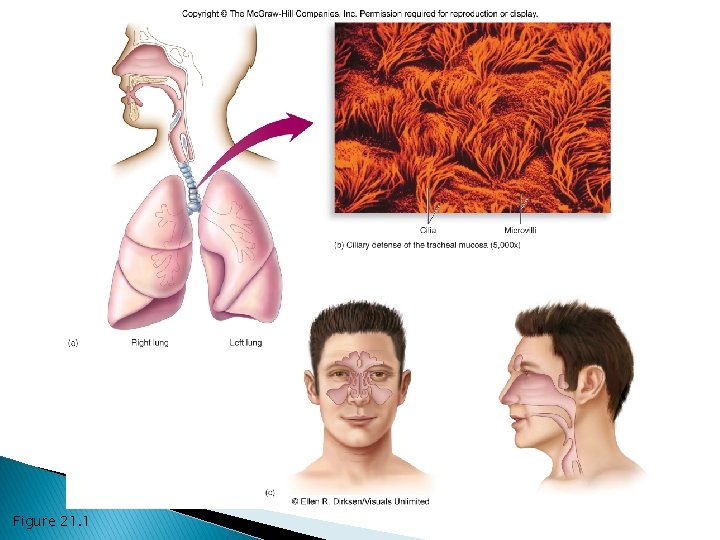
Figure 21. 1
Normal flora of respiratory tract • • • Generally limited to the upper respiratory tract Gram-positive bacteria (streptococci and staphylococci) very common Disease-causing bacteria are present as normal biota; can cause disease if their host becomes immunocompromised or if they are transferred to other hosts (Streptococcus pyogenes, Haemophilus influenza, Streptococcus pneumonia, Neisseria meningitides, Staphylococcus aureus) • Normal biota perform microbial antagonism
Respiratory tract • • Most common place for infectious agents to gain access to the body Upper respiratory tract: mouth, nose, nasal cavity, sinuses, pharynx, epiglottis, larynx Lower respiratory tract: trachea, bronchioles, lungs, alveoli Defences – Nasal hair – Cilia – Mucus – Involuntary responses such as coughing, sneezing, and swallowing – Macrophages – Secretory Ig. A against specific pathogens
Diseases �Influenza �Epiglottitis �Sinusitis �The Common Cold �Diphtheria
The significance in relationship with antibiotic abuse � Nosocomial infections-indisciminate use of drugs by doctors and quacks. � Drug resistance-causes � Cell wall alteration, Plasmid, ESBL, Efflux pump etc � Lysogenic strains � MRSA and others
Epidemiology � Pandemics � Epidemics � Endemic � Seasonal � Age Worldwide - antigenic shift Local - antigenic drift Sporadic Winter months - abrupt Infection: children >adults Mortality: adults >children
Pathogenesis � Virus replication: 24 - 72 hours � Virus excretion: 3 - 7 days � Antibodies to HA, NA subtypes
Secondary bacterial pathogens � S. pneumoniae � H. influenzae � S. aureus - Toxin Shock Syndrome
Reye’s syndrome � Post influenza B � Encephalopathy � Hepatic dysfunction � Elevate NH 3, LFTs, CPK � Children: Streptococcus pneumoniae ◦ Most common cause outside of neonatal period ◦ Nasopharyngeal colonization – 50% of kids ◦ >90 serotypes – majority of invasive disease caused by 10 serotypes ◦ Bacteremia in 25 -30% of kids ◦ Gram stain – gram positive lancet shaped diplococci (“gram positive cocci in pairs”)

Age differences � Adults � Kids – lobar pneumonia – lobar or bronchopneumonia
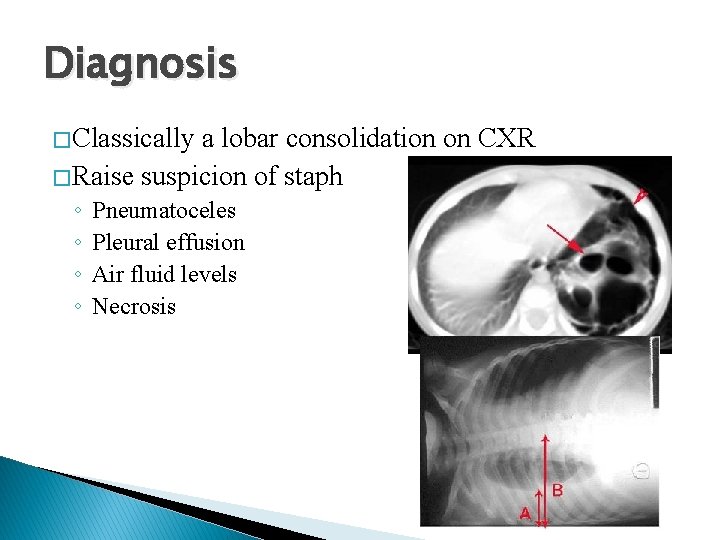
Diagnosis � Classically a lobar consolidation on CXR � Raise suspicion of staph ◦ ◦ Pneumatoceles Pleural effusion Air fluid levels Necrosis
The effect of cigarette smoke or gaseous inhalation on respiratory tract � Changes in alveolar epithelial-ciliated columnar to pseudostratified/columnar epithelium � Inefficiency of cilia to expel the debris, contaminants, carbon etc inhaled from atmosphere � Emphysema, COPD, Bronchiectasis, Carcinoma of lung
Influenza Vaccine Trivalent vaccine A/Beijing/262/95 -like (H 1 N 1) A/Sydney/5/97 -like (H 3 N 2) B/Harbin/07/94
Indications for Vaccine � Elderly (age>65) � High-risk* � Household contacts � Health-care personnel � Pregnant women after 14 th week High-risk: institutionalized, chronic heart or lung disease, diabetes, renal dysfunction, immunosuppressed, children on aspirin

The significance of vaccination, the target groups that should be vaccinated, frequency and side effects � Killed vaccines � Live vaccines are long acting while short acting are killed vaccines � Immunization ◦ Measles – �Pneumonia is what they die of – often super-infection �World-wide coverage rate – 76% in 2004 �Still having 30 -40 million cases a year ◦ Hemophilus. Influenzae B – � 2 -3 million cases of severe disease a year �In 2003, developed world coverage – 92% �Developing world – 42% �Least developed countries – 8%
Influenza Vaccine Timing: October Mid-November Duration of immunity: start 1 -2 weeks end 4 -6 months

Side effects � Prozone phenomenon � Serum sickness � Fever, lymphadenopathy � Severe anaphylactic reation � Defective vaccine production-NIH � DPT-not properly killed
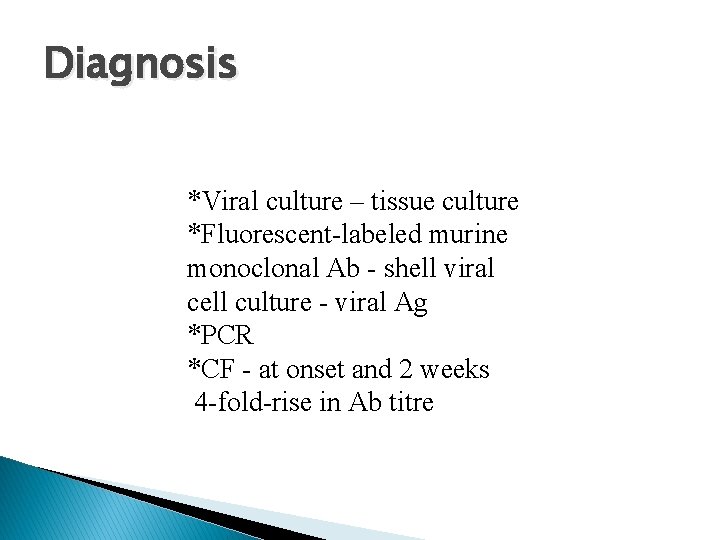
Diagnosis *Viral culture – tissue culture *Fluorescent-labeled murine monoclonal Ab - shell viral cell culture - viral Ag *PCR *CF - at onset and 2 weeks 4 -fold-rise in Ab titre

Prophylaxis of Influenza A � Control of outbreaks in institutions � Adjunct to late vaccination � Immunodeficient - AIDS � Vaccine contraindicated � Home caregivers of high risk
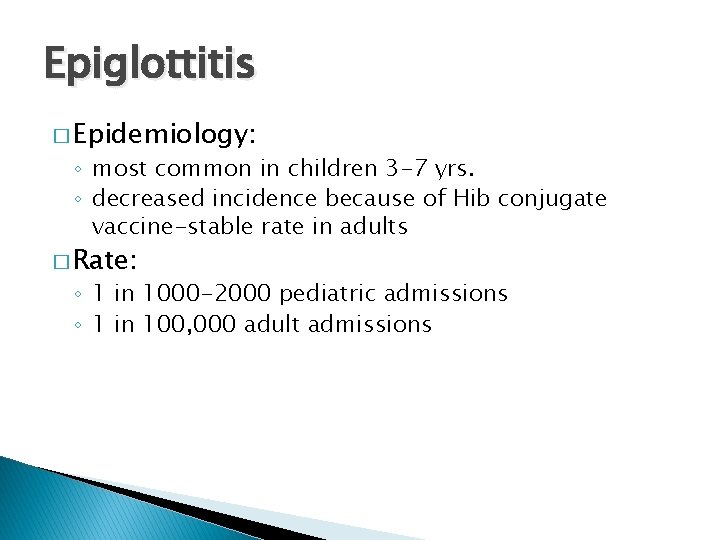
Epiglottitis � Epidemiology: ◦ most common in children 3 -7 yrs. ◦ decreased incidence because of Hib conjugate vaccine-stable rate in adults � Rate: ◦ 1 in 1000 -2000 pediatric admissions ◦ 1 in 100, 000 adult admissions
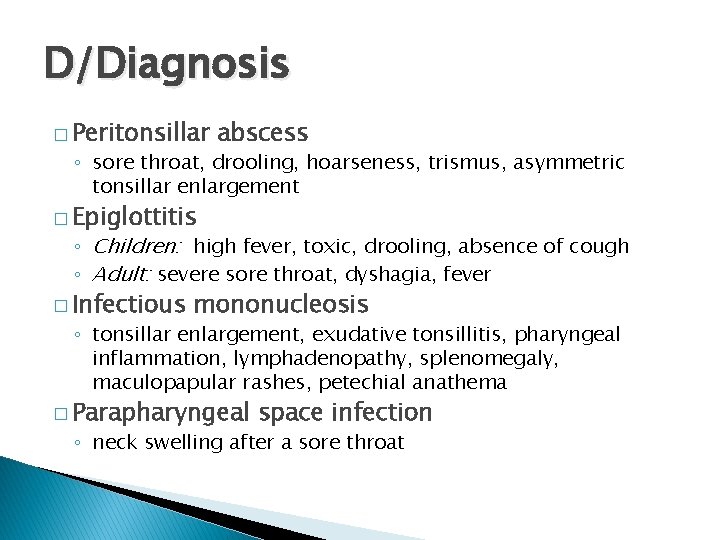
D/Diagnosis � Peritonsillar abscess ◦ sore throat, drooling, hoarseness, trismus, asymmetric tonsillar enlargement � Epiglottitis ◦ Children: high fever, toxic, drooling, absence of cough ◦ Adult: severe sore throat, dyshagia, fever � Infectious mononucleosis ◦ tonsillar enlargement, exudative tonsillitis, pharyngeal inflammation, lymphadenopathy, splenomegaly, maculopapular rashes, petechial anathema � Parapharyngeal space infection ◦ neck swelling after a sore throat

Epiglottitis - Pathogenesis � Haemophilus influenzae type b, S. pneumoniae, S. aureus, H. influenzae type non-b, H. parainfluenzae � Inflammation and edema of the epiglottis, arytenoids, arytenoepiglottic folds, subglottic area � Epiglottis pulled down into larynx and occludes the airway
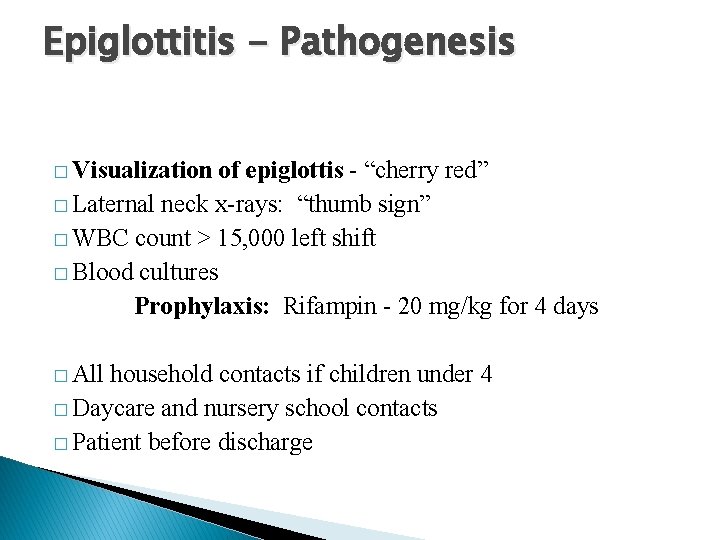
Epiglottitis - Pathogenesis � Visualization of epiglottis - “cherry red” � Laternal neck x-rays: “thumb sign” � WBC count > 15, 000 left shift � Blood cultures Prophylaxis: Rifampin - 20 mg/kg for 4 days � All household contacts if children under 4 � Daycare and nursery school contacts � Patient before discharge
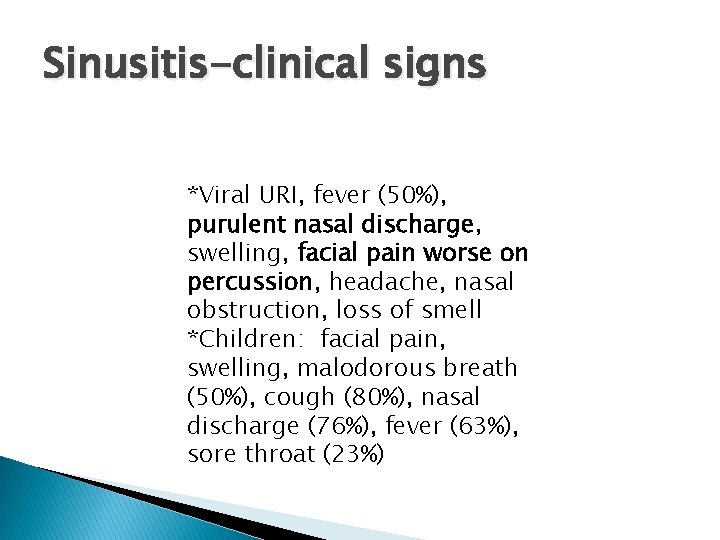
Sinusitis-clinical signs *Viral URI, fever (50%), purulent nasal discharge, swelling, facial pain worse on percussion, headache, nasal obstruction, loss of smell *Children: facial pain, swelling, malodorous breath (50%), cough (80%), nasal discharge (76%), fever (63%), sore throat (23%)
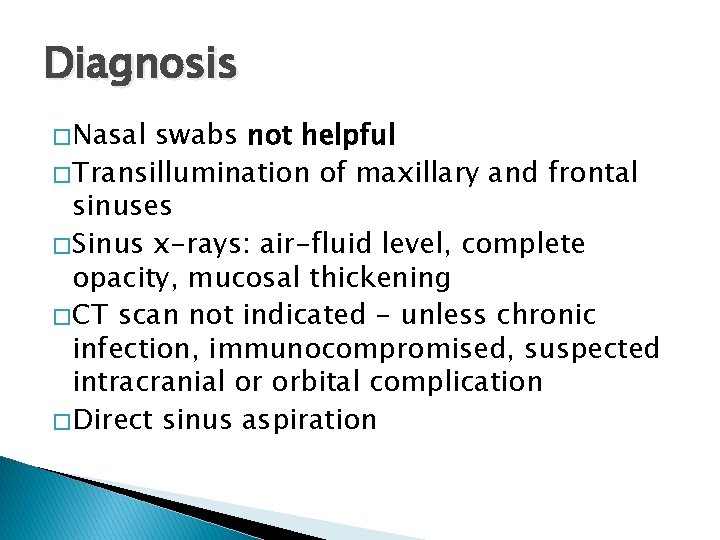
Diagnosis � Nasal swabs not helpful � Transillumination of maxillary and frontal sinuses � Sinus x-rays: air-fluid level, complete opacity, mucosal thickening � CT scan not indicated - unless chronic infection, immunocompromised, suspected intracranial or orbital complication � Direct sinus aspiration
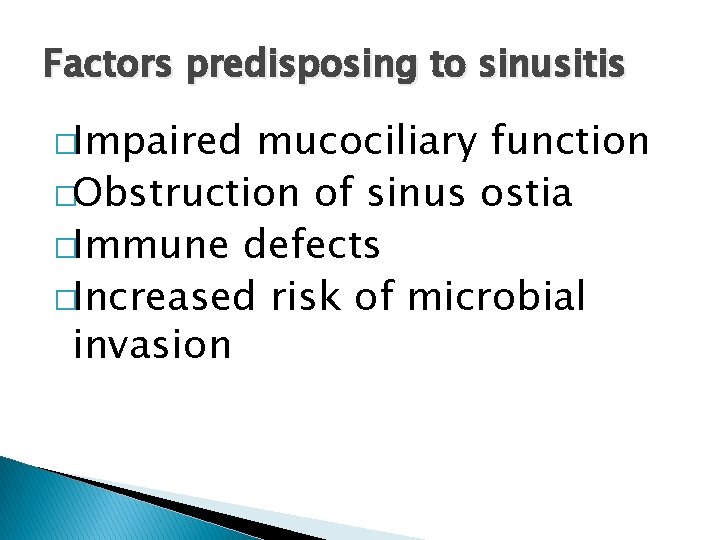
Factors predisposing to sinusitis �Impaired mucociliary function �Obstruction of sinus ostia �Immune defects �Increased risk of microbial invasion
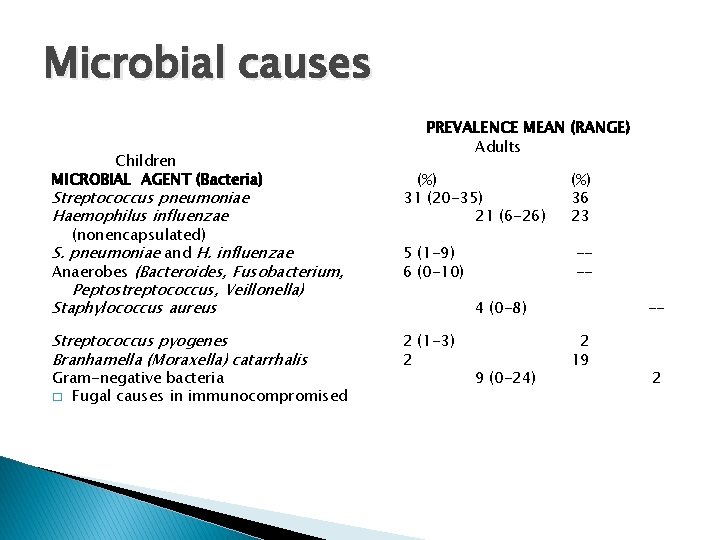
Microbial causes Children MICROBIAL AGENT (Bacteria) Streptococcus pneumoniae Haemophilus influenzae (nonencapsulated) S. pneumoniae and H. influenzae Anaerobes (Bacteroides, Fusobacterium, Peptostreptococcus, Veillonella) Staphylococcus aureus Streptococcus pyogenes Branhamella (Moraxella) catarrhalis Gram-negative bacteria � Fugal causes in immunocompromised PREVALENCE MEAN (RANGE) Adults (%) 31 (20 -35) 21 (6 -26) 5 (1 -9) 6 (0 -10) (%) 36 23 --- 4 (0 -8) 2 (1 -3) 2 9 (0 -24) -2 19 2
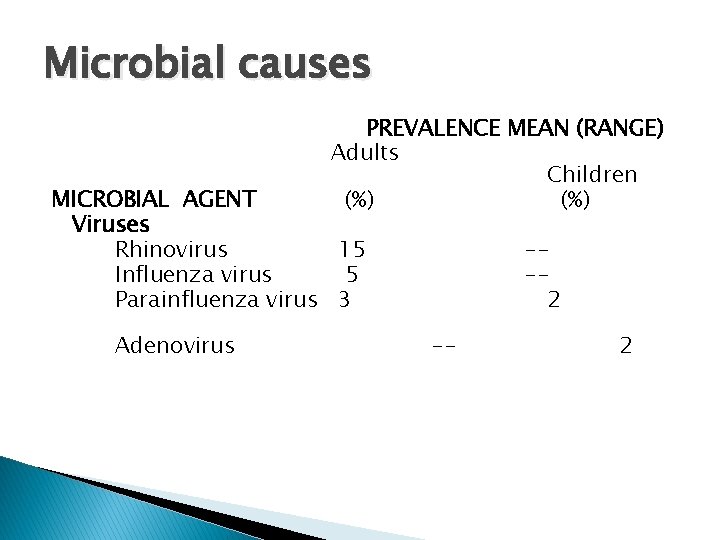
Microbial causes PREVALENCE MEAN (RANGE) Adults Children (%) MICROBIAL AGENT Viruses Rhinovirus 15 Influenza virus 5 Parainfluenza virus 3 Adenovirus --2 -- 2

Complications of Sinusitis Complication � Meningitis � Osteomyelitis Epidural abscess Subdural empyema � Cerebral abscess � � Venous sinus thrombosis death Cavernous sinus palsies Clinical Signs Headache, fever, stiff neck lethargy, rapid death Pott’s puffy tumor Headache, fever Headache, seizures hemiplegia, rapid death Convulsions, headache, personality change Picket-fence fever, rapid Orbital edema, ocular
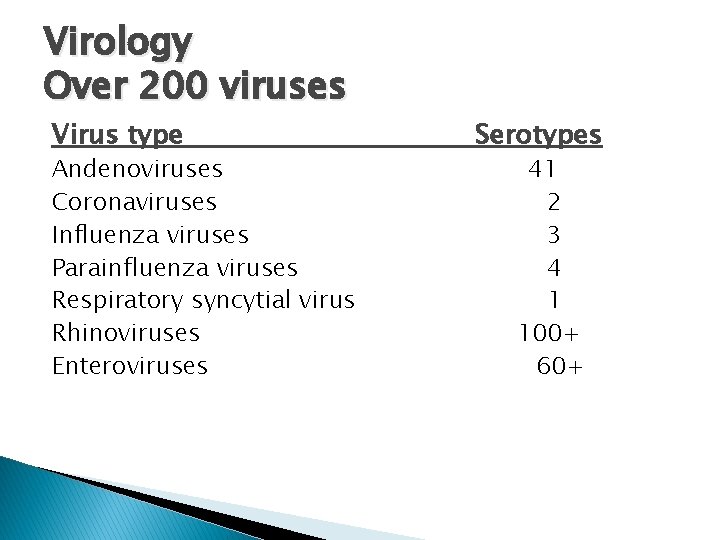
Virology Over 200 viruses Virus type Andenoviruses Coronaviruses Influenza viruses Parainfluenza viruses Respiratory syncytial virus Rhinoviruses Enteroviruses Serotypes 41 2 3 4 1 100+ 60+
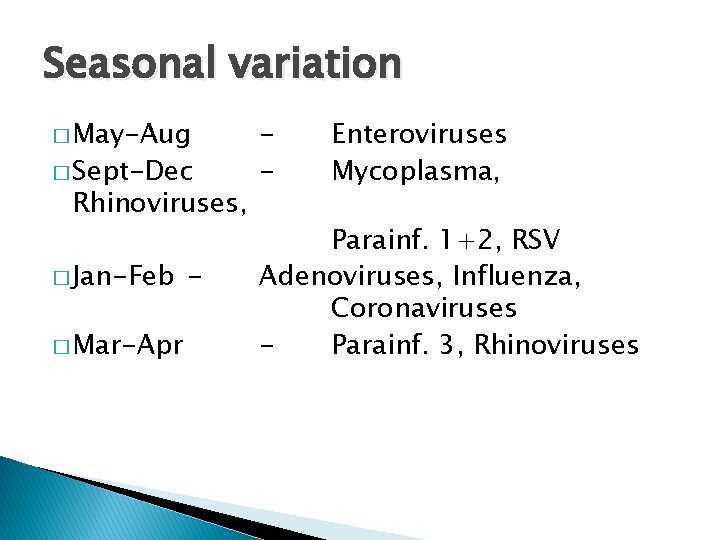
Seasonal variation � May-Aug � Sept-Dec Rhinoviruses, � Jan-Feb � Mar-Apr - - Enteroviruses Mycoplasma, Parainf. 1+2, RSV Adenoviruses, Influenza, Coronaviruses Parainf. 3, Rhinoviruses
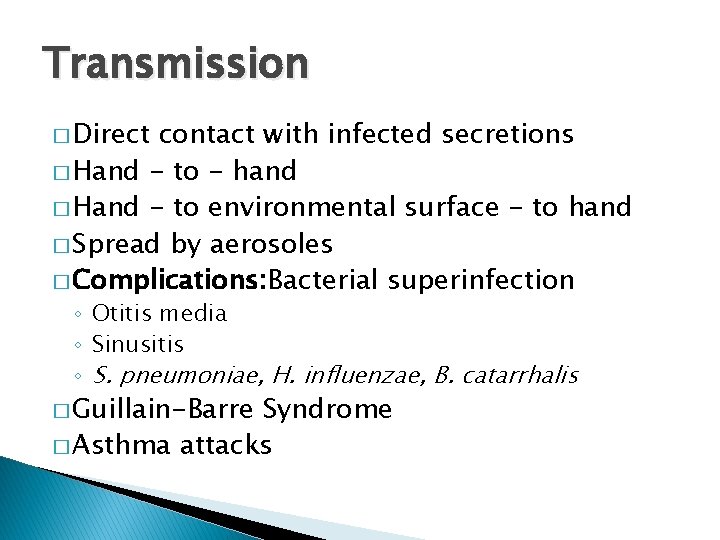
Transmission � Direct contact with infected secretions � Hand - to - hand � Hand - to environmental surface - to hand � Spread by aerosoles � Complications: Bacterial superinfection ◦ Otitis media ◦ Sinusitis ◦ S. pneumoniae, H. influenzae, B. catarrhalis � Guillain-Barre Syndrome � Asthma attacks
Aspirin and influenza � Aspirin - prolonged excretion of rhinoviruses, influenza virus � Children - aspirin associated with Reye’s syndrome � Prevention: Vaccines ◦ influenza A/B ◦ adenoviruses types 4, 7 � Intranasal interferon ◦ rhinoviruses ◦ nasal obstruction, bloody discharge

- Slides: 36