
An Overview of AirPurifying Respirators Prepared by CPWR
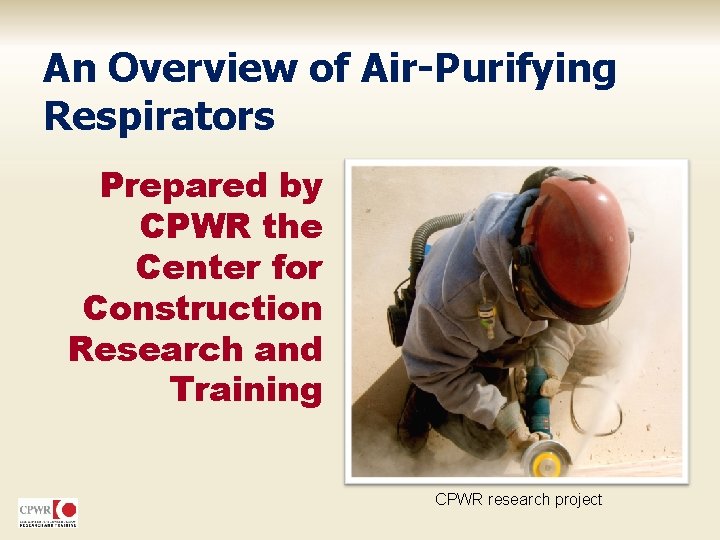
An Overview of Air-Purifying Respirators Prepared by CPWR the Center for Construction Research and Training CPWR research project
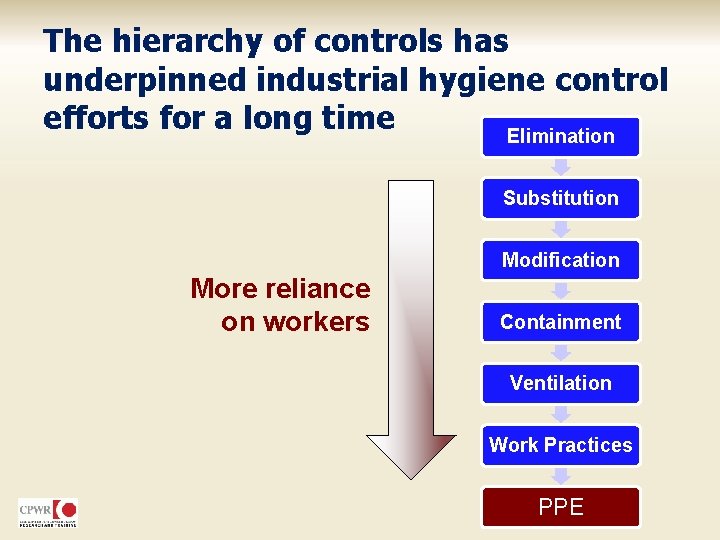
The hierarchy of controls has underpinned industrial hygiene control efforts for a long time Elimination Substitution Modification More reliance on workers Containment Ventilation Work Practices PPE
Is there an OSHA standard for respirators? • Yes! • General Industry 29 CFR 1910. 134 • Construction: 29 CFR 1926. 103 • Respiratory regulation may be contaminant specific
What is required in a written respiratory protection program? • • Respirator selection Medical evaluation Fit testing Proper procedures for routine and emergency use • Proper inspection, cleaning, maintenance, and storing • Training • Program evaluation
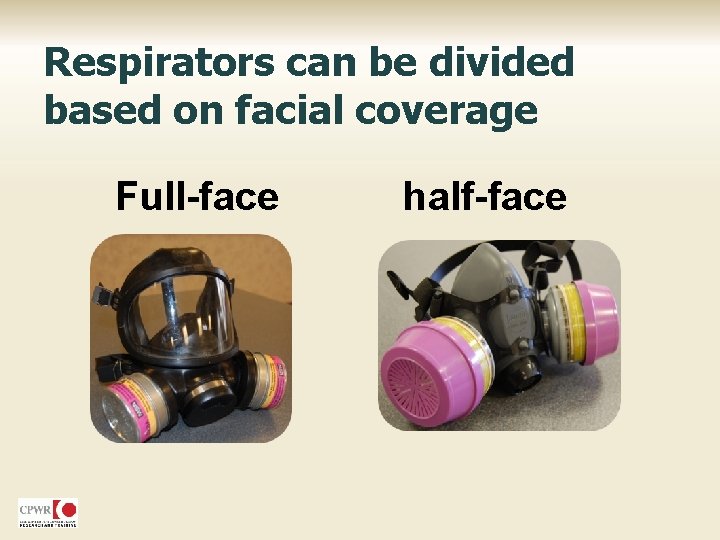
Respirators can be divided based on facial coverage Full-face half-face

A key difference is the pressure inside the mask when inhaling Negative pressure Positive pressure
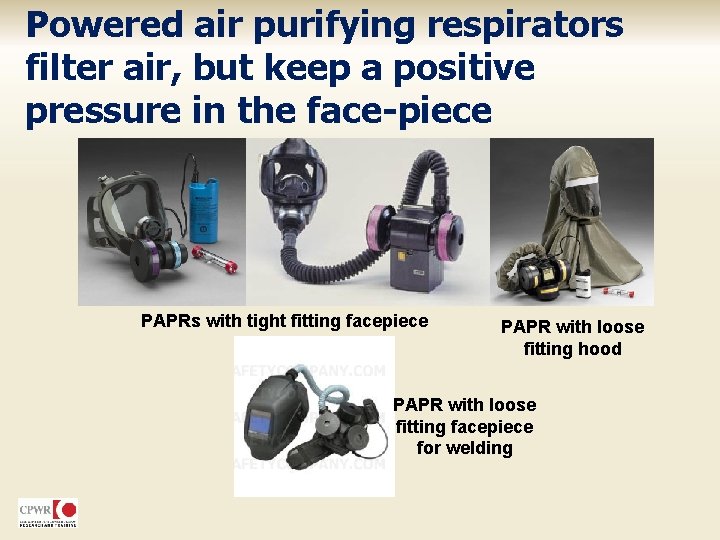
Powered air purifying respirators filter air, but keep a positive pressure in the face-piece PAPRs with tight fitting facepiece PAPR with loose fitting hood PAPR with loose fitting facepiece for welding
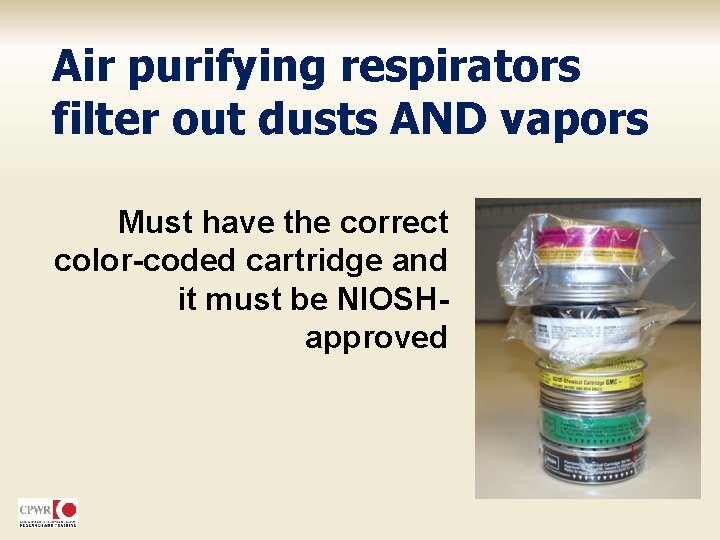
Air purifying respirators filter out dusts AND vapors Must have the correct color-coded cartridge and it must be NIOSHapproved
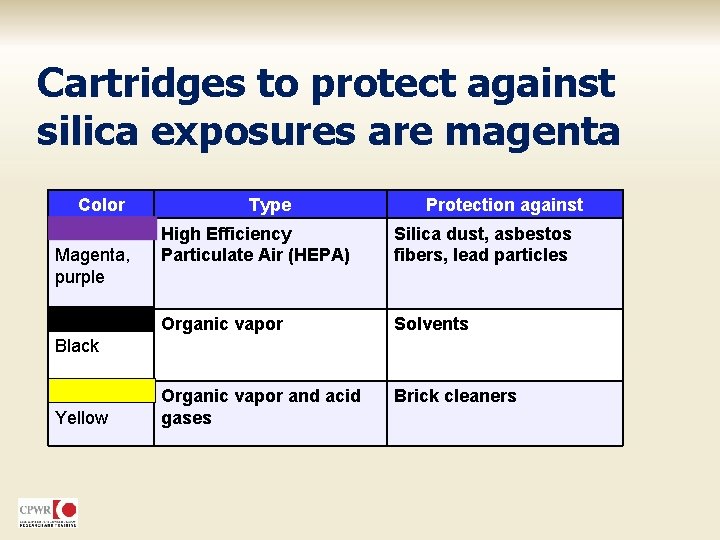
Cartridges to protect against silica exposures are magenta Color Magenta, purple Type Protection against High Efficiency Particulate Air (HEPA) Silica dust, asbestos fibers, lead particles Organic vapor Solvents Organic vapor and acid gases Brick cleaners Black Yellow
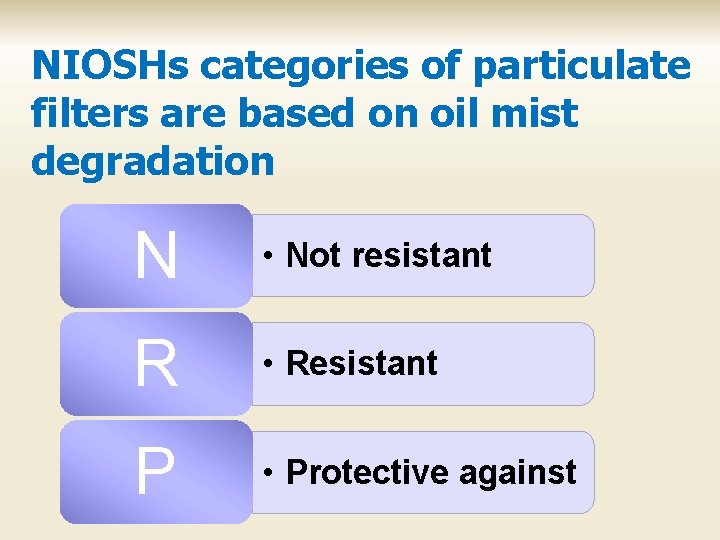
NIOSHs categories of particulate filters are based on oil mist degradation N • Not resistant R • Resistant P • Protective against
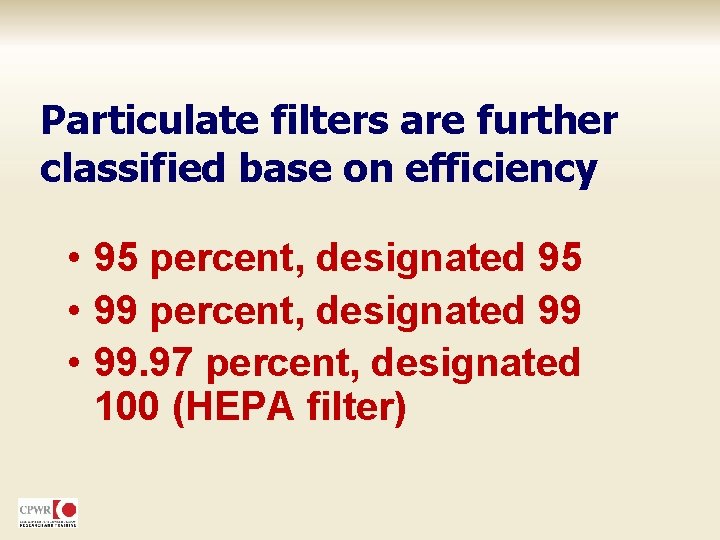
Particulate filters are further classified base on efficiency • 95 percent, designated 95 • 99 percent, designated 99 • 99. 97 percent, designated 100 (HEPA filter)
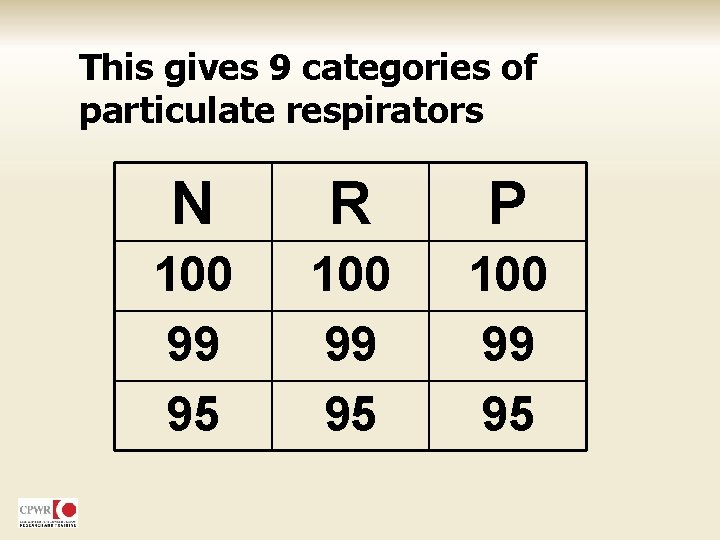
This gives 9 categories of particulate respirators N R P 100 99 95
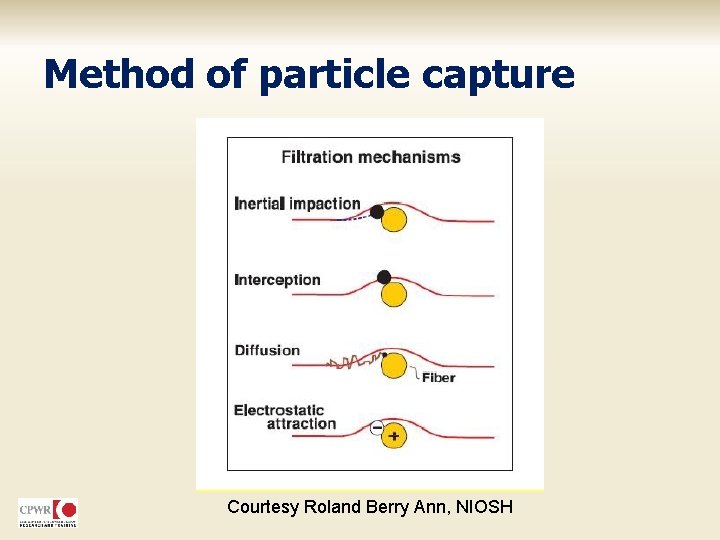
Method of particle capture Courtesy Roland Berry Ann, NIOSH
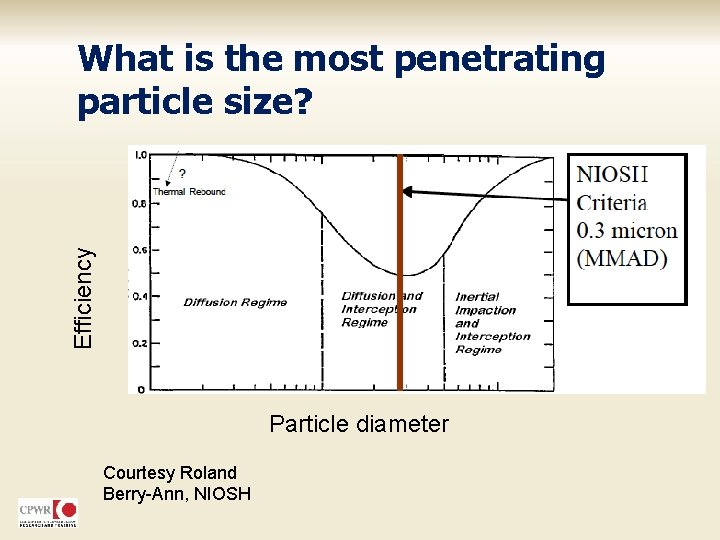
Efficiency What is the most penetrating particle size? Particle diameter Courtesy Roland Berry-Ann, NIOSH
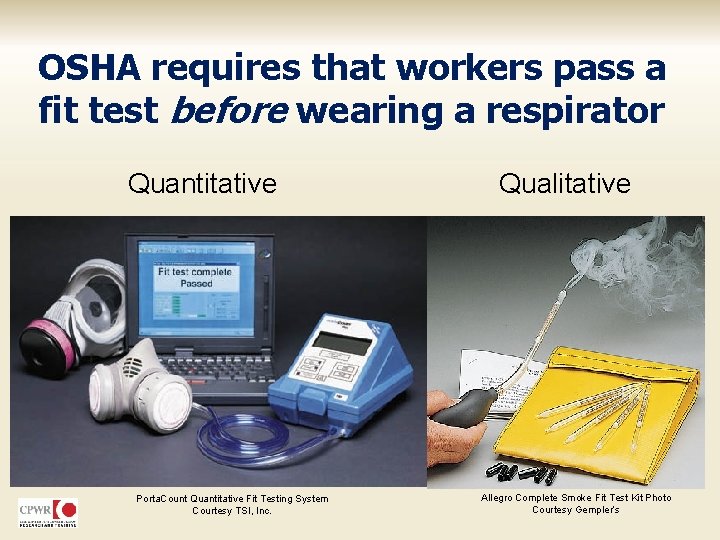
OSHA requires that workers pass a fit test before wearing a respirator Quantitative Porta. Count Quantitative Fit Testing System Courtesy TSI, Inc. Qualitative Allegro Complete Smoke Fit Test Kit Photo Courtesy Gempler’s
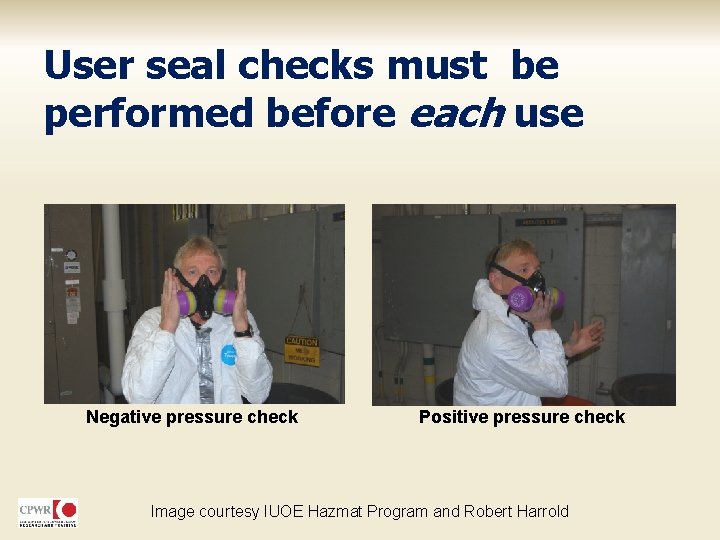
User seal checks must be performed before each use Negative pressure check Positive pressure check Image courtesy IUOE Hazmat Program and Robert Harrold
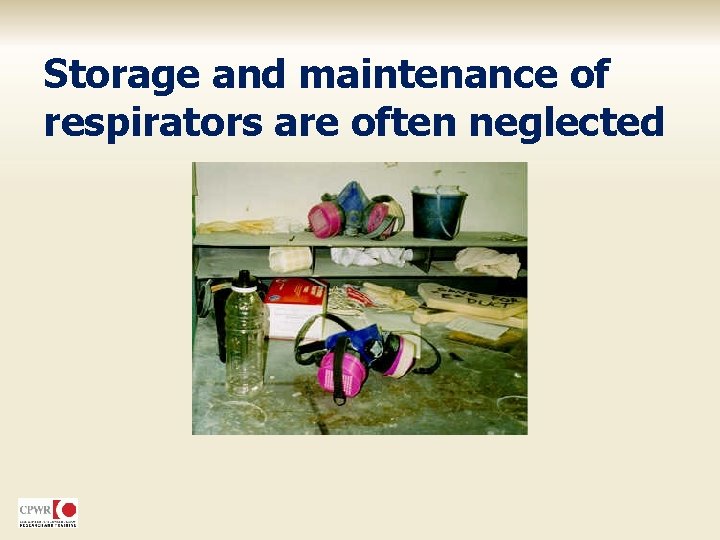
Storage and maintenance of respirators are often neglected
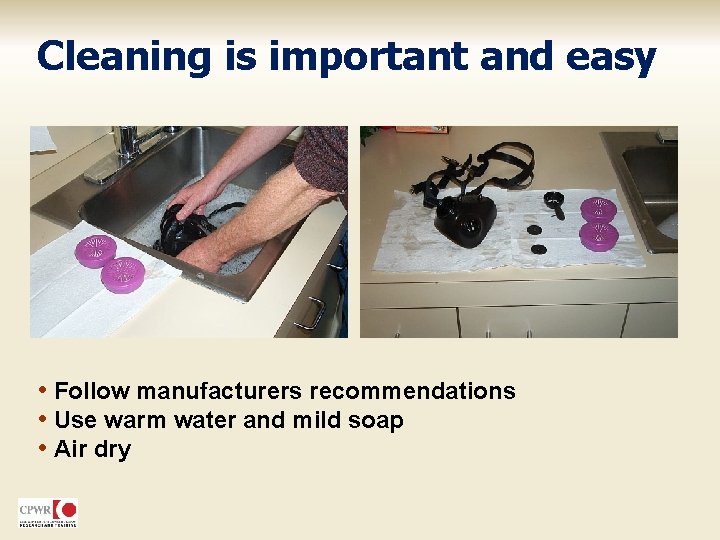
Cleaning is important and easy • Follow manufacturers recommendations • Use warm water and mild soap • Air dry
Questions? Bruce Lippy, Ph. D. , CIH, CSP CPWR’s Director of Safety Research blippy@cpwr. com 301 -495 -8527 (direct line)
- Slides: 19