
An Orientation of the Human Body Chapter 1
An Orientation of the Human Body Chapter 1
What’s the difference? Anatomy Studies structure of body parts and their relationships to one another Physiology How One the body parts work depends on the other Ex: Structure of bone allows it to carry out its function of support
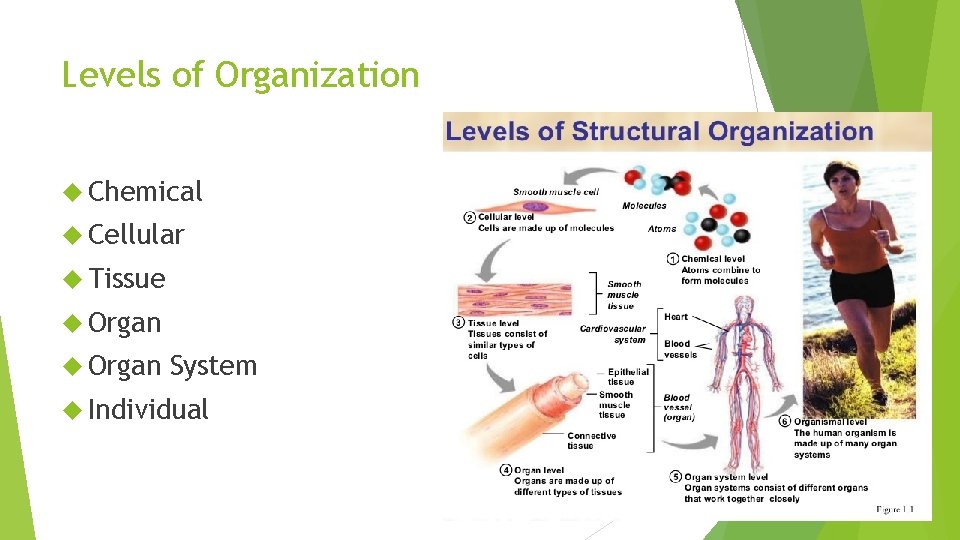
Levels of Organization Chemical Cellular Tissue Organ System Individual
Necessary Life Functions Maintaining Boundaries Internal environment has to be separate from external environment Selectively Body permeable membrane of cell protected by skin Movement Could be body movement or moving things through our body

Necessary Life Functions Responsiveness Ability to sense change in environment and respond Hand on stove Level of carbon dioxide in blood Digestion Eat food and obtain nutrients
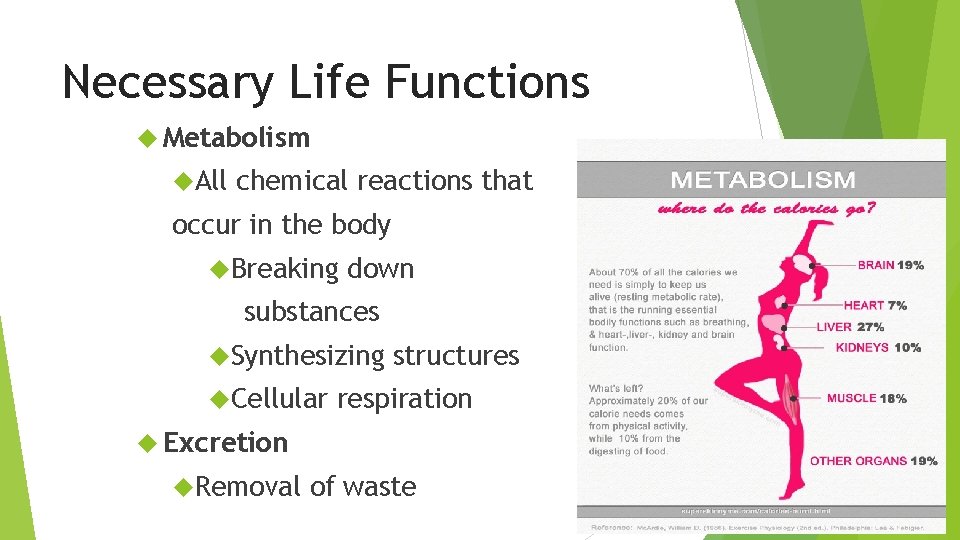
Necessary Life Functions Metabolism All chemical reactions that occur in the body Breaking down substances Synthesizing Cellular structures respiration Excretion Removal of waste
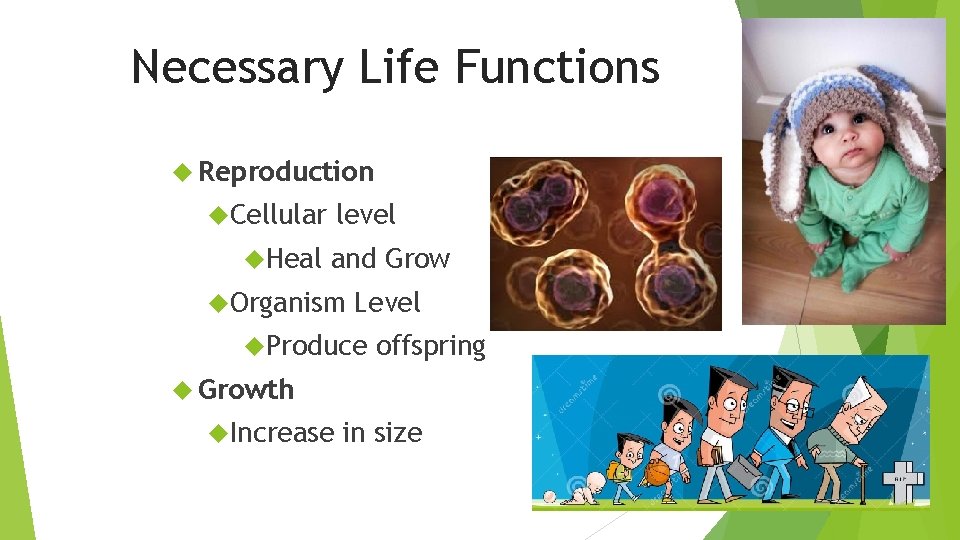
Necessary Life Functions Reproduction Cellular Heal level and Grow Organism Level Produce offspring Growth Increase in size
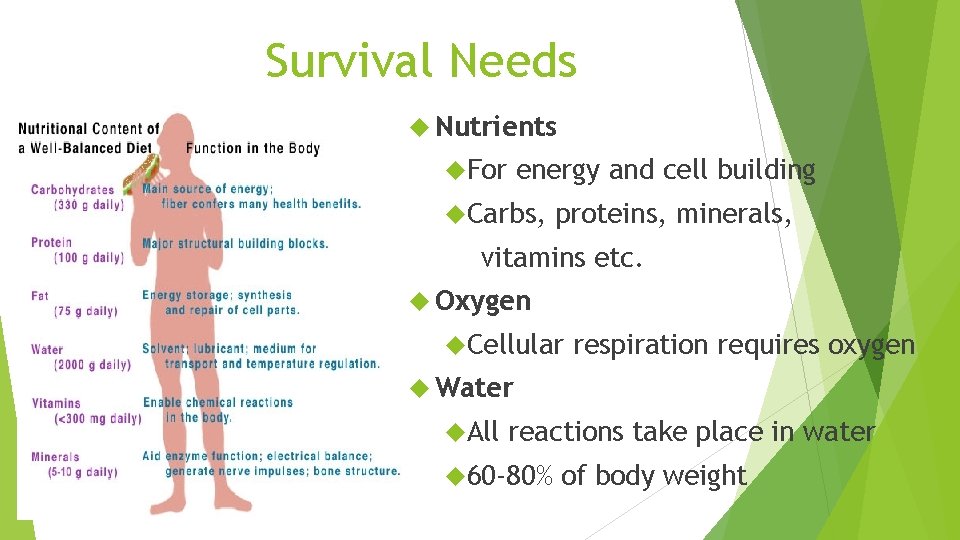
Survival Needs Nutrients For energy and cell building Carbs, proteins, minerals, vitamins etc. Oxygen Cellular respiration requires oxygen Water All reactions take place in water 60 -80% of body weight
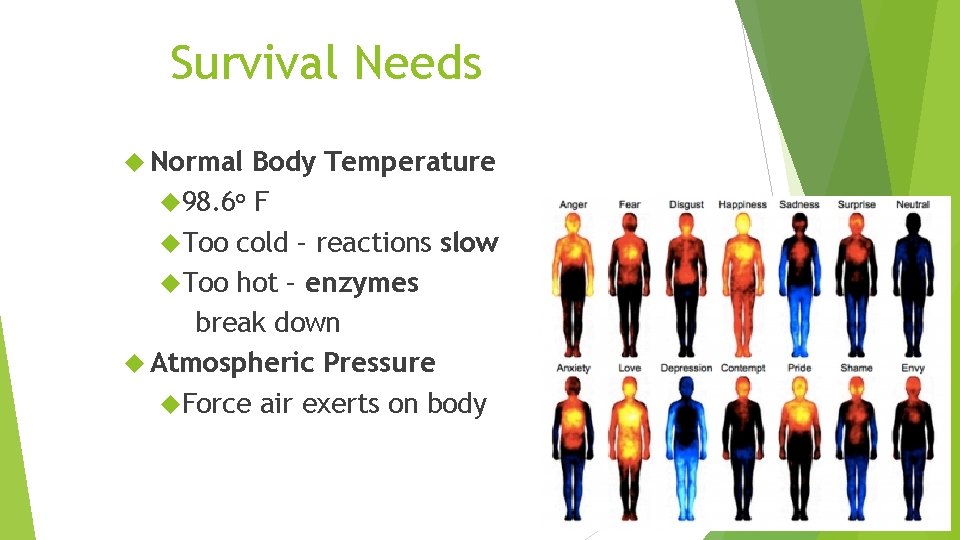
Survival Needs Normal Body Temperature 98. 6 o F Too cold – reactions slow Too hot – enzymes break down Atmospheric Pressure Force air exerts on body
Homeostasis Maintenance of stable internal environment Temperature Blood Pressure Heart rate Glucose levels Oxygen levels Components Receptor Big Bang of feedback system – senses change (thermometer) Control Center – Analyzes input (thermostat) Effector – Changes to get back to setpoint (heater)
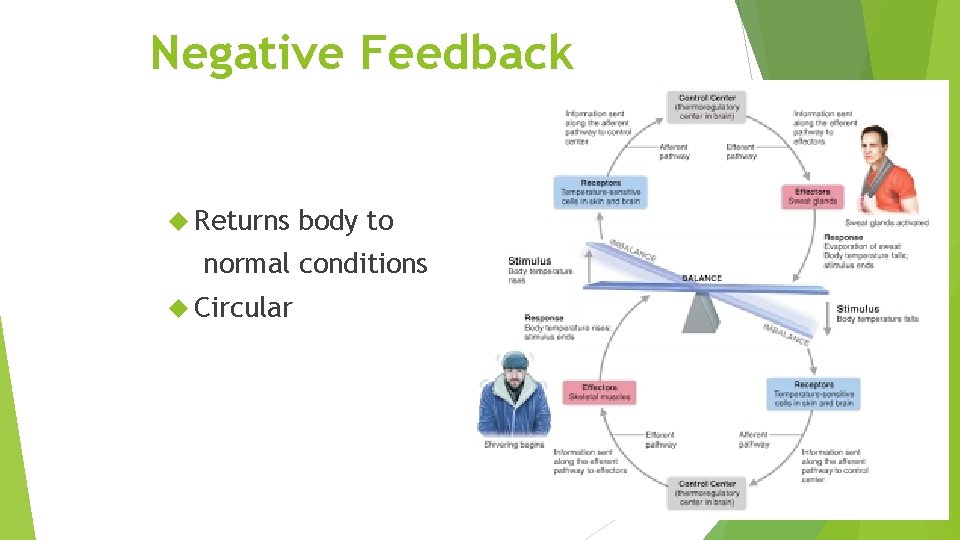
Negative Feedback Returns body to normal conditions Circular
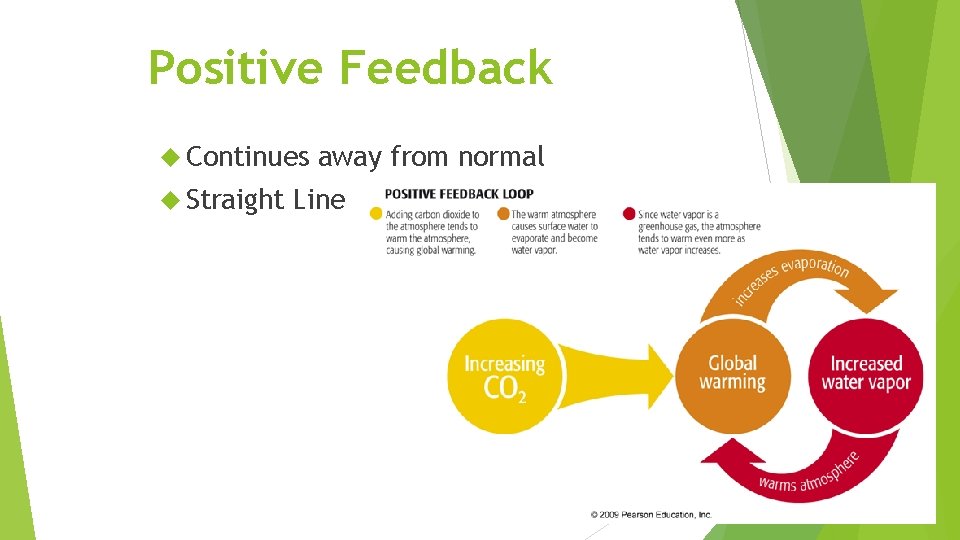
Positive Feedback Continues Straight away from normal Line
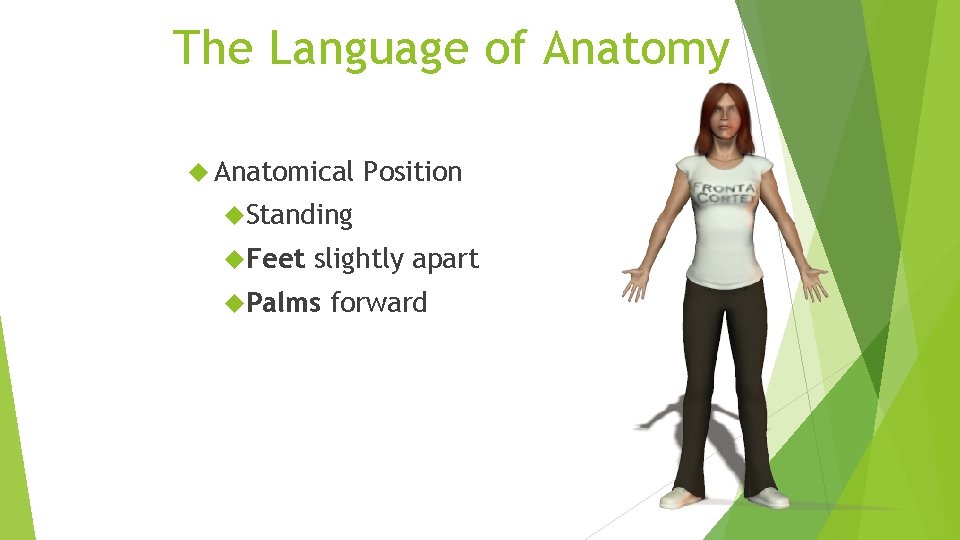
The Language of Anatomy Anatomical Position Standing Feet slightly apart Palms forward
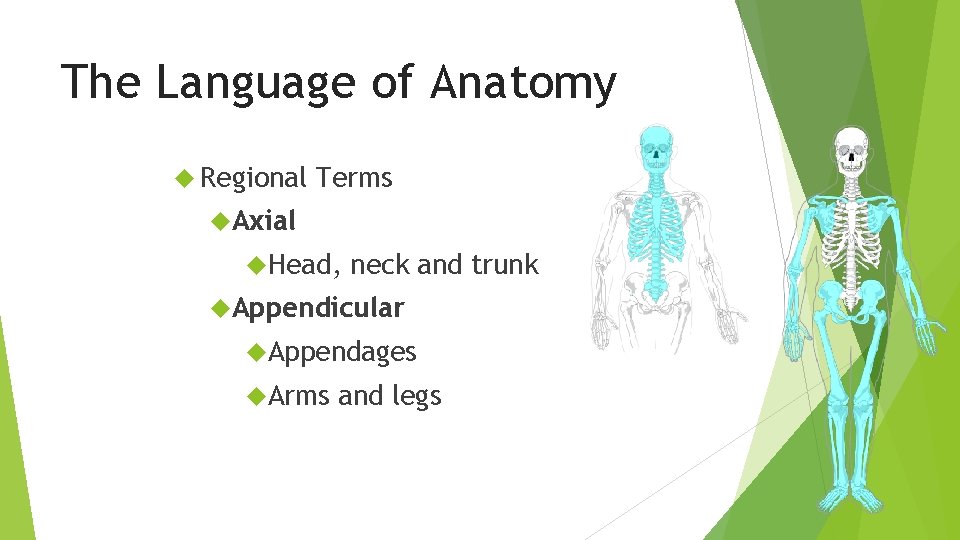
The Language of Anatomy Regional Terms Axial Head, neck and trunk Appendicular Appendages Arms and legs
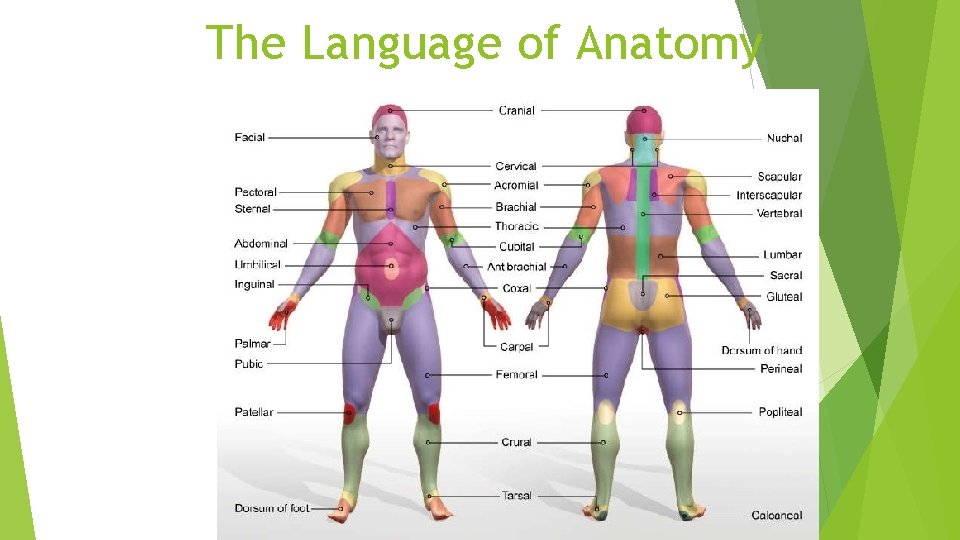
The Language of Anatomy
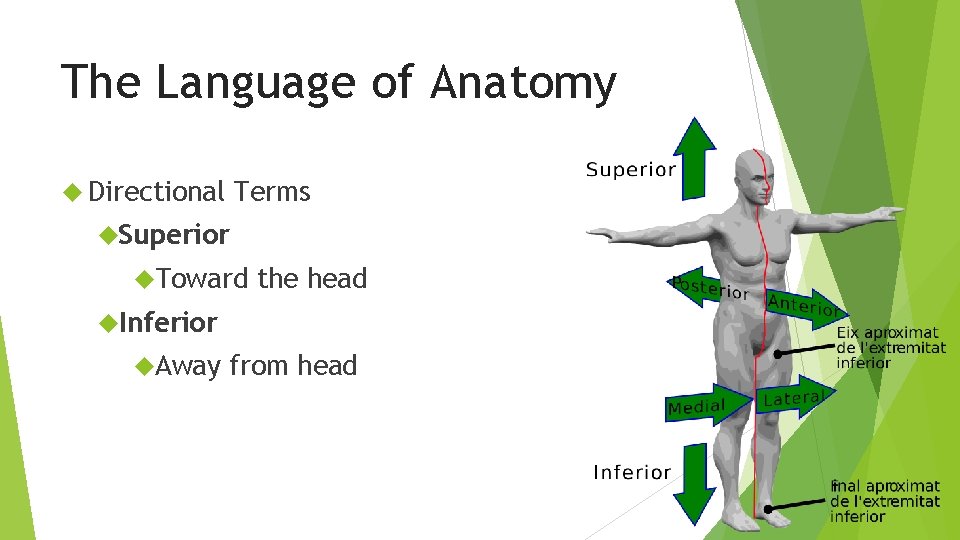
The Language of Anatomy Directional Terms Superior Toward the head Inferior Away from head
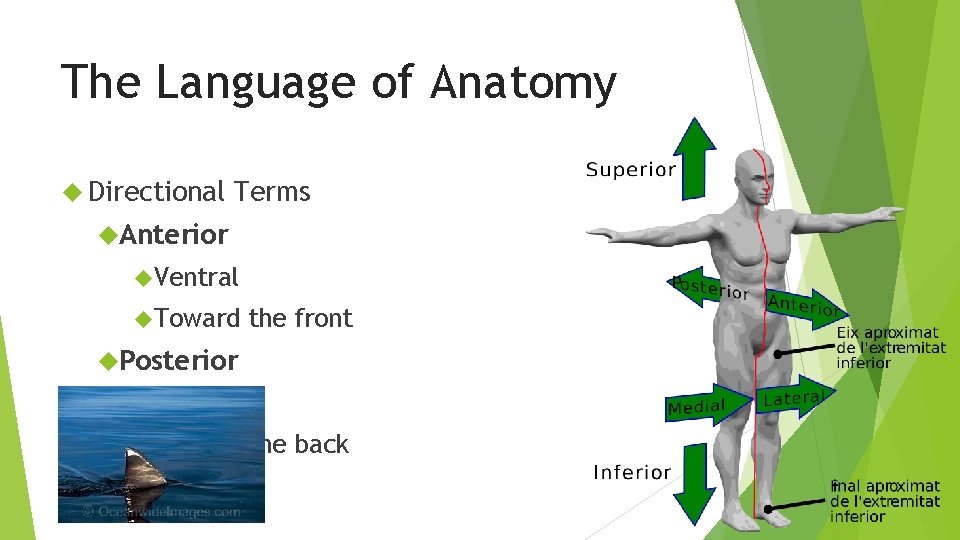
The Language of Anatomy Directional Terms Anterior Ventral Toward the front Posterior Dorsal Toward the back
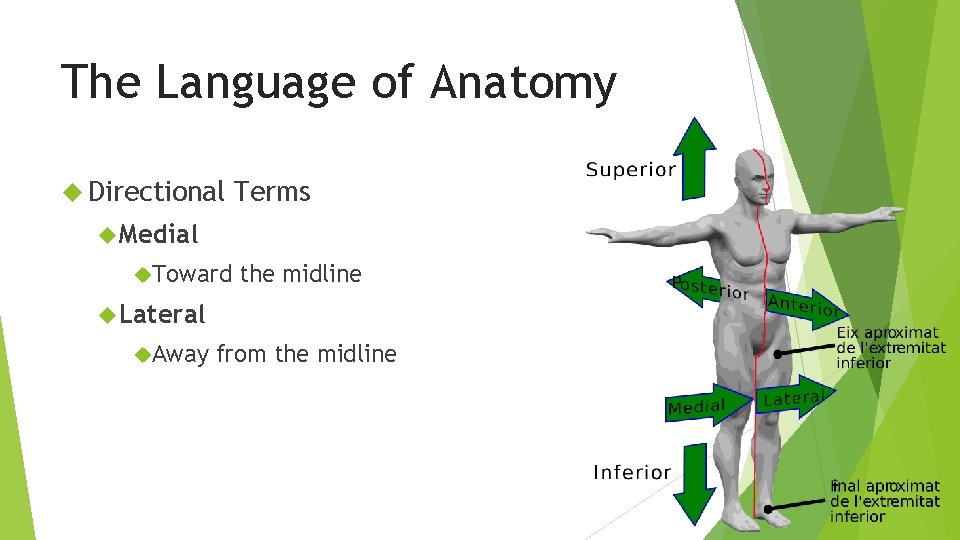
The Language of Anatomy Directional Terms Medial Toward the midline Lateral Away from the midline
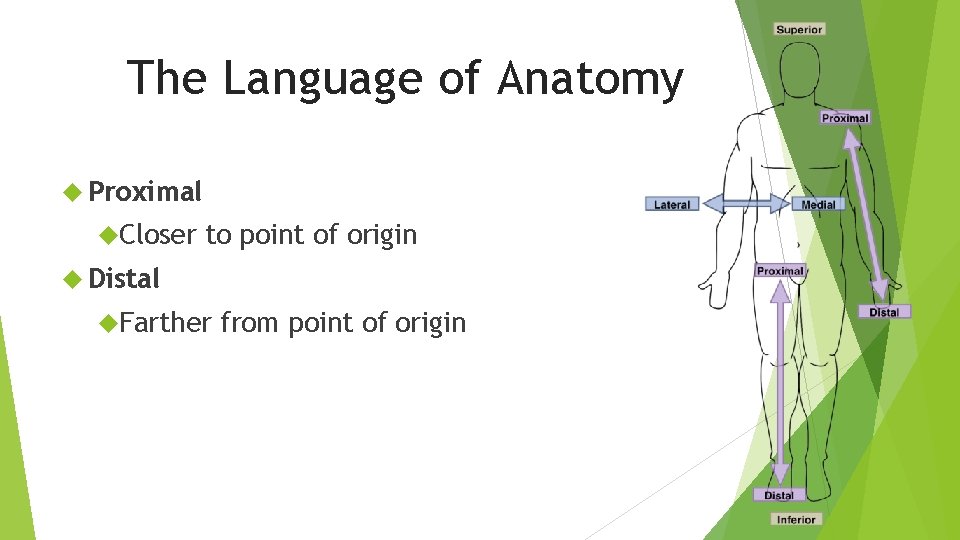
The Language of Anatomy Proximal Closer to point of origin Distal Farther from point of origin
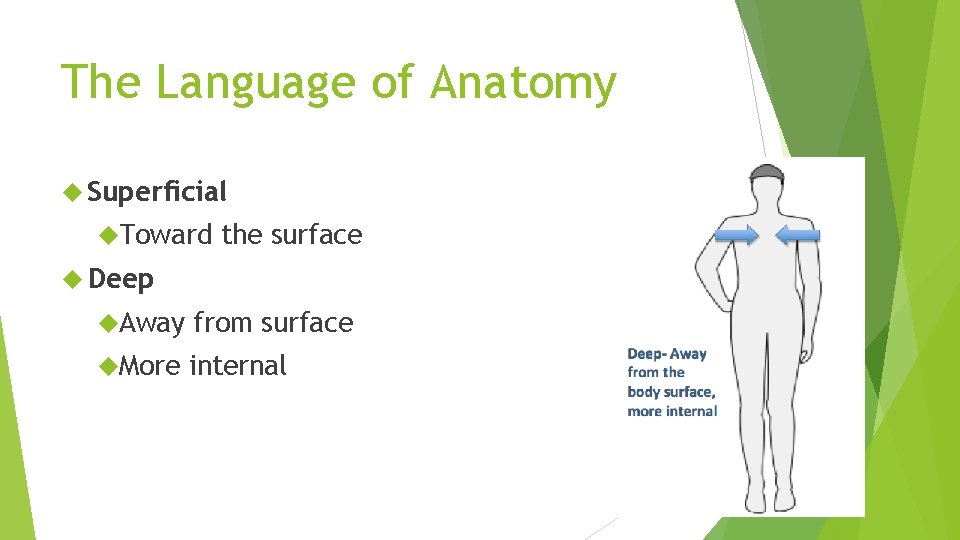
The Language of Anatomy Superficial Toward the surface Deep Away from surface More internal
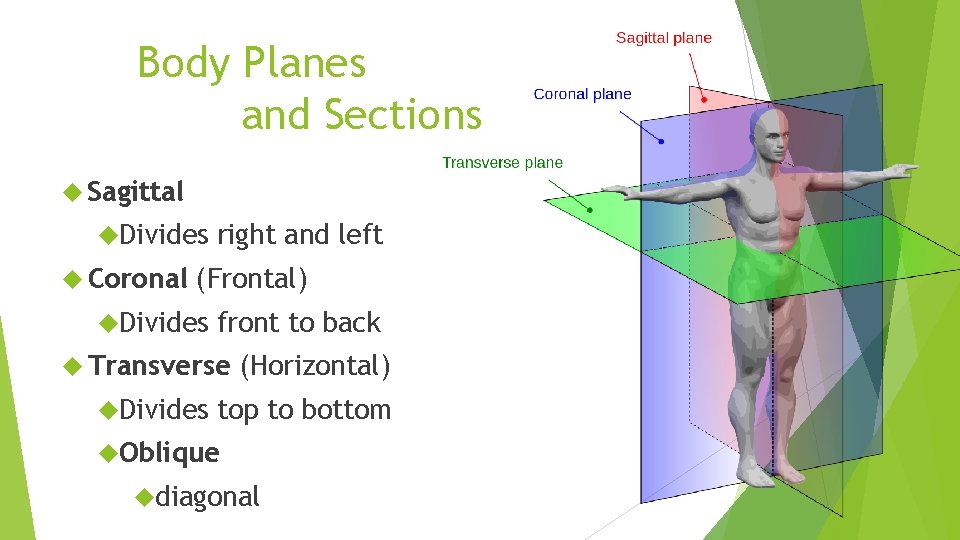
Body Planes and Sections Sagittal Divides Coronal right and left (Frontal) Divides front to back Transverse Divides (Horizontal) top to bottom Oblique diagonal
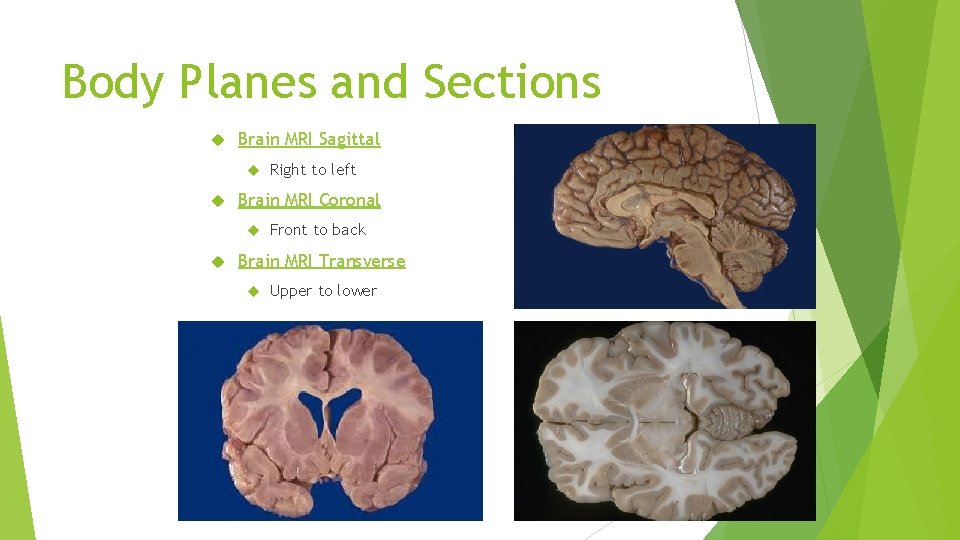
Body Planes and Sections Brain MRI Sagittal Brain MRI Coronal Right to left Front to back Brain MRI Transverse Upper to lower
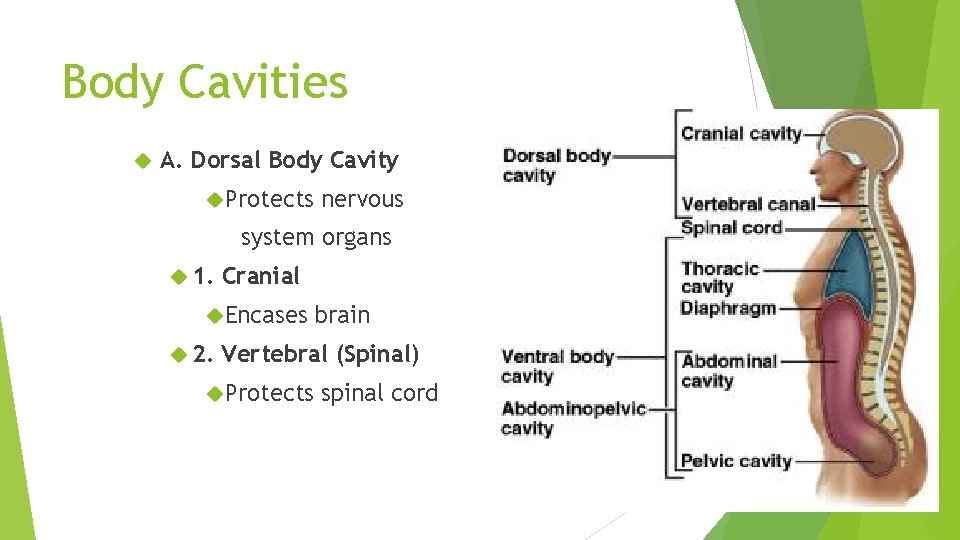
Body Cavities A. Dorsal Body Cavity Protects nervous system organs 1. Cranial Encases 2. brain Vertebral (Spinal) Protects spinal cord
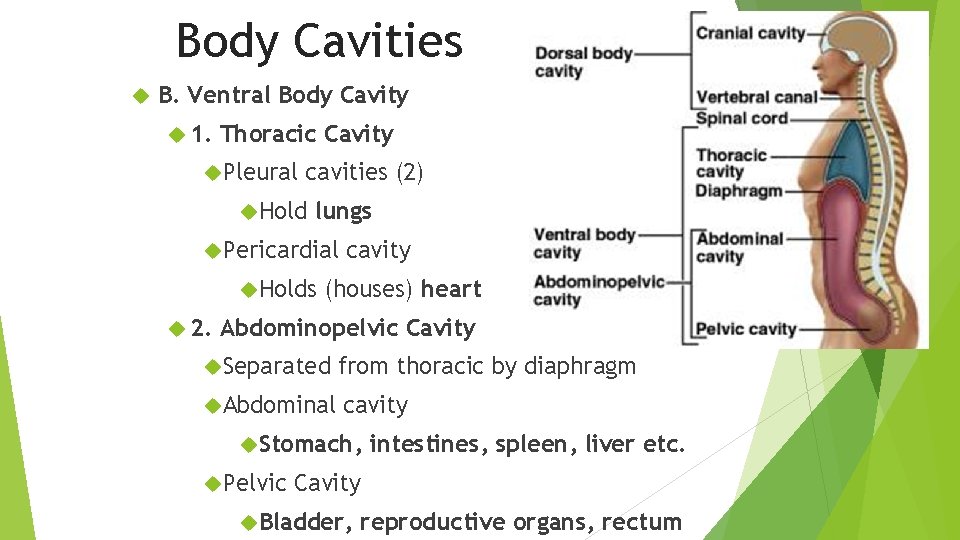
Body Cavities B. Ventral Body Cavity 1. Thoracic Cavity Pleural cavities (2) Hold lungs Pericardial Holds 2. cavity (houses) heart Abdominopelvic Cavity Separated from thoracic by diaphragm Abdominal cavity Stomach, Pelvic intestines, spleen, liver etc. Cavity Bladder, reproductive organs, rectum
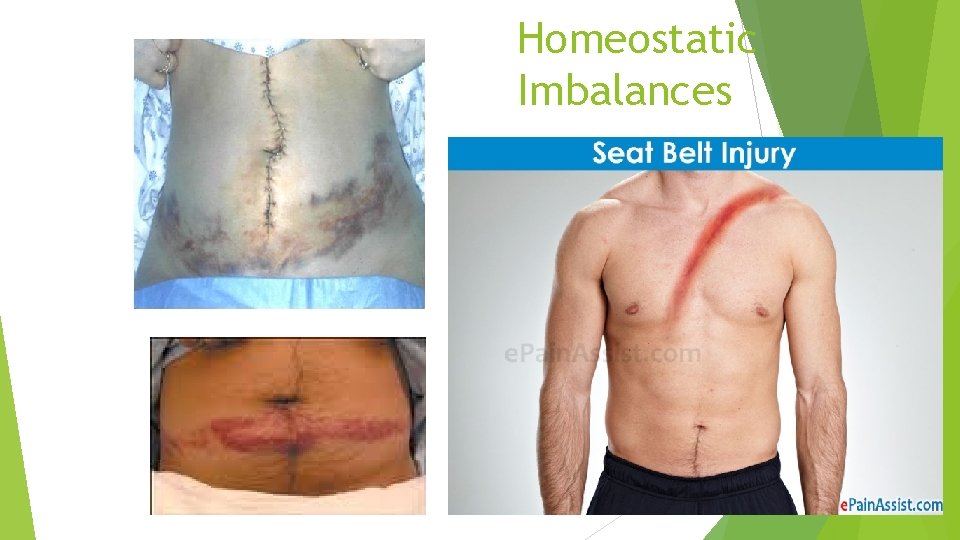
Homeostatic Imbalances
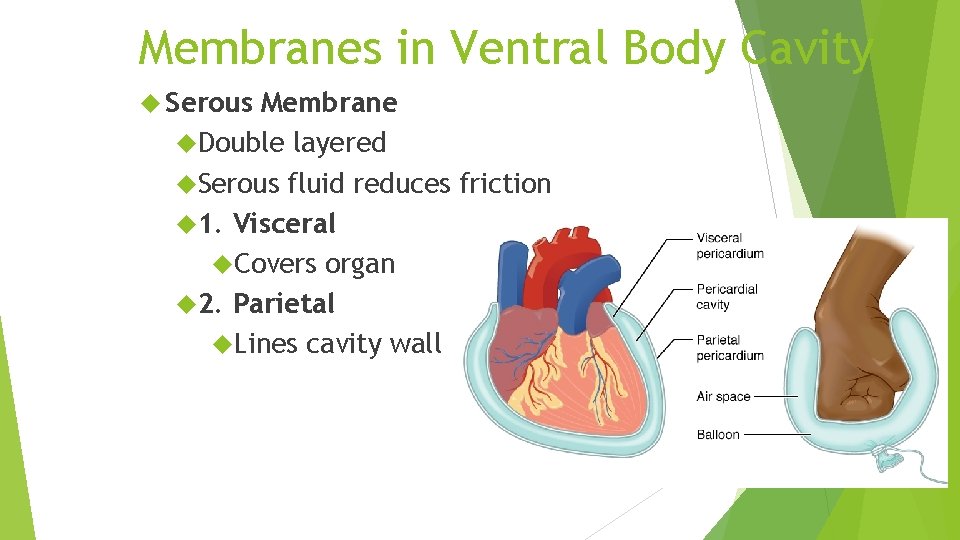
Membranes in Ventral Body Cavity Serous Membrane Double layered Serous fluid reduces friction 1. Visceral Covers organ 2. Parietal Lines cavity wall
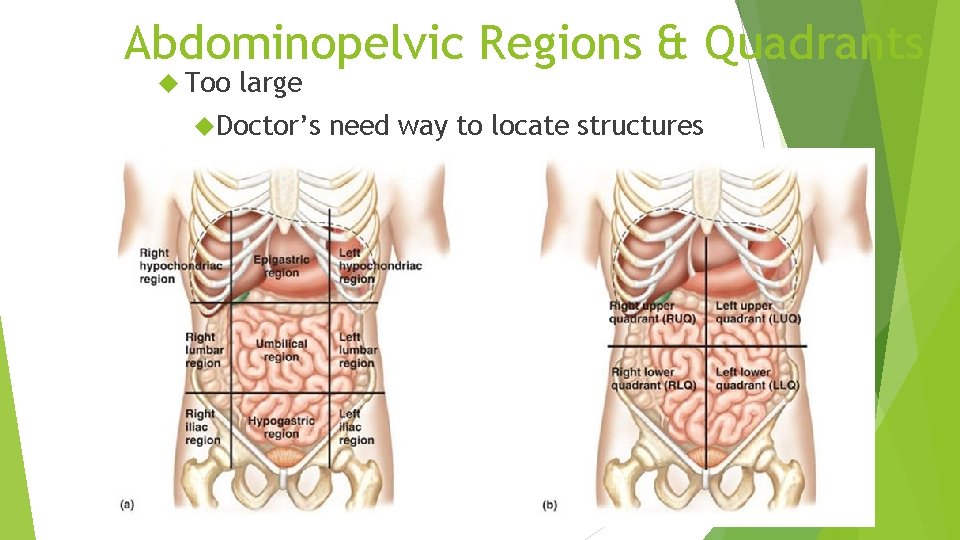
Abdominopelvic Regions & Quadrants Too large Doctor’s need way to locate structures
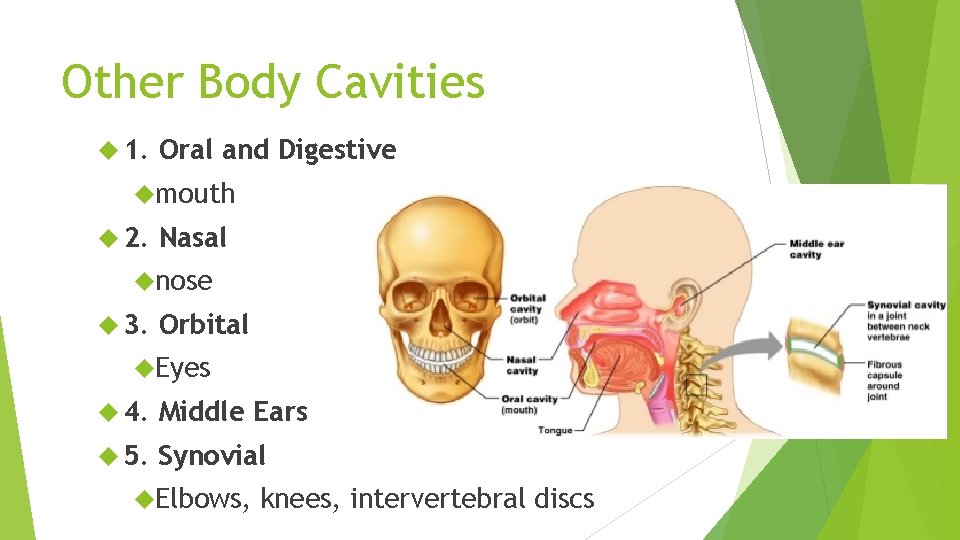
Other Body Cavities 1. Oral and Digestive mouth 2. Nasal nose 3. Orbital Eyes 4. Middle Ears 5. Synovial Elbows, knees, intervertebral discs
- Slides: 28