
An organization that has a memory COMPLAINT MANAGENT



- Slides: 36
An organization that has a memory COMPLAINT MANAGENT AS A COMPONENT OF RISK MANAGEMENT
Dr Yetunde Ayo-Oyalowo
The days are gone when you can ignore complaints. Often people only want to be heard. ’ Dr Ferguson, Principal Partner, Brooke Street Medical Centre.
WHY DO WE HAVE A COMPLAINT SYSTEM • We believe that dealing promptly and effectively with complaints has considerable benefits for health organizations, including better quality health care, reduced likelihood of litigation, and substantial savings in the direct and indirect costs arising from adverse incidents, complaints and claims.
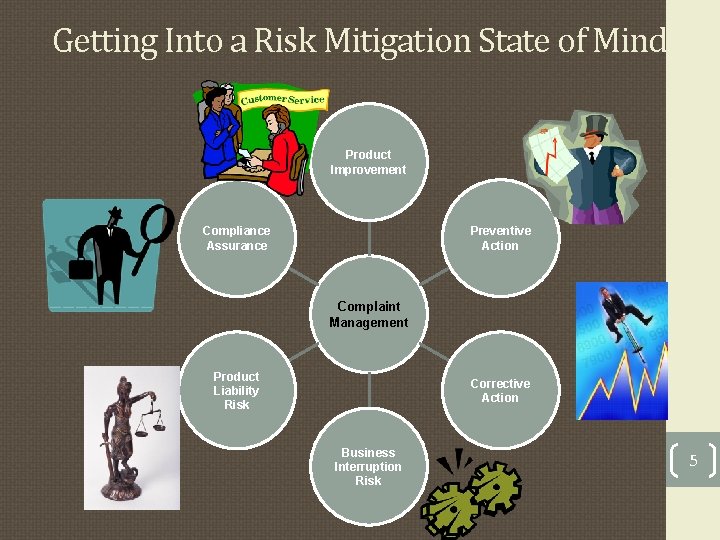
Getting Into a Risk Mitigation State of Mind Product Improvement Compliance Assurance Preventive Action Complaint Management Product Liability Risk Corrective Action Business Interruption Risk 5
The Gift If a customer is complaining, you are being given a chance to retain that customer
WHY DO PEOPLE COMPLAIN • • The person did not receive: sufficient or correct information safe health care respect expected outcome quality communication timely care
Listening and learning • Comments and complaints from consumers provide unique information about their needs • and the quality of care they receive. Open discussion of consumers’ concerns helps health • care professionals to understand potential problems and how to improve their service to • the public.
BENEFITS OF COMPLAINT MANAGEMENT • improve the safety and quality of the service, by providing information about the experiences of consumers and carers; • restore the trust and confidence of a consumer or carer; • save management time by the quick and simple resolution of complaints, • avoiding escalation; • promote a culture of reporting and accountability; • prevent wasteful practices and reduce the costs, such as insurance; • create a more satisfactory working environment for clinicians and staff; and • enhance the reputation of the service and prevent negative comments or publicity.
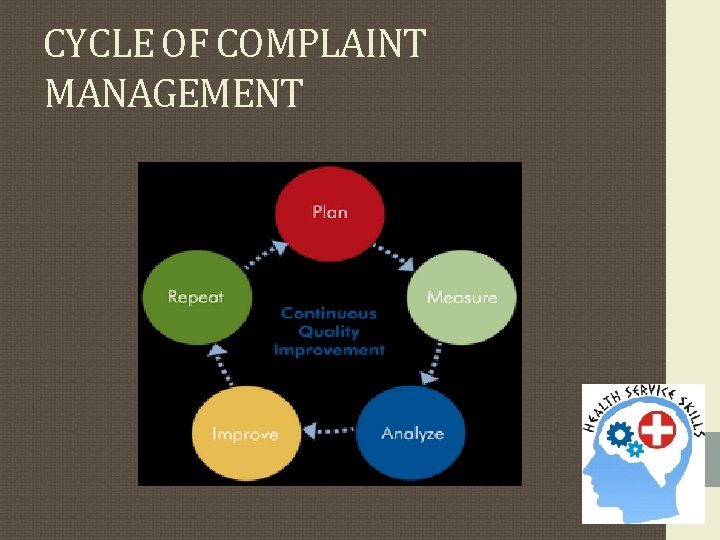
CYCLE OF COMPLAINT MANAGEMENT
ORGANISATIONAL CHANGE
WHY DO WE HAVE A COMPLAINT SYSTEM • We believe that dealing promptly and effectively with complaints has considerable benefits for health organizations, including better quality health care, reduced likelihood of litigation, and substantial savings in the direct and indirect costs arising from adverse incidents, complaints and claims.
WHY DO WE HAVE A COMPLAINT SYSTEM • We believe that dealing promptly and effectively with complaints has considerable benefits for health organizations, including better quality health care, reduced likelihood of litigation, and substantial savings in the direct and indirect costs arising from adverse incidents, complaints and claims.
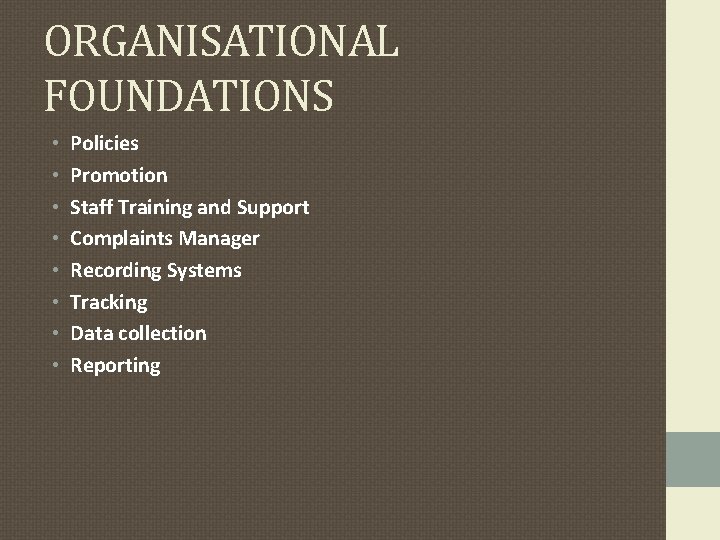
ORGANISATIONAL FOUNDATIONS • • Policies Promotion Staff Training and Support Complaints Manager Recording Systems Tracking Data collection Reporting
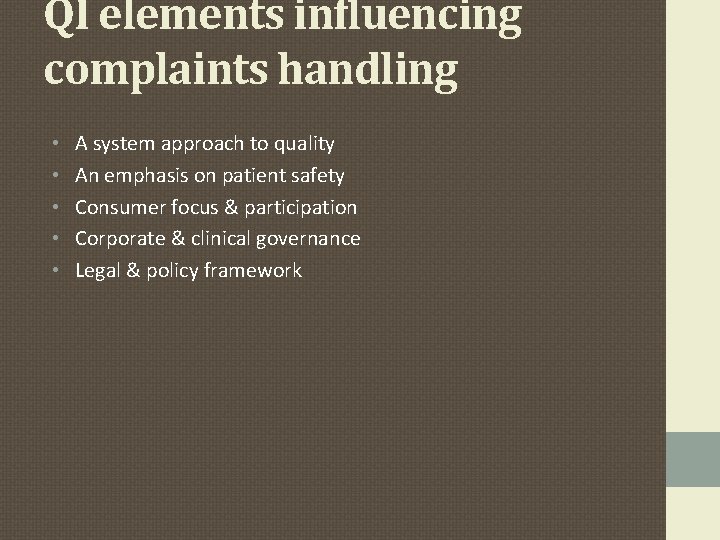
QI elements influencing complaints handling • • • A system approach to quality An emphasis on patient safety Consumer focus & participation Corporate & clinical governance Legal & policy framework
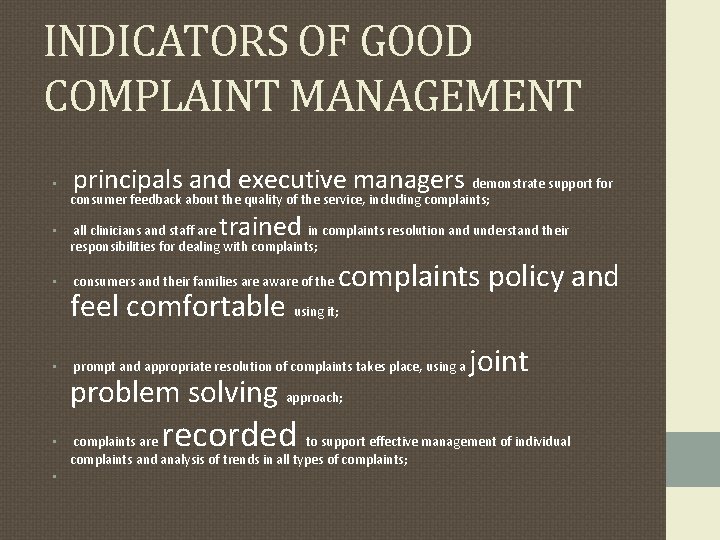
INDICATORS OF GOOD COMPLAINT MANAGEMENT • principals and executive managers demonstrate support for consumer feedback about the quality of the service, including complaints; trained • all clinicians and staff are in complaints resolution and understand their responsibilities for dealing with complaints; • consumers and their families are aware of the • • • complaints policy and feel comfortable using it; prompt and appropriate resolution of complaints takes place, using a problem solving approach; recorded joint complaints are to support effective management of individual complaints and analysis of trends in all types of complaints;
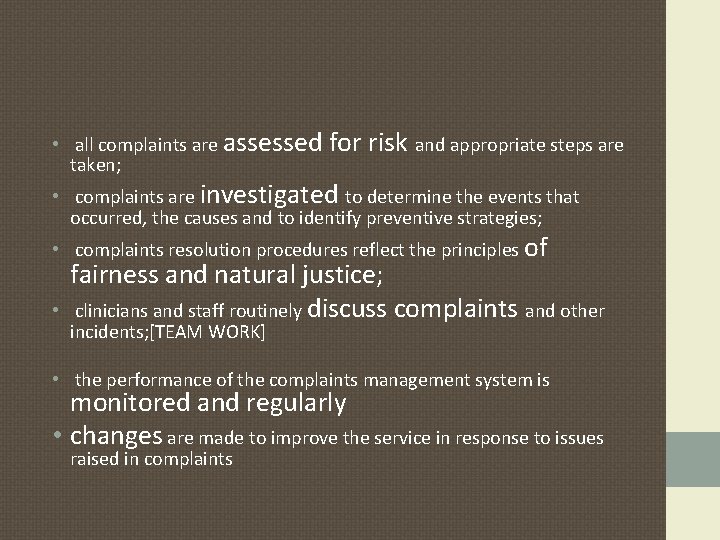
• all complaints are assessed taken; for risk and appropriate steps are • complaints are investigated to determine the events that occurred, the causes and to identify preventive strategies; • complaints resolution procedures reflect the principles of • fairness and natural justice; clinicians and staff routinely discuss complaints and other incidents; [TEAM WORK] • the performance of the complaints management system is monitored and regularly • changes are made to improve the service in response to issues raised in complaints
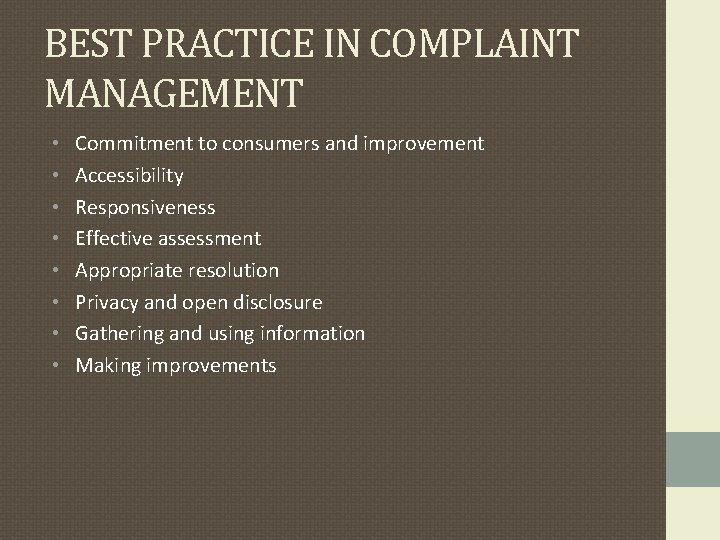
BEST PRACTICE IN COMPLAINT MANAGEMENT • • Commitment to consumers and improvement Accessibility Responsiveness Effective assessment Appropriate resolution Privacy and open disclosure Gathering and using information Making improvements
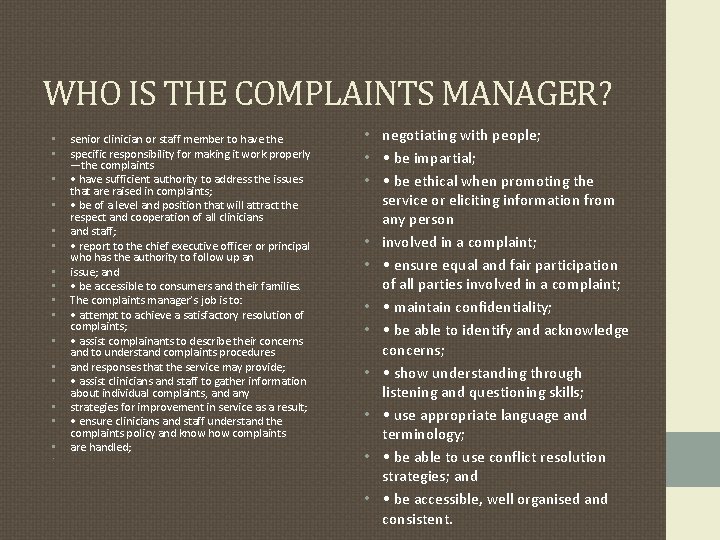
WHO IS THE COMPLAINTS MANAGER? • • • • • senior clinician or staff member to have the specific responsibility for making it work properly —the complaints • have sufficient authority to address the issues that are raised in complaints; • be of a level and position that will attract the respect and cooperation of all clinicians and staff; • report to the chief executive officer or principal who has the authority to follow up an issue; and • be accessible to consumers and their families. The complaints manager’s job is to: • attempt to achieve a satisfactory resolution of complaints; • assist complainants to describe their concerns and to understand complaints procedures and responses that the service may provide; • assist clinicians and staff to gather information about individual complaints, and any strategies for improvement in service as a result; • ensure clinicians and staff understand the complaints policy and know how complaints are handled; . • negotiating with people; • • be impartial; • • be ethical when promoting the service or eliciting information from any person • involved in a complaint; • • ensure equal and fair participation of all parties involved in a complaint; • • maintain confidentiality; • • be able to identify and acknowledge concerns; • • show understanding through listening and questioning skills; • • use appropriate language and terminology; • • be able to use conflict resolution strategies; and • • be accessible, well organised and consistent.
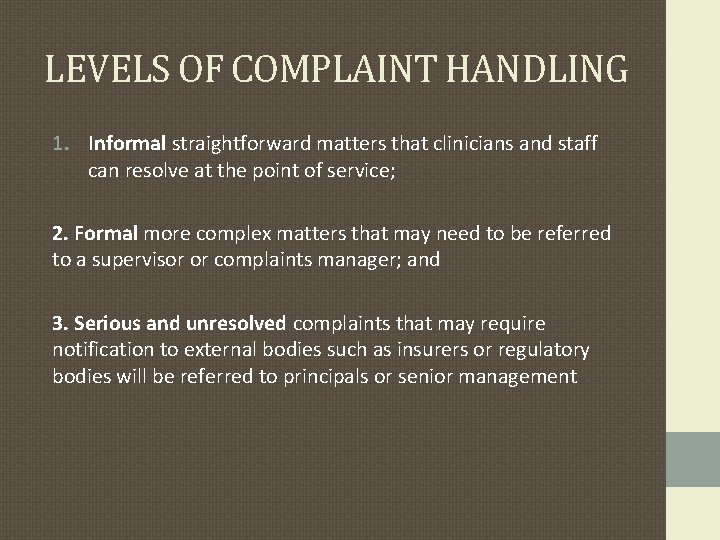
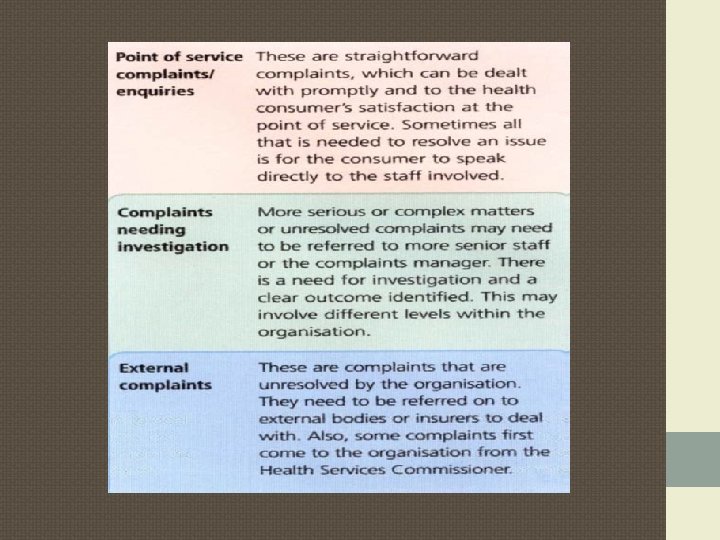
LEVELS OF COMPLAINT HANDLING 1. Informal straightforward matters that clinicians and staff can resolve at the point of service; 2. Formal more complex matters that may need to be referred to a supervisor or complaints manager; and 3. Serious and unresolved complaints that may require notification to external bodies such as insurers or regulatory bodies will be referred to principals or senior management
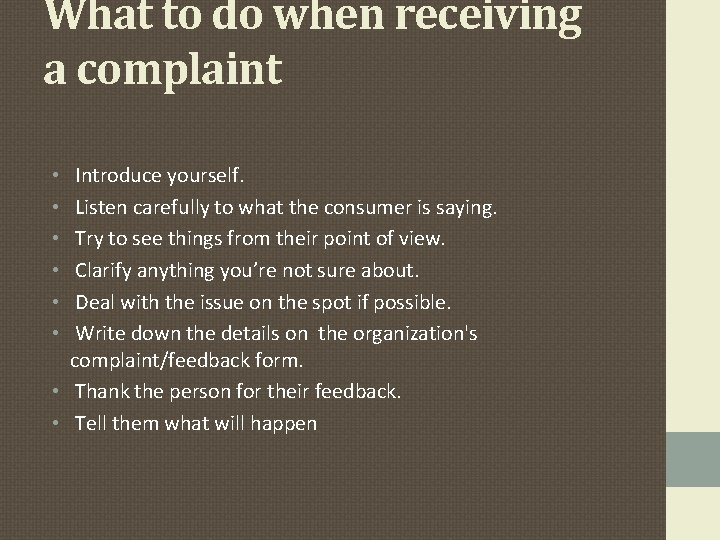
What to do when receiving a complaint Introduce yourself. Listen carefully to what the consumer is saying. Try to see things from their point of view. Clarify anything you’re not sure about. Deal with the issue on the spot if possible. Write down the details on the organization's complaint/feedback form. • Thank the person for their feedback. • Tell them what will happen • • •
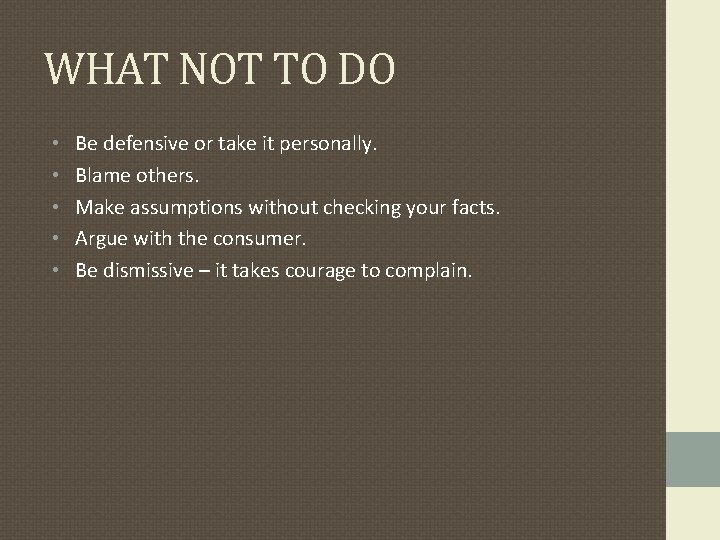
WHAT NOT TO DO • • • Be defensive or take it personally. Blame others. Make assumptions without checking your facts. Argue with the consumer. Be dismissive – it takes courage to complain.
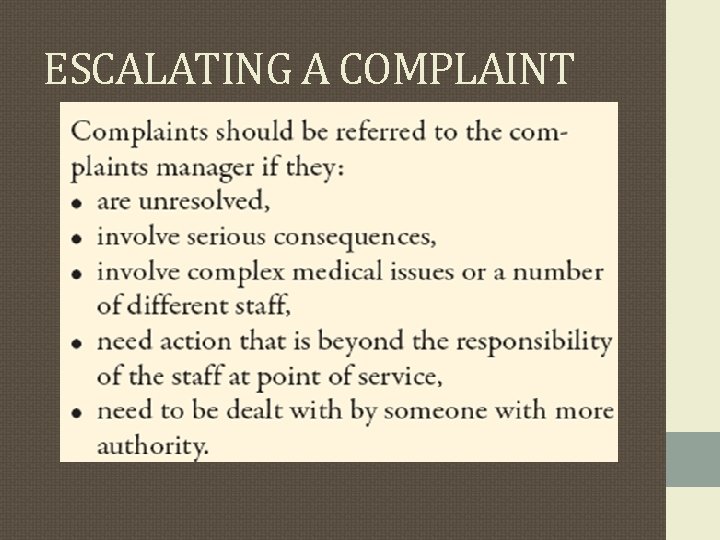
ESCALATING A COMPLAINT
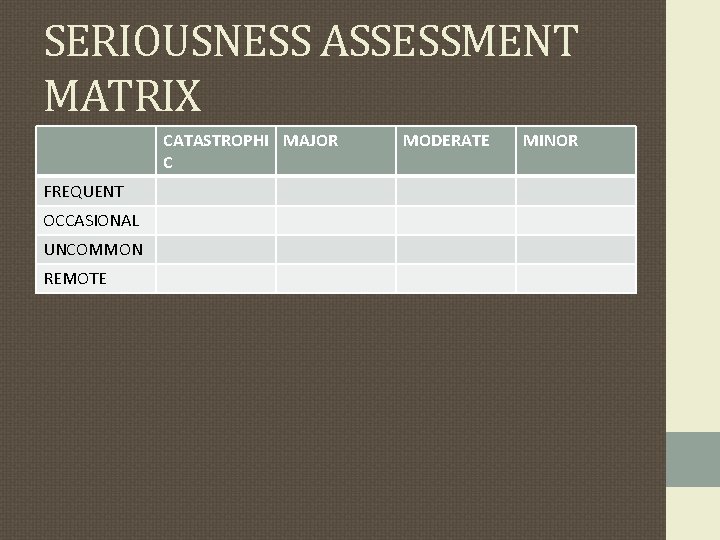
SERIOUSNESS ASSESSMENT MATRIX CATASTROPHI MAJOR C FREQUENT OCCASIONAL UNCOMMON REMOTE MODERATE MINOR
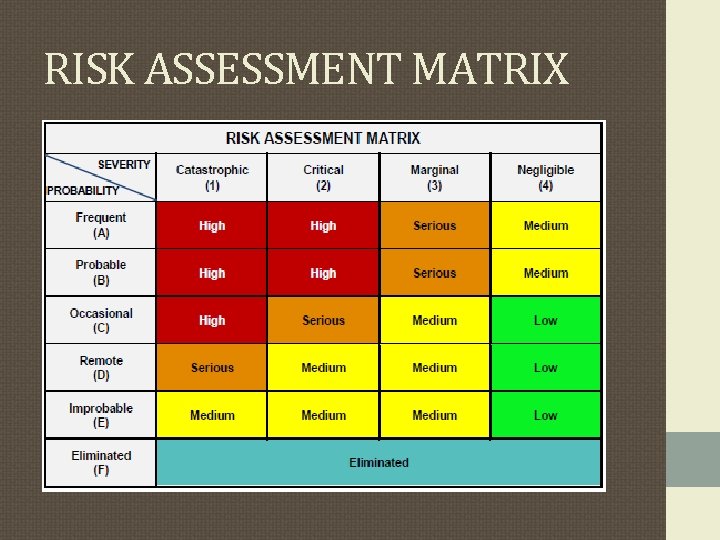
RISK ASSESSMENT MATRIX
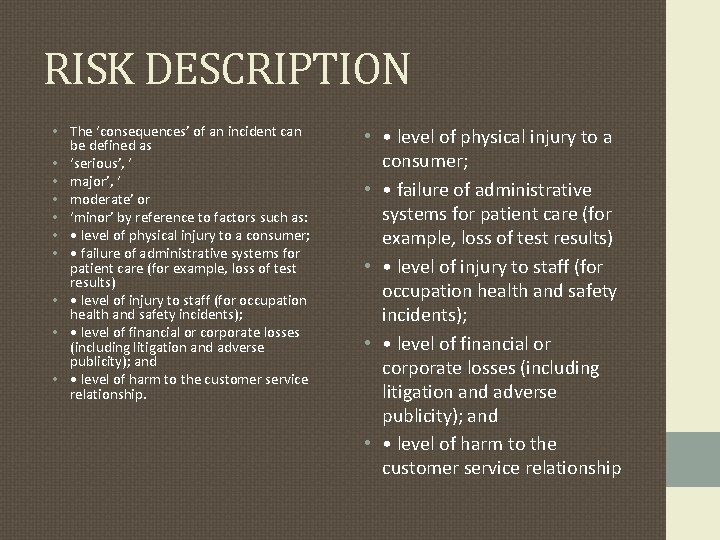
RISK DESCRIPTION • The ‘consequences’ of an incident can be defined as • ‘serious’, ‘ • major’, ‘ • moderate’ or • ‘minor’ by reference to factors such as: • • level of physical injury to a consumer; • • failure of administrative systems for patient care (for example, loss of test results) • • level of injury to staff (for occupation health and safety incidents); • • level of financial or corporate losses (including litigation and adverse publicity); and • • level of harm to the customer service relationship
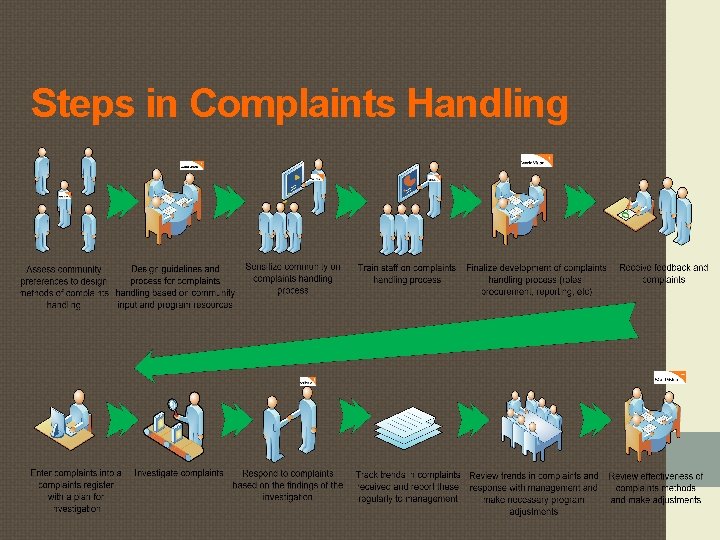
Steps in Complaints Handling
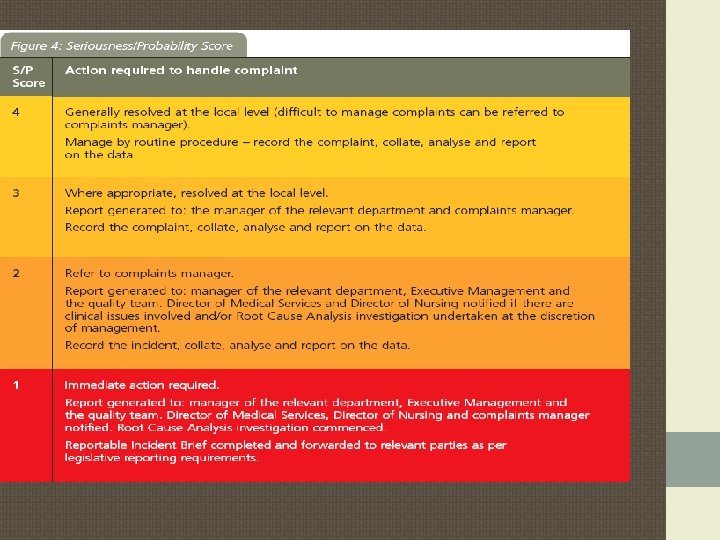
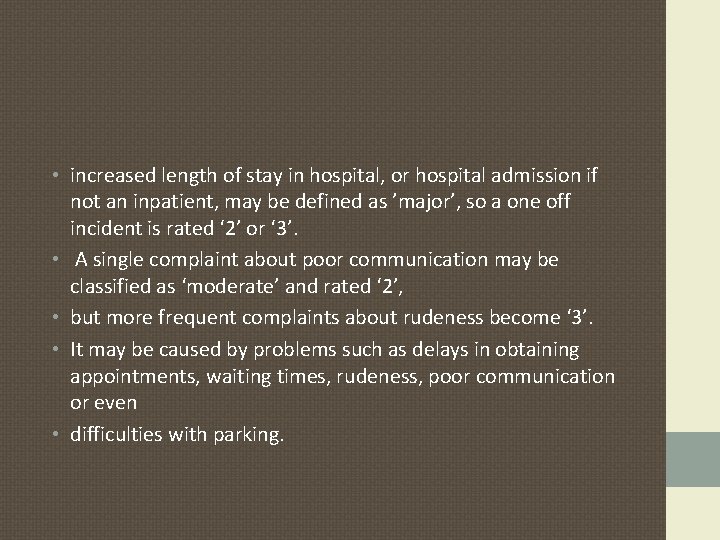
• increased length of stay in hospital, or hospital admission if not an inpatient, may be defined as ’major’, so a one off incident is rated ‘ 2’ or ‘ 3’. • A single complaint about poor communication may be classified as ‘moderate’ and rated ‘ 2’, • but more frequent complaints about rudeness become ‘ 3’. • It may be caused by problems such as delays in obtaining appointments, waiting times, rudeness, poor communication or even • difficulties with parking.
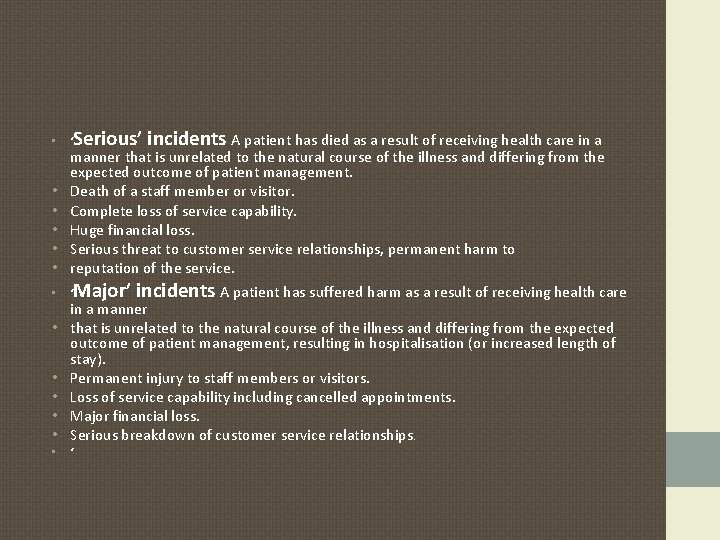
‘ Serious’ incidents A patient has died as a result of receiving health care in a • • • manner that is unrelated to the natural course of the illness and differing from the expected outcome of patient management. Death of a staff member or visitor. Complete loss of service capability. Huge financial loss. Serious threat to customer service relationships, permanent harm to reputation of the service. • ‘ Major’ incidents A patient has suffered harm as a result of receiving health care • • in a manner that is unrelated to the natural course of the illness and differing from the expected outcome of patient management, resulting in hospitalisation (or increased length of stay). Permanent injury to staff members or visitors. Loss of service capability including cancelled appointments. Major financial loss. Serious breakdown of customer service relationships. ‘
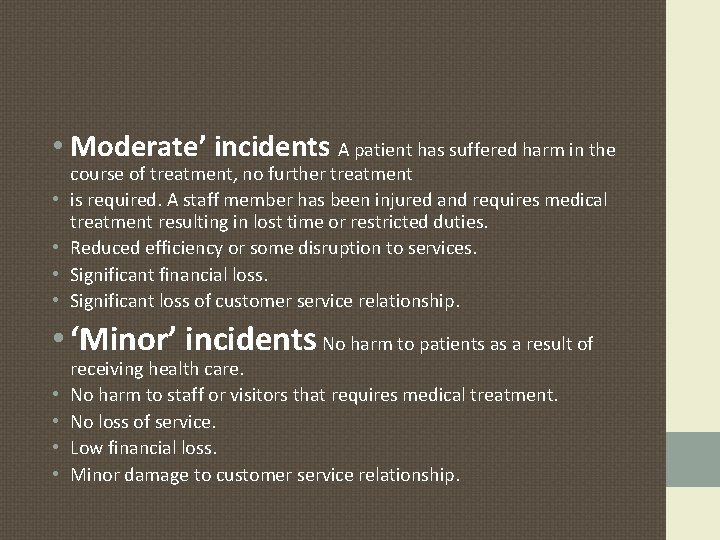
• Moderate’ incidents A patient has suffered harm in the • • course of treatment, no further treatment is required. A staff member has been injured and requires medical treatment resulting in lost time or restricted duties. Reduced efficiency or some disruption to services. Significant financial loss. Significant loss of customer service relationship. • ‘Minor’ incidents No harm to patients as a result of • • receiving health care. No harm to staff or visitors that requires medical treatment. No loss of service. Low financial loss. Minor damage to customer service relationship.
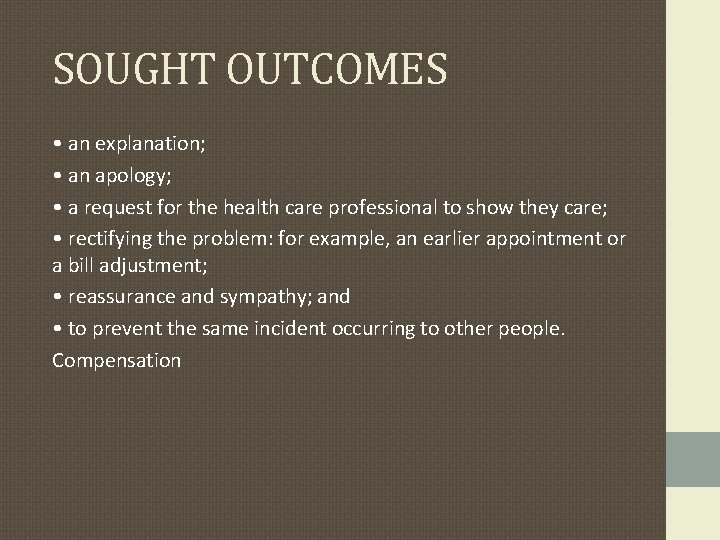
SOUGHT OUTCOMES • an explanation; • an apology; • a request for the health care professional to show they care; • rectifying the problem: for example, an earlier appointment or a bill adjustment; • reassurance and sympathy; and • to prevent the same incident occurring to other people. Compensation
Complaints management documents • Policy • Complaint form • Sugggestion form
What steps will you take to handle complaints?
• Thank you for listening.