
An organisms metabolism transforms matter and energy subject
An organism’s metabolism transforms matter and energy, subject to the laws of thermodynamics �Metabolism is the totality of an organism’s chemical reactions �A metabolic pathway begins with a specific moecule and ends with a product �Each step is catalyzed by a specific enzyme Copyright © 2008 Pearson Education, Inc. , publishing as Pearson Benjamin Cummings
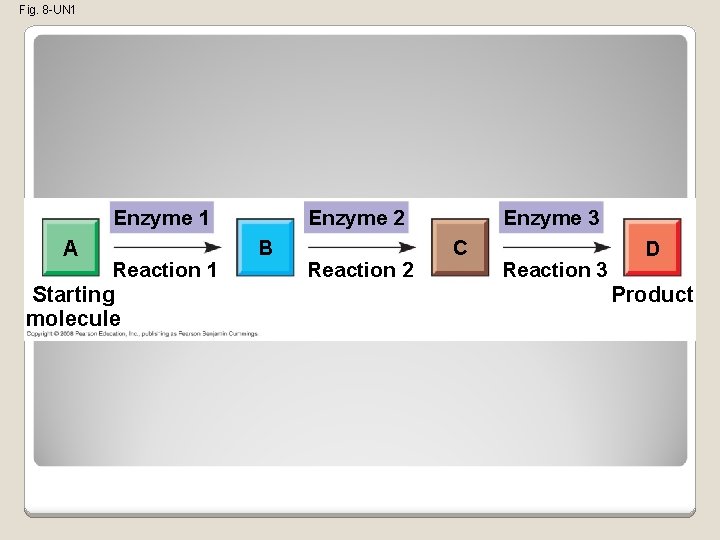
Fig. 8 -UN 1 Enzyme 1 A Reaction 1 Starting molecule Enzyme 2 B Reaction 2 Enzyme 3 C Reaction 3 D Product
�Catabolic pathways release energy by breaking down complex molecules into simpler compounds �Cellular respiration, the breakdown of glucose in the presence of oxygen, is an example of a pathway of catabolism Copyright © 2008 Pearson Education, Inc. , publishing as Pearson Benjamin Cummings
�Anabolic pathways consume energy to build complex molecules from simpler ones �The synthesis of protein from amino acids is an example of anabolism �Bioenergetics is the study of how organisms manage their energy resources Copyright © 2008 Pearson Education, Inc. , publishing as Pearson Benjamin Cummings
Forms of Energy �Energy is the capacity to cause change �Energy exists in various forms, some of which can perform work Copyright © 2008 Pearson Education, Inc. , publishing as Pearson Benjamin Cummings
�Kinetic energy is energy associated with motion �Heat (thermal energy) is kinetic energy associated with random movement of atoms or molecules �Potential energy is energy that matter possesses because of its location or structure �Chemical energy is potential energy available for release in a chemical reaction �Energy can be converted from one form to another Copyright © 2008 Pearson Education, Inc. , publishing as Pearson Benjamin Cummings
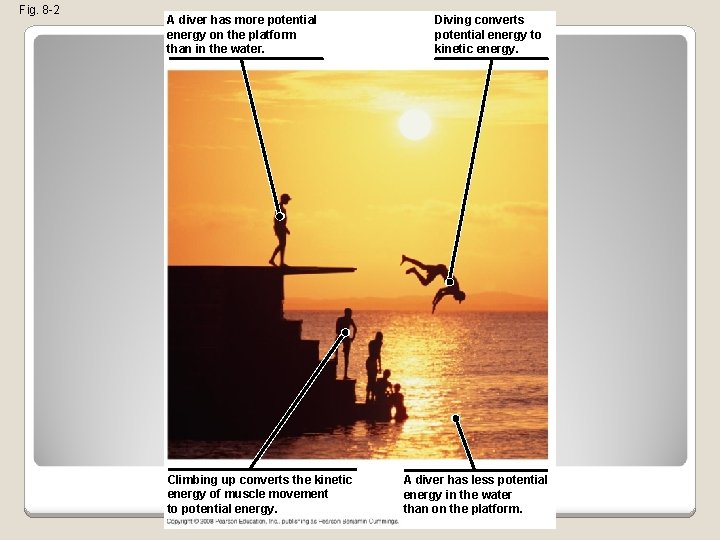
Fig. 8 -2 A diver has more potential energy on the platform than in the water. Climbing up converts the kinetic energy of muscle movement to potential energy. Diving converts potential energy to kinetic energy. A diver has less potential energy in the water than on the platform.
The Laws of Energy Transformation �Thermodynamics is the study of energy transformations �A closed system, such as that approximated by liquid in a thermos, is isolated from its surroundings �In an open system, energy and matter can be transferred between the system and its surroundings �Organisms are open systems Copyright © 2008 Pearson Education, Inc. , publishing as Pearson Benjamin Cummings
The First Law of Thermodynamics �According to the first law of thermodynamics, the energy of the universe is constant: – Energy can be transferred and transformed, but it cannot be created or destroyed �The first law is also called the principle of conservation of energy Copyright © 2008 Pearson Education, Inc. , publishing as Pearson Benjamin Cummings
The Second Law of Thermodynamics �During every energy transfer or transformation, some energy is unusable, and is often lost as heat �According to the second law of thermodynamics: – Every energy transfer or transformation increases the entropy (disorder) of the universe Copyright © 2008 Pearson Education, Inc. , publishing as Pearson Benjamin Cummings
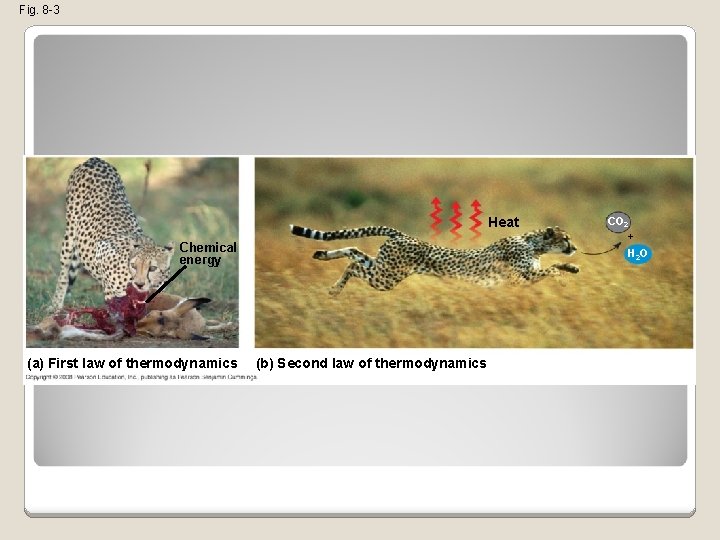
Fig. 8 -3 Heat Chemical energy (a) First law of thermodynamics CO 2 + H 2 O (b) Second law of thermodynamics
�Living cells unavoidably convert organized forms of energy to heat �Spontaneous processes occur without energy input; they can happen quickly or slowly �For a process to occur without energy input, it must increase the entropy of the universe Copyright © 2008 Pearson Education, Inc. , publishing as Pearson Benjamin Cummings
Biological Order and Disorder �Cells create ordered structures from less ordered materials �Organisms also replace ordered forms of matter and energy with less ordered forms �Energy flows into an ecosystem in the form of light and exits in the form of heat Copyright © 2008 Pearson Education, Inc. , publishing as Pearson Benjamin Cummings
�The evolution of more complex organisms does not violate the second law of thermodynamics �Entropy (disorder) may decrease in an organism, but the universe’s total entropy increases Copyright © 2008 Pearson Education, Inc. , publishing as Pearson Benjamin Cummings
The free-energy change of a reaction tells us whether or not the reaction occurs spontaneously �Biologists want to know which reactions occur spontaneously and which require input of energy �To do so, they need to determine energy changes that occur in chemical reactions Copyright © 2008 Pearson Education, Inc. , publishing as Pearson Benjamin Cummings
Free-Energy Change, G �A living system’s free energy is energy that can do work when temperature and pressure are uniform, as in a living cell Copyright © 2008 Pearson Education, Inc. , publishing as Pearson Benjamin Cummings
Free Energy, Stability, and Equilibrium �Free energy is a measure of a system’s instability, its tendency to change to a more stable state �During a spontaneous change, free energy decreases and the stability of a system increases �Equilibrium is a state of maximum stability �A process is spontaneous and can perform work only when it is moving toward equilibrium Copyright © 2008 Pearson Education, Inc. , publishing as Pearson Benjamin Cummings
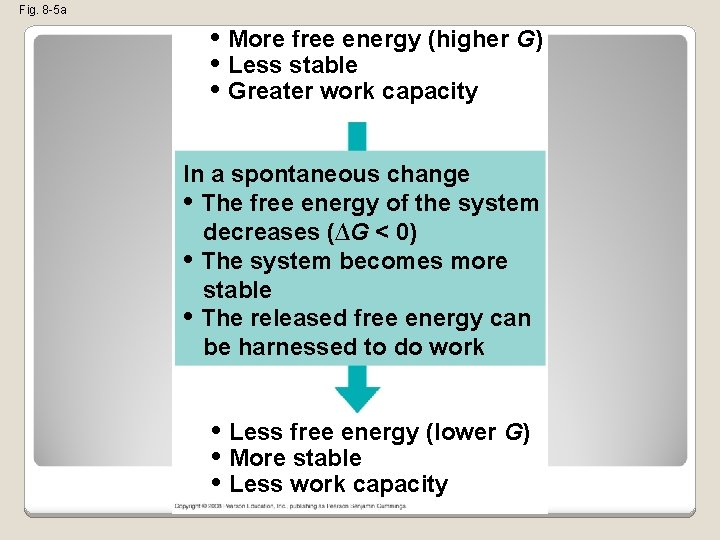
Fig. 8 -5 a • More free energy (higher G) • Less stable • Greater work capacity In a spontaneous change • The free energy of the system decreases (∆G < 0) • The system becomes more stable • The released free energy can be harnessed to do work • Less free energy (lower G) • More stable • Less work capacity
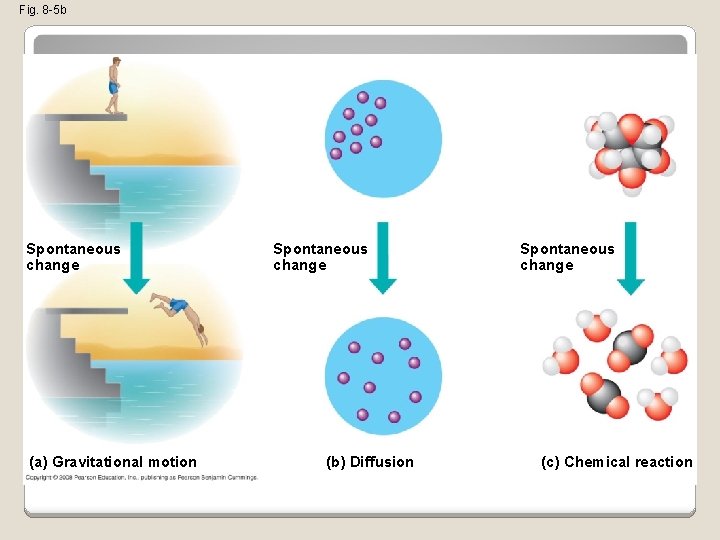
Fig. 8 -5 b Spontaneous change (a) Gravitational motion Spontaneous change (b) Diffusion Spontaneous change (c) Chemical reaction
Free Energy and Metabolism �The concept of free energy can be applied to the chemistry of life’s processes Copyright © 2008 Pearson Education, Inc. , publishing as Pearson Benjamin Cummings
Exergonic and Endergonic Reactions in Metabolism �An exergonic reaction proceeds with a net release of free energy and is spontaneous �An endergonic reaction absorbs free energy from its surroundings and is nonspontaneous Copyright © 2008 Pearson Education, Inc. , publishing as Pearson Benjamin Cummings
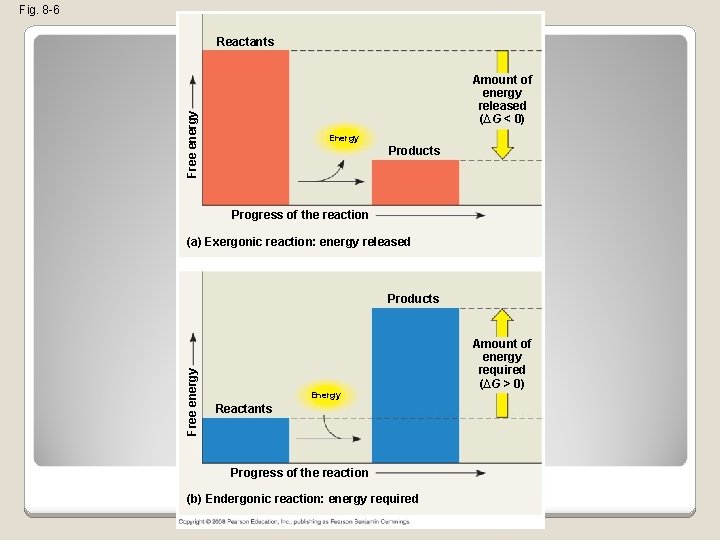
Fig. 8 -6 Reactants Free energy Amount of energy released (∆G < 0) Energy Products Progress of the reaction (a) Exergonic reaction: energy released Free energy Products Energy Reactants Progress of the reaction (b) Endergonic reaction: energy required Amount of energy required (∆G > 0)
Equilibrium and Metabolism �Reactions in a closed system eventually reach equilibrium and then do no work �A defining feature of life is that metabolism is never at equilibrium; a cell at equilibrium is dead �Exergonic reactions are coupled to endergonic reactions. �Equilibrium is avoided by the removal of products; either products are used as reactants in the next step of pathway or are eliminated as waste. Copyright © 2008 Pearson Education, Inc. , publishing as Pearson Benjamin Cummings
ATP powers cellular work by coupling exergonic reactions to endergonic reactions �A cell does three main kinds of work: ◦ Chemical ◦ Transport ◦ Mechanical �To do work, cells manage energy resources by energy coupling, the use of an exergonic process to drive an endergonic one �Most energy coupling in cells is mediated by ATP Copyright © 2008 Pearson Education, Inc. , publishing as Pearson Benjamin Cummings
The Structure and Hydrolysis of ATP �ATP (adenosine triphosphate) is the cell’s energy shuttle �ATP is composed of ribose (a sugar), adenine (a nitrogenous base), and three phosphate groups Copyright © 2008 Pearson Education, Inc. , publishing as Pearson Benjamin Cummings
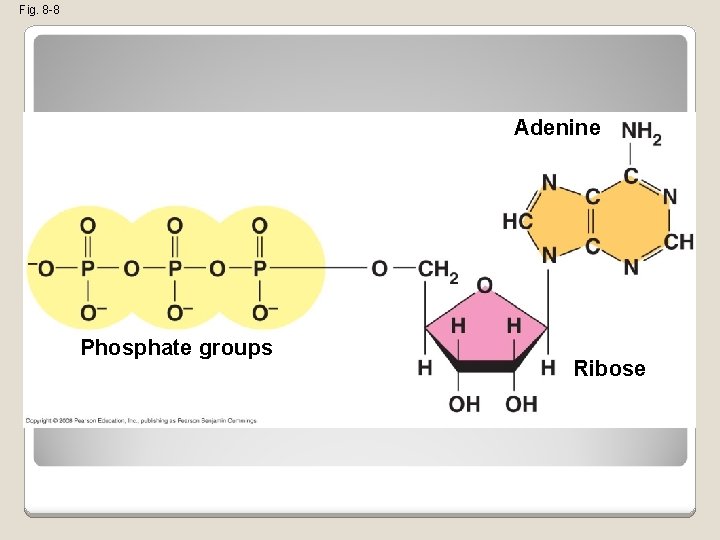
Fig. 8 -8 Adenine Phosphate groups Ribose
�The bonds between the phosphate groups of ATP’s tail can be broken by hydrolysis �Energy is released from ATP when the terminal phosphate bond is broken �This release of energy comes from the chemical change to a state of lower free energy, not from the phosphate bonds themselves Copyright © 2008 Pearson Education, Inc. , publishing as Pearson Benjamin Cummings
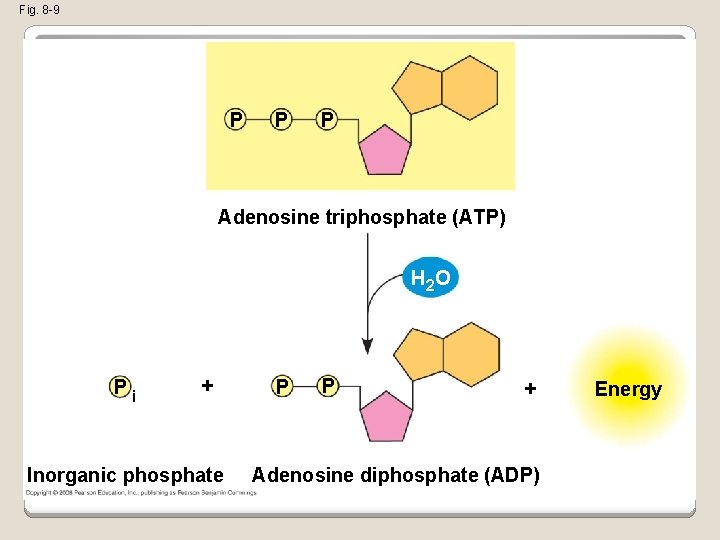
Fig. 8 -9 P P P Adenosine triphosphate (ATP) H 2 O Pi + Inorganic phosphate P P + Adenosine diphosphate (ADP) Energy
How ATP Performs Work �The three types of cellular work (mechanical, transport, and chemical) are powered by the hydrolysis of ATP �In the cell, the energy from the exergonic reaction of ATP hydrolysis can be used to drive an endergonic reaction �Overall, the coupled reactions are exergonic Copyright © 2008 Pearson Education, Inc. , publishing as Pearson Benjamin Cummings
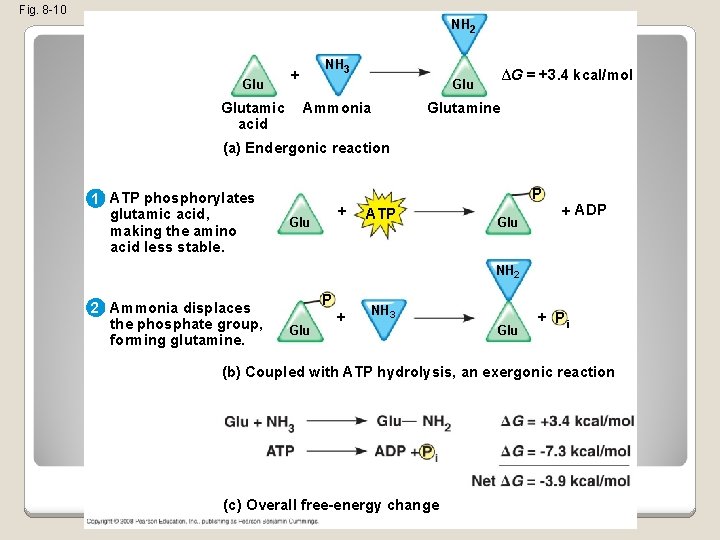
Fig. 8 -10 NH 2 Glutamic acid NH 3 + ∆G = +3. 4 kcal/mol Glu Ammonia Glutamine (a) Endergonic reaction 1 ATP phosphorylates glutamic acid, making the amino acid less stable. P + Glu ATP Glu + ADP NH 2 2 Ammonia displaces the phosphate group, forming glutamine. P Glu + NH 3 Glu + Pi (b) Coupled with ATP hydrolysis, an exergonic reaction (c) Overall free-energy change
�ATP drives endergonic reactions by phosphorylation, transferring a phosphate group to some other molecule, such as a reactant �The recipient molecule is now phosphorylated Copyright © 2008 Pearson Education, Inc. , publishing as Pearson Benjamin Cummings
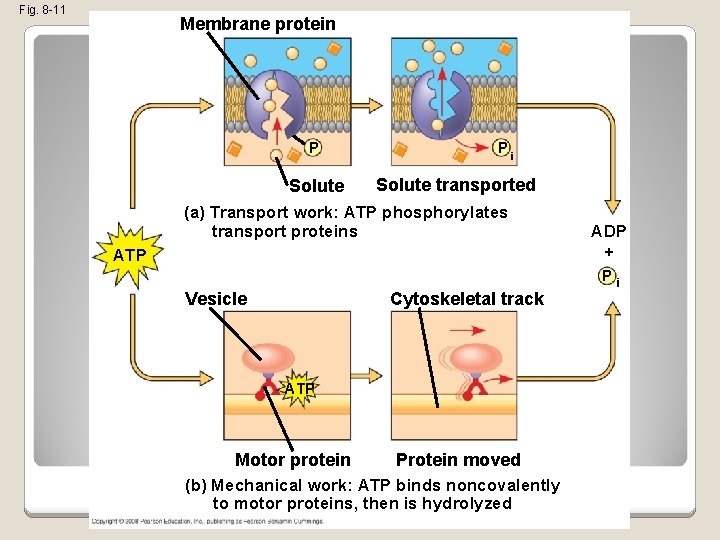
Fig. 8 -11 Membrane protein P Solute Pi Solute transported (a) Transport work: ATP phosphorylates transport proteins ADP + ATP Vesicle Cytoskeletal track ATP Motor protein Protein moved (b) Mechanical work: ATP binds noncovalently to motor proteins, then is hydrolyzed Pi
The Regeneration of ATP �ATP is a renewable resource that is regenerated by addition of a phosphate group to adenosine diphosphate (ADP) �The energy to phosphorylate ADP comes from catabolic reactions in the cell �The chemical potential energy temporarily stored in ATP drives most cellular work Copyright © 2008 Pearson Education, Inc. , publishing as Pearson Benjamin Cummings
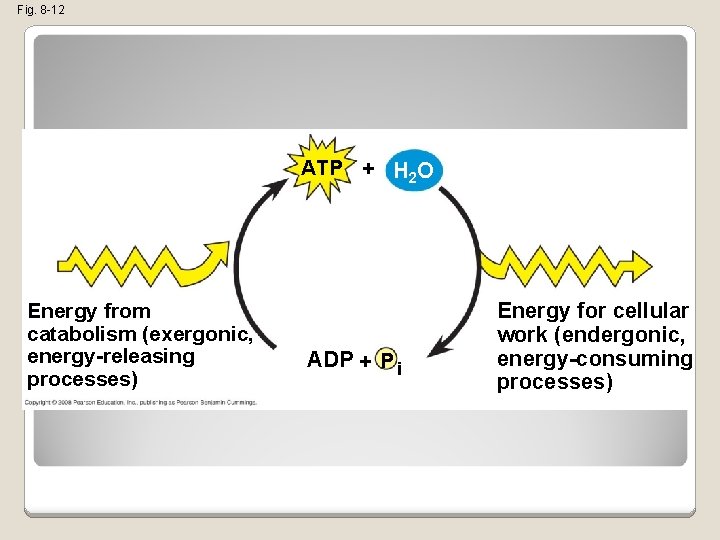
Fig. 8 -12 ATP + H 2 O Energy from catabolism (exergonic, energy-releasing processes) ADP + P i Energy for cellular work (endergonic, energy-consuming processes)
- Slides: 34